
Related articles: APPLE MAGGOTS BAGWORMS BUDWORMS THRIPS TWIG GIRDLERS WHITE FLYS
This video shows a lone aphid walking about.
Aphids can be brown or black too. There are many variations in how they look too. This Wooly Adelgid is unique but still an aphid.
APHID BIOLOGY
Aphids are a common pest in gardens and nursery stock around homes and farms. In fact, they may be the number one pest in both sheer numbers and frequency of plants they will attack. Though there are hundreds of species of aphids, the purpose of this article is not to detail each specie but instead detail basic biology and then offer a range of control methods to eliminate an infestation.
The good news about aphids is we have effective products to control any problem you develop. The bad news is that aphids can be both persistent and quick to multiply – traits which make them a formidable foe.
WHAT DO APHIDS LOOK LIKE?
Aphids are a small insect which are not much larger than a grain of rice. There are hundreds of species distributed throughout the world and though most are plant or host specific, aphids are able to adapt their nutritional needs to take advantage of that which is abundant and available.
Aphids are generally green in color but can be clear, white, brown or black. In general, their color will match what it is they are eating.
WHERE DO APHIDS COME FROM?
Aphids overwinter as eggs and in the spring will hatch winged females that immediately search out a good food supply. Once they find a suitable host plant, they will lay eggs and move on searching for more food supplies. The eggs which are laid will hatch in a about a week.
Aphids have piercing, biting mouth-parts and will feed off the sap of plant life. Once they start to feed, this first batch of aphids will start to produce live young. This is done parthenogenetically which means they are able to produce live young without having to mate.
Live aphid young will begin to feed upon emerging from the females and within another week this batch will start producing more live young. Each adult can produce 50 – 100 live young which means that a few adult aphids can turn into several thousand in less than a month! All the young created will be wingless until the colony grows too large for the plant to support it’s food demand. At that time winged live ones will start to appear whose role is to leave their home colony seeking new plants on which to feed.
This sequence of events will play out over the course of the growing season and will only stop when the plant either dies or goes dormant for the winter. Plant life within growing zones which are active year round are susceptible to aphids year round; plant life which is growing for 6 months of the year can only have active aphids during this time. If the aphids food supply goes dormant for a winter season so to will the aphids. Just before they do so males will mate with females and the females will lay eggs just before death. These eggs will hatch in the following spring and this cycle will begin all over again.
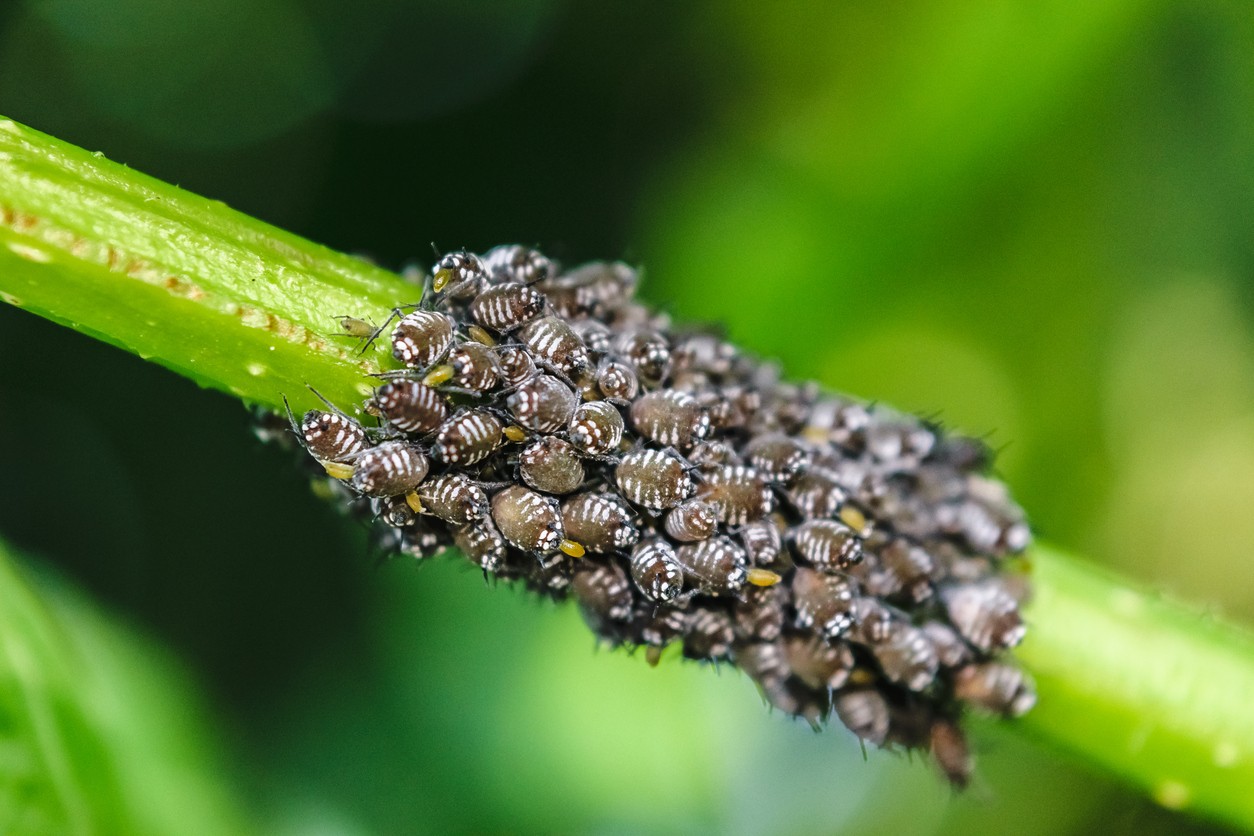
HOW DO I KNOW WHICH TYPE OF APHID I HAVE IN MY GARDEN?
As the author stated above, the intention of this article is not to detail all the different species of aphids around the world. However, the more common species includes the Pea Aphid, Bean Aphid, Cotton Aphid, Melon Aphid, Cabbage Aphid, Mealy Plum Aphid, Grain Aphid, Rose Aphid, Peach Aphid, Corn Aphid, Alfalfa Aphid, Pine Aphid, Spruce Aphid, Grass Aphid, Oak Aphid, Wooly Adelgid and the Cactus Aphid.
Though many of these are specific to a certain tree or plant, it is generally accepted that most aphids will take advantage of any vulnerable food supply. In other words, Rose Aphids don’t mind eating birch tree leaves or Crepe Myrtle’s if that’s all they find. For this reason alone aphids are a pest which must not be ignored. If a region is having a local breakout of aphids, rest assured some will find their way onto any plants they smell so don’t think your plant is safe because it’s “not what they eat”.
APHID DAMAGE TO PLANTS
Aphids have piercing chewing mouth parts which enable them to feed off the sap or life blood of any plant. They are much like Fleas or Mosquitoes are to mammals; Aphids seek the blood of plant life and won’t stop feeding regardless of how much they hurt or stunt the plant. Fleas and mosquitoes seek the blood of pets and people; aphids seek the blood of your favorite Rose bush or garden vegetable! This behavior lends itself to many problems which stem from aphid populations which is why you should not allow them free roam or access to your plants. Here are some of the more important outcomes which result from aphid activity.
1) Aphids feeding will deplete the life blood of it’s host. This could mean death for any young developing plant. Aphids won’t control their behavior; instead they will eat till the plant dies and then move on. Though established trees and plants may be able to endure the initial sap and nutrition withdrawal from their system, it will none the less weaken them making them vulnerable to many other problems and diseases.
2) Aphids will cause leaves to curl up and die. Mal- nourished leaves won’t look right when they don’t receive the right amount of food and aphids feeding will steal away some of the plants vital nutrients needed by it’s growing foliage.
3) Damaged leaves don’t look good and may look bad all season but most importantly, they may not serve the plant well. Leaves which were designed to shelter and protect the plant from the hot summers sun won’t be able to do so when curled up and brown. This will put more stress on the plant making it vulnerable to other problems. Furthermore, some leaves will look bad all season long which takes away from the aesthetic value a healthy, well manicured landscape provides.
4) Aphids excrement is a material referred to as Honeydew. This excrement is highly nutritious which further documents the waste created by their activity. This honeydew will attract all kinds of other insects which will literally farm it as food for their developing colonies. More common insects that will take advantage of local aphid populations include ants and wasps. Once they start to prosper they will eventually become a problem in and around the home. A large percentage of the ant infestations we are called upon to resolve is due to the fact that the ants wanted to live there because the aphid population was so large providing good food at some time. However, when the aphids leave for new feeding areas, the ants are left to fend for themselves which is why the end up in the home. Controlling those aphids early on in the season would have prevented the ant infestations which were then able to develop.
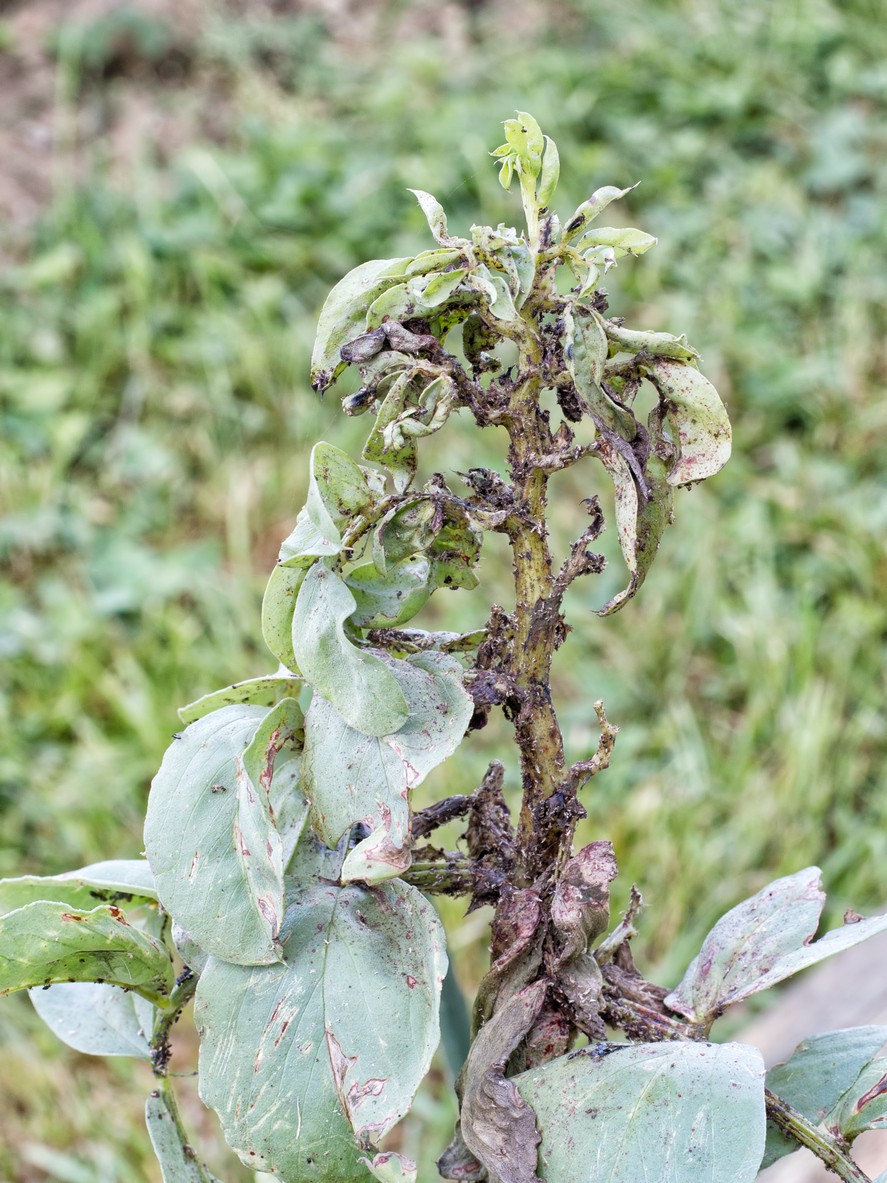
5) This same Honeydew is both corrosive and fosters fungus. Cars, furniture and structures are all susceptible to the damage which honeydew will cause. This sap like gel will stain and mar the finish of cars, plastic and siding of homes and other buildings. Furthermore, the Honeydew will allow plant fungus to grow like sooty mold, leaf spot and more.
6) Aphids serve as vectors of disease and will readily transfer fungus and other pathogens from one tree or plant to another. Their biting and piercing mouth parts allow bacteria and other contaminates to be passed on which exposes the disease to new plants. Many of these plants cannot survive both the aphids feeding and these new diseases they must contend with which ultimately causes death.
Since Aphids are such a common pest found throughout the entire country, most people accept that they will have them at some point in time. Furthermore, they accept the damage the aphids will do and feel that this is part of having a garden and that there is nothing that can be done to stop them. This defeatist attitude is not a healthy one nor one which is in the best interest of any plant you are attempting to grow. Most importantly, there are many things that can be done both before and after aphid activity is present.
HOW DO I KNOW IF I HAVE APHIDS
Aphid problems can be detected early by installing APHID TRAPS around the yard. These traps feature a bright color that will attract females who are looking for somewhere to lay eggs. Set traps out on plants which you want to protect and foraging aphids will readily be lured onto the sticky glue. Be sure to monitor the traps by looking them over weekly. If any start catching aphids, you’d be wise to start treating as explained below.
Our traps come packed 4 to a pack and the glue will remain active for 60 days or more.


HOW TO TREAT AN APHID INFESTATION
Fortunately, aphids are easy to kill. That being said, they can be persistent. The key is to stay on top of the problem and to follow the guidelines we detail below no matter which product you choose to employ. And we have options for flowers, ground cover and even vegetable gardens.
ORGANIC APHID SPRAY FOR THE VEGETABLE GARDEN
If you are growing a fruit and/or vegetable garden and want to use an “organic” spray, we have an effective concentrate that’s safe enough to use as often as needed. MULTI PURPOSE INSECT KILLER has just “1 day to harvest” yet its strong enough to knock out the toughest aphid infestation. Plan on spraying once a week for at least 2 weeks (3 treatments total) to get rid of them for good.
Add 6.4 oz per gallon of water and plan on getting 500-750 sq/ft of plant foliage treated per mixed gallon. Multipurpose Insect Killer has one day to harvest which means its safe enough to use right up to the day before you harvest your fruits or vegetables.
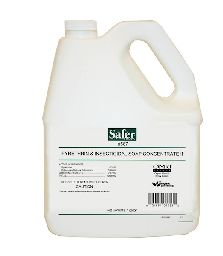
If you want a more “traditional” product for the garden, we the best option available. You can use it as a foliage spray for immediate control and then as a systemic to end the problem all season long.
STRONGEST SPRAY FOR NON FRUIT BEARING TREES AND SHRUBS
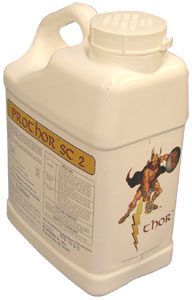
For the longest and “best” results, treat all shrubs and trees with PROTHOR. It can be used as a foliage spray and as a systemic. Treatments can last up to a whole year so in general, if you spray in the spring, you shouldn’t get insects on the treated tree for the year. Prothor is a great “one spray” protection for most any plant in the yard. It uses a non repelling active so insects won’t know the active is present. Aphids will unknowingly land on the treated plant, start to feed and within a few days die.
Now if you treat mid or late season, you will get control of any current problem but it would be smart to apply more the following spring. Yards which develop pests like aphids have a tendency to have them return. Treat once a year with Prothor to ensure this doesn’t happen.
For spraying the affected plant foliage, mix .5 oz of Prothor per gallon of water and use the mixture over 1,000 sq/ft of surface area.
The following “short video” (less than 60 seconds long) summarizes how to apply Prothor using our GREEN TOPPED HOSE END SPRAYER.
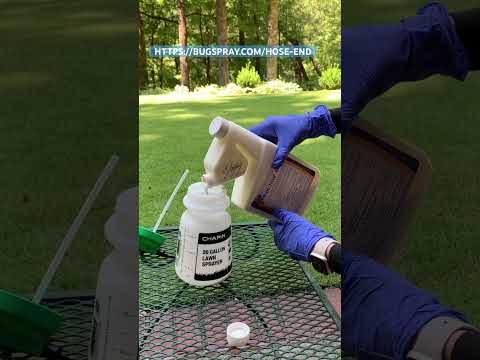
So for any tree or shrub, follow the guidelines in the video above using 1/2 oz per gallon of water to spray their foliage.
For systemic treatments, add .1 oz per inch of tree or hedge trunk thickness.
So if you have a holly with 3 main trunks coming up from the base and each trunk is about 3″ wide, add 1 oz of Prothor in a 5 gallon plastic pail with 3-4 gallons water. Next, make 5-8 holes in the ground within 1-2 feet of the hedge. Use a piece of rebar or a pick axe to make the holes. Next, pour out the mixture of Prothor into the holes being sure to pour it slow enough so the material doesn’t run away from the plant.
If done properly, the treatment will remain in the ground around the shrub where it will be absorbed in the coming weeks following the application.
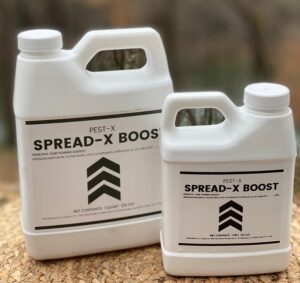
To get the most of your treatment, add SPREAD-X BOOST to your tank mix along with the Maxxthor. Boost is an adjuvant, also known as a wetter spreader or spreader sticker. It basically makes water and the mixture more “slippery” so you get better coverage. Treatments will spread 2-3 times wider and penetrate deeper.
The following short video summarizes why Boost can help deliver your treatment to where it matters the most. And this is extra helpful when treating homes with siding like vinyl, aluminum and stucco where clovermites are likely hiding.
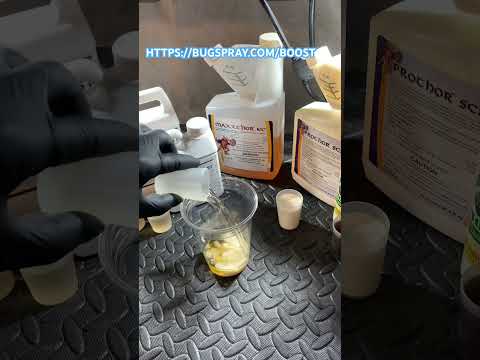
Add no more than the rate you’re applying the Maxxthor so in this case, if you’re adding 2.5 oz of Maxxthor to the hose end sprayer, add 2.5 oz of Boost too before adding water. If you’re adding Maxxthor to a pump sprayer at the rate of 1 oz per gallon, use 1 oz of Boost.
And don’t spray in the middle of the day; treat late in the day close to sunset so the treatment can dry without direct sunlight. UV light on the Boost can stress plants if the temperature is 85 degrees or higher so treat 2 hours or less before sunset to reduce sunlight stress.
BEST SPRAYERS FOR TREATING APHIDS
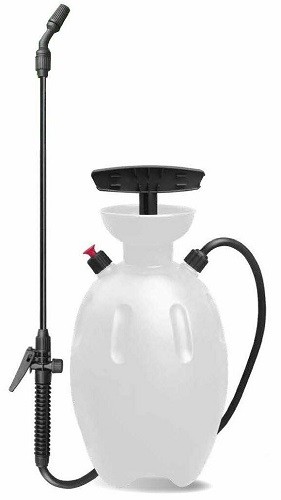
For most any small job (15 foot high or less trees and shrubs) can be handled using our standard PUMP SPRAYER.
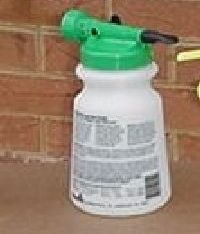
When treating 5 or more trees or shrubs OR if you need to reach up high, our GREEN TOPPED END SPRAYER will prove more efficient. It uses the power of your garden hose to spray which is generally 15-25 feet making it plenty powerful to get big jobs done quickly.
Make no mistake about aphids. They are a small and fragile insect which are easy to kill but due to their unique reproductive capabilities, aphids will present a persistent and annoying pest in the garden or general landscape. Their chewing and piercing mouth parts will cause stress and damage to plant life.
Remember to that disease can be spread by aphids, their honeydew excretions will attract a lot of other insect pests in and around the home and weakened plants will become that much more susceptible to heat, drought and other stresses during the growing season. For all these reasons and more you need to address aphid infestations with the intent to eliminate and keep them away for good.
CONTACT US
Give us a call if you need further help. Our toll free is 1-800-877-7290 and we’re open Monday through Thursday, 9:00 AM to 4:00 PM (Eastern Standard Time).
Email questions here: https://bugspray.com/about-us/contact-us
Order online and get a 5% discount! We ship fast with 99.9% of all orders shipping within 1 business day!!
Learn more about BUGSPRAY.COM and why it’s never been easier or safer to do your own pest control.
Please show your support for our business by purchasing the items we recommend from the links provided. Remember, this is the only way we can stay around to answer your questions and keep this valuable web site up and running. Thanks for your business!
Leave a Reply