HOW TO CONTROL CICADAS AROUND THE HOME
Cicadas are large insects that appear in late spring/early summer and make a lot of noise. Known around the world for being on a “17 year cycle”, many people believe they’re a sign of the “end times”. In fact cicada’s will emerge most every year. For this reason they’re commonly seen in large numbers and when active, their song will be heard all over the United States as summer arrives.
Related articles: CICADA KILLERS GRASSHOPPERS KUDZU BEETLES LOCUSTS
Cicadas can fly and will commonly infest residential neighborhoods. Even though they don’t sting, most people are afraid of them. Their large size seems to scare people and when one is seen, it usually gets a lot a attention.
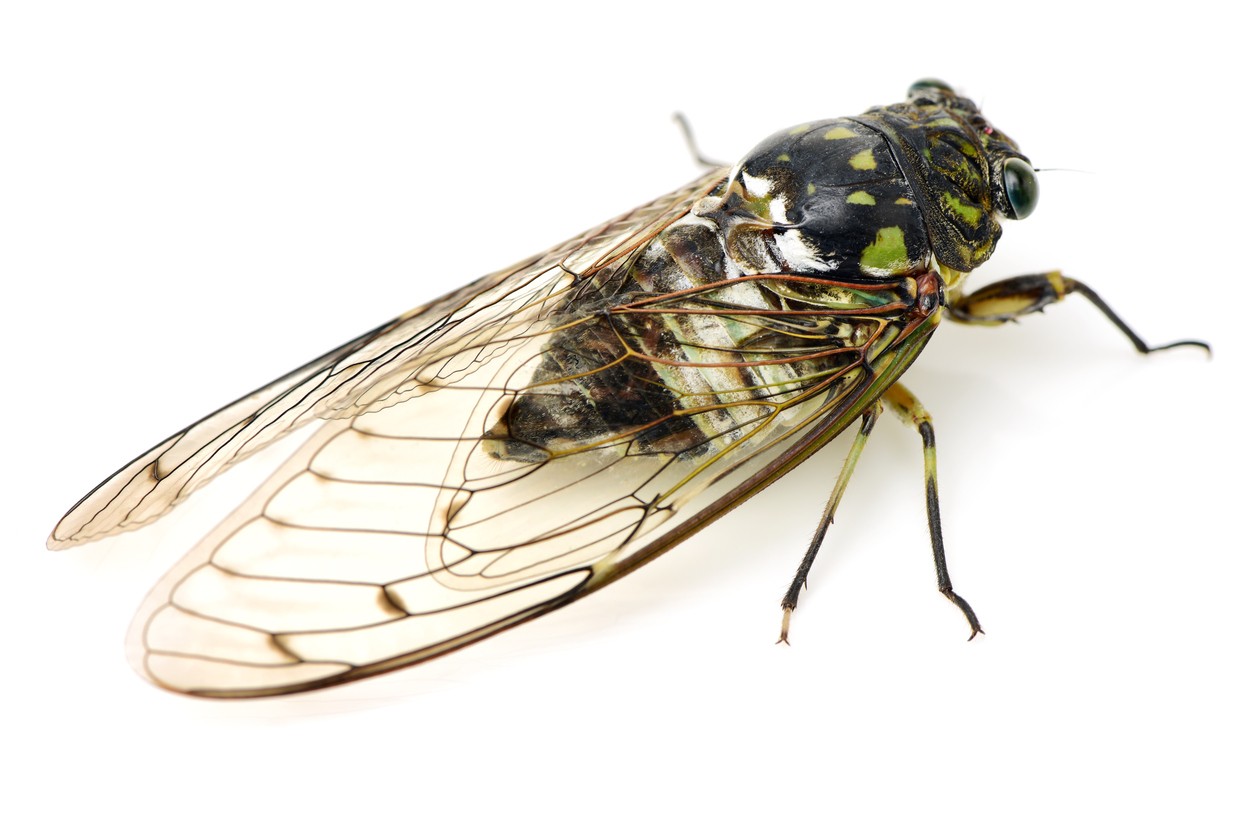
Cicadas are not attractive. They have an almost alien look with bulging eyes and a hard, shell like skin. Large and long clear wings don’t hide their short, stubby body. These insects are only active for a few months each year but when present, you know they are here!!!
CICADA BIOLOGY
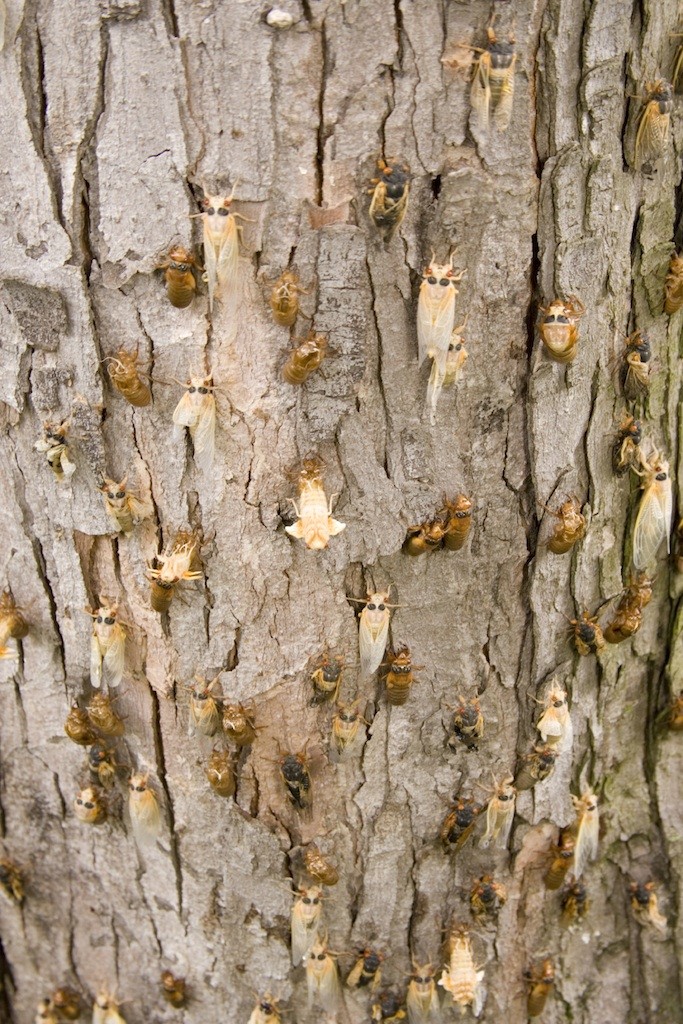
Cicadas are 2 1/2″ to 3″ long and easy to see. When active, they will fly from tree to tree in search of a mate and food. Adult cicadas eat mostly sap. Once females have mated and want to lay eggs, they seek small branches of trees and shrubs for egg laying.
The plants targeted will become food for their young. Cicadas will commonly fly from tree to tree, living their complete adulthood in just a few months. When they are spent and die off in late summer, adult cicadas will be seen on the ground being preyed upon by birds and other insects. This video shows what they look like up close.

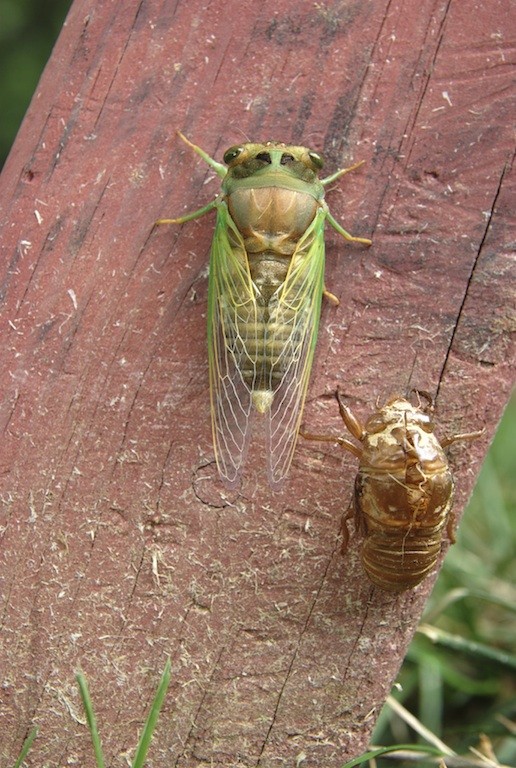
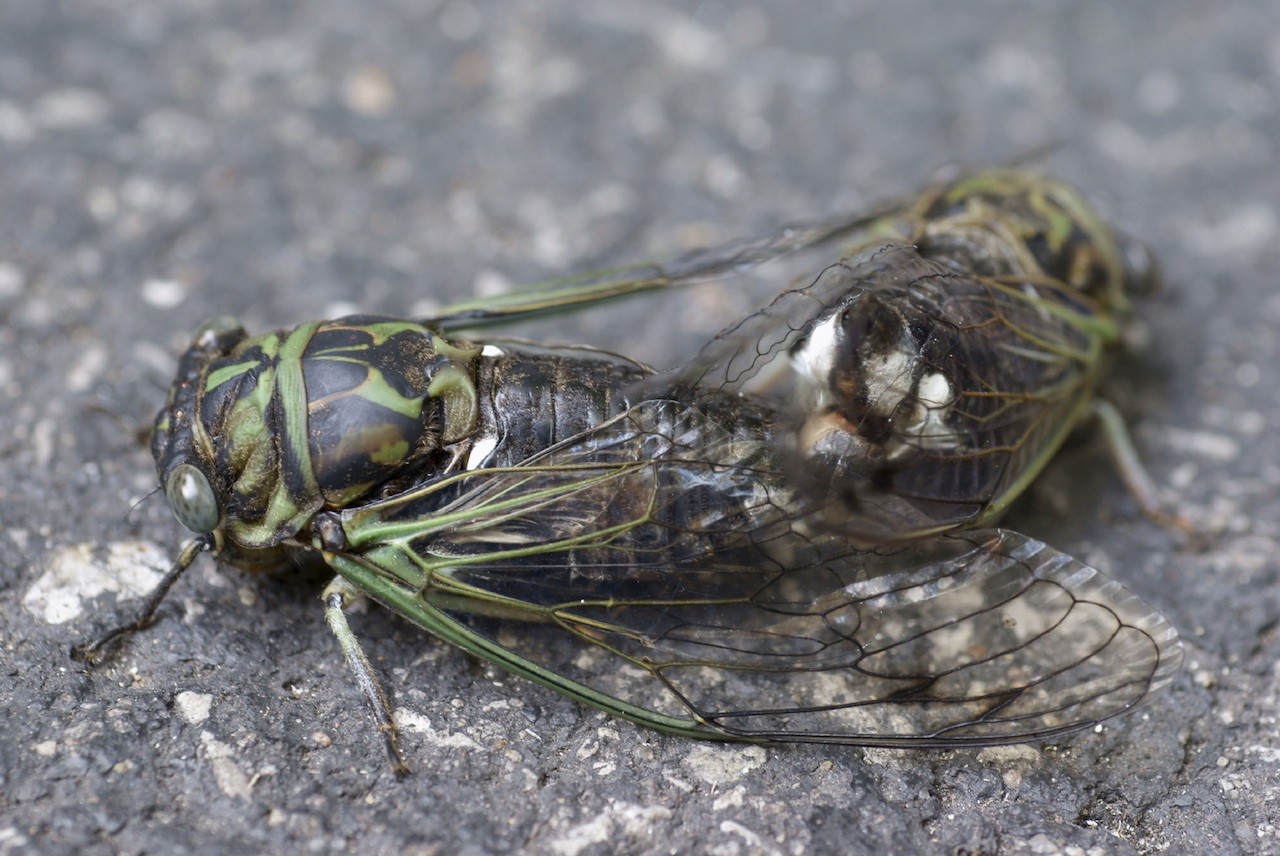
Cicadas are grouped into two main species; Dog Day and Periodical. Dog Day Cicadas are mostly green and black. There are many sub species of Dog Day Cicadas throughout the United States. These are the more common of the two species and appear annually throughout the country. These fully mature in 2-5 years and at least 15 sub species have been identified.
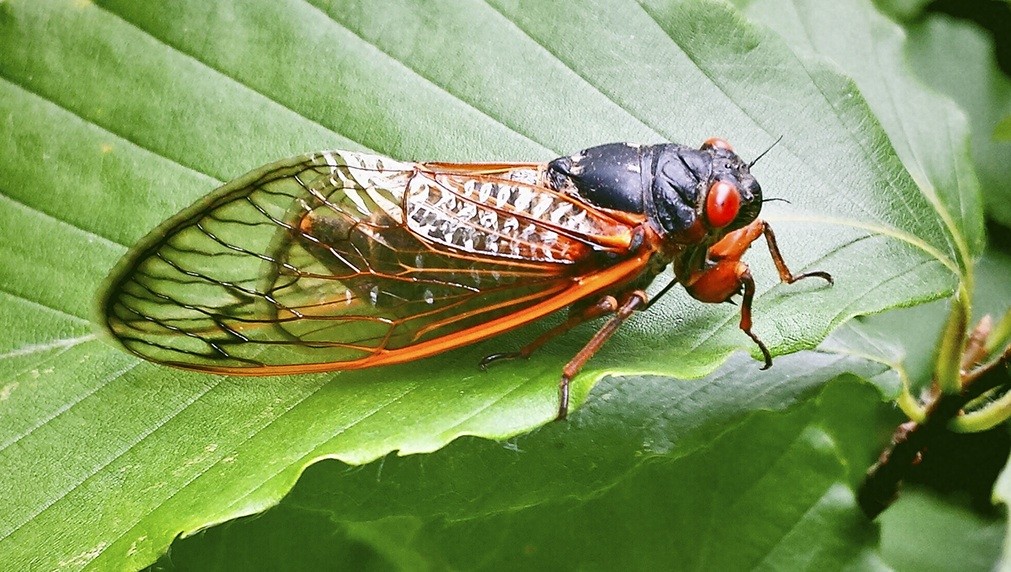
Periodic Cicadas are mostly black with red eyes. There are at least 5 sub species of Periodic Cicada and they don’t seem to be as active from year to year as the Dog Day Cicada. Periodic Cicadas take much longer to fully develop; southern species seem to be on a 13 year cycle while northern species seem to take about 17 years to complete their life. The exact range of either species is not known but clearly the eastern half of the Unites States seems to have the bulk of the populations.
Both species make noise. This noise is a loud mating call that will be sung over and over again as summer starts. Male cicadas have large tracheal air sacs in their abdomen and thorax which is used to push air through vibrating organs located on their sides. These sounds will start virtually every morning and continue through most of the day. Though annoying, the sounds of cicadas are not damaging. However, their egg laying and larval development can stress and injure many types of trees and shrubs.
Female cicadas will lay 500 or more eggs once gravid. These eggs are deposited through a needle like injector, called an ovipositor, and 10 to 20 eggs are sent into likely host trees when she makes her injections. Females will choose small branches and twigs for making egg deposits.
Though large hardwoods and other mature, healthy trees usually aren’t hurt by this activity, young plants can suffer.
The following “short video” summarizes what to expect from Cicadas during the summer along with the CICADA KILLERS who will likely follow.

Since the females will inject through several locations once they find a suitable limb or branch, these same branches will probably die in a few months due to the excessive punctures.
Eggs will hatch in 1-2 months and larva will emerge falling to the soil. There they will burrow and feed on the fine shallow root system of the host tree or shrub. As they grow, the larva will move deeper and deeper into the ground where they will stay till fully mature.
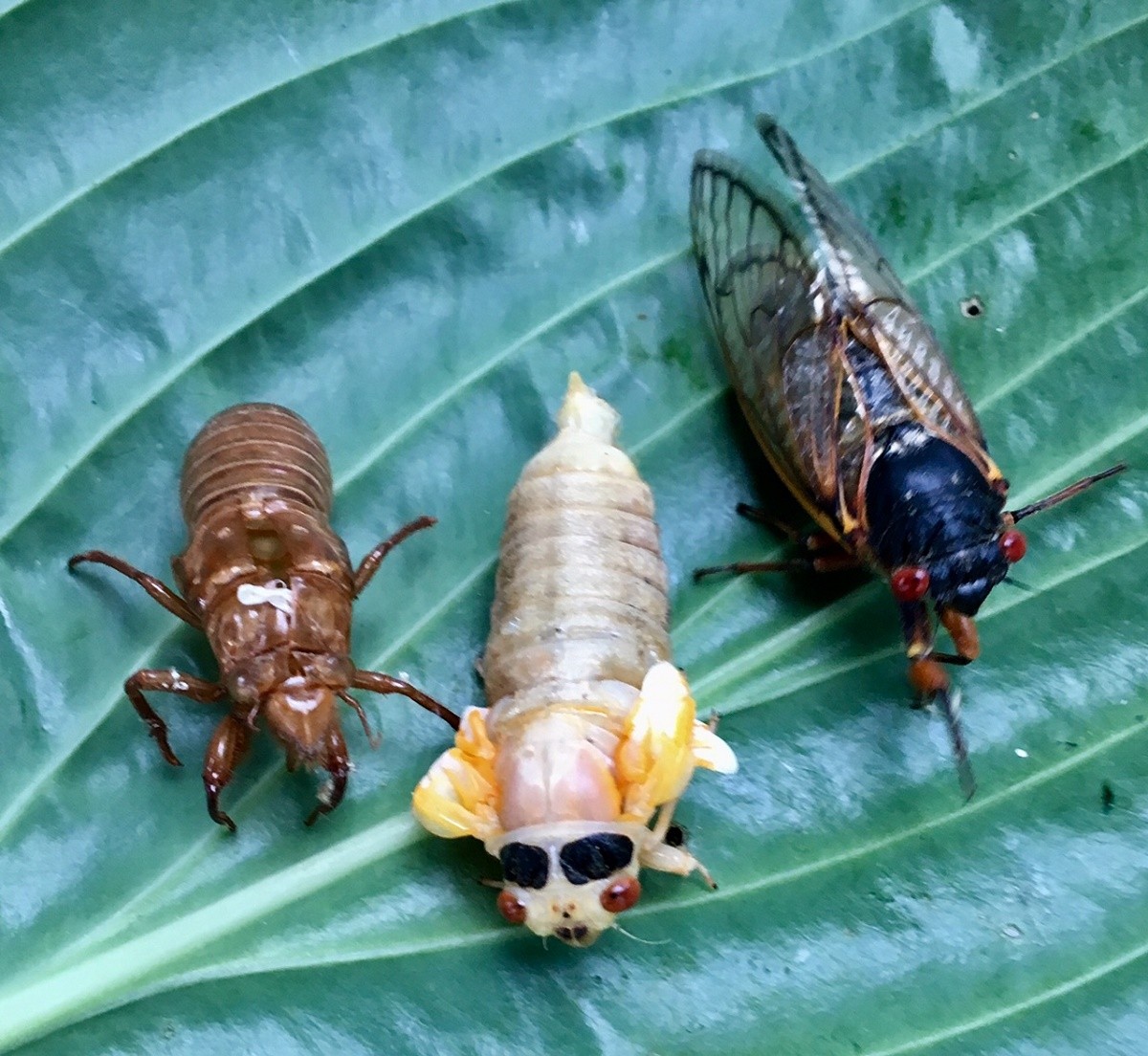
Regardless of the species, young cicadas will feed on the sap of the host tree and molt through their “instars” or stages of development. As they reach maturity, they will crawl out of the ground and up the trunk of the host tree. From there they will emerge from their last instar as an adult and fly off to mate and start the cycle again.
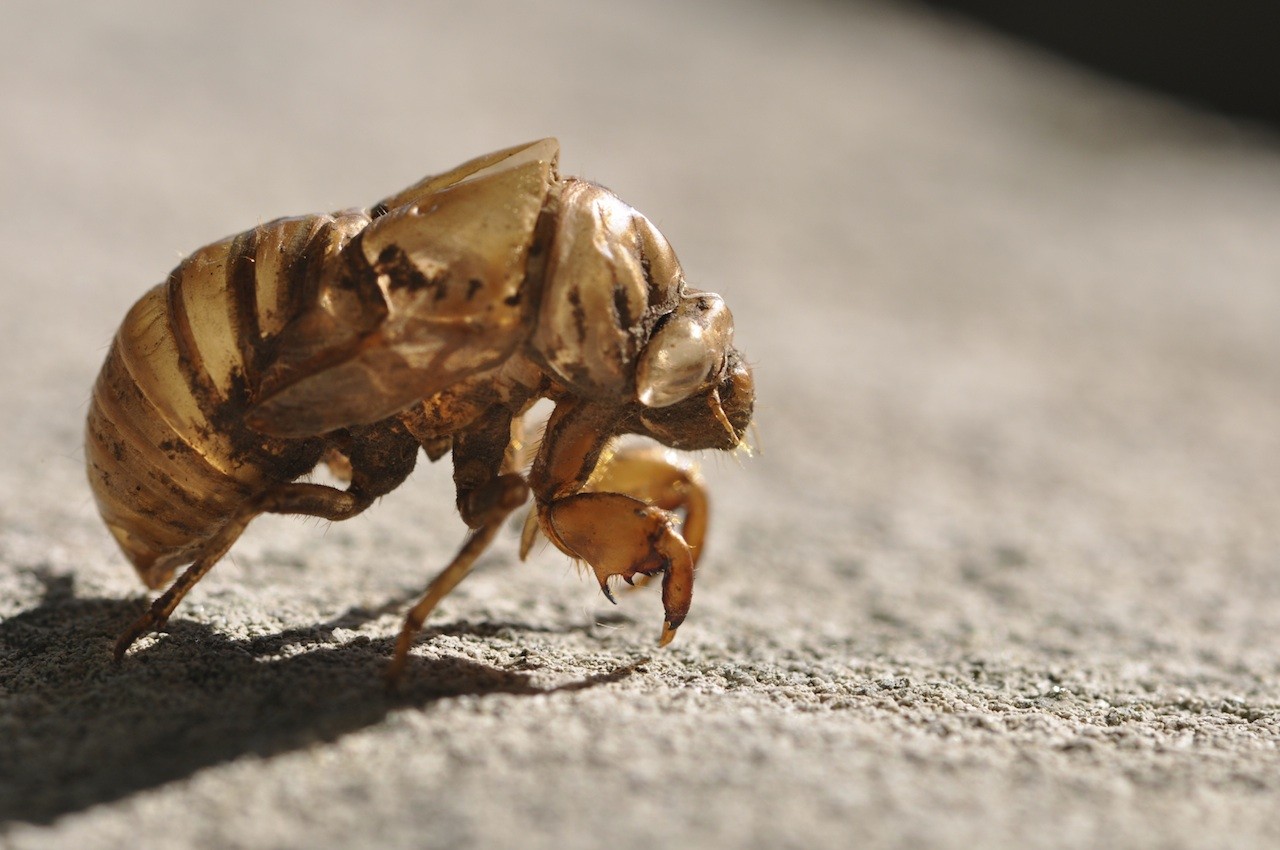
They leave a brown “skin shed” on trees and shrubs which will remain for some time if undisturbed. This brown skin was their shell and can be useful at identifying just which trees and shrubs cicadas are targeting. This clue can prove to help identifying stressed trees as well as alerting you to the species of tree which is being targeted. Once this information is known, you will be better prepared for both controlling local populations as well as protecting similar or neighboring trees so they too don’t get infested and damaged.
HOW DO CICADAS CAUSE PROBLEMS?
As described above, cicadas are a problem for two main reasons:
1) The sound they make.
2) The damage they do to trees and shrubs. There are many treatment options available for keeping them and for killing existing populations.
First, determine what it is you are trying to accomplish regarding your local problem. Next, choose one of the treatment options listed below for the type of problem you want to treat.
BEST SPRAY TO REPEL AND KILL CICADAS
If you have cicadas active on your property and specifically, any of your trees, consider bark and foliage treatments. Most any tree can handle a few cicadas living in the roots but if you have more than 10 emerging annually, it will progressively get worse leading to tree stress as well as other pests like CICADA KILLERS.
For this reason it giving the affected tree a few treatments would to both kill and repel new ones would be smart.
The strongest treatment is a combination of MAXXTHOR EC and XEMPT BOOST. This treatment will kill cicadas as well as repel them and can be applied throughout the landscape and up onto all affected trees.
The following “short video” (less than 60 seconds long) will show how to set up our GREEN TOPPED HOSE END SPRAYER ideally designed to reach up high using the power of your garden hose.
Keep in mind this VIDEO SHOWS USING 2.5 OZ OF MAXXTHOR WHICH IS CORRECT. FOR CICADAS, YOU’LL NEED TO ADD 1 OZ OF SPREADER STICKER TO THE TANK MIX TOO!
So to recap the mixture rate, it will be 2.5 oz of Maxxthor in the sprayer along with 1 oz of the Spreader Sticker.
Ideally treating before they emerge in June would be ideal but treating in July/August will help just as well. Spray in the evening 1-2 hours before dark so the spray will have a good chance to setup and cure overnight.
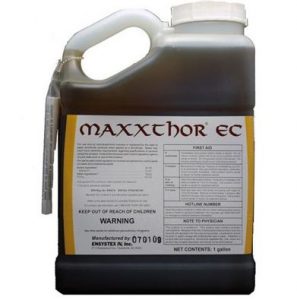


To get the most of your treatment, add SPREAD-X BOOST to your tank mix along with the Maxxthor. Boost is an adjuvant, also known as a wetter spreader or spreader sticker. It basically makes water and the mixture more “slippery” so you get better coverage. Treatments will spread 2-3 times wider and penetrate deeper.
The following short video summarizes why Boost can help deliver your treatment to where it matters the most. And this is extra helpful when treating big strong pests like Cicadas OR where they like to rest and relax like trees.

Add no more than the rate you’re applying the Maxxthor so in this case, if you’re adding 2.5 oz of Maxxthor to the hose end sprayer, add 2.5 oz of Boost too before adding water. If you’re adding Maxxthor to a pump sprayer at the rate of 1 oz per gallon, use 1 oz of Boost.
And don’t spray in the middle of the day; treat late in the day close to sunset so the treatment can dry without direct sunlight. UV light on the Boost can stress plants if the temperature is 85 degrees or higher so treat 2 hours or less before sunset to reduce sunlight stress.

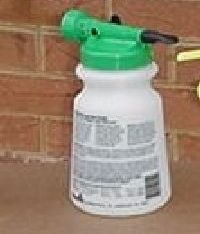
Though you can use a standard PUMP SPRAYER to apply the mixture, its generally best to use a HOSE END SPRAYER. Using the sprayer below with the nozzle removed will allow you reach up as high as your garden hose can spray normally.
For highest reach, get one of our NO PUMP SPRAYERS. This unique sprayer is simple in design yet very good at what it does. Its super easy to use and is one of our “favs” for applying insecticides to your homes exterior and landscape (its too powerful for use inside).
Ideally suited for reaching heights of 30+ feet, it has no moving parts other than the valve you hold for spraying and the adjustable brass “bullet” nozzle.
This sprayer is essentially a tank that can hold water, chemical and up to 130 psi of air. The top lid has a clamp and rubber gasket that seats on the “inside” of the sprayer so as you fill it with air, the seal will naturally remain in place, nice and tight.
The top has 3 “ports” (pic below). The port to the far left is used to fill the tank with air. Using any electric air pump (the kind you would use the fill tires on your car), you can safely pressurize this sprayer up to 80 psi. The tank is rated for up to 130 lbs but the relief valve will only allow you to fill it to 80-90 psi before it starts to release. This happens as a safety precautionary action.
Give our video a watch for all the details on how it works and how to use it.
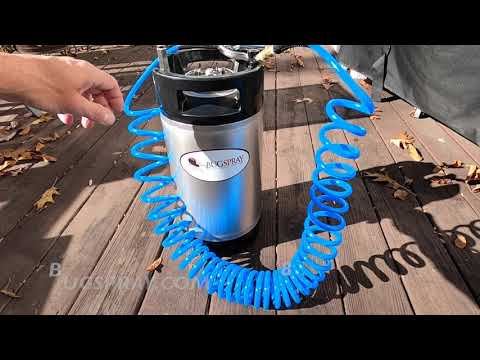
For normal use around the home, 50-60 psi should be enough for you empty the liquid from the 2.5 gallon tank assuming you only add 1 gallon of mixed product. True, the sprayer can “hold” 2.5 gallons of liquid but you need room for the air. Our tests show that 50-60 psi will pump out an entire gallon of spray allowing you to reach 25-30 feet heights.
For reaching 40+ feet or higher targets, pressurize the sprayer to 80 psi and again, mix up only what you plan on using and no more than 1 gallon of mixed solution at one time so the tank has enough room left to store all the needed “air”. One charge of 80 psi is enough to get the entire mixture to spray out so you don’t have to be concerned about constantly recharging.
The 5 GALLON NO PUMP can hold over 2 gallons of mixed material and can perform equally as well.
Remember, YOU WILL NEED AN AIR COMPRESSOR POWERFUL ENOUGH TO FILL THIS SPRAYER!! WE RECOMMEND ONE THAT CAN DO AT LEAST 100 PSI.
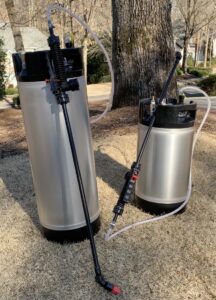
(10% OFF WHEN ORDERING ONLINE)


5 GALLON SETUP (remember to only fill it with 2.5 (3 gallons max) if you want one tank of air to pump it empty.
(10% OFF WHEN ORDERING ONLINE)
Once applied, the Maxxthor will both kill and repel cicadas. Its odorless, won’t hurt any plants and will provide 2-4 weeks of residual. But if the local population is large, expect to treat 1-2 a week during the peak activity. This could go on for 2-4 weeks so be prepared to defend all plants and shrubs you want to keep protected.
Though male cicadas will land on just about any plant, females ready to lay eggs tend to target plants which will be best suited to become a food supply for hatching young.
By treating these plants before the females start egg laying, you will be able to keep cicadas away and avoid tree damage. Treating as many of your plants will also repel cicadas so they don’t forage on your property which in turn will lead to less noise.
GARDEN SAFE CICADA SPRAY
If adult cicadas are targeting your vegetable or fruit garden in search of sap, use VEGETABLES PLUS PERMETHRIN to treat plants you want to protect. Mix 2 oz per gallon of water and like the Maxxthor, expect to treat once every 1-3 weeks but if local pressure is extreme, treat more frequently.

ORGANIC GARDENING SPRAY FOR CICADAS
For organic gardeners, protect plants with MULTIPURPOSE INSECT KILLER which is approved for use on organic gardens. Mix 6 oz per gallon of water and look to get 1-2 weeks of residual. The good news is you can spray this active daily if needed. Multipurpose Insect Killer can be sprayed over any plant and will both kill and repel unwanted cicadas.
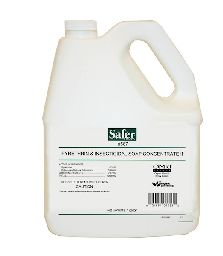
FAST KILLING CICADA WASP FREEZE
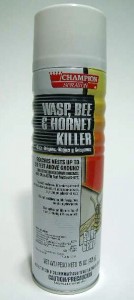
For anyone who wants a “quick kill” option, go with our HORNET KILLER. Its not a practical way to control cicadas but it does work. And for anyone afraid of them, you may want to keep a can around for use as needed. It can reach up to 15 feet and is good for use around the home and yard. Just don’t use it inside; it will make a mess!
BEST TREE SYSTEMIC FOR CICADAS
Another way to protect local trees and shrubs is by using a systemic. These are products that are watered into the ground around your plants. Once in the ground deep enough, the plants root system will absorb the active and distribute it throughout the plants limbs and leaves. Insects which target the plant to feed on sap will ultimately ingest some of the active and die.
Systemics are highly effective once distributed and since treatments can last a year, a good way to reduce plant loss – especially when the target pest is living underground out of site. The only drawback with systemics is that they won’t affect adult cicadas which have already fed. Additionally, they take a good 30-60 days to distribute throughout the plant so it’s important to get applications done in the spring and early summer ahead of the hatching larvae cicadas which arrive late in the year.
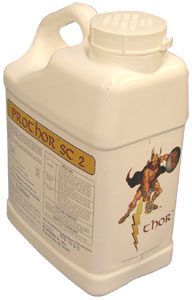
The best systemic for long term control of any insect is PROTHOR. Commonly used for TREE BORERS, TERMITES, APHIDS, WHITEFLIES and many other pests, Prothor is easy to use and cost effective. Its highly recommended to use this on any plant, tree or shrub you want to protect.
As a general spray for foliage and tree bark, use .5 oz per gallon of water. Foraging cicadas will walk over the non-repellent spray, pick up a lethal dose and die in a few days. But the best way to use Prothor is to mix .1 to .2 oz per 1 inch of tree diameter. To get a good estimate of your trees diameter, measure the circumference 4.5 up and then divide this value by 3. The circumference is like taking your waist measurement; you’ll have to wrap a tape measure around the tree and you’ll want to do this 4.5 feet up from the top soil. So if you measure the circumference to be 36″, you’d then divide this value by 3 to get its diameter of 12″. Once you know that value, you’d know to use 1.2 to 2.4 oz of chemical in 3-5 oz of water applied inside the trees drip line by soil drenching.
Cicadas are a sure sign summer has arrived. Their mating call will be heard throughout the day and will be loud enough to keep you from sleeping late. More importantly, females can damage host trees with their egg laying. Their piercing ovipositor can cause host plants to loose valuable sap and other fluids. Treat susceptible plants to keep cicadas away. For plants which are showing signs of hosting cicada larva, apply some granules around their base. These granules will kill hatching larva as they fall to the ground and try to borrow beneath the surface in search of plant roots. Intercepting the larva before they get established will help keep your plants healthy and happy. Keep some Hornet Freeze close by for any cicadas you want to kill off quickly. Though adult cicadas are only around for a few months during the summer, cicada larva will be feeding on host plants for several years. Don’t give them a chance to get established; treat local plants to help keep local populations in check.
CONTACT US
Give us a call if you need further help. Our toll free is 1-800-877-7290 and we’re open Monday through Thursday, 9:00 AM to 4:00 PM (Eastern Standard Time).
Email questions here: https://bugspray.com/about-us/contact-us
Order online and get a 5% discount! We ship fast with 99.9% of all orders shipping within 1 business day!!
Learn more about BUGSPRAY.COM and why it’s never been easier or safer to do your own pest control.
Please show your support for our business by purchasing the items we recommend from the links provided. Remember, this is the only way we can stay around to answer your questions and keep this valuable web site up and running. Thanks for your business!
Patricia Agee says
They are on their way to this area and this information will be helpful to help not drive me crazy and how to cut down their numbers.
JOAN VARA says
Our trees are looking like they are dying. There are so so many. Can we get the county to come and spray our street? Will the bug spray hurt other plants or pets?
Tech Support says
In general, there are no government agencies spraying for cicadas at this time.
And since none of the products we have listed above will pose a hazard to people or pets when used properly, you can definitely start doing some treating to reduce the local population and save your trees without putting pets or people at risk.
So if want to start reducing the damage foraging cicadas will do, you’ll need to start by spraying live adults with the Cyonara RTS listed above.
Next, apply Dominion 2L to the soil around any tree or other plant you want to protect. Dominion is a systemic that will permeate throughout the plants foliage, roots, bark, etc. so that any insect which tries to eat the tree or plant will die.
Here are links to these items in our cart. Please show your support for our business by purchasing the items we recommend from the links provided. Remember, this is the only way we can stay around and be here to answer your questions and keep this valuable web site up and running. Thanks for your business!
Cyonara RTS: https://bugspray.com/catalog/insecticide/liquid/cyonara-32-oz-rts
Dominion 2L: https://bugspray.com/catalog/insecticide/liquid/dominion-2l-termiticide-insecticide
Roberta Atlerman says
Which product is best to buy to kill the cicada killer for the lawn? I seem to get them every year and it gets worse and worse, digging up my grass and around the plants too.
Tech Support says
Roberta,
The article above is for the Cicada’s and not the Cicada Killer. So if you meant the Cicada Killer, review our article which details what you need to do. Basically you should dust each hole, let the treatment sit for a day and then spray the entire yard at least twice to kill off any hatching eggs later in the summer.
More information on our products for this pest can be found on our site where you can also order. Alternatively you can call to place an order at 800-877-7290, extension 1:
Cicada Killers: http://www.bugspray.com/articles99/cicadakillers.html
Tech Support
U-Spray Bugspray
http://www.bugspray.com
1-800-877-7290
PS: Are you signed up for our informative twice a month Pest Report Newsletter? More info here: https://bugspray.com/bugspray-pest-report
Michelle says
This was very insightful. This is my first time since moving to Texas that I’d ever heard these bugs. I’d seen them flying but thought they were some type of mutant fly or a dragon-fly crossbreed. I recently moved into an apartment community lined with trees. And I wondered [bird] what was making all that noise, and why I had not seen/heard any of the little birds from earlier in the year – now I know why. Thank you for what you do! Keep at it. Whenever I move into another house with a yard, I’ll keep this info in mind. Again thanks.