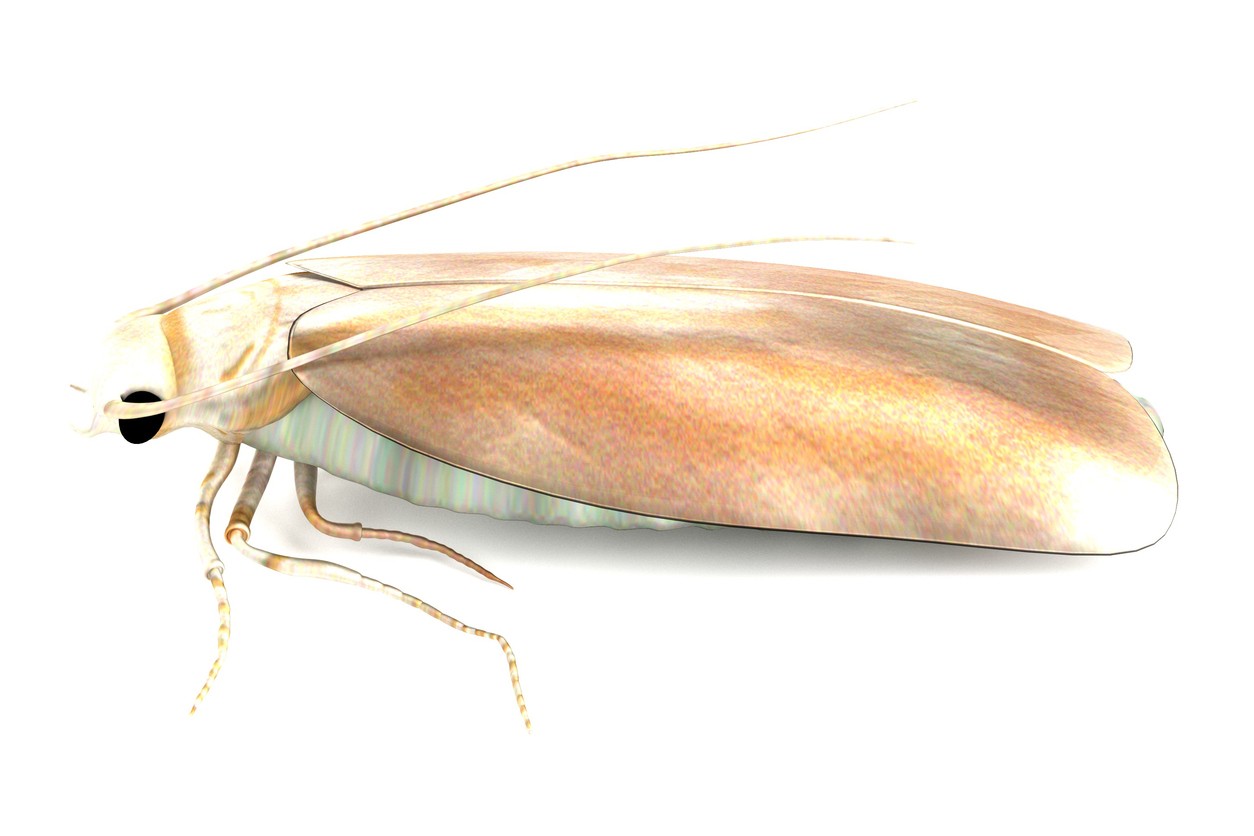
Clothes moths have long been a problem for mankind. It is believed they have been around as long as there have been animals with hair. Natural fibers are what clothing moths feed on; they have a unique ability to turn keratin, a protein available in wool, fur, horns and many other natural materials, into food. Clothes moths possess a special enzyme which does it work in the digestive track of the moth.
Though they prefer natural hairs and fabric fibers, clothing moths have been found to eat just about anything. The list includes but is not limited to snake skin, beef, just about any type of meal, milk products, finger nail clippings, human hair, pet hair or dander, wool, cotton, silk, furniture, insulation, carpets – both natural and synthetic, leather, cork and bees wax.
Though clothes moths appear to eat most anything they can find, it this does not mean they are able to live and prosper on such diets. Clearly some of the above items on which they feed are better suited as food items and some are not. However, the moth will take advantage of that which is available; a variety is not needed, just a good supply of something which has their needed nutrients.
Related articles: BLACK CARPET BEETLES CARPET BEETLES CIGARETTE BEETLES SILVERFISH
CLOTHES MOTH BIOLOGY
Clothes moths seem to prefer fabric which is dirty or stained. They are particularly attracted to carpeting or clothes which has human sweat, urine, milk, coffee, gravy or other liquids which have spilled on them. It appears they are attracted to these areas not because of what spilled there but because the spill contains moisture – a vital need for most insects. Since moth larva do not drink water, their food must contain moisture from which they can extract their requirements.
This process is unique to several insects; clothes moths will produce a small frass like pellet which is excreted during the process of moisture removal. This frass is commonly found in carpeting or clothing where infestations have been active for some time. This behavior supports why clothes moths will find their way to our clothing, carpeting and furniture. These three not only contain the foodstuff clothes moths need to eat but generally will have all types of food and/or water based materials spilled on them. Their dry pelleted excrement is free of all moisture since the larva is able to use it all in order to remain both healthy and moist.
CLOTHES MOTH LIFE CYCLE
Clothes moths develop much like any other insect. Eggs hatch larva which feed. Once they get their fill they pupate where they undergo metamorphosis to emerge as the adult. Adults do not eat; male adults look for females and adult females look for a place to lay eggs. Once their job is done they die. Contrary to what most people believe, adult clothes moths do not eat or cause any damage to clothing or fabric.
It is the larva which is solely responsible for this; larva spend their entire time eating and foraging for food. If they find enough close to where they hatch they will spend their time eating and very little time foraging. If conditions are not providing them with enough food, larva will become mobile. They will travel as far as they have to in order to get proper nutrition.
Both adults and larva prefer low light conditions. Most moths are drawn to light but clothes moths seem to like dim to dark areas over well lit rooms. If larva find themselves in a well lit room, they will try to relocate under furniture or carpet edges.
Since hand made rugs are a favorite food item for clothes moths, it is easy for them to crawl underneath and do their damage from below. They will also crawl under moldings at the edges of rooms in search of darkened areas which hold good food.
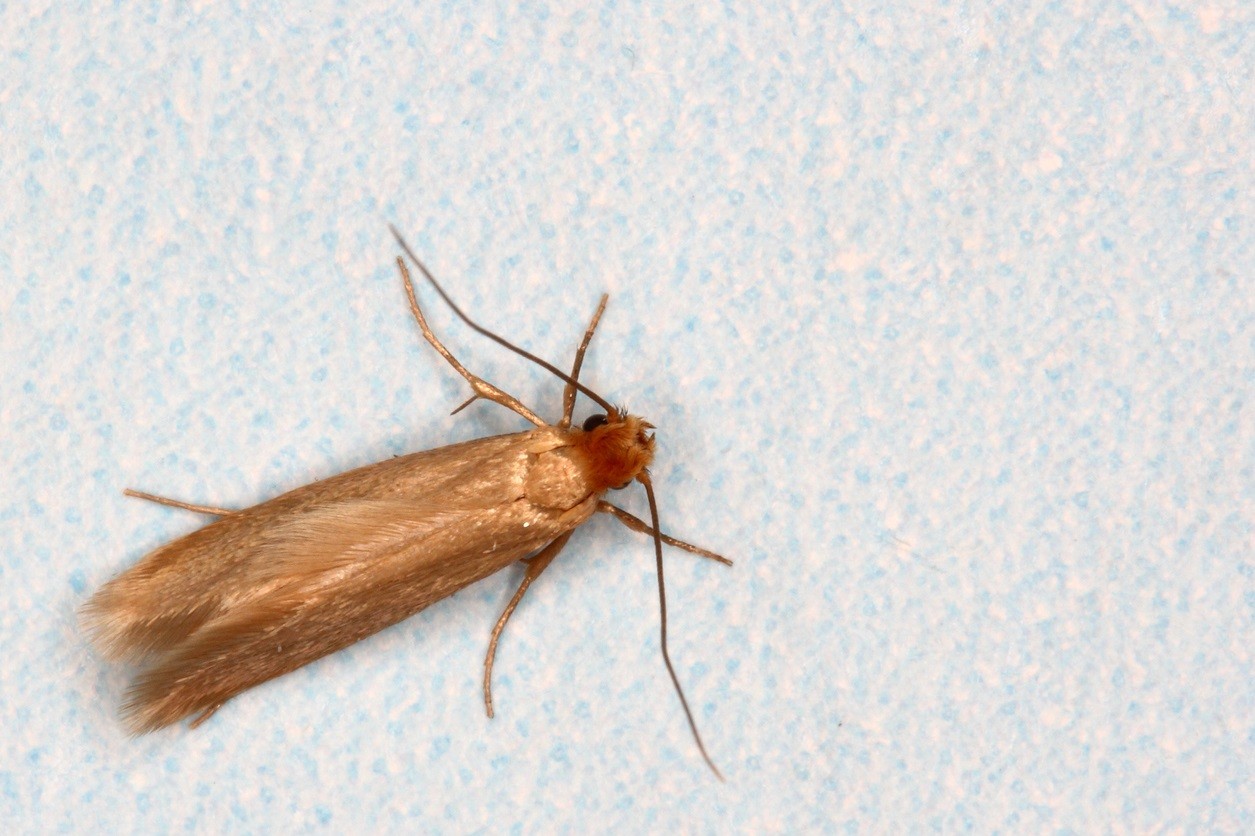
Clothes moths can easily be confused with pantry moths. They are similar in size, can and do infest side by side and are able to eat similar food. The big difference is where they end up infesting.
Though clothes moths are able to arrive at a home in some type of grain or meal, they will move to other parts of the home where fabric is found preferring this as a main food supply. Pantry moths will readily stay where food is abundant – in the pantry.
If you are not sure which one you have, be sure to go back to our article archive section and read our article about PANTRY MOTHS. It is in depth and informative and will allow you to distinguish which one you have and thus the appropriate course of control.
Another pest which is very common and does a lot of damage to clothing and other fabrics in the home is the CARPET BEETLE. If you have seen round small beetles around the home or hairy little caterpillars about 1/4 inch long, you might have some worth treating. Carpet beetle larva eat and cause a lot of damage like clothing moth larva but their treatment is different. Refer back to our article archive where you will find an in depth article about them and how to treat local infestations.
WHAT DO CLOTHES MOTHS LIKE TO EAT?
The most common clothes moth found to infest fabric in homes and places of business is the Webbing Clothes Moth. It is found worldwide and no manmade structure is missed when they’re out looking for a place to call home. Churches, homes, carpeting stores, warehouses, museums and just about any building has the needed material on which larva of these moths feed.
Though clothes moths prefer moist conditions, it is important to understand low humidity merely slows their development. A lack of moisture is most likely to keep them eating longer and pupating for a greater length of time too. But cold or heat will not eradicate infestations.
Female adults don’t like to fly; males will readily fly looking for females. These are small moths; adults grow between 1/4 and 1/2 inch. Their eggs are tiny most being under 1/24th of an inch long and barely visible. Females will lay several hundred during her life and egg placement will be carefully chosen in locations where they will have the best chance for survival.
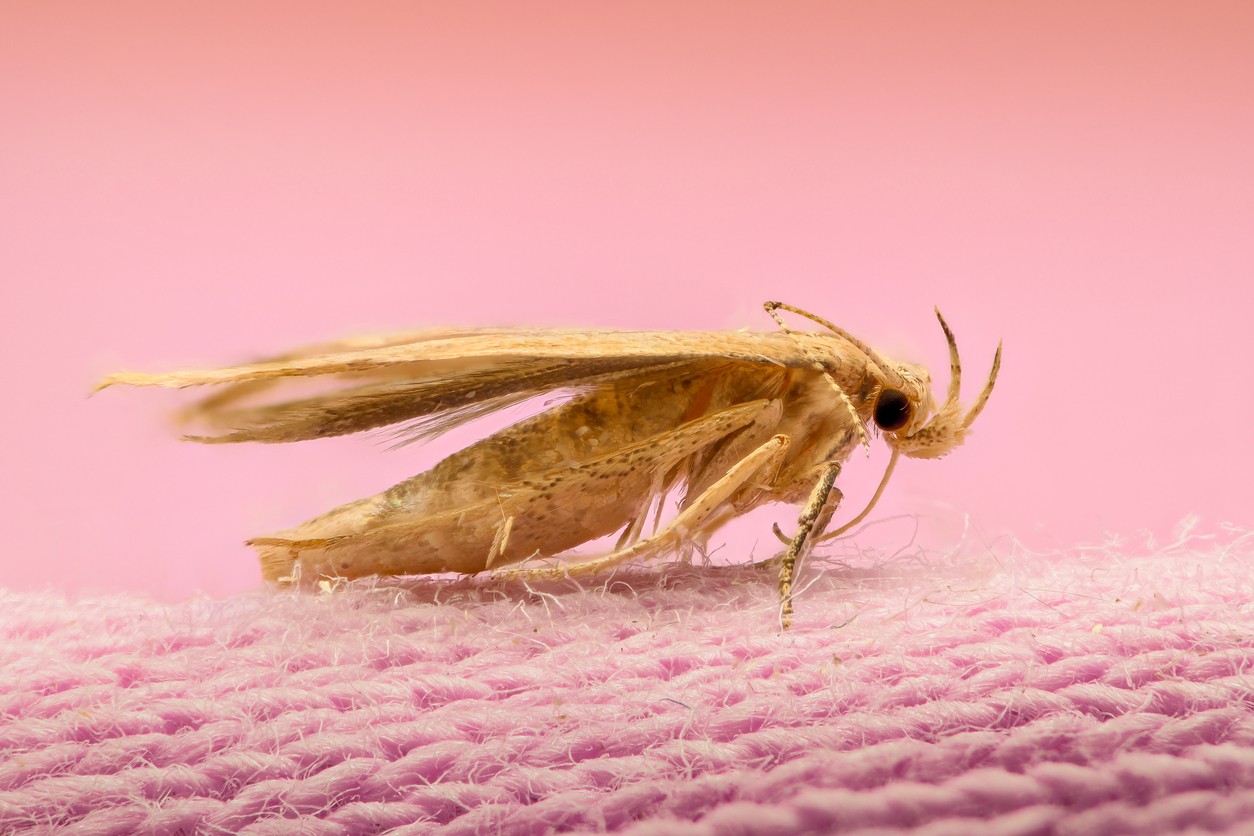
Clothes moths prefer loose ragged threads of fiber for egg placement and when laid, the eggs are attached with a glue like material making it almost impossible to remove with ordinary vacuuming or cleaning. This is an issue which must be dealt with when treating and will be discussed later in the article.
Once eggs hatch, the feeding larvae is what does all the damage. Like caterpillars found in the yard, clothes moth larvae will eat and eat slowly and precisely devouring even the most tightly woven fabric.
Unlike most insects, clothes moth eggs will hatch when ready regardless of the climate. Inside buildings this egg hatching will happen all year round making any time the proper time to treat suspected infestations.
Seeing adults is a good sign there are feeding larvae somewhere near. But adults aren’t eating or doing damage. They’re just looking for a mate and a good place to lay eggs. Since the egg laying and larvae feeding tends to be done out of sight in dark, well protected areas, it can be difficult to isolate nest sites.
WHAT STAGE DOES THE DAMAGE?
Clothes moths will eat pretty much any kind of fabric they find in the home. Cotton, silk and other natural fibers will be sought after as capable food and in general, they’ll look for these in hidden out of way locations.
Once eggs hatch, larva will immediately look for food. They are barely bigger than the egg and though have no eyes, they will easily find food.
If egg placement was good, larva won’t have to travel far to find a meal. If no food is present, they will crawl in search of dinner. The larval stage appears to be critical for understanding their development and control measures.
Larva can get their required food in under two months but if conditions are not favorable, larva will feed on and off for a long time taking years to develop. It has been found they can stay in this stage for over two years.
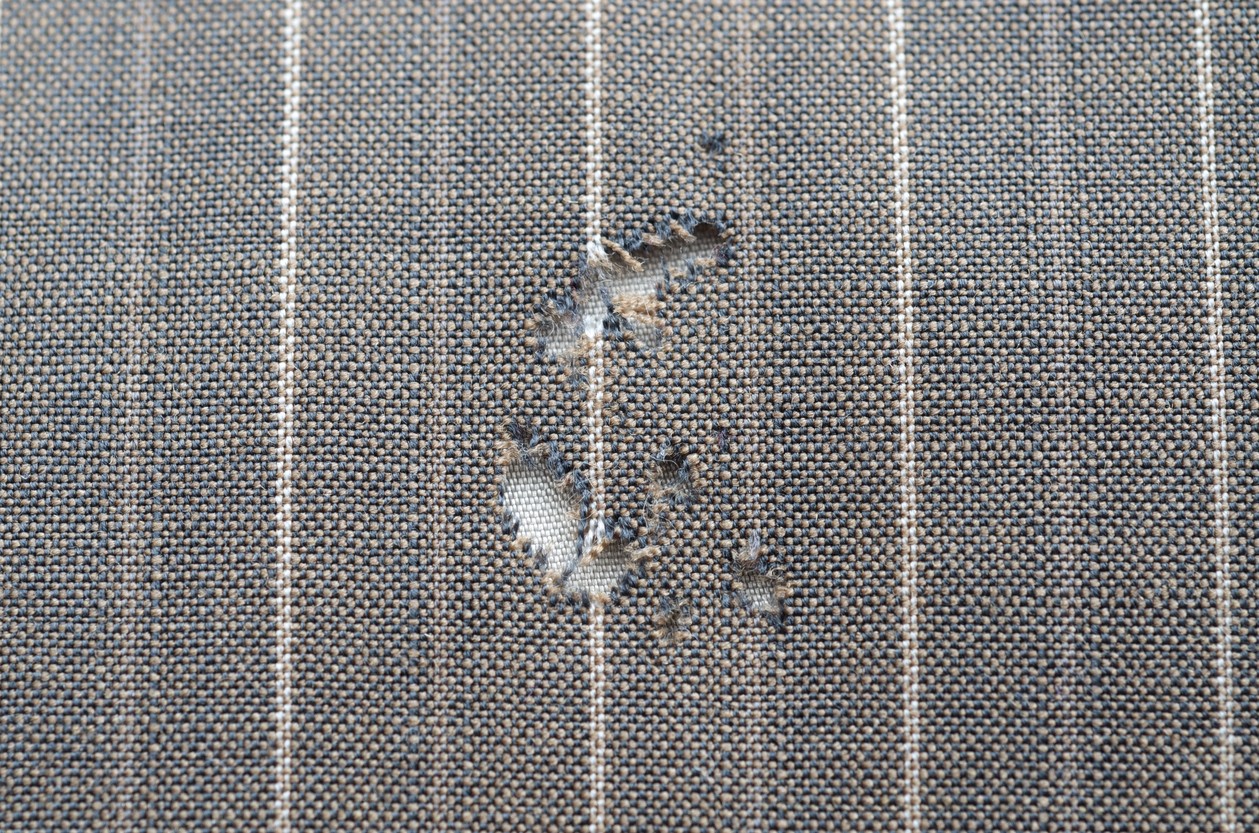
Besides doing a lot of damage during this time span, larva will mislead people into believing the infestation has been eliminated because no adults seen.
This can lead to improper treatment programs which serve to do nothing more than drag the process out. This will be explained later in the article.
Now it’s important to understand that even though larva do not create a case in which to live, they do spin a type of webbing around areas where they are most active. They generally will use this silken area as a place to sleep and remain protected but will venture away from it as needed to find food. Silk found on clothing or furniture is a sure sign of webbing clothes moths.
So whether it takes two months or two years, larva will eventually spin a cocoon in which they will change into adults. They will stay in these cocoon 1-2 months and then emerge as adults ready to mate and lay eggs. The average time it takes a local infestation to go from egg to egg is just about a year; the speed of development will depend entirely on food supply, humidity and temperatures.
HOW TO TREAT A CLOTHES MOTH PROBLEM
Once you know you have clothes moths, a thorough treatment should be performed. The rest of this article will cover everything needed. Our products are what professionals use so if you are inclined to treat your home, get the listed products from us so you will have access to 24/7 customer support and the best products on the market for this problem.
WILL CLOTHES MOTH TRAPS HELP?
The answer is NO. Traps will only make things worse. Once you know you have clothing moths, remove all traps. Why? The pheromones in these traps are so strong, they will easily “pull in” moths from outside the home. They’ll enter through any exhaust pipe for heating/air, chimney flues, doors, windows and more. In fact the use of moth traps for clothing moths, meal moths and other species is the single worse thing anyone can do once they know they have a problem.
So when can you use them? As a home owner, probably never because all they will do is lure some in.
And if you’ve using them for 3 months or more? Expect to have new moths tracking your home for 10-12 months. Moths are one of the most gifted insects at tracking pheromones and why they can “smell” your home for miles away. Even trace amounts.
To eliminate the pheromone scent, use our MINI MISTER and T.O.N.
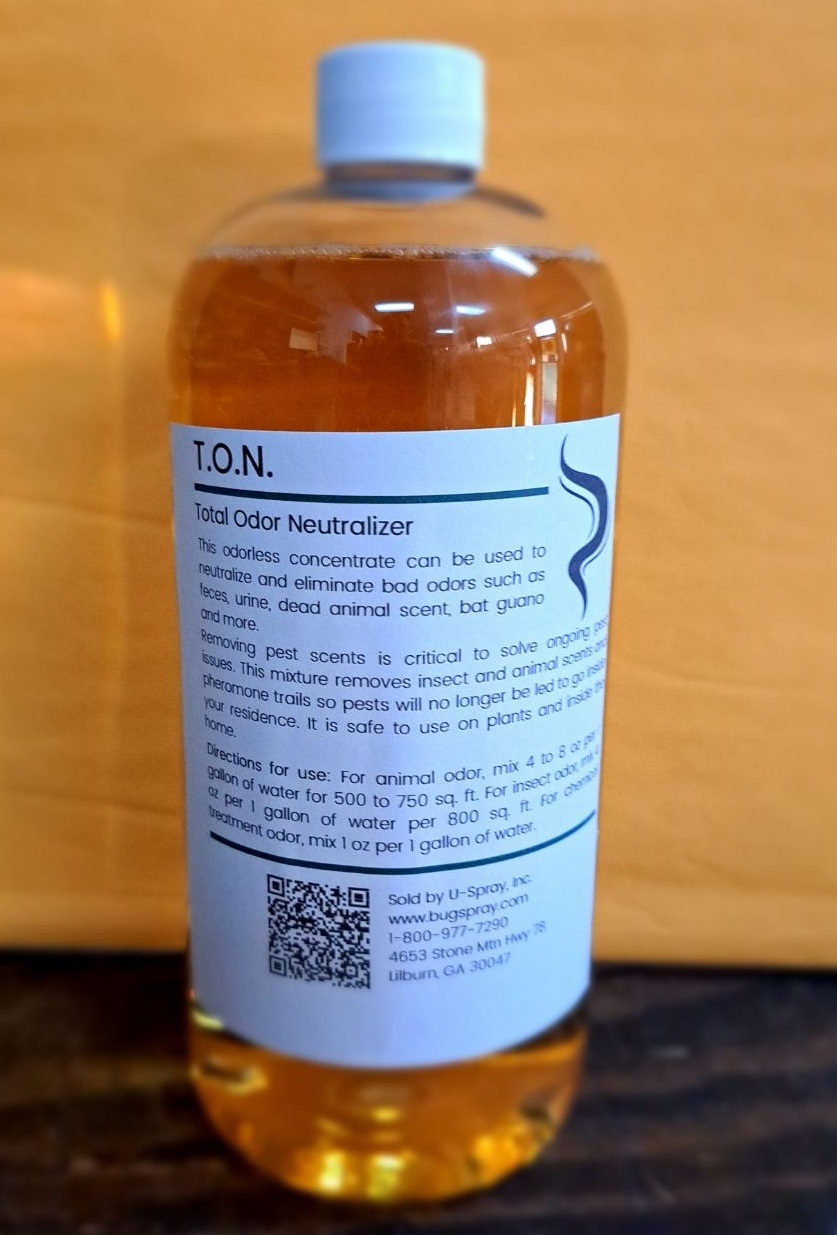


Total Odor Neutralizer is a concentrate used to neutralize the worse of odors you may have in the home including bat guano, feces, urine, cat sprays, dead body, smoke odor from a fire and insect pheromones. You can also add it to your chemical tank mix to eliminate noxious chemical fumes.
The following “short video” (less than 60 seconds long) summarizes how T.O.N. works and where you can use it.

Plan on using 2 oz per 1/2 gallon of water and spraying or wiping down all areas where the traps were placed.
Alternatively, using our MINI MISTER, you can easily mist over all surfaces without making a mess.
Super light mister ideally suited for use in the home for “sensitive” fabric, small apartments (1,000 sq/ft or less) or spot treating any piece of furniture, cabinet, bedding and more.
This fogger features a 12 oz holding tank (soft rubber), a rechargeable battery charged using the included USB cord, a locking switch which keeps it “always on” when misting along with a black “ulv” light so you can see clearly spots needing to be sanitized.
The following “short video” (less than 60 seconds long) gives a good summary of what makes the Mini Mister such a good tool for use in the home for regular pest control.
The “flow rate” is about 1-2 oz per minute and it will send the mist about 6 feet “out”.
The Mini Mister is well suited for treating walls, carpet and most any surface where traps were active. But remember, the pheromones in the trap will relocate and why we suggest treating the entire flooring and misting the walls of any room where traps were present.

Once the home is treated with T.O.N., you’ll see a huge drop off with active moths. With the scent deactivated, no more pheromones released means no more moths coming to your home.
WHAT TO DO BEFORE TREATING FOR CLOTHES MOTH
If you’re ready to treat your home for clothes moths, it would be best to do some house cleaning prior to doing the actual treatment. This will involve different things for different areas.
First, if you have activity in a closet around clothes or other stored fabric, this room will require a thorough vacuuming. You may even need to dry clean certain items. This process will help to remove moisture levels which we know clothes moths need. Make an effort to go through each piece paying particular attention to anything which is either valuable or left alone for long periods of time.
Fabric, whether clothing or bulk, can harbor infestations at different levels. Since larva will not readily migrate if the food supply is both close and abundant, you can easily miss nest locations and feeding sights. If you spend some time going through the piles of clothes and fabric you are most likely to find any droppings, webbing or even adults.
Finding clothes moth sign like this will definitely aid in control measures so pay attention when cleaning.
And if you decide to not wash or dry clean suspected infested clothing, make a point to vacuum the clothing directly. This may sound silly and the process will take some time. But it will prove to be a worthwhile investment.
Vacuuming will help remove larva, adults and their frass but eggs and pupa are almost impossible to remove which is why treating is paramount to get complete success. Their natural glue like excretions and cocoon spinning process does a good job of affixing eggs and pupa in place. And since they are near to impossible to see for the untrained eye, you’ll surely miss most making such effort inefficient at solving a local problem.
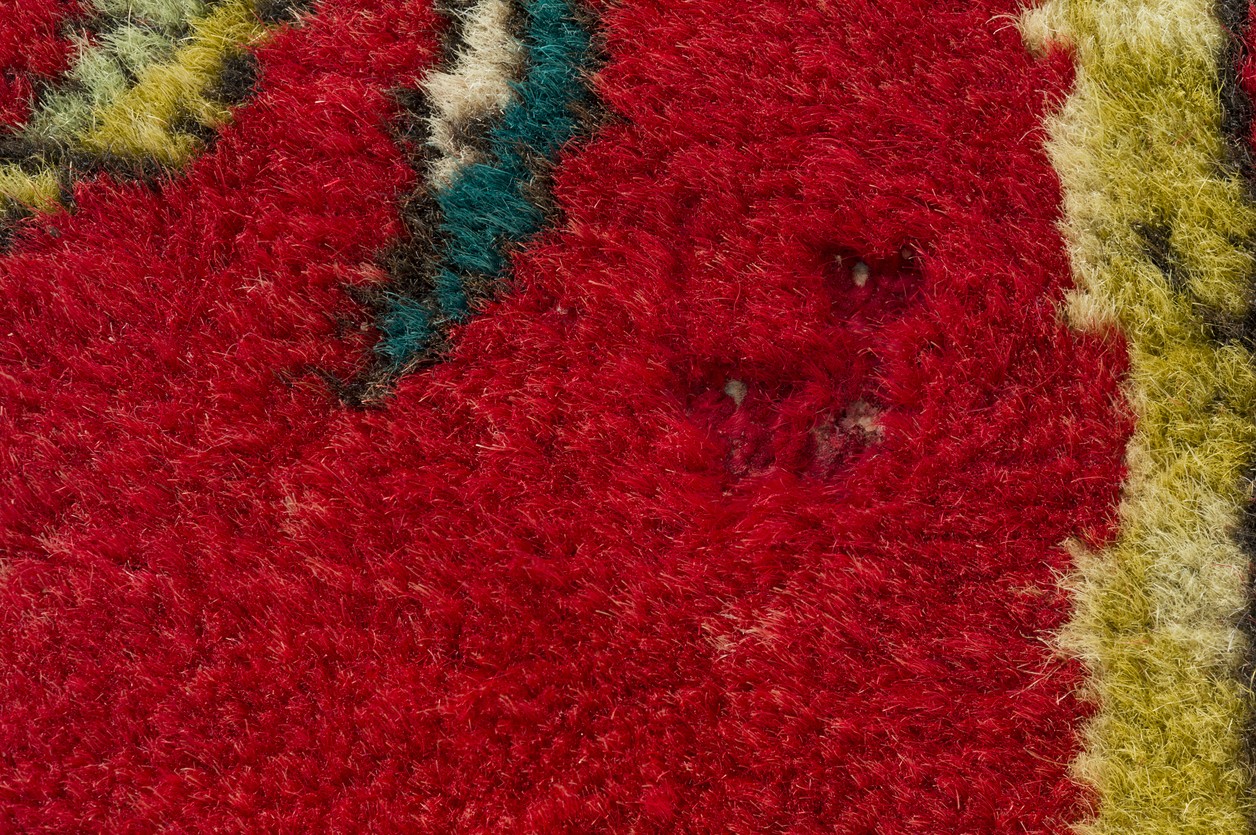
The same holds true for carpeting. Thick carpets need to have a good vacuuming. Area rugs need to have their top side cleaned but be sure to turn as much of it over and clean the bottom.
Since hand weaved rugs generally have natural fabric through and through, clothes moths will find their way to the underside and their feeding will cause the top to come undone. However, topside treatments may not penetrate far enough to get them and turning up sides or in some cases turning the rug over may be needed to insure good coverage.
Synthetic carpeting, though it may be harboring some moth activity, usually has a some type of backing moths cannot eat. This will allow you to treat from the topside effectively. Other items which may develop moth activity include tapestries, taxidermy mounts, drapes, wreathes, linens, area rugs, stored goods or just about anything which has some natural fabric or material on which clothes moths can feed. Most of these items will need a vacuuming prior to treatments to insure good results and to maximize product effectiveness.
Once you have cleaned closets, clothing, rugs, carpeting, furniture, or anything else with activity, you are ready to treat.
WHAT ARE THE BEST TREATMENTS FOR CLOTHING MOTHS?
There are several formulations available for clothing moths. The key is to match up the best formulation for the target area you intend on treating.
For small rooms or clothing you intend on storing away for long periods of time, an aerosol can usually handle the job well. These are easy to handle, ready to spray and effective. But they’re not good for treating the whole house nor are they good for warehouses, sales floors or attic spaces.
Liquid sprays are overall the most common applied. They can be safely used on carpets, furniture and other surfaces. When treating with a liquid, you’ll want to combine an growth regulator with an adulticide. Growth regulators will “translocate” which helps get protection on areas you don’t spray. Plus they last a lot longer compared to just using an adulticide.
Fogging is ideally suited for large warehouses and showrooms. You can get a vast area treated with less product and be more thorough as well.
Like most pests, there are varying levels of treatments you’ll need to do to solve the problem depending on how bad you’re infested but this following video really covers it all and well worth the watch.
USE AEROSOLS FOR STORED CLOTHING AND SPOT TREATING SMALL ROOMS
When storing clothes, FLYING INSECT KILLER will be a strong option to protect them from pests like clothing moths.
Flying Insect Killer uses a range of actives which can protect your clothing for months when they’re kept in a protected storage bin.
Commonly used to keep pests off your clothing when going afield, Flying Insect Killer is water based and won’t stain your fabrics.

FOR MOTHS FLYING AROUND CLOSETS AND THE HOME
If you have seen moths randomly flying around and are concerned there could be a problem but don’t know where to treat, installing AEROSOL MACHINES with CLEAR ZONE refills will offer relief. These machines run off batteries, can be wall mounted and will provide a one second blast of aerosol every 15 minutes.
The following “short video” (less than 60 seconds long) shows how easy they are to install. Killing the adults insures you won’t have new eggs laid and so the life cycle would end as long as you’re killing any new months that enter the structure.
Set up one machine for every 400 sq/ft of room. They release a small amount of pyrethrin which will kill active adult moths. This in turn will stop the cycle from developing. Machines should be off the ground 6-8 feet.

Each machine will need a can of CLEAR ZONE inside. These cans will last approximately 30 days so plan on running them for at least 2 months if you’ve had a problem. For some environments, running them all year long is the only way you can ensure a problem does not develop.

Remember, the above aerosol treatments will mostly be working on adults. Eggs and pupa will remain in tact and since it takes several months from these to hatch out you must be sure to have a continuous supply of Clear Zone released in the air to ensure control. The active ingredient, pyrethrin, is short lived which is why it needs to be renewed over and over.
That being said, the one advantage these systems have is that they’re well suited for small areas. Additionally, once the device is configured to your liking, they’re low maintenance. All you need to do is keep refills with product inside and replace the batteries once a year.
HOW TO TREAT WALLS AND CEILINGS
Now if you’re sure there is active clothes throughout the closet and home, treating with MULTIPURPOSE INSECT KILLER might handle it. This aerosol will effectively control all stages of clothes moths developing. It’s ideal for use in small rooms like closets and can be applied to walls, ceiling, carpeting, baseboards and other areas clothes moths like to nest.
The following “short video” (less than 60 seconds long) summarizes why this product is ideal for use in the home for moths.
One can can cover up to 1000 sq/ft and should be applied every two weeks for at least two months to ensure success. Multipurpose is convenient to use but for the average 2000-2500 sq/ft home, using the liquid recommended below would prove more cost effective.
Multipurpose is well suited for sensitive furniture though so if you’re opposed to spraying a couch or bedding, Multipurpose can handle it. Multipurpose is also good for clothing. Especially clothing with known problems or items you plan on storing for a long time. Just lightly mist it for a second or two per side, its residual will last a long time providing protection from any insect. Multipurpose will last 1-2 months and is safe enough for use on dogs for pests like fleas, ticks and lice.

LIQUID SPRAY CARPETS AND FURNITURE WHEN POSSIBLE
Rugs and carpeting which have moth activity will generally need more than just aerosol to control a local problem. Liquid applications are really the only way to be sure you get thorough coverage and enough material to last.
Keep in mind place mats and area rugs will need to have both their top and bottom sides treated; wall to wall carpeting generally only needs to be sprayed on top. Since eggs and pupa will not be killed during the treatment, you will need to use a material which will provide a long lasting residual and include a growth regulator to intercept developing eggs. A good combination of products is BITHOR and NYGUARD.
The following “short video” (less than 60 seconds long) summarizes why Bithor is a great product for this task.
Bithor is odorless, mixes with water easily and can be sprayed safely on carpets, furniture and baseboards. And when used with our MINI MISTER, you can treat pretty much the entire home without making a mess.
Add 1 oz per gallon of water and plan on using the entire gallon over 1,000 sq/ft of rugs and furniture. Remember, water is the carrier so if you are not comfortable spraying water over sensitive furniture, use the Multipurpose aerosol listed above. It will go on “dry” and be more discreet.

To ensure the best results, add a GROWTH REGULATOR to the tank mix. These are essentially proteins which mimic the target pests natural protein. By overexposing it to this protein, we can cause the insect to “stall” during development and not be able to fully mature. This will help in a big way mostly because growth regulators will last much longer in areas where applied compared to the Bithor. They also “translocate” which means they move around after being applied. This helps a lot since its not possible to spray everywhere when you treat. But this property of relocating around the room onto walls and other hidden spaces, you get much better coverage when adding some to the tank mix.
Growth regulators come in two concentrates. The standard one is fine for most applications. Use 1 oz per gallon of water and add it directly to the tank mix with the Bithor.

Use this once a month for the first two months of treating.
For large structures like rug warehouses or showrooms, the super concentrated NYGUARD will prove more cost effect as you only need to use 1/2 oz per gallon of water (mixed with the Bithor).

SPRAYERS
Apply the mixture of Bithor and growth regulator using a good PUMP SPRAYER and be sure to get proper coverage. Plan on treating once a month for the first two months and then once a quarter for the next year to insure the infestation is under control.
And if you have valuable area rugs which you want to protect, it makes sense to treat them twice a year to ensure moth activity will never start. This is easy to do and is the simplest way to protect a rug which could cost several thousands of dollars.

The following video shows how to fan spray properly when treating rugs.
MINI MISTER
For sensitive surfaces like furniture you don’t want to use the heavy liquid on, get our MINI MISTER. It produces a “light” aerosol mist and works great with the Bithor and IGR mixture.
The Mini Mister is well suited for baseboards where you have hardwood floors and want to avoid “over spraying” or puddling.
The following “short video” (less than 60 seconds long) summarizes how the Mini Mister works and why its the ideal spray when treating for clothing moths.
As you can see in the video above, the Mini Mister is so easy to use and allows you to treat without making a mess.
TREAT UNDER BASEBOARDS AND CARPETS WITH FS MP AEROSOL
Since larval stages of moths will “crawl” far from where they feed and target tight gaps to spin cocoons and pupate, FS MP AEROSOL should be applied to all baseboards, cracks and crevices.
Using FS MP is covered in great detail in our very first video; its the only product that can kill all stages of any insect so its ideal for pests that have the pupae stage. So even though you might have all the carpets, furniture and other surfaces well treated, failure to treat cracks and crevices can lead to ongoing issues.
Remember, egg laying females will target clothing and other fabric to lay eggs but you cannot ignore such areas and like to lay eggs where its dark and secluded. These areas are typically well protected from liquid treatments and aerosols don’t do a good enough job penetrating either.

FOG AREA RUG SHOWROOMS AND CARPET WAREHOUSES
For large areas like showrooms and warehouses, fogging will prove to be more efficient and cost effective. It will cover a large area in a fraction of the time and distribute the treatment in a more uniform manner. This will provide better coverage saving you time, energy and cost.
The best agent for the job the BITHOR listed above and when used in our Fogging Machine, can make treating for clothing moths super easy.
The following “short video” (less than 60 seconds long) shows the fogger being used in a yard for general pest control Note how it blows the fog 25+ feet and is so easy to operate.
1 oz per gallon of water per 1000 sq/ft or 8000 cubic feet when fogged is effective.
Be sure to add a growth regulator to the tank mix. Either the NYLAR or NYGUARD can be mixed with the Bithor as it will help break the life cycle of established moth populations as well as prevent them in the future.
For anything over 5,000 sq/ft, go with our BUGSPRAY FOGGER. This model features a 1.2 gallon holding tank and is more powerful. With this unit the fog will reach out 20-30 feet and the rate can be adjusted.

Fogging for clothes moths is both effective and cost efficient. You’ll use 75% less chemical, do the job in a fraction of the time and be more thorough with the treatment. Since the go will spread out and cover every nook and cranny, not one stage can hide from the mist.
In summary, clothes moths can be a damaging, frustrating pest. Finding the “source” is near to impossible and since they can spread so far in a structure, the only safe approach when treating is to use the shotgun method of treating everything. The good news is the right combination of products distributed over throughout the areas of activity or where they might get active can yield positive results.
CONTACT US
Give us a call if you need further help. Our toll free is 1-800-877-7290 and we’re open Monday through Thursday, 9:00 AM to 4:00 PM (Eastern Standard Time).
Email questions here: https://bugspray.com/about-us/contact-us
Order online and get a 5% discount! We ship fast with 99.9% of all orders shipping within 1 business day!!
Learn more about BUGSPRAY.COM and why it’s never been easier or safer to do your own pest control.
Please show your support for our business by purchasing the items we recommend from the links provided. Remember, this is the only way we can stay around to answer your questions and keep this valuable web site up and running. Thanks for your business!
V. Quesda says
So my husband being the smart cleaner he is mopped up some milk and never rinsed the mop. He just threw it in the bucket in the garage where we keep our laundry. When I was going to mop the kitchen I did not realize he threw the mop on the kitchen floor. As I was going to attempt to mop I saw a maggot then freaked out and moved the fridge and found a couple more.
We cleaned the area with bleach, threw out the mop in a tied up bag but being laundry day they’re piles of clothes on my garage floor where I’m almost sure this started. I’m going crazy. I think they’re cloth moths. However, is it safe to throw the clothes in my washer and dryer and then just put them away like nothing? I’m freaking out; can’t sleep, not sure how to handle this. I’m sure my clothes have some on them, what do I do? How do I make this nightmare go away?
Tech Support says
You could have clothes moths or you could have some kind of fly maggot. Both of these species are very active right now and since there was milk involved, it could be the maggot of something that feeds on food. But regardless, there is an easy to way to handle the problem.
If your review our Maggot article, you’ll learn maggots commonly migrate around by crawling in kitchens and garages. You’ll also learn in cases where people are seeing them foraging in these areas, simply spraying Multipurpose Aerosol will knock them out. Since this treatment will handle any maggot stage of other pests too, spraying your garage floor with it is what you should do.
Multipurpose Insect Killer: https://bugspray.com/catalog/insecticide/aerosol/multi-purpose-insect-killer-10-oz
Maggots: https://bugspray.com/article/maggots
As for your clothes; washing them is all that is needed to kill larvae and adults. But since eggs and pupae can live through this cycle, you may need to set up some Aerosol Machines fitted with Clear Zone Insecticide. This way any eggs and/or pupae that hatch in the coming weeks won’t be able to continue living on anything untreated like clothing.
Aerosol 1000: https://bugspray.com/equipment/foggers/aerosol-dispenser-1000
Clear Zone: https://bugspray.com/catalog/insecticide/aerosol/clear-zone-metered-insecticide.html
Also, if you don’t get the floor treated (and the mop cleaned out), there is a chance more will get active. And yes, the bleach will help the mop but not the floor. Bleach (and any other cleaner) will disappear immediately after it’s applied so there is no lasting residual like one gets from the Multipurpose Aerosol. This you’ll need for long lasting protection.
Lastly, you might want to get some of the FS MP Aerosol which can be applied to any crack and crevice where these pests might be hiding.
FS MP: https://bugspray.com/catalog/insecticide/aerosol/fs-mp-insecticide-15-oz-aerosol
Jerilyn Sproston says
Hello. We take care of a place that has museum-quality rugs and art. We have been using Multipurpose Aerosol for the last several years, purchased from you, for clothing moths for rugs and floors.
I spoke today to an employee at Bugspray.com and he told me to write you with my questions:
1. We have large oriental rugs on wood floors. Which spray should be purchased? He suggested using the Bithor along with Nylar. We take the rugs outside onto a porch and spray both sides, and spray the wood floors as well. Would you suggest this? He said to check with you.
2. We have many kachinas (N.American Indian art) draped in rabbit fur clothing (this may be how the moths got here to begin with). Do you have a product/protocol we can use for them that WILL NOT DAMAGE them in anyway. This art is to be protected forever from damage, and there are signs of moths eating the furs.
3. We have already dry cleaned the clothing and wool blankets and placed them in moth proof storage bags. Is this sufficient? We check them twice a year.
We would like to place an order by Wednesday if possible.
Thank you in advance for your response.
Best,
Jerilyn
Tech Support says
1) Regarding the rugs you keep on wood floors; I’d go with the Bithor and then add some Nylar for the best results. Bithor will yield a few weeks of residual.
Bithor: https://bugspray.com/catalog/insecticide/liquid/bithor_sc
Nylar: https://bugspray.com/catalog/insecticide/igr/igr-nylar
2) The kachinas draped in rabbit fur clothing is a tough one since you need to avoid any kind of damage from insects and the pest treatment. So my first thought is to use some Pest Strips. These would be very effective – especially if the items are being stored in glass cabinets. These strips have a label for use in museums for just this type of need.
Nuvan Pest Strips: https://bugspray.com/repellents/fumigant/nuvan-prostrips.html
Now if the kachinas are out in the open, I’d consider one of two “direct” treatments.
The first would be to mix up some Nylar and water. Make a small amount, like a pint or quart. Next, I’d dip a rag in the mixture and then squeeze out as much of the water so the rag was still damp and then lightly dab the fur you need to protect. Doing this every 2-3 months should provide enough residual to prevent any kind of fur eating moth or beetle from gaining a foothold on these pieces. This should be gentle too but of course, do some discreet applications and let them sit a month or two prior to treating everything. This way if there is some kind of odd reaction, you’ll see it before it’s a major problem.
The second treatment would be with the Multipurpose Aerosol. I use it around my home because I have hardwood floors and I can make applications without making a mess.
Multipurpose Insect Killer: https://bugspray.com/catalog/insecticide/aerosol/multi-purpose-insect-killer-10-oz
Now again, don’t forget to do some “sample” treatments to make sure you aren’t doing damage to the fur. We cannot take any responsibility should there be some kind of odd reaction which I’m sure you understand. That being said, I do believe either option could be done without much risk and if you test some discreet part of the areas you want to treat before doing anything, you should be able to confirm it will do the job and not cause other issues.
3) As for anything you’re keeping in storage; definitely get the Pest Strips and add them as needed depending on the size of the space involved where the blankets and clothing are being stored.
Nuvan Pest Strips: https://bugspray.com/repellents/fumigant/nuvan-prostrips.html
Dove Riviere says
I have a clothes moth infestation in my 1500 sq. ft. high-rise unit. My place is vacuumed frequently, as I have three cats. I also have oriental carpets and seagrass floor covering. Is there an effective fogger that can be used throughout my home? I have used the traps, and they are full! Please advise.
Tech Support says
If your traps are getting full, you need to spray. There is no fogger or aerosol that will handle a problem like you’re describing because foggers won’t get the key part of the cycle (eggs and larvae). But the Bithor and Nylar listed above will handle these and if you do a thorough liquid treatment to the rugs, carpeting and furniture, you’ll eventually get control of this pest in the next few months.
Here are links to these items in our cart. Please show your support for our business by purchasing the items we recommend from the links provided. Remember, this is the only way we can stay around and be here to answer your questions and keep this valuable web site up and running. Thanks for your business!
Bithor: https://bugspray.com/catalog/insecticide/liquid/bithor_sc
Nylar: https://bugspray.com/catalog/insecticide/igr/igr-nylar
Hilda Cumings says
Hi. I have a big problem moths. We have found many cocoons on our floor boards and underneath cabinets and crawling on the floors. At night you see the moth flying which we kill right away. I had my exterminator come to the house and he installed traps for grain moth with no luck.
Now I’m starting to see holes on my shirts. We had this problem in a previous apartment two years ago and before we moved to our current home we purchased a freezer and put all of our clothes in the freezer to kill eggs, larvae and adults present.
Before moving to our new home the house was tented. Now two years later we are having the same problem. Tenting the house was a horrible experience since we have four cats and they had to be medicated in order to have them over a hotel for 2 days. It was a very dramatic experience for them all. I prefer not to tent my home again since is costly and a bad experience for us and our pets! Please help me. We are DESPERATE!
Tech Support says
First, there is no need to tent the house for clothing moths. No doubt that process can work but it’s costly and inconvenient to most everyone involved. At this point I suggest you treat as our article above explains. Get your carpets treated with Bithor and Nylar. This can be done by your service company or you can get the products from us and do the work yourself.
Bithor: https://bugspray.com/catalog/insecticide/liquid/bithor_sc
Nylar: https://bugspray.com/catalog/insecticide/igr/igr-nylar
Next, set out some Clothes Moth Traps to help monitor the problem.
Clothes Moth Traps: https://bugspray.com/traps/pheromone-and-food/clothes-moth-traps-2-pack
Lastly, set out some Aerosol Machines with Pyrethrin refills inside. These should be placed in any closet with clothing. They’ll release small amounts of product that will kill off any adults or larvae the liquid treatment misses.
Aerosol Machine: https://bugspray.com/equipment/foggers/aerosol-dispenser-1000
Clear Zone: https://bugspray.com/catalog/insecticide/aerosol/clear-zone-metered-insecticide.html
One last thing; freezing your clothes will not kill off eggs or pupae of this pest so that’s a complete waste of your time. Most eggs and pupae stages of insects can withstand any amount of cold which is why they don’t disappear from regions of the planet with freezing temps.
Donna Wood says
I have a moth problem in my home. Based on the size of my closets and having only seen just a few larva, I would think the aerosol product would be the best treatment. However, are any of these products safe for pets to be inhaling? I have two cats.
Tech Support says
When used properly, none of the products we have listed in our article will pose a problem for you or your pets. The key here is simple; keep the pets away from the area being treated during the treatment and for at least 1 hour afterwards. More information can be learned by viewing our safety video’s which can be found at the bottom of every product page. These are well worth watching as they go over the general guidelines and safety measures one should take before and after treating.
Now if in fact your problem is limited to the closet areas, I would say the Multipurpose Insect Killer would be a good product choice for now.
Multipurpose Insect Killer: https://bugspray.com/catalog/insecticide/aerosol/multi-purpose-insect-killer-10-oz
I also suggest you set out some Clothes Moth traps. These should be placed out in many areas to help insure you’re not missing any problem areas. Clothes moth traps will let you know something is happening so you can take corrective measures and in turn, prevent further damage and infestations.
Clothes Moth Traps: https://bugspray.com/traps/pheromone-and-food/clothes-moth-traps-2-pack
Kim says
Hi. I live in a NY walk-up on the fifth floor. We left our ventilation window open during the winter and now that it is spring, all of a sudden moths have appeared in our house. I believe they came in through the vent window which leads down an alley way and our garbage is on the ground floor of the alley way. Now that the moths are here, I want to do whatever I can to make sure we don’t let them lay eggs and start growing. We want to kill them all. So far my closet seems safe, but not sure, they are mostly hanging out in the living room behind books. Let me know what to do. Definitely want to take all preventative measures in the closet as well. Thx.
Tech Support says
For starters, read the article above. In the article you’ll find all the options we have for treating inside. Typically the best way to thoroughly treat is to use a combination of the Bithor and Nylar listed above. This can be applied to carpeting, furniture, etc.
Bithor: https://bugspray.com/catalog/insecticide/liquid/bithor_sc
Nylar: https://bugspray.com/catalog/insecticide/igr/igr-nylar
And then for small areas like closets, installing an Aerosol Machine with some Clear Zone is the a good idea since these dark places are usually missed and hard to maintain.
Here are links to these items in our cart. Please show your support for our business by purchasing the items we recommend from the links provided. Remember, this is the only way we can stay around and be here to answer your questions and keep this valuable web site up and running. Thanks for your business!
Aerosol 1000: https://bugspray.com/equipment/foggers/aerosol-dispenser-1000
Clear Zone: https://bugspray.com/catalog/insecticide/aerosol/clear-zone-metered-insecticide.html
Christie says
Hello – we purchased a 1930’s home and when we moved in we found clothing moths. We removed all carpeting and have not put any wool clothing in the house. We thought that would do it. We saw more a few weeks later and thought maybe they were in the air ducts that had not been cleaned for 97 years (exactly). They are back. Where could they be? In cracks of wood floors? Under base boards? How do I treat?
I did find remnants of cocoons and eggs in an empty wood drawer. Will washing it with bleach kill any eggs? Thanks for your help!
Tech Support says
Clothing moths will commonly infest all areas of homes and not just clothing or carpeting. This is especially true when the home is old. The commonality I’ve seen in cases which involve older homes is that over the years, there tends to be an accumulation of “natural” food throughout the structure and the moths figure out how to feed on this “food”.
In fact, many older homes had moth food incorporated during the building process. Insulation will many times include natural fabric like cotton as will wall paper or some other material used during construction. These natural fibers will many times lay just below the living areas of the home and though out of visual sight, not out of reach of moth larvae.
Other common food items for clothes moths include pet hair, people hair, dust and other small, tiny fabric particles that tend to accumulate around the home as they fall into small cracks and crevices.
Now since most older homes will have various routes of entry to these hidden locations (via cracks in hardwood flooring, gaps in molding, where pipes for furnaces run through walls or flooring, through electrical outlets, etc.), adult females can usually find ample food supplies on which to lay eggs which are not generally easy to see or where you might think could be a problem.
In summary, even though you may be able to remove all the carpeting, old furniture, drapery, clothes, etc. kept out in the open, its not likely you’ll be able to remove all the hidden food supplies. And for this reason, the problem will no doubt persist unless you treat as we describe in our article.
So in your case, I would recommend 2-3 treatment options to resolve the issue for good. And forget using cleaners like bleach; they’re way more toxic compared to what we sell and in the end, won’t help because the proper treatment does not involve “cleaning” anything; it involves treating a growth regulator to stop the eggs from growing into adults.
In other words, you must control their eggs and that can only happen by treating the possible food supplies and hidden spaces where they might be living.
So with that being said, heres what I recommend you do minimally to insure you take away their food supplies and break the life cycle thats no doubt occurring even as I type this response.
First, you’ll need to treat any furniture, carpeting and hardwood floors. Use an adulticide and the egg killing nylar listed above. The two best options to apply are Bithor and Nyguard. You’ll also need a good Pump Sprayer to insure the treatments are done properly.
Spraying furniture and carpeting using a fan pattern mist will do the job and not pose a hazard to people or pets. And this same treatment can be used to treat hardwood floors, tiled floors etc. And for the flooring, pay particular attention to the cracks and crevices because this is no doubt a common location where they could be thriving since these spaces tend to accumulate pet hair, people hair and other natural fibers on which clothes moth larvae can live.
Second, treat all cracks and crevices found on walls and ceilings. Since spraying with a liquid sideways onto walls is not practical, use the FS MP aerosol as detailed in our article.
Third, mist Multipurpose Insect Killer over any areas where you didn’t spray the liquid Bithor and Nyguard. Multipurpose Insect Killer is packaged in a convenient to use aerosol can. This means its a lot less messy and ideally suited for hard to spray surfaces or fabric you’re not comfortable spraying with the liquid.
Now if the activity is limited to these locations I just said to treat, these applications will knock out the problem for good. But there is a chance some eggs and larvae are living in a crawl space, attic or other hidden area and if thats true, you may have treat these locations at some point.
And if that is needed, the FS MP will be the way to go since it lasts a long time when injected under the baseboards and in wall voids.
Here are links to these items in our cart. Please show your support for our business by purchasing the items we recommend from the links provided. Remember, this is the only way we can stay around and be here to answer your questions and keep this valuable web site up and running. Thanks for your business!
Bithor: https://bugspray.com/catalog/insecticide/liquid/bithor_sc
Nyguard: https://bugspray.com/catalog/insecticide/igr/nyguard_igr_140_ml.html
Eliminator Pump Sprayer: https://bugspray.com/equipment/sprayers/eliminator-gallon-sprayer
FS MP: https://bugspray.com/catalog/insecticide/aerosol/fs-mp-insecticide-15-oz-aerosol
jane hollingsworth says
What product would you use on fine textured wool curtains and would an aerosol applicator be sufficient . How often would I apply it please?
Tech Support says
The Bithor concentrate is odorless, won’t stain no doubt would be a good option. Add some Nylar IGR to the mixture and you’ll be set. Nylar is needed to control eggs.
This mixture is generally apply by spraying it out with a good pump sprayer. However, you could mist it out using a small electric mister like our Mini Mister or Bugspray Fogger. No doubt using one of these would be easy – especially if you have a lot of drapery – and it would enable you to treat with less material without making a mess as well.
Here are direct links to products listed above:
Bithor: https://bugspray.com/catalog/insecticide/liquid/bithor_sc
Nylar: https://bugspray.com/catalog/insecticide/igr/igr-nylar
Mini Mister: https://bugspray.com/equipment/foggers/mini-mister
Bugspray Fogger: https://bugspray.com/equipment/foggers/bugspray-fogger
Give us a call if you need more help. Our toll free is 1-800-877-7290 and we’re open 9:00 AM to 4:00 PM Mon-Fri; 9:00 AM to 2:00 PM Saturday, Eastern Standard Time.
Dave says
I just found quite a few casings in a bag of clothes in my closet today. I’m planning on treating the closet, but I decided to wash all the clothes in the bag immediately. After a full wash and dry, I had an adult fly out while folding the clothes.
How did the adult survive both the washer and dryer? Is that normal and do I need to take further action with the affected clothing items? Thanks!
Tech Support says
Dave,
As explained in our article above, cleaning won’t kill eggs or pupae casings (developing larvae which become adults). So even though you washed your cloths, they will still be harboring active stages (the first and third stage).
In fact, water will many times “activate” developing pupae and we commonly hear reports of adults flying out from just washed clothing. This happens because the moisture softens their pupae shells and enables the adults inside to escape sooner than normal.
The bottom line is simple: you have an active infestation that needs proper treatment.
So for your carpeting and furniture, you should treat with Bithor and Nylar. This will immediately kill any foraging larvae and eggs as well as prevent any new eggs from having success in their life span. Mind you its always best to treat these areas once a problem is identified because its highly likely eggs have been laid out in these areas even if you don’t see any evidence of activity just yet.
All closets where clothing is stored should be equipped with Aerosol Machines and some Clear Zone Insecticide. This configuration will be releasing small amounts of pyrethrin every hour (or more frequently if you want stronger control) and by doing so, it will kill any hatching adults from hidden pupae cases. It will kill hatching larvae from eggs you miss or can’t see.
Lastly, understand this problem won’t be gone until all the pupae have hatched and this will usually take a good 1-3 months following your initial treatments so you must stay the course and give it time to clear up. The good news is with the right products in place (along with an understanding of what to expect), you can control this pest and get rid of them for good.
Bithor: https://bugspray.com/catalog/insecticide/liquid/bithor_sc
Nylar: https://bugspray.com/catalog/insecticide/igr/igr-nylar
Aerosol 1000: https://bugspray.com/equipment/foggers/aerosol-dispenser-1000
Clear Zone: https://bugspray.com/catalog/insecticide/aerosol/clear-zone-metered-insecticide.html
Give us a call if you need more help. Our toll free is 1-800-877-7290 and we’re open 9:00 AM to 4:00 PM Mon-Fri; 9:00 AM to 2:00 PM Saturday, Eastern Standard Time.
Jonathan
Customer Care
https://bugspray.com
1-800-877-7290
PS: Please show your support for our business by purchasing the items we recommend from the links provided. Remember, this is the only way we can stay around and be here to answer your questions and keep our web site up and running. Thanks for your business!
angel says
Hi. I’ve been dealing with moths and their larvae for quite a while. They’re leaving holes in my socks and t-shirts. I know I have moths because I’ve seen one every so often fly here and there around my room. I bought pro-pest sticky moth traps, but haven’t caught anything? Are you sure the clear zone insecticide and aerosol will keep them at bay and eventually kill them all? Also, will my clothes be hole free as long as this is in use? Does it take a while before it takes effect? I have a medium size room? Do I need one each for a closet and room? Should I place aerosol can in room or closet? Will the spray be able to fill the room from the closet and vice-versa? I keep the window open during all times of the year even during the winter to keep the room fresh and from getting stale while I’m away at work. Should I keep the window closed while this is going on? Can I still be in my room while this spray is working 24/7? Thank you!
Tech Support says
Angel,
You asked a lot of questions so I’ll try my best to answer them all. First and foremost, in order to break the life cycle of this pest, you really need to apply an egg killing agent to the carpeting and baseboards. This can be accomplished using either the liquid Nylar or Multipurpose Insect Killer. Given the limited area with activity, the Multipurpose Insect Killer should be plenty effective for getting the job done.
Multipurpose Insect Killer: https://bugspray.com/catalog/insecticide/aerosol/multi-purpose-insect-killer-10-oz
After that’s applied, setting up an Aerosol Machine equipped with some Clear Zone insecticide will help by killing off hatching adults.
Aerosol 1000: https://bugspray.com/equipment/foggers/aerosol-dispenser-1000
Clear Zone: https://bugspray.com/catalog/insecticide/aerosol/clear-zone-metered-insecticide.html
Now some answers..
In general, using moth traps will only catch a few adults and that’s only if the trap you use matches the species you have active. This is tricky at best so in general, one should not expect much from any clothes moth trap other than having it alert the user to a current problem. This way if a trap catches a moth every now and then, you at least know you have an active problem. But traps will never solve or control a problem since they will only catch a few at best.
Regarding the aerosol machines; they will definitely kill active moths and by killing them, you’ll be ending the cycle because you won’t have new eggs being laid. But remember, the adults don’t eat the fabric so this alone will not solve the clothing damage problem which is why you need to thoroughly treat with the Multipurpose Insect Killer.
As for clothes not getting holes; this will only happen after you kill off all active larvae and if you have a lot of stored clothing, you should at least vacuum it all piece by piece and in some cases, get the items dry cleaned or washed too (as explained above).
The time involved to resolve clothes moth issues is usually 1-2 months at least and that’s assuming you do the right treatment to start.
Regarding the size of the rooms you’re wanting to treat; you will need a machine for the bedroom and one for the closet because the coverage will be limited to the space where they’re deployed.
Regarding keeping the window open; this will definitely make the treatment void so it will not work if you keep the windows open. In fact, its highly likely this is how the problem started in the first place since many moths are active outside and will readily forage inside if given the chance.
Technical Support
U-Spray Bugspray
http://www.bugspray.com
1-800-877-7290
angel says
Hi. Thank you for you answers. Where should I apply the Multipurpose Insect Killer to my carpet? Also, should I apply to the wooden floor under the carpet as well? Is one application sufficient enough? If not, how often should I apply Multipurpose Insect Killer to my carpet? In addition, I used to have a problem with bed bugs in a previous residence; is Multipurpose Insect Killer actually 100% effective in eliminating bed bugs as I’ve heard they are immune to most kinds of insecticides? Finally, When using the clear zone aerosol spray, should I place it on the wall in my room opposite from the closet where the other machine will be or can I just place it on the wall in my room just outside my closet which is near my closet? Or should I place it on the wall above my bed which is in the middle of my room? Also, this isn’t toxic so I can be in my room at all times of the day, correct? Thank you!
Tech Support says
Angel,
Multipurpose Insect Killer should be sprayed on all fabric including carpets, area rugs, place mats, couches and chairs. Area rugs which you can “roll back” and treat around the bottom edges for 1-2 feet is also smart to do since target pests will readily hide just underneath these areas. But carpet secured to the wall under the baseboards does not need to be pulled back to treat the flooring underneath. And if you have area rugs to roll back, treating the floor underneath these carpets would be smart when exposed just to be safe.
The frequency of treatments needed will vary from home to home but in general, once every 2 weeks with the Multipurpose Insect Killer is smart for at least the first two months but if you are seeing live activity in just 7-10 days following a treatment, by all means treat again. Now after 2 months of treating, the problem should be resolved.
No doubt there have been some incidences where bedbugs seem to show being resistant to certain chemicals. But these cases are unique and involve different actives and more importantly, they tend to include structures with extremely bad conditions. Given the actives in Multipurpose Insect Killer and the fact that you do not have any kind of a major, ongoing bedbug problem (based on the information you provided), there is no reason not to believe the treatments would work fine for your needs (including bedbugs).
Regarding the aerosol machines and Clear Zone; one machine should be placed in the closet and one out in the bedroom. Without seeing the layout of the bedroom, its hard for us to say exactly where but in general, keeping it opposite the closet and then pointing the machine toward the closet should be best. Clear Zone can be safely used inside the home where people are sleeping and even where one is preparing food so yes, you can safely co-exist with the treatment being done throughout the day or night.
Technical Support
U-Spray Bugspray
http://www.bugspray.com
1-800-877-7290
angel says
Hi. How many cans of clear zone and Multipurpose Insect Killer should I buy for the 2 months in order to eliminate moth larvae? Thank you! Plus I want to use it on my chair and mattress just in case?
Tech Support says
Angel,
Since 1 can of Clear Zone will last 30 days, you’ll need two cans for every machine you install.
As for the Multipurpose Insect Killer; each can will cover up to 1000 sq/ft so I’m thinking you’ll be using 1/3 to 1/2 of a can per treatment. And since I recommend treating every 2 weeks for the first month, you’ll need enough for at least 4 treatments so I’d go with 2 can’s at least. This way you should have enough and even if any is left over, it can be used at anytime for prevention.
Technical Support
U-Spray Bugspray
http://www.bugspray.com
1-800-877-7290
Diane deGroat says
I just discovered that my taxidermy collection is infested with clothes moths. Several pieces are damaged enough to be tossed out, but some seem salvageable if placed in sealed bags with Insect Guard, as recommended in taxidermy sites. Some pieces have only a small area covered with fecal pellets. Can I spray these areas with Multipurpose Insect Killer to kill eggs and larva? It’s mostly under tails or on feet, so I don’t care about discoloring.
Tech Support says
In general, the Bithor with water is the best way to proceed as you can dab it on using a sponge or rag. Plus you can spray the rest of the home (carpets, furniture) to ensure they haven’t spread. Multipurpose Insect Killer is water based actually and very gentle so not a bad choice either.
Technical Support
800-877-7290