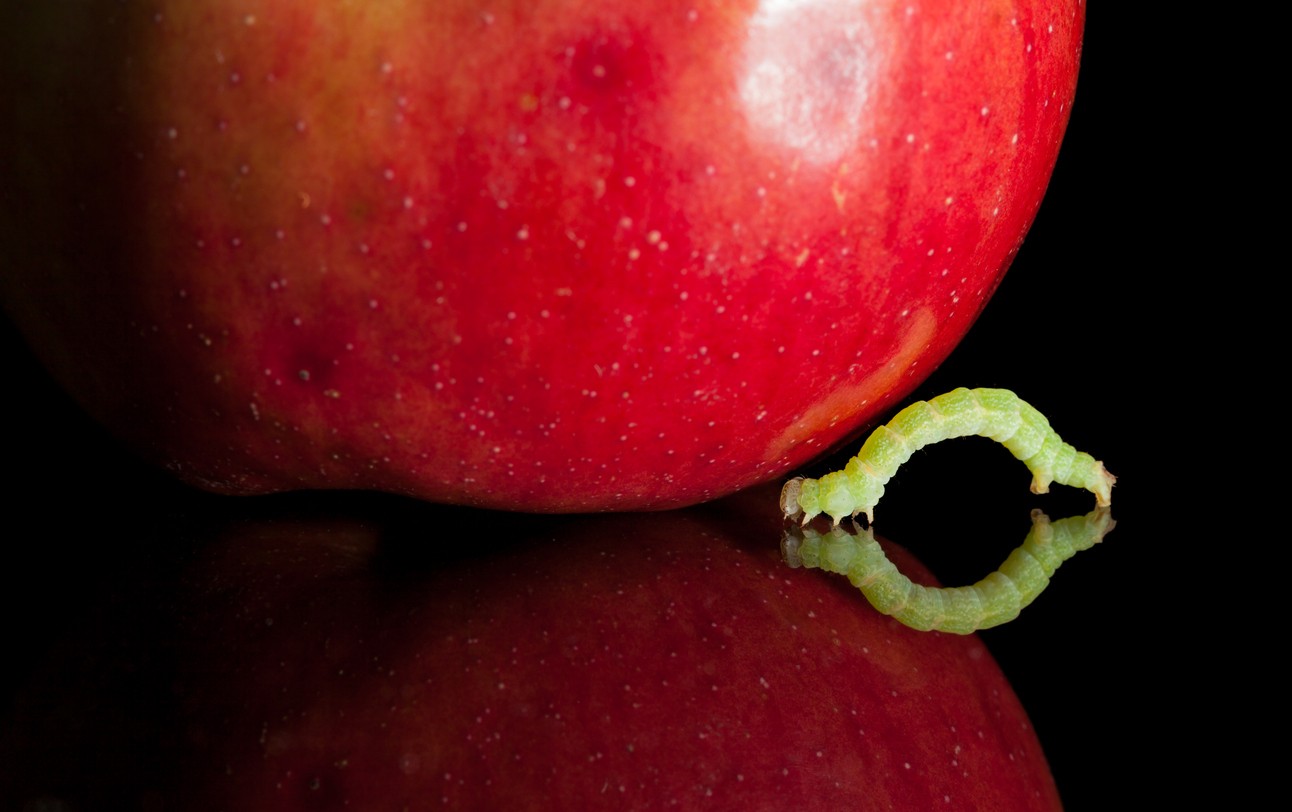
Codling moths have accounted for more damage to apples then any other pest. Their unique biology combined with their physical attributes makes them forever a formidable foe to anyone that grows apples. Whether you have 1 tree or an orchard spanning hundreds of acres, codling moths can take away your harvest quickly and consistently. This article will detail their biology and then offer practical and viable treatment schedules which will help keep your apples in tip top shape and not worm food!
CODLING MOTH BIOLOGY
Codling moth adults don’t cause apple damage directly. In fact, like many other insects, it’s their larva which do all the bad deeds.
Codling moths overwinter in the pupa stage and emerge in the spring when local temperatures are right. This is a key time for controlling the emerging adults and every region has a different time of the year when such activity happens. Getting an early grip on their development can prove to be a big help when the local environment has a large population.
Since codling moths are present in all parts of the world, there is no single time or date when everything starts. Since their young feed primarily on apples, the adults will emerge at a time when food will be ready for when their offspring need it. At this time, males will be seeking females. Once mated, females will begin to lay eggs. If this occurs early in the season, she will lay her eggs on the branches and the bark of local apple trees. The first egg laying will yield small amounts of eggs and sometimes only one at a time will be laid. As the temperatures warm, so too will her egg yield. Though these females will only live about one month, they will lay 50-100 eggs during this time.
CODLING MOTH LIFE CYCLE
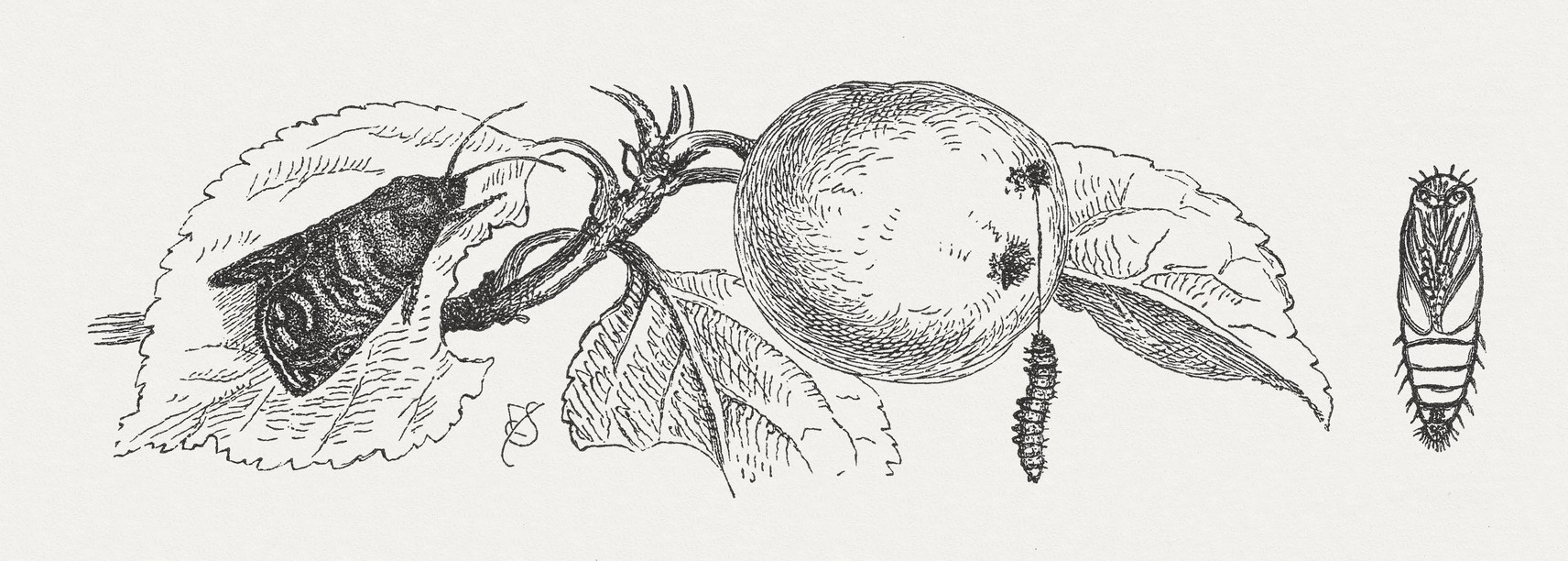
The eggs will develop and start to hatch in 2-4 weeks. This will again depend largely on local temperatures. A colder spring will tend to keep them dormant longer; warm weather will get them going all the more faster.
Once hatched, larva or “apple worms” will forage for fruit on which to feed. It is not uncommon for one apple to have several larva inside. It is also not uncommon for a larva worm to enter an apple and then die. This promotes rot and discolors fruit making it look bad and rotten.
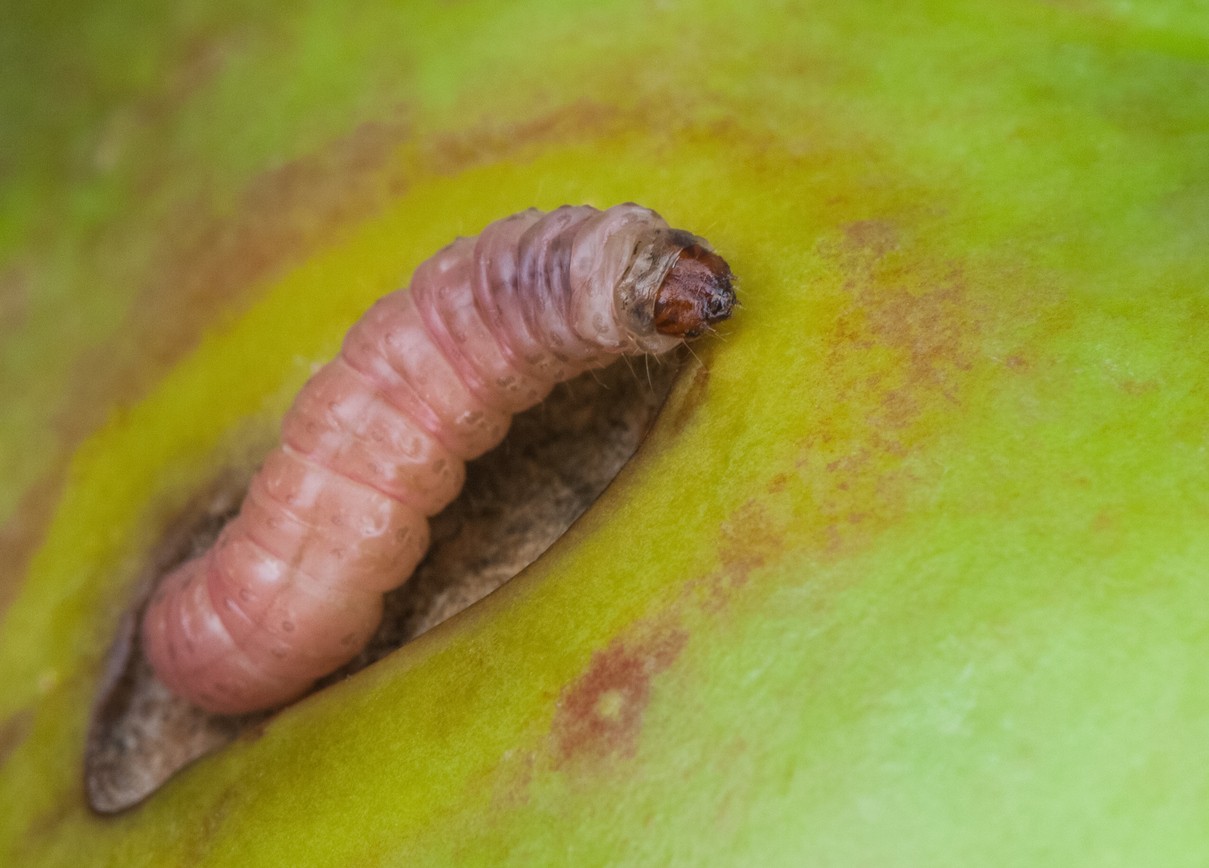
Once inside, larva will feed and grow through 4-5 instars or stages of development. Once completing their stages, larva will leave the fruit and seek a good place to pupate. In the southern zone of the United States, this cycle will play out over the course of the growing season. Eggs will hatch larva worms which will feed on apples; once they have gone through their growth they will leave the apple to spin a cocoon in which to change to an adult and then emerge to mate and reproduce. This could happen several times a year if conditions are right. However, it is most common to have two cycles occur in any one year and sometimes three. For this reason it is important to get the moth stage before they are able to lay eggs. Since larva cannot move great distances, if egg laying is minimized so too will larva damage. This essentially means that if you are able to stop all moths from laying eggs on any one tree or fruit, no damage would happen to it. Though this sounds easy and sound, the reality of achieving success is complicated. For this reason it is important to employ different strategies for different times of the year.
CODLING MOTH TRAPS
As explained above, interrupting the mating process is key to preventing the codling life cycle from getting established on your land. If you can prevent females from mating with males, you will effectively reduce the amount of egg laying which occurs on the tree.
Yes it is true that moths can come from other areas and find your tree but this is not too likely. Since most pupa hatch close to where they fed as larva they will be attracted to the same trees that have provided food for all generations before them. Furthermore, codling moths don’t fly all too well. They are not designed to travel great distances and though they can move from one tree to another in any one orchard, once they leave that common ground they are pretty much lost. For this reason, it is safe to say that any one tree or stand of trees has a certain amount of “seed” pupa which will hatch in any one spring. Clearly impacting this first hatching can have a dramatic impact on just how many or just how few codling moths are able to develop over the course of the year.
For this reason it is imperative that you get up some CODLING MOTH TRAPS before over wintering pupa hatch. Yes, it may still be cold out, but if you want to protect your crop, it’s better to be safe then sorry. Just remember the old adage about “the early bird gets the worm”. Well, your taste in worms might not be a codling moth worm but getting them before they get your apples is what any grower would prefer!
Pheromones will remain active for 60 days and each tree you’d like to protect should have a trap. Keep in mind using traps is not a method of control; traps are designed to keep you “updated” as to what is happening out in your orchard. So if you have 5-10 traps set up in one acre and don’t catch a moth, you’re in good shape. But if you have one tree and one trap and catch several moths, you have a problem requiring immediate attention.
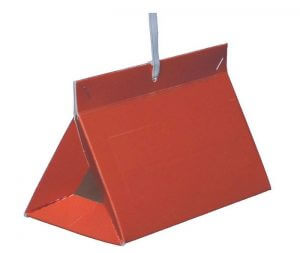


Timely placement of Codling Moth traps will assuredly cut down on the amount of egg laying which can occur. However, it is not likely that traps alone will serve to collect and kill every moth around any one or group of apple trees. If you only have one tree to protect, this same program will apply.
Remember, traps can catch a lot of males which will not be able to mate allow for egg laying females. However, some will inevitably mate and eggs are sure to find their way onto a tree or two if you have activity. To deal with this, there are varying treatments listed below. Choose a method with which you feel comfortable and one that will allow you to achieve your goal. This is largely an individual choice since apples to some are the gardens finest yield and to others are nothing but deer food.
CODLING MOTH SPRAY
If your traps are catching codling moths and you need to spray your trees for protection, there are several options depending on your goal.
ORGANIC CODLING MOTH SPRAY FOR FRUIT OR NUT PRODUCING TREES
For the organic gardener, MULTIPURPOSE INSECT KILLER is strong enough to handle codling moths yet safe enough to use on fruits like apples one day to harvest. Treatments will kill both adults and foraging larvae. In general, as soon as you detect or suspect adults are active in your region, treating trees every month will ensure they’re protected.
Mix 6.4 oz to one gallon of water and spray all foliage, limbs and trunk surfaces you can reach. One quart of concentrate is enough to make 5 gallons of product and will treat up to 2500 sq/ft. Gallons will cover up to 10,000 sq/ft.
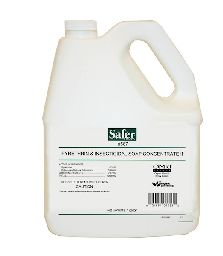
Remember, Multipurpose Insect Killer is strong enough to manage codling moths. But since its organic, you won’t get any lasting residual so if you want or need something stronger, consider one of the concentrates listed below.
For large scale treatments, consider a true concentrate. These will require spraying equipment but will cover large areas and for anyone treating orchards, a better option.
BEST CODLING MOTH SPRAY
If you’re looking for a true concentrate to mix with water to apply with a pump sprayer or mist blower, go with VEGETABLES PLUS PERMETHRIN. This product is labeled for use on fruit and vegetables too and like Cyonara, will provide 1-2 weeks of residual. Treating once a month will generally keep trees protected once the season starts.
Add 1.5 oz per gallon and plan on getting 500 to 1000 sq/ft of coverage per mixed gallon. Vegetables plus has 7 days to harvest so keep that in mind when treating.
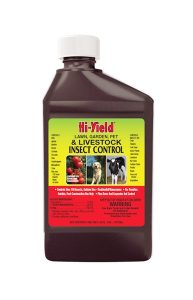
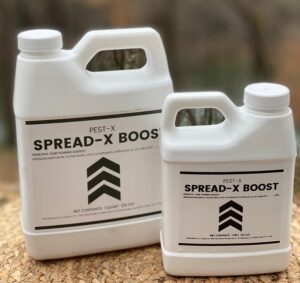
Which ever liquid treatment you choose (either the Vegetables Plus or the Pyrethrin), plan on adding SPREAD-X BOOST to add to the tank mix along with the concentrate.
Boost is an adjuvant, also known as a “wetter spreader” or “spreader sticker”. It basically makes water and the mixture more “slippery” so you get better coverage. Treatments will spread 2-3 times wider and “wrap” around foliage. This is super important when spraying trees and shrubs where larvae and adults like to hide. Boost will help any concentrate work better.
The following short video summarizes why Boost can help deliver your treatment better.
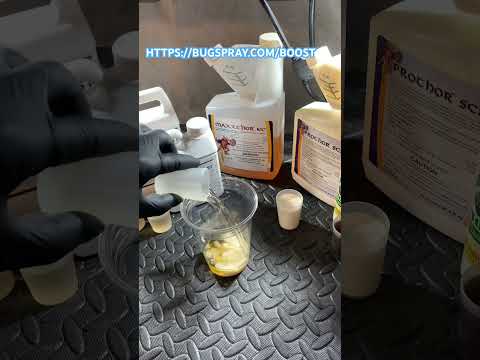
Add no more Boost than your concentrate so if you’re adding 1 oz of concentrate to a pump sprayer, use 1 oz of Boost.
EQUIPMENT NEEDED TO TREAT FOR CODLING MOTHS
When using any of the products listed above, you have a range of sprayers that can be used.
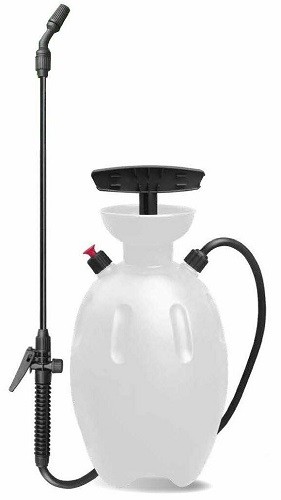
For small jobs, a standard PUMP SPRAYER will work fine. Our sprayer can reach 15-20 feet so if your tree isn’t too tall, it can handle the task.
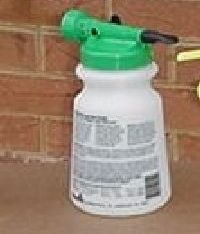
Another option is a our GREEN TOPPED HOSE END. Our sprayer can handle enough concentrate and water to spray out 20 gallons. Using the power of the your garden hose, they can often times reach higher compared to a pump sprayer.
For highest reach, get one of our NO PUMP SPRAYERS. This vunique sprayer is simple yet very good, easy to use and one of our “favs” for applying insecticides to your homes exterior and landscape (its too powerful for use inside).
Ideally suited for reaching heights of 40+ feet, it has no moving parts other than the valve you hold for spraying and the adjustable brass “bullet” nozzle.
This sprayer is essentially a tank that can hold water, chemical and up to 130 psi of air. The top lid has a clamp and rubber gasket that seats on the “inside” of the sprayer so as you fill it with air, the seal will naturally remain in place, nice and tight.
The top has 3 “ports” (pic below). The port to the far left is used to fill the tank with air. Using any electric air pump (the kind you would use the fill tires on your car), you can safely pressurize this sprayer up to 80 psi. The tank is rated for up to 130 lbs but the relief valve will only allow you to fill it to 80-90 psi before it starts to release. This happens as a safety precautionary action.
For normal use around the home, 50-60 psi should be enough for you empty the liquid from the 2.5 gallon tank assuming you only add 1 gallon of mixed product. True, the sprayer can “hold” 2.5 gallons of liquid but you need room for the air. Our tests show that 50-60 psi will pump out an entire gallon of spray allowing you to reach 25-30 feet heights.
For reaching 40+ feet or higher targets, pressurize the sprayer to 80 psi and again, mix up only what you plan on using and no more than 1 gallon of mixed solution at one time so the tank has enough room left to store all the needed “air”. One charge of 80 psi is enough to get the entire mixture to spray out so you don’t have to be concerned about constantly recharging.
The 5 GALLON NO PUMP can hold over 2 gallons of mixed material and can perform equally as well.
Remember, YOU WILL NEED AN AIR COMPRESSOR POWERFUL ENOUGH TO FILL THIS SPRAYER!! WE RECOMMEND ONE THAT CAN DO AT LEAST 100 PSI.
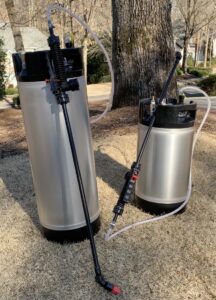
WATCH THIS VIDEO ON THE “NO PUMP” SPRAYER FOR OPERATIONAL DETAILS
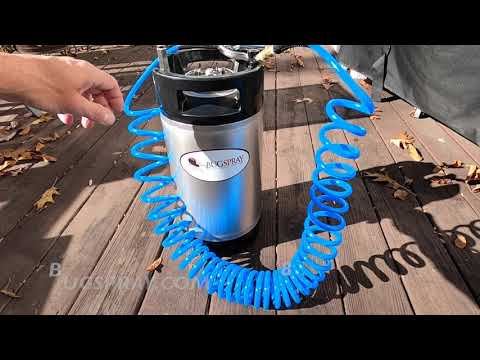
MIST BLOWERS AND FOGGING MACHINES
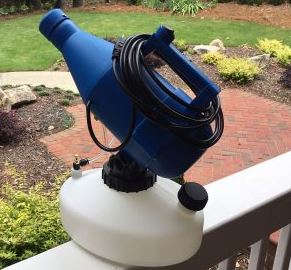
Another great way to apply the Vegetables Plus or Multipurpose Insect Killer is with our BUGSPRAY FOGGER. This process involves using machines that change the liquid to a mist. The mist will do a much better job of covering all the tree foliage and it will do using less chemical and less time. On average 75% less.
Our Fogger will propel the fog 20-25 feet up at a rate over 20 oz per minute.
View this short video to see it in action:
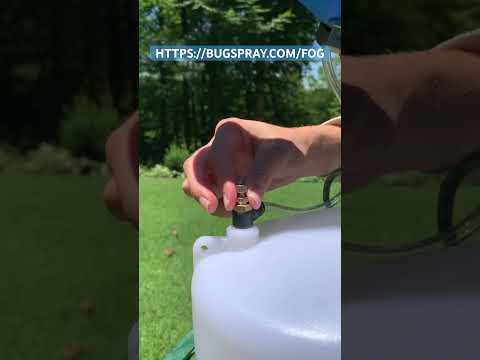
As you can see, using a fogger can both save time and effort but also do a better job compared to a liquid spray.
CONTACT US
Give us a call if you need further help. Our toll free is 1-800-877-7290 and we’re open Monday through Thursday, 9:00 AM to 4:00 PM (Eastern Standard Time).
Email questions here: https://bugspray.com/about-us/contact-us
Order online and get a 5% discount! We ship fast with 99.9% of all orders shipping within 1 business day!!
Learn more about BUGSPRAY.COM and why it’s never been easier or safer to do your own pest control.
Please show your support for our business by purchasing the items we recommend from the links provided. Remember, this is the only way we can stay around to answer your questions and keep this valuable web site up and running. Thanks for your business!
carl salem says
Hi, found your site while trying to find out what a codling moth looked like. I have a huge problem with apple scab this year and will be using a fungicide spray early and often next year. I assume that I also have the moth on the trees. I only have about eight assorted fruit trees so not a lot to worry about. What I would like to know is if I use dormant oil spray, along with the fungicide for pre-emergernce and then once more with leaves in squirrels ear stage, when do I need to spray for moth control? Also, I will be using the fungicide as growth progresses. Can I use your spray mixed with the fungicide and if so, what spray do I need use. I would like one with residual as long as possible. I have a pull behind tank sprayer.
Tech Support says
No doubt DORMANT OIL is the way to go for your apple scab. Use it during the winter and early spring for best results.
Dormant Oil: https://bugspray.com/catalog/insecticide/liquid/dormant-oil
But its important to understand Dormant Oil will have no impact on coddling moths. As our article above explains, the apple maggot larvae feed in growing fruit of your trees and then pupate either in the fruit it was eating or in the ground that surrounds your trees. The pupae are the third stage of this insect and they will stay in this stage all winter developing and waiting for the warmth of next spring and summer to emerge as adults.
For this reason its important to treat the trees now, during the summer and fall, when larvae are very much active and vulnerable. This way you can kill as many as possible thus reducing the amount that will be emerging around your trees next year.
Now which spray is best to use? That depends. If you are harvesting fruit from your trees, go with Vegetables Plus. It will provide 2-4 weeks of protection and won’t pose a hazard to anyone consuming the harvest.
Vegetables Plus Perm: https://bugspray.com/catalog/insecticide/liquid/veg-plus-10-perm
But if these trees are ornamental only, the Bifen will be better suited since it can last a month or longer.
Also, either concentrate can be used along or with Dormant Oil or with any kind of fungicide. So use it in your tank mix alone for the next couple of months and then come next spring and summer, use it with any fungicide you apply.
In summary, it would be wise to spray now and into the fall for this pest. And be sure to spray the soil under the trees as well as all the foliage. This way you’ll be sure to kill any migrating maggots currently active.
And if you treat now and this fall the problem (in theory) will be gone so come next year you’ll only have to do preventive applications. These are easier to do and basically you’ll only have to spray the trees directly. The purpose of these treatments will be to insure they don’t get infested again.
Give us a call if you need more help. Our toll free is 1-800-877-7290 and we’re open 9:00 AM to 4:00 PM Mon-Thur, Eastern Standard Time.
Jonathan
Customer Care
https://bugspray.com
1-800-877-7290
PS: Please show your support for our business by purchasing the items we recommend from the links provided. Remember, this is the only way we can stay around and be here to answer your questions and keep our web site up and running. Thanks for your business!
Allison says
Thank you for the wonderful article. I’m new to this predicament as I moved into a home with three apple trees full of codling moth a couple of years ago. I have a question and I hope it’s not a silly one. Is it important to wait to spray insecticidal soap or permethrin until after petal fall to make sure the trees get pollinated (so as not to kill the bees)? If so, what if you catch adult moths in the traps before petal fall? Thank you!
Tech Support says
First, if you know there are codling moths present on these trees, you should start treating before petal fall. As our article explains, the pupae will be nestled on the bark of the limbs and trunk so you can treat this area anytime of year and probably impact some stage of the moth. And this will be critical in early spring before the tree blossoms and any leaf growth has even started.
Second, even when it is in full bloom, there is no need to spray the blossoms directly since codling moths will only target the limbs and trunk. So a low pressure spray directed to these areas will do the job with no need to spray the blossoms and risk affecting the pollination process.
Third, you can change the products being applied to fit the time you’re spraying. So prior to blossoms being produced, you can apply the Vegetables Plus. Treatments will last 7-14 days and this will no doubt be your best course of action early in the year. Once you start to notice blooming blossoms, do one last treatment using this active which will provide a long lasting residual that could very well last all the way to petal fall.
But if it doesn’t and you see activity or just want to spray for protection, a light treatment with some Insecticidal Soap done in the evening won’t impact foraging bees unless you spray them directly or saturate the blossom. Remember, the Soap has no residual and once it dries the treatment is effectively gone and cannot affect any beneficial insect. This means using the Soap at this sensitive time is the practical solution if you must spray. But in our experience, it’s best to time the Vegetables Plus treatments around the blossom and petal drop because if you do this right, you’ll be well protected and not impact the fruit yield.
Here are links to these items in our cart. Please show your support for our business by purchasing the items we recommend from the links provided. Remember, this is the only way we can stay around and be here to answer your questions and keep this valuable web site up and running. Thanks for your business!
Vegetables Plus Perm: https://bugspray.com/catalog/insecticide/liquid/veg-plus-10-perm
Soap: Insect Soap: https://bugspray.com/organic/liquid/insecticidal-soap
Alan says
I have been trying to find a straight forward article concerning the problem of Codling moths without success until I found this article – Excellent, answered all my questions!
Bob Lawson says
Excellent article!