GROUND SQUIRREL CONTROL FOR THE YARD AND GARDEN | BUGSPRAY
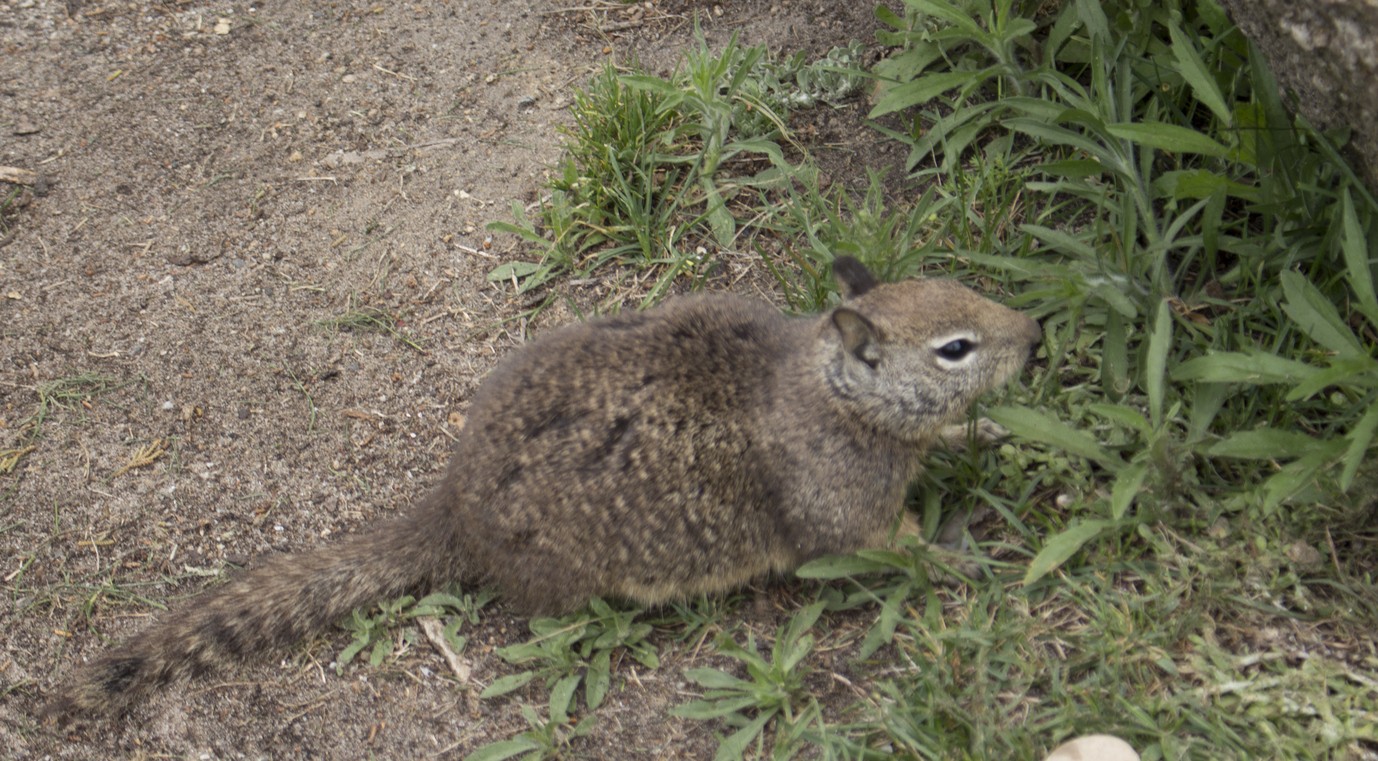
Though most people think of squirrels as animals which live in trees, there are several species throughout the United States which reside in the ground. These are close relatives of the grey and flying squirrels which populate much of the country. The more common species include the Thirteen Lined, the Belding’s, the California, the Rock, the Franklin, the Richardson, the Columbian, the Washington and the Townsend.
Related articles: CHIPMUNKS GOPHERS MOLES PRAIRIE DOGS VOLES
GROUND SQUIRREL BIOLOGY
Ground squirrels, as their name implies, have chosen to live underground and though they can still climb trees quite well, they don’t live in trees.
Ground squirrels can become a problem in the yard and around the home when their burrows lead to flooding. Their presence brings fleas and other insects or even worse, the transmission of disease. Ground squirrels will readily eat garden fruit and vegetables as well as nuts and flowers. If left alone, they will quickly populate to levels which can cause mass destruction in little time. They will even move into our homes if given the chance. This article will detail some of the more common species and then explain how you can control local populations.
MANY SPECIES OF GROUND SQUIRRELS
The California ground squirrel is limited in it’s range to mostly the west coast from the state of Washington down to Mexico. They like flat grasslands as opposed to forests but will live close to trees if they have to. They don’t need much water and will readily feed upon any green vegetation including flowers, fruits and plants. They will also eat nuts and seeds. They live in burrows they dig and will occupy these burrows year after year. They have litters which have 7-10 young once a year. They live 3-5 years on average.
The Belding’s ground squirrel has a much more limited range extending throughout 5-6 states including California, Nevada, Oregon and Idaho. They too avoid forests preferring meadow-lands close to farms growing wheat and alfalfa. Though they will feed on seeds and nuts, they will tend to stick with green leafy plants and fruits when they can find ample supplies. The Belding also loves flowers. They will produce litters of 6-8 on average once a year and will live slightly longer than the California squirrel.
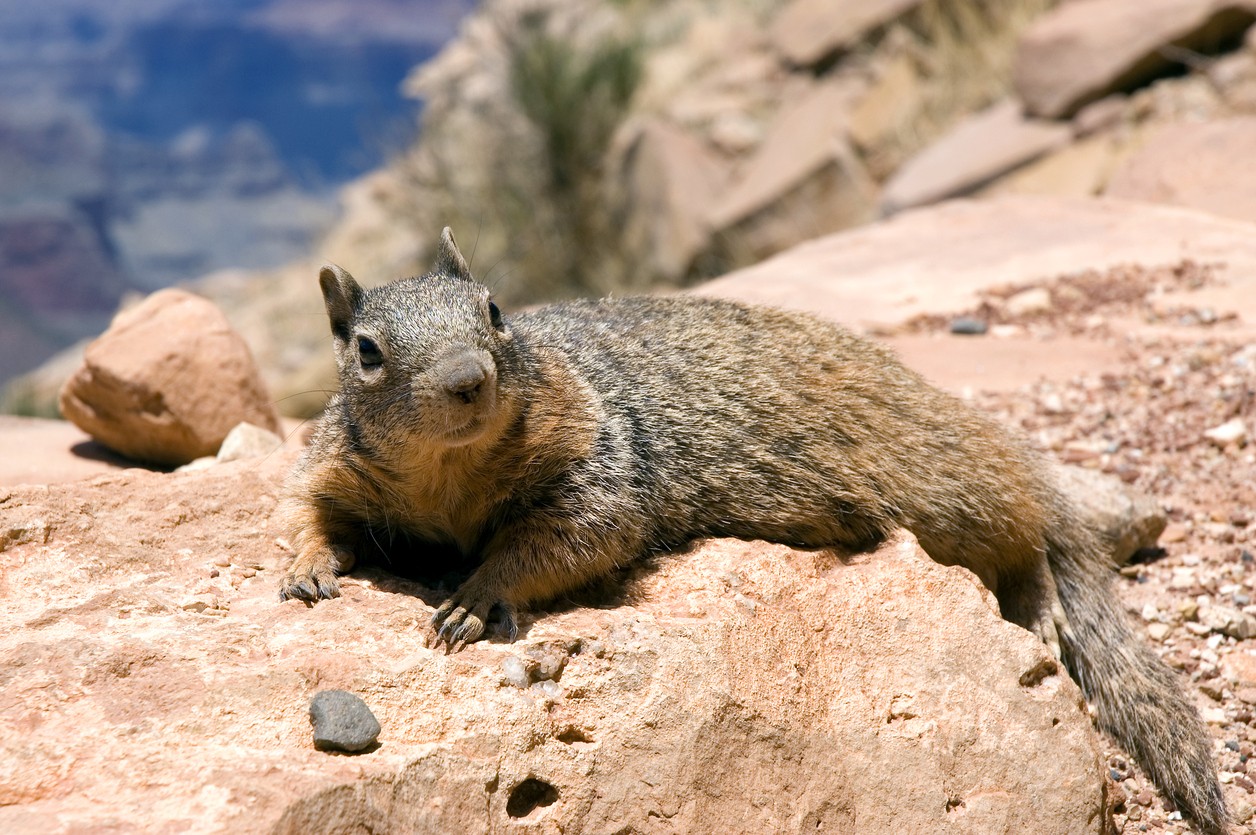
The Rock squirrel has a huge range extending from part of California through Arizona into Texas, Colorado and Nevada as well as Utah. As their name implies, they like to reside in rocky areas. This has enabled them to adjust well to roadside rock walls, fences and man made ditches. Though they too will eat plants as a staple, Rock squirrels love nuts, seed and fruit and will readily feed on them when available. They average 3-5 young per litter per year and will live 4-6 years on average.
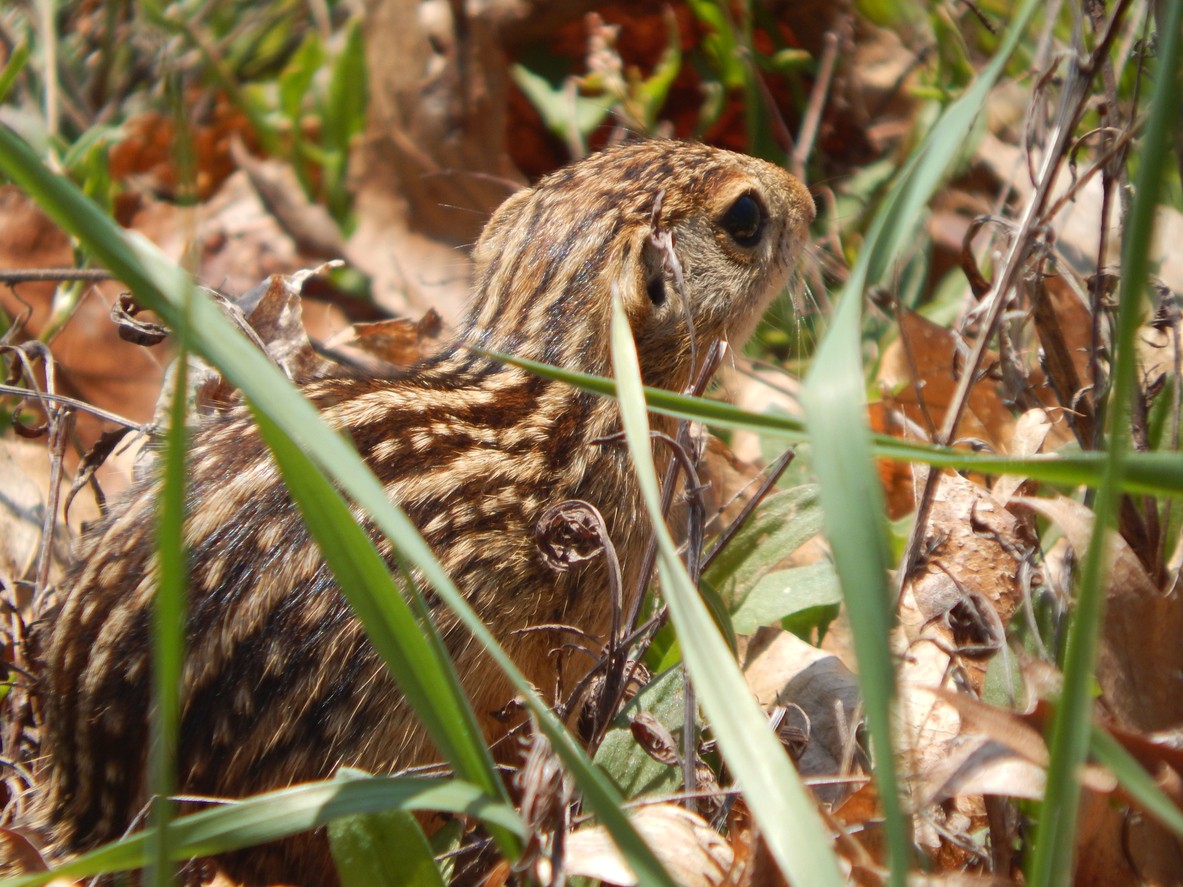
The Thirteen Lined ground squirrel is probably the most mis-identified ground squirrel often mistaken for chipmunk and gophers. It resides throughout most of the great plain states all the way from Texas to Pennsylvania to Canada. These ground squirrels will eat just about anything including insects, mice, earthworms, small birds, other Thirteen Lined squirrels, seeds, nuts, vegetables, fruit and flowers. They will produce over 10 young per litter once a year and will live a few years on average.
The Franklin ground squirrel resides in several of the mid western states from the middle of the country up to Canada. They will eat a lot of insects and small animals when available but rely mostly on plants, flowers, fruits and vegetables. They will change to seeds and nuts later in the year when available. Their litters can have 1-10 young and they only live a few years.
The Townsend has a range much like that of the Belding and relies on plants, fruits, vegetables and seeds for food. They have litters and life expectancies like the Franklin squirrel as well.
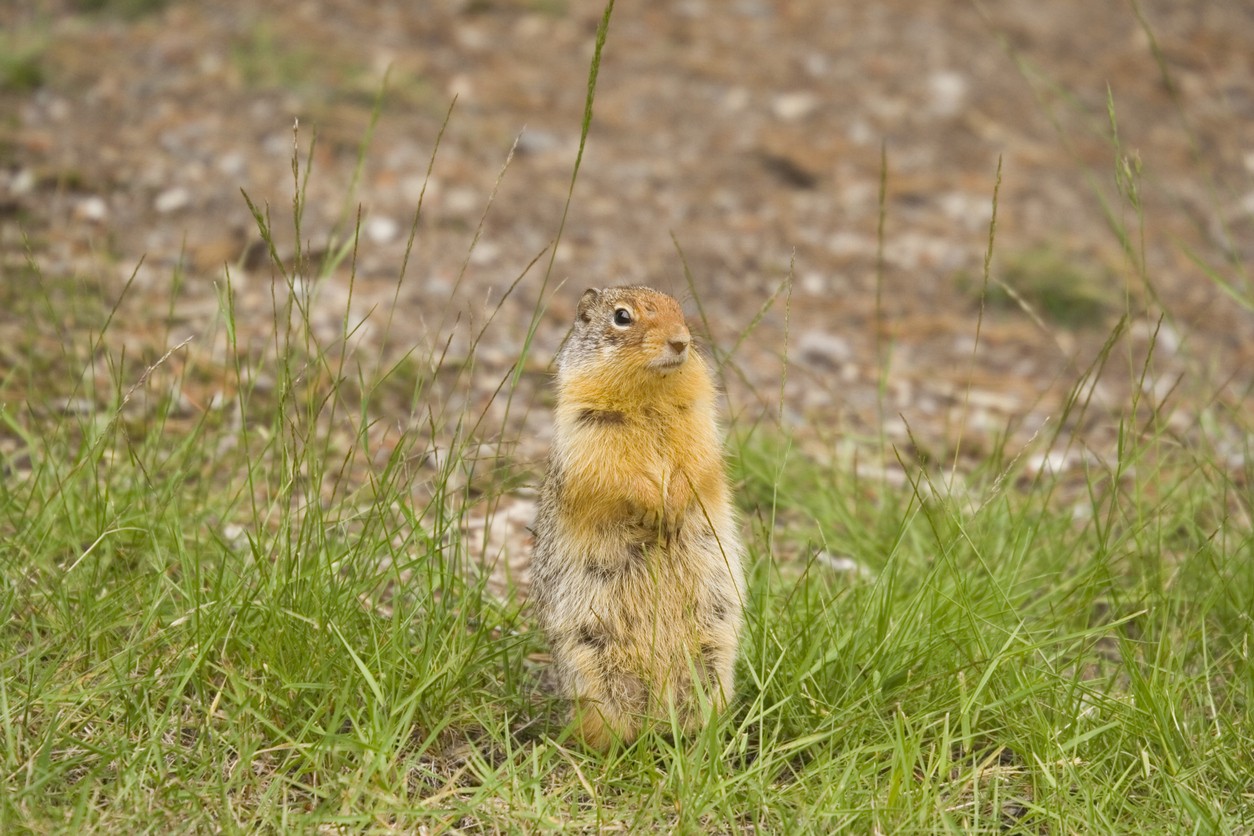
The Richardson, Columbian and Washington ground squirrels all reside in the northwest part of the country and like the Townsend, rely more on flowers, plant stems, fruit and seed for diet. They will eat nuts and grains when available and have one litter a year with as little as 2 or as many as 15 young. They only live a few years on average but because they can reproduce quickly a few can turn to 30-40 in a year.
GROUND SQUIRREL PROBLEMS
Most all ground squirrels look different and may reside in different regions of the United States. But they all behave in similar fashions, they all like urban environments and they can all cause damage to our plants and structures. Ground squirrels who want to live on your property will first have to dig burrows to nest. They may try to take advantage of old abandoned burrows but they’re good diggers and will quickly construct a network of tunnels. These tunnels will undermine cement slabs and foundations as well as present hazards to people and animals.

DISEASE RELATED TO GROUND SQUIRRELS
Ground squirrel activity will inevitably bring insects like fleas along with several diseases and virus all of which present a hazard to people. In recent years, black plague has been linked to animals like prairie dogs and animals like gophers and ground squirrels are almost assuredly helping spread this deadly disease indirectly.
GROUND SQUIRRELS LOVE GARDENS!
Ground squirrels will eat just about any ornamental flower or plant and since they love fruits and vegetables, most gardens will become a favorite feeding station once found. Since they like to live close to where they eat, once they start feeding in your yard they will colonize. This colonization can lead to some foraging into your home.
It’s for this reason that you should try to keep them off your property and once you find activity, take necessary action to remove all animals. The author will now list methods and products that can be used to repel ground squirrels from your yard to prevent local infestations. If you already have activity, there will be control options listed including poisoning, live trapping and kill trapping.
If you reside in a region which has ground squirrel activity, you must make note of surrounding land. Look for pockets of ground squirrels and some are present, expect them to move onto your land if left unprotected. If you know of people in the neighborhood who have had problems with these animals, make mental notes of where and when these problems were active. If neighbors immediately adjacent to your property have active ground squirrels or if your land adjoins fields where ground squirrels are present, you should start implementing some of the repellent treatments to make sure none move onto your land. Such repellents work well for this application.
GROUND SQUIRREL DETERRENT
Ground squirrels can be repelled and kept off you land using one of the deterrents listed below. In general, the best approach is to line your property with our sound repellers. These will create a “fence” of sorts they will not want to cross.
INSTALL SOUND REPELLERS ALONG PROPERTY BORDERS
Another effective way to keep ground squirrels out of the yard is to install some of our sound repelling devices. We feature two types; one for above ground, long distance coverage and the other is a “ground stake” low profile design.
ABOVE GROUND SQUIRREL REPELLER
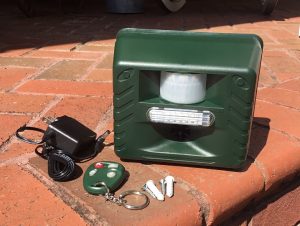
For protection over large areas where ground squirrels can come from different angles, our ABOVE GROUND SOUND REPELLERS are the way to go. These units are very effective on ground squirrels to the extent that they can actually chase away animals already living in the yard.
This repeller is unique in that it uses ultra sound by default which is usually generally enough to ground squirrels away. But it also has a predatory animal audible sound you control. This sound can be turned up or down as needed. This sound alone will be enough to scare them away instantly.
Refer to our product page for more details on this equipment since it has too many options to list. But here is a quick summary of why this unit is a good option for ground squirrels.
- It uses ultra sound to repel animals and ground squirrels do not like this sound.
- It has a wireless remote control so you can turn the machine off/on as needed in case you need to use the area where its deployed.
- It has a daytime only setting, a night time only setting or a 24 hour a day setting. For ground squirrels, it should be on during the day.
- It has the optional audible sound setting.
- It includes an AC power supply so if you can run it the device by plugging it into a power outlet, you can let the machine run constantly which will allow it to effectively control a huge area during the day. Using it this will give you coverage up to 70-80 feet away covering up to 4,000 sq/ft in the process.
- It can also be powered by batteries which can last several months. But using it this way means you will need to have it activate via the motion detector only or else the batteries will run out after a few days if you leave it “always on”.
Plan on protecting your property by positioning these along property lines and borders where ground squirrels might enter.Units should be placed 1-2 feet above ground and pointed in the direction where animals are entering as well as “over” the turf you want to protect. 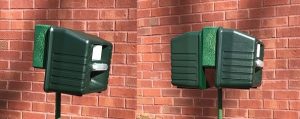
For easy installation, MOUNTING BLOCKS are handy. They can accept 1 or 2 repellers (picture to the right) and have a 1/2″ hole on their bottom so they will easily fit over a 1/2″ piece of rebar or any other wood or plastic stake. Ultra Sound Repellers will work fine by themselves as long as you have a good place to set them up. But we highly recommend getting the Units with Mounting Blocks in the kits we offer. Mounting Blocks allow you to place units anywhere and they will save time too.


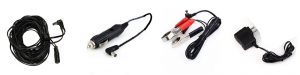
We also feature several accessories for our sound repeller including POWER CORD EXTENDERS (33 FEET AND 66 FEET), CIGARETTE LIGHTER POWER ADAPTER, ALLIGATOR CLIP POWER CORD and AC POWER SUPPLY REPLACEMENTS.
Install units pointing in the direction from where they will enter and ground squirrels will avoid the property. The sound is simply too irritating to the animals. This is particularly helpful at keeping unwanted animals off your property. So if you have animals coming around visiting periodically, they will effectively chase them away. But for nesting animals with active tunnels, you’ll need to first gas them and then install our in the ground repellers listed below.
LOW PROFILE SOUND REPELLERS
The ground stake repellers are a more “discreet” setup for the yard. Once installed, you’ll be able to keep them from creating nest tunnels. But again, plan on gassing active tunnels first.
So which unit do you install?
One design is strong enough to use as a barrier along property lines to keep foraging ground squirrels looking for homes away from your yard. The second unit is much stronger incorporating ultra sound along with the standard vibration and sound our basic unit provides.
There are lots of these units on the market these days but most are under powered and won’t be strong enough to handle the job when it comes to ground squirrels. That being said, the science is proven. Basically ground burrowing animals like ground squirrels will avoid dirt under construction or where they hear ongoing “noise”. For this reason, devices which intentionally send out sound waves can be used to both chase away ground squirrels and keep them from entering your property in the first place.
BASIC SOLAR POWERED GROUND SQUIRREL REPELLER
So if you’ve had ground squirrels in the yard and you want to make sure they don’t come back this year, install our basic SOLAR POWERED GROUND SQUIRREL CHASER along property borders. This device uses sunlight to charge a small battery which in turn will keep the unit running all day and all night. In fact it can run several days without sun so once installed, you’ll have 24 hours a day protection.
This basic unit can cover up to 6,500 sq/ft and if placed along property lines where ground squirrels might enter, these units will effectively reroute any nuisance animal elsewhere.
Coverage is about 4,000-6,500 sq/ft depending on soil type. Soft, loamy soil like that typically found along water ways will tend to absorb the sound and effectively deaden it. This means coverage will be thwarted and reduced to the lower range of 4,000-5,000 sq/ft. But for hard pan, clay type soil, coverage can be 5,000-6,500 sq/ft.
When placed along property lines, install units every 45-50 feet to establish an invisible “wall of sound” ground squirrels will not want to pass.
When the units arrive, they will have a slight charge but its not enough to use afield. So before installing units in the yard, we recommend letting them sit out in sunlight (turned off) for at least one day to get a good charge on their battery. This way when you deploy them in the yard, they’ll be ready to work at full strength.
Now if you currently have active ground squirrels, you’ll need the next unit down the page and possibly the above ground repeller listed above as well as the gas sticks for active tunnels.
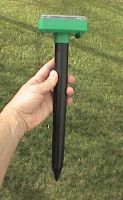
DELUXE SOLAR POWERED GROUND SQUIRREL REPELLER
So if you have active ground squirrels centered on your property say in a garden or flower bed, our DELUXE GROUND SQUIRREL REPELLER will be needed. This model is one of kind and not available for sale elsewhere. True, there are models which look similar. But they don’t have all the features our units have which are needed for certain animals like prairie dogs, ground squirrels, chipmunks and voles.
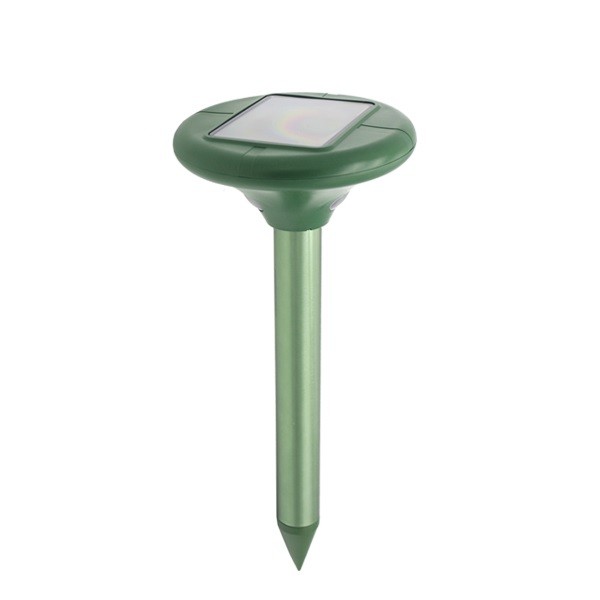
Our deluxe model works essentially the same as the basic unit above. It too uses the sun to charge an on board battery so it runs on its own, around the clock. And it releases a vibration that will both move the ground and create a sound wave that will “rattle” ground squirrels so they want to leave. But our deluxe model incorporates other sounds making them well suited for control of existing problems when used in conjuction with the gassers.
As stated, this unit will vibrate several times a minute constantly rotating the sound cycle. But it also sends out “ultra sound”. In general, ultra sound won’t help fight true, under-the-ground dwellers like moles since they’re down in the ground and well protected from sound active above them in the open air. This is why all the other ground stake repellers on the market don’t include ultra sound. But for animals that like to forage up out of the ground (like ground squirrels), ultra sound is helpful and for the most part, a necessity if you’re trying to treat an active problem.
This short video (less than 60 seconds long) shows how our Ground Stake Repeller works:
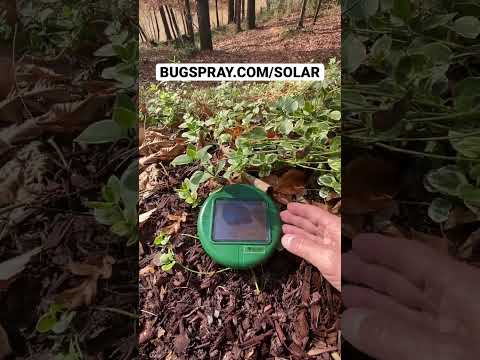
In addition to the ultra sound being sent out, it also uses LED bulbs located on the underside of the controller head. These light when its dark which effectively give the units an “evil” look at night. Small animals that like to forage on the ground will look up and see these flickering lights and perceive it to be a threat. This in turn will make them uncomfortable and nervous. Combined with the ultra sound, the vibration and the audible sound, the deluxe repeller is powerful enough to be used in the middle of a an active ground squirrels colony and within two weeks, force them to leave.
So if you have active ground squirrels and want to use this unit to chase them away, plan on gassing them first. After you gas the tunnels, wait a day and install the units directly into the tunnels and dens. During this initial phase you don’t want to install units along property borders for the first two weeks. Leaving the property borders unprotected will allow the nesting ground squirrels a way to escape.
If the above video wasn’t informative enough, this next one is a lot longer but provides all the details you’ll need to know:

Now after two weeks, you should still leave the units in nests where first installed for another month but at this time you can also install units along property borders. This will keep them out of your yard for good. And after another month, you can relocate the units from the middle of your property to the peripheral edges where they can work at keeping all other unwanted animals out.
Coverage for these units is a bit more compared to the basic unit. So for loamy soft soil, plan on getting 4,000-5,000 sq/ft of coverage. But for hard pan, 6,500 to 7,500 sq/ft per unit is to be expected. Along property borders, place units every 45-50 feet.
Setup for these is like the other unit in that you’ll want to let the head unit charge for 1-2 days prior to setting them out in the yard. This way they go afield under full power making them best suited to get the job done. For more detailed directions on how to set them up, download our SETUP DIRECTIONS (.pdf).
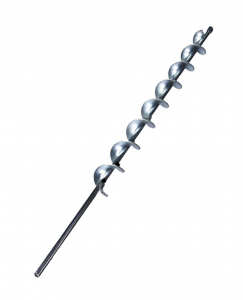
Regardless of which unit you get, you need to properly prepare the ground by drilling a smooth hole for them to fill. The hole must be the proper depth and width. Our SOIL AUGER is perfectly designed for the task.
This short video (less than 60 seconds long) shows how to use our Earth Auger:
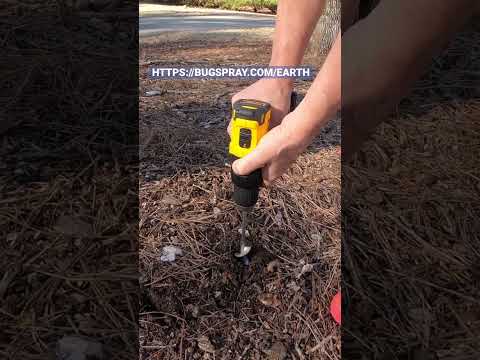
Simply attach it to your favorite hand drill and take it out to the yard for the task at hand. Holes can be drilled in 10-20 seconds and will be just right. Plan on making them about 9 inches deep as units need to be installed so 1-2″ stick out to keep the head unit off the ground.
GAS STICKS FOR GROUND SQUIRRELS
If you already have burrows and plan on installing our deluxe units to chase active animals away, use these gas fumigants to force them to move. These use sulfur as their driving force. They are “dynamite” looking GAS STICKS but don’t explode so you shouldn’t think you are deploying some kind of bomb! But they do get lit and then they basically “smoke” quite bit. Place them down dens and tunnels after they’re lit and then “cap” the hole so the smoke stays in the tunnel network. The goal of this approach is to literally “smoke” them out. If animals are in the den when you treat and their network is small (20 feet or less), there is a chance the smoke could suffocate them.
The second option that routinely happens is that they leave the den using an exit tunnel and escape off the property.
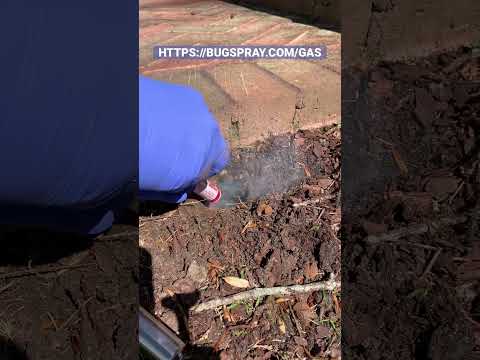
Gassing is effective and will provide 2-3 weeks of control. But when used with ground stake repellers, you’ll get more permanent results.
1-2 sticks per den is generally enough. And if you can close up or “cap” entrance/exits you see close to the one you want to use, do so as this will help keep the released gas in their tunnel.
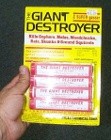
Now for these to be effective, its best if the targeted animal is in the burrow. This can be confirmed by observing it run down it’s den as you approach. Once sure targeted animals have moved down their dens, make an effort to locate all entrance/holes and use rocks to close up and “cap” these other entrances. Leave one hole open through which you will apply the Gas Stick and make sure it is one of the main holes used. Keep one more rock which will be used to seal this last hole once the Gas Stick has been applied.
Next, light the Gas Stick, place it down the den and close the den up with that last rock you have ready. If the holes are sealed correctly, the Gas Stick will release sulfur gas which will move about the tunnel network reaching all areas where nesting ground squirrels will be living. The gas will take about 3-5 minutes to completely release and animals which are breathing the fumes will quickly and painlessly pass away. If done correctly, results are immediate. It is important to understand that there is no residual left behind from treatments; once the gas is gone so too is any chance of killing targeted ground squirrels. This is why knowing they are present in the den is crucial for success. Most dens will take 1-2 sticks; larger ones will require 3-4 all applied at one time.
WHAT ABOUT A POISON BAIT FOR GROUND SQUIRRELS?
We routinely get asked for a ground squirrel “poison” and though there are are couple of formulations on the market, these are for use by licensed professionals only because of the active ingredient. We do have a non restricted GOPHER BAIT which works well on gophers and moles. Using grubs and worms as the main attractant, any small animal that eats some will succumb to the active. Generally used at the rate of 2 oz per tunnel or nest, its the only bait you could try if you insist on using one but keep in mind, its not labeled for such ground squirrels – just moles and gophers.
HOW TO TRAP GROUND SQUIRRELS
If you have active animals nesting or foraging and prefer to remove them for good, consider a good live or kill trap. Trapping is effective. Once animals are removed, repellents work best and can be set up with confidence because they always work when repelling new animals coming to the area. But trying to repel established animals can be a challenge and in some cases, removing the animals is the best way to proceed.
BEST LIVE TRAPS FOR GROUND SQUIRRELS
We have three live traps effective for ground squirrels.
Th smallest is the LT3310 and really is only suggested to use on animals which are less than 10 ounces like the 13 Lined Ground Squirrel. This trap measures 3″ wide by 3″ tall and 10″ long.
To set the trap, simply push the front door “in”. It will then lock in place. Animals that enter will pass over the front door and eventually reach the “trip pan” which will release the door so it closes behind the animal keeping it contained inside.
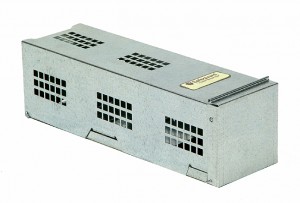
The more common traps used for ground squirrels are the GREEN ECONO 5X5X16 and the LT5518RD.
The Green trap is what we consider to be a “economy” trap and not designed to last years or to catch lots of ground squirrels. Its definitely “low” quality but sells for a good price so if budgeting is a concern, try this trap as it will work. Just be prepared to “tweak” the trip pan setting as its more likely to adjust over time.
This trap measures 5″ wide by 5″ tall and 16″ long. It’s painted green and will blend into most landscapes well.
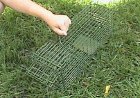
The best ground squirrel live trap is our LT5518RD. You can get it “stock” with front door access only but the rear door model is well worth the extra cost. This model will allow you to easily bait the trap as well as remove or release trapped animals. Made for professionals, this trap will last for many years. The author has this model and has trapped well over 500 animals using it over 14 years.
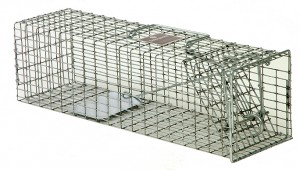
LIVE TRAP BAIT FOR GROUND SQUIRRELS
Trapping ground squirrels is actually quite easy. The key is trap placement. Simply place your trap alongside activity or burrows and with the right lure placed inside, you’ll get fast results.
We have found our LOGANBERRY PASTE or PECAN PASTE to be a great way to get ground squirrels to enter your trap.
For fruit eating animals (squirrels targeting your garden), go with the loganberry. Use a teaspoon full per set along with a small piece of their favorite fruit.

For nut eating squirrels, the pecan paste will work best. Same amount needed; 1 teaspoon full per set along with some bird seed or the local nut they’re targeting.

BEST KILL TRAPS FOR GROUND SQUIRREL
If you don’t want to live trap your squirrels and have no guilt about using a kill trap, there are two a few styles available that can make the job easy.
BODY GRIP SQUIRREL TRAP
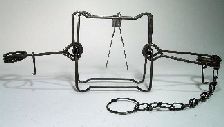
The first is known as a Bodygrip Trap. These are clamp like traps which are placed directly over ground squirrel entrance/exit holes. As the animal sticks it’s head out it will get crushed which instantly kills it. Death is both painless and quick. These traps come in many sizes and don’t need to be baited. They simply need to be placed over ground squirrel holes.
The easiest way to make a set is to use bricks on either side of the trap and then to “set” the trap springs in between a small gap you leave between two blocks. In most cases, 8 blocks will be needed. Set 4 blocks on opposite sides of the hole. Stack two on top of one another and leave a gap just far enough apart to allow the trap spring to fit in place between the blocks. The double spring #120 trap is well suited for this set. If you look at the picture of the trap, you’ll see the springs are in place. The picture is showing the trap “set”. Imagine laying the trap down flat, just over the hole, with the two springs laying between the bricks. When the squirrels emerge from the hole, there head will hit the “V” trigger releasing the jaws.
These traps measure 5″ wide by 5″ tall and can handle any ground squirrel.
PIPE TUBE TRAP FOR GROUND SQUIRRELS
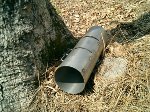
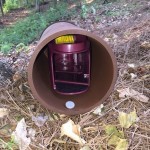
A similar type of trap – but one which is much easier to use – is the PIPE TRAP. This design uses a similar type of killing mechanism inside the pipe which is 4 inches wide. Squirrels love to enter pipes, tubes, hoses, down spouts and just about anything which is hollow and round. This design takes advantage of the squirrels natural curiosity but once inside, they don’t leave. Basically the trap acts like a pair of pliers which are being closed on the target animal.
SQUIRREL ZAPPER
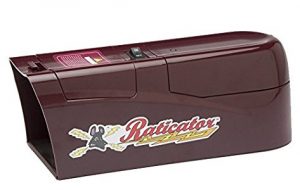
Another kill trap which can be utilized effectively is the SQUIRREL ZAPPER. These devices are small plastic chambers which have a high conducting metal pad inside on the floor. As targeted animals enter, they will unknowingly ground themselves which causes a strong surge of electricity to flow through their bodies which causes a quick and painless death. These devices are excellent for use on ground squirrels and should be baited with either our Loganberry or Pecan paste for best results. Like live trapping, your set needs to be just outside their den on the ground.
Zappers are easy to deploy. Just add batteries, some of our Paste and set them out. Squirrels will enter but not leave. This is the “easiest” kill trap to use and one set of batteries will be strong enough to handle 20+ animals.
To protect the Zapper from the rain and other elements, be sure to install them with TRAP TUBE. This is a super heave PVC pipe designed to keep your zapper “high and dry”. They come with two stakes so you can anchor them to the ground. And they can be configured to stay in place on both flat surfaces or hills.
CONTACT US
Give us a call if you need further help. Our toll free is 1-800-877-7290 and we’re open Monday through Thursday, 9:00 AM to 4:00 PM (Eastern Standard Time).
Email questions here: https://bugspray.com/about-us/contact-us
Order online and get a 5% discount! We ship fast with 99.9% of all orders shipping within 1 business day!!
Learn more about BUGSPRAY.COM and why it’s never been easier or safer to do your own pest control.
Please show your support for our business by purchasing the items we recommend from the links provided. Remember, this is the only way we can stay around to answer your questions and keep this valuable web site up and running. Thanks for your business!
Jason says
I live in Colorado on 1.5 acres. We have had a persistent 13-liner ground squirrel problem, and I’ve tried trapping, and sound deterrents, both to little effect. They have destroyed thousands of dollars in trees/landscaping They don’t seem too interested in bait, but they do love the seeds from the bird feeder that invariably fall to the ground. Getting rid of the bird feeder is not an option, and I have no qualms with lethal options. Shooting them (per the university extension) worked for a bit, but with more neighbors, is no longer an option. Thoughts on the best approach?
Tech Support says
Jason,
The quick answer is detailed above; first identify the activity closest to the home. If they’re merely foraging, use our above ground repellers to keep them away. As detailed, our units are not like any you’ve used as we have these made for us to our specifications and as such, will do the job. I’m certain the units you’ve tried are nearly as effective and why they fell short.
But if they’re nesting, these should not be used but instead, a combination of our Sulfur Sticks followed by installing Ground Stake Repellers. Again, these Repellers are made for us to our specs and will get rid of actively nesting animals. Once you reclaim the property closest to the home, you can expand out and chase away more and more until you get back the yard you want and then keep them out for good using the above ground units.
Send us an email at support@bugspray.com if you have more questions.
Technical Support
http://www.bugspray.com
Ellen says
We have 13 stripe ground squirrels burrowing under our above ground pool, in the sand. Causes big gullies inside the pool. We live in WI. It’s destroying our pool floor! We see them other places in the yard too. What’s our best option?
Tech Support says
Ellen,
Your best way to control this problem and to make sure it doesn’t return is to first remove the animals by trapping them with one of our traps listed above.
Best Live Trap: https://bugspray.com/article/groundsquirrel#best-live-traps-for-ground-squirrels
Now after you catch 1-2 and think there are no more active, cover the holes with some kind of debris like leaves or sticks and see if the holes are “uncovered” or left as is. Once you know for sure there is no activity for at least a week, treat them with Pest Away
Pest Away: https://bugspray.com/exempt/liquid/pest-away
Be sure to saturate the tunnels with a good 32-64 oz of mixed products Once it soaks in, seal the holes.
Lastly, install at least two of the Solar Powered Ground Stake repellers.
Ground Repellers: https://bugspray.com/article/groundsquirrel#deluxe-solar-powered-ground-squirrel-repeller
These will make sure new animals don’t try to use the vacated territory.
Technical Support
U-Spray Bugspray
http://www.bugspray.com
1-800-877-7290
MIKE WAGNER says
Have a black squirrel problem. You suggest live traps but they are a little expensive for my retirement budget. Is the body grip trap you sell as effective, if not as “nice”? Also I have heard peanut butter in saltine is an effective lure for them. Is that true? I live in Central Texas. Thank You!
Tech Support says
Mike,
First, are your black squirrels living in the ground? I ask because the black squirrels we know are a sub species of the gray squirrel and as such, live in the same areas like trees or attics. We mention them in our tree squirrel article here:
Squirrel Article: https://bugspray.com/article/squirrels
In the above article there is a picture of the black squirrel. Please have a look so you can compare it to the ones you see. I’d like to know if its the same species or if you have kind of ground dwelling black colored species we don’t know about.
Also in our other squirrel article is a less costly trap. Its not the best live trap around but its only $20.00 which isn’t bad. So if you’re inclined to give a live trap a try and don’t mind using a model of “lesser” quality, this one will work:
Economy Squirrel Trap: https://bugspray.com/article/squirrels#economy-squirrel-traps
Lastly, the body grip 110 trap also a fine way to deal with squirrels. And if you have a hole they’re using on your home or in a tree or even the ground, trapping them would be pretty easy. Just place a set trap over the hole and when an animal tries to pass through, they will meet a quick and sure death.
BG 110: http://bugspray.com/traps/conibear/body-grip-110-5-x-5
Technical Support
U-Spray Bugspray
http://www.bugspray.com
1-800-877-7290
PS: Are you signed up for our informative twice a month Pest Report Newsletter? More info here: https://bugspray.com/bugspray-pest-report
Judy Meirndorf says
Thank you so much for the helpful information you have given! We have a terrible problem with them. When you walk on our ground, your feet sink into the dirt due to their tunnels. We will try your suggestions now that we know where to get your traps. Thank you again!
Can you eat these squirrels? I see it on Duck Dynasty all the time where they eat squirrels. Boy, we would never have to buy meat again! Chuckle! Chuckle!
Tech Support says
You definitely can eat them! Most people don’t like the flavor as it tends to be a bit gamey. But its lean and no doubt a good source of protein.
As for the solving the problem; you are right in thinking that the live trap is the best option. It’s highly effective, easy to deploy and will get as many as you have in the yard.
RJ says
Do you have any info on controlling the Antelope Ground Squirrel? And putting out coyote urine does not phase them. I have real live coyotes on my property and they are not doing a good job and the squirrels are not afraid of them.
Tech Support says
The control methods listed above will work on antelope ground squirrels fine with the best method definitely being the live trap. For these guys, the small LT3310 is all you need since antelope squirrels are small. And use the Loganberry Paste as bait.
To trap them out, just set the trap alongside any burrow you find. These will usually be located close to or under vegetation like ground shrubs, clumps of grass, etc.
Once located, place your trap within 1-2 feet of the tunnel entrance. Be sure to add 1/2 teaspoon of Loganberry to the back of the trap and wipe some paste on the traps entrance door so they can get a little taste from outside the trap.
This will help get them to enter all the more faster because they love loganberry and won’t be able to resist the offering.
Once caught, relocate them at least 5 miles away and they won’t return. Most nests will have several adults active and it’s important to keep trapping until you go at least 1 week without catching any before you stop the effort.
Give us a call if you need more help; our toll free is 1-800-877-7290.
Here are links to these items in our cart. Please show your support for our business by purchasing the items we recommend from the links provided. Remember, this is the only way we can stay around and be here to answer your questions and keep this valuable web site up and running. Thanks for your business!
LT3310: https://bugspray.com/traps/cage/live-trap-3-x-3-x-10
Loganberry Lure: https://bugspray.com/traps/lure/loganberry-paste
Lesllile says
My husband and I just bought a home out in the country. There are big grey ground squirrels EVERYWHERE. There are burrows in a retaining wall, burrowing under my house and all over the yard. I have dogs and cats that both spend a significant amount of time outside so I am wary of poisons. The ultra sound devices looked appealing, but from reading your information it will not do much for current rodent residents. What do you suggest I start with? I had also heard that squirrels multiply at a rapid rate, as quickly as every 6 weeks? Can you confirm this? There is a large coyote population all over as well, but they do not come close to the house. Please help! Thank you.
Tech Support says
No doubt ground squirrels can reproduce quickly. Some species can do this in as little as 6 weeks so what you heard could be correct.
Now if you read our article above, you’ll learn that in our opinion, live trapping is by far the most efficient and safe way to deal with this pest. This is both easy and effective because you can literally remove every animal trapped and reuse the traps as many times as they’re needed.
So for now I suggest you get 2-3 of the LT5518RD traps and some Pecan Paste. The traps will last for many years. I’ve had one for 11 years now and it still works great. I use it for squirrels, chipmunks and rats and it still works like it did when I first started using it. I also have a jar of Pecan Paste that still works fine even though it’s almost 5 years old.
LT 5x5x18: https://bugspray.com/traps/cage/live-trap-5-x-5-x-18
Pecan Paste: https://bugspray.com/traps/lure/pecan-paste
Now once you receive your trap and lure, all you’ll need to do is set them up anywhere you find a squirrel den or burrow. And once trapped, destroy or relocate the animal at least 10 miles away and you’ll be on your way to resolving this problem.
Kristen says
I have ground squirrels eating the tomatoes out of my garden! I have a plot in a community garden so I am somewhat limited on what types of controls I can use (I don’t think they would like traps…) Any suggestions to keep my produce alive?
Tech Support says
Live trapping and relocating ground squirrels is a very practical and humane approach to solving this kind of problem. It’s what we always recommend whenever possible because the lure of food is usually so strong, there is no easy way to stop them from entering and pilfering the crop of most any garden. This is especially true during the warm summer months.
That being said, we have seen where Ultra Sound devices positioned around the perimeter of the garden and configured to send out a continuous wave of sound can have the desired impact of keeping them away. So if you are able to install at least 3 Yard Gards around the garden and have them all pointing at one another effectively creating a “blanket” of sound throughout the plants, you should be able to create a zone where no ground squirrel will want to enter. Be sure to keep these units running constantly using the included AC adaptor unless someone is in the garden working. At that time you could shut them off.
Here is a link to this item in our cart. Please show your support for our business by purchasing the items we recommend from the links provided. Remember, this is the only way we can stay around and be here to answer your questions and keep this valuable web site up and running. Thanks for your business!
Yard Guard: https://bugspray.com/deterrents/sound/usd-animal-repeller-with-wireless-remote
Dee A says
Hope you can help me with my problem. Do ground squirrels have a smell? I have an odor that I think is coming from a burrow under my front step. Is it possible there are babies in a nest causing it? It is driving me crazy! It comes and goes and seems worse in the evening. Any suggestions?
Tech Support says
Most any animal nesting in a stoop could create an odor. I’ve also seen mold and various other organic debris create odors. So unless you’re seeing ground squirrels active in the area, I wouldn’t assume you have them unless you’ve seen some.
At this point I would set out some bird seed or other local food item by any crack or seam where a small animal might be active. If the food gets taken, get one of the traps listed above and set it out with some of this food as lure. This approach should enable you to catch and relocate whatever the animal might be.
Barbara says
We have had a mole problem, but now we see it is ground squirrels. We have holes around our crepe myrtle bushes and have some now around the foundation of our house. What can we do? We have a ultra sound mole killer, but it hasn’t helped the squirrels.
Tech Support says
Get a live trap to trap out the ones nesting on your property.
Live Trap: https://bugspray.com/traps/cage/live-trap-5-x-5-x-18
Next, install some Ultra Sound Repellers pointing outward. They’ll ward off news coming around.
Yard Guard: https://bugspray.com/deterrents/sound/usd-animal-repeller-with-wireless-remote
You should also douse the old dens with some Coyote Urine but only use the urine after you remove the squirrels currently nesting.
Coyote Urine: https://bugspray.com/repellents/liquid/coyote-urine
Gail Wheeler says
We have 80 acres in Indiana. We thought all the holes in “our yard’ were moles…. however, this week our cat has now killed and proudly brought 2 dead squirrels to our door: the first a little red one. Then a black one today, which I put in a bag … into the freezer… wondering about what kind it was and could they be living in the ground?
Earlier this spring the cat had a tiny little red animal in my garden which was ‘crying like a baby’!! It had huge blue/green eyes and a very little tail. I took it from the cat and very quickly it went into a hole in my flower garden. I had no idea what it was… but now I suspect it was a baby” ground squirrel” after reading some of your information. We do have a lot of Oak trees and have put out food for birds in the winter and a “few” squirrels.
Our first year here there were flying Squirrels but we thought the noise of our many children scared them away to the woods behind us. However, in over 30 years here, this is the first year that we have been aware of “ground squirrels”. Thank you for this informative site!!
Tech Support says
Sounds like ground squirrels for sure. I suggest you start reducing the numbers in close proximity of the home or else you’ll start seeing more in the home. Additionally, the cat will no doubt start bringing them around a lot more frequently too.
jerry says
I have ground squirrels eating the electric wiring in my car and truck. I have replaced many items. I need serious help to stop them from getting in my autos as they are breaking my bank?
Tech Support says
This is a common problem with many small animals including rats, mice, chipmunks and members of the ground squirrel family. They need to gnaw small round objects as a way to keep their teeth ground to the right length and the wires, tubes, pipes, hoses and lines found in most any car or truck present a wealth of chewable real estate they need.
As explained above, the best method to stop them is to place live traps under your vehicles with some Pecan Paste and bird seed as lure. These squirrels cannot pass up a good meal opportunity like this and you’ll quickly catch any interested in coming around and trying to capitalize on your unprotected vehicle. Now once they’re trapped, you can do with them as you wish and your problem will be resolved.
Live Trap: https://bugspray.com/traps/cage/live-trap-5-x-5-x-18
Pecan Paste: https://bugspray.com/traps/lure/pecan-paste
Another option is to install Yard Gards at ground level pointing directly at the vehicles you wish to protect. If you place these at least 8 feet away from the front or rear end of the vehicle, the sound wave will be wide enough to cover the entire area under it. This way any approaching animal will be repelled. Use one Yard Gard per vehicle and though you can set them in “motion sensor” mode, we have found the best way to put them to use for small animals is with the AC Adaptor (which is included) and in the “constantly on” setting.
Yard Guard: https://bugspray.com/deterrents/sound/usd-animal-repeller-with-wireless-remote
Diane Newcomer says
Neighbors keep feeding squirrels peanuts and now they put a feeder in line fence next to my property to keep them out of their garage. These people aren’t friendly with any of the neighbors. What can I do to keep squirrels out of my shed?
Tech Support says
Not much. If you have a neighbor feeding these animals, you’re sure to get some in your yard no matter what you do. Clearly your best line of defense will be to trap and relocate as many as possible using a live trap like this:
LT7824: https://bugspray.com/traps/cage/live-trap-7-x-8-x-24
Peanuts should work well for bait since your neighbor already has them trained. As for your shed; installing 2-3 Ultra Sound devices around it might put up a strong enough sound signal to keep them out of it.
Yard Guard: https://bugspray.com/deterrents/sound/usd-animal-repeller-with-wireless-remote