
Gypsy Moths are small insects with a ferocious appetite. They’ll eat most any type of tree and their spring feeding frenzy can defoliate forests. Though their damaging behavior is most prevalent for 2-3 months each year, the impact of their feeding can be long lasting. This article will provide some basic facts about gypsy moths and then offer treatment options to help control and contain local infestations.
Related articles: CLOTHS MOTHS MILLER MOTHS PANTRY MOTHS WEBBING MOTHS
GYPSY MOTH HISTORY
Gypsy moths are not native to North America. Brought to Massachusetts back around 1869, they were imported for the intention of silk farming. Some escaped and the impact of their presence was soon discovered across our countryside.
Gypsy moths have a ferocious appetite and combined with a strong ability to reproduce, it didn’t take long for them to migrate across our country. Presently they are active as far south as Florida and they continue to migrate through the Midwest toward the west coast.
They can feed on most any type of tree including oak, apple, beech, birch, willow and hemlock. Though it’s rare that any host tree will die as a direct result of gypsy moths, the loss of leaves will indirectly cause other problems. Fungus, disease and other parasitic pests will find damaged host trees leading to stunted growth and ultimately death. Needless to say, the end result of “importing just a few gypsy moths” was never imagined; at this time gypsy moths represent the single most significant threat to our forests.
GYPSY MOTH BIOLOGY
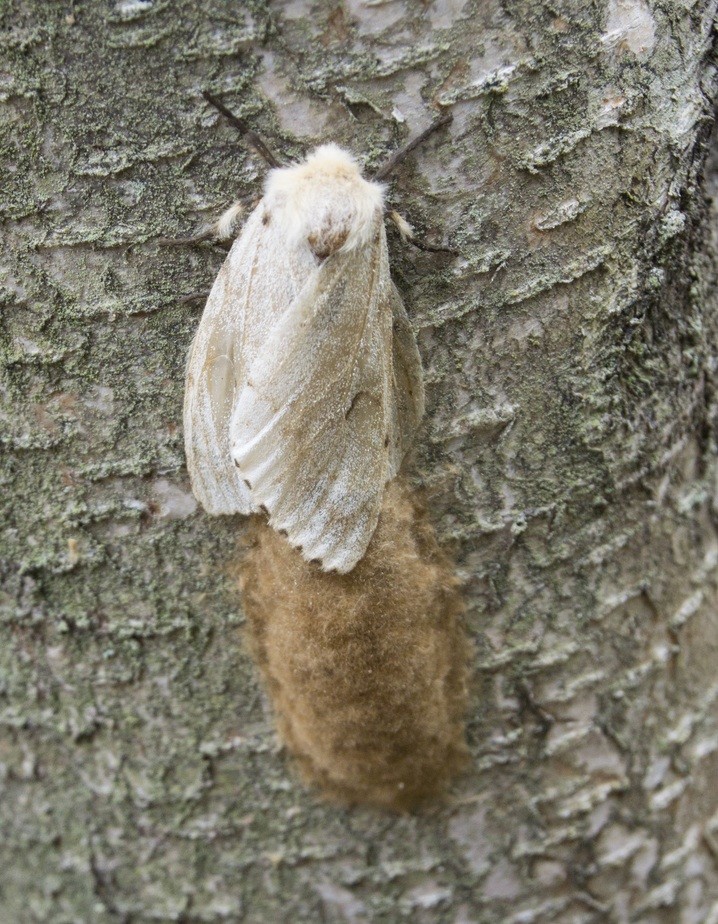
Gypsy moths have a simple life cycle. Eggs hatch small worm like caterpillars which feed on trees. These larva are tiny – so tiny they’re hard to see at first – but their silky webs will be both felt and seen everywhere once active. They use this silky web-thread to move up and down host trees.
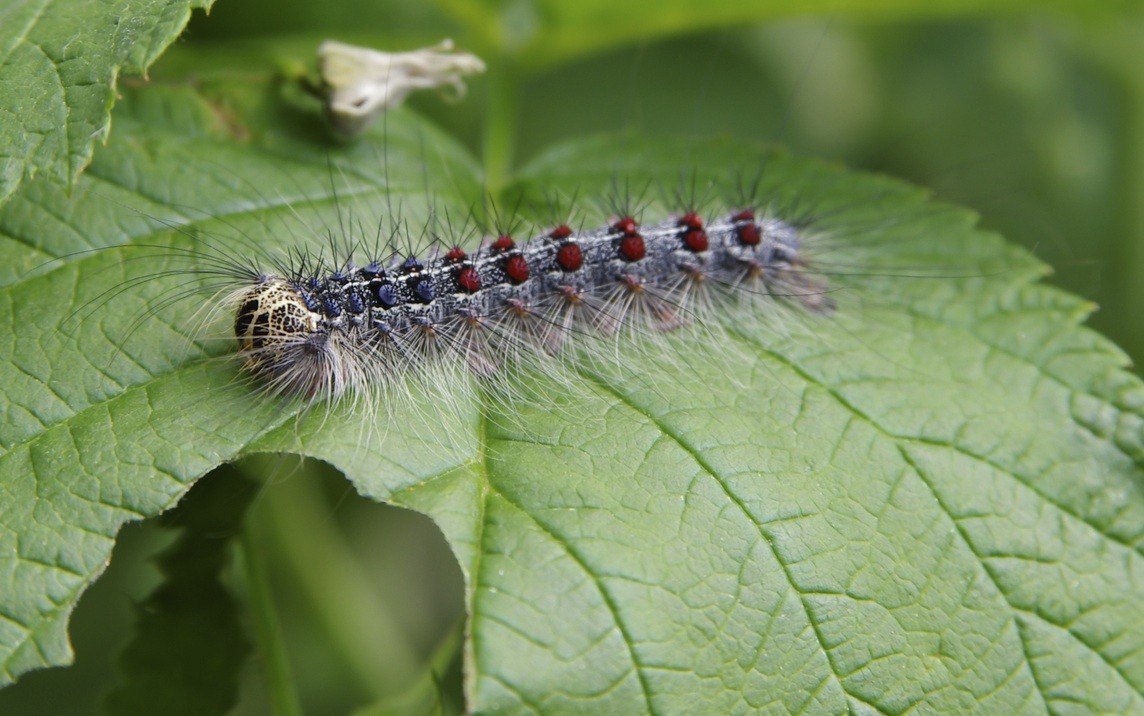
It will also enable them to migrate from one tree to another as the small light body of the larva is easily carried by the wind. This spring feeding will occur for 2-3 months. It will start in April or May and continue through July or August. Once they have their fill, they will travel away from host trees where they will spin a cocoon and undergo metamorphosis. Later in the year they will emerge as adult moths ready to mate and lay new brood eggs to continue the growth of the local population.
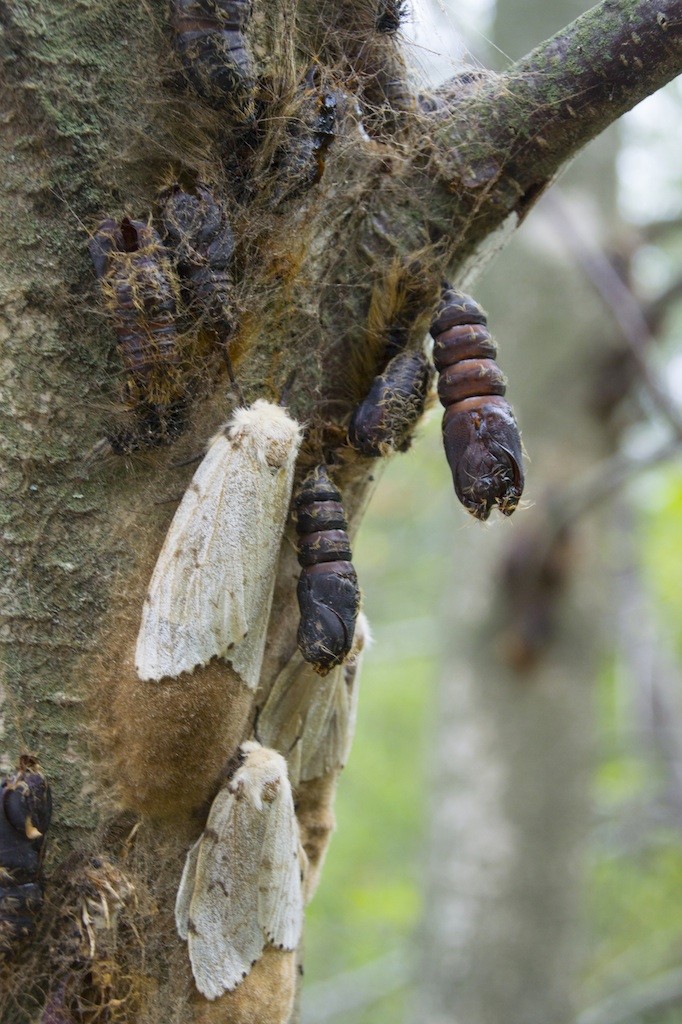
Once emerged, adult males have a strong desire to find females. This pursuit will happen during the dark of the night. Females will mate and lay eggs throughout the fall and die off as winter arrives. Before she dies, the average female will lay thousands of eggs. Her egg masses will be found on the bottom side of tree branches and bark of good host trees.
Females also seem to identify a good egg laying location as homes and other man made buildings. This behavior seems to be one of the main reasons why gypsy moths have found their way into most residential neighborhoods.
Ornamental trees also seem to be a food favorite and most any homeowners yard will provide ample hiding places for these egg masses. The average size of these masses will be 500-1000 eggs and if left untreated, these foraging young will cause a lot of damage in the following year!
INVADING GYPSY MOTHS
Now that gypsy moths are active in so many states, the goal of eliminating them has pretty much been abandoned. They’re here to stay. If you have activity in your community, it’s just a matter a “when” they will appear on your property. Fortunately there are treatment options that will keep them at bay and your trees protected.
And though many local state and county government agencies have control programs in place, don’t expect their effort to keep your property free and clear of their damaging feeding. If you want to keep them out or if you already have actively feeding larva, there are a few ways to treat which will yield results. The key is using the right product and getting it applied to the right areas.
GYPSY MOTH LIFE CYCLE
First, it’s important to understand a few things about how and when the larva feed. One of the unique characteristics of gypsy moths is their natural instinctive behavior to feed at night. This behavior helps to minimize the impact local birds and other prey animals would otherwise have; many birds like to feed on insects but almost all do this during the day. For this reason its best to treat in the evening, just before dusk, so the application will get them when they’re most active!
Gypsy moths will hide from the light. They will drop off trees via their webbing or crawl down tree trunks and seek refuge in rocks, mulch or other objects that surround host trees. They do this at the first sign of light and there they will rest during the day, well removed from local predators, and lie in wait till darkness once again returns. At that time they will crawl back out and go back to their damaging feeding. This distinctive feeding pattern means there are two ways attempt controlling local populations.
ORGANIC GYPSY MOTH CONTROL
In general, organic treatments will for gypsy moths will be slow to work and need to be done early in the season. They can be effective and if you have a few small plants, shrubs or trees to protect, certainly possible.
GYPSY MOTH TRAPS
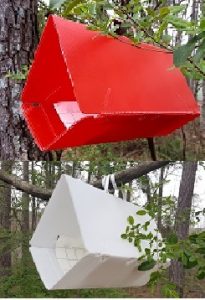
Setting out GYPSY MOTH TRAPS is a good way to help “monitor” the local activity on your property. So if you aren’t sure if there are moths around, set out a trap in a remote corner of the property and keep an eye on it to see if it catches any or if any are seen flying around it.
If so, it means they’re in the neighborhood and you may need to treat to get ahead of the developing population.
Also realize that traps ARE NOT a way to control an active population. Trees that had activity the previous year will be releasing PHEROMONE BEACONS in the air calling more moths. This high concentration of pheromones on the property will be dominant over the traps pheromones so active moths won’t notice the traps.
That being said, traps are great for finding out if there are moths around your property so you’ll know to treat.
We offer them in both red and white; use one trap per 5,000 sq/ft. Traps come with a short hanging “tie” so you can secure them to tree limbs, garden stakes, etc.
Each trap comes with a single glue pad and on the pad you need to place the lure. Do not handle the lure directly but instead, “pour” it out onto the glue pad. The lure is a small rubber “stopper” shaped object which has been soaked with the pheromone. Both lures and glue pads will remain active for 30-60 days but in badly infested yards, can fill up quickly. Pay attention to your traps and replace pads as they fill.


BEST VEGETABLE GARDEN SPRAYS FOR GYPSY MOTHS
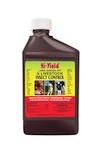
If you have a small garden on the ground growing vegetables, VEGETABLES PLUS would be an option. It’s odorless and can be applied to fruit bearing trees. Treatments will last 1-2 weeks but can be renewed more frequently if needed.
Mix 2-4 oz per gallon of water and expect to get 500 sq/ft of foliage coverage per mixed gallon.
STRONGEST GYPSY MOTH SPRAY
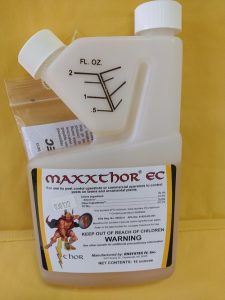
If you don’t have fruit or vegetable bearing plants and want the most concentrated option, go with MAXXTHOR EC. This concentrate is oil based and the only concentrate strong enough to penetrate the moth “powder” that protects moths from regular insecticides.
Maxxthor is super repelling too so treated trees will repel them once the spray is absorbed by their bark.
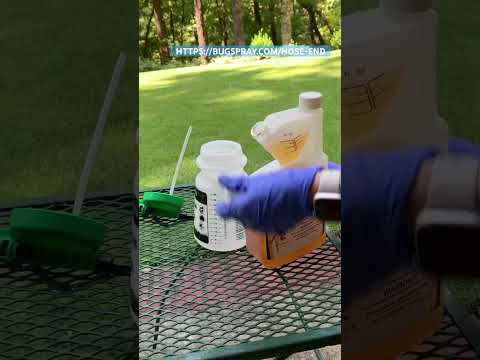
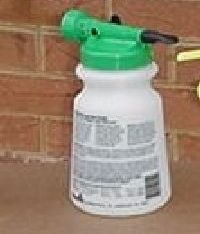
Use .5 oz per gallon of water when using a pump sprayer but in general, you should be using our HOSE END SPRAYER shown below to get the much needed coverage.
If you have an active problem with larvae and/or adults, you’ll want to use it at full strength which is 1 oz per gallon per 1000 sq/ft of foliage. This means our 32 oz jug will cover about about 3/4 acre total for active moths.
To get the most of your treatment, add SPREAD-X BOOST to your tank mix along with the Maxxthor. Boost is an adjuvant, also known as a wetter spreader or spreader sticker. It basically makes water and the mixture more “slippery” so you get better coverage. Treatments will spread 2-3 times wider and penetrate deeper. This is super important when spraying trees and shrubs where moth larvae and adults will be resting. Boost will help the Maxxthor penetrate their powdery “deflecting” shield for faster kills and even impact egg sacs.
The following short video summarizes why Boost can help deliver your treatment better.
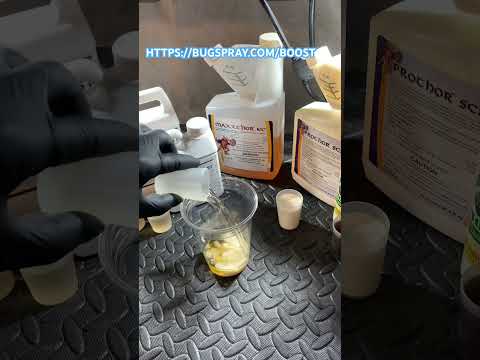
Add no more than the rate you’re applying the Maxxthor so in this case, if you’re adding 2.5 oz of Maxxthor to the hose end sprayer, add 2.5 oz of Boost too before adding water. If you’re adding Maxxthor to a pump sprayer at the rate of 1 oz per gallon, use 1 oz of Boost.

Maxxthor should applied using our HOSE END SPRAYER seen below.
The following short video (less than 60 seconds) shows how to “prepare” a hose end for spraying .5 oz per 5 gallons. For active Gypsy Moths, you’ll want to add 5 oz of Maxxthor per 5 gallons of spray so plan on using twice as much concentrate when preparing the sprayer.
We carry different hose ends but the best for gypsy moths is the green top sprayer. It allows you to remove the nozzle “deflector tip) so you can spray as far as your garden hose would normally reach.
BEST GYPSY MOTH TREATMENT FOR TALL TREES
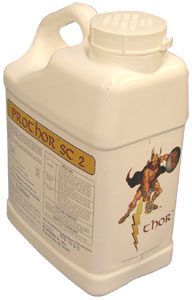
If you have tall trees and can’t spray high enough to reach feeding larvae, soil drench with PROTHOR.
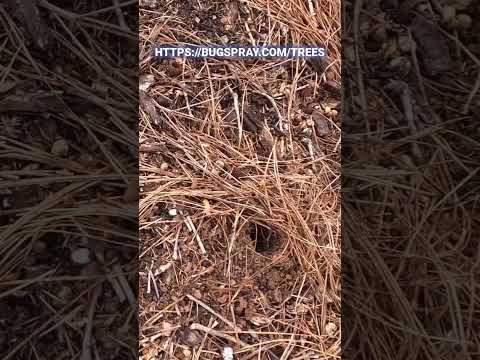
Add 1 oz for every 10″ of tree width to a 5 gallon bucket along with 3-4 gallons of water. Poke some holes 10-15″ deep using a piece of rebar or some other garden tool. Pour the mixture down the holes making sure it mostly stays in the holes and within the ‘drip line” of the trees limbs.
Prothor will take 1-2 weeks to be “sucked” up into the trees sap and to the foliage. Once there, anything eating it will die.
Prothor should be used once in the spring for controlling bugs that like to eat leaves but then again in the fall to control tree borers.
Halie Tinsley says
Hello, I am in desperate need of some help. I have an infestation of gypsy moths in my car. I have a very large yard with lots of trees and shrubs. One night about a month ago, the windows in my car were mistakenly left open. It was a couple days afterwards that we realized my car was infested with these moths. They mainly hide out during the day and come out like crazy during the night-time. They have literally infested my car. Do you have any suggestions on things I can use inside my car to eradicate them? I need to use a product that is safe for infants as we are due to have a baby any day now. Thanks so much!!!
Halie
Tech Support says
Halie,
This is an easy one. We commonly have customers who need to treat a wide range of insect problems that develop in cars. The most common would be roaches, ants, beetles and moths. Now even though gypsy moths aren’t common, it does happen. And it can happen without the windows being left open. The reason is simple.
If you park a car underneath a tree canopy that has any kind of pest, its just a matter of time before the car gets infested. We’ve seen this happen with whiteflies, aphids, wasps, ants, gypsy moths, tent caterpillars and more. So in the future, it would be wise to treat the problem in the trees so to avoid this exact issue.
As for your infested car; get some Multipurpose aerosol and treat every crack and crevice both inside and outside the auto being sure to apply it lightly and with the included injecting straw. Multipurpose is both odorless and goes on dry when used properly so it won’t leave any kind of residue or odor. This makes it ideal for use in the cab, around door frames, engine compartment, etc.
As for safety; Multipurpose won’t pose a hazard to people once allowed to dry and ventilate following the treatment. This process will take 30-60 minutes and from that time afterward, you and the family can use the car as always. More info on just how safe it is to use can be found here:
Product Safety: https://bugspray.com/about-us/who_is_bugspray.html#safe_for_the_home
I recommend treating 1-2 a week until there is no activity and if you continue to park the car under trees which are infested, treat once a month to insure the car doesn’t get infested again.
Multipurpose: https://bugspray.com/catalog/insecticide/aerosol/multi-purpose-insect-killer-10-oz
Give us a call if you need more help. Our toll free is 1-800-877-7290 and we’re open 9:00 AM to 4:00 PM Mon-Thur, Eastern Standard Time.
Jonathan
Customer Care
https://bugspray.com
1-800-877-7290
PS: Please show your support for our business by purchasing the items we recommend from the links provided. Remember, this is the only way we can stay around and be here to answer your questions and keep our web site up and running. Thanks for your business!
John Albright says
I have an infestation of gypsy moth caterpillars. They are crawling up the sides of the house and over the deck by the hundreds. Is there any product to apply to the foundation or any other method you can recommend to get rid of these caterpillars? Thank you in advance.
Tech Support says
John,
We’ve got two viable options depending on the size of the lot you need to treat. For small lots, go with Cyonara. It hooks to your hose and is “ready to spray”. It will kill active caterpillars and offer decent repellency action to deter more from coming.
Cyonara RTS: https://bugspray.com/catalog/insecticide/liquid/cyonara-32-oz-rts
For large lots (10,000 sq/ft or more), go with Maxxthor. Its stronger, covers a much larger area and will last longer per treatment. You’ll need a hose end sprayer to apply it.
Maxxthor: https://bugspray.com/catalog/insecticide/liquid/maxxthor-ec
Hose End: https://bugspray.com/hose-end
Give us a call if you need more help. Our toll free is 1-800-877-7290 and we’re open 9:00 AM to 4:00 PM Mon-Thur, Eastern Standard Time.
Jonathan
Customer Care
https://bugspray.com
1-800-877-7290
PS: Please show your support for our business by purchasing the items we recommend from the links provided. Remember, this is the only way we can stay around and be here to answer your questions and keep our web site up and running. Thanks for your business!
John Watson says
Question?
How do you get moth
out of clothes ?
Tech Support says
John,
If you review our clothing moth control article, you’ll see we recommend first removing the clothing from the closet/storage area. Next, vacuum each piece and then third, lightly mist it with Perm Aerosol. Labeled for use on clothing, it will kill off active stages and last several months killing hatching eggs.
More information on our products for this pest can be found on our site where you can also order. Alternatively you can call to place an order at 800-877-7290, extension 1:
Clothing Moths: https://bugspray.com/article/clothesmoths
Technical Support
800-877-7290
PS: Are you signed up for our informative twice a month Pest Report Newsletter? More info here: https://bugspray.com/bugspray-pest-report