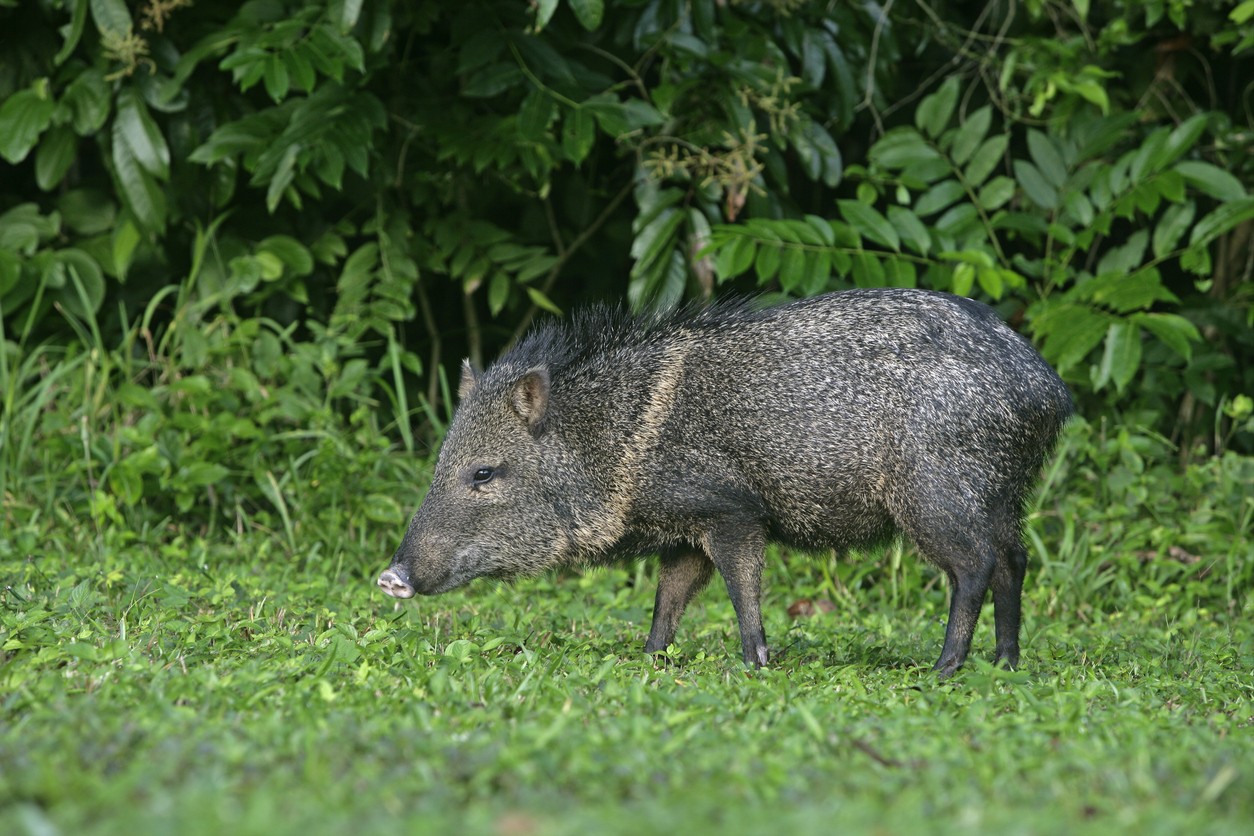
Havelina have become a problem in certain areas of the United States. They are ferocious eaters, populate quickly and have a negative impact on most all animals as well as the local environment.
Related articles: BADGER FERAL PIGS
HAVELINA PROBLEMS IN THE YARD
Havelina can be a problem in and around any home.
1) They compete with most native animals for food and due to their high rate of consumption, can severely restrict supplies.
2) They will eat most animal young like turtles, ground dwelling birds and even puppies or kittens.
3) They will readily forage on poultry and small cattle like lambs or goats.
4) When natural food isn’t available, Havelina will forage on local gardens or crops. Their impact can be fast and extreme resulting in tremendous losses to any farmers harvest.
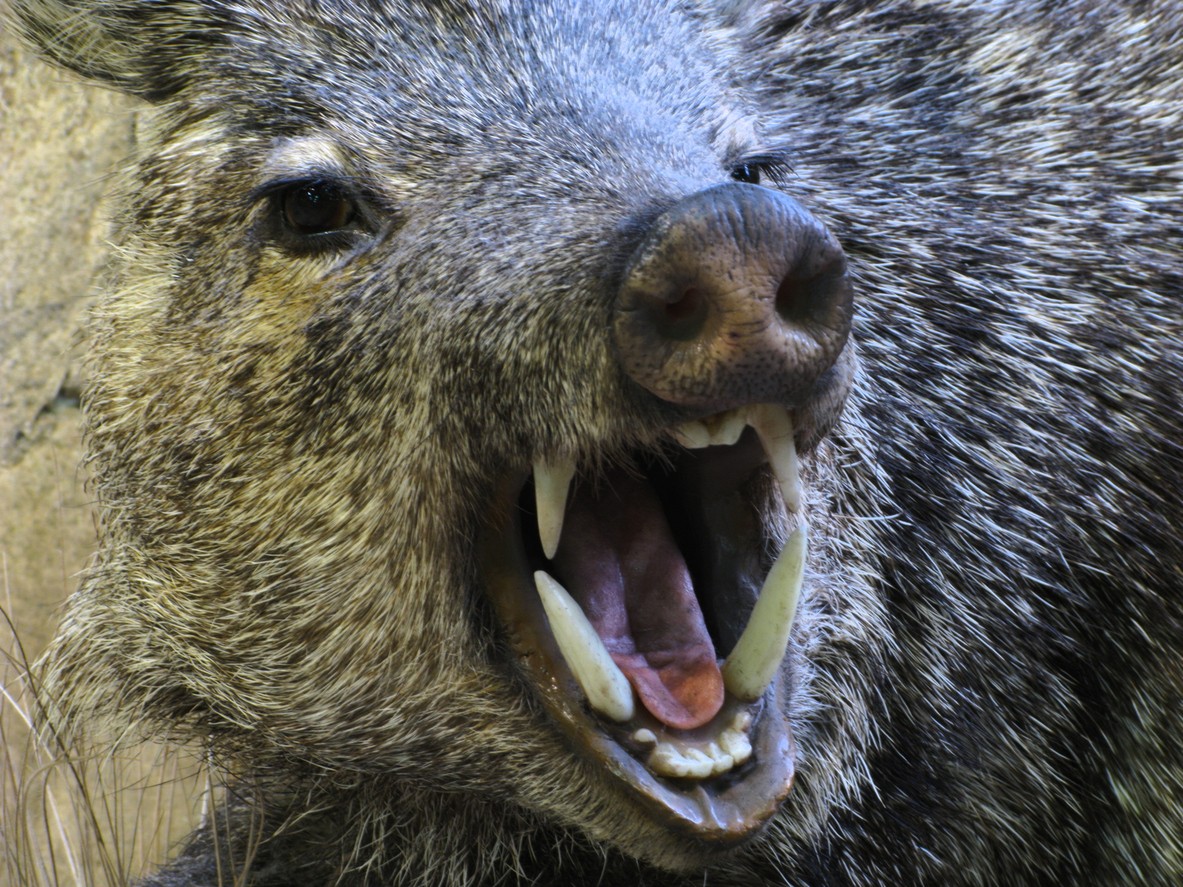
5) They love to feed on young plants, seedlings, trees, nuts and vital components significant to the way plants and trees replenish themselves in our landscape. Additionally, they will damage existing forests with their “rooting” and “rubbing” behaviors.
6) They love to “wallow” in local ponds, lakes or streams which in turn can lead to erosion as well as have detrimental effects on water quality which in turn will impact local aquatic life.
7) They carry all kinds of bacteria and germs and because of their normal behaviors pose a real contamination threat.
8) They can be dangerous. Though mostly shy, Havelina have been known to attack people or domestic animals.
HAVELINA REPELLENTS
There are a few havelina repellents that can be used to keep them out of the yard when local problems are small and not too extreme. These include bad tasting liquid sprays, sound and water sprayers.
HAVELINA SPRAY
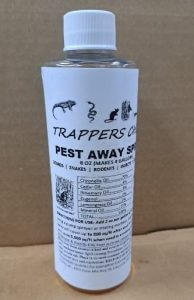
For mild feral havelina problems where you’ve found them rooting your yard, you can start by using PEST AWAY.
Pest Away is made with all natural organic essential oils and gets mixed with water. It won’t harm any wildlife, insects, birds, pets, etc. but due to it being so concentrated, it makes insects and animals “wary” of any treated areas. It tastes really bad too and so they won’t want to “eat” anything where its been applied making it a great way to naturally repel unwanted pesky animals and insects.
Our 8 oz jar mixes 2-4 oz per gallon of water and will treat up to 500 sq/ft when treating for Havelina.


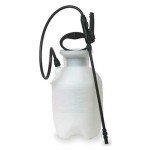
Use any standard PUMP SPRAYER to apply the solution. Spray turf extra heavy to stop digging behavior.
WATER SPRAY HAVELINA REPELLER
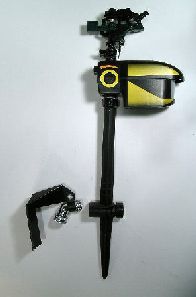
Another device that will scare them off is the MOTION ACTIVATED WATER SPRAYER. Basically these units are set out in areas of the yard where havelina are active or trailing. These devices have motion detectors and once turned on and hooked to a water supply, they can protect an area in the yard that is being targeted by local havelina. Once the havelina walk into the range of the sensor, water will start spraying out for about 3 seconds. It will then reset itself and be ready to spray again in 10 seconds. It has an effective range up to 40 feet away and can protect up to 2000 sq/ft per unit. Havelina are normally very skittish and sensitive to anything abruptly spraying water or making a hissing sound making this unit highly effective.
HAVELINA SOUND REPELLERS
Lastly, installing ULTRA SOUND REPELLERS is another option which can be used around your property to keep them away. These devices work because havelina are naturally sensitive to ultrasound, audible sound and flashing lights.
Our devices will send off ultra sound by default along with flashing a strong LED light bar. They also have an audible sound which is scary to most any nocturnal animal including Havelina.
Other features of our machines is that you can set them to operate at night only as well as turn the audible sound completely off if you don’t want to annoy neighbors. The Ultra sound is effective for up to 70 feet and when the included AC power supply is used to power them on, you can run them all the time to increase their range. When set to motion detector only, they’ll work fine but will not set off until the havelina walk within 30 feet of the unit. The audible sound is quite loud and can be heard for up to football field away.
These units are weatherproof and should be placed along property borders or where the havelina are rooting.
The best havelina settings is to set Operating Time to “night”, the Ultrasonic to “constant” and to power them always on using the included power supply. But you can also use them with the Ultrasonic set to “Motion” so it will only turn on when activated by intruding havelina. Again, you will need to have the unit within 40 feet of the intruding animal and about 3 feet off the ground for it to work best. In either case, set the Sonic Volume to “80-100”. Lastly, the frequency (yellow knob) should be almost all the way to the left.
We recommend trying to power the unit using the included AC converter for at least two weeks and then after that, running it on batteries using the “Motion Sensor” will be enough to keep them away for good.Units should be placed 3-4 feet above ground and pointed in the direction where animals are entering as well as “over” the turf you want to protect. 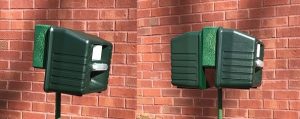
For easy installation, MOUNTING BLOCKS are handy. They can accept 1 or 2 repellers (picture to the right) and have a 1/2″ hole on their bottom so they will easily fit over a 1/2″ piece of rebar or any other wood or plastic stake. Ultra Sound Repellers will work fine by themselves as long as you have a good place to set them up. But we highly recommend getting the Units with Mounting Blocks in the kits we offer. Mounting Blocks allow you to place units anywhere and they will save time too.
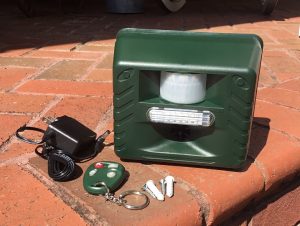
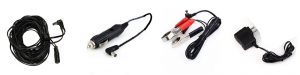
We also feature several accessories for our sound repeller including POWER CORD EXTENDERS (33 FEET AND 66 FEET), CIGARETTE LIGHTER POWER ADAPTER, ALLIGATOR CLIP POWER CORD and AC POWER SUPPLY REPLACEMENTS.
HOW TO TRAP HAVELINA
Because of the problems associated with wild Havelina, farmers and land owners will many times have to remove local havelina from the environment. Havelina can grow large and because of their size and shape, there aren’t many options available for managing local nuisance animals. There are no registered poisons and the only proven method of controlling this animal is with a trap.
LEGHOLD TRAPS FOR HAVELINA
There are two kinds of traps commonly used for havelina. Known as “leg-holds”, these are styles that have long been used by traditional trappers who hunt beaver, mink, muskrat, etc. These devices work by “catching” target animals on their legs. Trap sets must be made where the Havelina are known to be active and foraging. Depending on the size of the Havelina targeted, use either COIL #3 or COIL # 5 traps. These are the easiest to set and need to be placed along their walkways and trails. Be sure to “anchor” them to large stumps or better yet, live trees. Havelina are quite strong and will easy pull up common trap stakes.
For animals 100 lbs or less, the #3 will usually be large enough.
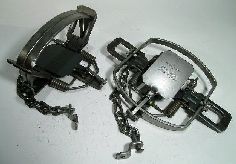
For animals over 100 lbs, go with a #5.
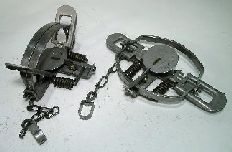
The more traditional Havelina leg hold trap is known as the Longspring. It’s a bit more difficult to deploy but works just as well. Again, animal size will determine the trap size needed. In most cases, a LONGSPRING # 3 or LONGSPRING # 5 will do the job.
For animals 100 lbs or less, the #3 will usually do the job.
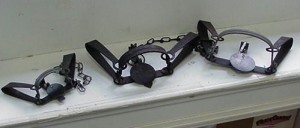
For animals 100 lbs or more, go with a #5.
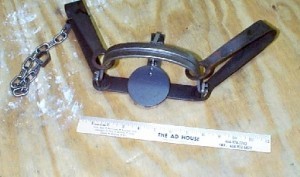
In most cases there is no need to bait these sets but if you place some corn along a pathway you know is being used, leghold traps can be set in line with the corn. This insures one will step on your set.
Havelina can grow large and are quite strong. For this reason leghold traps must be anchored to a big, strong tree to insure the traps aren’t taken away by animals getting caught. You can attempt to use a dead log but several cinder blocks will usually do the job too if no tree is present.
HOW TO SNARE HAVELINA
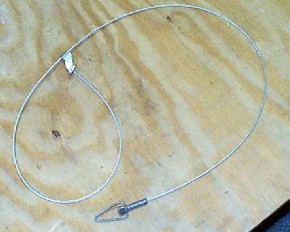
Another way to trap havelina is to use heavy cable SNARES. You’ll need our heavy duty model strong enough to hold both mountain lions and bears because Havelina will test the strength of the cables like any large animal. Use these like leghold traps; place them in pathways or trails where havelina are active. Bait is not needed to make a set and in most cases, target animals will be caught by the leg or head. Like the leghold traps, you must anchor your snare to a large, mature tree to insure the cable isn’t hauled away.
HAVELINA LIVE TRAPS
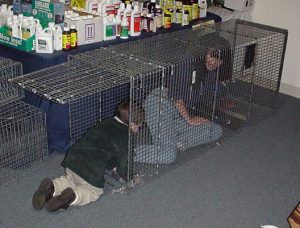
Lastly, another effective method of catching Havelina is with a live trap. Well suited for small numbers of animals, this trap is large enough and strong enough to contain any animal that enters.
To ensure success, place the trap in an area havelina have been active. Line the trap floor with common ground cover like pine straw, sand, grass, etc. The goal here is to conceal the metal cage floor so they do not detect it. Partially covering the trap with tree branches, shrub stems, local plants that vine like kudzu or some other vegetation can help too.
Lastly, bait it with corn using 3-5 lbs behind the trip pan and another 1-2 lbs scattered from the entrance to the trip pan.
Our trap is 20″ wide, 28″ tall and 72″ long which is 6 feet. In general, one animal will be caught per set but we have had reports of two entering and getting caught at the same time.
Havelina have made a big impact on regions where they are now established. If you have nuisance havelina that need to be removed, you’ll need to do some trapping. Leghold or snare type traps can work but the Havelina Trap is probably your best option for long term maintenance and population control.
CONTACT US
Give us a call if you need further help. Our toll free is 1-800-877-7290 and we’re open Monday through Thursday, 9:00 AM to 4:00 PM (Eastern Standard Time).
Email questions here: https://bugspray.com/about-us/contact-us
Order online and get a 5% discount! We ship fast with 99.9% of all orders shipping within 1 business day!!
Learn more about BUGSPRAY.COM and why it’s never been easier or safer to do your own pest control.
Please show your support for our business by purchasing the items we recommend from the links provided. Remember, this is the only way we can stay around to answer your questions and keep this valuable web site up and running. Thanks for your business!
Leave a Reply