We have a mink killing all the fish in my back yard koi pond. He just killed 4 last night and it makes me sick. Not sure if I want to trap it and I’d shoot it if I had a gun. Is there is some kind of repeller I can use to keep it out of the yard?
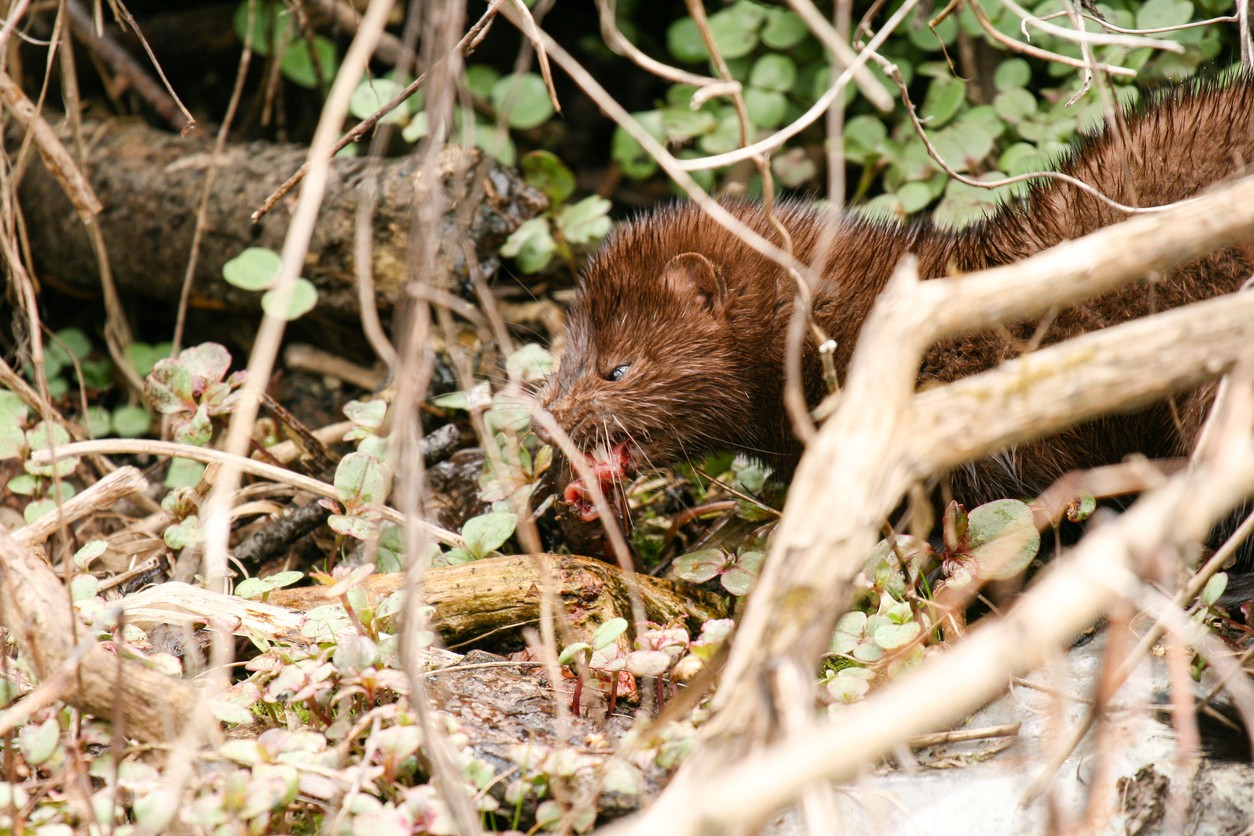
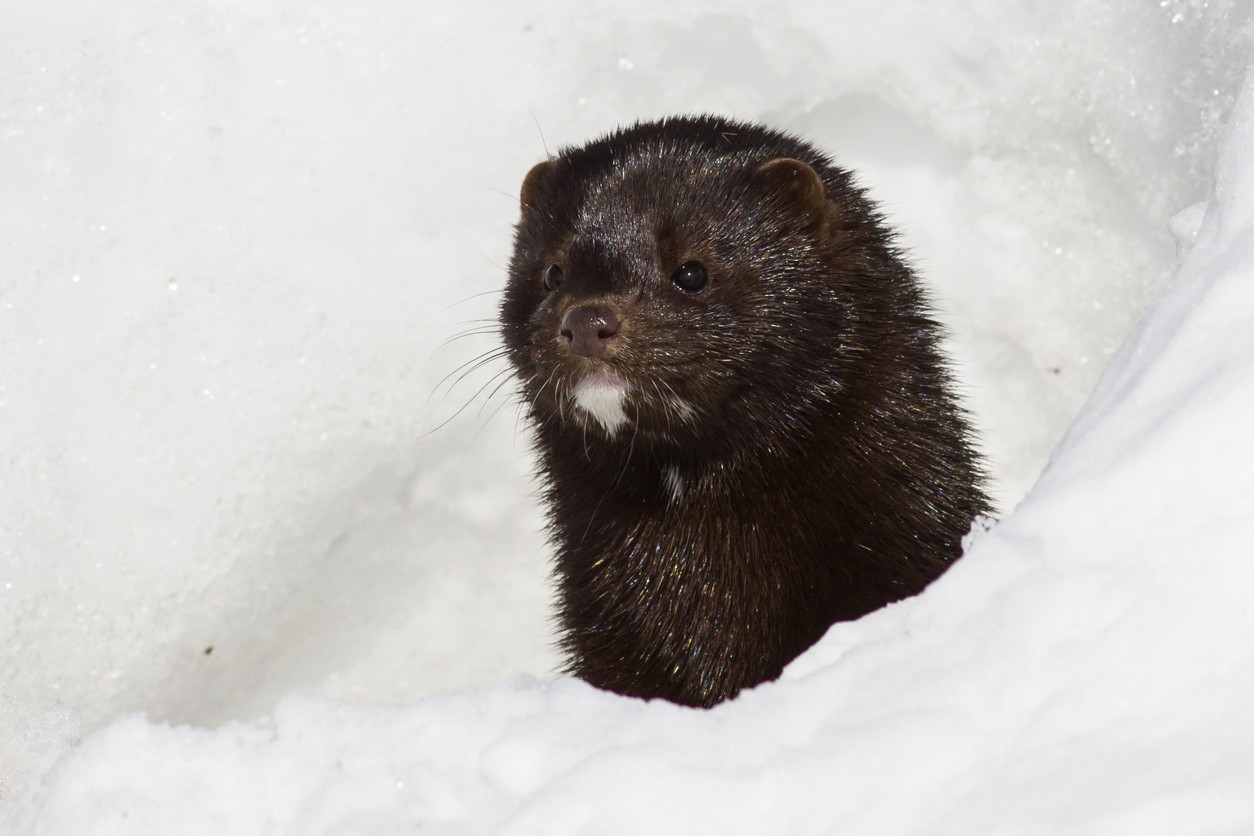
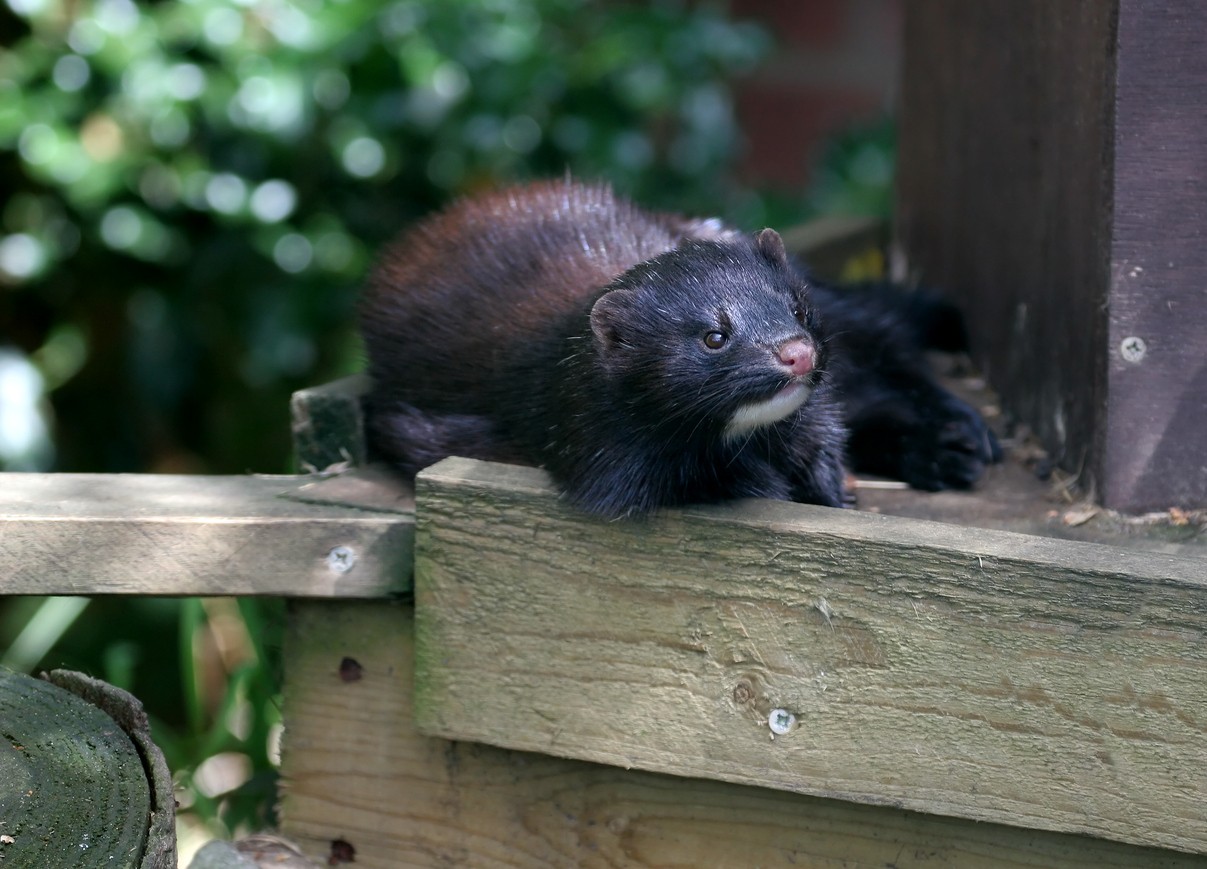
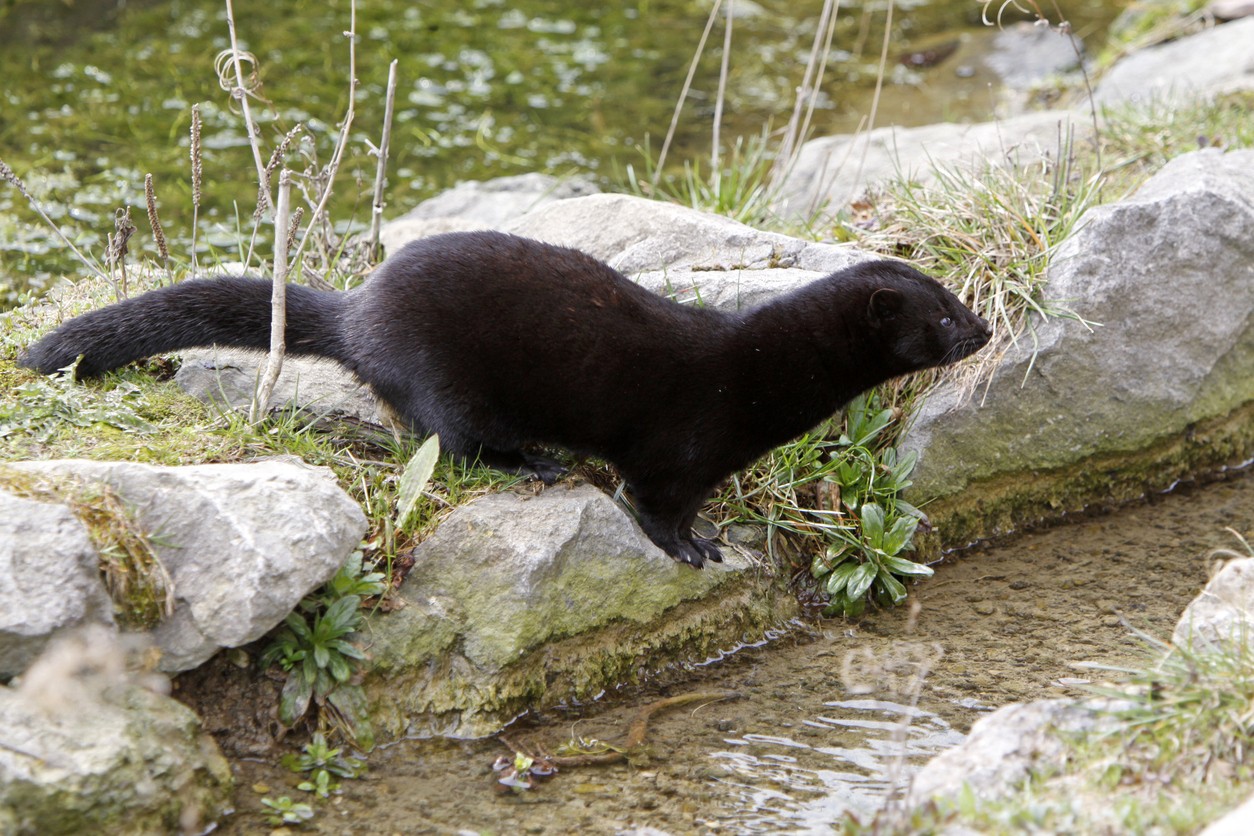
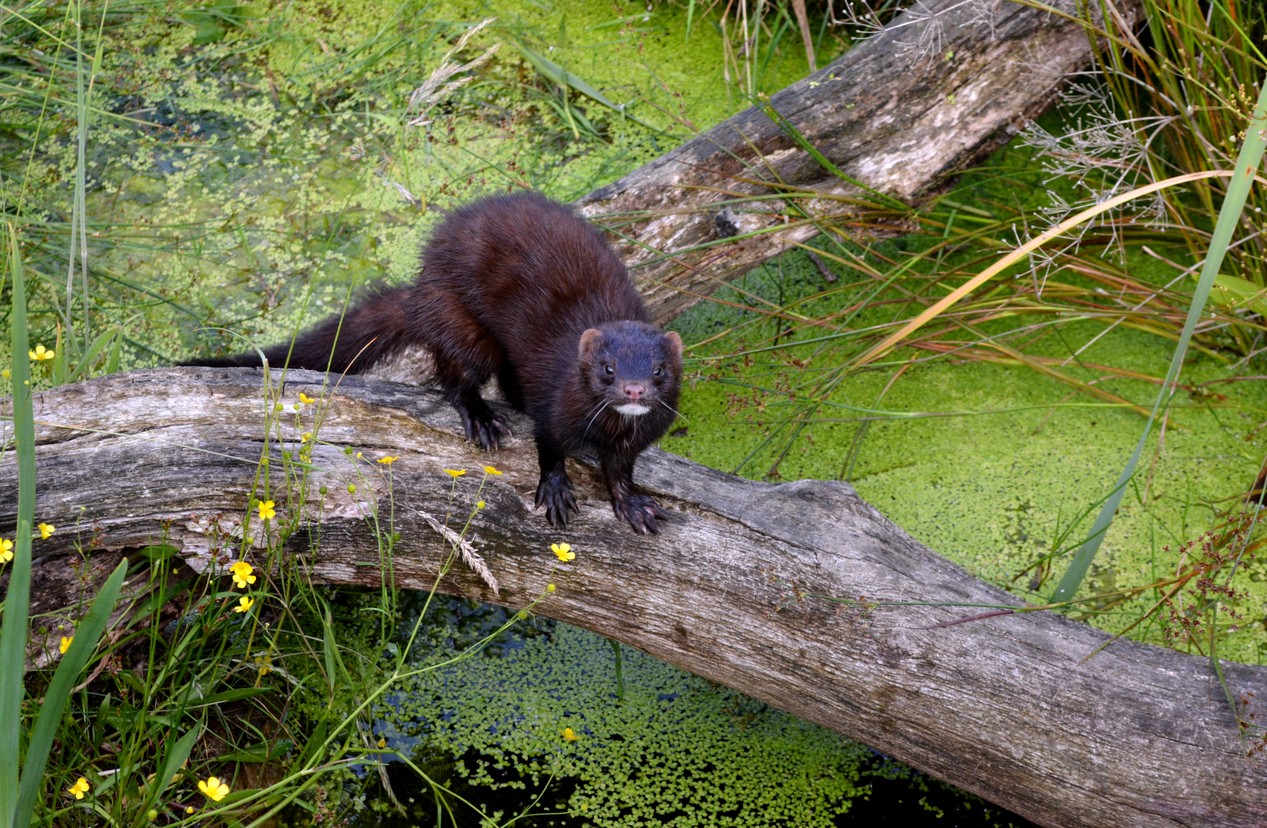
Mink are small members of the weasel family. Dark brown in color, mink have long been sought after for their pelts. Though they only reach 3-5 lbs in size, mink are aggressive and predatory.
Mink will prey upon most anything including rats, mice, fish, rabbit, birds, eggs, insects or muskrat. Because of their long and sleek design, mink will commonly find their way into chicken coops or other animal holding cages where they can kill several of the captive prey animals in a short period of time.
And as you already know, they love stocked fish ponds. When hunting, mink are known to kill whatever it finds.
This characteristic – random slaughtering of prey animals – sometimes confuses the animal owner into thinking local vandals are responsible. They also like to line their kill up along shoreline, fence rows or pathways which can lead to further confusion. It’s hard to imagine such a small animal could be so destructive, aggressive and organized. But if you raise quail, pheasant, chickens, turtles, fish, rabbit or some other small animals, you best hope the local mink don’t find your yard.
WHERE DO MINK LIVE
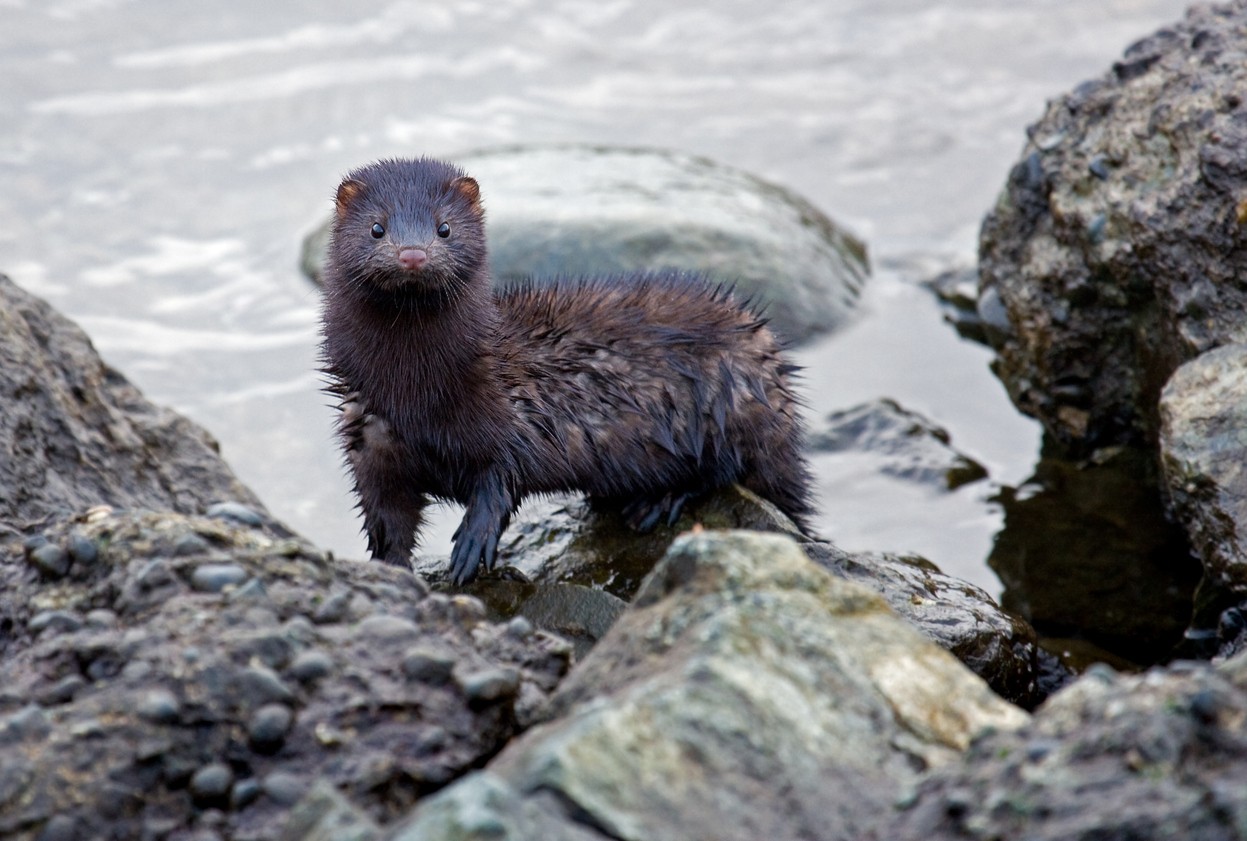
Mink like to live close to water. Dens are commonly made on the banks of streams and creeks but they may choose a location under a rock or log.
Babies are born in April and May and the average litter will have 4-6 young. Mink are active in most every state except one or two in the southwestern region of the United States.
Since mink are usually nocturnal and secretive, they are not easily seen unless the food they seek is active and only available during the day. Mink will forage several acres to find food and if you keep free roam chicken, they will be targeted.
Chicken coops are another mink magnet. Sleeping birds are easy target as are the eggs kept in nests. Rabbits too seem to attract mink as well so if you find animal pens vandalized or if something super small has forced open some wire fencing, it could be a mink.
HOW TO KEEP MINK OUT OF THE YARD
Once mink find your property, they’ll keep coming around if you have something they can eat. To keep them out, install SOUND REPELLERS along property borders. This device sends our a high frequency ultrasound mink do not like and one encounter with the unit going off will usually keep them away for good.
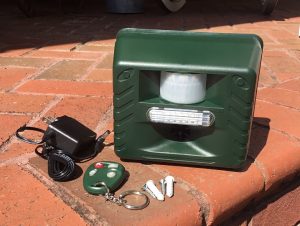
These units can be configured to run continuously using the included power supply or by 4 “C” cell batteries when set to “motion detector”. This setting will keep the unit in standby mode watching the area for movement. As soon as an intruding animal like a mink enters the protected zone of coverage, the device will go off for 20 seconds.
Units have a range of settings including day operation only, night operation only or 24 hours a day. The motion detector has a range of 40-50 feet when kept 1-2 feet up off the ground and this setting is adjustable too.
To get the biggest impact, use the units with the audible sound turned up as high as you can use it on your property. Starting at 20-40 DB is usually high enough but if possible, keep it at 60-80. This way when it goes off, the ultrasound will be active along with the white flashing light bar and the audible sound. In most cases, one close call with this device will cause the mink to leave and never return.
These units include a wireless key so you can turn them off/on as needed. This way you can turn them off if you need to access the protected zone for some reason. This wireless remote also has an “alarm” button so you can use this to “scare” approaching animals long before they get too close.
Sound repellers are very much directional so they will only work in the direction they’re pointed. So to protect a small pond, set the unit 10-20 feet off to one side but keep the unit pointing at the directions where mink are most likely approach. Units can cover up to 5,000 of open area but if the landscape is cluttered with vegetation, this will obscure its range so take this into account.
Units should be placed 1-2 feet above ground and pointed in the direction where animals are entering as well as “over” the turf you want to protect. 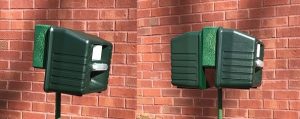
For easy installation, MOUNTING BLOCKS are handy. They can accept 1 or 2 repellers (picture to the right) and have a 1/2″ hole on their bottom so they will easily fit over a 1/2″ piece of rebar or any other wood or plastic stake. Ultra Sound Repellers will work fine by themselves as long as you have a good place to set them up. But we highly recommend getting the Units with Mounting Blocks in the kits we offer. Mounting Blocks allow you to place units anywhere and they will save time too.


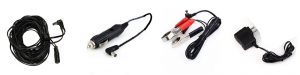
We also feature several accessories for our sound repeller including POWER CORD EXTENDERS (33 FEET AND 66 FEET), CIGARETTE LIGHTER POWER ADAPTER, ALLIGATOR CLIP POWER CORD and AC POWER SUPPLY REPLACEMENTS.
HOW TO TRAP MINK WITH LIVE OR KILL TRAPS
There are many ways to trap a mink. The best trap to use will depend on where you plan on trapping and which design you are comfortable using. Traps fall into two categories or trap design: Live Traps or Kill Traps.
LIVE TRAP CAGE FOR MINK
The first type, live trapping, can be done with an LT7824 LIVE TRAP. Since mink are wary of anything new to their environment, it will really help if you either hide or partially bury the trap when making a set. Keeping the wire floor of the trap covered with dirt or mud will help so when they enter, they don’t feel uncomfortable.

Leaves, brush and plants can be placed along the sides and top of the cage to mask the enclosure.
This trap measures 7″ wide by 8″ tall and 24″ long. In general, it will be large enough to catch any mink.
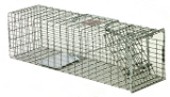
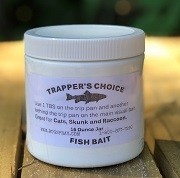
To get a mink inside the trap, place 2-4 oz of FISH PASTE behind the trip pan.
If you’re not 100% sure you have a mink but suspect it could be something larger like an otter or raccoon, using a live trap with live bait will be more effective.
The best trap for animals right up to Coyote and Bobcat is the LT152248RD fitted with our Bait Cage. Basically this trap comes pre assembled and ready to use so all you have to do is place a live animal in the bait cage such as a live chicken or small bird. The rear access sliding door makes baiting and maintaining the trap easy. And the ideal way to make a set is to use a well known point of entry your target animal is already using.
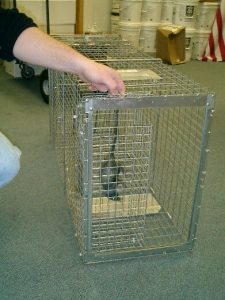
So if you have a mink (or some other animals) that’s been prone to digging under a fence to get inside, use his behavior to trap him. In other words, don’t thwart his digging; let him have his way. Now once you know the location where he want’s to enter, you’ll want to set the Live Trap with Bait Cage on the inside of your pen opposite of the digging. This way as the mink clears a tunnel under you fence and enters, he’ll be “channeled” into the live trap.
Now the front door of the trap must be a few inches away from the pen siding so it can close and this gap much be filled during your set. Simple barricades on either side can be made with chicken coop wire, railroad ties or cinder blocks. The goal here is to show the mink no way but forward and into the trap.
And if you’ve baited the trap with a live bird, the entering mink will never suspect anything is amiss. This set will take advantage of their tunnel vision which will cause them to move toward their goal and in the process, get caught. Just be sure to camouflage the traps floor by covering the metal wire with dirt, straw or some other natural material. Doing the same for the trap sides is helpful too.
LEGHOLD MINK TRAPS
There are two types of leg hold traps: the Coil and the Long Spring. For mink, the COIL # 1.5 is plenty big and strong enough to hold any mink
These traps should be set where mink are active such as inline with trails or where they are digging to get under fences. They need to be secured by staking them to the ground or a tree.
Once placed out, traps should be covered up with leaves or other “ground litter”. To give the mink a reason to walk around the area, place out MINK GLAND by smearing some on a stick or rock. Used as markers, this gland will get the attention of any foraging mink and when they come close to inspect the odor, they’ll step on the trap and get caught.
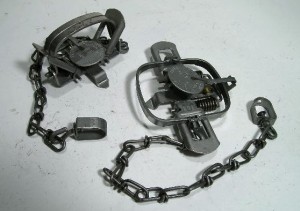
The more traditional long spring design is the LS # 11 and has probably caught more mink than any other trap around. Its a bit “longer” compared to the coil and harder to use so if you’re new to trapping, go with the coil design.
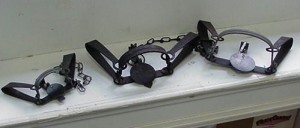
When using either trap, you’ll need MINK GLAND to get mink to the area. This “musky” odor commonly left behind when they enter holding pens or barns to mark territory is strong enough to pull animals from 50 yards away. This odor may be present and strong by entrances which may be a small hole or gap between fencing too which is a good place to make sets as well.
HOW TO MAKE A MINK TRAP SET
If the mink is active along a stream bed or other location where you have a dirt bank or ravine where you can make set, consider making a “pocket set”. This type of trap set is effective for many animals including mink. A “pocket set” is when a hole or pocket is dug out of the bank in which the trap will fit snug. Ideally, when the trap is placed in the pocket, it will fit tight. This will help camouflage the bottom, sides and top. Use any of the baits listed above (fish or mink gland) to get their attention.
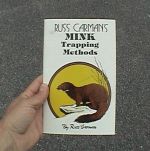
For more information on how to make a good set, get a MINK TRAPPING BOOK. It details what to do for a wide range of environments and can help the novice achieve success.
MINK SNARES
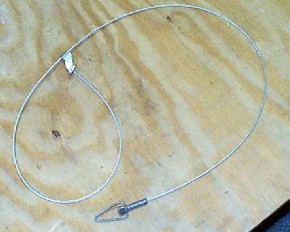
The last live trap option – and one that should be left to only the most experienced trapper – is the use of LIGHT SNARES. When placed along walk ways, pathways or slides where mink travel, snares can be quite effective.
The thin cable used for our snare is barely detectable and you can make a lot of sets without a lot of cost. However, snares must be used with precision and the rule to follow is to try and place out as many as possible.
Be sure to anchor your snare or else the caught mink will carry away your cable and fittings. Snared mink are mean and ornery so be prepared to deal with one mad animal when caught. And keep in mind that snares work well when placed in front of den holes but are great for use over log trails.
KILL TRAPS FOR MINK
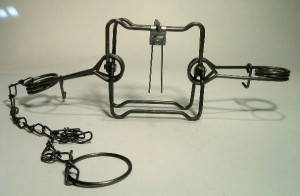
If you know the location of a den hole and don’t feel like dealing with a mad mink snared or caught in a live trap, consider using a body grip kill trap. These traps are fast acting and easy to use over dens.
The most common size for mink are the BG 120. Use a TRAP STAND to keep the trap properly angled and anchored. Make the set during the middle of the day to insure the mink is holed up. When attempts to leave that night, it will stick its head onto the trigger and you should have quick success.
Body Grip traps can break fingers easily and their springs can be hard to compress so you may want to use BODYGRIP SETTERS to help manage the spring sets – especially if you intend on making several placements.
Trap stands can be placed along pathways, over dens or fence holes mink use to gain entry onto your property. They feature an 18″ rebar stake you drive into the ground to keep the set stable.
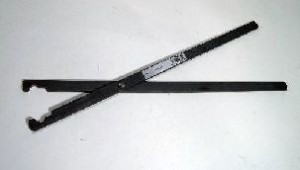
If you’ll be making a lot of sets, trap setters will help. They use a simple “scissor” design which gives the user tremendous leverage for compressing the springs.
CONTACT US
Give us a call if you need further help. Our toll free is 1-800-877-7290 and we’re open Monday through Thursday, 9:00 AM to 4:00 PM (Eastern Standard Time).
Email questions here: https://bugspray.com/about-us/contact-us
Order online and get a 5% discount! We ship fast with 99.9% of all orders shipping within 1 business day!!
Learn more about BUGSPRAY.COM and why it’s never been easier or safer to do your own pest control.
Please show your support for our business by purchasing the items we recommend from the links provided. Remember, this is the only way we can stay around to answer your questions and keep this valuable web site up and running. Thanks for your business!
Sherry Brigham says
We bought a new house and its off of a small marsh wooden area and has 2 full blk beautiful minks nesting underneath in a huge elephant ear plant at our place in Parrish, Fl. Question is the the cage better to trap these guys to relocate them?! Cuz were getting ready to put up a fence and they would be in our yard with our 4 huge dogs and I really don’t want either one hurt….HELP!!!
Tech Support says
Sherry,
For relocation purposes, go with the LT7824 seen here:
https://bugspray.com/article/mink#live-trap-cage-for-mink
Use our mink lure for a fast catch; it’s seen directly below the trap in our article.
Once caught relocate them at least 10 miles away. After that it would be best to install at least one of our Sound Repellers pointed at that direction. Old mink nests tend to be utilized by new mink – especially as we move to the spring months – and a sound repeller set within 10-15 feet of the spot powered by batteries and set to go off by any motion will keep all animals out and from using that spot again. Lastly, these sounds are very directional and will not bother or impact your dogs in any way.
Mink Repelling: https://bugspray.com/article/mink#how-to-keep-mink-out-of-the-yard
Technical Support
800-877-7290
PS: Are you signed up for our informative twice a month Pest Report Newsletter? More info here: https://bugspray.com/bugspray-pest-report
Cheryl says
We just trapped a mink that had been killing our birds (pigeons, ducks, chukar). What are the odds that there will be another mink? We have lived here for several years and this is the first time we have had this issue. I am just wondering if I have to keep locking everything up at night?
Tech Support says
Cheryl,
Once mink are active in a given “territory”, removing the native mink will leave the area void for awhile. But in most cases, this is short lived. Neighboring mink will look to occupy the now vacated territory once they figure out its empty. This usually happens in 3-6 months.
To ensure you don’t have more coming around, you should install one of our sound repellers detailed above in our article:
Mink Repeller: https://bugspray.com/article/mink#how-to-keep-mink-out-of-the-yard
Technical Support
U-Spray Bugspray
http://www.bugspray.com
1-800-877-7290
PS: Are you signed up for our informative twice a month Pest Report Newsletter? More info here: https://bugspray.com/bugspray-pest-report
Iggy says
Mink killing our young lambs at night. Any ideas how to get rid of them?
Tech Support says
Iggy,
We recommend either trapping the animal or using one of the repellents listed in our article here:
Mink: https://bugspray.com/article/mink
The sound repeller is no doubt the easiest way to go but trapping is generally a more “permanent” solution. In general, there is usually only one or two animals at most active so trapping would be easy. But with the repeller, you can set up a large protective barrier in no time and it will keep away other predators too compared to trapping which requires different traps for different animals. More on our repeller here:
Mink Repeller: https://bugspray.com/deterrents/sound/usd-animal-repeller-with-wireless-remote#mink
Technical Support
U-Spray Bugspray
http://www.bugspray.com
1-800-877-7290
Alex says
Hi, very informative site! I’ve been dealing with a mink (tracks and scat confirmed) since the weather has gotten colder and my pond has frozen. I lost 3 ducks and a goose in one night and my efforts to trap the mink have failed. I have all my birds in my barn with a light on now. It’s worked so far but in past years, the mink eventually will get brave and raid my coop, even with the light on. Have you heard of anyone having success using scents, such as coyote scent or one of the irritating deer repellents, to form a perimeter around an area? Also, will a mink respond to a predator call (wounded rabbit cry)? Thanks!
Tech Support says
We have not seen mink show any sign of being “afraid” of other predator scent. Scents tested include coyote, fox, bobcat, mountain lion and bear. Scent used includes urine and gland. Additionally we’ve not seen any of the “bad tasting” or “bad smelling” repellents deter them either.
But no doubt live trapping works. And though leg hold trapping can be hit or miss for a wide range of reasons, cage trapping is highly effective. So if you’re interested in saving time and energy, invest your money in our LT152248RD live trap with a Bait Cage installed.
The great thing about this trap is that you can then make a set inside the coop using a live chicken for bait with the lights out. This is about as “natural” of a set as is possible. And then if you remove your birds for the night, the mink will have no choice but to go for the one bird being offered.
No doubt this will provide a quick remedy to the problem and the great thing about this trap configuration is that you can use it for a wide range of animals like martens, fox, coyote, badgers and more.
Mink Live Trapping: https://bugspray.com/article/mink#mink-live-trapping
Live Trap with Bait Cage: https://bugspray.com/traps/cage/live-trap-15-x-22-x-48-rear-door
Give us a call if you need more help. Our toll free is 1-800-877-7290 and we’re open 9:00 AM to 4:00 PM Mon-Thur, Eastern Standard Time.
Jonathan
Customer Care
http://www.bugspray.com
Bea says
Hi,
We too have a mink. I saw it heading to our barn the other day. Prior to this we lost all of our chicken’s and a goose. At first no one believed me. I went in to the barn to feed my horses and heard the most evil sounding “Hiss” type of noise. Apparently it saw me even though I couldn’t see it. I’m thankful that it didn’t attack me. So we gave up on keeping chicken’s and focus on keeping our geese alive. We put the geese in my mudroom/woodshed that is attached to my house, in a dog crate, and we keep my 3 Rottweiler’s out there too. So far this has deterred it but my husband says he is chewing into the grain barrels to get our grain cause he has cleaned out everything else like rodents, foul, etc. My husband saw him in our horses pen yesterday and I am afraid. Will it attack my horses? We also have some beef cows.
I would like to have him trapped and relocated, far far away. But who knows, maybe there is more than one. We started having a problem about 3 years ago and it only would occur in the winter. It started in January and then every 30 days it came and killed some of our chickens. Now once the weather changed to spring it was gone then again the pattern was repeated. We tried numerous things to deter it, nothing, we thought a weasel till it attacked and killed one of the geese.
Anyhow, can they take up residence and stay living in your barn? I can`t believe that I actually saw him running across and down the road to my driveway, then cut across on a diagonal and head right for my barn. It was about 3 or 4 pm. It was actually this most beautiful glossy brown color. I thought that they would change colors to white like I heard weasels do but this one wasn`t. I`m afraid because I think either this is a sign we have alot of them here or this ones real brazen.
Tech Support says
Sounds like a mink or something else in the weasel family for sure. Now yes, they can move into a barn or home, but in general this doesn’t happen. However, once they discover a good food supply like what it sounds like your barn is providing, they’ll surely return which would explain why you’re seeing them out and about in the yard.
At this time I suggest you get one of the traps listed above and start relocating any that are coming around. You’re right in thinking it could be more than one but regardless of the local population, our trap will last indefinitely and can be put to use in future winters should more mink come around and start doing more damage.
As for which trap to get; the smallest model I’d recommend for now would be the LT7824 shown here:
LT7824: https://bugspray.com/traps/cage/live-trap-7-x-8-x-24
More information on how to bait and set it can be read here:
https://bugspray.com/article/mink#mink-live-trapping
Keep in mind mink are on the smaller size for a weasel. So if in fact you have a fisher or marten, you might need to get a larger trap. Larger traps will certainly work on mink too so if you’re unsure of this animals size, consider any of the following models:
Here are links to these items in our cart. Please show your support for our business by purchasing the items we recommend from the links provided. Remember, this is the only way we can stay around and keep this valuable web site up and running. Thanks for your business!
LT 11x12x30: https://bugspray.com/traps/cage/live-trap-11-x-12-x-30
LT 11x12x36: https://bugspray.com/traps/cage/live-trap-11-x-12-x-36-rear-door
LT 15x22x48RD: https://bugspray.com/traps/cage/live-trap-15-x-22-x-48-rear-door
Norma Bartman says
I have as of this date lost over 80 hens to a very fat mink. I know it is a mink because in preparing to pour concrete for my chicken pens, the mink came out of hiding and moved to a quieter place. Naturally, I was not close enough to kill it nor did I have a thing close enough to try to kill it. We have done everything humanly possible to secure my chickens. Pouring the concrete is the last straw. We have set live traps and “killer” traps with absolutely no luck. We have been able to tell where it was coming in. Last night my husband and I went to the pens and sure enough it had been there trying to get in under the pen. I filled in the rock and when I went up this morning guess what, he had been back. I need help and an army. I am now down to 11 chickens and 1 very large, large MINK.This mink and any of his relatives absolutely have to go. Help me.
Tech Support says
This is an easy one. Since you know where this mink is entering, just get one of the large live traps listed above and bait it with a live chicken using the trap set procedure explained in our article.
Most important for this type of set is for you to use their entry hole to their disadvantage. This method is highly effective on nuisance mink since it’s a perfectly “natural” way to make a trap set and use a bait which we know the mink want.
https://bugspray.com/article/mink#mink-live-trapping
Jj says
I’ve got loads of chicks and I went into the shed and I saw a chick with a chunk taken out of its neck. A few days before 6 chicks went missing with no trace! Can you help?
Tech Support says
We should be able to help. So you think it’s a mink? No doubt they can be a problem when they find young animals like chicks. But don’t rule out shrews, rats, cats, fox of coyote. I’m guessing you’ve already ruled out anything large and if you feel this varmint is something small like a mink or rat, I suggest you get one of the Live Traps listed above. Set it with some Mink Lure or Salmon Paste and you’ll catch whatever it might be.
Here are links to these items in our cart. Please show your support for our business by purchasing the items we recommend from the links provided. Remember, this is the only way we can stay around and keep this valuable web site up and running. Thanks for your business!
LT7824: https://bugspray.com/traps/cage/live-trap-7-x-8-x-24
Mink Lure: https://bugspray.com/traps/lure/mink-lure
Salmon Paste: https://bugspray.com/traps/lure/salmon-paste-16-oz
Billie says
Where we live (middle of the stix) we know it’s not human caused. I set my trap camera near the cages to find out. Whatever it is has to be removed. These rabbits are used for calming my son who is special needs and is only allow around them with supervision. Thanks for your help.
Billie says
Hi, I’m hoping you can help me. I think a mink is attacking my son’s rabbits so I was wondering if a mink can slip it’s paws into 1/2 inch rat wire cage? If not could you tell me what could? The wounds are needle like claw marks, no bite marks. I live in Eastern Kentucky, if that helps.
Tech Support says
There are a few animals that might do this and mink could be responsible. But the rabbit would have to keep itself close to the wire, not be afraid and most likely, small.
I’ve also seen rabbits being pierced by humans other than the pet’s owner. In one case it was a sibling of the pet owner and in another case, it was some other kids in the neighborhood that were poking the animals with an ice pick. This was no doubt cruel to the animal but my point is don’t rule out human interaction. If the cage is out in the open, I suggest setting up some kind of hidden “game camera” to film at night. They can be purchased for under $100.00 these days and would no doubt catch your culprit.
Robert Pettry says
Mink have taken 300 koi from my pond (which is adjacent to a canal). I believe the mink live in the bank of the canal and are rarely seen. For me trapping is not an option, but I would like to repel them before I restock the pond. Any ideas on how to effectively repel these pests?
Tech Support says
There are several predators that might be interested in your koi and in most cases, trapping is the best control option regardless of what kind of animal is doing the damage. But since you state you cannot trap, you might try two repellent options which we’ve had success using on koi feeding predators such as raccoon, weasels, bob cat, fox and domestic cats.
The first is a motion detecting water sprayer. Basically the device is hooked up to a garden hose and set out pointing toward the area you want to protect. When the target animal enters the motion “range”, it will activate the device which causes a blast of water to shoot out. The water and sound of the device is enough to chase any kind of animal and if you place these in the right zones surrounding the pond, you should be able to protect the koi from any kind of predator.
Scare Crow: https://bugspray.com/deterrents/visual/scare-crow
The second option would be to set out some ultra sound devices. Though not commonly employed for mink, I’m sure the sound would be disturbing to them and if you kept the units running continuously throughout the night, you should be able to keep out any unwanted predator including mink.
Yard Guard: https://bugspray.com/deterrents/sound/usd-animal-repeller-with-wireless-remote