SAWTOOTH BEETLE CONTROL FOR THE PANTRY AND HOME
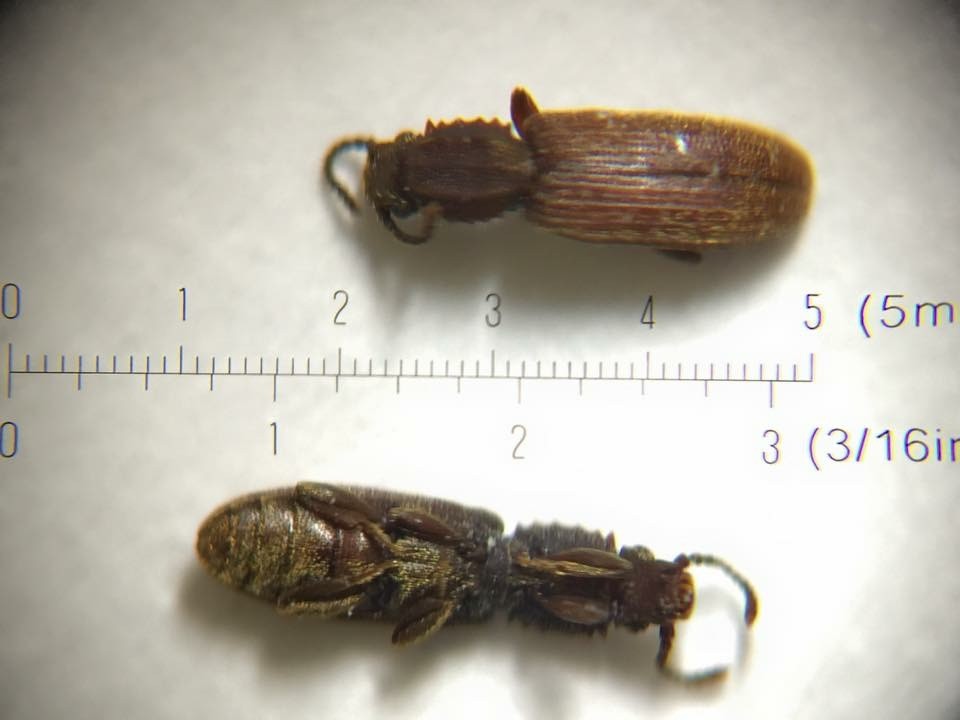
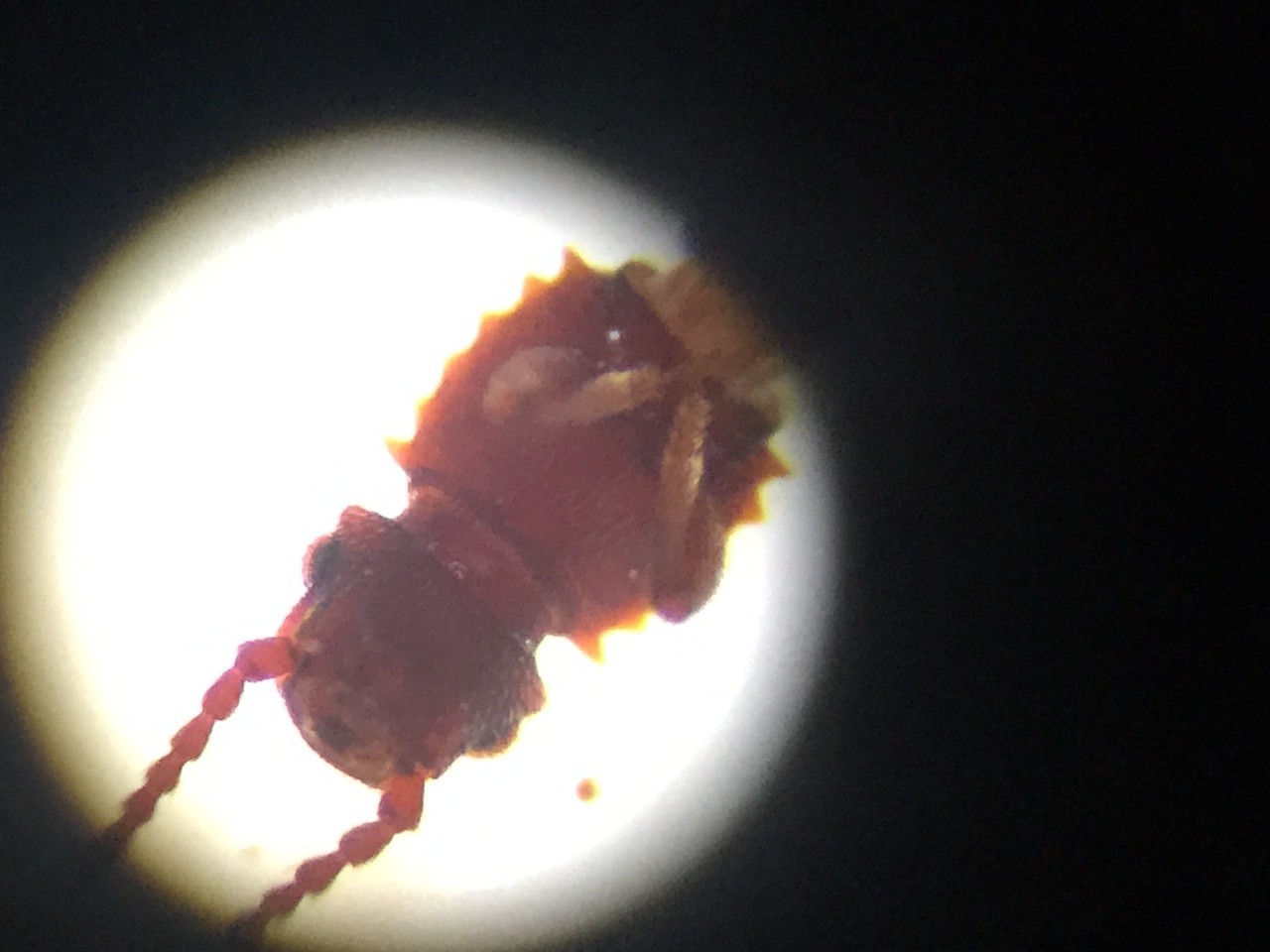 Sawtooth Grain Beetles are a small brown to black beetle measuring 1/4 to 3/8th inches long when fully grown. They are among the most common of pantry and cabinet infesting beetles and will readily enter homes from outside areas where they commonly feed on bird seed, flower pollen and more.
SAWTOOTH BEETLE BIOLOGY
Sawtooth beetles have been around as long as other flour beetles. Their history dates back several thousand years. This is due to the fact most ancient civilizations used flour as a primary food ingredient.
 Sawtooth beetles thrive on flour dust though they will readily feed on just about anything found in the home intended for people or pets. Sawtooth beetles are cosmopolitan and can thrive in any part of the United States.
SAWTOOTH GRAIN BEETLES IN THE HOME
Once in the home, sawtooth beetles will readily feed on pet food, cereal, pasta, spices, rodenticide, dried fruit and vegetables, eggs of other insects, nuts, grass seed and just about anything which can provide nutrition.
Unlike other pantry pests, sawtooth beetles can find food which is well hidden and protected. Their strong chewing mouth parts will allow them access to food which is stored inside boxes and plastic bags. All they need is the scent of something worthwhile and they’ll make every attempt to find their way inside.
LIFE CYCLE OF SAWTOOTH BEETLES
Sawtooth Grain Beetles live a long time. They have an average life span over 3 years which is quite long for an insect so small. Adult females will lay a few eggs daily which will amount to over 300 during her life. Eggs will hatch in a couple of weeks and start to feed immediately.
The feeding larva will go through 2-4 molts which will occur over a 3-5 week period. After they get their fill, the larvae will spin cocoon’s where they’ll disappear for awhile. During the pupa stage, they’ll morph and eventually emerge as adults when the cycle is complete.
All this will occur in less than 2 months which makes this species of Grain Beetle one of the fastest developing species we have as a nuisance pest in the home. And since they will readily eat anything, they will always find something good to eat.
HOW TO TREAT SAWTOOTH GRAIN BEETLES
Whether they’re brought home in cereal, pet food or pasta, Sawtooth Beetles are a nuisance once in the home. Like most pantry pests, there are a few things which must be done to break their cycle once established. Here is an outline of what to do.
First, empty all your kitchen cabinets, shelves and closets where they’ve been seen or thought to exist. Food stuff which has them active must be discarded in sealed plastic bags. This will help contain them until the garbage is picked up.
If you are not sure if something is infested, store it in a plastic bag and check the bags every few days. If you find Sawtooth Beetles active, it will mean the item is infested and should be thrown away immediately.
Since this pest is temperature tolerant, don’t waste your time trying to “freeze” kill adults, eggs or larva. No doubt you’ll get the active stages. But many will survive fine and these will be able to continue the cycle.
Once food stuff which is thought to have activity is discarded or stored in a clear liner for observation, you’ll be ready to prepare for a treatment. But before you treat, vacuum all closets, shelves and baseboards. This will help remove eggs which are usually too small to see. Sawtooth Beetles lay eggs with a glue like excretion which helps to attach them to surfaces where food is typically available.
VIDEO TRAINING OF HOW TO TREAT A PANTRY
The following video gives you an in depth look at how to treat any pantry using either FS MP Aerosol, Bithor or both. The products in the video are listed below and for most all homes, using both is the best way to procee because once in the home, the active adults can migrate to many areas.
For this reason the FS MP Aerosol should be used in specific locations where you know they’ve been active and then the Bithor distributed on baseboards throughout the rest of the home or even on carpeting or furniture if the target pest has been seen in any of these locations.
The following video presents the “long” version of how to thoroughly treat for this pest to eliminate them all.

TREAT CABINETS FOR SAWTOOTH BEETLES
Once everything has been removed from your cabinets and they’ve been vacuumed, proceed with a treatment. There is only one good options for pantries and kitchen cabinets that can kill all stages. FS MP AEROSOL is literally all you’ll need. Its penetrating invasive solvents will kill eggs, larvae, pupae and adults on contact.
The following “short video” summarizes why its so good for treating cracks and crevices in the home.

If you thoroughly treat any room, cabinet, wall void or other space where they might be living or nesting, you can kill them all off with one good application.
FS MP is fast acting so if you still see activity 3 days after you treat? Spray again.
Realize that any you are seeing must be coming from some nearby location so focus your application on where you’re seeing them. Be prepared to spot spray every 2-4 days and if you follow this routine, you can knock out all nests within a couple of weeks.


Be sure to let the treatment dry 1 hour before returning dishes and food stuff back into the cabinets and really, letting cabinets remain empty for a few days until you know the problem is gone is the better approach.
BEST SAWTOOTH GRAIN BEETLE SPRAY
For extensive problems that stretch into all areas of the home, you’ll be better served using a liquid. Laundry rooms, garages, basements and other areas where pet food and grain products like grass seed are stored. These areas will be prime locations for Sawtooth Beetles to hide and nest so if you have a lot of home to cover or a warehouse or food processing plant, go with a liquid spray. It will be easier to use, more cost effective and longer lasting.
The best concentrate for protecting the entire home is BITHOR SC. This concentrate is odorless, easily mixed with water and 1 gallon will cover up to 1,000 sq/ft.
The following “short video” (less than 60 seconds long) summarizes why Bithor is a great option for use in the home.

Bithor will kill them on contact but then that ingredient wears off and the long lasting residual won’t “spook” target insects or chase them around. Treatments will last a good 2-4 weeks and during this time, the active will be spread to others in their colony.
And for surface spraying, the MINI MISTER is the best way to apply it. The following “short video” shows how it works and why using it in the home is the best way to spray.

Add 1 oz per gallon of water and distribute this over 1,000 sq/ft of area (baseboards, carpeting, etc.). Bithor compliments the other products, FS MP and Phantom so you can use the Bithor “low”, where you can spray heavy have a lot of area to cover. Using the aerosol up “high” like in cabinets is generally the preferred way to proceed since this will give you protection both low and high and allow you to be thorough but not messy.


Since sawtooth beetles will hide in tough to reach areas, add GENTROL IGR to your tank mix for added protection.
Gentrol is a juvenile growth hormone regulator and will effectively stop developing larvae from reaching adulthood. This will be a big help because Gentrol will naturally “translocate”. This means it will effectively “move” to areas well beyond where you spray. It can be mixed with the Bithor and sprayed at the same time so it takes no more time to include it with your regular spraying.
For sawtooth beetles, add 1 oz of Gentrol to the same gallon of water with the 1 oz of Bithor and use the same exact way for up to 1,000 sq/ft of area.


You can make the treatments using a good PUMP SPRAYER.


If you want to avoid over spray, get the MINI MISTER. As shown in the video above, its ideal for making “clean” applications in the home.


SAWTOOTH BEETLE TRAPS
Once everything is treated and allowed to dry, install SAWTOOTH BEETLE CABINET TRAPS. These traps use strong food based attractants to lure foraging adults looking for a quick snack. They’re easy to set out and one trap per cabinet will suffice. The light brown liquid seen in the picture will be squeezed out into the triangular tray and placed discreetly in the corner. The oil smells like food but also serves as the medium that keeps them stuck in the trap. Traps will last 60-90 days but should be replaced if they fill up sooner.


Sawtooth beetles will fly or crawl into the holding tray and get caught on the thick oil.
Now for open areas, the XLURE BEETLE TRAP is better suited. This trap is quite durable. Its made with a hard plastic body and the inside chamber houses the special catching gel, food bait and some mild sexual pheromones. Set one trap every 15-20 feet; placements can be made under furniture and in other hidden areas as well as out in the open. Don’t let the dog eat it; the components won’t hurt any pet but the plastic isn’t good for them to eat. Change the trap every 90 days if the activity is still active this long.


Sawtooth Grain Beetles can be a persistent pest once n the home. To break their life cycle, you’ll need to remove contaminated food and treat with the products listed above.
Lastly, set out traps in any cabinet, pantry or where activity has been noted. Keep the traps fresh so they will monitor the areas to insure the problem has been resolved.
CONTACT US
Give us a call if you need further help. Our toll free is 1-800-877-7290 and we’re open Monday through Friday, 9:00 AM to 4:00 PM. On Saturday, 9:00 AM to 2:00 PM (Eastern Standard Time).
Email questions here: https://bugspray.com/about-us/contact-us
Order online and get a 5% discount! We ship fast with 99.9% of all orders shipping within 1 business day!!
Learn more about BUGSPRAY.COM and why it’s never been easier or safer to do your own pest control.
Please show your support for our business by purchasing the items we recommend from the links provided. Remember, this is the only way we can stay around to answer your questions and keep this valuable web site up and running. Thanks for your business!
Lois says
This is really scary! So far, in checking all my cabinets, I have only found them in birdseed.
Should I use the traps all over my home? Where can Bithor be purchased?
Tech Support says
No need to be scared. It sounds like you’ve identified the source. Now you just need some FS MP Aerosol for the cabinets. And if you believe they’ve been migrating around the home, spray the baseboards or carpeting with some Bithor. Lastly, set out traps in any room you’ve seen them. In general, 3-4 for the room with the bird seed will be fine. And if you’ve seen any foraging around, a single trap in those areas is suggested but really the traps need to be used as close to the source of the problem.
Since our products are professional strength pest control company products, you won’t find them locally. But we ship daily and you can order by phone or on line with most orders shipping in one day. Here are links to the items you need:
FS MP: https://bugspray.com/catalog/insecticide/aerosol/fs-mp-insecticide-15-oz-aerosol
Bithor: https://bugspray.com/catalog/insecticide/liquid/bithor_sc
Trap: https://bugspray.com/traps/pheromone-and-food/3pk-cf-rf-k-rw-st-pp
Adrian says
Hi. I’ve got quite a lot of these beetles in my room (about 80 last night). We have checked the whole room and can’t find any source or nest. What can I do to eliminate them? They are mainly found on my wife’s dresser and sofa plus the corners of my room. Thank you.
Tech Support says
There are many things in the house these guys can feed upon so finding the source can sometimes be tough. So for starters, give the room a good vacuum. Next, treat all the cracks and crevices with the FS MP aerosol. It comes with a crack and crevice straw so you can get the spray where they might be hiding. Treat under moldings, around door frames and any other crack or space they might be hiding.
FS MP: https://bugspray.com/catalog/insecticide/aerosol/fs-mp-insecticide-15-oz-aerosol
Next, if the floor is carpeted, there is a good chance they are feeding upon something in the fabric. You see, carpeting (and even furniture) can use fabric that includes natural ingredients. And there are several species of beetles that can live on these ingredients. So if the room is carpeted, it could very well be the source.
For this area, you’ll need to broadcast spray with the Bithor listed in our article. It’s odorless and labeled for use right on carpeting.
Here are links to these items in our cart. Please show your support for our business by purchasing the items we recommend from the links provided. Remember, this is the only way we can stay around and keep this valuable web site up and running. Thanks for your business!
Bithor: https://bugspray.com/catalog/insecticide/liquid/bithor_sc
Adrian says
Hi, I have tried vacuuming and sweeping my room. The pest company we used has gassed our home. The total number of beetles have dropped but now I’ve noticed they are up on my ceiling and climbing up the wall at my stairway. Any advice? Thank you.
Tech Support says
I do. First, I’m not sure what you mean by “gassed our home” but if you are referring to a Total Release Aerosol treatment, I would say this would not be and effective treatment for your problem. Total release aerosol’s (also known as “bombs”), spew chemical all over everything are not an effective method of control for any type of pest that is “hatching” out of pupae casings because they don’t leave a long lasting residual and in most cases, miss the most important areas that need to be treated.
To solve your problem, what you should do is treat the key nest site which could very well some carpeting, furniture or other location in the home everyone is ignoring. If fact, the comment just before your question sounds very similar to your situation and I suggest you follow my recommendation; spray the carpet and furniture with Bithor and then treat all the cracks and crevices with the FS MP Aerosol. And keep vacuuming. The vacuuming will remove the hatching pupae (which cannot be killed) and the Bithor will break the cycle of anything that might be growing in the carpet and/or furniture. If you follow this procedure, you should get the problem resolved in 2-4 weeks.
Bithor: https://bugspray.com/catalog/insecticide/liquid/bithor_sc
FS MP: https://bugspray.com/catalog/insecticide/aerosol/fs-mp-insecticide-15-oz-aerosol
Debbie says
We’ve found these bugs in our food cabinet about 4-5 months ago. We threw out all our spices, food, and even kitchen appliances that had crevices such as a hand mixer. We tried bombing and don’t keep food any where but in our refrigerator. Unfortunately the bugs still exist. We are going to completely empty the rest of our cabinets where we found them that have pots, pans, etc. and use your chemical process. When we wash our pots and pans will the bugs/larva die? Also if there’s larva on our dish towels, would it have died once ran through the washing machine/dryer? Also we have cats so would you recommend the FS MP AEROSOL be safe once dried?
Tech Support says
Since this pest can will lay eggs outside the main food source, I’m sure your initial efforts weren’t complete. Any eggs hidden in voids would be able to live since “bombs” don’t last long and can’t provide the needed residual you’ll get from one of the liquid or aerosol treatments mentioned above. They’re just not a good treatment option compared to more specific treatments that target pests like this which thrive in cracks and crevices.
Now for this next round, you’ll want to do what you listed in your comment. First, remove everything from the cabinets and pantry. Pots, pans and other kitchenware should be washed and yes, any eggs or other stage of this pest that might be on anything washed will be removed and killed.
Dish towels, place mats and other fabric you wash will be cleaned of all stages too after being washed and should be done as well.
Now don’t forget the remaining food items. Anything you suspect is infested, throw away. And all food you decide to save should be stored in clear plastic bags or tupperware. This way you can monitor the bags/tupperware to see if bugs emerge from contents inside. If you don’t find anything live coming out of these bagged items in 3 months, you’ll know for sure it’s okay to save.
Lastly, you need to treat all cracks and crevices with FS MP and then surface spray with Bithor. Both can be used safely inside the home around people and pets as long as you let the treatments dry 30-60 minutes before you put stuff away. As for the difference between the three? Here’s a good rule to follow.
FS MP is the most common option chosen because it’s cost effective and long lasting. It does have a slight odor but it will go away in an hour or less. Treatments will last 4 weeks or more and it can be used safely in these areas as long as you follow the directs explained in our safety video (found on all of the aerosol pages).
FS MP: https://bugspray.com/catalog/insecticide/aerosol/fs-mp-insecticide-15-oz-aerosol
Lastly, Bithor is also what I’d use. I like it because it’s odorless and treatments will last a good 4 weeks or more. Bithor can be applied with the Mini Mister listed above too which makes it go on without making a mess. I use it in my home quite a bit because it won’t leave a visible mess on my hardwood floors which are found throughout the home. For this reason Bithor in the mini mister is also a good option for use in any kind of cabinet or pantry.
Bithor: https://bugspray.com/catalog/insecticide/liquid/bithor_sc
Mini Mister: https://bugspray.com/equipment/foggers/mini-mister
In summary, any of the aerosol products can be used safely when used properly. Pick the one you’re comfortable with based on my descriptions and if you follow the guidelines I’ve cited above, you should get control of this pest once and for all. Good luck!
Leah says
Hi, I think I have these little brown things in my couch and around my living room. I started noticing them about a month ago… just 1 or 2 here and there… and I have seen them in my couch.. I admit I may have crumbs in there and under there, I have a 2 year old who is a little slob lol. But I also find them randomly on the rugs here and there… and I seen 1 in my kitchen randomly yesterday. I checked some of my food and cereals in the pantry and there aren’t any in anything… and my cabinets are not for food, only dishes and what not. Could they have been brought on by my son and his crumb habits on the couch? Or would they have to have come in from something at the store? I never noticed them until it got cold out here in MA.
Tech Support says
There is a wide range of food this pest might target. In other words, it isn’t just human food found in the pantry like cereal, pasta or flour they like. These beetles can live in pet food, bird seed and in some cases, fabric.
Since you’ve not been able to isolate their source, it’s clear their nest site isn’t going to be easy to spot. So for this situation, I recommend going about handling it in one of two ways.
The first approach would be the easiest but it won’t solve a problem should you have something nesting somewhere. In this case, setting out 4-6 traps around the home could prove helpful. They should catch some and once you start finding them in the traps, you should be able to better identify where the source might be.
Now once you’ve narrowed the space down a bit, a treatment could be done in the main active area. This will take time to figure out; may be 4-8 weeks of trapping. But in the end you should know just where to focus your attention.
Trap: https://bugspray.com/traps/pheromone-and-food/3pk-cf-rf-k-rw-st-pp
The second approach would be to do a surface application with the Bithor to the couches and rug. This would no doubt take care of any that might be living in the carpet or furniture and if that’s the source of the problem, they’ll be gone in a week or so. And using the Mini Mister, it would be easy to do without making a mess.
This would be more of a “shotgun” approach meaning you’ll be treating everything hoping that you’ll cover their main site right away. Many times this approach solves problems like you have without ever finding a main nest site.
Bithor: https://bugspray.com/catalog/insecticide/liquid/bithor_sc
Mini Mister: https://bugspray.com/equipment/foggers/mini-mister
Now even with this approach setting out some traps would be suggested. Again, they can always help identify problem areas so they should be used no matter what.
In the end, I’m fairly certain you have a nest site that needs to be treated. And obviously if this site is some type of food, it will need to be removed. But since these beetles can live and thrive on the ground, under furniture, in furniture, etc., using the broadcast method of treating everything can be quite effective without ever knowing their origin.
Leah says
@Tech Support:
Thank you for your fast reply! Are all those things safe for cats and children?
Tech Support says
Absolutely. When applied properly and allowed to dry, they won’t pose a hazard to people or pets. The safety video’s we have on every product page detail just how you should go about mixing and using our products and more detailed written information can be found here:
Product Safety: https://bugspray.com/about-us/who_is_bugspray.html#safe_for_the_home
Give us a call if you have any questions not covered on line.
GeeGee says
Would you say this is a sawtooth grain beetle? I keep finding them in my couch. Eeeekk! They are tiny and fast. This is the best pic I could take.
Tech Support says
Its definitely a sawtooth. And to get control of these guys on the couch, you’ll need to apply Bithor SC by spraying it on the couch, under the couch, to any carpeting under and around the couch etc.
Next, see if you can find the food source. This is most likely in the pantry somewhere since they sawtooths like pasta, cookies, cereal, pet food, bird seed, etc.
Keep in mind that if there is food under the couch or the couch cushions, this could definitely be enough to sustain the infestation so be sure to look in these areas too.
Now if you find activity in a cabinet or pantry, be sure to treat with FS MP aerosol. It comes with a tube injector so all cracks and crevices can be treated and FS MP is the only product that kill all stages. Lastly, get some Xlure Traps installed.
Here are links to these items in our cart. Please show your support for our business by purchasing the items we recommend from the links provided. Remember, this is the only way we can stay around and be here to answer your questions and keep this valuable web site up and running. Thanks for your business!
Bithor: https://bugspray.com/catalog/insecticide/liquid/bithor_sc
Mini Mister: https://bugspray.com/equipment/foggers/mini-mister
FS MP: https://bugspray.com/catalog/insecticide/aerosol/fs-mp-insecticide-15-oz-aerosol
Xlure Trap: https://bugspray.com/traps/pheromone-and-food/xlure-beetle-trap
Barb says
Hi there. I just purchased and received FS MP and the beetle traps. My questions are:
1. we washed all canned goods with bleach water mixture. i assume those can stay. what about pasta in bags that have not been opened?
2. I have literally about 100 spices. I don’t see infestation in my spice drawers but… I did put all of my spices into freezer bags and am now waiting to see if any bugs come out. Do I have to get rid of all of my spices just in case?
3. When we vacuumed, I have to wonder.. won’t the eggs we sweep up catch inside different parts of the vacuum and hatch there, infesting other places in the home, even though we dump the contents of the vacuum bag?
4. do i have to throw away the plastic wrap, aluminum foil, etc.?
5. if we see bugs come out in a few days after treatment, should we spray again or wait the whole 2 weeks?
thanks!
Tech Support says
Barb,
Here are some answers to your questions..
1) Pasta bags opened or unopened should be stored in zip lock bags for at least 2 weeks. By then if there were any pupae or eggs present, some will have hatched and in turn, alerted you to the food being contaminated. Of course you can throw it away now but it could be perfectly fine so storing it and waiting 2-3 weeks would be the way to go if you don’t want to waste it haphazardly.
2) Spices can no doubt be a nest site. So like the pasta, storing them in sealed zip lock bags for at least 2 weeks is the way to go instead of throwing them all away. So if any of the bags show bugs in 2-3 weeks, you’ll know there is a problem discard the infested bags accordingly.
3) No doubt vacuums can be serve as egg incubators. To insure they don’t harbor any stage, treat it. This can be done just after you do a vacuuming of the home. So right before you put the machine away, turn it on and spray some FS MP for a few seconds into the suction line. Let it suck in FS MP for a good 3-5 seconds and that will insure the material goes throughout all the areas any developing beetles may have gone.
4) Generally speaking any kind of storage wrap or other box can be visually inspected for eggs and/or pupae. And if you find them looking clean, keeping it should be no problem. But if you’re unsure, store them in a zip lock bag for at least 2 weeks and if nothing emerges, it will mean they’re safe to keep.
5) Retreat weekly as long as you’re seeing activity. Remember, if you are thorough when you spray the FS MP, you can kill all stages. But if they come back in a few days? It means you missed some and should reapply.
Technical Support
U-Spray Bugspray
http://www.bugspray.com
1-800-877-7290
Arnold says
I currently have a minor infestation of Sawtooths and am planning on following all of your guidelines to the letter in fighting these beetles. My question is, what’s the best of your products to routinely apply AFTER breaking the life cycle?
I write this because I read that Sawtooth eggs and/or adults can hitch rides from the grocer again and again so, in theory, a home will always need continual treatment. Just the same as how you treat every so often for other pests. It just seems as if I can always expect to see a certain amount of beetles if they could potentially be re-introduced into the home.
Thanks for the help.
Tech Support says
Arnold,
You are right regarding the fact that sawtooth beetles can be brought home with a wide range of products we routinely purchase from the grocer. In fact there are many other pantry pests which fall into this same “group” including drugstore beetles, rice weevils, Indian meal moths, cigarette beetles and grain borers. The bottom line is the food stuff we’re purchasing – along with the packages they’re stored in – can legally contain insect eggs, larvae, pupae and adults. Now do all of the boxes contain insects? No. In fact I’m sure the infested boxes at the grocer is actually a small percentage of what’s on their shelf. But there is always the chance you can unknowingly take home one of these bad boxes and once they hitch a ride home, its just a matter of time before they get established in your cabinets, pantry and surrounding rooms.
To prevent this from happening, use a combination of spray and traps. Personally I rely on the X-Lure Traps and FS MP Aerosol. The X-Lure Traps will attract and catch a wide range of insects including most any we might bring home so they’re a good choice. Place out 3-6 of these in your kitchen cabinets and pantry. Be sure to change them out every months to insure the traps are “fresh” and in working order.
Next, treat with FS MP every 2-3 months in any cabinet or room you want to keep pest free. FS MP is a great choice because it both kills on contact AND is the only spray that can kill all stages of insects including eggs.
I also use the Bithor. I have hardwood floors throughout the house and find liquid treatments are messy. But the Bithor applied in the Mini Mister goes on virtually dry and is odorless making it ideal for my house. And since I have an ongoing issue with spiders, stinkbugs and Asian Ladybugs, the Bithor is a good option because I can spray it on my walls and even the ceiling with the Mini Mister.
Hope this helps!
Xlure Trap: https://bugspray.com/traps/pheromone-and-food/xlure-beetle-trap
FS MP: https://bugspray.com/catalog/insecticide/aerosol/fs-mp-insecticide-15-oz-aerosol
Bithor: https://bugspray.com/catalog/insecticide/liquid/bithor_sc
Mini Mister: https://bugspray.com/equipment/foggers/mini-mister
Cheers,
Jonathan
Customer Care
U-Spray Bugspray
http://www.bugspray.com
1-800-877-7290
Arnold says
This is a cautionary tale to others to make sure Sawtooth beetles are dealt with thoroughly and not in only half-measures. Almost a year to the day later and my “minor” infestation of these persistent Sawtoothers has morphed into something else entirely. If anyone has a Sawtooth problem, please, please follow to the letter the advice given by U-spray, for they truly are hard to get rid of. I only treated about 2/3 of my house, and now I likely have an even bigger problem than before. I figured they’d stay limited to mostly the kitchen/dining area, but not so.
Last night I actually found a Sawtooth on a pillow on the couch! Obviously, this tells me they are everywhere. Most likely they’ve even migrated to bedrooms. Gross. Even though I treated and trapped (and additionally cleaned out cabinets and sealed all pet foods, chips, etc. in Tupperware) these little buggers are still plaguing me. I hadn’t seen any in a long time, but now they’re back with a vengeance. So now, lesson learned, I will be treating the whole house. I’ve read Sawtooths can sustain themselves on merely a tiny crumb of food. Given that I have pets, I’m sure there’s little “morsels” of food all over the house that makes for a veritable Sawtooth breeding ground.
Em says
I’m about to move from my apartment and we’ve found what we believe to be these beetles. How would I keep these things from following me to my new place? I’ve seen them mostly in my kitchen, but I found 1 in my desk drawer in my living room.
Tech Support says
Em,
We get this question quite a bit. In general, the people asking more likely to be concerned about ants, roaches or something other than sawtooth beetles. But the answer is always the same regardless of the target pest.
With any insect, the best “insurance” for not getting a problem is to treat. This way if any enter your home/apartment by invading from inside or by hitching a ride on something you bring to your new home, it won’t matter. Once they start foraging around, they’ll encounter some of the treatment, pick it up and die. Nothing else can do this but a good thorough treatment and since it takes very little time to do? By far your best course of action.
As for what to use in your new apartment? I recommend treating all baseboards, pantries, closets, etc. with FS MP Aerosol. Its the only product that can kill all stages so if you’re thorough, you can eliminate this pest immediately.
FS MP is also very easy to use and one can treat the average 1500 sq/ft home 2-3 times so it goes a long way. Get a can and thoroughly treat your new residence before moving in. This way any bugs there will be controlled and if you bring some of the sawtooth beetles there too? They’ll be eradicated as well.
FS MP: https://bugspray.com/catalog/insecticide/aerosol/fs-mp-insecticide-15-oz-aerosol
Technical Support
800-877-7290
PS: Are you signed up for our informative twice a month Pest Report Newsletter? More info here: https://bugspray.com/bugspray-pest-report
Emily Iliff says
Help! We have discovered sawtooth grain beetles inside our can lights over a shower! We assume they have a nest in the attic above the bathroom, but can’t find it or figure out how to get rid of them. They have migrated to more lights, even though we’ve used two “bombs.”
We’ve also seen a few on occasion in our kitchen, but can’t find a source. Could they be unrelated to each other, or is it likely they are moving from the attic to first floor??
Tech Support says
Emily,
It’s highly likely some got into your attic and found something in the insulation one which to feed. As our article above details, they are attracted to lights so the adults foraging to your can lights is not a surprise and to be expected.
And for sure some are making their way through and into living areas. As explained above, the adults are nothing but males and females who want to mate, lay eggs and continue their population expansion.
Did you view the video above? If not, give it a watch. Though it focuses on the pantry, there is a light fixture we treat in the video and I suggest you treat as many of the can lights you can get to in the attic using the FS MP above.
The “bombs” you’ve been using have been a waste since they will not penetrate or kill the eggs or pupae statement like our FS MP so you can quit using them. But using the FS MP as a “mist” over the top of all the cans will both kill any there AND keep them away since its highly repellent. So here is the quick “outline” on how you should proceed.
First, determine how many can lights you can reach. Any that have bugs in them? Bring a vacuum to remove them. This way you can monitor the can’s to see if any more are coming to them following your treatments.
Second, treat as many of the can lights as you can by getting any insulation off them and covering them with the FS MP for a good 5-10 seconds.
Third, get the 6 oz Demise Dust and using the Dustin Mizer, blow it throughout the entire attic after you treat with the FS MP. This will both kill off any foraging around up there AND it will kill off any that come inside during the spring/summer/fall. Remember, once an attic gets some, they will be releasing odors and pheromones that will keep attracting new adults when its warm. This means your attic will continue to get new activity. But if you treat with Demise, it will last 1-2 years killing any that come inside. Plus it takes away the pheromone scent these beetles create so there will be no reason for them to come around.
Demize Dust: https://bugspray.com/catalog/insecticide/dust/drione-demise-dust-6-oz
Dustin Mizer: https://bugspray.com/equipment/dusters/dustin-mizerdeflector
Lastly, for the inside areas, the Bithor sprayed on baseboards would be smart. Its odorless and every easy to use. Our Mini Mister would be the best way to apply it as detailed in the video above.
Mini Mister: https://bugspray.com/equipment/foggers/mini-mister
Technical Support
bugspray.com