Lawn moths are closely related to aphids. Like aphids, lawn moths rely on the nectar or sap of plant life for food. The two-lined lawn moth is the most common species though several exist in the United States. They are dark brown to black with two distinctive lines across their backs. These lines are orange to red. Other species include the Meadow lawn moth, the Dogwood lawn moth, the Saratoga lawn moth and the Diamondback lawn moth.
Related articles: CLOTHS MOTHS GYPSY MOTHS INDIAN MEAL MOTHS MILLER MOTHS MOTH FLY PANTRY MOTHS WEBBING MOTHS
All pest control articles: ALL PEST ARTICLES
LAWN MOTH BIOLOGY
Though lawn moths look like a moth, they are really a close relative of the aphid or cicada. They are small, about 1/3 of an inch fully mature, and local infestations will easily reach hundreds to thousands if left untreated. Lawn moths feed by extracting plant sap. A little bug shouldn’t be able to adversely affect a large plant and if lawn moths were efficient feeders, this article probably wouldn’t be written. However, lawn moths are extremely wasteful when they eat and this waste is what makes them such a damaging pest.
Lawn moths lay eggs which will overwinter in harsh environments waiting patiently for spring. When the temperatures warm, eggs will hatch and the young will begin to feed. It takes 1-2 months for nymphs to mature and during the summer, adults will lay eggs every 2-4 weeks. In damp, humid conditions, populations will soar if left untreated. However, it is not easy to see lawn moth damage when it is wet and moist. It is during this time that they can lay hidden in the wet, healthy grass and remain unseen. But as soon as conditions dry and the local grass is put to the “health” test, lawn moth damage will show it’s impact.
LAWN MOTH INFESTATIONS
Turf which has provided lawn moths safe harborage will deteriorate rapidly when stressed. This is due to how lawn moths feed. As mentioned before, lawn moths feed on the sap of grass and other plants. If they only ate what they need most plants would barely notice any impact from local populations. However, lawn moths feed in a rather unique way. Nymphs will huddle up close to one another and using their piercing mouthparts, puncture the plant stem on which they are feeding. Plant sap is then pumped out and through their bodies at an alarming rate.
LAWN MOTH DAMAGE
This pumping action extracts a lot of sap which then accumulates around the group of lawn moths as they feed. Since the sap is thick and gooey, it clings to the lawn moths and forms a type of sap or “spittlemass” in which the nymphs thrive. This moist, sap membrane is both a food supply and a place of safe harborage for the nymphs. Predatory birds are more likely to overlook nymphs encased in the spittle; the mass provides a damp environment for the young vulnerable bugs so they can easily endure even the hottest of days. However, the grass cannot.
LAWN MOTHS KILL GRASS
If left untreated, the impact of this feeding will result in dead turf. Though you may only see a few as you walk through your grass, it is very likely a lot more “activity” is happening down in the grass stems. It is here where the eggs will rest and nymphs will thrive. A closer look will usually reveal the spittle masses where lawn moth populations are most concentrated and if left untreated, the adults will forage to neighboring plants and shrubs. Hollies, azaleas, boxwoods and other low lying ground cover will become targets. The two striped lawn moth may be small in size but their numbers will cause a lot of damage so don’t ignore their presence.
LAWN MOTH SPRAY
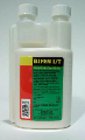 Fortunately, lawn moth management is easy. Since they are nesting right there in the grass, they are easy targets. A good combination of liquid and granular material will knock them down and keep them down. In most situations, two applications will be needed to get local populations under control. For light infestations, liquid alone will probably do the trick and the best material to us is BIFEN. This active works great on lawn moths and their nymphs.
Bifen IT: https://bugspray.com/catalog/insecticide/liquid/bifen
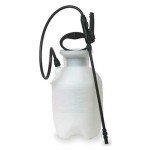
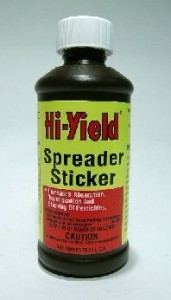 Use SPREADER STICKER to insure you get uniform coverage of the plant. This is particularly important with lawn moths since the young will be hiding down in the nap of the turf. We have a lot of SPRAYERS that can be used for the job with one of the Hose End styles being efficient to use since a lot of water is needed to get good coverage. Any of our Pump Sprayers will do the job too but if you have a lot of turf to treat, a larger capacity tank or spray system will make the job more manageable.
Spreader Sticker: https://bugspray.com/catalog/insecticide/additive/spreader-sticker
Pump Sprayer: https://bugspray.com/good/pump-sprayers
LAWN MOTH CONTROL GRANULES
 For severe infestations, it would be wise to put out some DELTAGUARD GRANULES first and then spray over the top with the Bifen. The granules will insure the lawn moths don’t avoid the treatment by migrating down into the turf. Since they tend to do this during hot spells, granules may be needed to reach them anyway if they are already nesting down in the topsoil. Apply them with a good GRANULE SPREADER and you will be setting out a one-two punch that will quickly knock down any unwanted population. Followup in 2-4 weeks with another liquid application and apply the granules at least twice to insure they don’t return.
DeltaGard: https://bugspray.com/catalog/insecticide/granule/delta-guard-20-lb.html
Spreaders: https://bugspray.com/equipment/spreaders/scatterbox-spreader
Lawn moths are a significant threat to most any type of grass. Once established in your grass, they will forage to neighboring plants. Populations will grow and by the time the damage is noticeable, it will be a lot more extensive then immediately visible. To avoid this scenario, be sure and treat when they are first found. If you address the problem early enough, liquid treatments with the Bifen will knock them out. Once established and embedded, apply some of the Deltaguard Granules first and then spray over the top. Treat at least twice and monitor your grass the rest of the growing season to make sure they don’t return.
CONTACT US
Give us a call if you need further help. Our toll free is 1-800-877-7290 and we’re open Monday through Thursday, 9:00 AM to 4:00 PM (Eastern Standard Time).
Email questions here: https://bugspray.com/about-us/contact-us
Order online and get a 5% discount! We ship fast with 99.9% of all orders shipping within 1 business day!!
Learn more about BUGSPRAY.COM and why it’s never been easier or safer to do your own pest control.
Please show your support for our business by purchasing the items we recommend from the links provided. Remember, this is the only way we can stay around to answer your questions and keep this valuable web site up and running. Thanks for your business!
Terry Marquez says
I have noticed moths in my grass and flower beds in the day. At late evening or dusk we are invaded by moths under our patio cover; especially when the lights are on under the patio. They are a real nuisance. I treated my lawn and plants with Bayer Complete because we noticed brown sections on the lawn. It does not appear to be chinch bugs. After treating the lawn the moths disappeared for about two days bit they came back under the patio. What can we do?
Tech Support says
Sounds like a classic infestation of Miller Moths.
Miller Moths: https://bugspray.com/article/millermoth.html
Treat the surfaces where the moths are landing with either Cyonara or Onslaught (both mentioned in the moth article) and this will both kill any active and repel them from the area.
Cyonara RTS: https://bugspray.com/catalog/insecticide/liquid/cyonara-32-oz-rts
Onslaught: https://bugspray.com/catalog/insecticide/liquid/onslaught
And since we can’t rule out the lawn as the source of the problem, spray it too.
Lastly, we’ve seen where moths love lawns with a low PH so it would be smart to check your soil PH to make sure it’s stable and in the proper range. Failure to keep it around 6.5-7.00 is risky and when it falls below 6.5, we’ve seen where all kinds of weeds, insects and plant disease can move in and take over making the local area a prime target for all kinds of “other” problems. The good news is monitoring and maintaining the soil ph is so easy and inexpensive, it’s one important thing anyone can do that can really help keep local pests in check.
So with that being said, if you haven’t been watching your soil PH, get a PH Meter and start checking it every few months.
PH Meter: https://bugspray.com/equipment/testing/phmoisturelight-probe
More information about the soil PH can be found here:
Soil PH: https://bugspray.com/article/ph