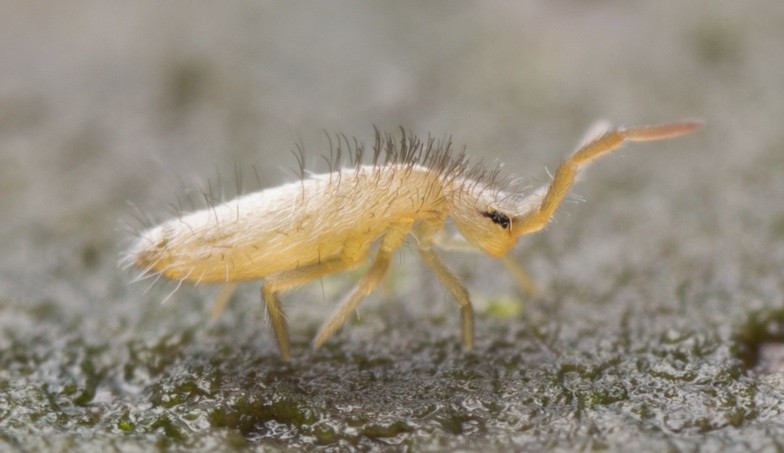
HOW TO CONTROL SPRINGTAILS IN AND AROUND HOME
Springtails are small insects which are one of natures most important recyclers. They exist from the north pole to the south pole; from the wet and humid southeastern states of America to the dry arid deserts of Nevada.
Springtails are very important to Mother earth since they are worlds biggest “re-cycler”. In the wild, they thrive in the ground but prefer to just under rocks, fallen trees and other vegetation. Once on a structure (natural or man made), they’ll migrate into cracks and crevices and eventually, into living spaces.
Springtails don’t “think” and they’re not good at deciding where to migrate so they do so indiscriminately, without cause, rhyme or reason. And for this reason they commonly end up on trees, plants, homes, cars, etc.
And if you allow them to live on your structure? They’ll eventually move inside.
As natures more important species, springtails will “test” even the driest of environments and survive so don’t think removing moisture will “cure” a problem. And since they can eat anything organic, they’ll routinely live on any plant or tree, dead or alive as well as any structure, new or old. EVERY structure and plant grows small microscopic mold and algae springtails will harvest as food so the world is their bounty.
This means in the big picture, if you’re dealing with an active springtail problem, you’ll need to think “big” and “everywhere”. So from the ground around your home to the siding to the wall voids to the living spaces; all these areas will need intense treatments.
And don’t forget the sinks, drain lines, tubs and showers.
Springtails can truly exist anywhere and if you keep an open mind to this concept, you can overcome their behavioral patterns and purge any structure or landscape of their presence.
BEST SPRINGTAIL TREATMENT VIDEO – INSIDE THE HOME
This short video (less than 60 seconds long) gives you the brief summary of what you’ll need to do inside the home for springtails. View it before reading the article below.

The next video gives you brief outline for what to do outside the home. View that too; its another short one.
BEST SPRINGTAIL TREATMENT VIDEO – OUTSIDE THE HOME
This next short video (less than 60 seconds long) gives you the brief summary of what you’ll need to do outside the home for springtails. After viewing it, decide if you’re ready to do the needed work to get rid of this persistent pest. If the answer to that question is yes, read the detailed article below as it will answer all your questions that are relevant to this subject.
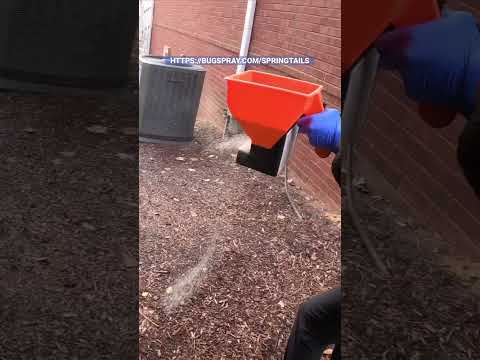
The bottom line with springtails and why so many homes continue to have problems is simple: Its usually the WRONG SPRAY BEING USED COMBINED WITH NOT USING ENOUGH. To be clear, springtails do not like to live out in the open and only venture there when populations under siding, in walls and in the ground get so excessive they need to migrate to new areas.
This is the main reason why you need the products we list AND why you need to use the amounts we detail. Only then can you impact them where they are nesting and reproducing so eventually you won’t have to see any.
SPRINGTAIL BIOLOGY
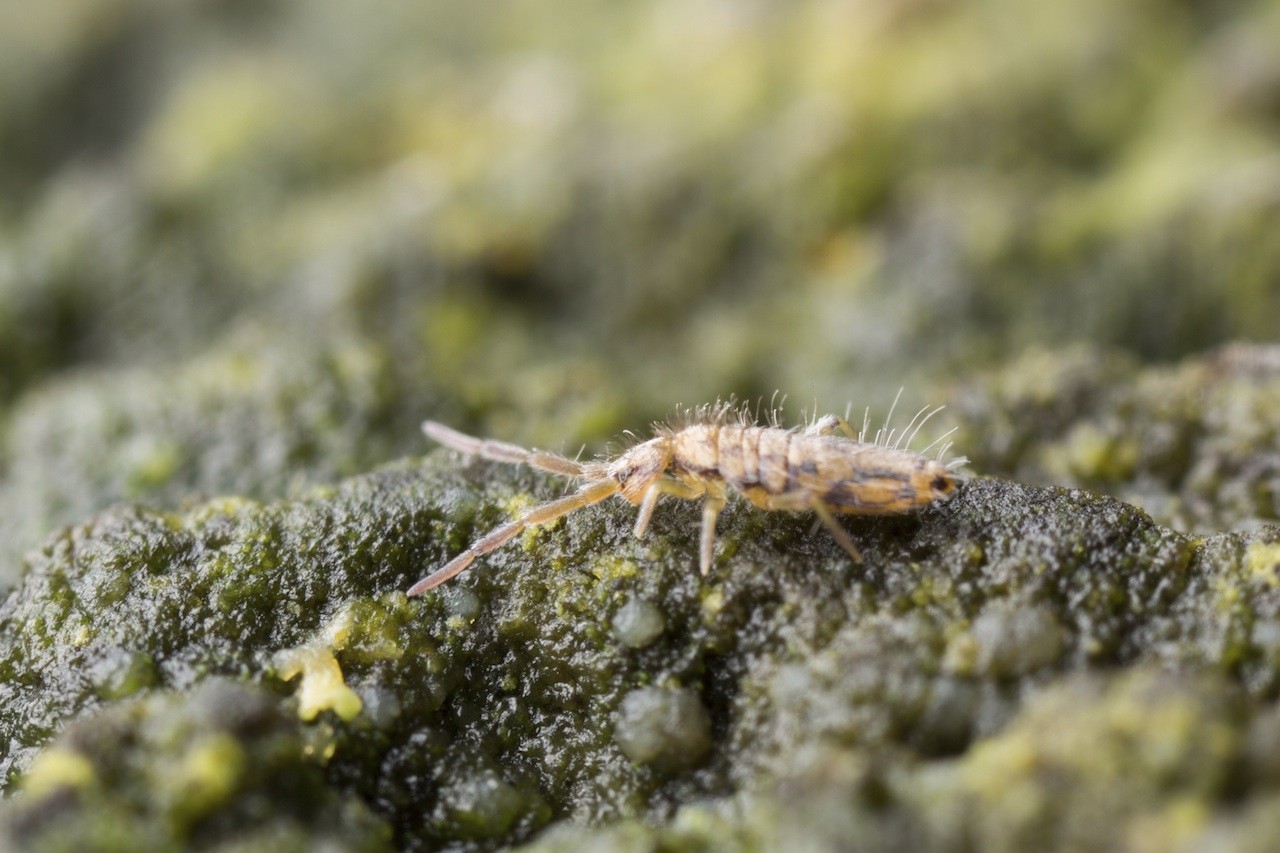
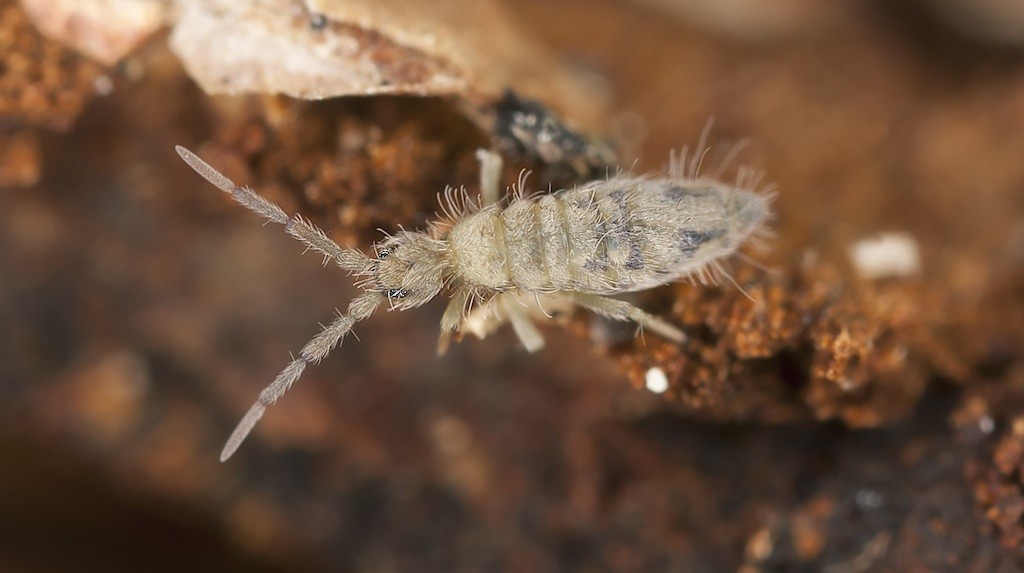
Springtails are commonly mistaken for fleas, ants, booklice, bark lice or psocids. Also known as Collembola, springtails eat mold, mildew, fungus and decaying organic matter commonly found in moist areas on and around the home.
They can be found in great numbers in homes which have been built for several years or in homes which are new.
So in older homes, inside infestations happen because they’ve emerged from the ground and over time, worked their way into home siding. From there, into walls where they love to live their lives. But as those internal nests get large, they’ll be forced to migrate out into living spaces.
In new homes, or at least homes that are less than a couple of years old, if you are seeing them inside it’s most likely because some where covered up behind walls during construction. Springtails love wood. As natures most important recycler, they will gravitate to wood where they can farm fungus, mold, algae and other microorganisms and plant growth barely visible to the naked eye. When homes are constructed, the studs are often left out in the open for many days if not weeks. During the time some will migrate up onto the wood from the ground around the foundation and then when exterior and interior walls are added, they get hidden. Since springtails love those locations, they will thrive. Unfortunately for the new home owner, this will often lead to internal issues in their brand new home.
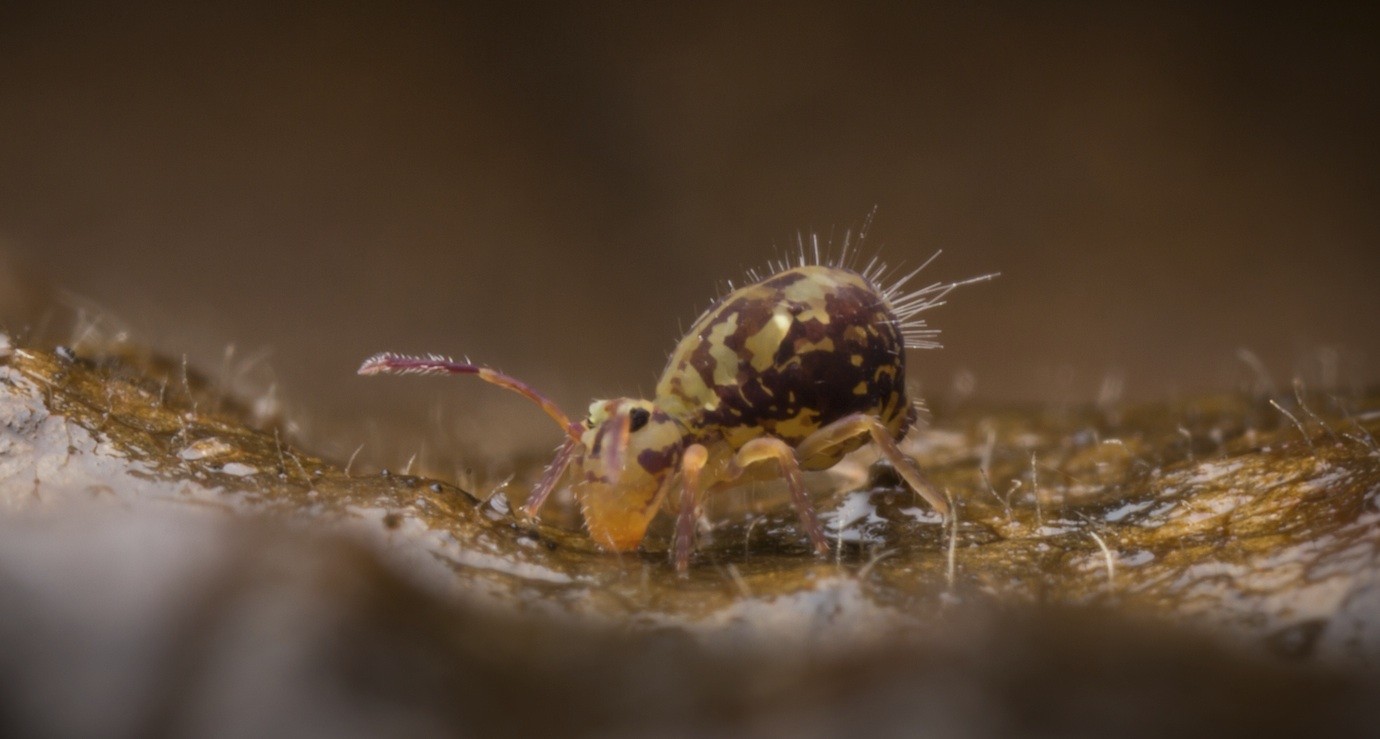
Springtails will choose to live under slabs, deep in the ground under grass or mulch, around drain lines, under house siding or under piles of wood when given the chance. And once they get into your wall voids, they’ll thrive. They will readily move under siding and from there, into wall voids and then be seen inside living spaces.
Springtails are readily found in any soil, leaf litter or mulch and survive well under slabs, under bathtubs and basically anywhere both dark and moist. The author has inspected many homes where large populations were found to be in wall voids, inside rain gutters, in the water closet of a toilet and under roof shingles. On many occasions the numbers were in the tens of thousands. This occurred because the population was never treated and when conditions are prime, they will multiply at alarming rates.
Springtails will develop into many sizes and shapes – even in the same colony – but the one constant among them is their ability to jump. They have an appendage, called a “furcula”, which loads like a spring. When threatened, they will release this spring and propel themselves away from danger – hence the name springtail. They will move in short runs, then rest, and then move again.
Springtails come in many colors and shapes. Young can be clear to white like a small termite. And some species are curled like a flea; others are flat like a psocid or silverfish.
CAN SPRINGTAILS SURVIVE IN THE WINTER?
They most certainly can survive in the winter. They actually utilize a natural “anti-freeze” that prevents them from freezing or shutting down activity when it gets cold. They will slow and generally don’t reproduce when its cold, which is why you won’t see them emerging too much in winter, but they will be active. In fact springtails can withstand extremely cold temperatures and why its not uncommon to find them active any time of year. This is especially true on any warm, sunny day when it’s cold. Give them a few days of a warming trend and they’ll be anxious to migrate up and into wall spaces, door frames or in some cases, out over the top of cold snow.
Of course these migrating springtails will die if they don’t get back down in the soil where they will find safe shelter but seeing them during the winter is a sure sign of a problem that needs to be treated and not ignored.
SPRINGTAIL PROBLEMS
Springtails become a problem in and around the home when they begin to appear inside, around pools or in garages. The first time or two they emerge no one may notice. Once they establish themselves, however, their numbers will be so large that they will be very evident when they come out. Expect to see tens of thousands of them as they cover the kitchen floor, sinks, tubs, basements, pool areas and patios. It’s important to understand that this behavior is just a symptom of the real problem. In other words, what you are seeing is not where the problem resides but rather a migration of them from an overly populated area in search of somewhere new that they can infest.
WHERE ARE THE SPRINGTAIL NESTS?
So one of the keys to understand springtail issues is to understand that springtails are very content living out of sight. As the worlds most important recycler, they’re growing population will be looking to “expand” to new areas most of the year.
But this takes time. They’re not like ants or termites that can migrate hundreds of feet in a day. They have a limited range; maybe 5-10 feet, and if they don’t make it home and stray too far, they’ll likely dehydrate and die. And though they might find the side of your home to provide safe shelter, it doesn’t mean they’ll get inside a day or two later. In general, it can take years for them to appear inside. This is because they’re very happy and content living under sill plate, where studs sit on top of the sill plate or under your home’s siding. But once those locations get saturated, they’ll become a “springtail generator” leading to massive migrations when it gets warm.
Now once they’re inside, it means they’re nesting and reproducing under baseboards, in walls, around windows and doors and even attics and why treating these hidden locations will be paramount if your goal is to not see them inside.
Since springtails thrive on any plant or tree, they typically end up on any roof that has leaves or other tree litter. Once on the roof, they’ll thrive in gutters, facia boards and under roof shingles which will then lead them inside to the attic space. From there its just a matter of time before they move down below into living spaces.
Lastly, since they love sewer lines and septic systems, springtails will readily migrate up from water pipes into sinks and from there, migrate into grout, countertops and the surrounding cabinets.
SPRINGTAILS YOU SEE WILL BE NESTING WITHIN 2-3 FEET!
What most people don’t realize is that SPRINGTAILS WONT MIGRATE FAR FROM WHERE THEY LIVE.
What this means is that if you see them in your sink? They’re either coming from the drain OR the rim where the sink sits in the counter or the cabinet adjacent to the sink.
If you are seeing them around a tub or shower? They’re most likely in any grout line, around the tub or shower stall, under the faucet control knobs or coming out the vent or fan duct.
Now outside the home, they will traverse great distances to find a good place to infest. But once they’re on the home and then in the home? They’ll live their lives happily hidden just out of view.
And so if they’re active around a window or below it? The void behind the window will need at least the crack and crevice aerosol we have listed applied and maybe surface spraying the wall too if you don’t want to see them all the time. But to be clear, the ones you’re seeing are nesting very close and where you need to focus for immediate results.
This is why it’s imperative to focus your treatments on where you see them. And this applies to both outside around the home on the ground, on the homes siding, inside the home on windows/doors, baseboards, sinks, tubs, showers, vents, electric outlets, light fixtures, air ducts, rugs, cabinets and basically WHERE YOU SEE THEM!
If the HOME HAS VINYL, ALUMINUM, STUCCO or WOOD SHAKES, you will probably have to pay it special attention by treating it as detailed below. Siding like this tends to harbor springtails and from here, they’ll be regenerating and so new ones will be coming inside indefinitely until the siding is properly treated.
This is summarized in the first two video’s above, at the start of this article, so do watch them. And if you decide to tackle this problem? Be sure you understand it will take focused applications using all the products we have listed. Remember, each product is a “tool” and like any good carpenter or mechanic, the more tools in your tool box, the easier it will be to get the job done.
HOW TO CONTROL SPRINGTAILS
Springtail problems can take years to develop. In fact they exist in all climates and will readily thrive in the hot southern states or up north where it gets cold and stays cold for 5-6 months a year. Springtails are very much a part of nature and as such fundamental to the recycling of all things organic. Much like termites are natural recyclers of wood; springtails are natural recyclers of plant life.
And even though moisture is related to their survival, its important to understand reducing moisture will not eliminate the problem. Reduced moisture will reduce their numbers. And in living spaces, any house using air conditioning will have an environment “tough” for springtails to use. But if it takes 5-7 days for them to die after they migrate inside and they keep migrating inside daily, they’ll be replacing the dead ones faster then they’re dying which means the amount you see will look like its getting worse with every passing day.
WHAT TO EXPECT WHEN TREATING FOR SPRINGTAILS
Now once you start treating a springtail problem, you should expect the process to take a good 2-3 months. Outside applications will eventually end the migration inside. But seeing them inside will be ongoing. Or at least it typically is if you’re already seeing them inside. The key is understanding that if you treat the outside on the schedule we advise below, you will reduce and eventually eliminate the ones entering your home. And once this happens, you won’t be seeing any inside. At least any more “new” springtails.
THE THREE STEPS TO SUCCESSFUL TREATING SPRINGTAIL PROBLEMS
In most cases, only two “steps” will be needed to get the problem under control. But if it continues to be an issue after 2 months, you’ll probably need to do the third treatment step too.
Since springtails come from outside, the most important step is treating the homes perimeter. This will be done with granules and liquid spray.
Once the outside is treated, problems inside can be addressed using an aerosol and in some cases a liquid spray. If you see them coming out of drain lines and gathering in a sink, tub or shower, you’ll need to use a drain line treatment too.
Lastly, if the outside and inside have been treated thoroughly for 2 months or more and you’re still seeing them appear inside, you’ll need to treat voids using a dust.
START OUTSIDE WITH THE BEST LAWN GRANULES
MAXXTHOR GRANULES are slow releasing and do a great job of penetrating mulch and other damp areas where springtails are known to thrive.
What makes Maxxthor so superior compared to any other granule is that it won’t stay up top where applied. Most all lawn granules are designed to stay in place where you apply them so that crawling pests like ants or palmetto bugs will crawl over the treatment and die.
But Maxxthor isn’t built that way. Maxxthor dissolves over 30 days and uses the tiniest amounts of active ingredient which insures it will penetrate deep into the ground. Most granules might get down 2-3 inches but Maxxthor will typically get 12-24 inches down after 2-3 treatments over 2-3 months. This is critical for subterranean pests like springtails which migrate “up”.
Plan on treating a band around the home covering at least 10 feet out from the foundation. This will eventually give you a “springtail free” zone on all sides with dirt, mulch, pine straw, etc. so that more can’t come up and onto your home. Remember, granules are slow to release but this is fine and very much the whole point of using them.
This short video shows you what these look like and how easy they can be to apply.
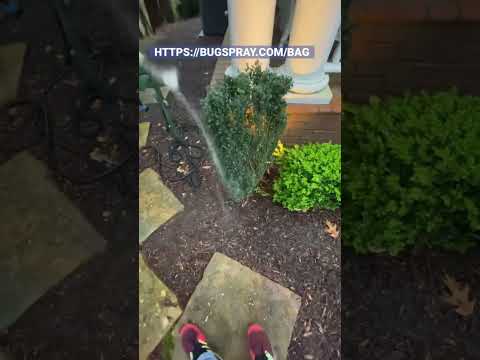
Expect to use around 1-2 lbs of granules per side of the home. Packed in easy to handle 11 lb jugs, expect to get 2 treatments around the home per jug which is enough for 2 months. Plan on treating once a month during the active season.
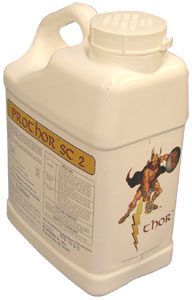


Any “push” type fertilizer spreader can be used to apply the granules; if you have a lot of flower beds and ground cover making that style impossible to use, go with a HAND SPREADER.

BEST OUTSIDE SPRAY FOR SPRINGTAILS
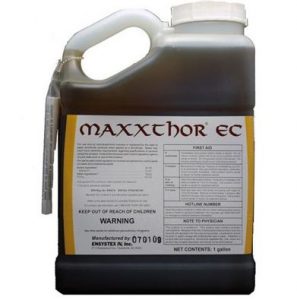
If you have a large home or lot and expect to be spraying on a regular basis, get MAXXTHOR EC. This concentrate will cover a lot more area and save cost over time. Mix it at 2.5 oz per 5 gallons of water and use this to cover up to 5,000 sq/ft.
Maxxthor is very unique in that it uses the very smallest particle size of any EC formulation. This grants it incredible power when it comes to penetrating power. And with springtails, you need this feature if you’re to reach all their nests or the depths down in the ground where they typically nest.
So with our HOSE END SPRAYER, you’ll add the 2.5 oz of Maxxthor to the sprayer and then water so it fills the 5 gallon line. Next hook it to your hose and spray it from the gutters down to the base of the foundation using about 1-2 gallons per side of the home. For large homes, double the dose.
That means a quart of Maxxthor will cover up to 1.5 acres.
Maxxthor is quick killing and its unique formulation allows it to “penetrate” most siding well like brick and masonite. But pests like springtails can come back quickly because once the treatment dries, it will take 2 days to kill the pests walking over it. For this reason its important to “respray” as needed – especially all hotspots where they’re nesting.
This short video provides some insight on why you should expect to be retreating almost daily when first dealing with a bad problem.
Remember, the Granules won’t do anything for the “above ground” pests but they will release and get all the ones breeding in the ground.
But for plants, shrubs, tree bark and house siding, you’ll need to use 1-2 gallons per side of the home spraying from the gutters down to the foundation. And if you find springtails coming back in a few days, spray again. On the outside, spraying when the springtails come back is important. If you don’t see any then once a month treatments with the granules should keep them gone for good.
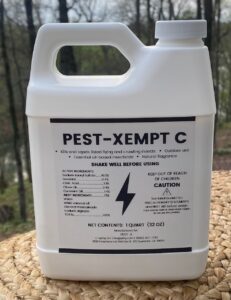
Now if you reside in New York or California and don’t have another state for us to ship Maxxthor, consider PEST-XEMPT C. This concentrate uses a blend of 5 essential oils and can be shipped to you direct. Xempt isn’t as strong as Maxxthor; expect to achieve 75% similar results. That said, Xempt uses all food grade actives and so it can be used around vegetables in the garden as well as down drains.
When spraying Xempt as a liquid, add 4 oz per gallon of water and expect to get around 500-750 sq/ft of coverage per gallon. Repeat as needed; expect to be spraying 1-2 a week for the first 2 weeks to knock down the initial populations. Xempt has an odor which is mostly the clove oil. And for enhanced performance, add 1 oz of the Boost (seen below) to your tank mix when preparing your mixture.


To magnify Maxxthor or Xempt, add SPREAD-X BOOST to your tank mix. Boost is an adjuvant, also known as a wetter spreader or spreader sticker. It basically makes water and the mixture more “slippery” so the spray will penetrate the ground faster and deeper. On home siding, you’ll get similar results with the spray reaching further into all cracks and crevices where springtails typically nest. Treatments will spread 2-3 times wider as well so you’re less likely to “miss” any surfaces. This is super helpful when spraying the ground, especially for ground dwelling pests like springtails, that can be nesting under the top soil or mulch.
The following short video summarizes why Boost can help deliver your treatment better.
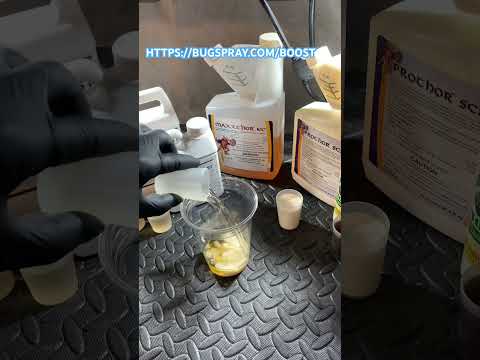
Add no more than the rate you’re applying the Maxxthor so in this case, if you’re adding 2.5 oz of Maxxthor to the hose end sprayer, add 2.5 oz of Boost too before adding water. If you’re adding Maxxthor to a pump sprayer at the rate of 1 oz per gallon, use 1 oz of Boost alongside every 1 oz of Maxxthor.
And don’t spray in the middle of the day when Boost is in your tank; treat late in the day, close to sunset, so the treatment can dry without direct sunlight. UV light on the mixture will break it down faster and can stress grass if you spray the foliage and temps are 85 degrees or higher. To eliminate that risk, treat 2 hours or less before sunset.

This next “short” video (less than 60 seconds long) shows how to use the Maxxthor with a Hose End Sprayer.
For springtails, the green top 20 gallon is ideally suited because you can remove the tip from the sprayer and shoot a “laser” spray up reaching heights often required for complete springtail control. Basically with the tip removed, the sprayer will spray as far as your water pressure can reach.
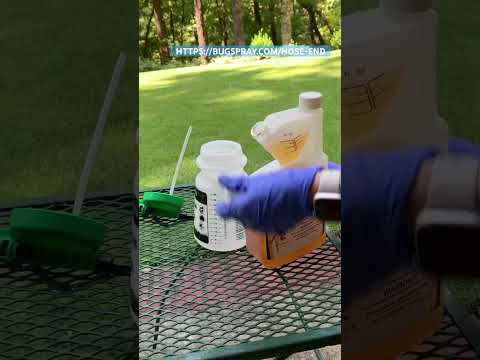
As you can see in the video above, our sprayer is easy to use. The 2.5 oz is recommended for the “average” home meaning you’ll be spraying about 1-2 gallons per side of the home. For grass, pine straw, wood chips and mulch, this same amount will be enough to cover about 5,000 sq/ft.
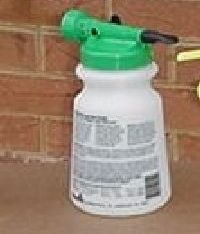
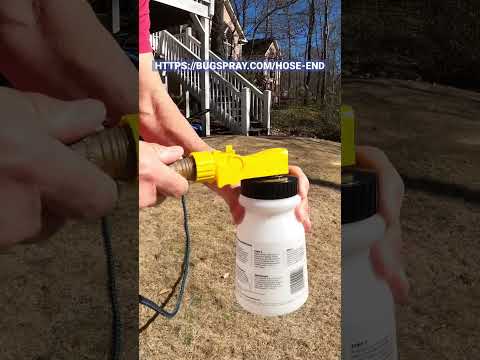
Now if you are “unsure” about how these Hose End sprayers work, watch this short video. It explains in under a minute how our Hose Ends work and offers up the quick difference between the two we offer so you can get the right one that will be fit your need.
ORGANIC SPRINGTAIL SPRAY
Now if you want to use a “green” product (or for small yards), XEMPT-C is good option. Use it at the rate of 4 oz per gallon per 1,000 sq/ft in our hose end sprayer or good pump sprayer. Keep in mind it will work fast and repel pests BUT it won’t last nearly as long. Expected residual is around 50% as long as the Maxxthor.
BE THOROUGH WHEN SPRAYING! And when treating, you need to cover everything. This includes the turf adjacent to the home like mulch piles, flower beds and any other area where close to the home. And don’t forget to spray the side of the house. Go up 5-8 feet letting the solution cover everything including the foundation and siding.
Cyonara or Maxxthor will provide a quick knockdown so you’ll see instant results with any exposed springtails dying within a few hours. And the water used to apply it will help get the Maxxthor going into the soil which is fundamental for the long term control of springtails.
HOW TO TREAT SPRINGTAILS UNDER CEMENT AND POOL DECKING
Springtails nesting under cement, pool decking, patio slabs, driveways or slab homes will often need extra attention/treatments to deliver the product where its most needed.
You see, the bottom side of any cement slab is a sponge that collects moisture. Mold and algae will readily grow there and pests like springtails, clover mites, millipedes and many others will take advantage of this food.
Once they move in under the cement, it can be near to impossible to reach them with Maxxthor. When this happens, you’ll have them coming up from their nests with no easy way to stop them.
So for patios, sidewalks or driveways that have a lot of springtail activity on top? You need to treat every crack and gap you can find. The following short video shows how to do this.

If you’ve tried and found you’re not able to get enough product through gaps and cracks, you’ll need to consider the next step. This involves drilling holes every 24 inches through the cement and then pumping the MAXXTHOR EC under the slab.
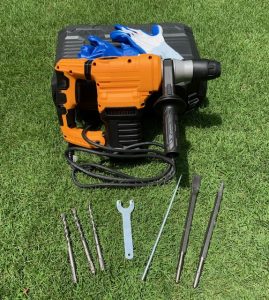
To get the holes drilled, use a good HAMMER DRILL and if you get our SUB SLAB INJECTOR, you’ll need to drill 1/2″ holes.
The following “short video” (less than 60 seconds long) shows how our slab injector works.
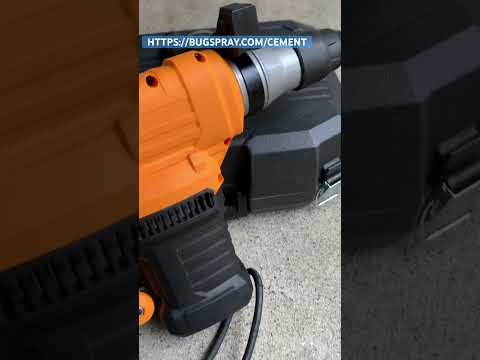
Space them 2 feet apart; the slab injector will treat sideways a good 1-2 feet thus insuring complete coverage.
Our Hammer Drill comes with several bits and the 1/2″ by 8″ long bit is the most common one needed since most slabs are 4-6″ thick.
Drilling might sound a bit “intimidating” but with this drill, its not hard. We’ll be posting a video shortly on how it operates so you’ll see anyone can do the work. Hammer Drills are generally available for rent from any tool rental company if you don’t want to purchase one.
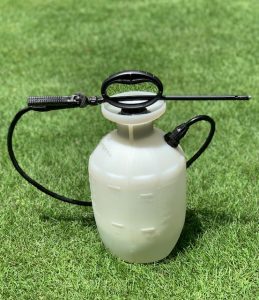
Once you’ve got the holes all drilled, treat them with our Sub Slab Sprayer.
This sprayer functions just like our Pump Sprayer but has been modded to spray “sideways” instead of straight out. Here is a zoomed in shot of the sprayers nozzle (this picture shows a “used” unit that’s been afield):
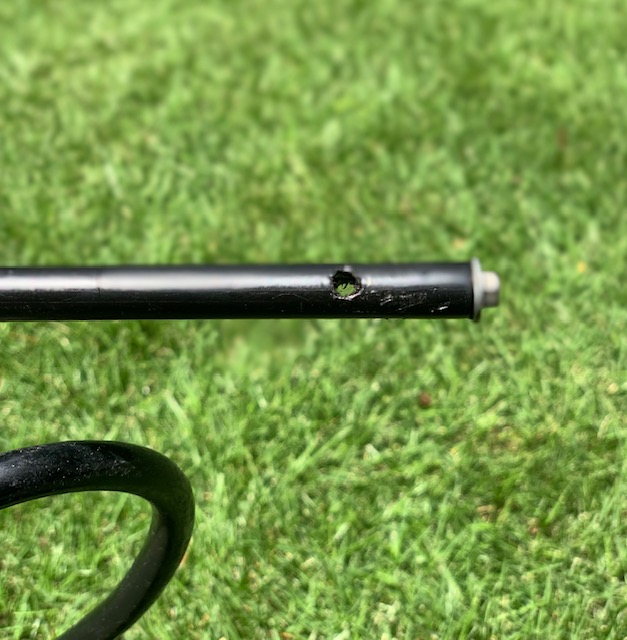
The flow will project 1-2 feet sideways so you can fill the gap under the concrete where the dirt has settled.
The best way to use the injector is to slowly push the rod into the slab and try to “feel” the soil underneath. Once you can feel the dirt, lift back up 1-2 inches and spray for 5-10 seconds.
The following “short video” (less than 60 seconds) shows how this injector works and why it may be key for solving your problem:
Over time the dirt under most slabs will settle at least an inch or more and that gap will allow the cement to grow food for most any insect. Mold and algae are common on slab bottoms and springtails love to live here.
Filling the void with Maxxthor will kill all nesting pests and last for several years. Mix the Maxxthor 1 oz per gallon to insure you’re getting 5+ years of residual.
HOW TO TREAT SPRINGTAILS UNDER EXTERIOR SIDING
Since springtails are migrating from the ground up and onto structures, they will many times get underneath wood siding such as cedar shakes or clapboards. They also LOVE living behind vinyl, stucco or aluminum siding. For homes with this this kind of siding installed, springtails will be nesting and breeding. In many cases, this becomes the main “source” of new springtails being seen. These areas hold moisture which in turn will grow mold, algae and other organic life springtails use for food. So once springtails find these locations, they’ll quickly start nesting and most people don’t realize, these are some of the most important areas you’ll need to spray.
Maxxthor sprayed on brick or even masonite will do a good job of keeping it springtail free. But any homes with the siding mentioned above will often require more than just the Maxxthor/Boost. You’ll know after a month; if you’re still finding active springtails on your homes siding after several treatments with Maxxthor, consider moving onto the POWER INJECTOR with BASE OIL.
In general, this would be the NEXT STEP after using Maxxthor and Boost for a month. Maxxthor and Boost will penetrate home siding. And if you’re able to direct it into all the areas where springtails are nesting, it will knock them out. Remember, springtails can be living from the gutters down to the foundation so be sure to spray thoroughly.
But after a month of steady treatments, if you’re still seeing activity on the siding (especially around gutters, windows, doors and other edges), then its time to go to the next level. And if you’ve noticed more coming inside since treating the home siding? That would be another sign they are living under it and why you will most likely need to power inject.
So just how can the Power Injector help? There are many reasons.
New for 2025, the POWER INJECTOR is something we’ve needed for a long time. It was first created to effectively replace aerosol products to help reduce on cost and waste (of throw away cans) but its turned out to be a lot more.
So first, you get to control what you’re spraying. That means now you can use the best chemicals like Bithor or Maxxthor. Currently there are no “ready to spray” aerosols which use these top of the line actives.
Second, you get to control the power. Standard aerosols run on 15-20psi. But with the Power Injector, you can power it up to 90psi. This will get you 3-5 times deeper penetration which can be all the difference when it comes to solving tough pest problems with pests nestled deep inside wall voids or behind home siding.
Third, you can use BASE OIL in the Power Injector. Unlike other oil based aerosols that have odors (like FS MP), Base Oil is odorless. And when mixed with Maxxthor, you’ll have the strongest mixture at your fingertips for hidden spaces.
The following video highlights these features in less than 1 minute:
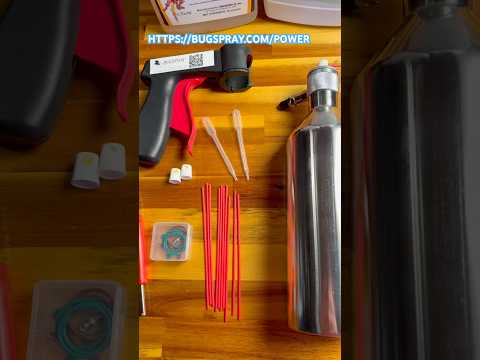
Since the filming of the video above, we’ve added a 50″ long straw that’s now included with the Power Injector. This will help you get even deeper penetration. Again, the deeper you can inject treatments is vital if you want to eradicate your pest problem.
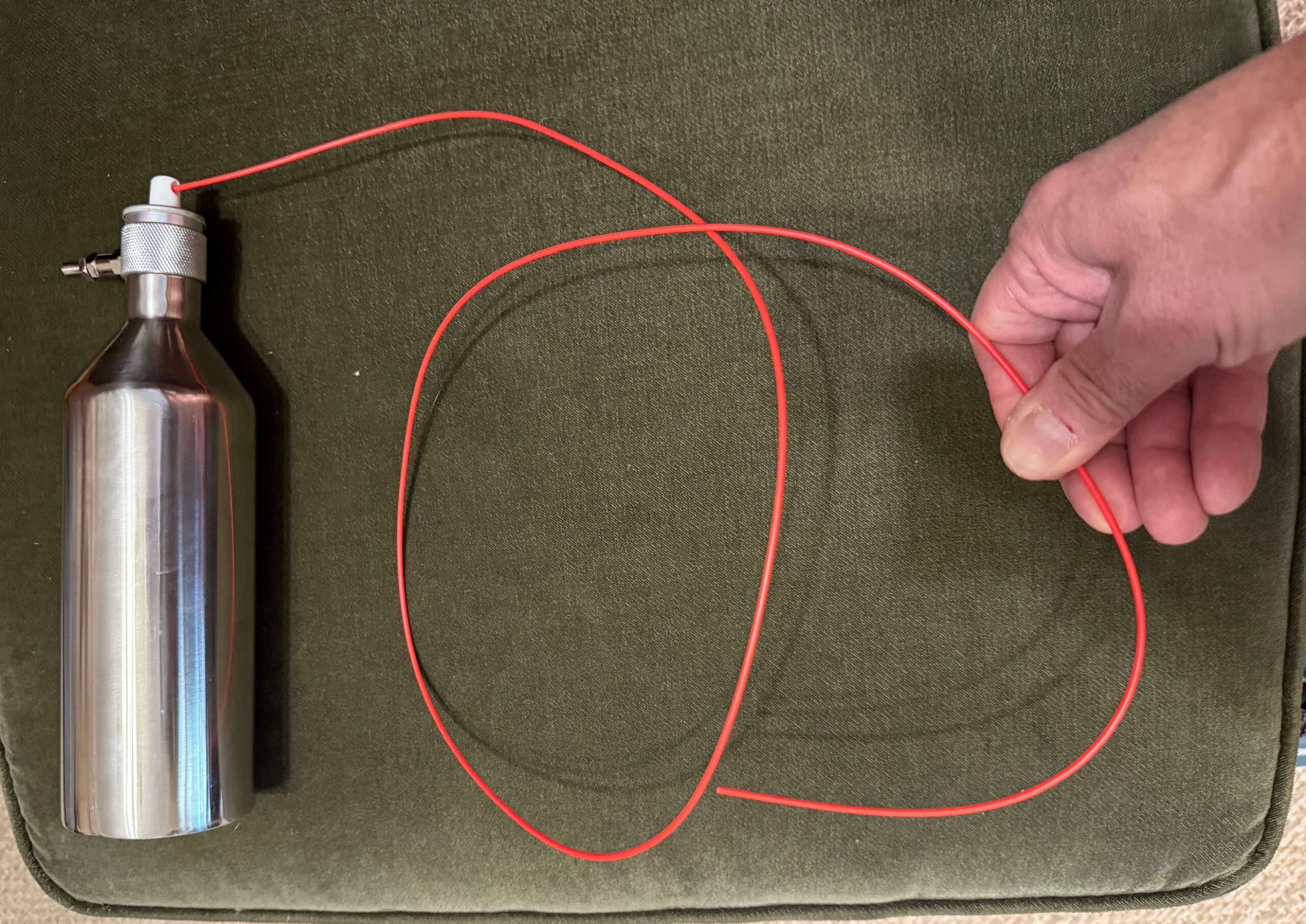
Now if you plan on getting Bithor (listed below), the Power Injector can be used with water to make your own Bithor Aerosol. But where you will really benefit is by using BASE OIL and Maxxthor in the tank.
Base oil migrates through wood like no other solvent and so it will carry the active ingredients (Maxxthor) 5-10 deeper compared to mixing it with water. For pests that like to nest in wood, this can be big help.
The following short video explains why Base Oil is so good at enhancing the Power Injectors range:

As the video above explains, Base Oil can really help get deliver your treatments where it needs to reach. So if you’ve had issues on your homes siding, the Power Injector is probably going to be needed. And since you can use it to apply Bithor and Maxxthor, you won’t need any of the aerosols you’ll learn about below.
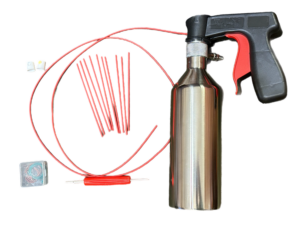
Base Oil comes in quarts, 1/2 gallon and 1 gallon jugs. Plan on using 16 oz per tank in the Power Injector so the 1/2 gallon will make 4 cans and the gallon jug, 8 cans. We recommend 5ml of Maxxthor per 16 oz of Base Oil; no more than 10ml. We include a 10ml eye dropper so its easy to add Maxxthor to the tank.

BEST LONG TERM TREATMENT FOR HOME SIDING TO PREVENT INFESTATIONS
Now if you don’t have an active problem under the home siding and want to make sure it stays that way, spraying it with Maxxthor/Boost will do the job. But you can also inject PEST-XEMPT D.
To be clear, any home with Vinyl, Aluminum, layered wood like Cedar Shakes or clapboards as well as stucco will likely need to be Power Injected. And if you use the Maxxthor and Base Oil, you can get years of protection in the treated space so dusting would not be needed. But if you don’t Power Inject because its not needed and want something there to help prevent issues? The dust is a great option because of its longevity.
Xempt D features two qualities that make it more efficient compared to ordinary insecticide dusts.
First, like insecticide dusts, it will agitate insects and force them to leave the dusted area or else they will die. And once they start moving, if they have dust on them they will die by dehydration.
Directly treated pests will succumb to the dust within a day BUT even as the active ingredient wears off in 1-2 months, the remaining base ingredient will keep working by making pests uncomfortable. So where ordinary dusts break down after 1-2 months and have no way of impacting pests, Xempt’s base lasts and keeps active by retaining its dehydrating feature.
This means once in place, Xempt D can protect your homes siding from getting infested for over a year.
The second most important part of this feature is that Xempt D CAN GET WET BUT WILL STILL WORK! This makes it quite unique and why its so well suited for both dry AND moist environments. The only way it won’t keep working is if you have water moving which causes it to wash away. But when left in place? Xempt dust will keep working!
Apply the dust with a good HAND DUSTER.
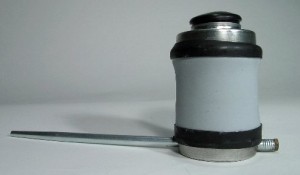
If you need to dust row after row of vinyl siding, cedar shakes or some other exterior siding springtails are using, consider getting a DUSTICK. This tool will let you do the dusting from the ground without having to climb a ladder.
Our Dustick features 4 extensions, each 4 feet long, which can be used one at a time or slid over one another to create a tool 8 feet long, 12 feet long, 16 foot long and longer if needed. Combined with the dust canister on top and the pump assembly on the bottom, you will be able to treat locations up to 25 feet high while standing on the ground and you can purchase extra 4 foot extensions to make it even longer.
This short video (less than 1 minute long) gives a good overview of how the Dustick works and why its essential for homes with springtails living under the exterior siding.

When you have a lot of siding and trim to treat where springtails might be nesting, Xempt dust is longest lasting formulation for the job and may be needed. And since it will control other pests too, it’s your best bet for long term control on siding when springtails are active in this area.

SPRINGTAIL SPRAY FOR INSIDE THE HOME
Once springtails start migrating up the homes foundation and start nesting under home siding, its only a matter of time before they start appearing inside living areas. They usually appear along baseboards, around windows and doors. If they’re living in gutters, they’ll migrate into attic spaces and drop down through air vents.
START BY SURFACE SPRAYING WITH BITHOR
Around windows and entry doors, you can try FS MP AEROSOL. This product is quick killing and repellent so it will stop them from entering where applied. This should be applied to all cracks and crevices around window frames and outside around the window as well. These are all key entry points and spots where springtails like to nest as they migrate from home siding to inside living spaces.
Keep in mind FS MP is for all cracks and crevices, where springtails will be hiding and nesting. Bithor is for surface spraying. THESE TWO WORK HAND AND HAND!
The following short video explains this well.
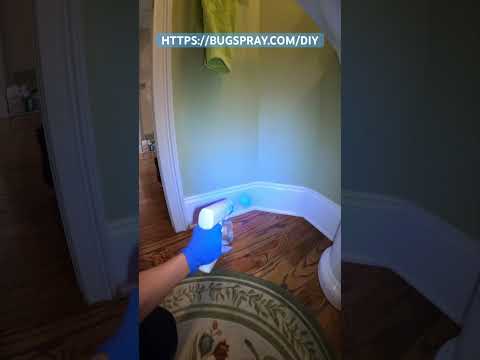
So for inside treatments, plan on using both. BUT IF YOU’RE GETTING THE POWER INJECTOR, YOU WON’T NEED FS MP. With the Power Injector, you’ll be able to apply Bithor to all cracks and crevices which is both odorless and overall, a much stronger set of actives compared to FS MP. Remember, the Power Injector comes with two misting nozzles so you can use it to spray Bithor on baseboards as well as the included straws to inject all cracks and crevices.
HOW TO TREAT CABINETS FOR SPRINGTAILS
Now if you’re finding them in sinks, you’ll need to a thorough crack and crevice treatment around it too. The following video details how to treat your sink and the cabinet underneath. In the video, we use FS MP but again, if you’re getting the Power Injector, it would replace the need to get the aerosol.
The techniques we use in this video apply to all other cabinet/sink areas too as well as the cracks and crevices around doors, windows and baseboards.
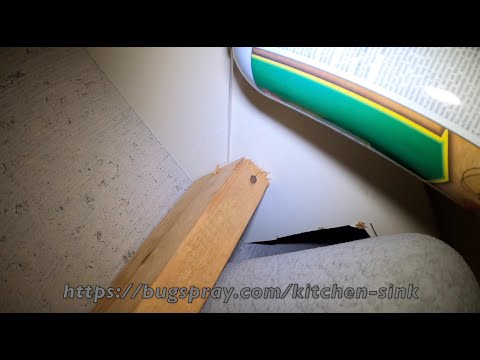
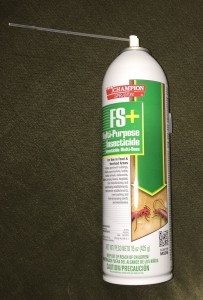
FS MP is strong and does a great job of reaching deep nesting springtails. But again, it is limited and so if you find they keep returning, the Power Injector will be needed.
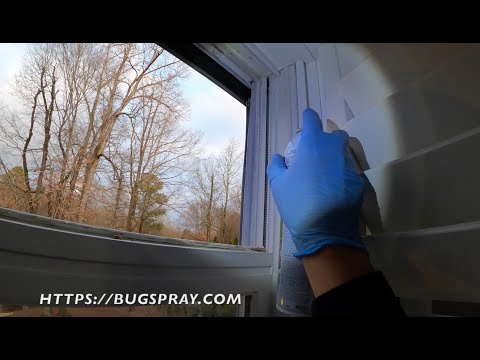
HOW TO TREAT A WINDOW FOR SPRINGTAILS
Windows are one of the key entry points for springtails and thoroughly treating every gap can get rid of all their pocket nests.
Most people miss so many of these key spots so be sure to watch the following video which details how to be thorough for any window using either the FS MP or the Bithor with the Mini Mister (both listed below). Again, this video was made before the Power Injector was available so if you’re getting one, use it here too. Water and Bithor would be great but Base Oil and Maxxthor EC, as good as it gets.
HOW TO TREAT AIR VENTS, ELECTRIC OUTLETS, WALLS AND CEILINGS
Another key entry point are air vents, electric outlets, light switch covers. These routinely allow springtails to enter rooms and are usually involved when you’re finding them in the second level of any home. From these areas you’ll see them active on walls and ceilings and its always challenging to know where to treat. Also, how do you treat these areas without making a mess?
The following “short video” (less than 60 seconds) shows how to safely treat these entry points using either FS MP Aerosol or Pest-Xempt Dust. To be clear, Xempt Dust would be your best option for these locations. Assuming they’re dry, the dust will last a year or more so you won’t have to keep retreating.
And for the Air Vents; you’ll learn springtails are not living inside the vent or duct as much as in the gap between it and the cover you see in the living areas. Get those areas dusted to stop springtails from going there and you’ll cut down on what you’re seeing dramatically.
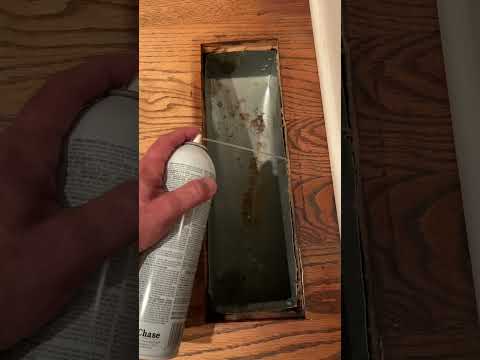
FS MP can be used for these areas too but you will need to reapply as needed compared to XEMPT DUST that can last several years.
Get XEMPT DUST if you’re looking for a more permanent solution or at least one that can last several years. Its highly repellent too so even if springtails are abundant in the wall or attic, they won’t be able to pass through these treated entry points.
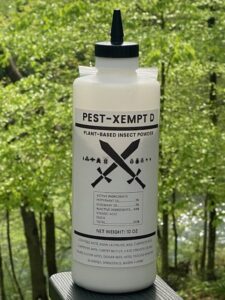
Use a CRUSADER to apply the Xempt.
HOW TO TREAT WALLS AND CEILINGS
Once springtails enter through walls or ceilings, you’ll see them around these points of entry and most likely underneath, down on the ground or even worse .. IN YOUR BED!
This is almost a certain sign of them entering from above so get those areas dusted as detailed above.
But what about the walls and ceilings?
The following “short video” shows two products being used for these surfaces. As you can see, they won’t make a mess so perfect for these hard to treat surfaces. Again, this video was made before we had the Power Injector so if you’re getting one, you can use it with Bithor to spray these same areas in place of Multipurpose or using the Mini Mister.
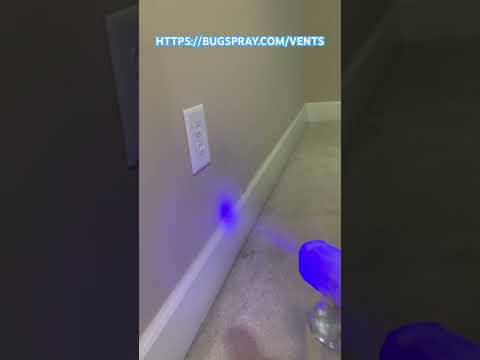
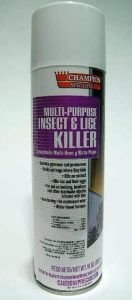
So the “ready to use” option in the video is MULTIPURPOSE AEROSOL.
This odorless, water based spray won’t stain or make a mess when used properly.
Lightly mist it on all ceilings and walls (be sure to wear eye protection when spraying “up”).
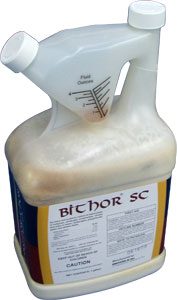
For large scale treating OR if you plan on using BITHOR, then get our MINI MISTER or the POWER INJECTOR.
This short video shows why the Mini Mister is ideal for applying Bithor to walls and ceilings. As you’ll see, it creates a light aerosol so it won’t make a mess or stain.

Add 1/2 oz of Bithor to the Mini Misters tank and plan on getting around 250 sq/ft of coverage per tank. In the Power Injector; adding 12 oz of water and 1/2 oz of Bithor will get you the same 250 sq/ft of coverage. If you load the Power Injector to 60psi, it will run for about 3 minutes to empty the tank.
Remember, Bithor is a slow working, non repellent. This means it will take a day or two for active springtails to die so expect to see them active and not dying quickly when the enter treated spaces. This is normal and by design so they may “share” the active thus affecting more than just the one springtail.
The Mini Mister is the great way to apply Bithor. Not only will it prevent making a mess, you will be thorough when using it because the mist just covers everything uniformly. And this goes for carpets, furniture and drapery.
This short video gives you a quick preview (less than 60 seconds) of how the Mini Mister works. Go to our MINI MISTER PRODUCT PAGE if you wish to see a more comprehensive video presentation:


And if you have a good pump sprayer, it can be used as well.
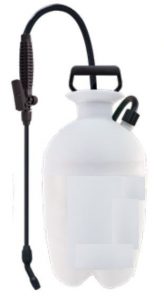
HOW TO GET RID OF SPRINGTAILS IN YOUR SINK
Springtails commonly appear in sinks and this will happen because drain lines are a direct pathway inside most any home. Here are some images showing a mass of springtails around a kitchen sink.
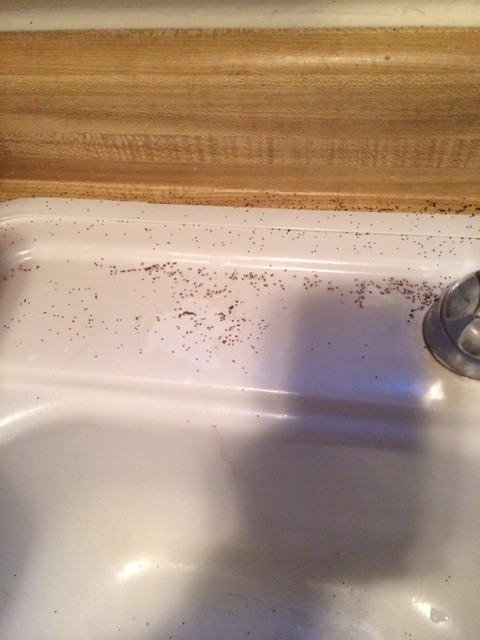
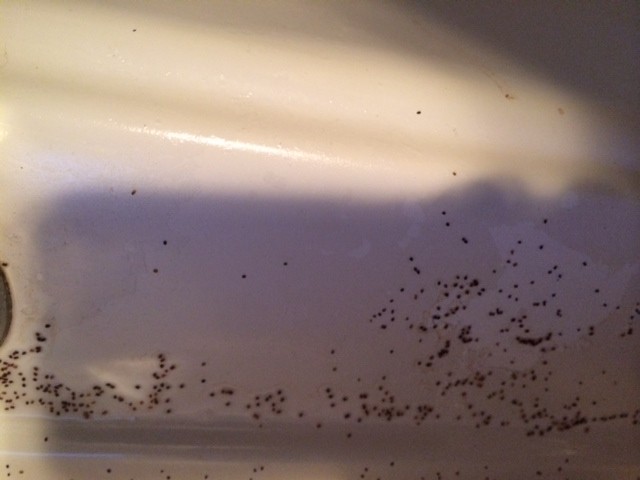
Remember, drain lines typically run to sewer lines or septic tanks. Both of these locations are prime springtail nest sites and when populations are growing and expanding in these outside areas, migrating springtails will forage up drain lines and into your home. And once they come up out of the sink, they’ll be looking for a place to start new nests.
So if you’re finding them in the sink, you’ll need to treat the sink drain line.
FIRST USE NO SURVIVORS DOWN THE DRAIN
Now for the sink drain lines? YOU NEED TO USE BOTH OF THESE NEXT TWO PRODUCTS DOWN THE DRAIN!
Because these areas are what we call “sensitive”, its best to use two products approved these locations.
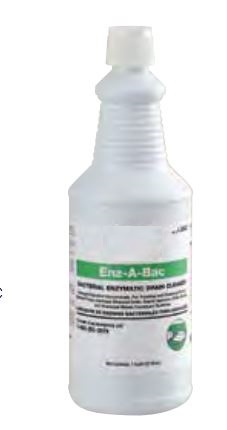
So the first product to use is designed to take away spring tail food. All drains will slowing accumulate a slime buildup of organic matter. It doesn’t take much to feed springtails and regular sink cleaners like clorox bleach or Draino won’t help.
What works is ENZ A BAC NO SURVIVORS down the drain. This material will break down and allow the organic matter to wash away. It uses enzymes – not acid – to dismantle the material so its no longer nutrional or useful for any insect.
Bleach, Drain-O and other cleaners won’t remove this slime so don’t waste your money using them. Enz A Bac No Survivors is made for this purpose and when combined with LEMON AIR (seen below), you can eliminate this area as a nest site for good.
No Survivors contains a bacteria which will “feed” upon all organic matter down any drain and effectively make it “useless” to insects.
This short video (less than 60 seconds long) explains how to use our No Survivors and how easily it is to apply weekly:
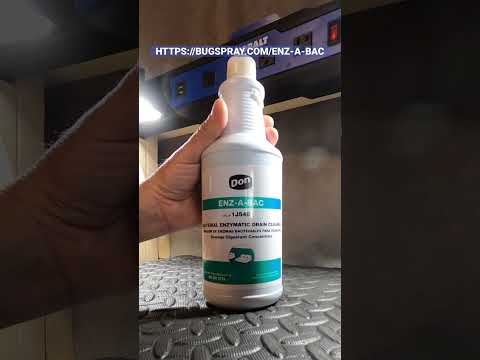
Plan on using No Survivors once a week for one month. After that every 2-4 weeks should keep the drains healthy and free flowing.
Treatments should be done just before retiring for the evening, so the treatment can “sit” overnight and work for a few hours before the water is run again.
Use 2-3 oz of Survivors per drain; it can be safely used in sinks, showers, floor and tub drains. Run warm to “semi-hot” water for 20 seconds and then add the Survivors by pouring the 2-3 oz directly down the drain as the warm water drains. Alternatively you can add 2-3 oz to 16-32 oz of warm water and stir the mixture for 5 seconds then pour it down the drain.
SECOND USE LEMON AIR DOWN THE DRAIN ON ANY NIGHT WHEN YOU DON’T USE NO SURVIVORS
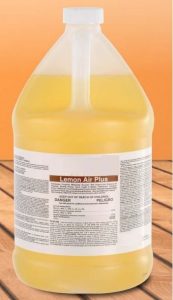
Compliment the No Survivors with LEMON AIR DOWN THE DRAIN insect killer. This product is the only labeled insect killer for use down drains that effectively kills on contact and eliminates all stages of insects like springtails, flies, mites, ants, roaches, crickets and more.
As the name implies, Lemon Air smells like lemons. It uses a unique active primarily used as a sanitizing agent for floors and drains. Its also a viruscide, labled to KILL COVID 19 along with other bacteria, viruses and microbes. This feature makes it unique in that can also kill many insects too – especially those which need microbes, mold, mildew and other organic matter for food.
When used down the drain on any night other than the night you use Enz a Bac, Lemon Air will actively kill any insects and keep the drain smelling lemony fresh.
Add 2 oz to a gallon of water in a bucket and pour 1/2 gallon down any drain you want to treat.
Lemon Air
This short video (less than 60 seconds long) explains how to use our Lemon Air Drain Treatment and how easily it is to apply as needed:

Lemon Air should be applied at least once a week but can be used as needed. If springtails are reappearing 2-3 days after you spray, treat again.
Lemon Air can also be used with a sponge or rag around counter edges, cracks and crevices as well as on the faucet, water levers and other places where springtails like to hide. Again, retreat as needed since Lemon Air will only be active for a day or two. It quickly dissipates so its safe for use where food and eating utensils are processed.
Now if you reside in California and don’t have another state for us to ship Lemon Air, consider PEST-XEMPT C. This concentrate uses a blend of 5 essential oils and can be shipped to direct. Xempt isn’t as strong as Lemon Air; expect to achieve 80% similar results. That said, Xempt uses all food grade actives and so it’s ideal for use in sensitive areas like down the drain.
When using Xempt as a drain treatment, add 2 oz per 1/2 gallon (64 oz) of water. Use it in the evening, just before you retire for the night, and treat by pouring 32-64 oz of the mixed solution down each sink drain. Focus on sinks, tubs and showers where you have activity along with the ones you want to keep pest free. Repeat as needed; this means if they come back in 3 days, treat again. Typically pest activity will slow or cease after 2-3 treatments and after that, use it weekly to prevent re-infestation. Xempt has an odor which is mostly clove oil since this is one of the active ingredients.
THIRD TREAT THE GROUT AROUND SINKS, TUBS AND DRAINS
Many times once the springtails come up from the drain, they migrate into tiny cracks and crevices common to any sink, shower or tub. If you have grout lines or other tiny gaps where you suspect they may be nesting, the FS MP or the Power Injector will be needed.
The following “short” video (less than 60 seconds) gives a good overview of how to apply it to the grout, around faucet covers, etc. (scroll back “up” to order some).

TREAT THE YARD AND SEPTIC TANKS FOR SPRINGTAILS
Now if you have a septic tank in the yard or suspect there is a cracked drain line leading to the city sewer, you’ll want to treat the dirt above and around the septic tanks and/or pipes out in the yard.
In some cases this will be easy. Septic tanks will many times have covers or caps that can be lifted. Gaining access to these areas will enable you to direct the treatment right where it matters. So if possible, get the lid off and treat around the drain line port as well as the rest of the dirt sides under the lid. If there is nothing but a tank visible, try to get the treatment in any gap up near the top. Springtails will love to nest both inside and around the edges of the system. Their goal will always be to stay above the water line to be safe but low enough to be properly hydrogenated.
Give the exposed soil, rocks and void a good spray down with MAXXTHOR EC monthly to keep springtails and other pests in check. By killing them here they won’t be able to follow your drain lines up and into the home when they migrate. Maxxthor EC and BOOST can be used there without any risk to the septic’s balance when treatments are done with the right rate. If you need help determining how much to spray, text us a picture along with the dimensions and we’ll be quick to respond.
Follow the directions detailed above; 1 oz in our 20 GALLON HOSE END SPRAYER is enough to get 5,000 sq/ft treated.
If your septic tank system is covered in dirt, you’ll need to use a less direct treatment method. Do this by applying MAXXTHOR SG applied over the top. As you’ll learn, these aren’t really like any other “granule” you’ve ever seen. In fact they’re more like a coarse powder that will work its way down into the soil like no other granules.
Once in place, the granules will slowly release active down in the soil and eventually penetrating deep enough where it can adversely affect the reproducing springtails.
Apply 2 lbs of granules for every 1,000 sq/ft of turf every 30 days.
BEST SPRINGTAIL TRAPS
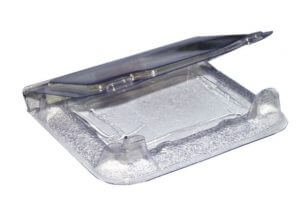
To help identify springtail pockets (nests) in the home, set out SPRINGTAIL TRAPS. These traps are well suited for use on countertops, around sinks, on sensitive furniture, beds where springtails have been seen and window sills. Other good locations to set traps would be around a shower or tub, a toilet bowl, inside plant pots and under furniture cushions.
Traps measure 4.25″ wide by 3.75″ long and less stand less than 1/2″ tall so they’re pretty flat. Each trap features a unique moisture lure in the glue that springtails find attractive. This will attract them from a few feet away and once they enter, they’ll be caught by the glue inside.
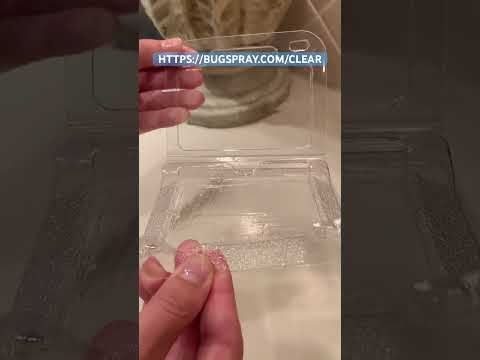
For general springtail monitoring, space traps every 10-20 feet and keep at least two traps per room. For specific areas like a bed or window sill, one trap will usually cover a 25-40 sq/ft area.
The glue and bait lure will remain active for 2-3 months but replace traps sooner if they get filled with insects.

SPRINGTAILS IN CRAWL SPACES
If you have a moist, damp crawlspace with springtails, dusting with XEMPT DUST once a year is the way to get such an area protected. The use of the Dust will provide a long residual and effectively reduce the amount of times you will have to treat. As explained above, Xempt D is water resistant and so it can get wet and still work. This makes it well suited for damp, dank environments like what you might find in a crawl space.
Typically a good dusting will last at least 6 months and can easily last over a year if its wet on a regular basis. If its dry, treatments can last well over a year.
Apply the dust at the rate of 10 oz for every 500 sq/ft of surface area. So if the space is 500 sq/ft, plan on using a full jug of dust because you need to cover the floor and the ceiling (which is the floor boards of above) since springtails will many times live up in the floor joists too.
For open spaces, use a DUSTIN MIZER to apply the dust. Its well suited for applying Xempt to attics and crawl spaces.
The following short video shows how to use it for an attic space.

It can blow the dust a good 20-25 feet out insuring good coverage.

WHAT ABOUT USING A PEST CONTROL SERVICE COMPANY FOR SPRINGTAIL CONTROL?
Are you currently using a pest control service company and still having springtail problems? This is “the norm”.
So first, we sell to many pest control services and we understand the challenges they’re confronted with regarding certain pests like springtails. The simple fact is they don’t have the time to keep coming back to homes that need followup service and why most companies will not service your home for this pest.
And those who do often aren’t able to get to the root of the problem which is usually inside wall voids, in attics, under the baseboard, in appliances, etc. The fact is that if they aren’t treating the “source” of the problem, they won’t solve the issue. And getting to the source is both time consuming and a challenge not easily manage if you’re only in the home a few times a month. Springtails require daily treatments to control their pockets and for this reason, a service company spraying all surfaces won’t resolve the issue for good.
Now we have seen many instances where customers use a service company AND supplement their effort by doing a lot of treating themselves. This insures all the key locations are getting attention when needed (by targeting the activity with FS MP) until the problem is resolved. In the end, its on the regular followup applications where it matters that resolves the issues.
And since the level of treatments needed for most springtail infestations aren’t covered under regular pest control contracts, it’s the only way for the problem to be handled.
HIRE A HANDYMAN
What if you are overwhelmed by all the treatments that will be needed and can’t find a pest control company to do the work? Then hire a handyman.
These small companies are almost always eager to take on new work and if you let them know you’ll need their services as the springtails come back, they’ll usually be keen to take on the project.
Handymen are usually skilled on ladders so ready to treat home siding, around gutters and all the “hard” treatments.
This will enable you to get our products and facilitate their use in and around your home.
The best arrangement seems to be using the Handyman for the outside work (or a landscape company) and then for the FS MP Aerosol and Bithor inside, you do the work as needed. Just follow our guidelines making sure to identify the key locations for them to treat and there is no reason you can’t reach your goal.
Springtails are a pest in and around the home throughout the United States. They are able to live in all types of soil and will thrive when wet, damp conditions are available. Though easy to kill, you must get to their nest sight if you intend on breaking their cycle and preventing massive migration and activity in the future. To do this you will need to use a combination of the products featured above. Two or three treatments will usually resolve any level of infestation along with moisture reduction and you should be able to knock them out once and for all.
HOW LONG WILL IT TAKE TO GET RID OF SPRINGTAILS?
No one can answer that question for sure. But if you treat the outside as explained above, you will stop them from entering which is the first step. And by following our recommended schedule of once a month granules and spray applied around the home, you’ll prevent new ones from migrating up. This will usually take several applications on the outside but once the chemicals have time to take effect, you shouldn’t have to anymore. In general, this will take 1-2 months and at least 3-6 applications.
As for the inside of the home, specifically living spaces, it will take longer. This is because in general, they don’t migrate to the open areas until they have well established “pocket nests” behind walls, around windows, around doors, down the drain, etc. So to not see any inside? It will require you to kill off their nest “pockets”.
This can be done the best way by using Maxxthor Granules and the Maxxthor EC outside. Then for inside, Bithor. And if you get the Power Injector, you won’t have to worry about getting any aerosols; use it to inject all the cracks and crevices to knock out all the hidden nests. In other words, surface spraying inside will only offer short term relief if you don’t knock out their pocket nests. And its very hard to identify every nest the first time you treat.
THE ONE THING TO REMEMBER DOING AFTER YOU’VE BEGUN TREATING AND STILL FIND SOME INSIDE IS TO FOCUS ON THAT ONE AREA! SPRINGTAILS DON’T TRAVEL FAR ONCE YOU’RE SPRAYING INSIDE SO IN GENERAL, IF THEY RETURN TO A DOOR OR UNDER A SINK OR AROUND A BASEBOARD, THEY WILL BE LIVING WITHIN 3 FEET OF WHERE YOU SEE THEM!
Another huge key is to not get frustrated or deterred once you begin. Springtail problems take years to develop and for this reason, you cannot knock them out with just 1-2 treatments. And remember, if you find them active a few days of treating any section of the home, it means one of two things. You’re either not using enough when you spray OR you’re not spraying frequently enough. So if you want to get rid of these pests for good, be prepared to battle!
CONTACT US
Give us a call if you need further help or “text a tech” at 678-667-2284. Our toll free is 1-800-877-7290 and we’re open Monday through Thursday, 9:00 AM to 4:00 PM (Eastern Standard Time).
Email questions here: https://bugspray.com/about-us/contact-us
Order online and get a 5% discount! We ship fast with 99.9% of all orders shipping within 1 business day!!
Learn more about BUGSPRAY.COM and why it’s never been easier or safer to do your own pest control.
Please show your support for our business by purchasing the items we recommend from the links provided. Remember, this is the only way we can stay around to answer your questions and keep this valuable web site up and running. Thanks for your business!
Larry says
Ok so ready for the success story?
Wow! What season! I was so relaxed! I followed the steps for power injecting with bithor and ec. I also used the hose sprayer for hose I believe I used it 2 or 3x. I found them under a basement window. Did a more thorough job waited a couple of weeks and then only found 1!
I am not seeing them in any numbers in the garage, on the siding, the slab, the deck or the stairs.
Peace at last!
Thank you so much.
Larry.
Tech Support says
Larry,
Great news mate! Thanks for sharing 🙂
This is just another confirmation that if you have the right products and apply them to them with the right tools (like the Power Injector or the Sky Hy sprayer), you can get the job done efficiently. Springtails need to be addressed where they are living – not where you see them. And if they get inside, Power Injecting their ports of entry with a strong repellent like Xempt EC will stop them from entering.
Remember, it may be late summer and you might not be seeing many right now but that can change quickly. Springtails don’t like heat much over 80 degrees. This means we move into the fall and temps cool, they’ll get super active for the next few months. Its very important to keep up with exterior treatments – especially around windows and doors – to keep them from re-establishing.
Stay the course and you will remain in springtail remission!
Tech Support
Team Bugspray.com
Jenna says
Hello,
I want to say thank you for this blog and for the products you supply. We used the power injecting last summer under our tub, toilet, and water closet baseboards last year.
It was the first summer in our new construction house, and we couldn’t get them under control. We even had the builder send plumbers to scope the tub and to take up the toilet and bathtub so we could spray down into the slab and then we resealed. That finally seemed to solve the problem, but the caulk seal on the bathtub has just cracked, and we have more spring tails already emerging this year. Do you have recommendations on what else we can do to treat? Should we just keep power injecting last summer we really don’t want to pull the tub and toilet AGAIN. That would be a third time for the tub and second time for the toilet. We are sure they are not coming from the drain, but don’t know how to prevent them from coming up from under the slab if that’s where they are coming from.
Thank you,
Jenna
Tech Support says
Jenna,
Your comment requires some specific information so we emailed a response. Moving forward, use that email to correspond with our tech support department. Oh, and if you don’t see the message, be sure to check your spam folder as that tends to be where our messages tend to go when sending to a Gmail account.
Customer Care
Bugspray.com
Olivia says
Hello, Thank you for such a great site- but I am a bit overwhelmed to be honest. We just noticed springtails under our ground floor French window outside and they re coming inside the house at that location. I am not a great DYI but from what I gathered:
– Do I need to use the Maxxthor lawn granules outside ?
– I need to spray the exterior of the home with the Maxxthor EC?
– re: inside: use Bithor with mini mister? FSMP aerosol?
what about the exempt dust?
So far I used an insecticide and Diatomaceous dust inside and outside and not sure this is helping.
We also live in California and it seems not all these products can be shipped there.
Thank you for your help!
Tech Support says
Olivia,
Due to the length of your inquiry, we have responded via email so be sure to check your “spam” folder if you don’t see our message in your “in” box.
And regarding the Maxxthor EC; you are right in that we can’t send it to CA but we can send Maxxthor SC as you’ll learn in our email.
https://bugspray.com/catalog/insecticide/liquid/maxxthor-sc
Tech Support
Olivia says
Thank you for your quick reply!
To clarify, FS MP is to be used indoor not outdoor?
You treat the whole outside of the french door and base with Maxxthor SC?
But the perimeter of the window inside with FS MP?
What about the base of the french door inside: FS MP under the door bottom and Bithor on the area in front of the door? Is it Ok is these 2 products overlap.mix a bit?
Also, do we need to add the Boost to Maxxthor SC?
The exterior of the house is stucco and we do not have a house on a slab, we have a crawl space- does it change the treatment you suggested?
Thank you so much!
Olivia
Tech Support says
Olivia,
We have been very busy so sorry for the late response but we did email answers.
Tech Support
Team Bugspray.com
Jules says
Hello,
I’ve been dealing with springtails all year long. They’re mainly covering my deck outside, which is trex decking, And they’re starting to come inside around my door frame and in/along the baseboards by my front door. I have also noticed them on my windowsills.
I’ve had an exterminator come out multiple times and he cannot seem to get rid of them.
I see you have many products so want to know which products specifically you would recommend for getting rid of them?
Thank you!
Tech Support says
Jules,
We have a “beginners list” here:
https://bugspray.com/what-do-you-recommend-for-springtails-and-how-much-should-i-get
And the deck will need to have all the under siding joints treated where they are nesting. Surface spraying will not help as we explain here:
https://bugspray.com/how-to-treat-my-deck-for-springtails
So as you will see in the article above, the Maxxthor Granules and Spray for outside along with the Bithor inside will be all you need to start as long as you are Power Injecting. Springtails WILL NOT BE CONTROLLED BY SURFACE SPRAYING! And the ones you are seeing inside are living inside emerging at the baseboards because that’s their main point of entry. Ultimately your goal is to create a springtail free “buffer zone” as we explain here:
https://bugspray.com/springtail-buffer-zone-when-treating-inside
And to make sure you’re not falling victim to any of the widespread “myths” we see online, review this article:
https://bugspray.com/springtail-myths
Tech Support
Team Bugspray.com
Loraine Wolynic says
What do you have to treat springtails. My son’s condo had them in various places: the bathroom sink and other places that are not wet. Is there something he can put in the sink drains that is safe for pipes. Also, anything you can recommend that can be used on the floors that is pet safe. They have a dog.
Thank you
Tech Support says
Loraine,
We have everything needed listed above actually. If you send him this next link, it will give a brief summary of what he should get to start.
https://bugspray.com/what-do-you-recommend-for-springtails-and-how-much-should-i-get
As he’ll learn, sinks should be treated with Enz A Bac seen here:
https://bugspray.com/sanitizer/liquid/enz-a-bac
And these sink treatments were made to save your pipes – not hurt them – as explained here:
https://bugspray.com/sanitizer/liquid/lemon-air-sanni-shine
As for spraying the floors; our Bithor is labeled for such use and it’s pet safe.
https://bugspray.com/catalog/insecticide/liquid/bithor_sc
But when it comes to springtails, SURFACE SPRAYING WHERE YOU SEE THEM WILL NOT END THE ISSUE!! He needs to treat their point of entry by Power Injecting. This will eventually stop them from emerging into his living spray. This also means surface spraying IS NOT EVEN NEEDED! If he just Power Injects enough, you’ll end the activity at some point.
https://bugspray.com/surface-spraying-vs-crack-crevice
https://bugspray.com/equipment/sprayers/bugspray-power-injector
As for how safe these treatments are for use around people and pets; visit this page:
Safety Videos: https://bugspray.com/safety-first-videos
Child Safe: https://bugspray.com/about-us#Are_our_products_child_safe
People Safe: https://bugspray.com/about-us#Are_our_products_people_safe
Pet Safe: https://bugspray.com/about-us#Are_our_products_pet_safe
Tech Support
Team Bugspray.com
Joe says
Thank you for the article and your comments. It’s quite overwhelming, honestly. I’m not a DIY-er and I have ASD, so I’ve definitely got some barriers here.
The outside of my home is covered in springtails and they come in at the windows and doors.
Can I do a sanity check with what to do?
I need to use the granules quite generously outside up to 10 feet out. I need to use the spray outside generously from top to bottom. That part I understand.
Where does the dust come into play? And the bithor? Is the bithor for inside/“detailing”? And the dust for getting under my vinyl siding?
Do these chemicals kill the beneficial insects outside?
Thank you! Is it possible to have a voice consultation? I work better through talking things out.
Tech Support says
Joe,
Thanks for your inquiry! We just emailed our detailed answers. And since you have a Gmail account, be sure to check your spam folder if you can’t find our email in your “in” box!
Tech Support
Team Bugspray.com
Nick M says
Good afternoon – I have been using nearly all of your products to treat a springtail infestation since June last year. I’m writing ask for your advice on how to treat a recent spike in springtail volume indoors after completion of our landscaping.
Quick context – 1960’s ranch home in Michigan. we’ve addressed every conceivable source of moisture, the last of which was new drainage and landscaping completed within the last week. We now have a 2.5ft rock barrier around the home. We keep a very regimented schedule for spraying/dusting and use flea lights traps and sticky pads in our crawl space to monitor volumes.
Up until mid-May we had very low springtails on the sticky pads and flea lights around the home. Fast forward one month and we’re now seeing over a hundred on certain crawl space and basement sticky pads after a few days. On the main level we’re seeing more land on sticky pads along baseboards and near vents. This morning I saw a few around our sink drain. I’ve sprayed FS in the vent voids, and planning to dust with Xempt. I did Enz-a-Bac this morning in drains and will do Lemon Air tomorrow.
My question – should we continue to actively spray outdoors, or would spraying just continue to agitate them to move indoors? I’m wondering if we need to allow 7-10 days for the new landscaping to “settle” and then resume a certain schedule. Anything we should do differently inside? Thank you for taking time to read this and respond, we’ve learned so much from you!
Tech Support says
Nick,
Sorry for not responding sooner but we have been very busy and haven’t had time to catch up until our days off!
So first, if you are seeing springtails inside the home, it means they are living in the home. This means you can do whatever you want outside to your landscape; it won’t impact the population living inside. We discuss this here:
https://bugspray.com/springtail-myths#myth1
Second, internal “moisture” of any home has nothing to do with getting springtails inside. The internal humidity of any home at worse will be no more than what’s outside and so if they were actually attracted to a more “moist” environment, they would never journey into most any home. This is myth is explained on our site here:
https://bugspray.com/springtail-myths#myth2
The mulch around your home is not important either; we explain this myth here:
https://bugspray.com/springtail-myths#myth3
In fact you can have any kind of mulch and keep it springtail free pretty easily as we explain here:
https://bugspray.com/should-change-mulch-foundation-reduce-springtails
As for using Flea Traps? This would not be considered controlling them; any type of trap (including our springtail traps) won’t control an active population that’s actively reproducing. If you’re seeing springtails inside, they have one thing on their mind: reproduction.
https://bugspray.com/are-my-springtails-looking-for-moisture
More importantly, treating where you see them will be critical so sure, your crawl space might need a treatment. But once Bithor is used there, it will last many months and so again, if they’re upstairs in your living area, you’ll need to get them there for sure and that will most likely include our Power Injector.
https://bugspray.com/equipment/sprayers/bugspray-power-injector
Tell us more about the crawl space; how is the foundation wall constructed? Cement block? Poured concrete? And what is the floor of the crawl space? Dirt or cement?
As for air vents; do not treat in the duct! They are not living there as we explain here:
https://bugspray.com/springtail-myths#myth9
Definitely treat the right area there using our Xempt Dust:
https://bugspray.com/exempt/dust/pest-xempt-dust
https://bugspray.com/vents
As for chasing them inside when spraying with Maxxthor outside; this can happen. To get more clarity, let us know your home siding and better advise. But for sure, Bithor Power Injecting inside with Bithor is certainly needed regardless of the outside treatments.
Regarding your landscaping “settling”? This has nothing to do with your springtail activity inside so we’re not even going to comment more about it. Do what you want in your landscaping. Assuming you’re using our Maxxthor Granules and Spray, there will be no springtails there and if there are, it means you’re not using enough or treating on a regular basis.
Moving forward, be sure to email instead of posting here. Your situation requires some followup so email order@bugspray.com your answers to our questions. Also include your order numbers. We need to see what you’ve been using and we suspect aren’t using enough nor do you have everything you will need. But once we see your order history, we’ll be able to best advise.
Tech Support
Team Bugspray.com
Julie Aceituno says
Can I apply the maxxthor Ec plus boost and oil combined under my base boards inside?
Tech Support says
Julie,
So first, Maxxthor is labeled for use under baseboards. Basically any structural members like the sill plate under baseboards, the studs in walls as well as floor joists in a basement or rafters in an attic. But you won’t need to add Boost. The Base Oil will effectively work in place of the Boost and do a better job actually. So when using Maxxthor in the Power Injector; mix it with water or Base Oil but don’t add Boost.
https://bugspray.com/catalog/insecticide/liquid/deodorized-oil
https://bugspray.com/catalog/insecticide/liquid/maxxthor-ec
Tech Support
Nick says
I first want to thank you for publishing this information – it gives us hope for a home we’ve invested a lot of time, care, and money into. We’re purchased nearly all the products recommended.
We have a walk-out ranch style home in Michigan and are making good progress outdoors with the treatment schedule and remediating trouble spots around the perimeter and in our crawl space. Our focus is now inside, where we’ve reduced numbers by 70-80% but we continue to see them mostly coming up through the void between the subfloor and vent (though we are spraying baseboards and treating drains just to be comprehensive).
I have two questions:
1. Last weekend we had a water leak in our newly-finished lower level (LVP flooring with vapor barrier). We’ve removed the baseboards and thoroughly dried the space but are concerned there is now ‘hidden’ moisture under the floor that will make the situation worse. What can we do to get ahead of this without taking up the floor?
2. For those coming up through the void between subfloor and vent, should we switch from FS MP and dust to Bithor? Do we need the power injector?
Thank you for your insight.
Tech Support says
Nick,
So first, although moisture will allow for springtails to reproduce more successfully, any moist area can be treated and in turn, end any possibility of them using it as a nest site. So for now Power Injecting “under” as much of the LVP would make sense. The LVP we know is generally Vinyl and so any water under it could effectively be “sealed” between the flooring and the vapor barrier. This could be problematic if ignored because it could remain trapped for a long time without drying. But a good dose of treatment using the Power Injector will fill the space with a mixture springtails will not be able to inhabit – even if it’s wet, damp or moist for a long time. Our advise is to inject as many points as possible. If you are able to at least get the perimeter injected since the baseboards are effectively not blocking you, it should eliminate these areas as possible nest sites for good. This way no matter how long it takes to dry, it won’t matter. Conversely, if left untreated? Even if it was dry this space would be a prime location for them to use.
Second, with the introduction of the Power Injector, we are seeing remarkable results afield. This is probably due to its ability to reach much deeper compared to any aerosol like FS MP. With that established, it’s clear you should Power Inject around the vent hole. Springtails will be nesting right there and so if you have been surface spraying and still seeing activity like you describe? It means they are thriving in cracks and crevices that need to be addressed. Power Inject those spaces and you’ll end them for good.
Check these links for more information you may have missed from the article above:
https://bugspray.com/best-way-to-treat-a-baseboard-for-insect-pests
https://bugspray.com/are-my-springtails-looking-for-moisture
https://bugspray.com/equipment/sprayers/bugspray-power-injector
Oh, and Bithor would be fine for this treatment since it’s LVP and won’t be absorbing anything. This means there would be no benefit to use Maxxthor which can soak into wood.
Tech Support
Brittany says
Hi there,
I think this is my third time reading through this and I’m trying to sort out what we’ll need. Toward the beginning of the article, you mentioned focusing on treating the areas where springtails have been seen. The Wall/Ceiling section mentions we should spray *all* the walls and ceilings.
I’m confused (and overwhelmed by the whole springtail thing!). Wondering if we need to spray *all* the walls in the home, or would we just spray walls near where we’ve seen springtails? Or would we just try the FS MP and/or Dust in the areas where we have spotted springtails and not have to spray the walls/ceilings? Can you clarify that for me?
Thank you so much!
Tech Support says
Brittany,
So first, the article above is all encompassing so we fully understand that the task of controlling this pest could appear to be overwhelming. That said, it may not be that hard. Please visit this other page we have which lists what we call our “starter suggestions”.
https://bugspray.com/what-do-you-recommend-for-springtails-and-how-much-should-i-get
Another good page to visit is the “treatment schedule” page here:
https://bugspray.com/springtail-treatment-schedule
The thing to always remember with springtails is that first, if you are seeing them inside? They are not “invading”. They are actually nesting within a few feet of where you see them. And the second thing to remember is that if you see them migrating out in the open? It’s because they are actively mating and reproducing.
They’re very much like whitetail deer in rut during October, November and December. During this time, males chase females and will often be seen during the day which makes them vulnerable and not something they normally do because they are nocturnal. Springtails are mostly the same. They are nocturnal and DO NOT like to come out in the open. The only time they do this is when they are actively looking to “spread” and the way they spread is a bit unusual. Basically males forage out which they don’t like to do and where they travel and find a safe haven? This is where they will leave small deposits of sperm. This in turn attracts females who then use it to start a new brood of young springtails at this new location. So effectively the females are chasing where males have been, a bit different from the deer, but the part about them coming out is the same: both the male deer and the male springtails do this because they are actively reproducing.
Now why this is relevant goes back to your question about spraying walls and/or ceilings. If you are seeing them on any wall or ceiling and it’s not sprayed? You are effectively letting them free roam which means some will surely set up new nests. In the end, just how much of these areas you want to treat is up to you but we always recommend the more the better when it comes to this pest. And this applies to walls/ceilings inside as well as home siding/gutters/roofing outside as well as the ground around the home. To put it bluntly: it’s very hard to over spray for this pest. In our estimation, less than 5% of our customers who get springtail products are over spraying and in a nutshell, the only reason anyone has a lingering issue is because they aren’t spraying enough when they treat or are they spraying on a regular basis.
The other big reason is that they’re not Power Injecting. If you want to knock them out for good, get the Power Injector and move on from the aerosols. It will perform 5-10x better now that we have data accumulated to confirm just how effective it is when reaching their remote pocket nests.
Tech Support
Matt D says
1) Pest control company sprayed Alpine WSG on inside windowsills and baseboards last weeks, along with Demand CS outside. However after reading your article I’m certain the springtails are nested in the walls, so considering using bithor with power injector in indoor cracks and crevices (baseboards, window sills). Is it safe to use bithor where alpine wsg was applied?
2) Why am I only seeing springtails inside at night?
3) Any tips for how to safely spray Xempt dust into the crevices around ceiling vents without it falling down onto myself/into room, and from getting into the vents themselves and spreading the dust when hvac is on?
Thank you!
Tech Support says
Matt,
So first, Alpine is not going to help much due to how it works. Bithor actually works in a similar way BUT includes the second active which is critical to get them active. Your thoughts about using it with the Power Injector will most certainly dramatically help your problem and if done completely (meaning reaching their nests), end the issue quickly. As for using Bithor over the Alpine; not a problem. The two “play nice” together.
Second, springtails are most certainly a “nocturnal” pest. We explain that here: https://bugspray.com/springtails-on-my-house-at-night
Lastly, Xempt Dust uses food grade actives and though breathing the “dust” part of it for a few years, every day, would not be healthy, applying 1-2 lbs around your home would not be enough to impact anyone if used properly. With that said, we recommend you wear a “dust mask” when using it. If you add a note for us to include one when checking out, we will send it with your order. This isn’t a respirator; it’s more like a COVID mask but it will do the job. We also suggest wearing goggles when dusting overhead. But to be clear, any dust that falls can be immediately annihilated by using a vacuum or damp paper towel. Its more like baby powder than an insecticide but like baby powder, you don’t want to be breathing it every day for years.
Oh, and here are some “safety links” to our posted info:
Videos: https://bugspray.com/safety-first-videos
Child Safe: https://bugspray.com/about-us#Are_our_products_child_safe
Pet Safe: https://bugspray.com/about-us#Are_our_products_pet_safe
Wait Time: https://bugspray.com/time
Tech Support
Stephanie says
I have been noticing springtails mostly in my kitchen but lately they are on every floor in windowsill and bathroom floors/counters. We have artificial turf around our house or concrete. What is best method for exterior ?
How do I find nest inside? If I find them on every windowsill can I just spray them or does every inside of the wall need to be dusted
Tech Support says
Steph,
So artificial turf will be a springtail generator around the home. To keep them from getting in, apply the Maxxthor Granules from 10 feet out all the way in to the foundation wall and then spray over the top with Maxxthor too. Do this at least monthly, maybe more to start to not see any out there.
https://bugspray.com/catalog/insecticide/granule/maxxthor-sg-granules
https://bugspray.com/catalog/insecticide/liquid/maxxthor-ec
As for the inside; anywhere you see them is where they’re living since they will only migrate out 2-3 feet from their nests. Use the Bithor to surface spray and if you don’t want to see any keep coming out from their nests, Power Inject the Bithor too under baseboards.
https://bugspray.com/catalog/insecticide/liquid/bithor_sc
https://bugspray.com/equipment/sprayers/bugspray-power-injector
Since springtails nest anywhere on wood and where wood meets cement, you need to treat all these areas. They’re just like termites meaning they love wood and can occupy any that’s unfinished so all the structural members of the home can be where they’re nesting. That said, ports of entry should be dusted as we explain here:
https://bugspray.com/vents
And then baseboards as we explain here:
https://bugspray.com/best-way-to-treat-a-baseboard-for-insect-pests
Lastly, this next post gives a good summary of what to get when first starting your treatments:
https://bugspray.com/what-do-you-recommend-for-springtails-and-how-much-should-i-get
Tech Support
Peter Chow says
Springtails on vinyl sidings of my house, window sills, and garage door entrance. Should I power-clean the sidings before spraying Maxxthor? Thanks.
Tech Support says
Peter,
So first, the ones you’re seeing are most likely coming from under the vinyl. We discuss this in a post; vinyl siding is one of the most favorite places for springtails to live and nest.
https://bugspray.com/treat-home-siding-springtails
So what is you concern about power washing? To be clear, Maxxthor applied with Boost will penetrate the siding and hopefully reach them well enough to take out the nests. In fact 50-75% of customers get that result. But another 10-20% have to Power Inject the siding to get the Maxxthor deep enough to do it’s job.
So if you’re concerned the power washing will remove the Maxxthor? It will or at least it will take away the surface residual. So if you were planning on doing a power washing, do it before you start taking on the springtails. But if you were thinking the power washing was going to somehow help control the springtails? Then don’t do it at all. If anything, power washing pushes water deep into the very same cracks and crevices pests like springtails and clover mites use to nest. That means if anything, the power washer could help these pests unless you followup with Maxxthor right after.
Tech Support
don h. says
I’m about to start doing this myself. been paying a pest service but its not helping. maybe for 1-2 days but they just come back. after reading this material i know for sure i have to treat under my baseboards. my house is on a slab and we never see them on foundation outside but they keep coming out inside along the front of the house. especially under the door and windows. my question is do i need the base oil? i think it will penetrate best but i’m wondering if using just water with the maxxthor will be strong enough. letme know so i can order.
Tech Support says
Don,
It’s usually not possible to tell whether or not Base Oil will be needed when using the Power Injector. Here are some guidelines on what to expect.
First, most of our customers actually get very positive, lasting results buy just spraying their home’s exterior siding, treating the ground and then surface spraying inside with Bithor. But for anyone seeing them come back within a few days – especially from baseboards, windows, doors, ceilings, walls or countertops – Power Injecting will be needed.
And to start, there is nothing wrong with trying Bithor in water or even the Maxxthor for any of these structural injections. Maxxthor/water would penetrate better compared to Bithor/water and with any luck, that might be all you need. But if you do such a treatment and find them coming back within a few days, then clearly you’re not reaching their nest. And in cases like that – which are 10-30% of our customers – going with Maxxthor/Base Oil may be required.
On a side note, if you lightly spray any insect with Maxxthor/Base Oil, you will see they die in seconds. That’s what we call a contact killer and so if you are able to deliver that mixture under baseboards and to all the joints where the springtails are nesting, they will be eliminated on contact.
https://bugspray.com/equipment/sprayers/bugspray-power-injector
https://bugspray.com/catalog/insecticide/liquid/maxxthor-ec
https://bugspray.com/catalog/insecticide/liquid/deodorized-oil
Gen I. says
We currently had a backed up pipe in our main line and just got it fixed this week. We started seeing a lot of springtails in the bathroom and now we know why. With that being said we ordered the drain cleaners you recommended last night. However, they are crawling out of my baseboards now in the master bath, and I see them sparingly in the other rooms of my brand new built home. They have even been in my master bedroom on my bed!!!! After talking this morning and seeing them come from the baseboards we decided we needed to treat the outside of the house as well. We decided on the granules and the spray but was concerned the spray would affect my hardy board and paint. Can you ease my mind on this? It’s a new home and don’t want anything compromising my paint or hardy board. Also, I have placed diatomaceous earth around my baseboards in the mean time. Don’t think we need the indoor spray. We hope treating the drains and outside are sufficient? Thanks in advance.
Tech Support says
So first, springtails in your bathroom may have come up from your pipes and so using Enz A Bac and Lemon Air would be smart.
https://bugspray.com/sanitizer/liquid/survivors
https://bugspray.com/sanitizer/liquid/lemon-air-sanni-shine
That said, if you’ve found any outside of the drains/sinks, then the bathroom will have active nests that need to be treated. True, they could have died before getting established. To find out, plug your drains in the bathroom, add 1″ of water and let it sit overnight. If you find any live ones the next morning, it means they are nesting throughout the bath and will require crack and crevice. Based on the rest of your inquiry, you should get the Power Injector. More on that below..
As for the ones you’re seeing coming out of the baseboards throughout the rest of the home? They are no doubt nesting there. You see, springtails aren’t like ants or palmetto bugs that can crawl in from outside easily. Springtails most certainly migrate up from the ground as our article above details. And this is why its paramount that you apply the granules and spray to the homes exterior. But when they do migrate up to the siding, they’ll first nest there. From the siding, they’ll migrate into walls. Springtails are especially fond of wood and are drawn to it like a magnet. They’ll be very content living their lives deep in the wall voids, most likely nesting on the studs and under the sill plate where it rests on the top of the foundation. And if your home is a slab, it will be extra attractive. As our Cement Slab section above explains, the bottom side of cement is one of the best locations for springtails to live and so any slab home is more likely to have springtail issues since they will be migrating up through cracks, gaps in pipe holes, etc.
https://bugspray.com/article/springtail#HOW_TO_TREAT_SPRINGTAILS_UNDER_CEMENT_AND_POOL_DECKING
But in your scenario, its clear the home started to get nesting springtails during construction. This is quite common actually. When wood is brought to any construction site, it will commonly have some booklice or springtails on it. And if the studs and other structural members are left exposed during the construction phase for just a week or two, many pests will be drawn to the wood. Then when its covered, the pests are now “trapped” inside. If you’re lucky, the local population will be limited and 1-2 treatments under the baseboards with our Power Injector will knock them out without further invasive applications being needed.
https://bugspray.com/equipment/sprayers/bugspray-power-injector
https://bugspray.com/best-way-to-treat-a-baseboard-for-insect-pests
Regarding the ones you’re seeing in the bed? If the bed is a traditional design with four legs on the ground and nothing else touching the floor, then they are most likely falling from above. This is common in homes with night lights, air vents or lights on the ceiling.
https://bugspray.com/vents
Since attics are commonly infested by springtails, getting dust around those point of entry would be smart as we explain the Air Vent post.
Regarding your concern about the Maxxthor affecting your home’s siding; there is nothing to worry about. Products like Maxxthor and Bithor were created to control pests both on home siding and even inside homes without causing damage or posing any hazard to the people/pets that live there.
In summary, we strongly recommend you do the following.
For the outside, start applying the Maxxthor Granules once a month around the homes exterior. Treat at least a 5′ band; treating 10′ out would be smart. Next, spray over the top with Maxxthor EC and then also spray from the gutters down to the base of the foundation. Do this once a month a month too but if you see them coming back sooner, retreat until you aren’t seeing any new activity. Remember, the best time to “look” for them is from dusk to dawn as explained here:
https://bugspray.com/springtails-on-my-house-at-night
For the inside, get the Power Injector and treat under the baseboards and any other crack and crevice using Bithor. Since the home is new, the springtails shouldn’t be too embedded so you should be able to get rid of them with just the Bithor. Also, the Power Injector comes with fan pattern nozzles so you can use it to lightly mist the baseboards. This will prevent them from spreading.
Long story short; your home has lots of little springtail pocket nests. Most likely focused under exterior walls, you should be able to knock them out by power injecting. Be sure to vacuum up all the dust you’ve applied there; it won’t help and blocking them will just force them to live under the wood and then to migrate up which will make the problem much worse. Conversely, removing the dust and then power injecting will get rid of them for good. And Bithor is both odorless and non staining so you won’t have any unsightly white dust laying around.
Tech Support
Matt says
We have a two story house. If we need to dust behind vinyl siding, does it matter if we only do the part where I can reach, which is about 6-8 feet high? Thank you in advance.
Tech Support says
Matt,
So first, we highly recommend Power Injecting first. This will get you the best penetrating and the Maxxthor is a lot more powerful compared to the Dust. In general, small pests like springtails or clover mites will be active in the bottom 10-20%. Now they could be up top too if you have them in your gutter so do be aware of that potential. But starting on the lower 25% of the siding is usually the most important section so you should be good to go for now. Of course, if you have them in the upper areas of the home, then you should at the very least inspect up high just in case they are embedded in the top section too.
https://bugspray.com/equipment/sprayers/bugspray-power-injector
Now once they’re gone for good after 1-2 rounds of power injecting, you might want to dust. The dust will last longer and is best to “prevent” re-infestation. The Power Injecting is the best to get immediate control but will need to be done on a more regular basis depending on how much moisture is getting behind the siding.
Tech Support
Rachel says
There are a lot of desperate people that find themselves on this page (I know because I was one) and I just wanted to say that following their recommendations has been working for me.
I had springtails scattered all over my house instead of in one concentrated area. I went from having 15 or so per room every day to only seeing 1 in my house in the past week. I started treatment about 1 month ago with the granules and maxxthor spray outside. Did the granules once so far and have been spraying outside once a week. I have a mostly stone house (for reference). I also dusted the small amount of siding I have once. I’ve been treating the inside with the aerosol and bithor 1-2 times per week before going to work (fyi buy way more aerosol than you think you need). I’ve had a few in my sinks so I’ve been treating all my sinks as well 1-2 times per week.
Additionally I have had Orkin come out twice for some supplemental help. I cleaned up a small amount of yard debris that was leftover from the fall/winter. I also had someone come check my gutters to make sure I wasn’t having a moisture issue there. I have been cleaning out my windows (long overdue) one at a time to get rid of any buildup and then I spray of course.
I don’t think I’m out of the woods yet, but there have been significant improvements THANK GOODNESS.
Matt says
Is there a way to accomplish clearing them out by only using organic items? I only saw one organic item on the list and am wondering if I misread? Thank you, in advance!
Tech Support says
Matt,
You haven’t missed anything. Unfortunately there aren’t any effective organic options we’ve found to work on springtails and so the Xempt C and Xempt Dust are the only we recommend. This is after 30+ years of searching.
Tech Support
Matt says
Hello!
Can Xempt C and Boost be used on the patio? Most of the springtails I find are coming in the patio door. Would it be effective to pair this with the Boost? Thanks in advance!
Tech Support says
Adding Boost with Xempt C would be wise when deeper penetration is needed. And in general, this is what you’re trying to get done when treating a home’s siding or concrete around it. That said, you may need to get more under the cement than surface applications will accomplish. Check our “how to treat under cement” post for more details. In general, you could start by focusing now on all cracks, gaps and crevices on the top side and hope it penetrates down enough to get a positive result. But if they keep coming back in a day or two, you may need to go to the next level to knock them out at the source.
https://bugspray.com/how-to-treat-cement-slabs
Jeff says
I recently found, for the first time ever, a few springtails in one side of my kitchen sink drain, so I ordered the No Survivors Enz-A-Bac treatment and the Lemon Air to try to deal with them. I’ve never seen any springtails anywhere else in any area of my house. I’ve even inspected the exterior walls and haven’t seen any on any of the walls, nor have I seen any in the crawlspace. I have a septic tank so I assume from reading your material that the springtails are coming from that area. Should I treat the entire perimeter of my house with Maxxthor Granules and Maxxthor EC or just the area over and around the septic tank? How frequently should I treat? Thanks.
Tech Support says
Jeff,
As natures most important recyclers, springtails can exist anywhere. We routinely hear from people who never had them for 10-20 years who are now infested as well as people moving into new homes who have active problems throughout and so when and where they will strike no one knows. And so if you don’t want to see any? You’ll need to treat around the home with our Granules and Spray as the videos at the start of this article explain. And inside, the Bithor or better yet, the FS MP applied around the sink to make sure none will migrate from it to other areas. This is covered here:
https://bugspray.com/kitchen-sink
As for how much and how frequently you should treat? That depends on you and what grants you level of comfort. Some people like to roll the dice and not treat until they have issues; others like to treat a lot no matter what and so they never get a problem. And so there is no right or wrong approach here; its more about what you feel good about doing.
Tech Support
Z says
This website and this company saved my sanity. We had a drought in my part of Florida followed by 7 days of rain and I saw springtails crawling over every exterior surface of my house and probably 50+ made it inside any hour. Pest control was useless. I put down diatomaceous earth all around outside the first day as it’s all I had. Day 2 pest control sprayed the exterior. Day 3 I applied my own exterior treatment. Day 4, my first package from bug spray came in and I used the FS+ MP to get every nook and cranny I could see inside and out and I spread the Maxxthor granules. Day 5 my pest control sprayed Biden I/T in the lawn and I touched up my FS+ MP treatment.
I still have the sink treatment coming from bug spray just for good measure, though I haven’t seen them actually come out of any sinks. They seem to stick to the tiled portion of my house as far as I can tell – I have no carpet, just tiles and rugs. I’m still going to spray bithor indoors for good measure and apply the Maxxthor spray every week for a month or so, then scale it back to every 2 weeks, followed by every month. I’m also going to keep putting the Maxxthor lawn granules down monthly.
These things are persistent. After it rained last evening I saw more of them in one window of the house so I reapplied the FS+ MP to knock them down a bit. I think in my case, they must have built up in the lawn so much that when it rains, it forces them out to seek higher ground.
The treatment definitely takes a lot of time and patience. We’re definitely not out of the woods yet but the interior intrusions have gotten to a minimum. I’ve lost sleep and my appetite over this. The only thing that’s given me any real system to fix it or explanation as to what I’m seeing is this company so thank you very much! And with all the pesticides I purchased, I don’t think I’ll need my pest control for years to come, just a few hours of my time once a month.
Andrew says
Hello, first off I’d like to thank you so much for all the information regarding these pests. I have a springtail problem and would like your help addressing it.
I see the spring trails all over my home outside walls. and I see piles of dead ones in my basement where they’ve gotten trapped in spiderwebs. Sometimes find one or two in the kitchen but not a problem like the basement is. Thank gosh for spiders in this case! However I’d like to make sure they don’t get into the basement and get them under control. It’s my assumption that I should start with granules outside. But what should I do for the basement where I see dead ones? I haven’t seen them alive just yet down there. I have old wood paneling in the basement with no baseboards. Should I just dust underneath the walls to start? I have a dehumidifier running in the basement but this year it seems like the springtails are coming out of hiding sooner than normal. I live in Minnesota and we have had some decent rain this season so maybe that is enabling them. I do not see them in the winter time. I have had services come out before and hasn’t helped much. Any advice is greatly appreciated.
Tech Support says
Andrew,
As our online article above details, springtails can thrive in most any location. As natures most important recyclers, they will move about ending up everywhere if given the chance. That said, treating the outside around the home with our Granules and Spray will keep new ones from getting on your home. But if you’re seeing them in your basement, you already have them most likely on those walls mentioned in your message.
For sure the first treatment should be to dust behind them attempting to coat the walls with Xempt D. If you can get dust on the cement, it will prevent them from having access. When treating some of the dust will go onto the wood (the back side of the paneling) which is probably equally appealing. So for now, this would be the least treatment we’d recommend.
Ideally you should adapt a more aggressive posture by treating with the FS MP and Bithor as well, especially in the room above, because if they’re that close already, its probably only a matter of time before they’re upstairs too.
Tech Support
Alissa says
Thank you for the prompt reply!
My question about using both delta dust and pest Xempt D was partially motivated by the fact that the times our pest control company has done under the siding (in just a section of the house) I believed they already used delta dust. So there’s a good chance I’d be mixing the Xempt with residual delta dust in the exterior siding…. I just wanted to double check that combining the two dusts wouldn’t make Pest Xempt D any less effective.
The wall voids inside remain pretty untreated (maybe a little DE under the baseboards here and there, but that is it). So for those I could avoid the cocktail mixture of dusts and just use the Xempt dust without too much fear of mixing.
Tech Support says
Alissa,
So first, combining the two will not be bad. Delta dust relies on true epa registered actives to kill targeted pests. Xempt relies on other actives. If anything, combining the two would be better meaning the mix will work stronger against pests, not worse.
Second, Xempt D will loose its quick killing quality after 1-2 months, just like the Delta dust BUT its base will keep working 6-12 months outside and 1-2 years inside. So for inside electric outlets, under switch plate covers and around air vents, its your best option given how long it can remain active.
Tech Support
Alissa says
Hi,
Thank you for this post (which I have been reading a lot of lately). We moved into a new house around Atlanta three years ago (bit of background: half of the house is on a slab and is totally new construction, the other half of the house is on the original 100-year old crawl space … but at some point the full structure was all down to the studs so, it is basically all new).
Anyway, we have been struggling with springtails in the spring/summer since we moved in, and this season they seem to be at their absolute worst! We have a professional pest company come and treat for them using lawn granules, spraying the outside of the siding, and even dusting last year under some of the siding (but just a small portion).
They have always seemed worse at the part of our house that was on the slab, but they’ve now begun to look worse over the crawl space parts. We have done a lot of work semi-recently (i.e. within the last two months) to try to address lawn moisture issues, like redoing our outdoor drainage system to solve some soggy yard issues back by the slab part of the house (which is possibly the reason the springtails now seem to thrive more over the crawl-space part, or else that could be due to our exterminators focus on applying outdoor treatments to primarily by the slab parts). I’m not sure how long we should expect to see any improvement in their numbers given the recent outdoor treatments and lawn drainage fixes… but they are still very active and getting inside. In short: springtails are everywhere now in our house and I am desperate to defeat them.
One thing I know for certain is that they are in the walls. I went crazy and caulked everything in one of our bedrooms (including the caulking the toe molding to our vinyl floor), and almost immediately that night we saw a far greater number crawling out of the outlets! I don’t know if they’re nesting in the wall voids, but they are definitely using them to move around. I know at a minimum, I need to dust the wall voids, but will it be enough to do so by just taking off the coverplates of outlets and light switches? I know the wall voids are filled with fiberglass insulation, so I worry that even if I dust behind one outlet that the dust won’t travel far enough throughout the wall voids to get ’em all.
My other question is about whether a cocktail mix of dust would work? I was thinking about ordering the Pest Xempt D dust but I’m worried that any humidity in the walls might make it less effective. Can I use a combo of that dust and also something like Delta Dust (which claims to be 100% waterproof, but not marketed specifically against springtails)? I have the same question for dusting under siding on the outside (would a cocktail mix be effective?).
Do you think our problem can ever go away if we don’t explicitly treat the slab too? I don’t know anything about home construction and so the slab treatment sounds very frightening to me. We’re planning on getting the crawl space cleaned up and a better vapor barrier put down and have it better sealed (pretty sure the springtails can just easily pop up into the wall voids from the crawl space… though I’m sure they can pop in to the walls from the siding too). Once the crawl space is cleaned, we’re planning to dust that too (though there are definitely some hard to reach areas where it gets too narrow for us non-professionals to reach).
Thank you for the help. Dreaming of a springtail free existence one day…
Tech Support says
Alissa,
So first, there is no need for this problem to be ongoing and ever persistent. Proper treatments as our article above details can defeat them both outside and inside your home. The key for this pest is to think small meaning where you see them is where you need to treat. Springtails don’t travel far from where they’re nesting and if you use this approach, you will effectively control nest after nest so that ultimately, there will be none left to generate new offspring bound to forage out in the open.
That said, the process will require persistence and patience. We have countless customers who have put in the the time to get the right amount of products applied and at the right places. In the end, they all see results and have learned the effort is well worth the time and cost.
Think of it this way. If there was a magical way to wave a wand and distribute our Maxxthor EC everywhere in one full “swosh”, your home would be purged of their existence. Unfortunately there is no magical wand to do this task and so the challenge is left for either trained professionals to get the job done OR novice DIY’ers. In either case, both can achieve success as long as they’re applying enough product frequently enough and in the right places. Failure to meet that simple requirement means the problem will persist.
Now even though you are using a service, we strongly recommend adding to their efforts with the Maxxthor granules and spray outside the home. As for the siding; get that dusted. Be sure to inspect up top, at the gutters, since they tend to thrive in this area. If they’re present up there by the facia boards and roofing, you’ll need to spray up there for sure. This is one of the most neglected areas on homes yet one of the most infested areas found on homes where there is an issue. Gutters are essentially “swamps” with organic matter, water and shade. Springtails love them!
Next, if you have vinyl or aluminum siding, get it dusted. Our Xempt Dust is second to none meaning it will provide insecticidal control like other dusts BUT it can get wet and work fine making it better than dehydrating dusts. As for your question about the delta dust; it does hold up to getting wet BUT its not a dehydrating dust and since the active ingredient is gone in 1-2 months, it doesn’t last long. Xempt dust will loose its insecticidal quality too (after 1-2 months) BUT its base will continue to work as a dehydrator 6-12 months (outside the home) and over a year inside the home (even if it gets wet). More on these features can be read about on our product page here:
https://bugspray.com/exempt/dust/pest-xempt-dust
Lastly, it would seem you’ll need our FS MP Aerosol for use inside to all cracks and crevices. And for surface spraying, Bithor in the Mini Mister is the way to go.
These are all highlighted above in our videos including a good one on how to treat under electric outlet covers and even air vents.
Lastly, can you one day hope to be rid of them? I would say 99% of them – even without treating under the slab. Most people reach this goal and so even if they are reproducing under your slab, a solid treatment/barrier around it can keep them contained without having to drill through it as our videos above show how to do. Remember, springtails are perfectly content living in that environment out of sight and out of mind. But if they can forage out and into your home without any resistance, they will certainly take advantage. And wall voids are prime locations for them to nest.
In summary, we suggest you start attacking this problem head on. I’m confident once you start that within 1-2 weeks you’ll see the reward and if you stay the course, within 1-2 months the problem will be mostly gone.
Tech Support
Brad says
Hi, I’m learning so much from this article so thank you! We have a very large southern-facing concrete patio (approx. 2,800 sqft) with an in-ground pool and an obnoxious amount of concrete brick work. There’s mulch with bushes/roses circling most of the pool and the entire back of our house has mulch starting a few feet out and up to the foundation. The lawn is actually pretty far away from our house.
I’ve been dealing with clover mites and springtails for 3 years now since buying the home and it’s made our backyard oasis a disappointment. The springtails and mites enjoy climbing all over our patio furniture, our built-in concrete grill-top, and the springtails love the backyard siding of the house along with window sills.
Can I assume the Maxxthor granules and spray is my best bet for reducing the population wherever there are mulch/beds? I’m not sure how useful our pest company is – I think they use Bifen granules. I saw a reduction in the red concrete mites last summer with our pest company but it’s like they were replaced with springtails mid-summer! The size of our concrete patio is overwhelmingly large and I’ve seen these bugs appear on all areas of it. I shudder at thinking what is bred beneath it. My primary concern is keeping them out of the house and the fact that I see them on the siding and near sills and our sliding glass door is very concerning.
I’m losing sleep over this.
Tech Support says
Brad,
No need to lose sleep over springtails! If you follow our program of granules once a month and the Maxxthor/Boost combination as needed for the first 1-2 weeks, you will see results!
The key is when doing the treatments yourself is that you are able to apply whats needed without lost time. Service companies are in general not willing to apply what will be needed and so the problem will often times just linger. This is covered in our article above in case you missed it here:
https://bugspray.com/article/springtail#WHAT_ABOUT_USING_A_PEST_CONTROL_SERVICE_COMPANY_FOR_SPRINGTAIL_CONTROL
Tech Support
Brad says
Thanks for the reply! Okay, I trust you guys; I’m going to go all-out on the Maxxthor granules, Maxxthor EC plus Boost, and some Xempt for dusting my siding since I know they love to hide behind there.
Will report back in about a month with my results! Here’s to hoping I can reclaim my backyard.
Brad says
Reporting back after about 5-6 weeks. I can definitely say that my springtail and clover mite situation has significantly improved! I started with granules and in my first 1-2 weeks had about 3 sessions with the Maxxthor EC with Boost.
I just put in my second set of granules tonight. I decided to use the Maxxthor EC again to water them in, but I probably could have done just regular water. I hardly saw any springtails! Only one or two on the window sills and siding, and the same near my grill and sliding glass door. When I first started I’d see hundreds. My whole pool deck seems spotless too, and this is at 8pm when I’d normally see them come out to play.
I’m honestly very impressed and relieved. Hoping the situation stays like this the rest of the summer and it’s not just dumb luck based on current weather or humidity! The real test will be next April/May when they emerge, but I plan on continuing treatments in early Spring to hopefully nip it in the bud. For anyone reading this, I’d say give the granules plus Maxxthor EC a try. My pest company is worthless and the $25 stuff from Home Depot did virtually nothing.
Ryan says
Hello,
First off, thank you to whoever the author of this article was. I didn’t even know what springtails were until I saw them on every window sill around my house last week. It is very informative and cuts through a lot of the BS you get elsewhere. I do have a few questions I’d like some advice on.
Just for a little context, so far I’ve only seen them on window sills and the baseboards, 10 or so feet from said windows. I applied granules and sprays outdoors and already noticed a significant reduction in their population on the side of my house. I haven’t seen any in the bathrooms or drains, and I have no moisture issues inside the house other than the fact that I’m in the south, so humidity stays pretty high. I’ve got some PEST-XEMPT dust I’ve ordered from you guys on the way.
My question is
Since they’ve made it into the house, is it safe to assume they are now under the base boards/wall voids and are nesting. I’m just wondering if I should go ahead and drill holes in the walls near the windows to dust in the voids yet or not. Through my research, I see they only nest in areas with high moisture, but I’m not entirely sure what that entails.
Thanks!
Tech Support says
Ryan,
As our article explains, they relocate by forming small “pocket” nests. Initially these will be under baseboards and “around” windows. Typically in cracks and crevices you can treat with FS MP and so initially, don’t assume the worse just yet. But if you are thorough with window treating as our video explains along with baseboard treatments and they keep coming back even after a month, then I would recommend dusting hidden voids. But to start, focus on the entry point and of course, if the home has vinyl or aluminum siding, get it dusted too. Our Maxxthor with Boost applied to the siding can really penetrate and that can often resolve the matter but dusting is more permanent.
Window Treatments: https://bugspray.com/window
Tech Support
Aurora says
Hello, I just moved to this house, which is 5 years old, and I started to see springtails on my balcony around April. For now, they are only on the balcony. My house has 6 floors and I live on the 4th floor. There is a very small garden behind the house. Do I think I need to spray for the springtails that come to my 2-3 meter balcony? My neighbors are not complaining about them. Does this show that they have not increased in number etc.? I will experience this this summer. I hope they do not spread to my house.
Tech Support says
Aurora,
So if you’re on the 4th floor and you’re seeing springtails on the balcony? It means they are “on” the first floor, second floor, etc. Whether or not your “neighbors” are reporting/seeing them is not important. As our article details, they move short distances at one time establishing themselves as they migrate about on a structure. In this case, they are most likely thriving on the homes siding and/or around door siding. Decks are certainly a main area for them to infest and from there, into living spaces.
If you choose to ignore this activity, its just a matter of time before they migrate inside. For now, handling the issue would be easy using Maxxthor and Boost or Xempt and Boost. Spraying the balcony as well as the side of the home along with the ground would be the best way to proceed for now. Watch the “outside treatment” video seen above for how to proceed; the products needed are below it.
Tech Support
Donnie says
Hi I have springtails coming in from my window sills and from the base of the floor where there are no baseboards, but only maybe 20 or so a day I can see in the house but only in kitchen and adjacent laundry room so far… would just treating the lawn and the foundation of the house with the maaxthor granules and outside home spray be enough to not have to spray inside my home? Thank you!
Tech Support says
Donnie,
So if you check this part of our article above, you’ll learn that the ones you’re seeing inside are living within a few feet of where you see them. For sure you need to spray the exterior and apply our granules. But for the ones inside, you’ll need the Aerosol and most likely a surface spray too. Stopping the ones from getting on the home will of course prevent future nesting but right now, you have them nesting either on the home’s siding or in the walls and why the interior treatments will be needed too.
Tech Support
Where the Springtails are Living: https://bugspray.com/article/springtail#SPRINGTAILS_YOU_SEE_WILL_BE_NESTING_WITHIN_2-3_FEET
Donnie says
So is the bithor spray what you suggest for treating the baseboards and around the door frames and windows?
Tech Support says
Donnie,
It doesn’t sound like you understand. Again, there is no “one magic bullet”. So for inside issues, one should expect to need both FS MP and Bithor minimally. Sometimes the dust is needed too.
The quick summary why is that the ones you are seeing are coming from deep hidden nests which need to be addressed with the FS MP. Failure to use it where they are most likely thriving and emerging means they’ll just continue to thrive there and when their populations get too large, they’ll migrate out where you’ll be seeing them. FS MP will both kill and repel and so if all those points of entry are treated, you will have killed many AND help to keep more from coming out.
Now also using the Bithor on all surfaces inside will kill any that miss the FS MP BUT only using Bithor means you’ll be seeing them when they emerge since no FS MP was in place to stop them. And since the new ones will be coming out replacing the ones that are dying faster than they die, the problem won’t “feel” like its getting any better. So in the end, using just the Bithor will kill the ones that come out into the open. But will that be satisfactory? Probably not nor will it solve the issue.
So to solve it, you need to get deep with the FS MP and only when enough has been applied there will they stop coming out. The only issue with using just FS MP is that many times there will be more in areas around where fail to use the FS MP and so again, you’ll still see some and question why the FS MP isn’t working. Well it won’t be due to the chemical but rather the user not using it in every spot.
For this reason having the Bithor on all surfaces will take care of these rogue springtails because its not likely you’ll get every spot needed with just the FS MP.
In summary, the two work hand in hand, complimenting each other, since they treat different areas. And in the end, failure to use both usually means not getting satisfactory results.
Tech Support
cc says
For treating inside, FS MP + Bithor and also need to add dust? Could you provide link for the dust and how to apply it inside of the house?
I also have pest control come in today and they don’t seem to be able to find their nest. We have no idea where they come from. We also turn off the water system outside, would it helps?
Thanks
Tech Support says
CC,
Most people DO NOT need the dust. So for the first 1-2 months, treat the outside with Maxxthor Granules and EC. During this time treat inside with FS MP Aerosol and Bithor. In most homes, this will get very good results.
.
Now if your home has vinyl, aluminum, wood shakes or stucco siding, they could be living under the siding and that’s when dusting will be needed. But try for the first 1-2 months using nothing but Maxxthor EC sprayed with the Green Topped Hose End Sprayer AND using FS MP around all windows as our videos shows. With any luck, the Maxxthor will get behind the siding and kill them. Inside around windows, if you do a good job with FS MP, you can stop them from getting inside.
.
Lastly, there is no “one nest”. Springtails exist everywhere so once a home is infested, you will have hundreds of little “pocket nests”. This is why its critical for you to treat with FS MP inside to get all these little nests.
.
https://bugspray.com/article/springtail#springtails-you-see-will-be-nesting-within-2-3-feet
.
And to learn how to properly treat a window, watch this video:
.
Window Treatment: https://bugspray.com/window
.
Tech Support
bugspray.com
Text-a-Tech: 678-667-2284
Erin J. says
This will be our 3rd summer having springtails and I haven’t been able to get rid of them. I wanted to get your thoughts if possible, before I order items. They come out of ALL of my outlets, light switches, and any hole drilled in the wall for picture frames, etc. They also have come out of my kitchen island’s outlets, so do you think they’re under my entire house? My house is on a slab, is 7 years old, and we have a pool. I don’t really see them from October to April but from May to September, they’re in full force. I’ve had a pest control company working on them but so far, nothing has helped. At the worst part of last summer, I killed about 40 a day, in random parts of my home. Are there any particular treatments you recommend? How much would you charge to come do it all for me?! Only joking (not really…I’ll pay almost any amount, haha). Thank you!
Tech Support says
Erin,
The treatments we recommend are all listed above.
.
For now, go to the top of this page and then scroll down a little bit and view the first two videos which detail what you need to do.
.
For outside, the Maxxthor granules once a month and the Maxxthor spray as needed.
.
For inside, the Bithor in the Mini Mister lightly applied to baseboards and any walls where you see them will help but ideally, you’ll need to dust inside all outlets and under light switch covers with our Xempt dust to stop them from coming from wall voids.
.
Xempt Dust: https://bugspray.com/exempt/dust/pest-xempt-dust
.
Crusader Duster: https://bugspray.com/equipment/dusters/crusader
.
We’re doing a video on this treatment later this week; tomorrows newsletter will have this treatment detailed for air vents but its accomplishing the same thing.
.
Lastly, the FS MP for all cracks and crevices will be extremely helpful – especially for windows and doors as our window video shows.
.
Window Treatment: https://bugspray.com/window
.
And for down the drain, the Lemon Air.
.
Lemon Air Down the Drain Insecticide: https://bugspray.com/sanitizer/liquid/lemon-air-sanni-shine
.
Technical Support
bugspray.com
Ilma says
Is it normal to see some alive springtails in the sink the morning after using the lemon air in the same sink? I’m thinking they are coming from the sink and toilet as these are the only places I’m seeing them but I didn’t think I would see any alive right after using the lemon air the night before and spraying FS aerosol in the toilet.
Tech Support says
Ilma,
.
If you had springtails coming out of a sink drain, it guaranteed some migrated up and found spots around the area in which to thrive, nest and survive.
.
So for example, where the sink sets in the counter top, the cabinet areas under the sink, the countertops around the sink, the splash backing behind the faucets, etc.
.
So for these areas, its important to treat them with the straw that comes with the FS MP on both sides of the sink, the areas underneath and the back section of any sink where you see them.
.
Remember, any you see live within a few feet of where you see them so its imperative you get the FS MP applied to all these areas OR you can mix up the Lemon Air and with a sponge or rag, wash down the counter tops allowing it to “seep” into the cracks and crevices where you might not be treating.
.
Tech Support
Ilma says
Thank you for the response, I’m following all the suggested steps as well as using Maxxthor outside, bithor once per week, the Suggested treatment for the drains as well and I’m seeing less and less, I go a couple of days without seeing any but I want to ask, the ones I was seeing before were very tiny maybe 3-4 mm and yesterday and today I’ve seen a couple of big ones that measure maybe 8-9mm they still look like springtails just a little bigger than what I was seeing. They were dead which is good but is this normal to see or Am I seeing something different?
Thank you for the help.
Tech Support says
Ilma,
Most likely adults. Since they stay the same shape, you will normally see a wide range of different sizes all resembling one another HOWEVER what you’re finding will naturally vary meaning not always the same look. In fact some can look so different, you might think its a different pest but no worries; the Bithor/Maxxthor will handle them all.
.
For now, stay the course meaning keep on track and soon there will be none seen anymore.
.
Technical Support
bugspray.com
Carolina says
I started to see them in my bathroom sinks, one bathroom specially, I just ordered the two products recommended for the sink, the bithor and the Maxxthor for outside, but this morning I woke up to the toilet full of them floating in the water; I’m freaking out, do I need something else to treat them? Why are they in the toilet now, I didn’t get the granules or the white powder but the only place I was seeing them was the sinks and it just started two days ago; before this I had no idea they even existed. I have fake yard in my small yard but we just added a small above ground pool, would this be the main source ?
Tech Support says
Carolina,
So first, there is no “main source”. As natures most abundant “visible recyclers”, springtails exist everywhere. So naturally in the ground surrounding any home or building and from there, can work there way into the structure via drain lines, the homes siding, windows, rooflines by gutters, etc.
.
To stop them from entering, spraying the Maxxthor from the gutters to the ground will usually do the job.
.
For inside the home, the Bithor on baseboards and the FS MP in all cracks and crevices at routes of entry like windows, doors, etc.
.
For sink/tubs/toilets, be sure to use the No Survivors down the drain once a week and the Lemon Air down the sink 1-2 on any night when you don’t use the No Survivors.
.
For the ones in the toilet; use the FS MP and spray it up top where the water comes out as this is a great place for them to live. There could also be an “overflow” hole in the toilet, must like any sink has, and springtails will thrive in these voids. Be sure to spray the FS MP Aerosol into these holes 1-2 a week until you are not seeing any in the sinks/tubs or toilet bowls.
.
FS MP: https://bugspray.com/catalog/insecticide/aerosol/fs-mp-insecticide-15-oz-aerosol
.
Technical Support
bugspray.com
Kristen says
Do you recommend any specific type of drill or have guidance on how big to make the holes for treating under a patio slab?
Thank you! This article has been tremendously helpful!
Tech Support says
Kristen,
Standard sized holes, what we drill for termite work, will suffice. So that would be 1/2″. The type of drill is called a “hammer” drill and if you to any rental center, they’ll have them and the bits needed to do the job.
.
Side note, applying the Maxxthor under the slab would be very helpful. This is true for all pests including termites, springtails, mites and more so if you have a lot of cement around the home or pool and ongoing springtail problems, drill and treat under these cement areas and you should see positive impact for sure.
.
Maxxthor EC: https://bugspray.com/catalog/insecticide/liquid/maxxthor-ec
Sub Slab Injector: https://bugspray.com/equipment/sprayers/eliminator-sub-slab-injector
Hammer Drill: https://bugspray.com/equipment/tools/hammer-drill
Technical Support
bugspray.com
Tech Support says
LJ,
Springtails nest in “pockets” and these are very small confined areas. For example, under a rock is an ideal spot for them to thrive. Normal spraying of a liquid above it would trickle down but not “under” the rock so you’d most likely miss many if not the vast majority. For this reason its why so many people fail to control them; simply put they tend to “miss” many locations albeit small but important.
In this case, whether you lift each stone and liquid spray under it or use the advantage of the slab injector to get that area treated is up to you. Just understand that complete coverage is critical and that even the smallest of real estate missed is sure to be exploited by this persistent pest.
Tech Support
Katie Futrell says
This article is fantastic and this info, along with your products, completely saved me. I had springtails ALL over the house. Every place you’d look, there some would be. Baseboards, counters, beds, sinks, showers, all over the siding, THRIVING in the mulch beds. I probably had millions of them living in or around the house. I had three pest control companies come out. No help at all. Either they honestly told me they couldn’t help me, or they told me that one or two treatments from them would take care of it. This was the only place that had information that actually made sense and matched what I was seeing and experiencing. After several weeks of treating (since my problem was so bad, I was spraying my mulch beds and siding every day or every other day), I am FINALLY seeing improvement. I don’t think I’ve seen a live one upstairs in a few days, and the few that I see in the basement have been dead. I’m going to keep up with the treatments and hopefully keep them at bay for good. If you have a springtail problem, follow these instructions and use these products like they say, and you’ll get there eventually. Thank you again. I was honestly scared that I was going to have to move.
Jay says
This website and your products are fantastic! I’ve been having a recurring issue with springtails every spring/summer for the past few years, but this year, they reached a critical mass and were invading my entire house. I was seeing hundreds of them every day inside (on windowsills, on the kitchen countertops, even a few on the bed) and thousands of them outside, all over my siding. I tried getting a basement dehumidifier and applying caulk where I saw gaps between the trim and the walls, but this did nothing. After reading this article and corresponding with your tech support via email, I decided to order the granules, liquids and dust. At first, it was a ton of work because I was treating with the liquid almost daily. Basically, anytime I would see new springtails appear outside, I would spray my entire property down in the early evening when the bugs became active, followed by spraying baseboards, doors, window frames and sill plate inside, as per your advice. After a couple of weeks of spraying daily, or every couple of days, I started seeing fewer springtails outside, but I was still seeing quite a few inside. At this point, I applied the dust into every wall cavity I could reach without breaking the walls (behind escutcheons, behind electrical outlet cover plates, under the bottom row of siding and siding overlaps and corners. I noticed that after dusting, I started seeing WAY fewer bugs inside. After about 5-6 weeks (total of two granule applications at that point), I saw greatly diminished quantities of bugs – maybe one or two every couple of days, and gradually even less. I am now starting month 3 (third granule application) and I haven’t seen any bugs inside or outside in over a week. I will keep doing regular treatments myself with your products and ditch my quarterly pest control company. Thanks again for maintaining this site and sharing your expertise!
Andrea says
Great article You said in your article that you should do these treatments once a month for a year. Is this still the case during winter months. I live in Minnesota so we generally don’t see the ground 3-6 months out of the year. How would one put granules down in these conditions? We generally only see springtails July-September.
Also we have a fish pond which is probably contributing to the problem. Do you know know how we treat around that?
Thanks!
Tech Support says
Andrea,
So for climates where it freezes, any treatment would be “preserved” until the turf thaws. So lets say you treat the first week of November and then a week later it freezes and remains cold till the end of March. Starting in April, you’d have an active treatment for another 3-4 weeks as the snow/ice melts and the released water carries the active down into the soil.
As for around the waters edge; go with the Essentria granules:
Essentria Granules: https://bugspray.com/exempt/granule/eco-exempt-org-g-22-lb
Heather Berman says
Can Lemon Air go down a garage drain that leads to the sewer? Thank you 🙂
Tech Support says
Heather,
For sure! Its great for all drains, kitchen, shower, bathtub, floor drains, etc. Not only does it control any insects that may be present, it will help keep the drain smelling nice 🙂
Tech Support
Heather Berman says
Can survivors go down a drain in the garage that goes to the sewer?
Tech Support says
Heather,
For sure. No Survivors is nothing but some bacteria which will “eat” up organic matter like food. So as it drains, its removing all the “stuff” in your drain insects might use to eat. Its not corrosive or damaging in any way.
Enz A Bac: https://bugspray.com/sanitizer/liquid/enz-a-bac
Technical Support
bugspray.com
Cindy Schertz says
What can be used in your crawlspace that is non-toxic for humans and animals?
Tech Support says
Cindy,
First and foremost, all of our products are safe for use in and around the home as detailed on our page here:
More about how safe our products are to use in and around the home can be read on our site here:
Product Safety: https://www.bugspray.com/about-us/who_is_bugspray.html#safe_for_the_home
Second, for crawl spaces, we have a section about that details what you should use but in general, the Xempt Dust is not a bad choice, especially if the crawl space is hard to access or dry. But if its wet, go with the Bithor.
Xempt Dust: https://bugspray.com/exempt/dust/pest-xempt-dust
Bithor: https://bugspray.com/catalog/insecticide/liquid/bithor_sc
Technical Support
bugspray.com
Linda says
we have a springtail problem in a fairly new studio built on a slab. The slab has rigid insulation all the way to the bottom and the slab has radiant heat all the way to the edges so obviously we can’t drill into the slab. so what are are our choices, there are no plantings around the building and no standing water around it…… what are your suggestions – filling cracks and crevices? i have seen them all around the edges of the room, by the baseboard, and i filled the cracks around the baseboards with caulking. please offer some help. we are in northern Vermont and it seems most of the pest control places aren’t that familiar with springtails or especially springtails on slabs.i will hugely be grateful for any help you can give us. thanks, Linda
Tech Support says
Linda,
There is no “mechanical control” that will stop them so filling cracks, reducing moisture are all are a waste of time. If anything, it will make matter worse since sealing things up will be preventing you from getting the chemicals where they most matter: underneath all this covering you placed over the springtails.
Also remember Springtails don’t “seek” moisture; they just exist where moisture can exist. But we have many customers, probably 25% of all springtail customers who are located in arid, dessert locations. Point is Springtails exist everywhere but if you have access to where they are “nesting”, you can eliminate them whether its dry, wet, humid, etc.
As for your situation; if you’re not able to get to the “source”, the next best option is spraying the Bithor as needed topically. With any luck, they won’t come back fast enough to matter. So if they come back in two weeks, spray again and consider yourself “lucky”. We have many customers who build structures that cannot be properly treated and as a consequence, have to retreat a few times a week. Hopefully this won’t be the case for you.
Lastly, remember that springtails will rebound faster than then the “residual” can kill them so that’s why you must retreat as soon as they get active following a treatment. Failure to comply will just allow for them to proper.
Bithor: https://bugspray.com/catalog/insecticide/liquid/bithor_sc
Technical Support
http://www.bugspray.com
Megan says
Just want to say you guys rock! Thank you for helping me with my springtail issues. People (Terminix) acted like they had no idea what I was talking about when I said we had springtails. Y’all are awesome!
-Megan
Matt says
Springtails seem to only be active in the evening or at night. Is it best to spray the liquid treatment when they are active (so in the evening when I actually see them on the siding)?
Tech Support says
Its always best to spray in the evening so yes. Sunlight breaks down chemical so when treating in the evening, you give it the best chance to do its job.
Tech Support
Anonymous says
Thanks!
Adam says
Hello. I had springtails on the outside of the house last year. I didn’t know what they was so i sprayed a generic spray. Now this year I figured out what they was now that they are in the house. They are along the window seals, coming out the tub drain, on the bathroom and kitchen counter top and sinks, floors. I kill about 10 a day or so. Big and small ones. What do i need for inside, outside and drain treatments?
Tech Support says
Adam,
This is an easy one. Scroll all the way up to the top of this page and read our article. It details what products you need to get from us. Start with the Maxxthor Granules and Spray for the outside. Retreat with the granules once a month, with the spray, every time you see them active on the homes siding you need to retreat.
As for the inside, the FS MP Aerosol will prob be best if they’re just around the windows but if they’re all over, get the Alpine. This aerosol has no residual but it kills on contact so if you’re thorough and get all in the area you spray, there won’t be any there the next day or two. But if they come back, it means you missed some so spray again. Repeat treating those areas until you don’t see any.
Lastly, survivors down the drain if they’re coming up there too.
Maxxthor SG: https://bugspray.com/catalog/insecticide/granule/maxxthor_sg.html
Maxxthor EC: https://bugspray.com/catalog/insecticide/liquid/maxxthor-ec
Hose End: https://bugspray.com/equipment/sprayers/20-gal-hose-end
FS MP: https://bugspray.com/catalog/insecticide/aerosol/fs-mp-insecticide-15-oz-aerosol
Alpine Aerosol: https://bugspray.com/catalog/insecticide/aerosol/pt-alpine-aerosol-20-oz
Survivors: https://bugspray.com/sanitizer/liquid/survivors
Brian says
I just wanted to thank you for providing such detailed information about how to treat specific areas of the house for springtails. I just found this website and am amazed at how detailed everything is written out. There are a ton of pest control products out there and your website makes me feel a lot more confident in choosing the right one. I plan to use your store next time I need to order any sort of treatments for them. I also really appreciate that you also provide extensive safety info and FAQs! Thank you again.
Brian
Kristen says
Hi. If I want to do the house spray and also dust between my vinyl siding, won’t the house spray get rid of the dust? Should I dust and leave it for a few months and then do house spray? Thanks.
Tech Support says
Kristen,
In fact the spraying of the home and dusting will be done to different areas. So if you have siding that has a “void” or space that would exist say under vinyl or clapboards, the dust will fill those spaces as it moves “up” and in like a smoke. Spray will only be on the surfaces and cannot reach those deep areas where often times springtails thrive.
The timing of both should be dusting first, let it sit for a day and then followup by spraying.
Technical Support
http://www.bugspray.com
Tracy says
I have noticed springtails on my deck railings and siding over the past few summers. I have two questions.
1. I have a drainage system with gutters under the higher part of the deck, with pavers that were installed underneath so that the area could be used for storage. From what I have read, I need to probably treat the whole yard but also….try to get underneath the pavers under the decking.
2. I am in the process of getting an above ground, semi buried pool (2 feet in, 2 feet out. The pool has not yet been installed, but entire (small!) yard has been dug up. Once the pool is built it will be backfilled and next summer masonry will be put around it. I’m wondering what I can do to effectively treat this area before it is all covered up. Should I add granules to the area around the pool before they backfill? Should I add granules to the “floor” of the pool….the dirt where the pool will be placed on top of? I know that this is a prime breading ground, and since I have identified how to treat the problem on the deck (via the surrounding soil) I want to address it in the most effective and comprehensive way before I put masonry on top. I suppose I’m trying to be proactive, and at the same time….I’m slightly paranoid these pests will ruin my pool experience!
Tech Support says
Tracy,
As our above article explains, springtails exist everywhere so yes, they might be under the pavers. But there is a good chance that using the granules and liquid spray above will keep them contained without having to do extra work. For now, its too soon to tell until you give them a chance. Use the granules once a month and spray over the top with the Maxxthor when you see any in the area and if you continue to see them active after a couple of months on the pavers, then yes, getting their bottom side would be warranted.
As for the pool; no doubt this will can become a springtail generator. But if you do the “pre treating under pool liners” we detail in our article, the treatment will last 10 years and prevent them from getting established. More on this process and treatment can be read in our article here:
Treating under the liner makes sense no matter what since termites might cause damage to it once installed. And since this treatment will help prevent springtails? Well then even if you don’t have termites in your region, do the treatment so you won’t have to contend with them after the pool’s installed.
Technical Support
U-Spray Bugspray
http://www.bugspray.com
1-800-877-7290
Kyle says
Hello, thank you so much for this helpful information.
We have springtails in our backyard, presumably because the yard is covered in mulch and gets very little sunlight because of the overhead trees. In addition to all the treatments your recommend here, we want to replace all the mulch with an alternative that isn’t such an ideal breeding and feeding ground. I’m wondering whether you have any suggestions for something in lieu of mulch, for example, we were thinking maybe sand, or gravel? Unfortunately the amount of sunlight the backyard receives is never going to change, but we are hoping to put something on the ground that doesn’t retain as much moisture as the current mulch.
Thank you so much!
Tech Support says
Kyle,
It appears your presumption is incorrect. As our article above details, springtails exist everywhere, even in the most arid climates. So replacing your mulch or making any mechanical alterations to your property will not get rid of them because they would continue to live in the yard no matter what you put in place of the current mulch.
So if your goal is not see springtails, the only option you have is to treat the yard with the granules and liquid spray we have listed above. And since it can be applied to anything you might have in the yard, you can then keep the landscape as you desire and by spraying it monthly, not have to deal with the springtails. Conversely, you can make all the alterations you want but if you don’t treat it as described, there will be springtails there for sure. How do we know? Well again, their job is to recycle anything organic. And though a “less wet” environment may help keep their numbers reduced, such an environment will not control them and eventually, they will populate it like it is now no matter what you keep in the yard.
Technical Support
U-Spray Bugspray
http://www.bugspray.com
1-800-877-7290
Nick says
Hi, good morning, I read some of the comments and reviews here and wanted to send you my current problem. I am seeing for the last 4 days or so very tiny black bugs on my bathroom sink all around as well as right on the side of the cabinet inside and outside, luckily my sink and cabinet is white so they are easy to see despite their tiny size if you look very closely. I am going to clean out under the sink in the cabinet to see if any issues are under there with the pipes or anything else. Aside from that, is there anything I can do regarding the drain/sink to minimize these things, they appear to black or dark brown. I haven’t noticed them in the tub or anywhere else in the bathroom or house, so I’m guessing they are coming from under the sink pipes some how. We do have a septic tank that was cleaned over 2 months ago. Please let me know what I should consider doing at the moment and thank you so much for the assistance.
Tech Support says
Nick,
Sounds like springtails for sure. If you read the article above, you’ll learn all you need to know about this pest. Homes with problems typically get them coming from either their drain line pipes or from around their foundation. And homes with septic systems are no doubt most vulnerable. Given the fact that you mentioned you have a septic system, I’m inclined to guess they’re migrating up the pipes and into your bathroom.
To stop the invasion, you’ll need to treat with both Survivors and PT-Cykick as listed above. This will stop any insect coming up through the pipe and when it comes to springtails, this option is excellent.
Browse up above to this section of our article to read up more on this treatment and to order:
https://bugspray.com/article/springtail#how-to-get-rid-of-springtails-in-your-sink
Treat with the Survivors at night before you retire and then the following morning, treat down the drain with the Cykick and you’ll see an instant improvement.
Cheers,
Jonathan
Customer Care
U-Spray Bugspray
http://www.bugspray.com
Toll Free: 1-800-877-7290
Jayme says
I have springtails in my bathroom shower stall and under the shower door frame, tub and kitchen sink faucet area (its leaky). I DO plan on getting a new faucet but in the meantime I will purchase Maxxthor granules for the yard (we have a septic), Survivors and Lemon Air for gunky drains and FS MP for immediate relief around faucets and down drains. Should I also consider Bithor? Is that applied alongside FS MP? I’m ready to sell the house! Its terrible. We even see 1-2 per night on our bed (next to the infested master bath – yuck!)
Tech Support says
Jayme,
In general, the FS MP will do the job for both the sink and surrounding areas. The Bithor is just better suited for large scale surface treating inside so if you had them along most any baseboard, several windows, etc., using the Bithor in the Mini Mister would be suggested. But if the problem is mostly in these “wet” areas like tubs and drains, the FS MP is what you need for sure.
Technical Support
U-Spray Bugspray
http://www.bugspray.com
1-800-877-7290
Mel Fena says
On July 2nd I ordered several products recommend for combating springtails, and found that one product was missing, the FS MP spray. I called and immediately the issue was handled, and I received the spray a few days ago. I forgot who I spoke with but he was very courteous and helpful, and I appreciate him taking the time to assist me. As for the springtails, I now plan on ditching my pest control company, especially after paying $200.00 and being told that the springtail problem was minor, of no real concern, and that it would “work itself out.” I know better now after reading the info on Bugspray.com. Plus I now have enough product for about a year that costs the same as what I paid them for only one visit. Can’t beat that. Thanks again!
Rebecca B. says
THANK YOU so much for this. I wish I had found this article a couple years ago!! We have spent a small fortune having different pest control companies come out to treat these “mysterious” infestations in our home. They kept treating for fleas when I described what is happening and I’m getting bit on top of that. It got so bad that one guy even said, “Lady, you’re crazy! We have come out 5 times now and there is no way anything is still infesting this house!” He didn’t know what a springtail was.. Through diligent vacuuming and spraying outside around the house, we thought we had finally gotten rid of them as we haven’t seen/felt any for about 6 months and just last week they came back. What frustrates me about this more than anything is the pest control companies in my area (3 that I’ve checked with) have been repeatedly treating my house for fleas and becoming irritable with me when I called them back to say we’re still having problems. One guy sarcastically told me to catch some and bring them in to show him.. so I did. I used clear packing tape to capture some of them and take to him and he couldn’t identify them. I called one of the better pest control companies to ask them if they had ever heard of a springtail and only one guy in the company knew about them. Like you mentioned in your article, they only want to come out and spray in the open areas which doesn’t do any good long term. I live in Arkansas which is a humid region and it’s shocking how many of these pest companies don’t know how to properly treat for springtails. We have already wasted a lot of money on treatments that didn’t work. I wish you guys were closer or trained other pest control companies. I can’t imagine I’m the only one who has experienced this here. I apologize for the rant. It’s just been a very frustrating couple years and we’re back to square one. This has got to be one of the most frustrating pest situations we’ve ever faced.
We will try what has been mentioned in your informative article. I can think of several problem areas where they may be nesting. Unfortunately, they are in the walls and all over inside of our home now. We can vacuum and bomb the house and three days later you can’t tell that any of it made a dent. It has made being at home miserable. I hope there is an end to this. We want to move at this point. 🙁
Tech Support says
Rebecca,
No need to move. Get the Maxxthor Granules and Maxxthor EC for use outside and this will really cut down on how many find their way to the home.
Maxxthor SG: https://bugspray.com/catalog/insecticide/granule/maxxthor-sg-granules
Maxxthor EC: https://bugspray.com/catalog/insecticide/liquid/maxxthor-ec
Next, apply Xempt Dust into any wall void you think they might be using to nest. Be sure to use outside as well treating all cracks and crevices on your homes siding, around windows, doorways, etc.
Xempt Dust: https://bugspray.com/exempt/dust/pest-xempt-dust
Hand Duster: https://bugspray.com/equipment/dusters/crusader
Lastly, use FS MP Aerosol inside the home treating any baseboard or window where you see them active.
FS MP: https://bugspray.com/catalog/insecticide/aerosol/fs-mp-insecticide-15-oz-aerosol
Follow this process making sure to treat once a month and you’ll be able to “win back” your home without having to move 🙂
Cheers,
Jonathan
Customer Care
U-Spray Bugspray
http://www.bugspray.com
Toll Free: 1-800-877-7290
AFD says
We just had engineered hardwood installed. We’re now having a problem with “cupping” which means there’s moisture coming up from the slab. I’ve also been finding these minuscule brown bugs crawling on the floors and I find them in the kitchen sink and other various places. It’s not yet to the point where I find many in one spot but it’s still got me very concerned. The hardwood is coming up and we’re going to carpet or put tile down. We’ve lived in this house 23 years with carpeted floors and have never had a problem such as the one we’re having now. Should we be considering treating the slab once the wood floors are removed? I can’t say for certain that they’re Springtails, but they may be. Your thoughts please.
Thank you.
Tech Support says
AFD,
Springtails are quite active right now and what you’re describing coming up in the sinks is a classic sign of their presence. But as our article explains, they come from outside and if you aren’t treating the ground around the home with Maxxthor granules and spray, its likely you’ll continue to see them coming inside the home as long as the outside populations stay high. Basically as the ground around the home swells with springtails, they’ll be forced to migrate up and during this process, many will end up in the home.
As for your slab; it would be wise to treat underneath it before putting any kind of carpet or tile down. In fact slabs will many times absorb moisture which in turn can lead to all kinds of pests including termites, springtails, millipedes and more. For this reason its generally not a good idea to install hardwoods over cement which is at ground level. Now will drilling and treating the slab help prevent pests from living underneath? Yes. So I would recommend you get this done applying something like Maxxthor with a Slab Injector.
Sub Slab Injector: https://bugspray.com/equipment/sprayers/eliminator-sub-slab-injector
Maxxthor EC: https://bugspray.com/catalog/insecticide/liquid/maxxthor-ec
Termite Control: https://bugspray.com/termite_treatment
But its important to understand the slab is just one small part of the “big” problem. In other words, you’ll still need to treat the homes exterior with Maxxthor Granules and spray to help reduce the amount of springtails available to enter the home. And you’ll need to treat down the sinks and drain lines with Lemon and Survivors to insure they don’t nest in the pipes.
Maxxthor SG: https://bugspray.com/catalog/insecticide/granule/maxxthor-sg-granules
Maxxthor EC: https://bugspray.com/catalog/insecticide/liquid/maxxthor-ec
Lemon Air Down the Drain Insecticide: https://bugspray.com/sanitizer/liquid/lemon-air-sanni-shine
FS MP: https://bugspray.com/catalog/insecticide/aerosol/fs-mp-insecticide-15-oz-aerosol
Enz A Bac No Survivors: https://bugspray.com/sanitizer/liquid/enz-a-bac
Give us a call if you need more help. Our toll free is 1-800-877-7290 and we’re open 9:00 AM to 4:00 PM Mon-Thur, Eastern Standard Time.
Jonathan
Customer Care
https://bugspray.com
1-800-877-7290
PS: Please show your support for our business by purchasing the items we recommend from the links provided. Remember, this is the only way we can stay around and be here to answer your questions and keep our web site up and running. Thanks for your business!
Iliana Crager says
Over the past month I have found springtails in bathroom sinks, bathtubs, bedroom window sills and beds.
After reading your article I understand I need to start tackling the problem from the outside.
The side of the house where the migration is most prevalent is surrounded with rock on top of plastic (5′ out), continued with about 10′ out of grass. Can you please advice on how treat the rock area? My guess is I will have to remove the plastic and rock but I’d like to hear from you if there is an easier way to treat that specific area. MANY THANKS IN ADVANCE and my apologies if I missed the answer to my question on any of the previous comments or the article.
Thanks,
IC
Tech Support says
IC,
No doubt the plastic is an issue. I’m willing to bet its holding a lot of moisture right at the surface of the ground and this moisture is producing all kinds of mold, algae and fungus which springtails love. Now should you remove it? It would help but in the end, you’ll have to treat just as much whether its present or not.
So if you wanted to keep it in place, let me make this suggestion.
Using our Slab Injector (seen above in our article), you could avoid having to remove the plastic by injecting chemical under it to get properly treated. Basically you’ll want to poke holes with the injector every 2 feet in a checkerboard pattern. This should be easy to do and in theory, provide the same kind of results compared to removing it all.
Now even if you choose to use this method of treating, I would still recommend applying the Maxxthor Granules over the rocks above the plastic and this area as well. But getting under the plastic would be needed and the Slab Injector would enable you to accomplish this goal without having to do any extensive work.
Next, spray all inside living areas like the window sills, baseboards, etc. with FS MP aerosol and then treat down the sink, tub and shower drains with Lemon Air and Survivors.
No doubt the inside treatments would yield instant results and if you attack the outside as explained above, there is no reason why you couldn’t eventually get rid of them for good.
Here are direct links to the products you’ll need to proceed with a proper treatment:
Sub Slab Injector: https://bugspray.com/equipment/sprayers/eliminator-sub-slab-injector
Maxxthor EC: https://bugspray.com/catalog/insecticide/liquid/maxxthor-ec
Maxxthor SG: https://bugspray.com/catalog/insecticide/granule/maxxthor-sg-granules
FS MP: https://bugspray.com/catalog/insecticide/aerosol/fs-mp-insecticide-15-oz-aerosol
Bithor: https://bugspray.com/catalog/insecticide/liquid/bithor_sc
Enz A Bac No Survivors: https://bugspray.com/sanitizer/liquid/enz-a-bac
Lemon Air Down the Drain Insecticide: https://bugspray.com/sanitizer/liquid/lemon-air-sanni-shine
Give us a call if you need more help. Our toll free is 1-800-877-7290 and we’re open 9:00 AM to 4:00 PM Mon-Fri; 9:00 AM to 1:00 PM Saturday, Eastern Standard Time.
Jonathan
Customer Care
https://bugspray.com
1-800-877-7290
Rob says
Great video about springtail treatment! Your site is the most comprehensive advice I’ve seen for eliminating these bugs. I keep finding springtails all over our porch and they occasionally get inside, so I know what my next project will be. My question is: Does the Maxxthor spray treatment you use in the springtail video have any effect on earwigs? They get inside pretty frequently as well and it would be nice if one treatment could eliminate both pests. Thanks!
Tech Support says
Rob,
All the treatments recommended in our article will no doubt have an impact on other pests like earwigs. In fact what the treatments can control includes so many insects, I don’t have enough room to list them all here!
Cheers,
Jonathan
Customer Care
http://www.bugspray.com
770-985-9388
1-800-877-7290
Mandy says
Are any of these products safe for use around children? We have springtails in our home and we have small children that crawl around on the floors. If we treat outside too; we’d want it to be a “safe” environment around our home. Any thoughts/suggestions? Thank you in advance.
Tech Support says
All of the products listed above can be used safely in and around the home. Basically once applied and allowed to dry, the amounts of active ingredient will be so weak and minute that it will not pose any kind of hazard to people or animals. More info on just how safe our products are to use can be found here:
Product Safety: https://bugspray.com/about-us/who_is_bugspray.html#safe_for_the_home
Technical Support
U-Spray Bugspray
http://www.bugspray.com
1-800-877-7290
Kevin says
Finally I may have found an answer to what these bugs are thanks to your informative site. I do have a few questions and no concrete answers yet so hopefully you can help me a bit more. First, how can I tell for sure that what I’m seeing are Springtails? The characteristics you describe seem to fit as does a lot of the other information I read but is there a more definitive way to determine whether or not these bugs are actually Springtails or not?
Second, we have a lot of woods around our house. We have one neighbor kitty corner across the street from us but other than that it is woods all around. I have not seen any Springtails actually in our house and they are not a constant presence at our house. They seem to make appearances at random times and at random spots around the house and yard. The closest I have seen them get to our house is when they were on the sidewalk next to the garage and on the foundation wall below the siding and around the entry door to the garage. They were they there for approximately 24 hours and I haven’t seen them there since. Could they be nesting in the woods around our house and not actually in our yard? If that is the case is there anything I can do other than treat our yard to help ensure they don’t migrate into our yard?
Finally, as I stated previously is the fact that I saw the bugs on the foundation wall an indication that they are already in our house despite the fact that we haven’t seen them inside yet? The first time I noticed the bugs outside I didn’t think it was a big deal when they disappeared the next day. The second time I saw them I started to get a little nervous about them getting into the house. It seems like if they had moved inside the house they would be visible to some degree just based on the number of them that appear and the way they congregate in one area but I didn’t know enough about what I was fighting to know one way or the way what to expect.
Tech Support says
First, did you look at the springtail pictures we have in our article? The “dirt” like brown spots in the pictures are the springtails and you will many times see them anywhere some come up like on the homes siding, in the snow, on concrete, around a window frame, etc. Now it could be just 3-5, 30-50 or even 300-500 at one time so the numbers will vary. But in the end, they typically look a lot like a group of fleas. Click the pictures in our article to see a “larger” view here:
https://bugspray.com/article/springtail#how-to-get-rid-of-springtails-in-your-sink
Second, as our article explains, springtails live in the ground and will be dispersed uniformly throughout your yard. In other words, there isn’t a main nest site. That means there is no point in looking for a main nest; their nest is the ground around your home as explained here:
https://bugspray.com/article/springtail#springtail-nest-locations
Third, springtails will prefer to live in the ground which is why you don’t see them all the time. In fact they only time you see them above ground is when you let the population in your landscape get so dense and full of springtails that they are forced to migrate up as they’ll be seeking new locations to live. Typically the ones that come up above ground will die within a few days but if conditions are right (high humidity and/or moisture), they can establish nests above ground and this does routinely happen. This is why we want to keep their ground populations under control. By doing this you’ll effectively prevent them from moving up into your home and in turn prevent them from starting nests in your homes siding, around windows, etc.
Lastly, the best way to handle a problem like this is to treat the yard with the Maxxthor Granules and Maxxthor EC we have listed throughout our article (and in all the followup posts). The granules should be put out monthly followed by the spray. And when you spray, be sure to spray over the granules but also onto the homes siding. This way any trying to nest there will be stopped.
Do this treating throughout the year and you won’t have any springtail problems because you’ll be effectively controlling the nesting springtails in the ground. Oh, and since these treatments will handle most any insect problem, you won’t have any other insect problems like ants, roaches, etc. either.
Maxxthor SG: https://bugspray.com/catalog/insecticide/granule/maxxthor-sg-granules
Maxxthor EC: https://bugspray.com/catalog/insecticide/liquid/maxxthor-ec
Give us a call if you need more help. Our toll free is 1-800-877-7290 and we’re open 9:00 AM to 4:00 PM Mon-Fri; 9:00 AM to 2:00 PM Saturday, Eastern Standard Time.
Jonathan
Customer Care
https://bugspray.com
1-800-877-7290
PS: Please show your support for our business by purchasing the items we recommend from the links provided. Remember, this is the only way we can stay around and be here to answer your questions and keep our web site up and running. Thanks for your business!
Katherine says
Thanks! You guys have been my saving grace in this ordeal!!! We’re ordering these products tomorrow!!! Another quick question that no ones been able to answer: is it safe for my son to sleep in his room until we treat it? I’ve read horror stories about ppl inhaling and ingesting springtails and then having them “swarm” around the mouth and nose area. Please tell me that’s unlikely.
Also, can they “spread” the same way roaches and other pests like bedbugs do? For example his clothes, and backpack… Are they safe to be in his room without fear of bringing the little guys out into other areas of the house?
Tech Support says
First, in general springtails don’t want to live on people as long as we wash, take showers, etc. With that being said, I have seen people with various insects living on them and yes, it can and does happen with springtails (other insects I’ve seen include lice, bedbugs, psocids, fleas, ants, maggots, chiggers, thrips, noseeums, mites and roaches). This can happen because people naturally have a lot of moisture (since we have so much water in us). And if you’re not washing daily, people will naturally build up dead skin (and other biological waste) all of which insects can feed and thrive. In the end, the human body is an excellent nest site for many insects and springtails would be one of the species that can take advantage of such an environment.
In other words, springtails are naturally attracted to anything thats decomposing. So in the ground, they do well population wise in yards which have a lot of water and food. The food part is anything breaking down like mulch, grass clippings, compost piles, etc. And yards where a lot of fertilizer is applied are that much more inhabitable. These are all part of what makes a yard ideal for springtails.
So when you think about it, if a person doesn’t shower (or change the linens on their bed), their body (and their bed) will have that same kind of chemistry going on – decomposing organic metabolites – which springtails can detect and want to be around. In fact this is why springtails will naturally infest beds; mattresses, sheets, blankets, etc. can all harbor the same odors which tend to attract springtails.
As for them “spreading” like other insects? This generally doesn’t happen unless there is more of the same kind of area for them to nest. Here’s what I mean..
As explained above in our article, springtails naturally occur out in the yard. And when springtail populations get large, they’ll start migrating up and out of the soil (due to the excessive quantities living in the ground).
Now once on the home, some will get inside. But since most homes are too dry and don’t have enough readily available food to sustain the migrating masses, these springtails typically die in a few days. Now it is true that if the house is dirty or if there is a nice moist area like a humid basement or dirty pet or person’s bed, they could move to such areas and live. But in general, most will die. And since they’re a lot more fragile compared to roaches, ants, lice, etc., they don’t do a good job of going mobile so a trans-locating infestation is uncommon.
In the end, if you treat around the home with some Maxxthor Granules and spray the over the top with Maxxthor EC, you’ll begin the process of getting control over the problem. And inside the home, if you treat with FS MP, you’ll be able to kill any you see in your living spaces. Next, just following this routine should prevent them from getting on anyone living in the house as well as stop you from carrying them elsewhere.
Here are direct links to the products you’ll need to get started:
Maxxthor SG: https://bugspray.com/catalog/insecticide/granule/maxxthor-sg-granules
Maxxthor EC: https://bugspray.com/catalog/insecticide/liquid/maxxthor-ec
FS MP: https://bugspray.com/catalog/insecticide/aerosol/fs-mp-insecticide-15-oz-aerosol
Katherine says
I finally understand how to deal with these pesky pests!!! Thank you for clearing up so much! Every other site I visited, I heard the same thing: “springtails are harmless and die off inside homes.” Or they simply state: “get rid of moisture and humidity and they’ll go away.” I don’t understand how these “experts” can say this?!?!
The info you have provided makes so much more sense! Now for my questions…
I’ve just recently discovered some springtails along the baseboards and bed frame of my son’s room about a week ago. I’ve been keeping the room dry with fans and hair dryers and doing lots of vacuuming. However they still appear at night mostly. Obviously after reading your article I now know why. I know now I should treat our yard with Maxxthor granules and then sprayed with Maxxthor EC. Should we still treat my sons room? And how?
Lastly, I did have a few other questions to debunk some things I’ve heard from other pest control specialists:
1. Do springtails EVER go away by themselves?
2. Do springtails cause skin irritation?
3. Treating our entire lawn and garden area is sure to stop them from coming inside, right?
Tech Support says
Springtails appear naturally around most homes and for many good reasons. So if you’re finding them inside the home, it means the soil around your house is good for them and with that being said, it means they won’t be going away from your yard anytime soon. However, if you control the local population in the yard by treating on a regular basis with the products we have listed in our article, you can definitely keep the inside of your home springtail free which for most people is acceptable and one they can tolerate.
Now in general, springtails do not cause skin irritation. But are some people allergic to them? Yes. Its kind of like the reverse of how it is with mosquitoes.
Personally, if I get bit by a mosquito, I’ll get a bite mark that swells up to the size of a nickel or quarter. But my brother is seemingly immune to them. He can let a mosquito bite him to the point of the mosquito exploding full of blood! Disgusting yes but my point is after the bite, he has no reaction. Why? Because he is not allergic to the replacement fluid mosquitoes typically pump into people when feeding. So in this case, even though most people ARE allergic to mosquito bites, some aren’t. And with springtails, vice versa is true. In general, most people AREN’T allergic to springtails but some people are.
Lastly, treating the yard with Maxxthor Granules and then spraying over the top with Maxxthor EC will no doubt help because as you decrease the outside population, you’ll be decreasing the chances of springtails migrating into your living spaces. But this process must be done throughout most of the year and you must not stop when you don’t see them because even though they might not be migrating up to where you can see them, they no doubt are still living in the soil around the home. And again, if you let that soil population reach migration levels, they’ll start moving onto and then into your home again.
As for your sons bedroom; it should be treated with some FS MP aerosol to start. Since the springtails you’re seeing are most likely not living in the room, a simple application with some FS MP will probably take care of them and keep them out for weeks. FS MP is quick killing and highly repellent so its ideal for use inside the home – especially around baseboards and points of entry like windows. Give the room (and any other room in the house where you see them) a thorough application of FS MP and within 1-2 days, they’ll be gone. Remember, FS MP works immediately so if they come back in a day or two? Its cause you missed their nests so treat again. Since the ones you’re seeing are only 2-3 feet from where they’re moving, their nest will be close. Get it treated and you’ll slowly but surely knock out their presence.
One other point regarding the moisture inside the home; no doubt keeping the home as dry as possible will insure the springtails aren’t able to set up nests inside the house but in general, springtails rarely nest inside. With that being said, keeping a fan running and using a blow dryer will not stop or slow up the springtail migration that no doubt is coming from outside the home. So in the end, all these inside efforts (running fans and blow dryers) are a waste of time and money.
But if you really want to get rid of them and keep them out of the home, you need to focus your resources into an effort that we know works. And this will be the outside treatments followed by some light inside treating.
Here are direct links to the products listed above:
Maxxthor SG: https://bugspray.com/catalog/insecticide/granule/maxxthor-sg-granules
Maxxthor EC: https://bugspray.com/catalog/insecticide/liquid/maxxthor-ec
FS MP: https://bugspray.com/catalog/insecticide/aerosol/fs-mp-insecticide-15-oz-aerosol
Give us a call if you need more help. Our toll free is 1-800-877-7290 and we’re open 9:00 AM to 4:00 PM Mon-Fri; 9:00 AM to 1:00 PM Saturday, Eastern Standard Time.
Customer Care
http://www.bugspray.com
PS: Please show your support for our business by purchasing the items we recommend from the links provided. Remember, this is the only way we can stay around and be here to answer your questions and keep our web site up and running. Thanks for your business!
Bob says
I have a problem with springtails in 2nd floor bathtub. They appear to be coming from drain. I have used various treatments with white wine vinegar, bleach, drano etc. These treatments appear to knock down the burden of the infestation but they keep returning in a few days. It appears from your article that a combination of Lemon Air and Survivors treatment is best. How do I keep them from spreading to nearby sink drains that are attached with common plumping? Do you have any other suggestions?
Tech Support says
If you read through our article, you’ll learn springtails will many times forage up through drain lines and from there, end up going to just one, a few or even all the sinks, bathtubs and showers in the home. But there is no “choice” being made here; its a random occurrence and one that’s best handled by treating every drain. This approach will insure you get them all and that they don’t “spread”.
And yes, the Lemon Air and Survivors would be the way to go. There is no stronger option for drain lines and if you start by treating weekly (whether you see them or not), you should keep the problem under control inside the home around sinks and tubs. Remember, it doesn’t take much to treat these areas and usually you will only need to maintain drain lines for just 2-3 months per year during the warm summer season.
Lastly, it would also be wise to go outside the home and thoroughly inspect the landscaping for any springtail activity. The goal for doing this would be to see if you can locate any active springtails around patio slabs, air conditioners, septic tanks (if you have them), well lines, mulch islands, rock gardens, pine straw, etc.
You see, finding springtails around the home and addressing the problem outside the house will prove to be the best long term solution to the problem. I say this because if you eliminate the majority of the populous in these areas, there won’t be any mass migration during the summer months which is the reason you see them in your drain pipes.
Here are links to these items in our cart. Please show your support for our business by purchasing the items we recommend from the links provided. Remember, this is the only way we can stay around and be here to answer your questions and keep this valuable web site up and running. Thanks for your business!
Lemon Air Down the Drain Insecticide: https://bugspray.com/sanitizer/liquid/lemon-air-sanni-shine
Survivors: https://bugspray.com/sanitizer/liquid/survivors
Bob says
@Tech Support: Thank you for your advise. I have one follow-up question. Are these products safe to use if there are infants in the household?
Tech Support says
All the products listed in our article are safe for use around children and pets when used properly. More info on this can be seen here:
Product Safety: https://bugspray.com/about-us/who_is_bugspray.html#safe_for_the_home
Now in this case, if you’re only applying the Survivors and Lemon Air to your drain line, there won’t be any chance of exposure to people anyway since the applications won’t be out in the open where they can contact the actives being used.
But even if you did apply the FS MP to cracks and crevices in living areas, the material would be limited to those specific sites so again, no exposure to people should happen when applied properly. Just keep the kids and pets away during the treatment and let it dry for 30-60 minutes following the application and they’ll be fine.
jeremy says
Thank you for the quick answer! A couple follow ups if you don’t mind. What is the difference between the aerosol and the liquid you recommended? Would it be good to get both, or one or the other? Second, if I have some raised boxed (1ft high and 8×4) vegetable garden beds close to the house, how close can I put the Maxxthor to it?
Thank you so much!
Tech Support says
The Lemon Air can be used down sinks and drains so if the springtails are active in these locations, get this. But if the problem is around window sills, door frames and other areas in the home where a liquid spray would be too “messy” to use, go with the FS MP instead since it’s deep penetrating.
Lemon Air Down the Drain Insecticide: https://bugspray.com/sanitizer/liquid/lemon-air-sanni-shine
FS MP: https://bugspray.com/catalog/insecticide/aerosol/fs-mp-insecticide-15-oz-aerosol
As for the vegetable garden boxes; you can use Maxxthor right up to their border as long as you’re only spraying the ground. And I would say you should plan on treating these areas too since springtails love the rich soil most any vegetable garden has and for that area, you’ve got a couple of options.
The most common product people use is the Cyonara RTS. But we also have Vegetables Plus, which is a concentrate you’ll mix with water first and apply with a good pump sprayer. Either will work fine and control Springtails.
Cyonara RTS: https://bugspray.com/catalog/insecticide/liquid/cyonara-32-oz-rts
Vegetables Plus Perm: https://bugspray.com/catalog/insecticide/liquid/veg-plus-10-perm
Eliminator Pump Sprayer: https://bugspray.com/equipment/sprayers/eliminator-gallon-sprayer
jeremy says
We have springtails. We put new mulch down 6 weeks ago and then got 3 weeks of rain. Then they invaded. Terminix has been out twice, reduced them, but they are still in every room of my house, on every window. I agree that Terminix is not going to do what is really needed to treat the in ground population so we are going to do it ourselves. Thank you for all the information, how to videos and product links as well as good pricing. My wife wants to know that we can in fact get these out of our house. She is so upset and just wants to sell the house! Will it really take a year or two to get these under control? We live in Ohio. Will fall/winter give us some relief? Is it possible we bought infested mulch? Thank you again.
Tech Support says
First, even if there were some springtails in the mulch, there would not be enough to cause them to migrate up and into the home. This only happens from in ground populations that reach and develop into what we call “migrating density”. This means you have had them developing for some time around the home and need to focus on the outside for long time control of the invasion.
Second, you can definitely expect them to “go away” certain times of the year. This will usually happen in the winter when its cold but that’s not a sure thing. The bottom line is if you treat their nests sites and where you see activity, you can most definitely reduce and eventually eliminate the problem regardless of the time of year.
Just don’t ever expect that your lawn will be “springtail free”. This will never happen. So the goal is to keep the numbers around the home manageable and if you accomplish that goal, you won’t see many (if any) coming inside.
So with that being said, if you start applying the Maxxthor Granules and Maxxthor EC outside followed by using some FS MP and Bithor inside, you should see instant results.
Next, just stay the course by applying enough throughout the rest of the summer/fall and eventually you should not see any and at that point, realize your goal without having to move.
Oh, and since springtails exist everywhere there is soil around homes, if the new yard is moist and healthy then springtails will no doubt be there too. The point is you’ll have to treat if you don’t want them inside the home no matter where you live since they are active pretty much everywhere.
Maxxthor SG: https://bugspray.com/catalog/insecticide/granule/maxxthor-sg-granules
Maxxthor EC: https://bugspray.com/catalog/insecticide/liquid/maxxthor-ec
FS MP: https://bugspray.com/catalog/insecticide/aerosol/fs-mp-insecticide-15-oz-aerosol
Bithor: https://bugspray.com/catalog/insecticide/liquid/bithor_sc
stacey says
I’m seeing these pests more and more in my home! I have a split level brick home on a concrete slab. I have only seen then in the window seals of two bedrooms on the lower level but they are prominent on the upper main living level. I understand I need to get the materials to treat the outer perimeter but I cant determine the entry points. I have seen them in all window seals close to drains but also sooooo many in my sky light above the shower. Also several in the bathtub but none in the actual separate shower.
So how can I tell if the entry point is the windows or the pipes?? Also, is the indoor treatment child safe? I have a 1 year old. What would make them so prominent on the upper level and not the first level? Thank you for reading. My husband thinks I’ve gone mad!
Tech Support says
First, all of our products can be used safely in and around the home as explained here:
Product Safety: https://bugspray.com/about-us/who_is_bugspray.html#safe_for_the_home
Second, there are many, many entry points to any home and even if you knew them all, it would serve no purpose or point so that information won’t help with this problem. And thats because springtails live in the ground around the home and once their populations get large enough, they will migrating up. This is when they start being seen on the homes exterior siding, around windows, on doorways and even on rooftops. In fact, clogged gutters are one of the more common places they’ll infest and from there, enter attics and living spaces.
Now if these areas aren’t treated as explained in our article above, some will start coming inside. And if the inside areas aren’t treated, they can start nesting in these areas too.
So at this point you need to focus your applications on the outside as this will probably stop the invasion. First, get some Maxxthor Granules applied around the home and then spray over the top with some Cyonara RTS. You’ll also need to spray the homes exterior siding, all the way up to the gutters, to make sure they don’t use this pathway to get inside.
Next, you should get FS MP and start treating your window sills and other areas inside where you see activity.
Lastly, the gutters around the home should be inspected and cleaned if necessary. During this process, you should be looking to see if springtails are active either in the gutters or the shingles of the roof.
If you find activity in either location, you’ll need to treat the gutters or the roof with either the aerosol you get or the Cyonara RTS. Based on the fact you’re seeing so much activity on the second level of the home, there is a good chance they’re coming up the homes siding and getting in through windows so spraying the homes siding might solve the problem.
But they may be traveling all the way up to your roof line and if that’s true, you’ll have to treat the gutters and roof too.
Either way, spraying the homes exterior with Cyonara will probably take care of most all entry points in these areas and will be easy to do. With any luck, this will take care of the problem. But if they’re in the gutters and roofing, you’ll need to do a bit more work to knock them out for good.
Remember, in the end, there is no way you’ll ever kill all springtails living in the ground. But you can definitely keep them off the homes exterior and from migrating inside the home. And that’s why treating the soil around the home is vital to slowing down the migration; keeping the population living in the ground minimized and you won’t have them migrating up into your home anymore.
Here are links to these items in our cart. Please show your support for our business by purchasing the items we recommend from the links provided. Remember, this is the only way we can stay around and be here to answer your questions and keep this valuable web site up and running. Thanks for your business!
Maxxthor SG: https://bugspray.com/catalog/insecticide/granule/maxxthor-sg-granules
Maxxthor EC: https://bugspray.com/catalog/insecticide/liquid/maxxthor-ec
FS MP: https://bugspray.com/catalog/insecticide/aerosol/fs-mp-insecticide-15-oz-aerosol
Bithor: https://bugspray.com/catalog/insecticide/liquid/bithor_sc
stacey says
I really cannot thank you enough for your attention and promt response in this matter! I have referred and sent the link to your website to 3 people already this morning and will continue to do so!! I will be purchasing all the products you have mentioned! @Tech Support:
Nichole G. says
Thanks so much for the response and careful instruction with products. Just to make sure I understand correctly, the FS MP is for barriers, cracks, and certain smaller more specific spots of where Springtails are fond, whereas Bithor is applied all over an entire area – like my entire basement floor, entire bathroom floor, correct? If that is right, how much Bithor should I purchase if I am covering my entire basement floor and entire upstairs wood floors, and 3 tiled bathrooms ~ 2000 square feet. Thanks.
Tech Support says
For the most part, you’re right. As a liquid, the Bithor will not be able to penetrate or go “deep” into wall voids, cracks and crevices. It’s really for the surface like baseboards, carpeting and other “spots” where you see springtails on the surface of the walls and flooring.
But FS MP is a mist and comes out strong so it will penetrate making it best suited for voids like in the wall, etc. Now it’s fine to treat baseboard cracks and crevices with FS MP and then followup over these areas with the Bithor. But it’s not necessary to spray FS MP over an exposed area and then spray Bithor over the FS MP. That would be wasteful and ineffective since the Bithor is non-repelling and the FS MP very repelling.
As for how much Bithor you’ll need? Well, it’s a concentrate and as such it means you’ll only be mixing 1 oz of it to a gallon of water. And for the average home, you’ll only need 1 to 2 gallons of mixed material to treat per application. I can’t say for sure how much you’ll use because I don’t know how much surface area you’ll want to spray but 1 gallon of mixed Bithor will be able to cover 800 sq/ft.
Hope this helps.
FS MP: https://bugspray.com/catalog/insecticide/aerosol/fs-mp-insecticide-15-oz-aerosol
Bithor: https://bugspray.com/catalog/insecticide/liquid/bithor_sc
Mini Mister: https://bugspray.com/equipment/foggers/mini-mister
Nichole G. says
Hi – this is my first time dealing with Springtails. I cannot seem to get them under control! I have noticed them for a month now. I have tried to get rid of them mostly this past weekend outside and inside our home – I have tried all sorts of bug killers from my local hardware store, vinegar, bleach, etc, NOT working!
I have one of those basements that are still mostly above ground with a back patio which is a concrete slab. I have noticed them heavily in our 1 bedroom downstairs, mostly around the perimeter of the room but also on the window ledge inside. They are also all over the basement floor, which is concrete, I have not seen them in the carpet in the basement, they are also all over the patio concrete slab outside and the tile inside leading to that patio, all in the dirt around the outside patio, then also all over our A/C unit, which was leaking quite a bit straight out of a pipe that was coming out of our house which created a deep moist hole in our dirt right up against our house! We dug a lot of the wet dirt out to try to allow the hole to dry out but we are not sure if the leaking pipe has leaked so badly that the dirt is moist even deeper, possibly under the house? There is also a pipe that leaks condensation when the A/C unit is on and this pipe is not sealed…..we are not sure if we can seal around it…I actually was seeing a few Springtails going in toward the house on that pipe – do you think it is crucial to get that sealed? Maybe I should call the A/C company to make sure that it is ok to seal that pipe? There were also a lot of them underneath and around concrete gutter splash blocks, I moved these blocks away from our house – do springtails live in concrete gutter splash blocks, should I get all plastic? There were many of them on our brick siding on one side of our house but they are all gone now after spraying them with everything I have in my house and removing moist dirt and the gutter blocks – do you think they went back to their nest or possibly some of them died?
Outside, they are found at: the A/C unit area, the back concrete patio, and the one side of the house with the two concrete gutter blocks – they were not in other areas as plentiful around the house or even at all.
Inside, they are found at: all over basement concrete floor, near laundry but not behind the units (no wet areas there either), especially in the 1 guest room (has the A/C unit outside of it and the two gutter blocks outside of it on the outside) – they are not in the carpeted area in our basement though – they are not upstairs at all (not kitchen, not middle bathroom) EXCEPT in our master bathroom, which we use often and is small – they are found on the tile floor, along the baseboards and around the toilet only.
We have lived in this house 1 full year and I do not remember them last year – yes, the A/C unit was leaking then too…ugh. Is it possible the A/C unit is the main problem? Or a combination of things?
Final note, yesterday I did purchase a dehumidifier for the basement (which did not feel very moist to begin with), it read that our basement it is usually around 55-60% humidity, and I have the dehumidifier running at 40% humidity in the bedroom that they were most heavily found in, but unfortunately the springtails are still walking all around it.
I am so worried that even though I have reduced the numbers around the outside of the house this weekend they may be under the house or in the walls!
Thanks for reading this long post! What do you suggest? THANK YOU!
Tech Support says
First, it’s important you understand a few things about springtails. As explained in our article above, they’re not actually “attracted” to your home (inside or outside). But because you’ve created an environment in the ground which they love and need, you’ve allowed their local population to excel and once this population reaches certain levels, they’ll start migrating. And when they migrate, you’ll start finding them in all the locations you’re reporting. This is because springtails exist naturally most everywhere. And in most “normal” environments they exist without ever being noticed. But when there is a lot of water in the ground, they can reproduce quickly and as this population explodes, they’ll start migrating big time. That’s when the problem moves from the ground to the structure and that’s when people realize they have a problem.
Second, no amount of dehumidifying in the home will remedy the problem. No doubt you need to keep using it as this is important for the overall health and well being of your home. But this alone will not cause the springtails to go away. If nothing else, it will cause them to migrate even further into the home as they will now be forced to find an area with “better” air quality. Whereas before the basement air was maybe adequate for them; now if it will be too dry which will cause them to keep migrating in search of a good place to live and start new nests.
Three, don’t spend anytime trying to seal them out. No doubt sealing entry ways is a good pest control practice. But in most cases, this should be done before any problem is active and if there is a current problem, you need to wait till the current problem is resolved before you start doing any seal work. So once the current activity is reduced to near nothing, sealing up entry ways around the homes foundation will be worth your time and effort.
Now the one thing that sounds like it’s overly abundant around your home is moisture. And since we know springtails love and need moisture, we also know reducing this resource will many times indirectly result in reducing their ability to reproduce and populate a given amount of yard. So the one thing you should do ASAP would be to somehow route your downspout drain lines to carry water further away from your home than what is currently happening.
Based on your message, it sounds like the splash blocks are alongside the foundation and if this is true, I would recommend you add some kind of plastic drain line piping to the downspouts to carry the water at least 10 feet from the home before it starts to drain into the ground. We know having it drain alongside the home is bad and should be avoided. Personally I have my drain lines carrying water 25 feet away. This in turn allows the soil around my home to remain mostly dry which really helps reduce the ability of any insect to live or nest close to my home.
We also know AC drain lines should be piped to these same plastic drain lines so the water being pumped out of the home does not accrue alongside the foundation. Again, springtails need water. Take this ingredient out of the equation and you can have a profound impact on their local population. It does not mean you’ll eliminate them. But springtail control can only be achieved if you’re able to reduce the population adjacent to the home to such a degree that few if any will be migrating out of the ground. And this can only be achieved by treating with the products listed above and combining the treatments with a reduction of the water supply around the home.
Now as you’re already learning, the products your local hardware store sells won’t work for springtails. But products that will work are listed above. So for now, you need to immediately start applying Maxxthor Granules to the turf around the home and then spraying over the top with Maxxthor EC. Use at least 1 bag of granules every month treating all the way around your home covering an area at least 15 feet wide that starts alongside the foundation and moves out. The goal here is to get a “springtail free buffer zone” all the way around the home.
Now one spray a month usually won’t be enough so try to spray the Maxxthor over the top as often as you see springtail activity. So immediately after applying granules, treat with the Maxxthor. Now if you find springtails active 7 days later, spray again. Follow this routine for 30 days and once you reach 30 days, apply another bag of granules. Over time, the combination of granules and liquid will penetrate deep enough into the ground so that the local springtail population will begin to get affected. And this will result in less springtails. Eventually they’ll be reduced so much you won’t find them migrating onto or into the home.
Now for inside the home; go with FS MP and Bithor. The Bithor should be applied every 1-2 weeks in rooms with hard flooring like tiles, wood, etc. Bathrooms are one of the most common places to use Bithor since its odorless. Apply it with a good pump sprayer to all baseboards and on any flooring like cement or carpeting where springtails are seen. In your case, the main area you need to liquid spray will be the basement.
In summary, if you reroute the water funneling from your downspouts so it drains further away from your home, you’ll help your cause. But to get the springtails under control, it will take time (I’m guessing 6-12 months) and the products suggest applied on a regular basis. Eventually you’ll reduce the local population so they won’t be so eager to migrate and once the mass migrations cease, so too will be the visible activity you now report.
Here are links to these items in our cart. Please show your support for our business by purchasing the items we recommend from the links provided. Remember, this is the only way we can stay around and be here to answer your questions and keep this valuable web site up and running. Thanks for your business!
Maxxthor SG: https://bugspray.com/catalog/insecticide/granule/maxxthor-sg-granules
Maxxthor EC: https://bugspray.com/catalog/insecticide/liquid/maxxthor-ec
FS MP: https://bugspray.com/catalog/insecticide/aerosol/fs-mp-insecticide-15-oz-aerosol
Bithor: https://bugspray.com/catalog/insecticide/liquid/bithor_sc
Eliminator Pump Sprayer: https://bugspray.com/equipment/sprayers/eliminator-gallon-sprayer
Al says
I have found some dead ones in the bathtub and maybe 10-15 swimming around in the toilet water. Can these little guys come up thru the water trap in a toilet?
Tech Support says
They can’t get through the water trap so no, they’re not coming up through the drain line. But what they commonly do is nest around moist areas and both tubs and toilet bowls will typically be wet enough for them to live in all the cracks and crevices that surround these two fixtures.
And if the home is on a slab and the bathroom where you’re seeing the springtails is on the first floor, it’s highly likely they’re coming up through the slab which means they’re basically coming in from outside.
So for now you should start by treating with FS MP aerosol. It comes with straw like injector so you can treat all the cracks and crevices around the toilet and tub. This could solve the problem if they’re only nesting inside and just under the toilet and tub.
But if this room is on top of a slab, there is a good chance they’re coming up from the ground under the home. And if this is happening, you’ll have to treat as explained in our article above in this section:
https://bugspray.com/article/springtail#springtails-in-bathrooms
Here are links to these items in our cart. Please show your support for our business by purchasing the items we recommend from the links provided. Remember, this is the only way we can stay around and keep this valuable web site up and running. Thanks for your business!
FS MP: https://bugspray.com/catalog/insecticide/aerosol/fs-mp-insecticide-15-oz-aerosol
Janet says
I read the article but it’s a little confusing for novices like me that have no idea about pest control to figure out exactly what steps to take. My house is brick on a concrete slab.
We have what I believe are springtails in one of our bathrooms only. I believe they are coming from the toilet area which is a small room separate from the tub/sink/shower area. That is where I mainly find the bugs but have also found them in the tub and window sill. They haven’t shown up around the shower or sink yet.
There is landscaping on the side of the house outside the bathroom with weed cloth and pine straw around the plants (azaleas). Can you please tell me the exact sequence of events, which of your products to use, and how to use the products to try and eradicate them?
Thanks so much for the information! Your site, article and sections are extremely helpful – just hard for me to figure out exactly what to do. Another question, is the Maxxthor and other products I will need available for shipment to SC?
Tech Support says
We can ship whatever you need to your state.
As for what to do; here’s what we suggest initially.
First, remove all the weed cloth around the yard under flower beds, shrubs, pine islands, etc. Springtails love this stuff. They typically thrive underneath the material living on the organic matter and moisture that can literally “brew” huge populations of springtails and other insects.
Second, treat around as much of the home as possible with both Maxxthor Granules and Naxxthor EC sprayed over the top.
Maxxthor SG: https://bugspray.com/catalog/insecticide/granule/maxxthor-sg-granules
Maxxthor EC: https://bugspray.com/catalog/insecticide/liquid/maxxthor-ecte.html
Next, since you’re on a slab, there is a good chance you’ll need to get under some sections of the cement where the springtails are penetrating living areas. As our article above explains, the most common location for this to happen is the bathroom. This usually happens around tubs, showers and toilet ports.
So for now, treating all the cracks and crevices in the bathroom with FS MP Aerosol. Ultimately treating with our Slab Injector may be needed but start small for now and go from there once you’ve started the treatment process.
The good news is the outside treatments should take care of the ones adjacent to the home. But if springtails are nesting under the slab, you’ll need to make access as our article explains to your tubs drain line trap and liquid treat the area. This treatment method may be needed under the toilet too because if springtails are nesting under either or both of these locations, no aerosol treatment made from the living section alone will hold the migrating springtails from entering.
FS MP: https://bugspray.com/catalog/insecticide/aerosol/fs-mp-insecticide-15-oz-aerosol
Rudy says
Hi – I bought a house plant from Home Depot about 3 weeks ago and 2 days later I started noticing the springtails. Once I realized the only thing that changed in my apt was that I brought in the house plant, I moved it outside but I keep on finding them near the window and front door. I fogged my place recently and then realized there was a ton outside so I tossed the plant out. My question is since I got rid of the plant (nest in my opinion) and cleaned the patio could I have invited a new nest under my concrete or is my problem on the way to being over?
Shobhan says
Thanks so much for the prompt and detailed response. We plan to follow your advice right away.
Tech Support says
The products you should use are all listed above in our article. And as explained in the article, springtails live in the soil around and under the home. This means you need to focus on those areas and really, not at all where you actually see them.
So for the outside, apply the Maxxthor Granules first and then spray over the top with the Maxxthor EC.
Maxxthor SG: https://bugspray.com/catalog/insecticide/granule/maxxthor-sg-granules
Maxxthor EC: https://bugspray.com/catalog/insecticide/liquid/maxxthor-ec
For inside areas, you can start by treating cracks and crevices with FS MP aerosol.
FS MP: https://bugspray.com/catalog/insecticide/aerosol/fs-mp-insecticide-15-oz-aerosol
Now as our article above explains, with slab homes the best way to knock them out is by first gaining access to the drain line “trap” that lies under shower pans and/or bath tubs. Once this area is exposed and reachable, spraying it down with Bithor liquid and then placing a thin coat of plaster or cement over the exposed dirt will generally stop them from entering these areas for good.
Bithor: https://bugspray.com/catalog/insecticide/liquid/bithor_sc
Lastly, in the end we know the best way to control this pest is by treating the traps and outside which means there should be no treatments done in the actual living area of the home. And if there are no treatments being done inside, there would be no risk or exposure to any individual that are “allergy prone”. The only exception would be if you chose to apply some Bithor but since it’s odorless and with so little needed in the areas you listed, the amount of material that would be applied if the treatment is done right would be minuscule.
More information about how safe these products are to use in and around the home can be found here:
Product Safety: https://bugspray.com/about-us/who_is_bugspray.html#safe_for_the_home
Shobhan says
We live in Phoenix, Arizona and our home sits on a slab. In the last few months our two bathtubs and shower floor have been crawling with tiny bugs. From reading this article and the comments, I believe they are indeed spring tails. We see a few crawling on the bathroom floor as well, especially around the toilet. What product(s) should we use and how frequently for our dry, hot desert southwest climate? How safe are the products to use in a home with allergy-prone people?
Thanks.
Tech Support says
For granules, there are two alternatives that can be used in place of the Maxxthor Granules. Neither will last as long as the Maxxthor but they’re you’re only option. You’ll just need to apply them more frequently since they’ll only last around half as long residual wise.
Essentria Granules: https://bugspray.com/exempt/granule/eco-exempt-org-g-22-lb
Lawn Granules: https://bugspray.com/catalog/insecticide/granule/complete-insect-killer-granules
Next, use the Cyonara RTS spray listed above to spray over the top of the granules. This product works okay for springtails and can be shipped to your state with no problem.
Cyonara RTS: https://bugspray.com/catalog/insecticide/liquid/cyonara-32-oz-rts
For inside, the Xempt Dust and FS MP can both be shipped to your state with no problem.
Xempt Dust: https://bugspray.com/exempt/dust/pest-xempt-dust
FS MP: https://bugspray.com/catalog/insecticide/aerosol/fs-mp-insecticide-15-oz-aerosol
Lastly, you won’t find any of these products being sold locally so ordering on line will be the only way to obtain them.
James says
Located in NY. Can you recommend any granules or sprays that can be used in NY. Maxxthor and the other products can’t be purchased in New York. I have been using Eco smart granules. The exterminating company we were using were not reliable.
Any recommendations would be great looking to treat the problem myself at this point.
Tech Support says
Glad I could help. In fact treating the cracks and then sealing the grout would be wise. This will serve you by first protecting the treatment and allowing it to last longer. Additionally, by sealing the grout and keeping water out, you’ll no doubt make the conditions in the area a lot less likely to develop insect problems. Good luck!
Kacee says
Extremely informative. Our plan is to treat several times and then re-grout and seal all of the cracks which should go a long way, hopefully, to eliminate the problem.
Tech Support says
If your review our article above, you’ll learn that this pest will typically come up from the ground in mass numbers and in most cases, if the nest site is not treated heavily for long periods of time, the activity inside the home will usually just keep happening until the outside nests are under control. That being said, there are cases where springtails can find adequate conditions inside structures where they can create new nest sites and it just so happens that under tubs and showers is a great place for this to happen.
So since you’re no doubt limited in where you can treat and it would appear that you’re well above the ground, treating every crack you find in the active area would be the recommended treatment strategy for now. And a good product to use for this type of treatment would be either FS MP.
FS MP: https://bugspray.com/catalog/insecticide/aerosol/fs-mp-insecticide-15-oz-aerosol
Each can comes with thin “straws” you would use to direct the treatment into any crack you might find and because both are self propelled, the treatment will move into any spaces that might be naked to the eye. This means you could very well hit their main nest site without knowing exactly where it might be located.
Mind you liquid sprays won’t work for this since they won’t move around a void space like an aerosol will do naturally. Additionally, it’s hard to direct a liquid into small cracks which is actually quite easy to do with these two aerosol formulations. And since this is no doubt where you need to treat, I’d start using this approach.
Lastly, neither product will pose any hazard to you or your children if you follow the safety guidelines we have explained in our safety videos. These can be seen on every product page as well as here:
Product Safety: https://bugspray.com/about-us/who_is_bugspray.html#safe_for_the_home
Kacee says
Thanks for such a quick response. I live in NY so Bithor will not be an option. As for FS MP, would it be effective as a residual treatment in a shower stall or will it wash away? The springtails seem to like to congregate in the corner of our shower stall and right outside.
Tech Support says
Just so you understand what we do; basically we’re a chemical warehouse that sells professional pest control products. These are the same products professionals use so whether you apply them or you hire a service company to do the application, these are the best products on the market and no doubt they’ll get positive results.
Now even though they’re the best products on the market, you still need to use them right and that’s why we posted the article above. If you read through it, you’ll learn all you need to know about springtails, what it takes to control local infestations and how to treat. So while reading, pay attention to the treatment part because this is what you’ll be doing if you decide to do the work.
So for now, I suggest you read through the article. And after reading it, if you have further questions, give us a call toll free at 1-800-877-7290. At that point we should be able to further advise and help you make a decision one way or the other.
Kacee says
We have springtails in our bathroom, primarily around our shower. I cannot find their nest but think it might be around/behind some cracked caulking. I live in a high rise apartment so drilling holes, etc… is not a real option. We have two young toddlers. Any thoughts on what to do in terms of treatment?
Tech Support says
No doubt that springtails emerging will many times die quickly and leave what many describe as “crumbs”. This is because they’re actually quite weak and susceptible to the local humidity. So if the air in your apartment is dry, they’ll “dry” up and become crumb like after they’re exposed to the local air.
As for the “tacky dust”? Can’t say they normally leave this in their path though I have seen cases where they come out in such numbers and in some cases, when they emerge, they can be quite moist. This moisture will many times be carried from where they were nesting and if there was something in that wall space they were contacting just prior to emerging, it is possible they brought some of that moisture with them to your living space. Regardless, it won’t be harmful and should be easy to clean.
At this time I suggest you do a thorough vacuuming of the area to remove as many as possible. I also suggest you treat with some Xempt Dust and FS MP. As explained above, the Xempt Dust should be applied into your wall voids and the FS MP to all cracks and crevices. If you pay attention to when they emerge, you should be able to locate just which cracks and wall voids are most active and once located, get them treated. This should help reduce if not eliminate their numbers substantially.
Here are links to these items in our cart. Please show your support for our business by purchasing the items we recommend from the links provided. Remember, this is the only way we can stay around and keep this valuable web site up and running. Thanks for your business!
Xempt Dust: https://bugspray.com/exempt/dust/pest-xempt-dust
Hand Duster: https://bugspray.com/equipment/dusters/crusader
FS MP: https://bugspray.com/catalog/insecticide/aerosol/fs-mp-insecticide-15-oz-aerosol
Elvira Guiton says
Hello, I have thousands of springtails all over my outside walls and outside floor is completely covered and a couple in my kitchen sink. I don’t know what to do anymore. I tried applying boric acid but that didn’t seem to work. I don’t know if i should try to do it my self or call a pro..?? Please help.
Tech Support says
I’m not aware of any “average” depth. I’ve seen them under basements over 10 feet below the soil grade around a home. This can happen when water is somehow tricking down under or alongside a home. I’ve also seen them under roofing shingles on the top of homes some 50 feet up so the range is really only limited by the availability of quality nest sites.
That being said, dirt under a plastic weed barrier or tarp tends to be acidic, dry and void of adequate food that springtails need. Remember, they don’t forage for food; they live where they have direct access to what they need. And they need moisture as well as organic material on which to feed. So that means it’s more likely they’re thriving under mulch, flower beds, any a nearby compost pile.
More importantly, springtails don’t want to leave where they’re living. If given the chance, they’d gladly live out their lives where they were born. But when populations explode, their DNA tells them to migrate and this is something many people fail to understand. Unlike ants or roaches that forage inside looking for food, springtails only come out into the open because where they’re nesting is too “full” of them. This in turn forces a massive migration and that’s when you start seeing them out in the open. This is also why treating their nest sites is the only proven way to effectively reduce and/or eliminate the amount you see out in the open and why it’s important to treat as much of your yard as you can with the Maxxthor granules and Maxxthor spray.
Maxxthor SG: https://bugspray.com/catalog/insecticide/granule/maxxthor-sg-granules
Maxxthor EC: https://bugspray.com/catalog/insecticide/liquid/maxxthor-ec
Now obviously if your neighbor is willing to let you pull back their tarp and treat underneath it I would say go for it. But to think that this area is the only important area to treat around your home would be a mistake. I’ve never seen where there is just “one” spot in any yard that’s generating all the springtails coming out in the open. In fact it’s usually 5-10 spots which is why treating with a “shotgun” approach is no doubt the best approach for long term control.
Cathie says
Do Springtails leave tiny crumbs and tacky dust every where like termites? I live in an apartment that is loaded with these tiny bugs. I thought I had termites. My sister’s bug man told me that I had Springtails coming out from under my walls and in my bath tub. Thank-u for all the good information.
Tech Support says
No doubt you have a problem that’s stemming from the soil and the key for you solving this problem will be to get the soil treated enough. As our article explains, springtails live and breed in the soil and when their populations get dense enough, they’ll migrate out into the open. This will usually happen in the spring, summer and fall and though there is no guarantee it will happen at any precise time, we find it does tend to happen more when the local moisture is high (such as a lot of rain fall and/or high humidity).
Now it’s important to understand that the Maxxthor granules and spray applied to the soil will definitely reduce some of this population. And if you do it enough, you can reduce them deep down in the ground so when they migrate up, none will be seen in the open. But to accomplish this goal, you must treat on a regular basis and you must treat now. So even though fall will soon be turning to winter, now is a great time to get on top of the problem and reduce their numbers. This in turn will make managing them next spring so much easier.
Maxxthor SG: https://bugspray.com/catalog/insecticide/granule/maxxthor-sg-granules
Maxxthor EC: https://bugspray.com/catalog/insecticide/liquid/maxxthor-ec
Lastly, we know springtails like to migrate together, around other springtails. So when they forage up around the siding of the home, they’ll naturally accumulate around windows because they see themselves in the reflection. So when you combine the window sills with the reflective surfaces of the window glass, it’s no doubt a great spot for them to appear the most concentrated and one of the reasons why treating this area with Bithor is the way to go.
Bithor: https://bugspray.com/catalog/insecticide/liquid/bithor_sc
Jimmy says
Thank you for the advice! Will the Bithor work right away or does it take a few days for it to kick in?
@Tech Support:
Tech Support says
Based on your message, I would say you’ve done a great job of analyzing your problem along with the most likely ways you’ll need to treat now before it gets worse. Treating the outside with granules and spray will get the local population regulated and knocked down which is no doubt directly linked to what you’re seeing inside. In the long run, this more than anything will keep them out of the home.
Maxxthor SG: https://bugspray.com/catalog/insecticide/granule/maxxthor-sg-granules
Maxxthor EC: https://bugspray.com/catalog/insecticide/liquid/maxxthor-ec
As for the inside; I’d say the Survivors and Lemon Air is the way to start in your sinks. This way if they are starting to get established in your pipes, you’ll be nipping them in the bud. Now do I think you have a cracked pipe? No. I think it’s more likely there are some that have worked their way up the drain lines and 1-2 treatments in the sinks will take care of what you’re seeing.
Survivors: https://bugspray.com/sanitizer/liquid/survivors
Lemon Air Down the Drain Insecticide: https://bugspray.com/sanitizer/liquid/lemon-air-sanni-shine
Lastly, you should definitely dust under any tub or shower traps too if you have these locations since this would be a prime nest site if available.
Xempt Dust: https://bugspray.com/exempt/dust/pest-xempt-dust
In summary, I think it sounds like a good outside and inside treatment regime for your home will get this springtail problem solved with little frustration or aggravation. The key here is treating now, before it gets worse, so they don’t have a chance to get established with massive numbers.
Chris says
Thanks again. One final question, is there an average depth in the soil that springtails tend to live and breed in? I’ve also just realized my neighbor has a plastic tarp over his planting beds…approximately 15-20 feet from my problem area. I feel my efforts could be futile treating my property without asking them to remove that plastic so I can treat that area as well??
Tech Support says
Bithor is what I would consider “slow” in that it will take a day or two for you to see results. For springtails, if you treat after dinner sometime in the evening, the following morning you’ll find little to no activity. Now the reason we like suggesting the Bithor for use inside is because it is odorless and it won’t spook them around. For use inside the home – especially for use on window sills and other highly visible locations – this trait of going on dry is a big “plus”. Add to this the fact it’s virtually odorless and you can see Bithor is a good choice for inside the home.
Bithor: https://bugspray.com/catalog/insecticide/liquid/bithor_sc
Now if you insist on using something that will provide an instant kill, go with the FS MP. It’s fast acting so you’ll see the springtails die following the application. Just be careful as it will have an odor and it will leave a “wet” feel to where it’s applied so don’t over use it.
FS MP: https://bugspray.com/catalog/insecticide/aerosol/fs-mp-insecticide-15-oz-aerosol
Chris says
Hello, I recently discoverd your site and it contains some great information. I am interested in ordering the correct products from you but concerned about the severity and origin of my infestation. I have lived in my older victorian home that has aluminum siding for approximatley 5 years. The infestation does seem to be getting worse but are still what I would call random. Seems to happen heavily in the spring and fall with an occasional outbreak in the summer. Usually these infestations last a copule of weeks and then subside. But buy heavy infestation I mean hundreds to a thousand or more. They like to sit/collect on my window screens and back door and siding around these areas. They are most almost always highly concentrated on the north corner of the house that gets little direct sunlight but by no means is this area consistently damp. I’m going to start tracking to see if heavy rains trigger the out breaks or not. But interested in why they may be collecting on windows and screens (as opposed to wood) and why I can go weeks to months between outbreaks without much evidence or activity at all. I hope and assume that my interior wood sheathing is not moist so they wouldn’t be feeding and breeding there. I would guess they are nesting in the ground around the foundation and poured concrete walkways (slabs) as your site indicates. But again curious about the areas they collect in and why the ramdom outbreaks. And since the concentrations can be high in my opinion, does it help to treat we higher amounts of Maxxthor for the soil or is there another approach that can be considered? I need to get this under control as it has become a huge nuisance.
Tech Support says
If you’re seeing this much activity and the home is new, it’s safe to say the surrounding yard must have had a healthy population before the home was built. That means you should take a proactive stance as soon as possible and starting with the Maxxthor Granules outside with Maxxthor EC over the top would be smart.
Maxxthor SG: https://bugspray.com/catalog/insecticide/granule/maxxthor-sg-granules
Maxxthor EC: https://bugspray.com/catalog/insecticide/liquid/maxxthor-ec
For the door sills, Bithor would be a good choice. It’s odorless, goes on dry and treatments will last several weeks per treatment.
Bithor: https://bugspray.com/catalog/insecticide/liquid/bithor_sc
Now again, I can’t stress enough how important it will be for you to get control of this problem because as soon as possible because if you don’t take care of it, I’m certain you’ll have springtails for many years. Just read the threads above and you’ll learn that some of the worse cases are people who move into a new home and because everything is so new, they fail to act swiftly. This will just enable the local population and in the end, make getting control that much tougher.
Jimmy says
Hi there, I am seeing springtails around my back patio sliding doors, on the floor. Only about 2 or 3 here and there, maybe 10-15 per day. We have a new home, about 2-3 months, with new landscaping that does include mulch. Would using Maxxthor granules and Maxxthor EC on the mulch and patio area do the trick? What can I use on the door sills of the sliding doors? Thanks!!
Tech Support says
Go with the Xempt Dust listed above. It will last a year or so when applied to this area and will work on all pests.
Xempt Dust: https://bugspray.com/exempt/dust/pest-xempt-dust
Hand Duster: https://bugspray.com/equipment/dusters/crusader
max says
Just discovered through your website that the bugs in my kitchen sink, bathroom sink, and tub are springtails. I’d been killing 10-12 a day in the kitchen for a few weeks, and just started seeing them in the bathroom now the last couple of days. After reading the article I did some investigating. I didn’t see any evidence of them in my basement, or even around the house. Though I do have some flowerbeds (with weed blankets and mulch) that I’ve been watering religiously during the drought. Didn’t find any under the sinks, or even in a utility sink in the basement. Only in the two sinks and the tub themselves. Haven’t seen them anywhere else in the house as of yet. I’m hoping that means I’ve identified the problem early on before things get worse. At any rate, before I found your website last night I closed the two sink drains and the tub drain, and put tape over the overflow holes, and have only seen a couple of stray springtails since. Am I correct in thinking that my problem might be a crack in my drain pipe somewhere? (I don’t have a septic system). I’ll certainly have it inspected by my plumber. I’m planning on treating my lawn and flowerbeds regardless, but also considering the Survivors and Lemon Air for the drains, and something for under the tub and in the “tub box.” Given my situation, would you recommend anything else? Thank you for your help!
Tech Support says
Definitely the Bithor because it goes on “dry” and is odorless. The key with windows is to make sure you get under the window seating. In other words, where the bottom of the window sits when closed is where the moisture accumulates and that’s where they’ll nest. If possible, raise the window and treat under it. Also all along the runners of each side.
Bithor: https://bugspray.com/catalog/insecticide/liquid/bithor_sc
As for the outside; the Maxxthor SG and Maxxthor EC applied throughout the year will take care of them as long as you use enough and keep treating.
Maxxthor SG: https://bugspray.com/catalog/insecticide/granule/maxxthor-sg-granules
Maxxthor EC: https://bugspray.com/catalog/insecticide/liquid/maxxthor-ec
Tech Support says
As our article explains, the granules are a “slow release” type product that’s designed to provide long term control. Unfortunately they won’t do much for the immediate problem. What you’ll need for the thousands you’re seeing right now is to treat with the Cyonara RTS.
Cyonara RTS: https://bugspray.com/catalog/insecticide/liquid/cyonara-32-oz-rts
Now once you get some, treat as often as is needed. In some cases this means daily treatments for a few days just to knock down the initial activity/invasion. Now once they subside and you’re not seeing the numbers you describe in your message, you can start to space out the applications. But because of the magnitude they can bring at one time, granules alone will not cut it as you’re now learning.
Additionally, now would be a great time to get the foundation and siding of the home sprayed. This way you should be able to ward off any would be invaders and hopefully avoid the problems associated with having them inside which many people have to contend once the soil around their home gets as loaded as yours already sounds like it is.
Teresa says
I forgot to ask what treatment should be used on insulation? It was removed to look for mold and there was none found, so it was replaced. But there are some springtails found on the insulation on the partial exposure wall in the basement.
Teresa says
The springtails appear to be penetrating the perimeter of the house as I have only seen them in perimeter facing rooms. I will be treating the outside of the house and lawn. What is the best treatment for window sills and inside walls?
Tech Support says
For sure what you’re seeing is a good indication of what we consider to be an “initial” infestation. Now is a good time to start the process and what you just ordered is exactly what you should be getting to start the battle. With any luck, the treatments you’ll start doing shortly will get rid of them and keep them away for good.
Tom says
I’m in New Jersey and have a springtail problem around my pool. The insect control company we used said they legally can’t spray around a pool so they just spread Talstar EZ granules on the surrounding stones and lawn and said that rain would help activate it. The treatment was done 5 days ago and it rained immediately afterwords, however, the problem has not improved and we are still getting thousands of springtails in the pool around dusk. Do the granules take time to work or should I (can I) consider spraying the area with Cyonara RTS at this point?
Tech Support says
Indirectly, it can translate to what you’re suggesting. Here’s why.
There are some molds and fungi that “change” wood and in the process, enable it to become digestible by some insects. Now I don’t know that this can happen to any significant degree but my guess it has at some time in some home. So yes, it’s quite possible that springtails could be feeding upon your house.
Much like a termite, if their numbers were to reach certain levels and the environment was right regarding moisture, mold and fungi production, I would say that they could in fact be consuming structural members of any building that were being deteriorated enough by the environment.
Teresa says
We live in a new construction home that is 4 months old. I am seeing about 5-10 springtails a day in both bathroom bathtubs and shower drain. There has also been few around some windowsills both upstairs and in the unfinished basement for the last 2 weeks. Does this indicate how large of a problem we may have? I have ordered Maxxthor Granules, Maxxthor ec, Survivors and Lemon Air.
Tech Support says
Less moisture around the home is better so converting to rock instead of mulch should help. But as our article explains, you need a buffer of 25-50 feet to stop the migration from reaching the home. That would be more than the normal amount of rocks people commonly put around the home. And even then, it’s not likely this will stop them without having to treat. So you could forego all the landscape work and treat with the Maxxthor sg and Maxxthor ec to get rid of them regardless of what you decide to keep around the home.
Maxxthor SG: https://bugspray.com/catalog/insecticide/granule/maxxthor-sg-granules
Maxxthor EC: https://bugspray.com/catalog/insecticide/liquid/maxxthor-ec
As for the inside; this activity will probably slow or stop once you get the outside treated. And since springtails commonly migrate such long distances, once they get inside it’s normal to find them anywhere including the ceiling.
Jill says
Your article states that these bugs eat decaying plant matter. Can this translate into them eating the wood siding / flooring in my home? Coming inside appearing to be a pest and actually eating / destroying my home are two different things!
Tech Support says
I’ve seen where they’ll nest all around a pipe so you must be sure before you start pursuing a damaged drain line theory because they’re rarely a major contributing factor. This means that treating the drain is still suggested but what you can also do is add some water and plug the drain for long periods of time (like over night) and see what happens.
Now if springtails start appearing in the sink above the water line or even on the counter just above the sink, it would mean they’re not coming from the pipe but instead from the counter, where the sink sets into the counter, etc. I have seen this happen many times and though at first it appears they’re coming up from the drain, they’re actually coming from inside the living area to the drain so make sure you’re 100% sure of the source.
John says
@Tech Support: In your above reply to Tamara dated July 16, 2012, you did not recommend using the pump sprayer to spray over the Maxxthor Granules. I’m not a fan of using the hose end sprayer because I always feel that too much water is coming out and diluting the product. What if I use the Maxxthor concentrate from a pump sprayer to spray over the Maxxthor granules on the approximate 2,000 square feet of lawn/dirt and then follow it up with a light spray of water from the hose? Does that make sense?
Tech Support says
No way to tell but based on what you report, I’m pretty sure the plant is not the cause. The numbers just aren’t adding up.
So if you were seeing a few (10-20), I’d say the chance of the problem coming from the plant would be high. I would also say there would be little chance of them successfully relocating to your home and concrete areas around the home. But if hundreds have been seen? Then I’d say it’s more likely they’re coming from somewhere in or around your home and not from the plant. But lets say that many did come from the plant; the chances of them succeeding in creating a new nest around your home would be good.
So if you suspect 100 or more may have relocated to either your window or front door area, you need to get these areas treated with some Bithor or FS MP immediately.
Bithor: https://bugspray.com/catalog/insecticide/liquid/bithor_sc
FS MP: https://bugspray.com/catalog/insecticide/aerosol/fs-mp-insecticide-15-oz-aerosol
And the same for the outside. So anywhere outside where the plant may have been placed or where you’ve seen any decent amount of springtails, treat. A good spraying with some Maxxthor EC will help insure new nests won’t develop and if they’re already in place, the treatment will help alleviate the problem before it gets worse.
Maxxthor EC: https://bugspray.com/catalog/insecticide/liquid/maxxthor-ec
Kim says
Hello – Unlike the comments above we don’t see them in the sinks or tubs. They are in our bathrooms and bedrooms on the first floor (on a slab) and we noticed that they tend to be around the floor length windows / in the corners. They could be elsewhere, in the carpet, but we put down “sticky strips” and that’s how we try to track where they are / volume. Now I am seeing them on the ceiling! Is this normal for springtails? The other side of the house is over a partial unfinished basement and I know we get them there as well. We had professional pest control for years and then starting spraying on our own since they didn’t really help us. We also have mulch around most of the house. Should we consider landscaping with rocks instead of mulch? This website was the most helpful information I’ve found. Thanks!
Tech Support says
A pump sprayer is okay for most all pest control applications. Especially when spraying over foundations, house siding, carpeting and baseboards. But for certain pests – especially pests that thrive in the ground – the key to cutting their numbers down is to get the treatment deep in the soil. And this can only be accomplished with a lot of water.
Not surprisingly, this is extra true with springtails. Remember, with most springtail problems, they’ll be thriving deep down in the ground. Just read the posts above; the one common thread is that the problem comes from deep in the ground surrounding the home.
So for these problems, even the most concentrated surface treatment won’t stop their massive migrations if allowed to live down in the soil. But by using a lot of water to help get deep soil penetration, one can reduce their numbers deep in the ground and over time, establish a “buffer zone” of springtail free dirt. And if you keep this zone free of springtails by treating on a regular basis even after they’re gone, you will greatly reduce the chance of them coming back strong.
So in the end, the extra water is no doubt diluting the concentrate. But this is not nearly as important as it is to get the treatment down into the ground where it will matter the most. And that means using a lot of water which the Cyonara RTS will provide.
Cyonara RTS: https://bugspray.com/catalog/insecticide/liquid/cyonara-32-oz-rts
So to answer your question; the Cyonara being pumped out using a hose end sprayer is the way to go over a standard pump sprayer. But if you have a large area to treat or would like to spray at a higher rate compared to the pre-packaged hose end Cyonara container, you can do so using the concentrated Cyonara and a Hose End Sprayer. This would allow you to use it at whatever rate you’d like.
Cyonara: https://bugspray.com/catalog/insecticide/liquid/cyonara
Hose End Sprayer: https://bugspray.com/equipment/sprayers/20-gal-hose-end
Tamara says
Thanks. We are pretty sure they are coming in from the drains unfortunately. Or at least, that is the main source as we see them in sinks/tubs mainly. So doing the Survivors and Lemon Air, but also wondering if we should have the pipe going into our house checked for cracks, especially since in that area we had water seepage through the foundation wall (had that crack repaired from the outside). Just wondering if there is an issue with the pipe coming from the city’s main pipe into our house (which I’m unsure how to explore anyhow). Ugh, we will keep trying, but infuriating!
Tamara says
Ok, and one more follow up question from my husband (sorry for the separate threads – forgot when I was typing the previous message).
My husband just informed me that for the past year of treating outside with Permethrin, he’s been watering it after applying it as the bag says to do so. I had him read your information (and watch the video – great by the way!) and told him he should be spraying the Maxxthor with the Maxxthor EC instead. Is that correct? That he should skip the “plain water” step and activate it with the Maxxthor/water mix instead?
Also, we have a pump sprayer we use for outside Maxxthor treatment on the house and over the granules. Since we don’t have it in a ready to spray/hose bottle (and still have a lot of the concentrate left to use), do you have any tips on how heavy to put it on/how much to use using a hand pump method?
Thanks again (again!)
Tamara says
Ok, a follow up question about treating inside while we continue to attempt to get control of them from the outside…..
We have been using a less concentrated amount of the Cyonara to spray inside (around baseboards, etc). Is that what we should be using for indoor treatment of the springtails or is there a better (and of course, safe for indoor around kids) product to be using? We do have Xempt Dust we are trying to spray around the pipes coming into the house in the basement as well. But wanted to know what is best for overall indoor treatment.
I see Bithor listed as well as FS MP. These are good for crack/crevice treatments, but is it also the best suggestion for overall spray for baseboards and such? Not sure how long the Cyonara lasts versus the FS MP or Bithor either.
Thanks again!
Tech Support says
I’d say you’re well on your way to understanding this pest and resolving your problem. Here’s some more insight to help.
First, houses that have activity are simply “in the line of fire”. This line is we call the “migratory” line. So it would appear that your home is situated in such a way that when the populations choose to migrate, they’re coming up mostly where you’re home is positioned. In fact this is a common phenomena and what we’ve seen is that there tends to be a type of “funneling” in the common landscape that causes this pattern of migration. Sometimes the funneling is water related, sometimes food related and sometimes it’s nothing more than gravity affecting how they travel. But no doubt these guys will almost always have a focal point in any given area or they’ll be seen appearing all over. Sadly for you, it’s the former.
Second, you are right in thinking that if you expand your “springtail free zone” to encompass more of the yard, you should be able to reduce the migratory numbers which in turn could preclude them from your home. This will take time but if you stay the course and do a bit extra like treating the sinks, I’m sure you’ll achieve success!
Tamara says
I was just curious as to why one house in the neighborhood might have an issue with springtails outside/inside the house and their neighbors don’t have an issue (or a known one anyhow)? We’re the house with the issue of course!
We used your site last year to initially buy/treat outside, but I’ve just re-read all of these answers to re-educate myself on treatment guidelines since we still have them. Therefore, my husband will now be treating more of our yard (as he was only doing the Maxxthor & Maxxthor ec about 4 feet from the house at most), especially since it sounds like it’s safe for kids after the first few hours.
Since we see them coming up from sinks/drains, I am also going to buying Survivors and Lemon Air. I have to have hope that if we continue this routine, it will “solve” the problem over time. We’ve been doing it since last year routinely, but will expand out treatment area and utilize the drain solutions in hopes to finally decrease their numbers to non-noticeable numbers!
Thanks again for having the most information about a subject that most have never heard of.
Brandi says
@Tech Support:
Thank you. I’ve placed my order. Hoping to get these things under control.
Tech Support says
These are tough to find products and since we ship daily, you can get orders placed with us within a few days.
As for where to spray, definitely spraying the concrete is needed like walkways and especially the foundation of the home.
And inside, use the FS MP for cracks and crevices; Bithor for spot treating.
FS MP: https://bugspray.com/catalog/insecticide/aerosol/fs-mp-insecticide-15-oz-aerosol
Bithor: https://bugspray.com/catalog/insecticide/liquid/bithor_sc
Brandi says
@Tech Support:
Thank you very much. We have them everywhere inside, mostly window sills and along the base boards. Should the cyonara also be sprayed on the concrete around the house? Like along our walk out basement and leading in to the garage? Are any of these products available at local businesses, or are they online only? Thanks again for your help.
Tech Support says
If you go back and read our article again, you’ll learn that what you’re experiencing is NOT an invasion but in fact a migration. This is a very different event.
Migrations happen because a given population density reaches a level that is too high forcing individuals to find a new place to live. So in this case, it means the population of springtails outside your home is so abundant they’re being forced to migrate and in this process, they’re getting into your home.
Now most homes are far too dry for springtails to live and thrive so in general (as our article also explains), they’ll all die once they get out in the open. This doesn’t mean you shouldn’t treat inside; it just means the real problem is where they’re coming from so don’t waste all your effort inside when the outside is the key to getting the issue resolved.
As for watering the yard? That’s a bad idea. In fact, moisture is what they need so the less they have the better.
Lastly, the more of an area around your home you treat the better because what you’re trying to create is a “springtail free” zone or perimeter. And we know from experience that if this area is only 5-10 feet, springtails from outside that area can still penetrate through it, reach your home and get inside. But if you keep a treated zone of 25-50 feet, the odds of this happening are far less. So I suggest that 25 feet would be minimal; 50 feet of buffer is excellent and what I keep around my home.
Maxxthor SG: https://bugspray.com/catalog/insecticide/granule/maxxthor-sg-granules
Maxxthor EC: https://bugspray.com/catalog/insecticide/liquid/maxxthor-ec
Brandi says
Your article and answers have been so helpful. I live in Michigan and we are currently experiencing a terrible invasion. It has been a really hot and dry summer, so I assume they are migrating to find moisture? I plan to treat with the granules and the spray first. Is it helpful to water the yard intermittently to draw the springtails back to the moisture there? Will that at all help? Also, we live on 5 acres, in the middle of a hay field. How far around the house would you recommend treating? Thanks!
Tech Support says
If you review our article above, you’ll learn that there is a lot more you’ll need to do. Here’s the drill:
First, apply Maxxthor Granules around the outside of the home treating as much of your property as possible. Do this monthly. Next, spray over the top of the granules with Maxxthor EC. Do this right after you apply the granules so that would be monthly too. Now the Maxxthor EC can be sprayed more than once a month and should be if you find springtails active outside in between treatments. This treatment routine should be followed every month for at least 1-2 years.
Maxxthor SG: https://bugspray.com/catalog/insecticide/granule/maxxthor-sg-granules
Maxxthor EC: https://bugspray.com/catalog/insecticide/liquid/maxxthor-ec
For inside treatments, dust wall voids, under light switch covers and any space with Xempt Dust using the Hand Duster.
Xempt Dust: https://bugspray.com/exempt/dust/pest-xempt-dust
Hand Duster: https://bugspray.com/equipment/dusters/crusader
For exposed surfaces, spot treat with Bithor.
Bithor: https://bugspray.com/catalog/insecticide/liquid/bithor_sc
Lastly, for the sinks, use Survivors once a week and Lemon Air applied the night afterward once a week too.
Survivors: https://bugspray.com/sanitizer/liquid/survivors
Lemon Air Down the Drain Insecticide: https://bugspray.com/sanitizer/liquid/lemon-air-sanni-shine
Kandy says
I have a two-story 2300 sq/ft home on a slab that is 3 years old. I have springtails everywhere. They are coming in the front door. The patio door. Through the kitchen window. The drains in bathroom and tub, under baseboards. Traveling up the walls in the kitchen and bathroom, coming out of light switches, on the kitchen table, etc. Just name a place and those bugs are there. I ordered the dust and sprayer. What else do I need to do?
Tech Support says
I’m afraid any mechanical control like you suggest won’t help keep them away for good. Here’s why. Springtails exist throughout the world in all shapes and forms. Now what we know is that in regions where the soil is nutritious and moist, they tend to thrive. And where they thrive they can produce fantastic numbers.
Eventually these numbers will have to migrate and it appears that they can migrate through a good 25-50 feet of springtail free soil and make themselves visible in areas one would think they could never reach. So even if you had all your soil removed and replaced with springtail free soil, it would only be a matter of time some returned and started the process all over again.
Which leads me to your question about removing all your mulch; yes, it’s possible that doing this could reduce the amount close to your home but will it prevent springtails from entering your structure? No way. I say this because when springtails migrate, they can move great distances in little time. And more important, nothing can stop them. No spray, no barrier, no sealant, etc. This is why treating as much of your property as thoroughly as possible on a regular basis is the only known way to get rid of them and keep their numbers minimized.
So in summary, doing what you want to do should help the problem. Just don’t do so hoping it will get rid of them for good because in our experience, it’s just not that easy.
Jason says
Thank you so much for your response. I will apply the Maxxthor granules and Maxxthor ec as you prescribed. However, I am interested in being rid of these forever and not needing to constantly apply this stuff every 2-3 months. Do you recommend me removing all of the cedar mulch from the front of my home, and replacing it with gravel with a weed mat underneath? Thanks again!
Tech Support says
As explained in our article, they are coming from outside. Also explained in the article is that problems like this don’t start overnight and in fact usually take 3-6 years to develop. So based on your story, you’re right on track.
As for how to get rid of them? That’s easy. Start applying the Maxxthor Granules around the home as prescribed above followed by liquid treating with Maxxthor EC.
Here are links to these items in our cart. Please show your support for our business by purchasing the items we recommend from the links provided. Remember, this is the only way we can stay around and keep this valuable web site up and running. Thanks for your business!
Maxxthor SG: https://bugspray.com/catalog/insecticide/granule/maxxthor-sg-granules
Maxxthor EC: https://bugspray.com/catalog/insecticide/liquid/maxxthor-ec
And for the inside, FS MP for the ledges and window areas.
FS MP: https://bugspray.com/catalog/insecticide/aerosol/fs-mp-insecticide-15-oz-aerosol
Jason says
Hello,
I am finding springtails on the wooden ledges and trims of my windows in multiple bedrooms, kitchen and finished basement. They also appear to be running along bottom wood trims in my rooms and through AC vents which are located on walls near the floor of many rooms. I have found some in my kitchen sink as well. I will rarely find any in the bathroom. I have cedar mulch up against the front foundation of my home for the past 6 years, but this is the first year I am having this problem.
I recently put wood chip mulch over a porous rock landscape mat around the side and back of my home but I since removed all the matting and mulch in those areas when I began noticing the bugs inside. Unfortunately, this has not fixed the problem. I have raked back the cedar mulch in the front of home home about 1 foot. I ONLY see the bugs inside my home at night. I never see any during the day, but once 8:00 p.m. comes I start seeing them in multiple locations inside the home described above. I do not have any leaking pipes. Can you provide any insight, based on my situation, as to where they are likely coming in and what would be the best attempt at treatment? Thank you!
Josh says
I just want to say thanks for the advice and the product recommendations. We have seen the springtail invasion reduced to almost nothing in two weeks. I plan on continuing treatment every month or so to maintain control.
Thanks again!
Tech Support says
Yes. The links to all the products above will put you on our shopping cart product pages. At that point you can “add” to your cart and when you’re ready to pay for your order, you’ll get to the “secure” section of our cart which is used for the checkout process.
Anonymous says
Is there a secure site to order the stuff?
Tech Support says
Here are some answers:
1) Get the Maxxthor SG and the Maxxthor EC. It will prove to be the most economical and effective over time.
2) I would apply the granules at least once a month using 20-25 lbs for every 20,000 sq/ft of turf. So if you need to treat the entire 1/2 acre, expect to going through 1 bag per application. With the Maxxthor ec, expect to be using 8-12 oz per treatment depending again, on how many sq/ft you’re actually treating. Remember that if you live on a 1/2 acre lot and the house, driveway, etc. are all part of that lot, the actual amount of turf you’ll be treating will be a lot less than 20,000 sq/ft.
Maxxthor SG: https://bugspray.com/catalog/insecticide/granule/maxxthor-sg-granules
Maxxthor EC: https://bugspray.com/catalog/insecticide/liquid/maxxthor-ec
As for the frequency of treatments; here’s what you do.
If you’re seeing springtails in the yard like on mulch or concrete, treat. And if they come back to these area sooner than 1 month, treat when they return. But if you aren’t seeing any outside, follow the once a month treatment routine for the outside only. And try to treat year round. Here’s why.
Springtails will get active in the winter on warm days so if you treat and the ground freezes, that’s okay. The treatment will “lock” in place and either hold all winter (and during this time you won’t have to spray since it will be frozen). Now should it warm, the treatment will “kick in” and use itself up so if any springtails get active, you’ll be ready. And if the warm temps last for an extended amount of time, treat some more.
3) Survivors should be applied once a week, late at night, and allowed to set over night without running the water. This should be done in any sink that has springtail activity. Lemon Air would be applied the following night, same time, and allowed to set over night too. Both should be done once a week during the warm season and only break from this during the winter if you’re not seeing them inside when it’s cold out. As for the FS MP; apply that inside as frequently as you see activity. So if you see them around a window and treat and then just 3 days later they’re back, treat again. Basically treat as needed.
Survivors: https://bugspray.com/sanitizer/liquid/survivors
Lemon Air Down the Drain Insecticide: https://bugspray.com/sanitizer/liquid/lemon-air-sanni-shine
FS MP: https://bugspray.com/catalog/insecticide/aerosol/fs-mp-insecticide-15-oz-aerosol
Tech Support says
Doing your own pest control can save money and insure the treatment is being done properly and thoroughly. When it comes to springtails, there is no way you can resolve any significant problem with quarterly applications. If you read our article and subsequent comments, you’ll see it requires a thorough application at least once a month outside and even more inside if you have a bad problem.
And given the fact that you continue to have an earwig problem following the service is disturbing because earwigs are in fact easy to control. So if they’re not able to take care of that problem, there is no way they’ll ever be able to take care of your springtail problem.
In summary, you should either hire a service company that promises to be a lot more aggressive with their service or simply do the work yourself.
Kathy says
Thank you for the information. I have a few questions about which items to purchase for the 1/2 acre of yard I need to treat. Do I purchase:
1). Maxxthor granules 11 lb jug with the Maxxthor ec?
2). To determine quantity for a year treatment program, would I apply each of these products monthly from April – November (near Chicago)? Do I stop once there is frost or do I continue as long as there isn’t any snow?
3) Again to determine quantity to purchase, do I treat the house interior with Survivors and FS MP on a monthly basis? I have a very persistent invasion problem.
Candi says
I have had 3-4 different pest control companies treat my house since I purchased it in late 2005, yet none of them can control the springtails or earwigs. The current company that comes, according to their treatment slips, is using Talstar but its not really working. There really has never been a decrease in the population of either pest. We have them year-round and they seem to be getting worse by the day. I have quarterly treatment plus call back at least once monthly for “problem pests”. Wondering if I should just try to fix the problem myself instead of paying someone else??
Michelle S. says
I just want to say thank you for providing us with this information. I first noticed springtails after getting some mulch from a local garden store. It’s been two years of just killing them when we saw them occasionally in our bathroom and this year we are seeing hundreds (or more) outside. We found several in our bathrooms and a few in the kitchen but immediately started treatment and although they keep coming back, we are noticing a difference. I was in such a panic – I hate bugs! But having your website and encouragement that continuing treatment will eventually lead to a bug free house gives me great comfort. No one here has even heard of springtails. We first tried calling several exterminators and none of them had heard of them. So thank you!
Tech Support says
No risk of “chasing” them anywhere. Here’s why.
The ones you’re seeing are trying to relocate from a densely populated soil and really stand no chance of living once they are exposed and out in the open. That being said, you don’t want them around because as they move through the yard, some will get closer and closer to your home and in the process, mate and start new populations. So for now, get some Maxxthor Granules applied along with the Maxxthor EC to make sure this doesn’t happen.
Maxxthor SG: https://bugspray.com/catalog/insecticide/granule/maxxthor-sg-granules
Maxxthor EC: https://bugspray.com/catalog/insecticide/liquid/maxxthor-ec
Laura Jackson says
My first experience with springtails happened today. Very weird to see them jumping out of my landscaping. The landscaping is about 15 feet from my house. When I treat the springtails in the yard as you suggest, will I risk “chasing” them towards the house?
Tech Support says
Go with the Xempt Dust as listed in our article:
https://bugspray.com/article/springtail#springtail-control-in-crawl-spaces
Laura says
Hi –
We received all the products from you very promptly and have applied the Maxxthor granules and Maxxthor spray outside and will be using the Xempt Dust and FS MP. There is a crawl space under half of the house that is very accessible. Which product would you recommend we apply there?
Tech Support says
Based on the description you provided, I doubt what you saw are springtails since springtails are so small. Now just what they were are anyone’s guess. Bedbugs are what first come to mind but it could have been anything. And though you feel the water might be the reason they came around, my intuition says there is most likely something else going on (like some kind of infestation in the mattress, bed frame or in the room close to bed).
At this point I recommend getting some Bed Bug Rid. This product can be sprayed on the bed, the bed frame and throughout the bedroom. It’s a federally exempt product which means it’s very safe for use in such sensitive areas and though it’s most commonly used for bed bugs, it will kill any insect.
Bed Bug Rid: https://bugspray.com/exempt/liquid/bed-bug-rid-exempt-liquid-insect-killer
Now if you start finding dead insects in the days following the treatment, give us a call to discuss what you found and how to best resolve the problem should it turn out to be something that’s more involved than just treating the bedroom.
Laura says
Thanks for the previous advice. I am ready to order several products to get rid of these springtails but it turns out the Maxxthor granules and Bithor cannot be shipped to NY so I’m having them shipped to NJ. Do I apply the Maxxthor over the Maxxthor granules?? Thanks!
Tech Support says
@Laura: There will be no problem treating with the Maxxthor over the Maxxthor granules since they were designed to be used together. Nothing “super toxic” will be created nor will any cross treated area “cancel” out the other chemical so the all these compounds will be able to co-exist fine.
As for the lack of impact on springtails from the other compounds that have been applied; chances are high it has to do with the very little amounts that were used. You see, in general, most any pest can be conquered using small amounts of mixed product. And the products you listed are generally only used in small amounts like 1 gallon or less.
But for springtails, you’ll need to apply 10-20 gallons of finished spray to have any kind of positive impact. So follow our directions on how to use the Cyonara on the turf and house and I’m sure you’ll see a big reduction following the application.
Lawn Spray: https://bugspray.com/article/springtail#springtail-control-lawn-spray
Laura says
I live in NW New Jersey and have a similar problem with a lot of the other people who have left comments. Have seen springtails in the house for the past few summers. They disappear completely in fall but we start to see them again around May. We always see them around the kitchen and bathroom sinks but this year they seem to be in parts of the house I have not noticed before. Wonder if they may travel through the AC duct to those rooms? We have had the house treated by a professional pest control place for carpenter ants and cave crickets. The products they use work great on those creatures but apparently have no effect on springtails. I would like to try the Maxxthor granules and Maxxthor ec but want to make sure they are ok to use with the pesticides that have already been put down which according to my receipt are Demand CS, Generation, and Termidor. Any information you have would be very appreciated.
Tech Support says
Everything sounds right in regards to what you’re doing except one thing I didn’t see you mention: Maxxthor ec. You must spray the Maxxthor over the Granules at least every 2 weeks when you apply more of the Maxxthor. Remember, the granules are for long term control but the liquid spray will kill springtails on contact and needs to be done at least as frequently and in some times, weekly if the springtails are returning that quickly.
Maxxthor EC: https://bugspray.com/catalog/insecticide/liquid/maxxthor-ec
As for the patio slab; I’d say it’s most likely it’s the ground surrounding the slab where they’re thriving and if you hit the entire ground around the home with the Maxxthor, you should see another marked improvement. Do this before considering the slab injecting.
Hammer Drill: https://bugspray.com/equipment/tools/hammer-drill
Sub Slab Injector: https://bugspray.com/equipment/sprayers/eliminator-sub-slab-injector
Jen says
I am treating with the Maxxthor granules every two weeks as suggested. However my husband and I are still seeing them on our patio which two years ago we had a termite job done on the patio and all around the home. Our patio is roughly only five years old. Do you think we need to do your “termite job” with the slab injector or do you think that the springtails on the patio are an overload from the ground around it? We also have them in the basement and we had a termite treatment done on our basement floor at the same time we have the house treatment done. What are your thoughts and suggestions? The problem is definitely much better than it was two summers ago. However, they are still coming in through the electrical panel in my kitchen where my light switches are and I see them on my kitchen window sills and in my bathroom as well as the basement and outside… again it is much better than it was two summers ago. We’ve also dusted inside the electrical panel with the Xempt Dust but we still do see them coming out of there every few days.
Tech Support says
If you read the article above, you’ll learn that at this point you’ll need to start applying the granules outside and spraying over the top ASAP if you wish to stop the invasion.
Maxxthor SG: https://bugspray.com/catalog/insecticide/granule/maxxthor-sg-granules
Maxxthor EC: https://bugspray.com/catalog/insecticide/liquid/maxxthor-ec
Inside, vacuum furniture where they appear but baseboards and window frames should be sprayed with FS MP.
FS MP: https://bugspray.com/catalog/insecticide/aerosol/fs-mp-insecticide-15-oz-aerosol
And yes, you can call a pest control service to do this work for you. Alternatively you can do the work yourself and by doing so, save a lot of the cost. The products listed above are the same professional products a service company would use so in the end, you can get the same results with a little effort. More importantly, by doing it yourself, you can regulate how much material is applied which could turn out to be critical. Springtails need to be treated a lot and when using a service, it can be difficult to get them to come around frequently enough. And don’t waste your time with store bought products; only the items listed above have been proven effective for this pest.
Emilie says
I’ve done my research and I’m positive they’re Springtails. It misted and sprinkled at my house the other day and since then I’ve notice THOUSANDS of these horrible things. But as of today, they are inside too. Not only my bedroom but my bathroom, porch area and also the kitchen. They are
everywhere and they need to go. What might I do? Would it be alright to call exterminators, do you think they could fix this problem?
Tech Support says
I’d start by treating around the home mostly. Basically an area that’s as wide as each side of the home and then at least 10 feet out into the yard as well. And that would be the minimum about to treat because really, the more the better. And in this area I’d apply the Maxxthor Granules and spray over the top with the Maxxthor.
Maxxthor SG: https://bugspray.com/catalog/insecticide/granule/maxxthor-sg-granules
Maxxthor EC: https://bugspray.com/catalog/insecticide/liquid/maxxthor-ec
As for product safety; just click on the above listed products and at the bottom of both product pages you’ll see safe videos. These videos cover all you need to know in order to safely handle, apply and store our products.
Amy says
We believe we are having an issue with the springtails. They are in the basement, garage and on the front porch. We live on 5 acres.. I guess I am wondering where you would focus your efforts when your yard is large… Also we have a pet; how safe or what precautions are needed if we were to do any of these treatments?
Tech Support says
My fingers are definitely tired of typing answering the same questions and what makes it extra tiring is that we only see this line of questioning with springtails!
So here are the answers to your questions: Yes, yes and yes! Sorry, I couldn’t resist..
First, sorry for getting you a bit confused. But you have no doubt identified the common theme here for controlling this pest so the information must be making some sense!
Second, get as much of the yard treated with the Maxxthor granules and then spray over the top with the Cyonara. And spray the foundation too going up around 5-10 feet.
Maxxthor SG: https://bugspray.com/catalog/insecticide/granule/maxxthor-sg-granules
Maxxthor EC: https://bugspray.com/catalog/insecticide/liquid/maxxthor-ec
Next, use the FS MP inside injecting some in every crack and crevice where they are active.
FS MP: https://bugspray.com/catalog/insecticide/aerosol/fs-mp-insecticide-15-oz-aerosol
Lastly, your family and pets will be fine as long as you keep them away and off the treatment for a few hours after you treat but once it’s dry, there is no hazard when used properly. And don’t be afraid to treat often. If it was my home, I’d treat weekly if they came back that soon. But even when they’re gone, don’t stop. Treat at least monthly for maintenance and as often as is needed when they’re active.
Carrie says
Okay, I read the entire article and all the questions and answers. I think I read so much I am confusing myself.
We have Springtails all over the siding, window sills and coming in the bathroom. This means they are migrating from the yard, right? I’m already noticing they are worse than last year.
We have 4 dogs (small ones)
To treat I should start with the yard and use Maxxthor granules and the spray over top. Should I use the Cyonara on the siding too?
Then use the FS MP in the house along windows and such?
Sorry, I know you must get tired of the same questions.
Tech Support says
If you read through our article above, you’ll learn springtails thrive in the ground and will saturate healthy soil with an ever increasing population until it reaches large numbers which in turn causes them to migrate up and out of the soil. And once they start migrating out into the open, you’ll start seeing them on structures, in your newly installed pool and ultimately inside your home. Rest assured this would have happened whether you decided to install a pool or not and seeing them following the pool installation is merely coincidence and nothing more.
In our article you’ll also learn the treatment for springtails involves lots of Maxxthor Granules and Maxxthor ec sprayed over the top. This treatment regime will have to be followed for 6-24 months in most cases because it takes a lot of treating over a lot of time for any benefit to be realized. This is just the nature of the beast but if you follow the treatment program, you can reduce them to manageable levels.
Maxxthor SG: https://bugspray.com/catalog/insecticide/granule/maxxthor-sg-granules
Maxxthor EC: https://bugspray.com/catalog/insecticide/liquid/maxxthor-ec
Josh says
We just started digging for a pool. Suddenly these little bugs are all over my siding, few are crawling into the home. Could digging the pool have stirred them up? What should I do?
My home is new, no leaks that I’m aware of. These little bugs have been found in every room now. Albeit very small numbers so far, but we have been killing them. We had the exterior and interior sprayed, and it has helped reduce numbers, but I still see a bunch of them crawling on our siding.
Tech Support says
As explained in our article, springtails can migrate large distances when leaving their main nest site so they will commonly end up on the second floor of homes and even on furniture and clothing. Fortunately they’re easy to kill and any vacuum will remove them without making a mess. For now you should start by vacuuming up any you find in the living space as this is both easy to do and the least “messy” quick response that will work well.
But if you want to get rid of them for good, you’ll need to start treating as our article explains. In most cases that means lots of granules and liquid spray outside the home.
Maxxthor SG: https://bugspray.com/catalog/insecticide/granule/maxxthor-sg-granules
Maxxthor EC: https://bugspray.com/catalog/insecticide/liquid/maxxthor-ec
As for the bathroom; get some Survivors down the sink and FS MP into all the cracks and crevices around the sink cabinet where it attaches to the wall.
Survivors: https://bugspray.com/sanitizer/liquid/survivors
FS MP: https://bugspray.com/catalog/insecticide/aerosol/fs-mp-insecticide-15-oz-aerosol
Lastly, dusting all the wall voids where they might be living can also help. The walls which are usually involved will be the exterior walls. These can really be a problem area when homes have siding (aluminum or vinyl) on their exterior or if they have gutter issues that might be allowing the springtails to live along the roofline of the home. Excessive moisture is what springtails need once they leave the ground and in some cases they’ll find enough moisture above ground to allow them to thrive. And if this is the case at your home, dusting the wall voids between you and where they’re living can help aid in preventing them from getting inside. However, solving the moisture problem is always the best remedy so if you have any leaks or gutter concerns, get the fixed.
Xempt Dust: https://bugspray.com/exempt/dust/pest-xempt-dust
Tami Kilmarx says
It would seem we have springtails in our bathroom sink on the second floor. My son just brought a shirt to me that was hanging on his bedpost that was crawling with tiny bugs that appear like those in the sink?????? (His bedroom is on the second floor?)
Would springtails be migrating into his bedroom and now all over his bed? What do I do? Help?
Tech Support says
Same as listed in our article above: you need to get them where they’re nesting and that will no doubt be the soil surrounding the home. Not surprisingly, homes made predominantly with concrete tend to have more problematic entry ways. I have seen many times where the brick and concrete will separate enough to effectively “channel” the springtails up and into areas like windows. Hair line cracks in the mortar is all it takes for these guys to enter the foundation wall and then track up and inside living areas. This means the soil treatments must be extra heavy alongside the house, against the foundation, much like a termite job, so you get them where they’re reproducing.
Additionally, using the FS MP Aerosol into all the cracks and crevices can help. Especially on the outside walls where any cracks are found. So for now, I’d use the FS MP around all windows and door ways. I’d also spray all the cracks I could find on the foundation under and around the home just under the windows as these could be the main route of entry to the living spaces. Lastly, get the Maxxthor Granules and Spray applied heavy around the structure and if you do that enough over time, you’ll decrease their levels so little if any migration will occur inside.
FS MP: https://bugspray.com/catalog/insecticide/aerosol/fs-mp-insecticide-15-oz-aerosol
Maxxthor SG: https://bugspray.com/catalog/insecticide/granule/maxxthor-sg-granules
Maxxthor EC: https://bugspray.com/catalog/insecticide/liquid/maxxthor-ec
Mike says
I have springtails coming in at my windowsills, which are aluminum. The home is solid masonry, three wyths of brick, so no wood to be damp, but as we all know, masonry tends to stay damp. How would you recommend getting rid of these little critters?
Tech Support says
Like most pests, treating early or before you have a major springtail problem is very much worth the time and effort. This is because you can essentially head them off before they get established and in doing so, prevent major headaches because as you can see from the posts above, springtails can be a serious problem!
So if you haven’t been doing so, I’d say to start applying some Maxxthor Granules around your home every 2-3 months and spray over the top with some Maxxthor ec following each granule application. This treatment will actually stop everything from coming to your home including ants, crickets, sowbugs, scorpions, roaches, silverfish and springtails. And because you’d be treating before you actually have a problem, you’ll be able to use a lot less material and treat a lot less frequently – an option that people with springtail problems cannot consider doing because once you have them, it will take a lot of treatments and a lot of chemical.
So for now, I’d say to start here and with any luck you’ll be able to get any developing springtail population under control with these quarterly applications before things turn for the worse. And even if there isn’t a major problem developing, keeping the local pests in check makes sense so doing some applications is a smart maintenance routine for any homeowner.
Maxxthor SG: https://bugspray.com/catalog/insecticide/granule/maxxthor-sg-granules
Maxxthor EC: https://bugspray.com/catalog/insecticide/liquid/maxxthor-ec
Vivien says
Just tonight I came out of the shower to find a tiny grey insect on the tiles just outside the bathroom. I tried to squish it but to my surprise it jumped. I tried a few more times but it kept jumping away, not very far, just about 20cm away from where I struck. So I tried to pour some water over it first hoping that it would get stuck or drown but it didn’t and when I tried to squash it again, it jumped away again. I was getting very frustrated with it and the next time I tried, I found it had disappeared and I could not find it again. I was afraid it was a flea or lice since it jumped but after some research online I’m thinking it is more likely a springtail. I have never come across one before and there was only one that I could see in the house (so far) and it did rain a lot today so I am hoping that this is the reason a stray one entered the house. But after reading this article I am very afraid that it will soon be an entire population in the house so I am just wondering if you had any suggestions for me to do in preparation to prevent that from happening. Thanks in advance.
Tech Support says
If you read our article above, you’ll learn that springtails nest in the ground and once their population gets thick enough, they’ll start migrating up. That means if your home is built on a slab and they’re nesting under the slab, you’ll be seeing them inside indefinitely until you treat the source of the population which is almost always the soil under and surrounding the house.
Now once they start migrating into a home, the problem tends to get worse and worse until you get it properly treated and reduce the numbers at their source. Additionally, a proper treatment for a slab can be tough. Here’s why.
Slabs have many routes of entry that springtails will use. The most common entry points will be around toilets, bathtubs, shower stalls and sink drains. These are commonly used because a) there is water in the area they need and b) the cement slab usually doesn’t seal around the pipe completely so there will be little holes and cracks through which foraging springtails can easily fit. These areas will naturally be moist and attract all kinds of pests and once they find this spot under the slab, they’ll be able to crawl up and into the living spaces.
So the first thing you can do is seal all these entry points with some Pur Foam. This is a special sealant that is ideally suited for home construction. Use this under bath tubs in the pipe trap. It should also be used around sink drain lines where they pass through cement, where electric lines come up through the cement and into any cracks in the cement you find under carpeting or tile.
Pur Black: https://bugspray.com/repellents/aerosol/pur-black
Next, you should treat the outside lawn surrounding the home with some Maxxthor Granules and then spray over the top with some Maxxthor ec as explained in our article above.
Maxxthor SG: https://bugspray.com/catalog/insecticide/granule/maxxthor-sg-granules
Maxxthor EC: https://bugspray.com/catalog/insecticide/liquid/maxxthor-ec
Lastly, if this doesn’t get them, you’ll have no choice but to drill through the slab and pump some Maxxthor Liquid using our slab injector. Ideally you should treat as much of the slab as is possible focusing on the areas where the springtails are the worse. This will usually be where expansion joints exist and these joints are usually along the exterior walls.
Bithor: https://bugspray.com/catalog/insecticide/liquid/bithor_sc
Sub Slab Injector: https://bugspray.com/equipment/sprayers/eliminator-sub-slab-injector
In my experience, about half the homes I’ve treated for springtails were successful in doing nothing but the outside treatments. But in the other half of the problem homes we were forced to drill and treat inside, under the slab, because in fact the springtails were nesting under the home and without the slab injector, we were never able to reduce their numbers enough to stop them from getting inside.
Springtail Slab Treatments: https://bugspray.com/article/springtail#springtail-control-under-slabs
Sandy says
We bought a home back in 2009 and we noticed we had them last summer! Our house is on a slab with no basement. We noticed them first in our kitchen floor and some around our kitchen countertop around the sink but not necessarily in the sink. We open our vents in the kitchen and living room and noticed some in there too! How do we get rid of them?? And are they harmful to humans as I have two small children that are constantly on the floor? We’ve already caulked all over our base board to try and seal them out. It did help a little bit but we are still seeing them! Should we worry we might have a greater problem… Like our foundation?? Please help!!!!!!!
Tech Support says
The Maxxthor Granules will penetrate through the rocks. Basically the active will be released and slowly trickle down to the soil below. This will happen whether you have rocks or soil.
Maxxthor SG: https://bugspray.com/catalog/insecticide/granule/maxxthor-sg-granules
As for the “treatment tubes” and using Maxxthor through them; I cannot comment on this system since I’ve seen many different configurations and they’re many different types. And in general, the use of an Aerosol or Dust for any wall void is best and not a liquid spray so my best guess is no, the Maxxthor liquid would not be good to spray and our recommended dust would be the way to go.
Xempt Dust: https://bugspray.com/exempt/dust/pest-xempt-dust
Eric says
I sent a comment before about seeing springtails on my front porch. I have only seen a couple in the house but I want to kill them before they get in. I have red rocks in my flower beds and all around the house, not mulch. Will the granules penetrate through them and get in the soil or will I have to move the rocks? Also, I have this pest control service that has tubes that were built in with the house, so when the pest guy comes all he has to do is attach to these 2 boxes on the outside of the house and the spray will release through the tubes that are in the walls of the whole house. My question is, should I have him pump the Maxxthor through the tubes next time and should that take care of treating the wall voids? Thanks.
Tech Support says
As explained above, springtails migrate from the outside and once they get onto a house, most will die. In some cases they are able to locate a “wet” spot on the home which can serve as a nest site and in this situation, it appears they have found such a site on your home.
But it also appears they’re not nesting in the room where you’re seeing them. In fact, in the cases where I’ve seen them nesting on a home, they were living in a range of spaces just outside the room where they were being seen. This meant that no matter what was done inside the room, it didn’t help. What helped in all these cases was treating the various voids where they could be nesting and once we hit the main nest void, we solved each problem. So here’s what I recommend you do.
First, forget about any “inside” treatments. And forget the dehumidifier. All you’re doing there is wasting electricity. Your problem stems from an “overload” of springtails migrating from a void outside the room and it’s there where you must treat. And as long as these voids remain untreated, the springtails will continue to thrive, reproduce and “overload” the space thus leading to some migrating inside. And as long as you allow them to live in these spaces, they’ll continue to migrate inside the living spaces.
Second, get some Xempt Dust and start treating all the spaces where they can be hiding. This will include the wall voids with extra attention being paid to the spaces under any windows in the room. Windows many times leak and commonly create ideal locations for springtail nests.
Third, dust under the exterior siding. Masonite, cedar shakes or even asbestos siding tiles are all excellent locations for springtails. These tight cracks can harbor moisture which can readily feed a springtail nest. Basically any siding can serve as a nest space with the only exception being brick.
Fourth, dust in the attic space above the room. While in this space, look for any leaks from the roof above.
Fifth, dust under the roof shingles. This is one of the their favorite locations to nest since the roof decking can absorb and retain moisture well yet never show it anywhere below. And once it gets wet, the decking will attract and host a wide range of pests including springtails.
Sixth, focus a good dusting on the gutters, specifically where they mount to the home, and make sure they’re cleaned out good. Clogged gutters can be an excellent location for outside nests as can the facia boards behind them, the soffits and the roof line where it overhangs onto the gutters.
Seventh, remove any exterior plant boxes located on the home. I’ve seen where plant boxes hanging on the outside of the windows can harbor springtails and from there they can migrate inside.
Eighth, pull back any mulch you have up close to the home. Do this around the entire home. And trim back any tall or excessively growing ground cover making sure you have a good “space” between the home and the ground so this area can dry out and not retain as much moisture as it will if you have plants or mulch filling the space.
Now if you dust all the locations listed above with the Xempt Dust, there is no way springtails (or any other pest) will be able to nest on or in your home. And since these treatments will be done to hidden areas where no pet or person will have the chance of getting any exposure to the treatment, there will be no hazard to people or pets.
Xempt Dust: https://bugspray.com/exempt/dust/pest-xempt-dust
Linda says
We are having our home treated outside for springtails because we had an infestation in the house that has taken us months to get under control. There is only one room in the house that no matter what we do, we can’t get them out. It is a small office, carpeted. We are running a dehumidifier in there for weeks now. We’ve taped the windows shut and checked everywhere they might be getting in. Unfortunately I am one of the few that has a reaction to these little pests so they drive me insane! Could they have a nest under the wall to wall carpet? This is a second floor room. I am afraid we’ll have to take the carpet up because we have a cat and I’m afraid to use heavy duty chemicals inside the house. It’s been seven months of battling these critters. Is there something I could put on that rug or would you suggest ripping it out and installing vinyl flooring?
Tech Support says
First and foremost, springtails cannot cause damage. Second, they don’t live in boxes. Now could some migrate up and into a box? Yes. But I feel it necessary to point out that Psocids closely resemble springtails and many people confuse the two. And since Psocids thrive in books, boxes and anything paper, if what your tenant is seeing is small, alive and crawling around, chances are high they have Psocids and not springtails.
Psocids: https://bugspray.com/psocids.html
Regardless of what this pest turns out to be, reducing the moisture in any unit will help control most every pest. In fact, Psocids won’t live unless they have a certain level of moisture and springtails require even more moisture. A lot more.
And as our article above explains, when migrating springtails come up out of the ground, they mostly die. This usually happens within a few hours of them being exposed to the elements. Now could they survive? Only if it was really, really damp in those boxes. And it would have to be almost to the point of the boxes being “wet”.
So at this point I’d recommend keeping the units as dry as possible to reduce the chance of any insect living inside them for any length of time. I also recommend treating as our article explains if you want to keep the problem from getting worse because if in fact these are springtails and you don’t treat, the problem will only get worse with it being just a matter of time before they start appearing in other units.
Jeremy says
I manage a self storage facility in Michigan and a tenant who has an interior storage unit that is not climate controlled called to tell me that she took some boxes from her unit and when she got home she noticed these very tiny bugs on and in the boxes. She called a pest control service that immediately identified them as springtails. Since the building is not climate controlled there is humidity retained in the storage units during humid/rainy days and the concrete floors can become wet with condensation. I sell a product called Damprid that many of my tenants use to eliminate moisture in their units. Will eliminating/reducing the moisture and humidity in my tenant’s unit prevent the springtails from migrating into her storage unit? Also, can springtails cause any kind of damage to her belongings in storage?
Tech Support says
If you read our article above, you’ll learn that springtails thrive in soil and since the soil around any home is many times quite good for them to live, any home with healthy soil will have springtails. Now when conditions are really good, they’ll populate to such excess that the surplus numbers will migrate up and out of the dirt due to over population. And based on your message about seeing them last year, it no doubt sounds as though the soil on your property has begun to get maxed out. That means that once it gets moist again, their numbers will start growing rapidly.
So to answer your question; no, it’s not likely the snow had any direct impact on the local springtail population. In fact, what you should expect is that if you have a drought period of several months, their numbers will drop. This will happen whether it’s winter or summer. And the same holds true for the summer months.
During any drought they’ll go dormant and you won’t expect to see any. But once the soil gets moist again, their population will surge and the surplus numbers will begin to migrate up and out. It’s then that you’ll start noticing them again.
But you can avoid this from happening if you take direct action right now to reduce their numbers. And that action is to do some simple outside applications in the yard. In fact, taking a pro-active stance outside the home now will greatly reduce the chances of them getting inside in the future.
And what would the treatments involve? Nothing more than the Maxxthor Granules applied to the turf and the Maxxthor ec sprayed over them. And if you start doing this every 2-3 months throughout the year, the springtails will never be able to get re-established to such numbers that they’ll be forced to migrate. And if they’re not migrating, you won’t be seeing any.
Maxxthor SG: https://bugspray.com/catalog/insecticide/granule/maxxthor-sg-granules
Maxxthor EC: https://bugspray.com/catalog/insecticide/liquid/maxxthor-ec
Jenna says
Hi last year we had a problem with springtails more on the outside of the house which some ended up inside but I m a little freaked out cause I really don’t wanna deal with this again but my question is: is it possible that we only had a problem last year because of the amount of snow the winter before? With the ground being so wet for so long and never really being able to dry out?? I’ve lived here for a while and never seen them before last year. Hoping they won’t be back!!
Tech Support says
When springtails migrate, they end up anywhere. I’ve seen them on a wide range of furniture including beds, sofa’s, chairs and couches. But I’ve also seen them on kitchen tables, medicine cabinets, dressers, armoires, book shelves and light fixtures. And after finding them in such a wide range of locations, I learned where they end up is essentially meaningless because in all cases once we treated their nest site, they disappeared and stopped coming around. And since I know they’re not nesting in your bed, I’m certain the same will happen with your springtails. Find their nest and get it treated and you won’t be seeing anymore in the home: not even in your bed.
Jess says
@Tech Support:
Thanks. I will work with my pest control team and hopefully get this resolved soon.
Any thoughts as to why they’re taking to the bed? There is a central air vent directly above the bed near the headboard, and I had a hunch they might be coming out of there. But this is just me reaching for an answer. I put some clear packing tape over parts of the vent to see if I catch anything, so I’ll check in a couple of days. But I doubt they’d be in there. I’ve tried tape on the carpets but haven’t caught a thing. Only on the bed. And again not in the logical moisture places like the master bath just feet away.
Tech Support says
As explained in our article above, what you’re seeing are springtails that are migrating from a nest which is most likely located in the ground around the home. To stop this inward migration, you’ll have to treat the outside enough to knock them out where they’re nesting. To accomplish this goal, you’ll need to start on the ground using a combination of the Maxxthor Granules and Maxxthor ec.
Maxxthor SG: https://bugspray.com/catalog/insecticide/granule/maxxthor-sg-granules
Maxxthor EC: https://bugspray.com/catalog/insecticide/liquid/maxxthor-ec
Now in many cases these migrating springtails will find moist pockets on a structure where they can live and thrive as they’re migrating. Common areas include drain lines, sinkerators, bathtub drain lines, window sills, roofing tiles, rain gutters and house siding. Inside the home where you’re seeing them appearing in sinks or tubs, apply Lemon Air down the drains weekly.
Lemon Air Down the Drain Insecticide: https://bugspray.com/sanitizer/liquid/lemon-air-sanni-shine
For the roof, gutters and outside siding, you’ll need to first do a thorough inspection to see if they are any living in these areas. If you find any pockets of them nesting, you’ll need to treat accordingly with either the Xempt Dust or the FS MP Aerosol.
Xempt Dust: https://bugspray.com/exempt/dust/pest-xempt-dust
FS MP: https://bugspray.com/catalog/insecticide/aerosol/fs-mp-insecticide-15-oz-aerosol
In the end it’s getting them where they’re nesting that will prevent you from seeing any inside because there is no spray that can stop them while they’re migrating. So matter how much your service sprays inside, the springtails will keep appearing until you get them at their source which is most likely somewhere outside the home.
Jess says
I live in Las Vegas, so it’s a desert climate and just started warming up here. I used to see these little guys in my kitchen sink and in front of my patio doors (inside). I have a monthly pest control service now (to rid myself of a few scorpions who made it in the home) and the sink/patio springtails have all but disappeared. I will very rarely find one in the sink. However suddenly I am finding 5+ of these guys in my second floor master bedroom on the bed. I am mortified and have been sleeping on the couch downstairs for about a week. I had my pest control guys come out and spray the baseboards, the master bath, and they even pulled back the carpet a few inches off the wall and sprayed beneath the carpet. They also sprayed inside and outside all bedroom windows. But these buggers keep popping up on my bed. I am at a loss for how to get rid of them because I can’t tell where their point of entry is. Nothing on the window sill. Nothing in the master bath 8 feet away. Only on the bed and always near the headboard. Any suggestions? I’m tired of sleeping on the couch 🙁 I have vacuumed all carpeting daily, even moved furniture around to get the normally harder to reach carpeted areas. I need them gone asap. Thanks!
nancy says
I live in Michigan by Lake St Clair. We also have springtails in the bath tub and kitchen sink. They do go away in the winter. We have an above ground pool and my problem is IN the pool. I saw what looked like a bunch of dirt floating on top of the water but when it didn’t filter out. I scooped some of it up in a cup and dumped the water out of the cup and in the bottom of the cup was about 50 springtails. At first they didn’t move, then all the sudden they started jumping. They were very small like the ones in my bathtub. I tried everything last summer to get rid of them. I over chlorinated, tried to rise the P H, skimmed with an old pair of nylons. I did not know that they floated and lived in the water. Do you have any suggestion for when I open my pool this summer? I hate to have to take it down, we Love the pool!!!
Lora Field says
Thank you for your help! I don’t have a septic system, so I’ll try the Survivors.
Tech Support says
First, review the section in our article above that explains what is most likely happening. If in fact they’re coming up from your drain line, it means you either have a septic tank system in place for the home or you have a cracked drain line.
Springtails in Sinks: https://bugspray.com/article/springtail#springtails-in-sinks
The treatment options for either drain line scenario are explained in detail above. If you have further questions let us know.
Lora Field says
I have a horrible springtail problem in my kitchen sink and all over my kitchen floor. That’s it. They aren’t anywhere else. But I have to wash 50 of them down the drain every time I go in the kitchen. I’ve had the exterminator out twice in two weeks, but it’s not helping at all! What should I do? I can’t stand it. They’ve looked under the kitchen sink and don’t see any.
Tech Support says
When people have pets that eat grass, we always tell them to refrain from spraying it. So if you’ve been broadcasting the grass with the Maxxthor, don’t use it anymore since the sprayed grass is being eaten by your pet.
As for applying granules; they would actually be okay. You see, if you apply them properly the granules won’t be “on the grass” but instead down at the soil level and barely detectable. Especially after you water them in. So to use the granules, first remove the pet, treat with the granules, water them in and allow them to sit for an hour or two before the pet comes back onto the treated area. Following this procedure would remove any hazard even if some of the grass was eaten.
Maxxthor SG: https://bugspray.com/catalog/insecticide/granule/maxxthor-sg-granules
As for the siding; the Xempt Dust would be ideal for such an area. I suggest you get as much as you can up under the siding and into the wall void. I also suggest you treat with the liquid Maxxthor EC along the foundation wall (much like what is done for termites) because there is a good chance they are nesting in this area too.
Maxxthor EC: https://bugspray.com/catalog/insecticide/liquid/maxxthor-ec
Nick Martinez says
I have a springtail problem I currently spray with Maxxthor. I would like to use the Maxxthor granules to kill them where they live (in the ground). But I have a Black Lab who loves to eat grass. So my question is are the granules safe for pets? My house also has old asbestos siding and I always see the springtails coming out from behind the siding and going back underneath the siding. Would dust under my siding be a good way to control this area?
Tech Support says
What you’re experiencing is normal and to be expected. And it sounds like you missed the section of our article above which deals specifically with springtails in the winter:
https://bugspray.com/article/springtail#springtails-in-the-winter
Basically what you have happening is that alongside your home, there are nests of springtails thriving in the soil that’s no doubt kept warm by your homes foundation. You see, cement is a great conductor of heat. And as you warm your home throughout the winter, the foundation is usually kept quite warm too which will attract all kinds of insects including springtails.
Additionally, any kind of mulch (like pine straw) can serve as a heat generator because most any mulch will decompose – even during the winter. Here at my house (just outside of Atlanta, GA), I’ve measured temperatures 30-40 degrees above the freezing air temps during the winter under the thick pine straw I keep around my home. My point is even if the top of your mulch is covered in frost or snow, a thick enough cover of wood chips or pine straw can generate a lot of heat.
Now if you add some food and moisture to this heat, your springtails will be able increase their numbers all winter long and based on your message, I’d say it sounds like this is happening right now at your house.
So even though the ground has snow on it, the soil below could be well above freezing (especially alongside the home) and from there, springtails could migrate up and into your wall voids, door frames, etc.
And though you will no doubt need to get going with some intense soil treatments in the yard to control this infestation, you won’t be able to start this process just yet. Soil treating with Maxxthor granules and Maxxthor ec should only be done in the spring, summer and fall.
But what you can and should be doing is treating with FS MP aerosol. This material should be applied to all the cracks, crevices, door frames, door tracks, etc. where the springtails have been seen. By killing off the springtails now present in these locations, you’ll be able to stave off any establishing nests. This in turn will enable you to control the whole population that much faster come spring and summer.
FS MP: https://bugspray.com/catalog/insecticide/aerosol/fs-mp-insecticide-15-oz-aerosol
Eric says
I have a big problem with Springtails on my front porch. If I were to get a pest control company to treat for termites, would this solve the problem? Or do I need to use the specific products listed in the above article? Thanks.
Tech Support says
Good question. And the quick answer is that a normal termite treatment is not likely to solve the problem. Here’s why.
As explained above, most all springtail populations found above ground inside or adjacent to the home will in fact originate from a large area just outside the structure. This is usually a flower bed, mulch island or just a wide open, moist yard. And since a standard termite treatment will not have treatments done to these areas, it’s highly likely the springtails will continue to thrive and migrate from them following the termite job. That means regardless of how much chemical is applied to the ground surrounding the home, they’ll be able to get past the chemical and into the living areas. This means you’ll see them. Yes, most will end up dying because of the exposure they have passing through the treatment but never the less, they’ll be a major nuisance.
Now if the “porch” you mention is in fact a slab and the main nest sight for the springtails in under the slab, drilling and treating it will help. But even this won’t knock them out unless the entire slab is drilled and treated and this is never done during a “normal” termite application. Generally what does happen is that the slab is drilled and treated where it butts up to the home so most of it will still be untreated. This means there will be plenty of areas for the springtails to continue to thrive and over populate under the slab and as this happens, they’ll continue to migrate.
So in summary, it’s most likely you’ll need to treat the turf with the Maxxthor Granules and if you have slabs that might be harboring springtails, drilling and treating under as much of it as possible would be a big help (whether you get a termite job or not).
Maxxthor SG: https://bugspray.com/catalog/insecticide/granule/maxxthor-sg-granules
Maxxthor EC: https://bugspray.com/catalog/insecticide/liquid/maxxthor-ec
Hammer Drill: https://bugspray.com/equipment/tools/hammer-drill
Sub Slab Injector: https://bugspray.com/equipment/sprayers/eliminator-sub-slab-injector
Catherine says
@Tech Support: Hi, after reading through your extensive posts I have found lots of helpful information but unless I missed it, I haven’t seen a situation exactly like mine. Please help!
We live in a suburb of Toronto, Canada, and have had tons of snow these past couple of months. About two months ago I noticed little black bugs on my hardwood floor in my living room, along the wood trim of the patio doors. Most were alive, some were dead and when I opened my patio doors to see where they were coming from, I was shocked to find a thick trail of these bugs leading to a (horrifying) squirming mass of them tucked into the wood trim of my doors.
They were along the metal track where the patio doors close and all over the wood trim, just inches away from piles of snow. I thought this was really odd that bugs would be above ground during such cold and snowy conditions, so I grabbed tons of paper towels and wiped them up, thinking that they must be a lucky pile of bugs that had somehow evaded the cold and snow. Boy was I wrong!
Vacuuming the kitchen today, I shook out my dog’s bed into the snow and noticed a bunch of little black jumping bugs. Initially I thought that my dogs must have fleas…(sorry girls)! But then I remembered that squirming ball of bugs from two months earlier so I checked the hardwood floors in my living room and saw they were back. Much to my horror, they are not only outside of my living room doors, but are also in giant balls outside of my family room patio doors and kitchen patio doors now too. They are only inches away from 3 foot piles of snow! We live on 2 1/2 acres that backs onto forest and have three kids and two dogs…how should we go about getting rid of these bugs during winter?
Tech Support says
Nothing can last in a shower stall so this is not a consideration. But more important, residual is not what’s important for this type of treatment. What is important is using something that’s both fast acting and able to penetrate. With that being said, the FS MP would be ideal for this.
FS MP uses a solvent system which tends to be invasive meaning it penetrates cracks very well. This characteristic makes it ideal for such use. Just 1-2 squirts per crack and the treatment will surely get deep enough to immediately kill off any that might be hiding in the space behind it.
Now true the treatment won’t last like it might in a space away from water. But since it won’t take much to treat and the treatment will kill any nesting in this location, if you do a spot treatment every 2-4 weeks I’m sure you’ll keep them at bay.
FS MP: https://bugspray.com/catalog/insecticide/aerosol/fs-mp-insecticide-15-oz-aerosol
Scott Boydston says
I read a lot of great information about treating springtail invasions but I missed how I can go about locating where they are nesting. We have lots of planters and bushes and grass in our back yard, so I don’t know if they are coming from there or from under our concrete slab. We first saw them in our bath tub and we still see them there. Except now we see them around and in our window sills. We saw them for the first time just last week. I want to get to attacking the nest but don’t know where it is or how to locate it.
Tech Support says
Sorry for the confusion but if you read through the section above about springtail nests, you’ll learn that most any yard can serve as one giant nest.
Springtail Nest Sites: https://bugspray.com/article/springtail#springtail-nest-locations
Sure there tends to be focal points like areas under a slab patio, planters or a low lying part of the property. But first and foremost you must attack the entire yard with the mindset that every inch of it is harboring springtails. Do this with both the Maxxthor Granules and the Maxxthor ec.
Maxxthor SG: https://bugspray.com/catalog/insecticide/granule/maxxthor-sg-granules
Maxxthor EC: https://bugspray.com/catalog/insecticide/liquid/maxxthor-ec
Next, treat the planters you suspect could be a problem with these products too. And certainly treat extra heavy through any cracks or seams you can find where patio slabs attach to the home as this can many times help dramatically. These cracks can very well be where water is leaking down to the ground below thus enabling the springtails. By treating these locations directly, you can really knock them back.
Lastly, get dust applied to any wall void where activity is noted like under the bathtub and in the wall under the window sills. And if the home is a slab, focus in on any slab cracks or expansion joints since springtails will regularly use such locations to gain access to inside the home. Now if you seal these entry ways and still find springtails emerging and getting through the sealant, you’ll have to resort to sub slab treatments (if the home is a slab) as explained above.
So to answer your question more directly; it’s never really feasible to first identify and then treat specific springtails nests. But identifying the most likely nest sites on your property will no doubt serve you well in your quest to get these key areas treated. So once you locate them, go about resolving any moisture issues you can correct and then by treating them all as if they are all are infested and you’ll get positive results. Good luck.
Xempt Dust: https://bugspray.com/exempt/dust/pest-xempt-dust
Bithor: https://bugspray.com/catalog/insecticide/liquid/bithor_sc
michelle says
hi- similar to another post, our problem was an infestation, went away, and has now returned. The springtails are getting in through the sink drains. How do we treat this permanently with the dust? Or, should we order the spray and spray the drains?
Tech Support says
First things first. It’s important to understand that springtails rarely live above the ground so what you’ve been experiencing is an “invasion” and not an “infestation”. Roaches in your cupboards, mice living under the stove or meal moths in your cereal would be considered an infestation because the pest is in fact laying eggs, hatching eggs, pupating and cruising around as an adult inside the home. In other words, they’re living their entire life in your house. But insects like springtails and termites are invading pests (live outside and come inside when populations are excessive) and in general, do not live above ground. So what you’re seeing is in fact a symptom of a far bigger problem (the fact that the soil surrounding your home is filled with springtails) and not the problem itself.
Second, once you understand this big difference, you’re train of thought will be one that can solve the problem and not the typical mindset which only serves to place a “band aid” on the problem. What I mean by this is that most people feel they must spray where they see the springtails or maybe dust the wall spaces where the springtails are traveling and that this alone will stop the migration. This is very far from the truth. And though we recommend doing these things, the reason is so that you don’t develop a springtail problem in these areas because we have seen where they can migrate into such areas and then start living because there is enough moisture to accommodate them. This isn’t common but it can happen which is why dusting and spraying is suggested when you see them around the baseboard, bath tub, door frame, patio slab, porch, etc.
So to answer your question about the dust; by all means dusting will help. But not the drain lines! Any dust applied down there will just wash away and be useless as soon as you use the sink. But if in fact you have springtails emerging from your sink line, it would be a good indicator of what the real problem is: springtails living in the ground adjacent to the home. Over the years we have seen homes with septic tanks tend to get both drain flies and springtails. So I’m guessing you have a septic tank on your property and the springtails are merely migrating up the pipe line. Now if you don’t have a septic system, it would stand to reason that the drain line you have in place has sustained an injury (a crack) and through this crack is how they’re entering and then migrating up the pipe. Either way, treating by pouring anything down the drain is not the way to proceed because it will only kill the migrating springtails and not get the ones that are mating and reproducing which is the source of the problem!
So what is the right treatment? The right treatment is the one that gets this pest where it lives: in the ground. And this process will be applying the Maxxthor Granules and spraying over the top with the Maxxthor over and over, every month, year round. This process will eventually bring the springtail levels down so low that there won’t be any in the yard available to migrate inside. But it will take time. Maybe 1-2 years of steady treatments, whether you see springtails or not, because they don’t migrate all the time.
But one day there won’t be enough available on the property to migrate inside and that’s when you’ll have true control because in fact they never really “went away”. They just were’t in what we call “migration mode” so you weren’t seeing them. But every time they migrate you will have them coming inside until you get with the treatment program which will reduce their numbers enough so they cannot generate the numbers that will allow them to get inside.
Maxxthor SG: https://bugspray.com/catalog/insecticide/granule/maxxthor-sg-granules
Maxxthor EC: https://bugspray.com/catalog/insecticide/liquid/maxxthor-ec
elizabeth says
I have been finding springtails only in my windowsills. All of them. I have checked the house and around the windows but I am not seeing them any where else. During the warmer seasons we have scheduled pest control spray outside and spray the inside of the home ourselves. I live in Memphis, Tn and it has been raining a lot and we are already in the 80’s as far as temp goes. I have a baby and a toddler. What is safe to use and why are they only in the windowsills?
Technical Support says
If you read through the article above, you’ll learn that what you’re seeing is merely a symptom of the real problem. And the real problem is that right now the springtails living in the soil around the home have multiplied to such a level that they have no where to go but up and out in the open. During this migration some are ending up inside the home and for now, they’re mostly on the windowsills. But if you let it get worse, they will no doubt start moving into the living areas of the home too as their numbers grow. So how do you stop it?
As explained above, you must get them where they’re nesting and that will be In the ground around the home. And though you might have someone spraying the foundation, it will take a lot more than just a spray. Especially if he isn’t treating the turf which is where they always start.
So for now, be sure to have a lot of granules applied monthly all year long, over the course of 1-2 years, and maybe you’ll reduce the local numbers enough so you don’t get them swarming inside. But this will take time and a lot of outside treatments.
As for the ones inside, you can vacuum them up and then apply some of the FS MP to all the cracks and crevices around the windows. I also suggest you dust the wall void under the windows too with the Xempt Dust. These two treatments will no doubt slow down the invasion but if you don’t get them in the ground, this problem will only get worse and worse no matter how much you apply inside because this is not the source of their nesting. Oh, as for the safety of the people and pets; no problem when the two products I mentioned are used properly. And that’s because they should not be applied to the living space; just the cracks and crevices and wall voids. Therefore no one should be coming in contact with the treatment if you do it correctly. Good luck and stay the course if you want them gone for good!
FS MP: https://bugspray.com/catalog/insecticide/aerosol/fs-mp-insecticide-15-oz-aerosol
Bithor: https://bugspray.com/catalog/insecticide/liquid/bithor_sc
Maxxthor SG: https://bugspray.com/catalog/insecticide/granule/maxxthor-sg-granules
Christina says
Hello,
I tried ordering the Maxxthor granules, but they can’t be shipped to NY. Would the Cyonara spray be ok alone or can you suggest another granuale or dust to use outside in mulch areas, flower beds, etc that can ship to NY? Thanks
Tech Support says
Sorry for the delay in not answering sooner but we’ve been very busy given the warm temps outside. To answer your question; the Complete Granules are a good option and first on my list of alternates to get. Essentria is very good too.
Lawn Granules: https://bugspray.com/catalog/insecticide/granule/complete-insect-killer-granules
Essentria Granules: https://bugspray.com/exempt/granule/eco-exempt-org-g-22-lb
Erika says
Last summer we were infested with springtails, in every room, on the walls everywhere, in the kitchen, and all bathrooms. They were all outside of the house as well. We had a professional who worked with us on the problem, however he was unable to help. After months of researching and trying sprays, granules, and pesticides on our own, we gave up. FINALLY in September they “went away”. Now, it’s March, and they’re coming back. I’ve only seen a few, but this is how it all started last year. In a month we’ll be infested again. My question first is, do we use the Maxxthor Granules with the Maxxthor ec throughout the yard? And the 2nd is, and this was my question all last summer too, is it possible that they are coming up into the house from our DIRT (the dirt is tarp covered) floored basement? If so, can we use the Maxxthor Granules and Maxxthor ec down there as well? I just want to be safe as far as fumes in the house go. Thank you so much in advance.
Tech Support says
Based on what you experienced last year, it’s important to realize your problem will not be resolved in any small amount of time. I fully expect you can beat them but it will most likely take 1-2 years of steady treating. This is explained in our article above and happens because the springtails living in the ground must migrate somewhere. So even though you’ll be putting up a barrier and killing thousands of them right away, they’ll just be so many coming up behind them that some will get inside no matter what you do since you’re only now just starting. This is because our products will only get down a few inches and the springtails are nesting and reproducing much deeper in the soil. Now if you stick with the program, eventually you’ll get the product to penetrate enough so there will be more and more of a void between where they’re living and your home. And once this space gets big enough, you won’t be seeing them anymore.
As for the treatments; the Maxxthor SG should be applied around the home throughout the entire “warm” season. That means if you do a treatment now, retreat every 30-45 days till the fall.
As for the Cyonara; use it following every granule treatment.
Now could the springtails be coming up from the basement? Yes. But if they were, you’d see them throughout the basement so just go down and see if they’re present. If you see them and feel like treating down there, you’ll need to use the Bithor and not the granules or Cyonara mentioned above as they’re for the outside only. The Bithor concentrate is odorless and can be sprayed inside the home, even on carpeting, so it will be safe enough for the basement you described too.
Maxxthor SG: https://bugspray.com/catalog/insecticide/granule/maxxthor-sg-granules
Cyonara RTS: https://bugspray.com/catalog/insecticide/liquid/cyonara-32-oz-rts
Bithor: https://bugspray.com/catalog/insecticide/liquid/bithor_sc
Erika says
Thank you SO much for the advice! I’ve ordered my Bithor and Cyonara. These little guys aren’t going to get the best of me again this year!@Tech Support:
Christina says
Hello,
I’m having a problem with springtails in my bathroom along the bathtub walls and the floor at the base of the tub. How would you apply the Xempt Dust. Would you have to drill small holes in an adjacent closet or room? I could spray with the FS MP AEROSOL also? Thank you.
Tech Support says
Drilling holes to gain access under the tub would be ideal. And applying the Xempt dust would impact them the best because it would both last much longer than the FS MP and it will kind of “suffocate” the springtails as they get active in the open area under there. We’ve found the dust does the best overall job for hidden voids like wall spaces and areas under the tub or cabinets, etc. so you’re right in what you’re thinking.
Xempt Dust: https://bugspray.com/exempt/dust/pest-xempt-dust
Just don’t forget to consider getting a visual under this area because many times the springtails are coming up through drain pipes, water lines and even the bath tub trap. If you find there is a trap under the tub, you really need to spray it with the Bithor liquid and then seal it up with a thin coat of cement. This way it can easily be broken up should anyone need access. But coating it with a thin layer of cement will prove way too thick for any pest to enter so it’s a good way to seal them out if you find a large access point under there.
Bithor: https://bugspray.com/catalog/insecticide/liquid/bithor_sc
Lucas says
To whom it may concern:
I have problem with springtail inside and outside my house. I want to know if you have the chemicals to get rid of them. Please let me know ASAP.
Thank you,
Lucas
Tech Support says
We have all the products listed in the article above. Just click on any product where you see it capitalized and in the color “blue”. This will link you over to the product page where you’ll see packaging, pricing, etc. We ship pretty much within one business day too.
nathalie says
I have been finding them on my patio….I live in south Texas and we have been getting a lot of rain lately…what should I use to treat them? I live in a house and surrounding the patio is mud…
Tech Support says
If you review our article above, you’ll learn that you need to get the soil around and under the patio slab treated. If you’re lucky, this may be accomplished by spraying through cracks, gaps and seams in the concrete slab. This will work for mild infestations and small springtail populations.
But springtails love living under cement slabs and in many cases their populations will soar making it difficult to get complete control with only a limited amount of spray getting under the slab. If you find your initial treatments don’t end the constant migration, you’ll need to do some drilling of the slab.
To do this treatment, you’ll want to space holes 1 foot apart, about 6-10 inches away from the house foundation, much like the way holes are drilled when treating for termites. Holes should be about 1/2″ wide using a hammer drill to make them. Through the holes you’ll want to pump the Bithor listed above. This can be done via our slab injector. By saturating the soil under the slab, you’ll get the springtails where they’re nesting which in turn will end the migration.
Bithor: https://bugspray.com/catalog/insecticide/liquid/bithor_sc
Hammer Drill: https://bugspray.com/equipment/tools/hammer-drill
Sub Slab Injector: https://bugspray.com/equipment/sprayers/eliminator-sub-slab-injector
Shannon says
I have them crawling out of the base boards in the wall where the piping runs to the second and third floor condos. (I am on the first floor). How am I supposed to treat all the way up condo 2nd & 3rd floor?
Tech Support says
I’m not sure I’m following your question completely but it seems like you’re asking how to treat the condo’s above you? Well, you don’t. If you review our article above, you’ll learn that the springtails are in fact living and thriving down in the soil (under and around the condo) and from there migrating into your wall space.
Based on where you’re seeing them, they are no doubt coming up through a crack in the foundation wall, under an outside veneer that might be on the foundation of the condo or, if the condo is a slab, through a crack or drain pipe trap which is actually a very common round of entry for them to use. And if there is a bathroom on one side of the wall where you’re seeing activity, my guess is the drain line trap. But regardless of how they’re getting inside, you must address them where they’re entering and where they’re nesting and in doing so, all activity on your floor and floors 2 and 3 will cease.
So for now, try to isolate the entry point and begin the soil treatments explained above if you want long term control. For short term control of the ones you’re seeing in the wall void; treat with either the aerosol or dust.
Here are links to these items in our cart. Please show your support for our business by purchasing the items we recommend from the links provided. Remember, this is the only way we can stay around and keep this valuable web site up and running. Thanks for your business!
FS MP: https://bugspray.com/catalog/insecticide/aerosol/fs-mp-insecticide-15-oz-aerosol
Xempt Dust: https://bugspray.com/exempt/dust/pest-xempt-dust
S. says
I keep finding springtails on the carpet area in my basement. I had professional exterminators spray and dust but we keep finding them. Have been fighting them for 9 months. Basement is dry. What to do next?
Tech Support says
@S.: Based on where you’re seeing them, there is one of two things happening. Basements may be considered “dry” to you and your family but to springtails, most any basement slab will attract and absorb enough moisture from the adjacent ground to enable them to thrive. With unfinished basements, the cement walls and floor remain open to the air so this moisture will evaporate. But when these same walls get finished, things change. Moisture will get trapped and though it may not be enough to notice for those of you living in the home, it many times will create an environment ideal for pests like springtails.
Given the fact you’re seeing them on the carpet, my guess is one of two things is happening. The first is that the carpet is trapping enough moisture between the cement floor and the bottom side of the carpeting to create a great nest site for springtails to live. I’ve seen this happen many times on slab homes. And I’ve seen it happen with many pests but springtails are up there as one of the leaders for pests to use this area. To solve this problem, spraying around the baseboard will do the job. In some cases, treating the carpet like you would for fleas by broadcasting a spray over the entire surface of the carpeting might work. But many times this treatment will not reach down under the carpeting so again, you won’t be getting them at their source. This will lead to you continuing to see them. So to get them for good, you must pull up the carpet and lay down a layer of dust before placing the carpet back. You might be inclined to spray but since cement absorbs liquids like a sponge, this would be a waste. Use Pyganic Dust at the rate of 1 lb per 1000 sq/ft. If this area is relatively dry like you say, treatments will last a good 6-12 months.
Pyganic Dust: https://bugspray.com/catalog/insecticide/dust/pyganic-dust-10-oz
Now if you pull back the carpet and discover lots of cracks through which springtails might be nesting or using as a way to get inside, you’ll most likely need to focus your treatments to either the area outside the home or directly under the slab. As explained in our article above, springtails coming inside through basement floors will either be nesting there or alongside the home and unless you get them where they’re nesting, not treatment inside will stop them.
Basement Treatment: https://bugspray.com/article/springtail#springtail-control-for-basement
mike m. says
Springtails are appearing between the caulking around my bath tub faucet. I do have a leaky tub. If i were to fix the steady drip, what kind of pesticide can i use to help kill the little pests?
Tech Support says
@mike m.: In the article above we discuss treating under showers and tubs. The short term fix is to dust with the Xempt Dust. Treatments will last 3-6 months. But ideally you should open up the area under the tub as we explain and then treat with the Bithor. Lastly, if the tub is on a slab, seal the tub box and any cracks if you find them.
Bithor: https://bugspray.com/catalog/insecticide/liquid/bithor_sc
laurie b. says
i think i have springtails in my tomatoe plant soil indoors. will sevin dust kill them? my leaves are mostly green but some turn yellow and leaves are curled. any home remedy suggestions to kill them and are they hurting my tomatoe plant? thanks laurie
Tech Support says
@laurie brookbank: Springtails love nesting in any kind of potted plant where the soil is “contained”. The best product for this the Organic Insect Killer seen here:
Organic Insect Killer: https://bugspray.com/organic/liquid/multi-purpose-insect-killer-24-oz
It can also be sprayed directly on any vegetable or fruit plant and is perfectly safe to such use.