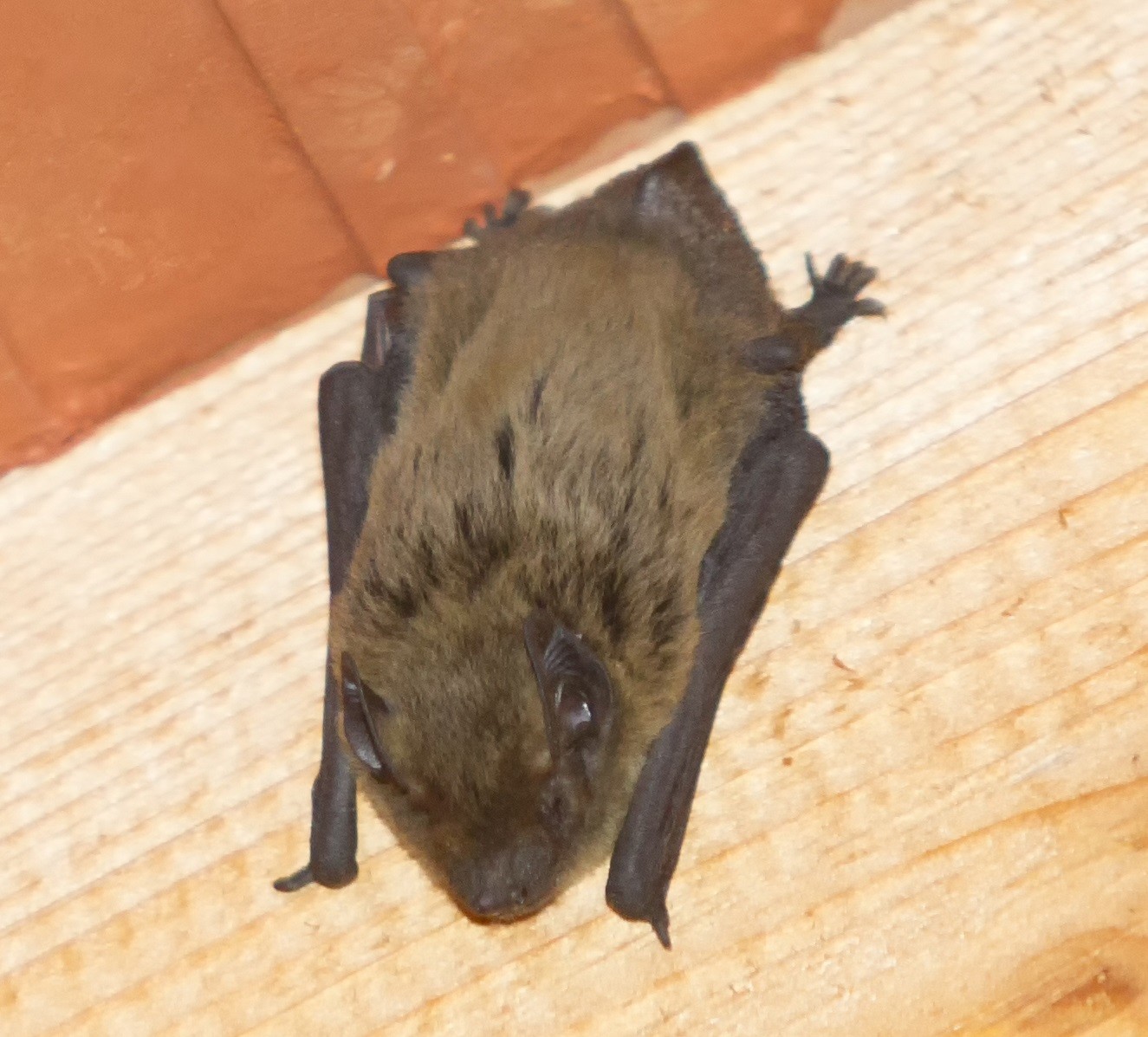
Bats have long been known as beneficial animals because they eat insects. However, they can become a pest when they move into attics, barns and soffit areas of our homes. This article will detail different problems bats create when they roost in or on our buildings and then we will explain how to safely clean up their mess and keep them off our homes and out of attics.
Related articles: FLYING SQUIRRELS MICE SQUIRRELS
BAT FACTS
There are many species of bats throughout the world. In fact, bats comprise the largest segment of mammals in the world. It is estimated that over 25% of the worlds mammals are bats. As man infringes upon their natural habitat’s, bats get displaced and sometimes move into our homes and other buildings. This article will detail various ways to expel bats from your attic and keep them off your home.
BAT PROBLEMS
Bats can be a pest for several reasons. Some people are so afraid of them, just seeing bats in the yard is enough to make them panic. In general, these bats are foraging for food and in most cases won’t want to encounter anyone so don’t worry they might “attack”. Contact will people is rare and though they might fly close to you when its dark, their sonic sounding clicks will “echo locate” you and everything else in the landscape. This type of radar or sonar enables them to effectively “see”.
Bats become a more direct nuisance when they roost on the home. When hanging to exterior siding, they’ll typically use the spaces under soffits, porches and overhangs. But if given the chance, bats will readily move into wall voids under the siding or into attic spaces.
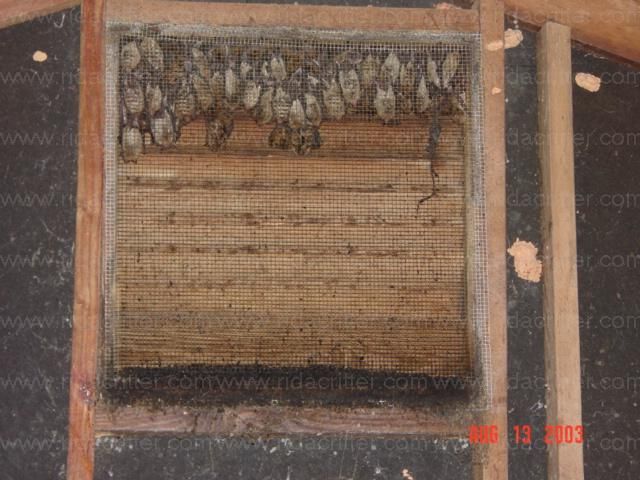
One of the more common entry point for bats to get inside the home is through gable or attic vents. This vent allows hot air to exit the attic and most attics have these vents on either side of the home. Initially, bats will hang from the screening which is behind the louvers. Over time this screening will degrade and eventually break apart. Small holes will soon become big enough allowing them to fit through and into the open attic space inside.
ATTACKING BATS
We get calls all the time from customers claiming they have bats “attacking” them when they go outside in the evening or night. In fact these bats are just out and about foraging for meals and when they detect your presence, do a fly by to get a better look at you. Using their sonar, these bats will rarely fly into you but the rule here is to not “panic” or move about quickly. Just let them fly by and after 1-2 passes, they’ll move away. Remember, bats eat insects and one of their favorite meals are mosquitoes and other biting pests. Letting the roam in your yard means you’ll probably enjoy less pest activity so in most cases, letting them forage is a good idea. But if you insist on keeping them off your land, you can install one of our ULTRA SOUND REPELLERS. These devices can cover large areas and bats will avoid any air space where they’re active. More on these below..
ROOSTING BATS AND THE MESS THEY MAKE
Roosting bats are the second and more common way bats present problems on structures. They have strong “hands” built into their wings and can use these “fingers” to hold tight on most any surface including wood, stucco, brick and even aluminum.
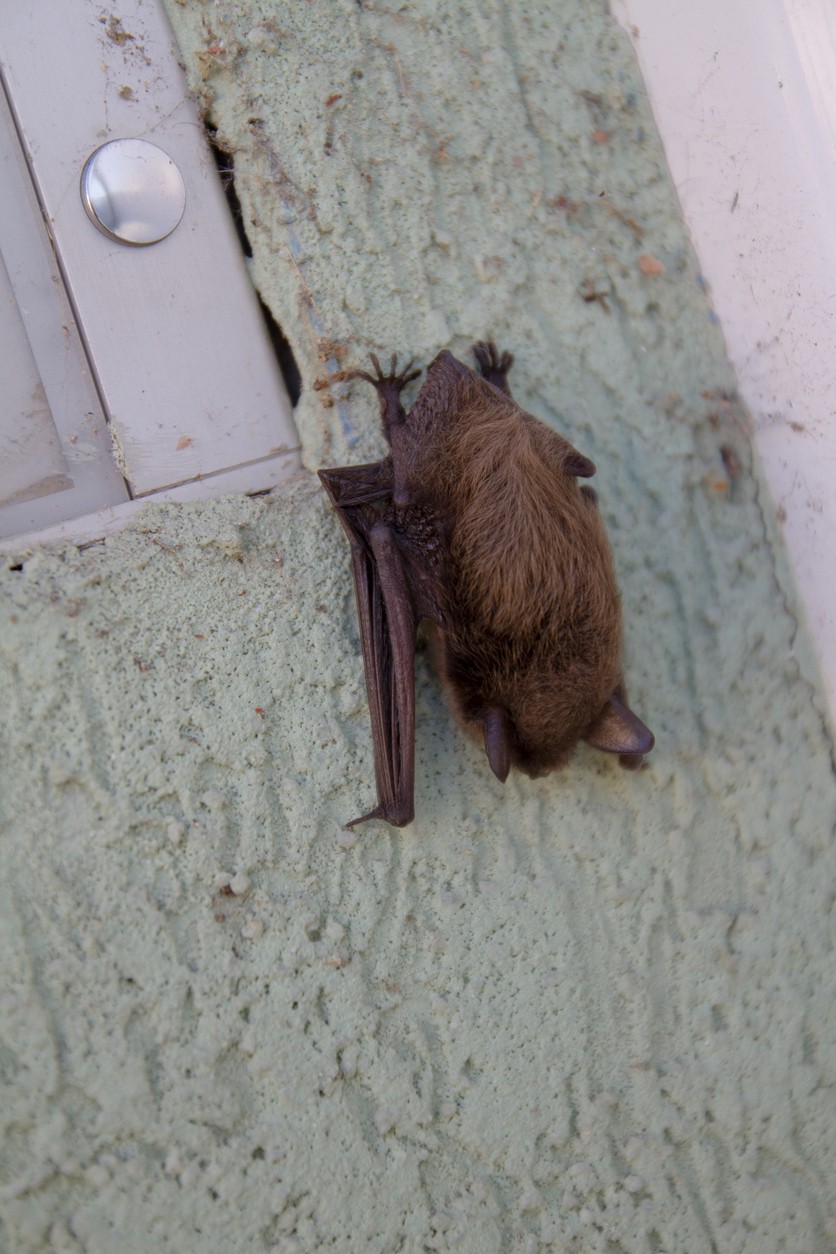
On a side note, bats are actually more similar to humans than rodents. In fact the they have 5 fingers per wing, much like we have 5 fingers per hand. And they have 32 teeth like humans. People often describe bats to be “winged rats” but ironically, they’re more like people than rodents. The point is their “hands” enable them to grab tight onto a wide array of surfaces and to maneuver in all directions once they land. This allows them to take advantage of our homes to use for shelter.
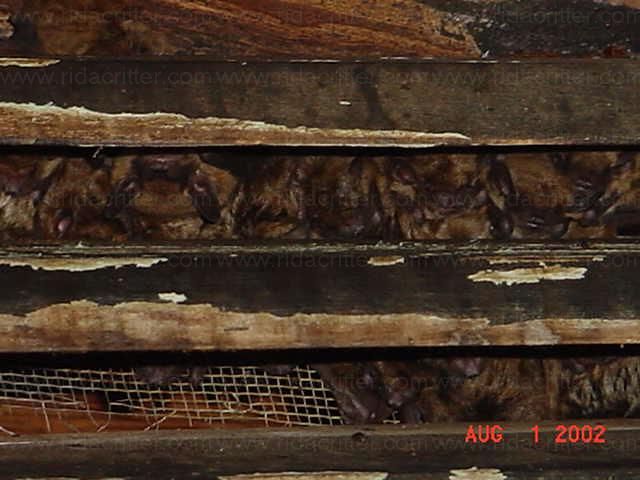
In fact one of their favorite places to roost is on attic vents. The screening behind the louvers provides a secure spot to grab and the louvers offer shelter. Initially bats will line up under louvers row after row. Male bats tend to hang around by themselves but females tend to colonize in numbers. And when they have pups, its not unusual to see row after row of roosting bats behind the louvers. Over time, the screening leading to the attic space will break down and once that happens, bats will enter the space behind.
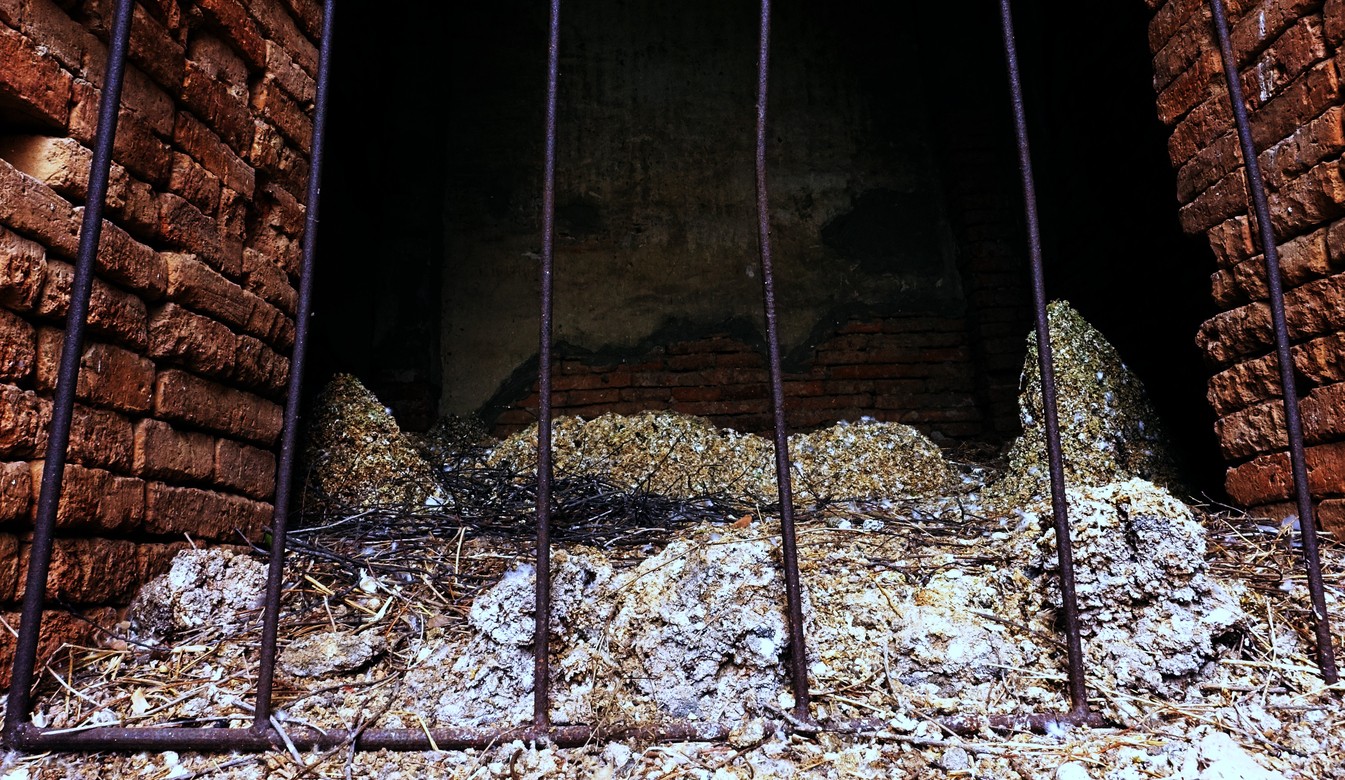
Once inside the attic space, they’ll hang from rafters and ceiling boards and this is when their numbers can really grow.
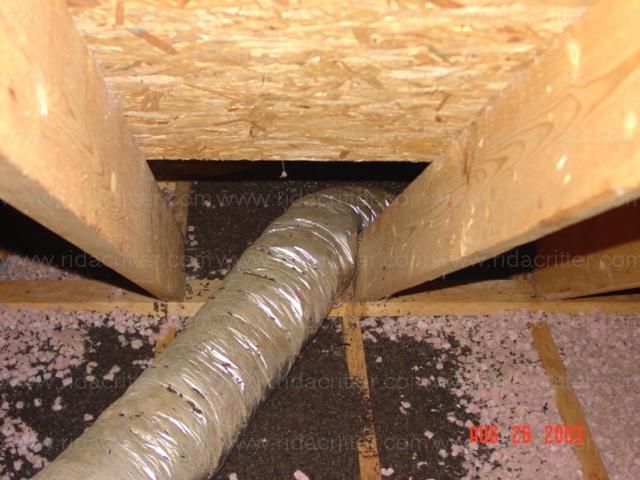
Its when they get inside the home that the real problems start. Bat droppings, known as guano, will quickly accumulate posing a health hazard and making a mess. These droppings have been found to contain bacteria and virus and for obvious reasons, should not be allowed to accumulate in the home.
Bat guano and urine has a strong pungent odor as well and will creep into the living area of the home in a short period of time. Many times their droppings and urine fall into a remote wall space and can remain undetected. Other times it quickly stains ceilings in living areas giving the residents tell tale evidence that something needs to be done.
HOW TO CLEAN UP BAT GUANO AND DROPPINGS
If you’ve had a bat problem in the home and need to clean up their mess, follow these guidelines to keep safe. There are all types of microorganisms which can flourish in their fecal matter – histoplasmosis being one of better known – which could present a hazard to residents. For this reason alone you should take care when removing their guano and make sure to keep them out of your home.
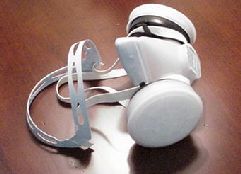
For outside cleanups where there are droppings on the side of the home or on the ground, washing the area will usually do the job. But for attic spaces or wall voids, you’ll need to wear a RESPIRATOR. Be sure to use one with good charcoal and fabric filters like our model. The charcoal will filter out noxious organisms along with the nasty odor one will easily detect during cleanup. You should also wear some old clothes or DISPOSABLE COVERALLS so you don’t have to worry about getting dirty when working.


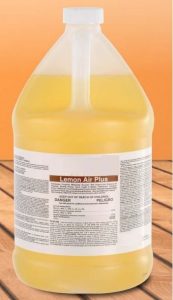
Once the droppings have been removed and safely bagged in some type of strong plastic hefty bag, you’ll need to first sanitize the area using our LEMON AIR PLUS.
Lemon Air is a viruscide, bactericide, germ killer that also works on mold and mildew. Its got a lemon smell and “can” help with some minor odor issues. That being said, most people will need to use the T.O.N. listed below as a “followup” to ensure the odor is gone for good.
Mix 4 oz of Lemon Air per gallon of water and either wipe it on the wood, spray it or fog it. Fogging it is best for sure. One mixed gallon will cover up to 750 sq/ft and should be used at least twice before applying the T.O.N. .
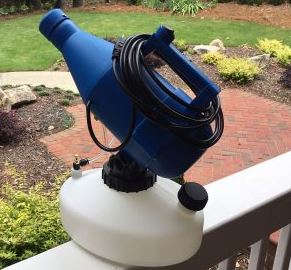
The best way to apply the Lemon Air is with our FOGGING MACHINE. For attic spaces, this machine is well suited to tackle the job quickly and safely. It can handle 2500-5000 sq/ft easily as it will propel the mist 30-40 feet.
Commonly used around the home to treat for pests like mosquitoes and gnats, our Bugspray Fogger will change the liquid to a mist so it will effectively cover and coat all surfaces so nothing is missed.
HOW TO ELIMINATE GUANO ODOR
Once sanitized, there is a good chance you’ll have a lingering odor. Guano has a high level of acid based pneumonia and will embed itself into porous surfaces like unfinished wood, stucco, etc. This smell can be strong, pungent and unhealthy.
To eliminate the odor, spray or fog T.O.N. This material is unique in that it actually breaks down organic compounds rendering the odor molecules null and void. By attacking the source of the odor, T.O.N. will stop it from coming back.
Odors are very much “alive” and act like a living organism when moisture levels are right and minimum temperatures attained. But T.O.N. will take care of this issue and can be sprayed everywhere including attics, living spaces, exterior siding and even on plants.
For the best results, applying T.O.N. to the area where the guano was removed will usually do the job. But if the droppings were in place for any length of time, it would be wise to treat the surrounding area too. Guano scent will translocate and find its way in all directions. For this reason its important to be thorough when treating.
Add 4 oz of T.O.N. to a gallon of water and expect to get 500-750 sq/ft of coverage per mixed gallon. For severe problems, 6 oz per gallon.
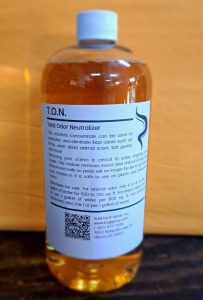
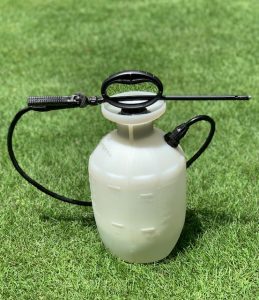
T.O.N. can be applied with a standard PUMP SPRAYER or simply wipe it on using a bucket and sponge. Keep in mind that common house cleaners like pine sol, bleach and detergents will not help with guano odor problems and in most cases will just make matter worse so do not use them!
This is because odor is a living organism and as such, requires specific enzymatic ingredients to deactivate the structure. T.O.N. contains these ingredients and does a great job of neutralizing these organisms quickly and immediately. In most cases, you’ll see immediately improvement with only one treatment needed. But in extreme cases, a second application may be required.
Another great way to apply T.O.N. is using the MINI FOGGING MACHINE listed above. Its perfectly fine to use Lemon Air in the fogger first to get rid of all the contaminates and then 1-2 days later, to use it for applying T.O.N. The fogging machine is well suited for treating large attics, crawl spaces and even the side of the home. The mist will promptly cover everything so there is little chance of missing any surface.
HOW TO REMOVE BAT GUANO ODOR IN WALL VOIDS
If guano has dropped down into wall voids, the odor will no doubt leech into living spaces. Ripping down the walls to both remove the guano and spray T.O.N. is an option. But this can be both costly and time consuming.
Before going to this extreme, try treating the space with our SLAB INJECTOR. This device allows you to spray “sideways” so you can shoot the mixture to all sides in the wall void.
Remember that wall voids typically have studs spaced 16″ apart so plan on making at least one hole up top, one hole mid section and one hole down low. When treating the top two holes, pay attention to the hole down low to see if any of the mixture makes its way down. If so, you might be getting good coverage without having to treat the bottom level.
The following “short video” (less than 60 seconds long) shows how this sprayer works and why its ideal for treating in walls.
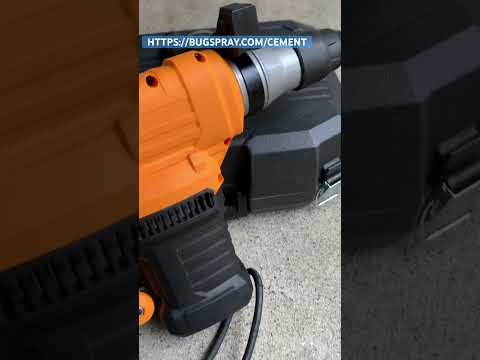
As you can see in the video above, the spraying sideways design of this tool will let you get the spray where it needs to be in the void.
BAT CONTROL PRODUCTS FOR THE HOME AND YARD
Bats in the home are an obvious problem. But even in the yard they can be menacing. We carry several products which can be chase away bats out of your home and even keep them off your property. First you need to decide if your bat activity is a problem and second, where they’re active. Listing below are a range of products we offer to control bats in your attic, on the home or in the yard. There isn’t any “best” product; its more about you deciding what will make you most happy and then picking the product that will be best suited for you to achieve that level of happiness. For some, keeping bats out of their attic is enough as they don’t want them in the yard. For others, having bats in the yard is fine. These are decisions you need to make for yourself and your family. Once you decide, we can help fit a solution based on your preferences. Keep in mind all the options listed below have proven history and will accomplish the goal described.
BAT SCREENING
Bats will often roost in small voids created behind parts of the home’s exterior siding. For example, they like to roost behind gutters where they hang in front of fascia boards. They’ll also roost behind shutters or just under tin roofing. For bats not entering a structure, screening or netting are two options that can force them elsewhere.
So if bats are using such spaces or entering the structure through the attic gable vent, soffit vents or other small entrances, BAT SCREENING can be used to cover access points. This heavy gauge plastic is easy to bend, cut, and attach to most any substrate. It has a “diamond” pattern and since its UV protected, the sun won’t break it down for many years.
Screening can be used over gable vents, soffit gaps behind gutters, seams around fascia boards or other entry points created by normal construction gaps and tolerances. Simply staple it to the home or attach it using standard plastic cable ties. Screening can be cut with scissors and has been treated to take direct sunlight without breaking down.
If bats are currently living in the areas you want to protect, you can use screening as a “one way valve” to allow them to leave but not come back in. To use screening this way, simply cover their holes but only secure the top section. This way the bottom will be loose so they can push it out when leaving.
Alternatively you can wait till dark when you know they’ve left and then cover up access holes.
Bats are not the best at navigating over the screen so even if the bottom is loose, they generally won’t try and crawl up under it due to the fear they have of getting stuck. And even though they have strong teeth, bats won’t chew through screening like rats or squirrels.
Screening is sold by the foot. Each “foot” is 12 inches tall and 4 feet wide. You can connect it using cable ties for extended runs like covering up the gap commonly found under the shingle line where it drops over the gutter.
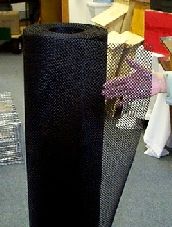
BAT NETTING
If Screening is too rigid for the area you need to protect, BAT NETTING might be more flexible and better suited. This product is not as strong as the screening but its more forgiving and “form fitting”. This flexibility allows you to install it many different ways.
Like Screening, it can be installed over siding by just stapling the top above the entrance areas and letting it hang down. The big advantage of netting is that one can custom fit it to whatever it is you’re trying to protect. Since the netting will bend and shape – much like wrapping paper – you can mold it around corners, soffits, gutters and any odd part of the structure which may be allowing bats to enter.
The other advantage of the Netting is that it’s not as visible as the Screening. However, the big drawback is that it’s not nearly as strong. Since it’s thinner compared to the Screening, Netting will break down sooner and installations are not permanent or as long lasting. Expect to get 6 months to a year from any section installed; doubling or tripling up on the layers installed will help to lengthen this time.
Another way to use Netting is to stretch it out over wide spaces of air through which bats are flying and either scaring people or making a mess. Though bats don’t intend on being a nuisance, they can become “scary” when they establish flight paths under car ports, above patios or over pools. Since bats are very much creatures of habit, once they get these flight paths established, they can be hard to change.
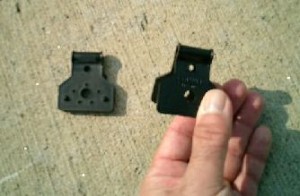
If you have some bats flying around your pool, stretch out netting on the sides where they are approaching. It’s easy to pull up the Netting using NETTING CLIPS. These special clips attach to the Netting and are slotted to fit cables. Using a couple of hooks and/or pulleys, its easy to configure some Netting which can be put in place quickly or taken down just as fast. Such installations are perfect for creating a “no fly zone”. Bats will detect it’s existence and learn to fly elsewhere. Now if you prefer a more “discreet” way to keep them out of the yard, set up our SOUND REPELLERS featured below.
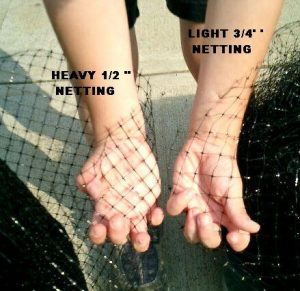
Netting clips can be used to lock netting in place. Common places to affix clips are on trees and the side of you home.
BAT SPRAY
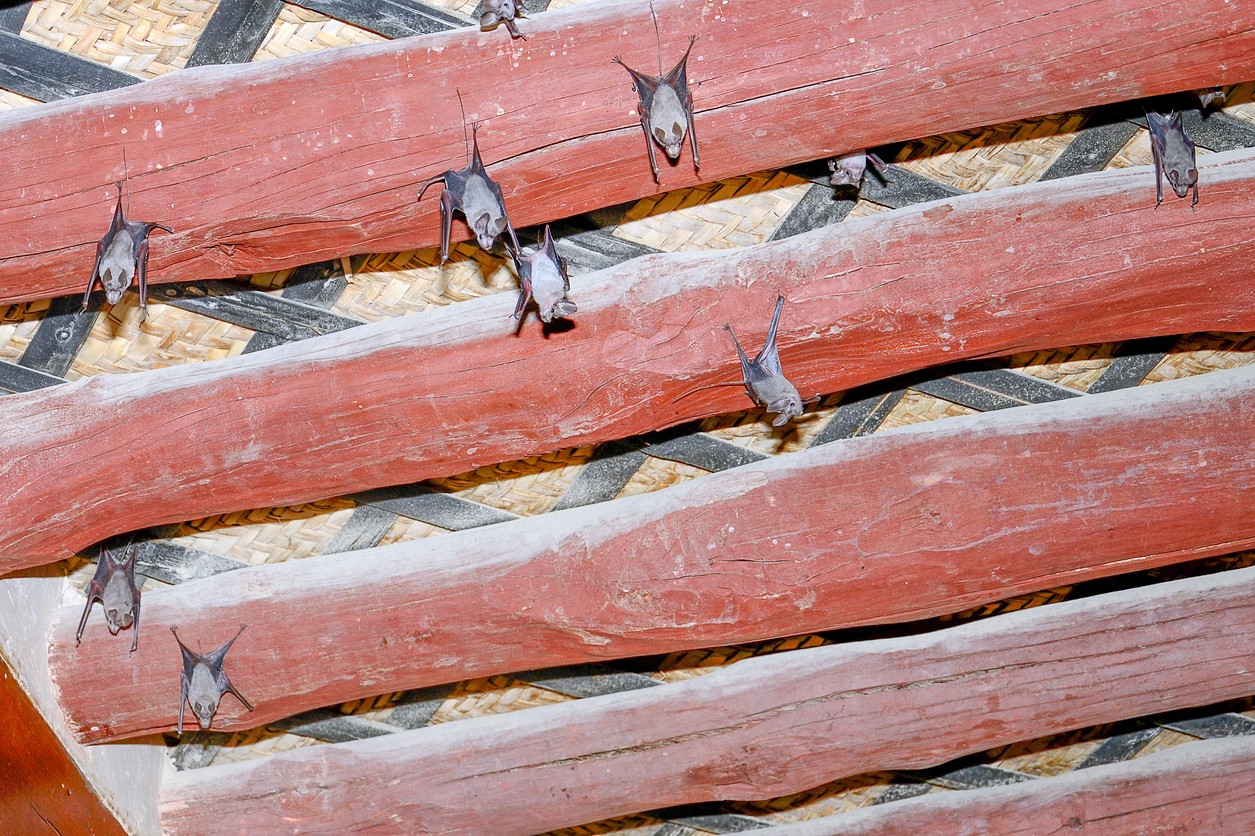
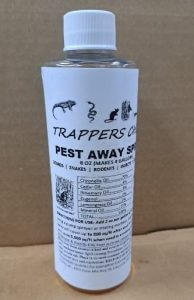
For nuisance bats landing on the side of you home or up under patios or gazebos, spraying PEST AWAY over all surfaces will keep them away.
Pest Away uses all natural plant essential oils and when applied to surfaces where animals like to land, it has been known to drive them away. Basically the concentrate of these essential oils is strong enough to not be “naturally occurring” which serves to warn insects and animals to stay away.
Pest Away comes in a small 8 oz jug but it makes 8 gallons.
Each gallon will treat up to 800 sq/ft so it goes a long way. Treatments will last at least a month but usually after two treatments, the bats will be gone for a good while.
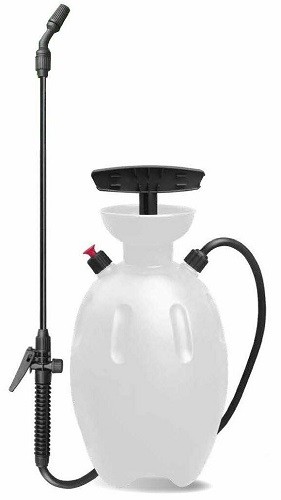
To reach 15-20 feet or higher, use a good pump sprayer.
BEST BAT SOUND REPELLER FOR THE ATTIC AND YARD
In our field tests, the best overall way to repel bats is to install our ULTRA SOUND BAT REPELLER. After testing over 10 ultra sound devices to repel a range of animals, we finally decided to have a unit built to our specifications. The final result is a unit will will do everything you need to repel a range of animals including bats. The list of features is too long to list in this article but here are the important settings required for bat control.
First, you can set it to run at night or day. For bats in the attic, you’ll want to run it all the time since they might want to use your attic during the day but at night, come and go. In the yard, run them only at night.
Second, our units are weatherproof so you only need one unit for bat control inside or outside your house.
Third, our unit comes with a power supply so you can run it all the time using any wall outlet. Power consumption is minimal, less than $.40 a month, and when kept always on bats will never come close to the protected area.
Fourth, our units have an included “light bar” which flashes on/off adding more “scare” to the effect.
Fifth, each unit comes with a wireless key (like the one you use for your car) so you can turn units off/on as desired.
Sixth, we have an optional mounting block which allows you to angle units up at a 45 degree angle and to place them over a 1/2″ stake. Stakes can be any standard garden stake or 1/2″ piece of rebar. Units only need to be 1 foot off the ground to keep them dry so a 2 foot piece of rebar driven into the ground will do a great job of keeping the unit pointed where it will most matter.
Lastly, units can be powered by 4 “C” cell batteries if need be. We recommend using the power supply for the first 2-3 weeks when first installing the units to make sure the bats relocate quickly. You can get 33 ft and 66 ft extension cords to extend the power cable so there is no reason to not use a nearby wall outlet to power them. This gives you optimal range because units always on will repel animals for 100 feet or more. But when relying on batteries, they will only turn on when activated and bats will have to come within 40 feet to turn them on. This could limit their initial impact so use them by keeping them plugged in whenever possible.
Using a mounting block, you’ll be able to set the unit just off the ground and direct the sound where needed. The height off the ground is not important but in general, 1-2 feet high is fine. Be sure to direct it to the section of the home where the bats are either roosting or entering.
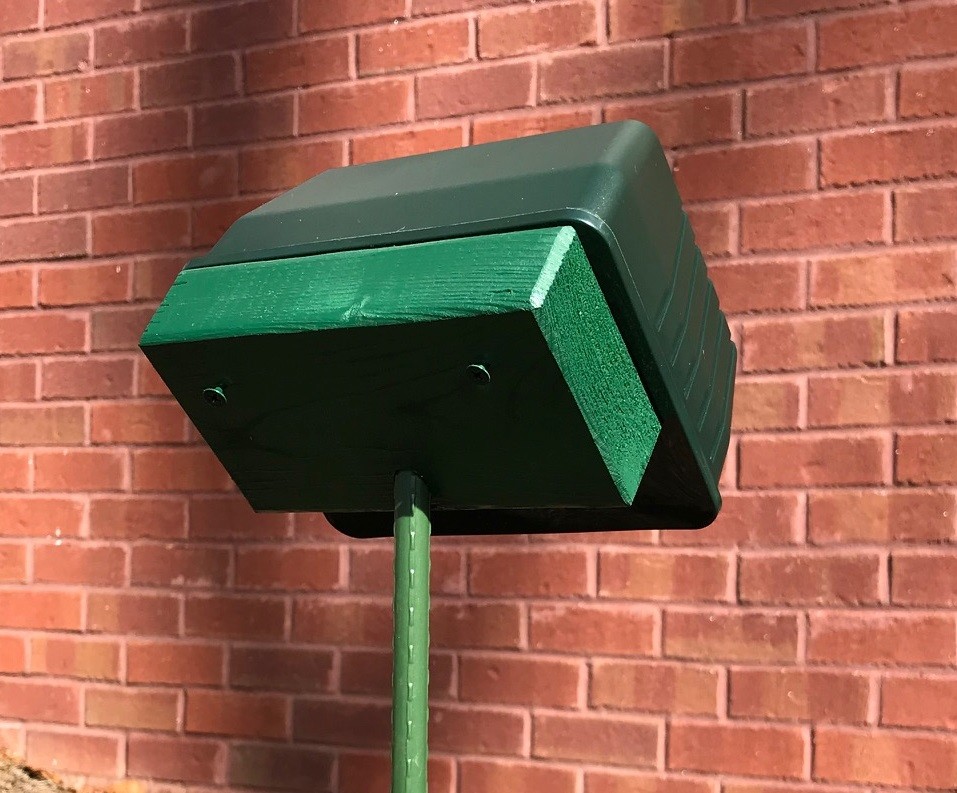
As stated above, we recommend keeping it “always on” for immediate and long lasting results. More info on the settings can be found here: BAT SETTINGS
Remember, these units are very much “directional” so for most homes, at least one unit per side of the home is needed to get complete coverage.
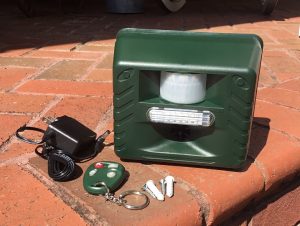
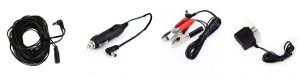
If needed, we have power cord extenders which can lengthen the power supply up to several hundred feet. These can be buried in the ground too for discreet, more permanent installations.
HOW TO BAT PROOF YOUR HOUSE
Once you’re sure all the bats have been expelled from attics and wall voids, consider sealing off entry points.
This can be done using COPPER WOOL. Bats do not like chewing and copper is very irritating to animals so they won’t ever try. Plus the copper will not rust. Copper wool is both easy to cut and easy to stick in entry holes so its an easy to way to seal bats out.

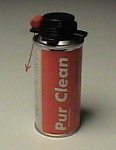
Once open gaps are filled with Copper Wool, seal them with PUR BLACK. This unique expanding material is durable, strong and will seal gaps good and tight. For small jobs, the cans which include the injecting hose will work fine.
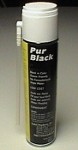
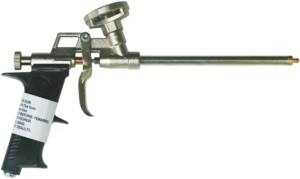
For large jobs where you’ll need several cans, get the larger size. This can is will need a PUR SHOOTER GUN. Similar in how it works to a caulking gun, this set up will let you specifically apply just the right amount to all gaps and cracks.
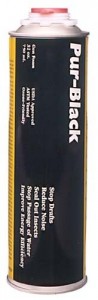
The larger can of PUR FOAM is about 25 oz and will only work in the guns.
You’ll also need GUN CLEANER when the job is done to “purge” the gun of foam so it won’t get clogged.
BAT HOUSES
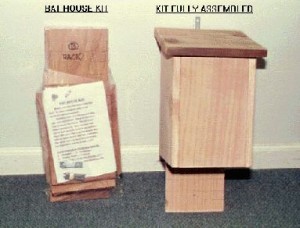
If you are like many homeowners who have a bat invasion but have lived with it too long be- cause you knew the bats were keeping the mosquito population down, there is a way to get the bats out but also to keep them. First identify where the bats are coming in and out of the home. Next, install the bat screening we talked about above using it as a one way valve. At the same time, install a BAT HOUSE alongside this entry point. The bats will have no place to roost so they will utilize whatever roost sight they can find. In some cases, placing some of their guano on the house landing pad will enable them to find it quicker. Once they move into their new home, you can relocate it where you want. Try to keep it where it will have a similar temperature and sun exposure as it did when it was hanging on your home. In general, the less the change when relocating the bat house increases the odds that the bats will stay.
CONTACT US
Give us a call if you need further help. Our toll free is 1-800-877-7290 and we’re open Monday through Thursday, 9:00 AM to 4:00 PM (Eastern Standard Time).
Email questions here: https://bugspray.com/about-us/contact-us
Order online and get a 5% discount! We ship fast with 99.9% of all orders shipping within 1 business day!!
Learn more about BUGSPRAY.COM and why it’s never been easier or safer to do your own pest control.
Please show your support for our business by purchasing the items we recommend from the links provided. Remember, this is the only way we can stay around to answer your questions and keep this valuable web site up and running. Thanks for your business!
Virginia says
We had bats in our large attic. Last summer we had a new roof put on. Unbeknownst to me when the roofer were throwing shingles off of the roof the broke off a corner of the facia siding. About a month after we noticed bats coming and going. The hole has become and now there are three stains on the ceiling in that bathroom near where the hole was. The stains look like a water mark but dont read as moisture on a meter. Now we have bat bugs coming into the home in that bathroom. I can not afford a bat company exterminator. I’m creeped out and no frightened of the stains on the ceiling after reading some of the posts.
Tech Support says
Virginia,
Well even though you did not ask a question, we can offer some advice. For starters, you need to get rid of the active bats. This can be accomplished by setting up one of our sound repellers (seen above) in the attic. Point the unit toward the corner where the bats are entering. Run the unit 24 hours a day using the included power supply unit and they’ll stay out.
Sound Repeller: https://bugspray.com/deterrents/sound/usd-animal-repeller-with-wireless-remote
Now once they’re gone for 2 weeks, get the hole sealed. Next, apply the T.O.N. (seen above) to the area where the stain is seen. This will remove the odor from the guano and urine.
Total Odor Neutralizer: https://bugspray.com/sanitizer/liquid/total-odor-neutralizer
Next spray T.O.N. around the entire perimeter of the home, up by the gutters, to take away any lingering bat odor so more don’t come around.
Now if you think you have bat bugs in the home, use a combination of our Multipurpose and FS MP Aerosols. The FS MP is for injecting all cracks/gaps and crevices where these guys like to nest. The Multipurpose is for all surfaces. It goes on dry when used properly and won’t stain. Use it for ceilings and walls and even carpeting.
FS MP: https://bugspray.com/catalog/insecticide/aerosol/fs-mp-insecticide-15-oz-aerosol
Multipurpose Insect Killer: https://bugspray.com/catalog/insecticide/aerosol/multi-purpose-insect-killer-10-oz
But if the whole house has activity, go with Bithor. It mixes with water and can be sprayed on carpets, furniture and more.
Bithor: https://bugspray.com/catalog/insecticide/liquid/bithor_sc
Technical Support
U-Spray Bugspray
http://www.bugspray.com
1-800-877-7290
PS: Are you signed up for our informative twice a month Pest Report Newsletter? More info here: https://bugspray.com/bugspray-pest-report
Anonymous says
We have hundreds of bats living in the wall cavity and roof of our home. Every night there are 10-12 bats inside the house. We have corrugated tin on the outside walls and plaster board on the inside so there are many small gaps. Although we try to block up the obvious holes we would dearly like to repel them all together so they leave the house. What gels/liquids/ would you suggest?
Tech Support says
Given the details you’ve described, I don’t think you’ll be able to keep them out with any kind of repellent spray or gel. In cases where you have large quantities of bats entering combined with many routes of entry, simple repellents generally won’t work. But you can try the “shotgun approach” using nothing but Ultra Sound.
This method involves the installation of Sound Repeller around the home. You’ll need to position them on the ground about 5-10 feet away from the foundation. Point them up so their sound will cover the entire side of the home all the way up to the roof. These units will generally have to be set 10-30 feet apart depending on the height of the home.
If you need help determining how many to get and where to deploy them, send us details of the structure (width and height) and we’ll be able to provide specifics. Once in place, these devices will keep the bats from entering and effectively force them to leave the home. This could take a few weeks but they will eventually leave. Once gone, you’ll be able to properly seal the home using a combination of Copper Wool and Pur Foam.
These products can be seen in our catalog here:
Sound Repeller: https://bugspray.com/deterrents/sound/usd-animal-repeller-with-wireless-remote
Pur Black: https://bugspray.com/repellents/aerosol/pur-black
Pur Gun: https://bugspray.com/equipment/tools/pur-shooter-basic-gun
Scroll up to the article above for more details on these items and how to best use them for bat problems.
Technical Support
U-Spray Bugspray
http://www.bugspray.com
1-800-877-7290
Danny says
Hi…over the past several years we have gotten a bat or two in the house during the summer months…we just had one the other night…we have now noticed droppings on our outside deck just below one of the facia boards in the back of the house…no other drippings anywhere else… I’ve seen a bat fly out from under the board the other evening…can it be we have just that one bat or should we be concerned there are more? I plan on installing the screening under the facia board…any advice? Thanks.
Tech Support says
No doubt your home has been “scented” by bats which means any bats flying by will pick up the pheromone smell of other bats and then further investigate to see if your structure is suitable for roosting or worse yet, colonization.
And if you read our article above, you’ll learn that bats will either be in large groups (comprised of females with their pups) or in small 1-3 groups which are usually nomadic males looking for females.
So based on the limited amount of activity you report seeing, it would appear you have a single male or at worse, a small pack of males using the structure. But this can change. And it can change in a hurry.
I say this because any “good” roost site is highly desirable and female bats will readily displace males to move in and take over what they find to their liking. So if foraging females come upon your home and decide they like what they see, your small problem could become 25-50 bats overnight. Female bats are quite determined to provide the best roost sites for their young and late spring through summer is when they aggressively seek such locations.
So at this time you should be concerned. But if you take corrective measures now, there is a good chance it can be resolved before it gets worse.
So to accomplish this goal, installing bat screening would be your first step. But you may want to apply as much as you see necessary to take away all the surrounding vulnerable spots your home may have. I say this because if you only screen one area, roosting bats will merely move to the next available spot they find. And if your home has several such “weak” vulnerable locations, the bats will no doubt find these areas and simply move to them automatically.
So with that being said, it would be wise to get as many of these areas fitted with screening. And I suggest you set up 1-2 ultra sound repellers pointed at these sections of the home as well for a secondary line of defense. These units will help insure you’ve got everything covered and they can be placed discreetly on the ground hidden from view so no one will even know they’re present.
Bat Screening: https://bugspray.com/equipment/netting/screening-48-x-12
Sound Repeller: https://bugspray.com/deterrents/sound/usd-animal-repeller-with-wireless-remote
Give us a call if you need more help. Our toll free is 1-800-877-7290 and we’re open 9:00 AM to 4:00 PM Mon-Fri; 9:00 AM to 2:00 PM Saturday, Eastern Standard Time.
Jonathan
Customer Care
https://bugspray.com
1-800-877-7290
PS: Please show your support for our business by purchasing the items we recommend from the links provided. Remember, this is the only way we can stay around and be here to answer your questions and keep our web site up and running. Thanks for your business!
Mary Ann Johnson says
Hello, I have had my first bat in the house, a townhouse, since 2004. I discovered it flying around at 2:30 a.m. and couldn’t get it out – too terrified. It hid some where and surfaced again about 5:30 p.m. that day. I opened the patio door and hoped it would finally leave. It was flying around me for awhile and I ran out of the house, waiting for it to leave. I didn’t see it leave, but it must be gone. That was Aug. 20, 2013 and haven’t seen anything since.
I fear that they are still around here because I see droppings on my driveway under the roof soffits. My friend says that what I see is bat droppings. What do I do now?
Someone from the association did come over and went up on the roof and sealed up a few areas with some tar substance in a gun. I fear there are more problems going on since I see the droppings. Please advise me what to do.
Thanks for your help.
Tech Support says
No doubt there is a problem. My guess is bats are roosting somewhere in the soffits, maybe under the facia boards or maybe just inside the space behind the facia board (which would be the attic). And though randomly sealing some holes could help, a more thorough job is no doubt needed. I say this because in my experience, if you don’t do more to the entire area, the bats will usually just mover away from where the holes were sealed and find a new area to roost. So in the end, unless all these areas are sealed, the problem will just persist.
Additionally, you should set up some Ultra Sound devices in both the attic and outside areas of the townhouse. This way you’ll have in place a sound barrier they cannot tolerate. This will help drive them away and keep them away for good.
So in this case, you first should gain access to the attic. Once you can get up inside this area, install at least one Sound Repeller; more depending on the size of the space. These can be turned on at night; turned off during the day. Alternatively you can have them run 24 hours a day.
Outside, you’ll need at least 1 Sound Repeller placed below where you see the droppings. This unit should be pointed up at the area where you suspect the droppings are falling from. With the right placement, you should be able to get a good sound barrier in place that again, the bats will not like. And in doing so, you’ll be able to keep them off the townhouse and out of your living space.
Sound Repeller: https://bugspray.com/deterrents/sound/usd-animal-repeller-with-wireless-remote
Give us a call if you need more help. Our toll free is 1-800-877-7290 and we’re open 9:00 AM to 4:00 PM Mon-Thur, Eastern Standard Time.
Technical Support
http://www.bugspray.com
Grace Darlingone says
I discovered bat droppings on my basement floor. The house is old and the basement is dark. I’m sure the bat is up in the rafters somewhere so how do I get him out of there? There may be more than one bat. If I spray bug spray up into the rafters will that kill the bats and drop them?
Tech Support says
Having been in the pest control business for over 30 years, I can tell you with certainty that there is no type of spray you could apply that can kill an animal so this is an approach that will not work. I say this because insecticides are designed to kill insects and todays products are barely strong enough to accomplish this task let alone do anything to more complex animals like mammals. Besides being a complete waste of time and money, it would accomplish nothing but to make the basement messy.
But there are two things you can do. First, do you suspect they might be using the basement for a living space? This can happen if they have found a way in and out of the basement. To see if this is happening, try walking around the homes exterior to see if you can locate an entry point. My guess is that they have found a gap in the homes foundation or siding and are entering around a window or basement door.
Now if you can find such a location, don’t randomly close it. Instead, wait till the bats are gone before you attempt sealing it. They will probably leave around dark so doing some closure after dark to any holes you find would be the time to do the work.
Next, set out at least one Sound Repeller. Bats don’t like the sound these units release and will stay away from where one is turned on. So if you set 1-2 of these up in the basement pointing up at the rafters, you’ll put in place a sound repellent that will keep them from returning to the area.
Again, do this after dark and after you seal any holes you find. In other words, do not turn a newly installed unit on during the day; they will work best when deployed after the bats have left for the evening so when they return to roost around dawn, they’ll hear the sound and stay away.
Here is a link to this item in our cart. Please show your support for our business by purchasing the items we recommend from the links provided. Remember, this is the only way we can stay around and be here to answer your questions and keep this valuable web site up and running. Thanks for your business!
Sound Repeller: https://bugspray.com/deterrents/sound/usd-animal-repeller-with-wireless-remote
Jessica Daickvis says
We have a ranch style home with a large attic. We found that there were bats in the attic near the triangular opening at one end of the house. My husband cleared the guano from the area, sprayed with bleach and a day later used kiltz spray to seal it. The entire attic has spray insulation very thick so it is difficult to see any of the floor. There are not additional markings on the walls and we do not see any bats physically. We have tried to seal off any potential openings. The trouble is that we can still smell the bat odor. It seems to peak early morning and again just around the time it gets dark in the evening. That worries me that we may still have additional bats up there. Please advise. Would the odor from an existing mess have “peak times” for the odor being stronger?
Tech Support says
If you review our article above, you’ll learn that bat guano is very much a “living” organism and cannot be sanitized using regular cleaners like detergent or bleach. This just won’t kill it so the odor will continue to linger unless you treat the area with a specialized agent like T.O.N.
This product is easy to use and you’ll see fast and complete results. Use a Black Light in the space to help identify just where the droppings have accumulated as this is important. All areas must be treated for the odor to go away so you don’t want to miss any section.
Total Odor Neutralizer: https://bugspray.com/sanitizer/liquid/total-odor-neutralizer
Black Light: https://bugspray.com/equipment/detectors/black-light-deluxe
I’m fairly confident that if you get the entire area treated with the T.O.N., the odor will subside and you’ll be fine. In other words, I’m willing to bet you don’t have more bats up there; just the lingering odor that’s still very much alive. Give us a call if you have any further questions or need more help.
https://bugspray.com/articles98/bats#how-to-eliminate-guano-odor
Tech Support says
For starters, I recommend you install 1-2 Transonics. These ultra sound devices might be all you need to chase them out and keep them from returning.
The only question is whether or not the sound will penetrate enough behind the metal walls to irritate the ones roosting in this space. I’d say it’s a 50-50 chance because I bet there are some gaps and voids for the sound to enter these areas and if enough sound gets to them, it will chase them from these spots too.
Now if a couple of Transonics installed inside don’t do the trick, get 1-2 Yard Gards to install outside. They’re weather resistant and if you set them up below the points of entry pointing up to where you suspect they’re entering the barn, you’ll be able to keep put in place a sound barrier they won’t want to cross. The combination of USD sound both inside and outside should do the job.
The last option would be to try and fill all the voids behind the metal siding with the Pur Foam Repellent listed above. No doubt if you filled these areas with this specially treated repellent, they’d stay out for good.
Here are links to these items in our cart. Please show your support for our business by purchasing the items we recommend from the links provided. Remember, this is the only way we can stay around and be here to answer your questions and keep this valuable web site up and running. Thanks for your business!
Transonic: https://bugspray.com/repellents/sound/usd-transonic-tx-pro
Yard Guard: https://bugspray.com/deterrents/sound/usd-animal-repeller-with-wireless-remote
Foam Repellent: https://bugspray.com/repellents/aerosol/pur-ipf-foam
Pur Gun: https://bugspray.com/equipment/tools/pur-shooter-basic-gun
Tamso Cox says
We have a colony of about 200 bats in our attic. The smell from their droppings is leaving one part of the house inhabitable. We have taken off the roof and removed the droppings and disinfected the area. We have also built a bat box in hope they might move into it. What is the best way to get the bats out of the house attic so we can seal up the entrances to stop them coming back in?
Tech Support says
First, make sure you used the proper odor neutralizing product before you do anything else. Common house cleaners and bleach won’t do it; you’ll need something like our T.O.N. when it comes to bat guano odor. So if it’s lingering after the cleanup recently performed, that means the odor is still there and you’ll need to do some extra work as explained here:
https://bugspray.com/articles98/bats#how-to-clean-bat-droppings
Next, if you line the interior of the attic framing with Bat Netting before replacing the roof, you’ll be able to keep them out. You should also install 2-3 Sound Repeller in the space. Keep them running 24 hours a day for a few weeks. This will keep them out for sure and force them to move elsewhere. Once the bats are gone, turn on the units 2-3 a week to insure no new ones come around.
Here are links to these items in our cart. Please show your support for our business by purchasing the items we recommend from the links provided. Remember, this is the only way we can stay around and be here to answer your questions and keep this valuable web site up and running. Thanks for your business!
Total Odor Neutralizer: https://bugspray.com/sanitizer/liquid/total-odor-neutralizer
Netting: https://bugspray.com/equipment/netting/net-7-x-20-x-34-reg
Sound Repeller: https://bugspray.com/deterrents/sound/usd-animal-repeller-with-wireless-remote
Sue Ulivi says
Hello,
We have a cabin on Neebish Island in Northern Michigan. We have a ton of bats that like to sleep in an overhang above our bay windows. The problem we have is that their urine is staining the window glass. We’ve tried all kinds of cleaners and nothing is working. Do you know what we could use?
Thanks for any advice you can give!
Sue Ulivi
Tech Support says
Sue,
I’m fairly sure what you see is corrosion and not anything you can remove. Bat guano is highly acidic and I’ve seen it eat away metal, plastic and glass. When left to roost where they want, bats will make a mess. And their droppings will many times fall on plastic shutters, metal gutters and glass windows. And in the vast majority of such cases, the droppings caused damage that cannot be “cleaned” or removed.
Think of their droppings as hydrochloric acid. As you know, this type of acid will burn just about anything. And though bat guano is not as strong, if you allow bats to roost where their droppings will land on your home, your cabin will sustain damage.
So at this point, I don’t think there is much you can do. In fact, many of our customers contact us wanting to get rid of bats because of such damage so you wouldn’t be the first who had this happen. That being said, there are several repellents listed above in our article which can be used to chase them away. And once they’re gone, you might consider replacing the damaged windows. Just be sure to get rid of the bats since their guano is both damaging and very much a health hazard to you and your family.
Jesse says
Hi, I have some bats in my warehouse that I need to get out so my boss can lease out the building. They’re in the roof in the installation. Any idea’s on how I can remove them?
Tech Support says
So are they in an area that’s inaccessible? In other words, can you see or reach them from below or is the area hidden? This will be a factor in determining what to use.
So in some cases, warehouses might have insulated roofing but there is no space between the roofing and the area below. In these cases, the insulation is basically mounted on the roofing and can be loosely fitted or covered with some kind of wood or metal panel. And if you have the insulation covered with some kind of panel, the only way to resolve the problem is to locate where they’re coming in by going OUTSIDE onto the roof.
And if you’re lucky, it will turn out to be just 1-2 areas. If this is the case, you should be able to easily install some Ultra Sonic repellers on the outside roofing and simply point them at these entrance ways. In most cases the sound will be so repelling that once the bats leave in the evening, they will not want to come back because they won’t want to go “through” the sound barrier again. For small areas, the Sound Repeller will be able to handle the job. It will need electricity but it’s weatherproof and can be set to run 24/7.
Sound Repeller: https://bugspray.com/deterrents/sound/usd-animal-repeller-with-wireless-remote
Now if by chance you have line of sight on these locations while in the warehouse, you might be able to install units inside and get the same result.
One other option worth mentioning is to Netting. In some cases one can “chase” out all the bats and then install some Netting on the outside roofing attempting to cover all entry points. Bats don’t pass through netting easily and again, will avoid the area once it’s been installed. Ultimately sealing up the entrances with some Pur Foam would do the job for good.
Netting: https://bugspray.com/equipment/netting/net-7-x-20-x-34-reg
Pur Black: https://bugspray.com/repellents/aerosol/pur-black
Pur Gun: https://bugspray.com/equipment/tools/pur-shooter-basic-gun
Give us a call if you need more advice; our toll free is 1-800-877-7290.
Charlene Holley says
We have an open triangular shaped attic that the previous owner built two rooms into. Bats are getting in through roof openings under the dormer and nesting outside the rooms but inside the attic. It would require dismantling those rooms to get to them so that kind of major deconstruction would be a last resort. We thought of using two of the ultra sound machines to direct the sound at each of the joints between the roofs and then treating the entrance way with one of your foams to seal up the openings and keep the bats out. Do you think this will work or do you have other suggestions?
Tech Support says
I believe your resolution will work. The key here will be to wait long enough before you seal up the entry ways to insure all the bats are gone for good. So first, install the two units and have them run 24 hours a day for at least 2 weeks. My guess is within 1-3 days, all the bats will leave and relocate but you need to give them time just to be sure. The last thing you want to do is seal a bunch of bats in this area.
Now if there is any chance of you getting up there to snoop around to see that they’ve gone, do so after 4-5 days to confirm they’ve left. And if you do this every 2-3 days for the next week and don’t find any bats, any new guano, etc., you can proceed with sealing and closing any cracks, gaps or holes you find.
Here’s a tip on locating entry ways; go up into the space during the middle of a bright sunny day. Sunlight should be quite visible passing through the gaps during any sunny day so you can clearly see entry ways. And if you do the seal job when it’s bright and sunny out, you should be able to get them all fairly easily.
Here are links to these items in our cart. Please show your support for our business by purchasing the items we recommend from the links provided. Remember, this is the only way we can stay around and keep this valuable web site up and running. Thanks for your business!
Sound Repeller: https://bugspray.com/deterrents/sound/usd-animal-repeller-with-wireless-remote
Jennifer says
Every summer we get bats visiting in the corner of our covered deck. They come late at night and are always gone by the morning but leave evidence of droppings all over our walls and furniture. What can I do to make him go away?
Tech Support says
If you review our article above, you’ll see we have several suggestions and each one is discussed with great detail.
My guess either the Netting or a single Ultra Sound device should do the job but it will depend a bit on how high up the area is, how wide it is where they’re going etc.
Generally speaking, the ultra sound is the easiest way to proceed because you can set it up from below and just point it up at the area where they’re roosting. As long as the unit is within 50 feet of where they are, it will work.
Netting: https://bugspray.com/equipment/netting/net-7-x-20-x-34-reg
Sound Repeller: https://bugspray.com/deterrents/sound/usd-animal-repeller-with-wireless-remote
Zhinka Chunmee says
We have bats roosting along the top of a brick wall above our rabbit cages. I cannot use ultrasonic because it will harm the rabbits and I do not want to use anything that will discolor the white brick. Does your product make something that will not discolor brick but still repel bats? It is an exterior area with no power outlets available.
Thanks
Tech Support says
Just so you understand, ultra sound doesn’t “harm” animals or people. It’s merely a sound that can be in a frequency range that certain animals don’t like and because they don’t like it, they will avoid the area where the sound is heard.
Additionally, the units we recommend work like flashlights. So if you were to position an Ultra Sound device above the rabbit cages and point them up and away from the rabbits, they would not hear any of the sound.
That being said, without a power supply, I’m afraid it wouldn’t be cost effective resolution if you have to power them by batteries alone.
So without ultra sound or the liquid and gel treatments, the only thing left would be the netting.
Now though you didn’t say how large the area is you need to bat proof, I’m sure we have size that could be stretched over the amount of brick you need to protect. And once in place, the bats would definitely avoid it and move away.
And once they’re gone for at least 2 weeks, you could then take down the netting and then just store it in case they return. In most cases we find that once the bats move and are gone for 2 weeks or more, it means they have found another roost site and that particular colony won’t return. With any luck you won’t have to deploy the netting but 1-2 a year and still be able to stay bat free.
Netting: https://bugspray.com/equipment/netting/net-7-x-20-x-34-reg
arun g says
I have 2 acres of land with lot of trees. All the trees are covered with bats. Their noises are insufferable and their droppings are very smelly. What should I do to get rid of from them?
Tech Support says
Did you see our sound repeller above? Its plenty powerful and can do the job.
The key is getting the “line of sight” maximized. If you can get the maximum coverage out of the unit, there is no reason these won’t get the job done. Its just a matter of getting them high enough and the proper amount out for the area you want to protect.
I can’t say for sure how many you’ll need but if you get one and set it out at full power, you should be able to see the extent of it’s impact and based on how large of an area it clears out, figure out how many more you’ll need to get enough of the trees cleared. No doubt these will chase them away. It’s just not possible to say how large of an area each unit will cover because it’s largely affected by the density of the foliage, local vegetation, etc.
Sound Repeller: https://bugspray.com/deterrents/sound/usd-animal-repeller-with-wireless-remote
teri says
Our home is built into the hillside in the middle of the woods. We expect to have to share this space with nature. Our siding is ship lap wood. We definitely have bats living somewhere on our back porch. We can’t seem to find them. We have never seen them, just their droppings. This is an area we like to use often and have now been unable to. We have caulked all the seams on the porch, light fixture area and door frames. We thought this would stop them from coming but it has not. How can we eliminate them from this area? We also have dogs and small children and want something safe. Thank you.
Tech Support says
In cases like this where the unwanted roosting is outside on a structure and you don’t actually see the bats, the best way to chase them off is using Ultra Sound.
So if you were to carefully set 1-2 devices down around ground level and have them pointed straight up, you should be able to fill the air space alongside the structure with ultra sound.
Since bats don’t like ultra sound, they’ll avoid the area and should move away within a day of the units being installed. Just be sure to have the units running 24 hours a day by using the included ac power adaptor for power.
Now after the first a couple of weeks, you can start shutting them off when you go outside if anyone finds the sound annoying. Just remember that ultra sound doesn’t hurt animals or people and in many cases people and pets won’t mind hearing it if they’re in the area. But no doubt some people don’t like it and if by chance someone finds it annoying, you can simply turn it off when you want to use the area and back on when no one will be around.
Sound Repeller: https://bugspray.com/deterrents/sound/usd-animal-repeller-with-wireless-remote
D. Rime says
Hi,
We are planning on having a graduation party in a farm machine shed in early June. The problem is we have bats roosting and flying around inside. They seem to find enclosed areas in the rafters to nest. I was wondering what the best way to drive them out might be? The doors stay open on this building most of the time. Can I use bat away? Should I shine lights on the rafters where I see them roosting? I don’t know how many places they are nesting!
Help!
David
Tech Support says
I don’t think the Pest Away would be a good option. It has a strong odor and though it might chase away the bats, it will probably chase away any people too.
But what would be a viable option is the use of Ultra Sound. Bats hate these sounds and I’m sure if you get the areas covered by a blanket of ultra sound, the bats will leave and stay away for good.
Sound Repeller: https://bugspray.com/deterrents/sound/usd-animal-repeller-with-wireless-remote
J. Wall says
We have a 2-story house with hinged shutters (they do not lay flat against the house). Bats made their home behind some of the shutters last Spring/Summer. They left for the winter, and we’ve recently had them cleaned and repainted. What can we use to keep them from coming back? We were looking at your netting products and wondered if that might be attached somehow to the backs of the shutters? This is on the front of our house above the front door, so aesthetics matter – don’t want an unsightly solution. We would appreciate any advice you can give! Thank you.
Tech Support says
In my experience there have been a few times where I’ve seen this problem and each case required a slightly different mechanical fix.
In one case the shutters were fairly tight against the home, which was stucco, so we sealed the gap and that resolved the problem. Obviously this won’t work for your situation based on the fact there is a significant space between the shutters and your home.
So for cases where this space is significant, a good fix is to set out Ultra Sound Devices on the ground underneath. You’ll need to set them in such a way that their sound is pointed up at the shutters. Basically they’ll look like the kind of lights you place out to add accent lighting to the home. But instead of light, they’ll be sending ultra sound up the side of the house which will keep the bats away for sure.
Sound Repeller: https://bugspray.com/deterrents/sound/usd-animal-repeller-with-wireless-remote
In this scenario, the key is to get as much coverage per device. Generally it will take 3-4 units to get complete coverage and ultimately, having them hard wired in place by adding in ground electric lines and a timer can make using them really easy. Alternatively you can power them on/off manually every evening and morning; just don’t forget to turn them on because the bats will return if you don’t use them throughout most of the year.
Lastly, I have also used screening and 4-The-Birds Gel to keep them off the backside of shutters. Basically the screening was first attached to the back side of the shutter using liquid nails. However, this alone didn’t work because the bats started to hang on the screening.
So then we then added the gel by squeezing some onto the screening and wiping it over the entire side lightly. Once in place, this proved effective. And after the initial setup, the homeowner only had to renew the gel once a year to make sure it was still sticky and doing it’s job. Since the initial installation, the bats never returned.
Screening: https://bugspray.com/equipment/netting/screening-48-x-12
4-The-Birds-Gel: https://bugspray.com/repellents/gel/4-the-birds-gel
Either of the options will work and should keep them off the home for good.
Ivy says
I moved to Iowa about 6 mo ago and last week I noticed a brown spot on the brick wall of my fireplace in my living room/family room where I spend most of my time with my 3 small children. 2 or 3 days had gone by and I forgot to tell my husband to see what it was when I went to grab my daughter I noticed the spot was still there and told my husband to look and see what it was. Lo and behold it was a small ( about palm size ) bat hanging from the brick of the fireplace. My oldest son grabbed some tongs, grabbed the bat and threw him outside in the yard. Should I be concerned that more bats will come or are already in my home?
Tech Support says
Absolutely. Though the bat itself does not represent a direct danger, their droppings do. As explained in our article above, there are all kinds of bacteria and disease associated with bat guano (not even considering the smell and/or visual mess they will leave) which is why you should not allow them access to your home.
At this time I suggest someone go up into your attic space and do a thorough investigation. If there are bats roosting, I would expect them to be focused around an attic vent or the rafters hanging onto rough and exposed wood. Expect them to be focused around one another. Grouping up is what they’ll do during the winter to stay warm.
You see, bats hibernate and love using attics for over wintering so it would not be a surprise to find some utilizing this space. And since there are many ways into the main living space of the home once they get into your attic, it would explain why this lone bat was found inside.
I say this because it’s still way too cold outside for bats to be active and flying around. Therefore it’s not possible this lone bat came from somewhere out in the yard. No doubt it (and quite possibly many more) have been using your home for their home and as many will do during this time, this lone bat was simply foraging to a warmer spot in the house, got separated from his colony and ultimately ended up inside your living room.
Unfortunately the act of capturing him and then letting him go outside would probably not resolve the issue. You see, bats are smart and my guess is he would have flown right back through the entry way they’ve been using and from there, probably got back to the main colony which is most likely up in your attic space somewhere.
Now once you locate their main nest site, you’ll have a few ways to resolve the matter depending on how large it is, where it’s located, etc.
If the colony is small (5 bats or less) and they haven’t created much of a mess, you might choose to wait another month or two before you did anything. This way when did you expel them, they’ll have a good chance of living.
Now if you choose to chase them out now, chances are high they’ll die. It’s just too cold and with no food around, they won’t stand much of a chance surviving. In general, bats are good to have around. In fact, we sell BAT HOUSES for people to place out in their home all for the sake of attracting bats. You can see our complete line of houses here:
Bat Houses: https://bugspray.com/bat_houses.html
The reason people do this is because bats eat all kinds of insects. So if you have them living in your yard the hope is that they’ll naturally remove unwanted pests like mosquitoes, gnats, moths, etc.
So if you do find a colony and want to expel them from the attic, the best way to go about this process would be to first try and locate the area where they’re entering. This is usually around an attic vent, soffit vent, where a rain gutter is attached to the home or maybe just someplace where a hole has developed in the roof. This can easily happen with any home as it gets older and settles.
Chances are high the bats are roosting close to their entry way and if you inspect the attic on a bright sunny day, you will probably see some sunshine coming through that will reveal a weak spot that needs repair. Now in some cases they find their way through a broken screen so maybe the home is structurally fine. Bats are small and agile once they land (unlike birds) so any crack or crevice can be utilized and instinctively they seek such locations for shelter.
Now once you see how they’re most likely getting inside the attic, you can proceed.
The first thing to do would be to set up a Sound Repeller device. These are small sound emitting devices that can be used to repel unwanted wildlife. Point one in the direction of where they’re roosting and try to get it as close to them as possible. Wait till dusk and turn it on. Bats do not like the sound of these units and will quickly leave the attic space where one is sounding off.
Sound Repeller: https://bugspray.com/deterrents/sound/usd-animal-repeller-with-wireless-remote
Now it’s important to leave the unit on continuously, all night long, for it to have a positive impact. In most cases they’ll be uncomfortable and move away from the sound. Eventually they’ll figure out they cannot escape the noise unless the leave and with any luck, they will probably be gone by the next day.
Once they’re gone, you can go about sealing the hole. If some wood will do the job, fine. Alternatively you can install some Bat Screening over the area which will keep them out too. In extreme cases, sealing long gaps commonly found with some forms of exterior siding might be needed and for this, the Pur Foam listed above in our article can be quite helpful.
But if there is just 1-2 small entry ways visible, the screening alone can usually do the job. It’s ideal for covering small holes and reinforcing metal attic vents from inside the home. Just staple it in place and they won’t be able to get back inside.
Screening: https://bugspray.com/equipment/netting/screening-48-x-12
Again, waiting till the spring would insure the bats have a chance of surviving since it’s still cold outside. And if you only find a few in your attic, this would be a viable option. But if you uncover a massive colony with a large mess, waiting would not be an option due to the hazard they present. Give us a call if you have further questions or concerns. Our toll free is 1-800-877-7290.
Patrick Hanby says
My wife and I reside in Memphis, TN. After returning from a week-long vacation, we had found that a number of bats (several dozen, it seems) had begun “hanging out” in a bamboo patch in our back yard. They only seem to be there for a couple of hours; approximately 7-9pm.
While we are aware of the benefits of bats, they are causing our two dogs to become very agitated/excited and they have begun jumping our fence to find ways to get to the bats. Additionally, they give my wife the super-creepies (I think they are pretty cool). Is this likely a temporary situation? What would you recommend to encourage them to move on to a different spot? Thanks for your help.
Tech Support says
What you’re reporting we do see from time to time. But in general, this happens during the summer and usually not this early in the year. I’m wondering if the bats know something we don’t? Maybe an early spring is about to arrive?
Regardless, it’s not possible to tell if they’ll stick around long or be gone in a few days. Now what usually happens is that once they find a spot like this, they’ll use it periodically and over time, this use of the spot will tend to increase. So if I was to guess what will happen; I’d say there is a good chance you might not have them around continuously but that over time (1-2 years), it’s highly likely they’ll come back more and more and bring more and more bats with them when they arrive. The good news is if you want them gone, you can easily chase them off.
Basically all you need to is to install a Sound Repeller pointing at the area and keep it running all the time. Now since you say they’re not there all the time, you could opt to put the unit on a timer so it only goes on from say 6-10 PM. This way you’ll definitely have the unit powered on during the time frame you know they seem to arrive.
Sound Repeller: https://bugspray.com/deterrents/sound/usd-animal-repeller-with-wireless-remote
Alternatively you could simply plug the unit in daily when you want it on. This would require a little daily effort, someone being around during this time frame and obviously, remembering to turn it on. But either set up would suffice.
So regardless of how you decide to control the sound, it will no doubt drive them away instantly. And after 1-2 experiences hearing the ultra sound, they’ll most likely move away and never return.
Now just so you understand, there is apparently something special about this bamboo that attracted them so my guess is if you stop using the Sound Repeller, eventually more will come around. But again, even if they do, it won’t be hard to chase them off once you’ve got a Sound Repeller in your possession. And since ultra sound can’t injure your pets or the bats, it’s a great way to chase them off and keep everyone happy. Good luck!
Mahlon Pringle says
I have a a wood sided house with a good sized open foyer above the front door. I have a persistent problem with bats resting up there and leaving droppings on the side of the house as well as on our walkway and step up to the front door. I have recently noticed a sticky substance which resembles sap on the brick step but the wood of the foyer roof is dry and not dripping anything. Where this stuff is dropping from is directly in front of our door and below where the bats are resting. I have numerous spots the bats are resting and have done several things to discourage them from hanging around. I have placed metal flashing where they rest and have hung garlands and flagging tape to the rafters. The garlands and flagging tape worked for a while but now they are not bothered by the movement. I am talking about a distance of 15′ along the roof line which is not straight. I have thought about installing a large ceiling fan on a timer, maybe the constant movement and air flow might discourage them. I am willing to try an electronic device, but most information I have found indicates they are not effective. How would I install one as it would have to be directed straight up to reach where the bats are resting?
Tech Support says
A good spraying with Pest Away would stop them.
Pest Away: https://bugspray.com/exempt/liquid/pest-away
Another option would be to suspend some screening or netting over the area they’re targeting. Again, this might not be cosmetically acceptable but I’m sure it would work if you cover the areas they’re targeting so consider this as a fix too.
Bat Screening: https://bugspray.com/equipment/netting/screening-48-x-12
Netting: https://bugspray.com/equipment/netting/net-7-x-20-x-34-reg
Lastly, we’re sure our Ultra Sound unit will get rid of them for good.
Sound Repeller: https://bugspray.com/deterrents/sound/usd-animal-repeller-with-wireless-remote
One more thing. As mentioned above, bats are mostly attracted to areas because of scents left there by previous bats. My guess is you have strong pheromones that are helping new bats find the area and only when you neutralize these odors will you get better results. The T.O.N. is the best product for this cause. It works great on bat guano and should be applied to the areas in question prior to anything else being applied.
Total Odor Neutralizer: https://bugspray.com/sanitizer/liquid/total-odor-neutralizer
lisa says
I had bats for years and only lately heard of the foam spray. I can’t wait to try it.
Tech Support says
No doubt the expanding Pur Foam is ideal for filling voids, cracks and spaces where bats (and other animals) like to roost. Just make sure any currently hanging around leave the building first so you don’t get them trapped inside.
Here is a link to this item in our cart. Please show your support for our business by purchasing the items we recommend from the links provided. Remember, this is the only way we can stay around and keep this valuable web site up and running. Thanks for your business!
Foam Repellent: https://bugspray.com/repellents/aerosol/pur-ipf-foam
Stephanie says
We are having a problem with bats flying around our horses and goats at dusk. It is impossible to feed and take care of my horses because the bats keep dive bombing my head. I hit one with a muck rake (I was trying to clean stalls) and it just kept coming back at me. I know people who’s horses and gotten rabies from a bat bite. How do I keep them away from me and the horses? With the ultrasound bother the horses and my goats?
Tech Support says
In the wild, bats and birds serve animals by feeding on parasites and other predatory insects. No doubt that’s what you have happening here. Remember, the only reason the bats are coming around is because there must be a bounty of food around your animals. Bats feed on mosquitoes, biting flies, gnats and basically most anything that flies and wants to feed on blood. And once you understand this, you’ll understand the way to get rid of the bats is to remove their food supply.
So in this case, reducing the flying pests around your horses and goats will cause the bats to stay away. And to accomplish this goal, we recommend fogging. If you read our Gnat Control article, you’ll find a wide range of treatment options listed. No doubt the best option for large areas is the use of a fogger and a concentrate. On farms, the Essentria IC is an ideal concentrate to spray and it can be applied via an electric or portable fogger. It’s made from food grade actives and therefore safe enough to apply to farm animals directly so you can even spray the horses and goats with it. By fogging the areas where the animals stay, you can effectively remove the food the bats want and in doing so, remove the bats.
Bithor: https://bugspray.com/catalog/insecticide/liquid/bithor_sc
Bugspray Fogger: https://bugspray.com/equipment/foggers/bugspray-fogger
Now if the area where the bats are bothering you the most is somewhere inside a covered area like an open barn or stable, installing Ultra Sound devices at the entry ways can help by keeping putting in place a sound barrier. This barrier can be configured to be large enough that the bats will not want to fly through it.
To accomplish this goal, you’ll need to position the units pointing outwards and toward the area where the bats will be coming from. Now will the ultra sound be strong enough to chase them away without first reducing the amount of insects around your horses and goats? Probably not. Food is a strong attractant and in general, repellents alone won’t be strong enough to deter any animal that’s focused on a good food supply. But no doubt using Ultrasound in conjunction with a good flying insect program will solve this problem for good.
Sound Repeller: https://bugspray.com/deterrents/sound/usd-animal-repeller-with-wireless-remote
Marilyn Whetstone says
We have had 3 creatures flying around in our home in the last few weeks. My husband thought they were birds that had gotten in when the dogs go in and out. Tonight I was sitting in our sunroom reading and heard a noise and then saw something flying around… turns out it was a bat! My husband chased it outside but now I am concerned more will come back. I don’t know how they are getting in. Could they squeeze in through an air conditioner vent or at the point where the sunroom was added to the house, there isn’t any attic in that room as it was a late addition to the house.
Please help, I hate bats!!!
Tech Support says
First, bats are smart and would not “randomly” forage into any home. The reason you’re finding them inside is because they are no doubt roosting on and probably “in” your house somewhere. And when they are leaving this “somewhere” space of your home, they are no doubt funneling through some port (by mistake) which ends up causing them to get into your living space.
Second, you need to understand bats living on a house is usually not good and if they’re “in” the house, it’s even worse. Their guano will harbor all kinds of bacteria and virus (not to mention the smell) and since bats can transmit rabies, they’re not something you want active in your home.
The bottom line is you need these guys gone. As beneficial as bats are, they cannot be allowed to live in close proximity to people.
Now at this time you need to decide if you want to handle resolving this matter yourself or if you want to call in a professional. If you need help finding a service company, send us an email and we can refer someone. But if you’re inclined to resolve it yourself, first read the article above and then take an active approach to try and locate where they might be entering.
So if this was my home, I’d start by inspecting the outside area looking for likely spaces they may be entering. I would also see if there was a pattern in the home where they’re appearing. And if you’re able to locate where they’re roosting, you should be able to choose one of the methods listed above as a way to both expel them and keep them out.
Now if you need further assistance, give us a call toll free at 1-800-877-7290. But I suggest you take a proactive stance to eliminate this problem because I’m fairly sure there are bats living in your home.
Rita zalucki says
I live in a 2nd floor apartment in an older house. About 7 years ago we had a bat get in at night. I found it in the morning sleeping or whatever on a wall away from the light. My landlady took it outside and let it go. I never had another one come in until last year. My son heard it in the middle of the night, I heard the shade flapping and it found its way out because we never found it. This year I had another one come in and my cat was chasing it back and forth and it woke me up. Again, the woman downstairs got it in a net and took it outside. I have 3 big windows in front of the house and I’m thinking it came in around a window air conditioner. It’s always happened when it was off and windows opened. I’m paranoid as I’m now living by myself, don’t want my cats to get ahold of one and I’m just creeped out at night trying to sleep! If I put an Ultrasound in the open window at night will that keep them away? Thanks for any information you can give me.
Tech Support says
No doubt the inside Sound Repeller unit could be deployed at the window (keeping the unit inside since it’s not weatherproof) and if that’s where they’re entering, it will keep them out.
Sound Repeller: https://bugspray.com/deterrents/sound/usd-animal-repeller-with-wireless-remote
But my instinct says there is a good chance you’re missing something else around the home. In other words, I suspect there is a location or two where bats are roosting on the home and ideally, you should try to find out if any such place exists. I say this because in my experience, it’s rare that a bat finds it’s way into a home by mistake and to have it happen more than once? That generally means there is some roosting going on.
So with that being said, I’d spend some time outside, around dusk, to see if I could spot any bats coming or leaving the structure. Look around attic vents, roofing, gutters, etc. Basically anywhere there could be a crack or void is where bats will focus. And if you identify any such area with 1 or more bats active, you’ll need to take more corrective action for any kind of long term control. But for now, the ultrasound would be a reasonable way to start.
Chris says
We have had a bat removal company come to our house and try to seal all of the potential entrances into our house. It seemed to work but I have noticed more bat dropping in our attic. The attic is large; what should I do to prevent the bats from getting into my attics? If a bat removal company can’t do it is there a way? I have 2 little kids and 2 pets. Any help would be greatly appreciated!
Tech Support says
It sounds like the services the bat removal company provided have at least made it more difficult for bats to get into your home. That being said, once a home is marked with bat pheromones and guano, any resident bats will be reluctant to leave for good. Additionally, any free roam bats in the region will smell the old scents that are no doubt still active. And once they notice the smells, they’ll try to get inside seeking to discover any member of the old colony. Now since you’re currently finding more droppings, it would appear that one of the following two scenarios have played out.
To solve this recent problem, I suggest setting out some Ultra Sound devices. These are highly effective and should be used in conjunction with a good “seal” job like you just had done. I would say at least two of these units set out in the attic, pointed to the sections where you have had or seen activity, should chase them out for good. I also recommend setting at least one outside the home pointed at the area where you suspect the bats might be entering. Once in place, the outside unit should keep away any “new” curious bats coming around that smell the old scent.
Sound Repeller: https://bugspray.com/deterrents/sound/usd-animal-repeller-with-wireless-remote
Lastly, you should also spray down the attic and roofing with T.O.N. . This is a powerful odor neutralizer and will remove and “descent” your home. This alone will make it more difficult if not impossible for bats to notice your home and when combined with Ultra Sound, should be more than enough to keep the structure bat free.
Total Odor Neutralizer: https://bugspray.com/sanitizer/liquid/total-odor-neutralizer
Danny says
We have recently noticed what we believe to be bat droppings on our front porch. Our home is only two years old and I cannot find any areas where they might be entering but it seems that they have found a pleasant place to roost each night on our exterior rock under our front porch eves. What should we look for and do to discourage this?
Tech Support says
It’s most likely that the droppings you’re finding will lead you to where they’re roosting. So if you’re finding the droppings in the same area all the time, just look above and you should be able to find the exact location where they’re hiding.
Now if you have multiple locations with droppings, you no doubt have multiple bats. I’ve seen where they’ll move into the cracks and crevices rock veneers can create so what you have happening is quite normal. And in my experience, the best way to solve the problem is to install a few Ultra Sound devices pointed to the areas. In most cases the bats will move away within a day or two and not return.
Sound Repeller: https://bugspray.com/deterrents/sound/usd-animal-repeller-with-wireless-remote
Be sure to keep the units running for at least two weeks straight and don’t rely on the motion detector setting; make them run all the time. Eventually you’ll be able to turn them off but running them once or twice a week after the bats are gone is a smart way to insure no new bats come around.
Debbie says
My parents live in a small houseboat outside Portland, OR…metal roofing and all cedar shakes on the siding. They have tried caulking the entry points to the attic and bat houses but no success. We are considering the Sound Repeller in the attic but are concerned about its effect on their cat.
Tech Support says
If you review the information we have listed on the Sound Repeller product page, you’ll learn that even though pets like dogs and cats can hear the ultra sound if they’re in the same room, it cannot injure them. Ultra sound needs to be specific to be effective so once the Sound Repeller is dialed in to work on bats, the sound won’t affect dogs or cats. Additionally, if the unit is deployed in an attic space, very little if any will leak into the living space.
Sound Repeller: https://bugspray.com/deterrents/sound/usd-animal-repeller-with-wireless-remote
tom says
Hi,
We have a pool and at night we have all of a sudden started to see an increase in bats diving into the pool. Our neighbor has a bat house on his property. Although I heard that the chance of getting hit by a bat is almost impossible, I’m still uncomfortable being in the water with them dive bombing. I have read about the ultrasonic equipment, but I have two dogs and wonder if it will bother them? Can I just run the ultrasonic when were in the pool at night?
Thanks,
Tom
Tech Support says
First, the Ultra Sound doesn’t injure any animal. It merely sends sound waves which the targeted animals will interpret as stressful or dangerous. In turn, they’ll leave the area. But this won’t affect pets this way because the area you’re treating is their home so if they hear the sound, they’ll be inquisitive at first wondering what is making the sound but once they find out it’s a plastic box and not another animal, they’ll forget about it altogether.
Second, you can definitely run the units at specific times so if you want to activate them at night only, that’s fine too. For bats it’s really the only time you need to have them on outside anyway because this is the only time bats will be out and about anyway. Now if you were trying to keep them out of your attic, running the units during the day would be wise.
So at this time I would deploy at least 2 units pointing to the main locations they’re using to enter your air space. In some cases more are needed – especially if you have a wide open area with various entry points. But you’ll soon figure it out once the units are deployed. Since some species of bats hate this sound so much you can sometimes get positive results even when you’re not able to cover every bit of their flight paths. Good luck!
Sound Repeller: https://bugspray.com/deterrents/sound/usd-animal-repeller-with-wireless-remote
Norma says
Just a note; we did put SCREENING over all five of our louvers, and it does not look bad. The bats are gone. We had our attic checked for a month, no bats. I’m so happy!
Brad says
I have a house that has approximately 100 bats flying around at dusk. A couple of them have found there way in and we have gone through this big house to seal it up and still getting one or two in the house. But why would so many be flying around the house at dusk? What can I do? Thanks..
Tech Support says
First, homes that have bat activity around them are indicative of an air space that must be full of flying pests like mosquitoes and gnats. I’m guessing you have plenty of these because bats love them and will come to land where either is present. That’s because bats eat these bugs.
So the first thing you can do to stop the bats from flying around your land so much is to fog the area as explained in our Mosquito Control article. This will take away their food which in turn will cause them to forage elsewhere.
Mosquito Control: https://bugspray.com/articles98/mosquito
The second thing you can do is set out some Ultra Sound devices around your home to help repel the unwanted behavior as well as help stop roosting bats from entering your home. Most homes will need 2-3 units set out pointing at where bats are active and once turned on, they’ll send out sound waves bats don’t like. This in turn will keep them away from the areas where the sound is active. For outside locations, use the Sound Repeller.
Sound Repeller: https://bugspray.com/deterrents/sound/usd-animal-repeller-with-wireless-remote
Donald Haney says
I have heard bat noise in a fireplace which has a Buck wood stove insert in it. Had to take the damper out to install the stove, so I assume that the bats could actually be in the fireplace with the stove, but it sounds like they are on the shelf in the smoke chamber above the damper. I need help.
Tech Support says
This is an easy one. Get our Ultra Sound unit that emits high frequency sound waves. Bats hate it and will stay away from where it’s deployed.
Next, set it up in the stove and close the fireplace door. Now keep it on continuously. This will no doubt drive them out and keep them out.
Now if you notice the sound and don’t like it (some people can hear it), run the unit on a timer or during times when you’re not present. If you keep it active throughout the summer and into the fall, there won’t be any bats in the system when it gets cold enough to start burning again.
Sound Repeller: https://bugspray.com/deterrents/sound/usd-animal-repeller-with-wireless-remote
Jeremy says
While in my attic today I saw 1 bat. It had not made its way through the vent screen. With there only being 1 should I be concerned? I know my neighbors had a severe bat problem about 6 months to a year ago but I have been checking and this is the first one I saw. Any suggestions would be greatly appreciated, thanks!
Tech Support says
A single bat is a good clue others will like your home too and once he starts scenting your home, more will surely come. Could be in a week, a month or maybe next year but once they start, it’s inevitable. I suggest you install an Ultra Sound Device to start repelling them from the area. If you set it out in the attic pointed right at the screening, you can chase this single away right now and in the future, power the unit on as needed in case others come around.
The Sound Repeller will work well for this need and you can configure it to power on during the day, the night, you can use it on a timer as our instructional video shows, etc. so it’s ideal for this application.
Here is a link to this item in our cart. Please show your support for our business by purchasing the items we recommend from the links provided. Remember, this is the only way we can stay around and keep this valuable web site up and running. Thanks for your business!
Sound Repeller: https://bugspray.com/deterrents/sound/usd-animal-repeller-with-wireless-remote
L.Nelson says
I have a 12 year old log home and bats started to appear last year. I’ve been locating and filling up the cracks as they fly out each evening, but they seem to find another way in. It’s been a battle. There’s still a lot up in the rafters (which I cannot access). The smell is getting stronger and am sweeping up droppings daily.
I will try the “T.O.N.” to neutralize the smell to the extent that I can place it. I think I’ve isolated their escape route through a section of the roof vent…finally. I am trying to climb up there and place a weighted sheet over the area after they leave at night, and then remove it mid-day, and then repeat the process. I’m getting the feeling that only part of them are leaving each night, while the non-hungry ones remain. Is this true ? Where might I be able to get a bat trap that will allow them to leave but not re-enter?
Tech Support says
In fact bat colonies won’t send all members out every evening. And if they have young pups, they tend to stay at home too more often than not.
As for a one way system; our Screening works well for this approach. It can be seen above and can be installed “permanently” compared to what you’re doing now. And what I mean by permanent is that you can set it up and keep in there for as long as the bats remain active and still occupy your home. But once you see they’ve all gone you can remove it.
Screening: https://bugspray.com/equipment/netting/screening-48-x-12
As for the smell; the T.O.N. would no doubt be the way to go. Apply it from above spraying it into any crack or crevice you can find as that will usually do the trick. If done right, the spray should funnel down into all the areas the guano would naturally flow. And in the process, the T.O.N. will diffuse the odor.
Total Odor Neutralizer: https://bugspray.com/sanitizer/liquid/total-odor-neutralizer
Lastly, once you’re sure they’re all out and gone, install some Ultra Sound Repellers around the home to repel any new bats from roosting.
Sound Repeller: https://bugspray.com/deterrents/sound/usd-animal-repeller-with-wireless-remote
Heather says
I have several bats that join us for a dusk swim. They fly by so close I can touch them. There are no bugs in the pool but I believe they showed up when I had tadpoles on the cover. They making swimming impossible at night. How do I get them away from the pool?
Tech Support says
We have been selling Ultra Sound devices that repel bats and the units that can withstand the elements will handle this job fine. Basically what you want to do is position the units around the pool but have them point outward and away from the pool water. These units can be set to run continuously and most swimmers with this problem will employ the units when they want to swim and then turn them off afterward. Since the sound is usually not noticeable by people and is not harmful in any way, using them when swimming is fine.
Sound Repeller: https://bugspray.com/deterrents/sound/usd-animal-repeller-with-wireless-remote
In cases where the pool is in an open area with bats coming from every direction, you’ll probably have to install at least 3 units to cover enough air space for them to be effective. But if you have a lot of protective trees on 1-2 sides of the pool or if you notice the bats only use one flight path in and out of the area, you could get by with just 1 unit.
Now if you try to use just one unit and find the bats avoiding the area the one unit is protecting but going elsewhere in the yard where no sound is present, then get more installed.
Dorothy says
We have cedar shakes and bats set up house many years ago under them. We have replaced the shakes but the bats came back. There are just too many entry points in these thick shakes. Now I find there is an odor in the stairwell so I presume this is from the bats. There is no attic in the house — it is a post and beam type home. Do I need to put the bat netting all over the roof? This would be a huge job. Help!
Tech Support says
Once a house gets marked with bat pheromones, it will continue to attract more and more bats until you set up some kind of repellent barrier to keep them out. At this point, it would appear they are roosting under the shakes big time. And the smell you detect is most likely due to their guano (droppings). This product is a known health hazard so you need to take corrective measures ASAP since you are detecting the odor inside the home.
So at this point, it’s imperative that you isolate as many entry points as you can find. These can then be covered with the Bat Screening after you spook the bats out or if you know they’ve left for the evening. Since bats are active at night, you could wait till the evening to do the work and when they’re gone, seal the entry points with the screening.
Screening: https://bugspray.com/equipment/netting/screening-48-x-12
Next, if you install our Ultra Sound devices on the outside of the home pointing up at these routes of entry, they won’t be able to come back and gain access to inside the home again. It may take several units installed to get the entire area covered but it can be done.
Sound Repeller: https://bugspray.com/deterrents/sound/usd-animal-repeller-with-wireless-remote
Lastly, the T.O.N. should be sprayed into any spaces where the bats may be roosting to help neutralize the smell. T.O.N. will break it down and if you can get these voids and spaces sprayed, you should be able to eliminate the odor.
Total Odor Neutralizer: https://bugspray.com/sanitizer/liquid/total-odor-neutralizer
Norma says
We have just found out we have bats. We have 5 different louvers on our house, and they are sleeping and pooping from them all. My question is does the screen that people put over the louvers make the house look ugly? I want the bats gone but I don’t want my house looking tacky.
Tech Support says
When applied carefully, the screening can be put up discreetly and be barely noticeable. But we have had customers use excessive amounts making it easy to spot so clearly this is a personal choice as to how much is used and how carefully it’s installed. In the end, it’s up to user as to how much they use but to have enough there and working does not mean the install should impact the look of the home.
Screening: https://bugspray.com/equipment/netting/screening-48-x-12
Netting: https://bugspray.com/equipment/netting/net-7-x-20-x-34-reg
Now if you want to avoid having to spend time installing the screening along the possibility of not being happy with it’s cosmetic look, go with an Ultra Sound device. If you position one under the louver, pointing up and running all the time, the bats will surely leave.
Sound Repeller: https://bugspray.com/deterrents/sound/usd-animal-repeller-with-wireless-remote
Kevin Osborne says
I have 1 bat that has decided to “roost” on the brick wall in the back corner of my carport. Any advice on how to make him leave?
Tech Support says
This is an easy one. If you review our article, you’ll see a lot of options but really, the easiest to deploy and the most flexible overall for your problem would be one of the ultra sound devices. Just plug it in, point it up at the bat and he’ll leave and stay away. I’d run the unit continuously for a few weeks to insure he doesn’t return and if any others come around after him, just pull it out and set it back up again.
I mention to watch for others because once one comes around, the area can get “scented” which will lead to more and more so it’s best to nip this as early as possible.
The good news is either unit listed below should last many years and since they would be used under a carport, the weather shouldn’t be a big concern meaning they’ll last even longer than normal.
Here are links to these items in our cart. Please show your support for our business by purchasing the items we recommend from the links provided. Remember, this is the only way we can stay around and keep this valuable web site up and running. Thanks for your business!
Sound Repeller: https://bugspray.com/deterrents/sound/usd-animal-repeller-with-wireless-remote
nick bath says
Bats are roosting in and ruining light fixtures in a covered area next to our basement. They are pulling down and going under the metal ring of the light fixture. Nets or caulking would not work – do you recommend the foam spray along the outside edge? Is there a spray repellent or pellets that we could use inside the light enclosure (75 watt incandescent bulbs) that is not a fire hazard? Thanks for any advice.
Tech Support says
My first thought is to seal the entry ways after you know they’ve gone out for the evening. But I suspect you must have thought of this option already and for some reason, not employed it. If that’s true, then consider Ultra Sound.
Installing just one unit pointed to the access points after the bats leave for the night should be enough to repel them from coming back. And if they do come back, the sound should be intolerable enough so they won’t want to stick around.
The best unit for the job would be the Sound Repeller. It can be configured to run non-stop and I would suggest you run it continuously whenever possible till you know they’ve moved away.
Sound Repeller: https://bugspray.com/deterrents/sound/usd-animal-repeller-with-wireless-remote
Diane Richard says
Hi..we live in our 5th wheel camper for my hubby’s work..we thought we had mice in the walls and roof..but after hearing them flutter about..we have determined its bats,…I hear nothing all day..but come dusk…theres a party going on..please help…Diane
Tech Support says
Since the 5th wheel is usually a small structure with a limited amount of access points on top, I believe you could easily “exclude” the bats from having access. In most cases where bats are using such spaces to live, they’ll migrate inside the space around dawn and spend the day inside shielded from the sunshine. As night arrives, they’ll migrate out into the darkness. My guess is the “party” you hear every evening is them leaving.
To get control of the problem, you should position yourself outside the 5th wheel in the evening, at a vantage point where you can see the entire top, and watch to see just where they are exiting. This will reveal valuable information on where they’re roosting. It will also insure what you have is in fact bats. And once they are gone, you can either seal the holes with Pur Foam, Screening or Bat Netting.
Foam Repellent: https://bugspray.com/repellents/aerosol/pur-ipf-foam
Screening: https://bugspray.com/equipment/netting/screening-48-x-12
Netting: https://bugspray.com/equipment/netting/net-7-x-20-x-34-reg
Just be sure to install any of the above after they leave the 5th wheel to prevent them from getting stuck inside. In most cases, the act of excluding them will cause them to migrate elsewhere in search of a new roost site.
SUSAN FEDORCHAK says
I HAVE AN AREA WITH CEDAR AND STUCKO AND A BAT THAT HAS ESTABLISHED RESIDENCY THERE. UNFORTUNATELY IT IS ABOVE THE DECK AREA. WHAT WOULD BE BEST?
Tech Support says
I’d go with either the 4-The-Birds Gel or an Ultra Sound device. If the area where the bat is roosting is a small limited area, a gel treatment would be easy and effective. Just understand that you’ll have to get as much of the area as he might want to use so if it’s possible for him to avoid the gel and still be safe and comfortable, he’ll do just that and this won’t work. Basically you’ll just push him around and he’ll figure out how to avoid it. But if it’s a small ledge he’s using, you might be able to cover it all and force him to leave.
4-The-Birds-Gel: https://bugspray.com/repellents/gel/4-the-birds-gel
Alternatively, an Ultra Sound device that runs all the time could be set up and pointed to this area. Hooking the unit up to a switch controlled outlet will let you turn it off and on as you want so this way you can shut it down when you want to go outside around the unit. Alternatively, if no one is out there, you can turn it on with a flick of a switch or by plugging it in. If the unit can be protected from the rain, you can go with this unit:
Sound Repeller: https://bugspray.com/deterrents/sound/usd-animal-repeller-with-wireless-remote