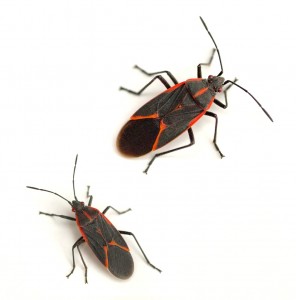
Boxelder bugs are generally black and red and have been identified in most states of the Union. Although other insects closely related to Box Elders look similar including the milkweed bug, none are likely to congregate in huge numbers like boxelder bugs. Members of this insect family feed on woody plants and herbs. The box elder bug got it’s name because it was found to infest box elder trees
These trees were planted in the west as settlers wanted quick growing shade trees. The availability of the vast numbers of boxelder trees allowed the boxelder bug to flourish. It now infests many other species of trees including maples, apple and almond. It seems to target a wide range of dead insects for food but will feed up on plants, vegetables and fruit when available.
Related articles: LADYBUGS STINK BUGS
BOX ELDER BUG PROBLEMS
Boxelder bugs become a problem when they move into your yard or home. Once they infest a tree, their population will grow from year to year. You’ll notice them congregating in massive numbers on the tree bark, limbs and the immediate ground surrounding the tree. This congregation will occur in the spring and then again in the fall. In the spring, the boxelder emerges from its winter hibernation looking for a tree or plant that will supply food for the season; in the fall it will migrate to “scented” locations on which to hibernate during the colder months of the year.
BOX ELDER BUG BIOLOGY
Boxelder bug young hatch in early summer and grow like roaches; they develop by instars. This means they go through several stages which resemble adults but will be smaller in size. As they molt (shed their exoskeleton) and begin a new instar, they’ll become more and more like their reproducing parents.

In the fall, they will seek the south or warm side of the tree or plant they’ve been feeding on throughout the summer. As it cools even more, boxelder bugs will take up residence in nearby homes and structures naturally drawn to the radiating warmth.
Since they over- winter and do not die from year to year, a population can reach huge numbers. This “colony” will readily infest the same area from year to year once a successful winter shelter has been found. Some will migrate onto your home, up under the siding and roofing and ultimately, inside. Besides the damage to leaves, fruit and trees around the home, if allowed to infest your house they will end up invading living spaces when its too cold for them to be outside.
Expect to have them climbing walls, clinging to curtains and buzzing around lights and ceilings throughout the winter. Since most homes are heated, boxelders don’t need to “sleep” through the cold. Instead, they will forage causing discomfort and being a nuisance until the spring.
Here is a short video of one inside a home. This boxelder was filmed in the middle of winter but because it’s warm inside, they’ll stay active.
This video shows many phases of Boxelder Bugs so you can see adults compared to nymphs. All sizes will be common when you have an active infestation.
WHY ARE BOX ELDER BUGS SO MESSY?
No doubt boxelder bugs will make a mess. Their droppings will accumulate everywhere and their eggs will appear as a series of small sacks laid 6-12 in a row. Since warm homes interfere with their natural cycles and biology, you may find them reproducing and egg laying throughout the winter. To stop them from being a pest all winter, you need to treat outside in the fall.
BEST BOX ELDER BUG SPRAY
So to start, you need to keep them off the home. This sounds easy but it can be tricky. Most infestations start slowly and therefore can be hard to notice. But if you’ve seen them congregating on a nearby tree or active on the side of your house, you need to spray immediately.
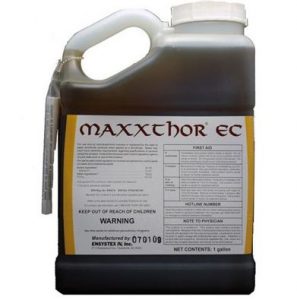
Use MAXXTHOR EC for a quick kill and a month long repelling action. Maxxthor is fast acting. Be sure to spray high up your home, preferably starting up at the gutters and then around windows, doors, shutters, etc. Boxelder bugs love light fixtures and will find any crack or crevice so be sure to get them all.
The following “short video” (less than 60 seconds long) summarizes how to use Maxxthor in our GREEN TOPPED HOSE END SPRAYER.
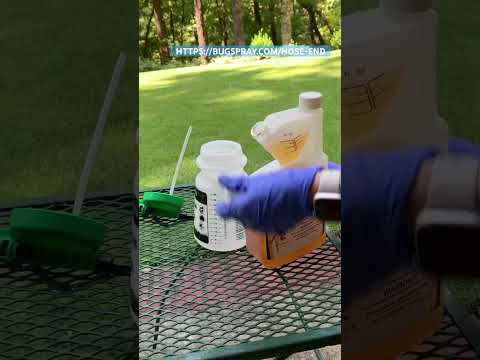
Since Box Elders come from the ground be sure to spray any tree, plant or inanimate object you see them on. This will reduce the active bugs in the yard wanting to nest in and around your home. By reducing these numbers you are reducing the amount that could find their way inside.
Maxxthor should be mixed at the rate of 1/2 oz per gallon of water and plan on using at least 5 gallons when treating the average sized home.


To get the most of your treatment, add SPREAD-X BOOST to your tank mix along with the Maxxthor. Boost is an adjuvant, also known as a wetter spreader or spreader sticker. It basically makes water and the mixture more “slippery” so you get better coverage. Treatments will spread 2-3 times wider and penetrate deeper. This is super important when spraying for pests like Boxelder Bugs. Boost will help the Maxxthor penetrate their hard “shield” shell leading to faster kills.
The following short video summarizes why Boost can help deliver your treatment better.
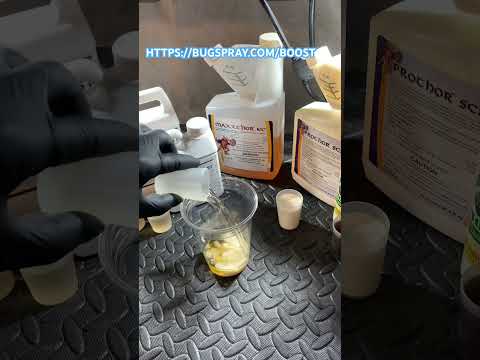
Add no more than the rate you’re applying the Maxxthor so in this case, if you’re adding 2.5 oz of Maxxthor to the hose end sprayer, add 2.5 oz of Boost too before adding water. If you’re adding Maxxthor to a pump sprayer at the rate of 1 oz per gallon, use 1 oz of Boost.

As seen in the video above, the best way to apply it using our 20 gallon Hose End Sprayer.
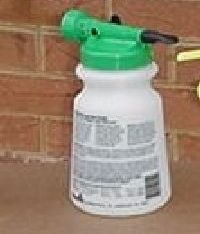
But a good PUMP SPRAYER can be used too as long as it can reach high enough.
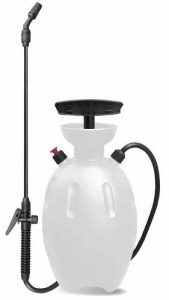
NEED TO SPRAY HIGH FOR BOX ELDER BUGS?
Now if you don’t feel like pumping and pumping a regular pump sprayer or if hose doesn’t spray that high, consider getting one of our NO PUMP SPRAYERS. This unique sprayer is simple yet very good, easy to use and one of our “favs” for applying insecticides to your homes exterior and landscape (its too powerful for use inside).
Ideally suited for reaching heights of 30+ feet, it has no moving parts other than the valve you hold for spraying and the adjustable brass “bullet” nozzle.
This sprayer is essentially a tank that can hold water, chemical and up to 130 psi of air. The top lid has a clamp and rubber gasket that seats on the “inside” of the sprayer so as you fill it with air, the seal will naturally remain in place, nice and tight.
The top has 3 “ports” (pic below). The port to the far left is used to fill the tank with air. Using any electric air pump (the kind you would use the fill tires on your car), you can safely pressurize this sprayer up to 80 psi. The tank is rated for up to 130 lbs but the relief valve will only allow you to fill it to 80-90 psi before it starts to release. This happens as a safety precautionary action.
This video shows how this sprayer works.
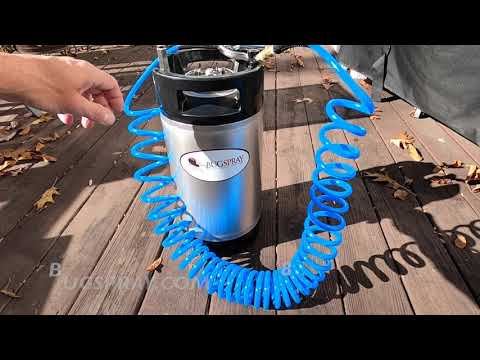
The 5 GALLON NO PUMP can hold over 2 gallons of mixed material and can empty completely using one tankful of air.
Remember, YOU WILL NEED AN AIR COMPRESSOR POWERFUL ENOUGH TO FILL THIS SPRAYER!! WE RECOMMEND ONE THAT CAN DO AT LEAST 100 PSI.
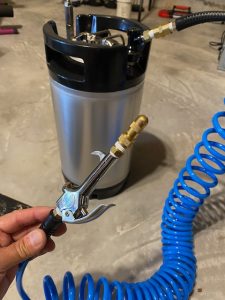
5 GALLON SETUP (remember to only fill it with 2.5 to 3 gallons of mixed solution so you leave room for air)
$395.00 (287774)(10% OFF WHEN ORDERING ONLINE)


BE SURE TO TREAT MULCH AREAS WITH GRANULES!
Since Boxelder bugs live and breed in the ground, you’ll want to treat mulch areas – espeically if they’re covered in pine straw or wood chips. They love to nest just under the top layer of soil once they emerge feeding on roots, sap and leaf litter. That means if you’re seeing activity on a tree, you need to treat the ground around the tree. For this treatment, the use of MAXXTHOR GRANULES are well suited.
The following short video summarizes how to use them around the home:
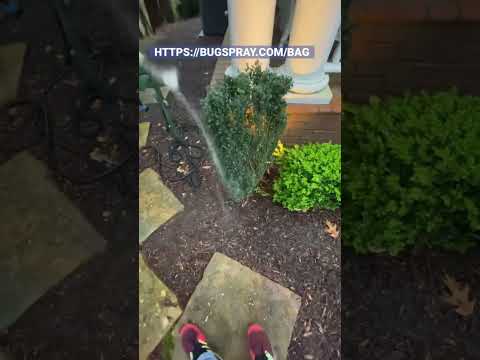
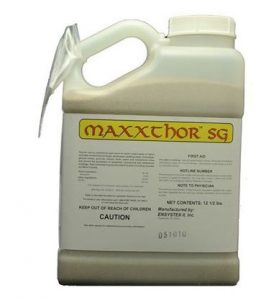
Use 1-2 lbs for every 1,000 sq/ft. Our 11 lb jug will cover up to 1/4 acre and should be applied once a month for active problems; once a quarter for preventive treatments.
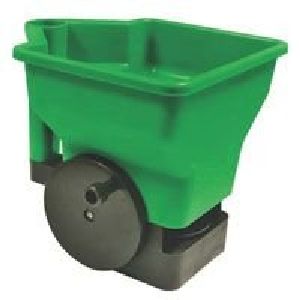
You can use a traditional “push” type fertilizer spreader to apply Maxxthor Granules or a simple HAND HELD SPREADER too.
BEST BOXELDER BUG SPRAY FOR INSIDE THE HOME
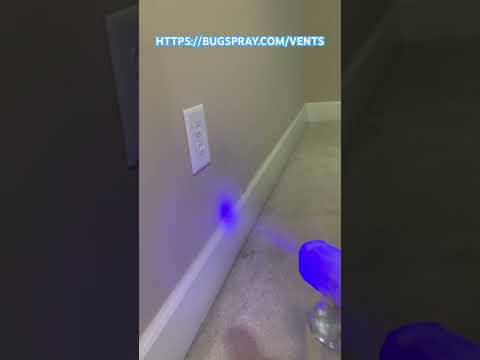
If the boxelder bugs have already moved inside and have started to be annoying in the home, you’ll need to get them where they’re nesting. This will usually be in the wall under an electric outlet cover or around a window frame.
Treating these areas can be tricky but the following video shows how to treat Air Vents, Electric Outlets and under Light Switch Covers.
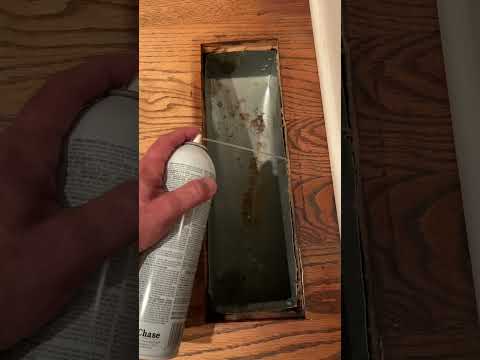
So for these locations, DEMISE DUST is best suited. Treatments made to wall voids will last a year or more so once done, you don’t have to worry about them for a long time.
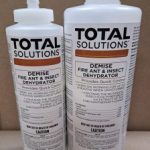
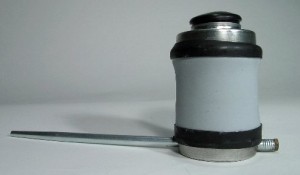
Use our HAND DUSTER to apply it.
WHAT ABOUT WINDOWS?
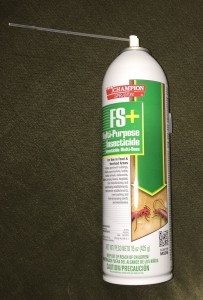
Windows are in fact a very common entry point. They have all kinds of cracks and crevices and are hard to dust. But for these areas, FS MP AEROSOL will provide a quick kill and long lasting repellency action.
The following video covers in great detail how to properly treat a window. As you will see, its imperative to treat every crack and crevice.
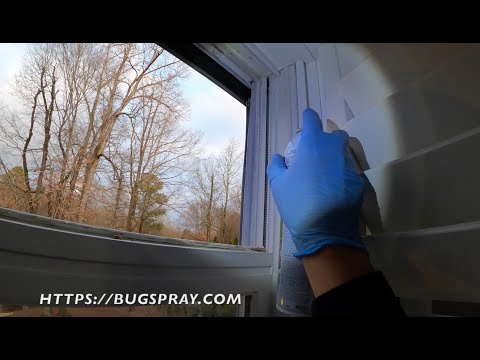
For sure FS MP is the best option for this task mostly because its oil based. Virtually all aerosols these days are water based and though this formulation has advantages when used as a surface spray, it won’t do half as well as an oil based in cracks and gaps.
The following “short video” explains why FS MP is so well suited for this job.
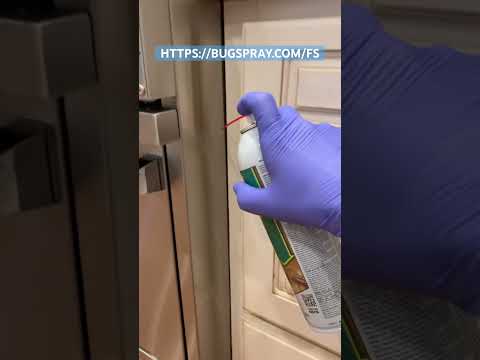
FS MP comes with a crack and crevice straw so you can direct it where Box Elders like to hide.. Use it as needed but if you’re thorough with your initial application, you can kill all stages and virtually eliminate any living in the home with one good treatment.
HOW TO TREAT WALLS
If you have Box Elders walking up walls to the ceiling, we don’t recommend spraying these areas with FS MP. Because its oil based, it can stain.
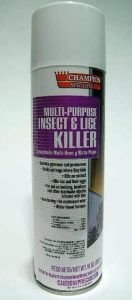
Instead our MULTIPURPOSE INSECT KILLER is the proper option to apply.
Multipurpose is odorless and water based so it won’t make a mess or leave an odor where applied. You can apply Multipurpose on walls and ceilings effectively as this video summarizes:
Be prepared to treat every 2-4 weeks if they return but when combined with the FS MP applied to all cracks and crevices, you should be able to knock them out with one thorough application.
WHAT ABOUT HOME SIDING?
A special note about home siding: If your home has vinyl, stucco, aluminum or wood shake siding, there is a very good chance Box Elders will be nesting up underneath the siding. This “space” is a prime location for a range of over wintering pests like Box Elders because it provides shelter from the weather and warmth from inside the home.
Treating the siding with our Maxxthor may penetrate enough to knock out a population using the space but if you find them living there after you spray, you’ll need to dust using the Demise listed above.
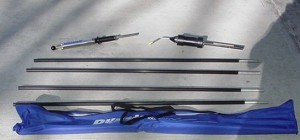
You can apply it using the hand duster listed above if you have a good sturdy ladder and can safely work it along each side of the home. But a DUSTICK can make the task a lot easier.
The following “short video” shows how the Dustick works.

As you can see in the video, the Dustick will let you treat the entire siding all the way around the home without having to climb a ladder. And you can get extra 4 Foot long extensions to extend up over 30 feet if needed.
Treating for boxelder bugs before they move into the wall voids of your home is the best way to stop invading populations. Expect to see them grouping in the fall as they prepare for their winter hibernation. Treat these congregations with Maxxthor for quick control. If they have already established themselves inside, you will need to treat outside populations with Maxxthor and inside cracks and crevices with FS MP Aerosol. This practical approach will stop new infestations, force them away from your beneficial trees and shrubs in your yard and keep your home from becoming their winter play ground.
CONTACT US
Give us a call if you need further help. Our toll free is 1-800-877-7290 and we’re open Monday through Thursday, 9:00 AM to 4:00 PM (Eastern Standard Time).
Email questions here: https://bugspray.com/about-us/contact-us
Order online and get a 5% discount! We ship fast with 99.9% of all orders shipping within 1 business day!!
Learn more about BUGSPRAY.COM and why it’s never been easier or safer to do your own pest control.
Please show your support for our business by purchasing the items we recommend from the links provided. Remember, this is the only way we can stay around to answer your questions and keep this valuable web site up and running. Thanks for your business!
Joni says
Thanks for your help. The pictures were the best way to identify the bug.
mary says
Can’t you just cut the trees down and eliminate the bugs all together. Just bought a home, has 2 trees in back and the bugs are swarming all over the gazebo and house. I can’t see where there are any leaves on these trees.
Thank you.
Tech Support says
Of course you can remove the trees but why? If you want to remove these trees thinking it will get rid of the boxelder bugs, you’re mistaken. Here’s why.
Boxelders will come to certain trees to feed. They’ll do this in the spring, summer and fall. During the winter, they tend to amass and hibernate on these very same trees. But they also use homes as a place to hibernate because it’s nice and warm, has lots of cracks and crevices in which to hide and many times will provide much more protection from the harshness of winter. And if you have boxelder bugs on your home now, they’re using it to hibernate whether they visit the trees in your yard or not. So yes, you can remove the trees in your yard but it’s not likely this will have any impact on the boxelders that are using your home.
More importantly, once boxelderbugs start hibernating on a house, they’ll leave their scent all over it which in turn will attract more boxelders the following year. So ultimately if you don’t treat, the problem will get increasingly worse.
And if that’s not bad enough, it gets worse. Boxelders love the southern and western facing sides of any home. Ironically trees will many times shade a home which boxelders don’t like. During the winter, they love homes with no trees around them because these homes get the most direct sun. So in fact removing your trees could actually make the home more attractive to boxelder bugs!
Now if you see lots of boxelder bugs on your trees and don’t want them there, you can spray the bark of the tree and that will take care of them. But boxelder bugs rarely feed enough on any one tree to damage it so in most cases, spraying any tree when they are living or hibernating on it is not needed.
Lastly, boxelder bugs can easily travel several miles to find food. So even without nearby trees, the ones living on your house will merely fly off to get dinner elsewhere and come back to your house to live no matter how many of your own trees you cut down. In the end, removing trees won’t help the problem. But a simple fall and spring treatment with some Maxxthor EC will keep them off your house and out of your living spaces for good.
Maxxthor EC: https://bugspray.com/catalog/insecticide/liquid/maxxthor-ec
Becky says
We have found random Box Elders in our home for over a year. We are looking to treat the exterior of our house this spring but believe we have colonies inside. How do you find indoor colonies that may be living in walls? And what is the best method to eliminate (in addition to exterior treatment)?
Thank you!
Tech Support says
As explained above in our article, you should dust wall voids to kill existing nests that may have been formed over the years of them using the home. Listed above is Demise dust which works great. Apply it using a Hand Duster. In most cases, there will be 1-2 sides of the home the boxelder bugs are using but you should be able to figure it out based largely on where you’re seeing them.
As for the outside; treating in the spring and fall is important and that could very well be now. Well, maybe not just yet depending on whether you’re seeing them or not on the outside of the home. But here in GA, they’ve been active the past few weeks which means it’s definitely time to spray. Exterior treatments should be done in the spring and then again in the fall.
Demize Dust: https://bugspray.com/catalog/insecticide/dust/drione-demise-dust-6-oz
Hand Duster: https://bugspray.com/equipment/dusters/crusader
melanie lindberg says
We had a rough time with them in the summer but I thought they die when it’s this cold. Now there are a few in the house and I’m just wondering why? Is there a nest like you spoke about somewhere? We live by the river. Does that contribute to the problem?
Tech Support says
If you read our article above, you’ll learn that if you let boxelder bugs live on or around your home, they’ll end up inside once it gets cold. This is because they don’t die from year to year but instead hibernate. Boxelder bugs love to hibernate on manmade structures and once they’re hibernating on a home, they’ll readily move inside because the inside of most any home is usually warmer than the outside air during the winter months.
So to answer your questions; they’re coming inside your home because there must have been some nesting on the exterior of your home this past fall. And living by a river would no doubt “help” because it usually means there will be moisture and good ground cover which they need for nesting. But even with a river close by there is no need to have a boxelder problem if you take a proactive stance and treat as explained above.
Now since they’re probably not active outside if it’s winter by you now, I would focus my attention on the inside of the home for now. And that means a lot of crack and crevice treating with some FS MP aerosol.
FS MP: https://bugspray.com/catalog/insecticide/aerosol/fs-mp-insecticide-15-oz-aerosol
FS MP is a strong working agent that will last a month or so when applied to cracks and crevices around the baseboard, window frames, door frames, outside light fixtures, etc. where boxelder bugs nest. And once you kill them in these nest sights, you should see a reduction in how many are active in the home for now.
Come spring, you should do some treating outside to insure they’re not nesting in the mulch, under pine straw or on your homes siding. These treatments will involve the Maxxthor Granules applied to the ground and the Maxxthor sprayed on the homes exterior.
Maxxthor SG: https://bugspray.com/catalog/insecticide/granule/maxxthor_sg.html
Maxxthor EC: https://bugspray.com/catalog/insecticide/liquid/maxxthor-ec
Doing these treatments every 1-2 months will both kill off any populations living on the home and help to prevent any more from coming back to hibernate next fall. In the end, these applications will insure you don’t get any inside come next winter.
Dave Strickland says
I have the Box Elders you show outside my house and some get inside but my real problem inside and out is a smaller version that is tan/gray in color and when you catch one they leave a sage type scent on you that’s hard to get rid of. Someone told me they were box elders but they look different and hang around box elders. My home is infested and nothing seems to kill them. What I want to know is will your pesticides kill them? And what exactly are they? I can send you some in an envelope for identification. Any way, help me pleaaasseee… Dave.
Tech Support says
In fact we generally recommend the Maxxthor for any type of invasive pest like Boxelders, Asian Ladybugs, Kudzu Beetles, Stink Bugs, Ants and Wood Roaches. So whatever this beetle turns out to be, I’m sure the Maxxthor can handle spray it so start with this applied to the outside of the home. Inside, go with either the FS MP (strongest with a slight smell).
Maxxthor EC: https://bugspray.com/catalog/insecticide/liquid/maxxthor-ec
FS MP: https://bugspray.com/catalog/insecticide/aerosol/fs-mp-insecticide-15-oz-aerosol
Now if I was to guess what this bug might be without seeing a sample, I’d have to go with either Stinkbugs or Kudzu Bugs. Stinkbugs are about as large as Boxelders but the Kudzu Beetle is much smaller.
Stink Bugs: https://bugspray.com/article/stinkbug
Kudzu Beetles: https://bugspray.com/kudzu-bug-control.html
barb schoenfuss says
Hi. I have the boxelder poop on the house and had it professionally cleaned and it didn’t come off. Do you know of anything that will take it off? Thank you.
Tech Support says
We have had similar reports over the years that the feces from boxelder bugs can stain with the only remedy to be painting over the stains. Be sure to add some NBS Paint Additive to the paint too. This way you’ll have in place a long lasting repellent to keep new boxelder bugs from coming around as well as many other pests that can stain your house. Alternatively you can spray the Maxxthor EC to repel them because even if you paint, once your home is marked by this pest it will constantly be attracting them unless you spray.
NBS Repellent: https://bugspray.com/exempt/additive/nbs-paint-additive-16-oz
Maxxthor EC: https://bugspray.com/catalog/insecticide/liquid/maxxthor-ec
Bill Moden says
Thank you for all the info on boxelder bugs. My first battleground with these bugs was on my porch with a flyswatter (killing about 50 a day). However that form of assault doesn’t seem to reduce the number. My next form of defense will be this Maxxthor EC you mentioned. Thanx again. Bill.
Tech Support says
No doubt the Maxxthor EC will help. But remember to treat the surrounding area just off the porch. My guess is there must a nest close by, maybe in some mulch, which is breeding all the numbers you’re finding. Get those areas sprayed too and you’ll see even better results.
Maxxthor EC: https://bugspray.com/catalog/insecticide/liquid/maxxthor-ec
Scott Lewis says
The remedies you site with the spray and granules, are they safe for dogs or other pets?
Tech Support says
Absolutely. For more information on just how safe, review the “safety” video’s you’ll find at the bottom of every product page. In these video’s we go over how to handle, mix and apply the product as well as any special safety precautions you need to take. As you’ll learn, the key is following some basic rules like keeping the kids and pets away from the area you’re treating. But once the area is allowed to settle and dry, everyone will be able to return without risk or danger. All these vid’s can be seen here too:
Safety Videos: https://bugspray.com/safety-first-videos
Bryan Buchanan says
I have an infestation of boxelder insects in the back corner of my lot. I had it treated by a professional pest company on the split rail fence, post and tree. However, I need something for my tomatoes, peppers etc. I found two red tomatoes ‘covered’ with them yesterday. What can I use on them? Thanks.
Tech Support says
No doubt boxelder bugs will target vegetable gardens from time to time. And since the products listed above aren’t to be used on vegetables, I’d recommend our organic MultiPurpose Insect Killer. It’s approved for use in organic gardens, works great on a wide range of pests and even though it doesn’t say Boxelder Bugs on it’s label, it will definitely kill them.
Organic Insect Killer: https://bugspray.com/organic/liquid/multi-purpose-insect-killer-24-oz
It can be used daily if needed since it has a “one day to harvest” label. But we’ve found that after people treat and knock out the initial infestations, they can usually go several days and even weeks between treatments after just 1-2 applications.
Chelsie says
Hello my previous apartment became slowly filled with box elder bugs. At first we noticed big ones then noticed them mating and then started finding eggs and babies and since our landlord did nothing we finally were able to move out. I tried to clean everything and search through everything the best I could before the move but I’m nervous the babies will follow us and we will have a never ending problem. We have been moved in for about a week and I have seen only one baby. There are no trees or really any grass around us..any suggestions or thoughts? Thanks!
Tech Support says
Boxelders are easy to transfer from one location to another once they infest the living area of any home and the residents then up and move. To make sure they’re aren’t more where you now live, I suggest you do a thorough treatment of the living areas with an aerosol.
FS MP would be a good choice for this task since it’s highly effective on Boxelders. FS MP is fast working and lasts a long time. Treat all the moldings, around windows and any place you know they like to live based on where you saw them at your last residence. This will insure any you brought with you won’t have a chance to start a new population where you live.
Here is a link to this item in our cart. Please show your support for our business by purchasing the items we recommend from the links provided. Remember, this is the only way we can stay around and keep this valuable web site up and running. Thanks for your business!
FS MP: https://bugspray.com/catalog/insecticide/aerosol/fs-mp-insecticide-15-oz-aerosol
Bhoberg says
I have a mandevilla tropical plant that boxelders are all over. I need to bring it in for the winter months but don’t want to bring it in until the bugs are gone. Anything safe for tropical plants? Any suggestions will be very much appreciated.
Tech Support says
The word “tropical” when applied to plants means the plant is native to a tropical climate. And though these plants may be sensitive to cold temperatures, they are no more likely to be sensitive to any of the treatments we can use to control parasitic pests like boxelder bugs.
That being said, since I don’t how large your plant is, the general health of it nor how it might react to the more common materials I’d normally recommend, the use of something approved for organic gardening would be a fine work around that should take care of the problem yet keep your plant safe. Fortunately we have two organic gardening approved products that will be gentle yet strong enough to handle boxelder bugs.
The first one is an aerosol. Known as House Plant Insect Killer, this spray is easy to apply and will provide immediate relief. Boxelders don’t like it and will stay off treated plants for a day or two. They will also die if sprayed directly. Now if your plant is small, one can would be enough to handle the problem. Simply spray it down, let it sit for half a day and then once the bugs are all dead or gone, bring the plant inside.
But if you have a lot of plants to treat, the organic Multi Purpose Insect Killer would be the more efficient option. It’s a liquid you’ll mix with water and spray with a standard Pump Sprayer. Multi Purpose Insect Killer is highly effective on a wide range of pests including Boxelders.
Organic Insect Killer: https://bugspray.com/exempt/liquid/pest-away
Eliminator: https://bugspray.com/equipment/sprayers/eliminator-gallon-sprayer
shirley burleson says
Just had box elder trees cut by city that were along ally boarding our property line that were interfering with power lines. They were outside our property line. Now we are greatly infested with the bugs in all sizes as they were in the trees reproducing. They are up and down tree limbs, all over almost anything including the grass, millions of them, the house is stucco and white. We have sprayed with some spray also laundry detergent mixture. Do we now try to use granules on grass and stronger spray on house and trees?? Please help we are quite worried how many are getting into walls. Thank you.
Tech Support says
No doubt the random take down of any tree can dislodge and relocate animals and insects alike. And when it comes to insects like boxelder bugs, the numbers can be astounding!
I suggest you get the Maxxthor Granules applied immediately followed up by the Maxxthor EC. The Maxxthor should be applied to any tree and ground area where you see activity. Next, spray the exterior of the home to prevent nesting.
Now if you jump on this quick, you’ll be able to knock out any trying to relocate to your home. With fall fast approaching, they’re no doubt looking for a place to overwinter and rest assured, you don’t want your home to be their prime location of choice!
Maxxthor SG: https://bugspray.com/catalog/insecticide/granule/maxxthor_sg.html
Maxxthor EC: https://bugspray.com/catalog/insecticide/liquid/maxxthor-ec
anne says
We have a tree that is covered from top to bottom, inside and out (it appears) with boxelder bugs. Before I saw this site, I sprayed the bugs on the trunk with sevin, some fell off, but they’re still milling around. Oh, they’re in the grass and beginning up another trunk, too. I’ll try the products you recommend, but what about the thousands that are up covering the branches on the treetop (say 40 feet)? Thanks for any help.
Tech Support says
Before you do any spraying, be sure to get the Maxxthor applied to as much of your turf as you can. This is important because when you spray, many will flush off the tree and migrate to other parts of your property. Now if you don’t have the granules in place prior to spraying, boxelders can elude the treatment and that means they’ll continue to thrive elsewhere. But if you have the granules applied, any that migrate will surely die.
Maxxthor SG: https://bugspray.com/catalog/insecticide/granule/maxxthor_sg.html
Next, spray as much of the tree as you can with the Maxxthor EC. It’s fast acting and can be applied to all parts of the tree trunk. Using a Hose End Sprayer, you should be able to reach quite high too. Certainly 25-30 feet if not higher since it uses the water pressure of your garden hose. Our No Pump Sprayer is another great way to reach high up as you can see in the video we have demonstrating how high it can reach which is 30 ft and more.
Maxxthor EC: https://bugspray.com/catalog/insecticide/liquid/maxxthor-ec
Hose End Sprayer: https://bugspray.com/equipment/sprayers/20-gal-hose-end
No Pump Sprayer: https://bugspray.com/equipment/sprayers/bugspray-no-pump-sprayer
Bev Marks says
Are the products you have mentioned safe for birds and other wildlife? I have numerous feeders and do not want to have an adverse effect on the environment.
Tech Support says
All the products we have listed above can be safely applied in the yard without any danger being presented to pets, wildlife or people. Remember, once they’ve been mixed and dispersed, the actives will be minute over the area they’re applied which is why they cannot do any harm when used in the way described on their respective labels. More information can be learned from our Safety Videos which can be viewed on every product page. We also have more info posted here that helps to explain this fact:
https://bugspray.com/about-us/who_is_bugspray.html#safe_for_the_home
Bonnie Lehmkuhl says
Where do you buy this stuff to get rid of box elder bugs? How much is it to treat a house outside and inside? How often do you have to do it too?
Tech Support says
Click on the products above to see them in our cart. Where they appear “blue”, those are the links. The main products people spray is the Maxxthor EC.
Maxxthor EC: https://bugspray.com/catalog/insecticide/liquid/maxxthor-ec
You’ll use 1 oz per gallon of water and you’ll spray 2-3 gallons for the average sized home. Treatments can last several weeks but you should retreat as is needed to keep them off the home because if you let them linger, they’ll no doubt start nesting in the home which you don’t want.
Now there are other items you might need but if you review the material above, you’ll learn the details of what might be needed.
Bev Marks says
We have ordered the Maxxthor EC and it should arrive tomorrow. We have been using dishwashing soap and water to control a very large infestation of nymphs, spraying several times daily since we discovered them. That is helping but it has to be done every day. Now we are seeing the adults also. I have only found two nymphs and one adult in the house but it is getting cooler here in IL. I have 2 questions. Do we have to repeat the Maxxthor EC application more than once this fall? Also, our home is painted cedar and there are so many crevices it will be virtually impossible to hit them all. If they overwinter in these crevices and behind shutters how can I keep them from laying eggs in the spring? We have two maple trees and an ash and wetlands that we back up to. We noticed a woodpecker this summer in the ash frequently. Is there a product we can use to keep them from laying eggs to alleviate another infestation of this magnitude. I have never experienced this since moving to this house 3 years ago. I read on one site that a hot drought summer like we had can add to this problem. Thank you so much for all the wonderful info you have provided on your site.
Tech Support says
When the Boxelder Bugs first come to any home, they won’t be hiding. That means a good application with the Maxxthor EC will knock them right out before they get “embedded” on the home. The key is getting them before it gets cold so you are definitely ahead of the curve. Boxelders are hardy and will be active well into November so 2-3 treatments should cover you this fall. Many homes will do one good treatment and then followup a few weeks later to be sure they’ve got it under control but that’s usually all you’ll need to do. Only the worse problems will require more than two applications in the fall or spring.
Now keep in mind that if you have warm days during the winter and any emerge, you need to spray. Getting them when they come out on either warm winter days or next spring is important and key to breaking the cycle.
Lastly, don’t be afraid to spray any plants or ground where you see them active. Boxelders will typically get into pine straw and other ground cover and treating these areas are many times needed too.
Here are links to these items in our cart. Please show your support for our business by purchasing the items we recommend from the links provided. Remember, this is the only way we can stay around and keep this valuable web site up and running. Thanks for your business!
Maxxthor EC: https://bugspray.com/catalog/insecticide/liquid/maxxthor-ec
Spreaders: https://bugspray.com/equipment/spreaders/scatterbox-spreader
tmarsh says
This page has a lot of great information about controlling box elder beetles. I read the products are safe for people and wildlife; however, my concern is that my dog eats these bugs like they are treats. If she eats the dead bugs would this be harmful for my dog? Thanks!
Tech Support says
We definitely understand your concern and the answer to your question is no, the dead box elder bugs will not pose a hazard to your pet even if they eat any. Here’s why.
The pesticides listed above will be so diluted down when applied they can’t hurt people or pets. And that’s if you ingested them directly. Now once you spray the mixed solution, it will be dispersed over such a large area that one cannot pick up any significant amount of the active and for that reason, there is no risk or inherent danger where they’re applied.
Additionally, the pests that die from the treatment won’t have any measurable amount of the treatment on them so they too won’t pose any hazard.
Now yes, the concentrate in it’s original form would make one sick if they drank some straight from the bottle and for this reason it must be stored where kids and pets won’t have access. But once mixed, they just don’t have that potential anymore because they’re so dilute.
More information on this subject matter resides here:
Product Safety: https://bugspray.com/about-us/who_is_bugspray.html#safe_for_the_home
Judy says
Something else boxelders do is to eat the insulation of insulating draperies and ruining them.
Tech Support says
They most definitely can cause damage to items made with natural ingredients. Rugs, furniture, carpeting and other things found in living areas of most any home can all serve as food for boxelder bugs!
Sherrill Muller says
If you seal the cracks after they move in will they die or just continue to live inside?
Tech Support says
If you seal the cracks without first treating with FS MP Aerosol, whatever is living in the space will most likely end up migrating deeper into the house and this could present all kinds of other issues. So definitely seal the home; just don’t seal up live pests in the process. Treat the cracks first, let the treatments sit for a day and then go ahead and seal it up.
FS MP: https://bugspray.com/catalog/insecticide/aerosol/fs-mp-insecticide-15-oz-aerosol
kimberly dickenson says
I have a lot of boxelder bugs in my basement. Most of them are dead but now I’m finding them in my living room and bathroom. Its winter time and I’m not sure where they came from. They are becoming a real problem. How do I treat for them and get rid of them? Thank you.
Tech Support says
First, read the article above. It will help explain why your home is getting infested with boxelder bugs and how you can treat your home to prevent this kind of problem from continuing.
As you’ll learn, for now you should treat inside with FS MP. Its fast working and long lasting. FS MP: https://bugspray.com/catalog/insecticide/aerosol/fs-mp-insecticide-15-oz-aerosol
Now come the spring, summer and fall, you should start doing some outside applications to get rid of them for good.
In most cases, spraying the outside of the home with Maxxthor EC will do the trick. But if you’re finding them on a tree, in some pine straw mulch around the home or in other areas of the yard, you’ll need to first apply Maxxthor granules to the turf and then spray over the top with the Maxxthor EC.
Maxxthor EC: https://bugspray.com/catalog/insecticide/liquid/maxxthor-ec
Maxxthor SG: https://bugspray.com/catalog/insecticide/granule/maxxthor_sg.html
Mary Anne Winslow says
Thanks for all the great comments. I came home today to find about 15 box elders on the inside of a sliding glass door in our kitchen. Last fall they swarmed by the hundreds on the west side of our house. You mention several products. Which is the BEST product to eradicate these creatures inside and out?
Tech Support says
If you read through the article, you’ll learn that in fact we have all these different products listed because they’re all used in different areas of the home depending on where the problem is centered.
True, in most cases, you’ll at least need to spray the outside exterior of the home and do some inside treating of cracks and crevices. And the basic products for this would be the Maxxthor EC for the outside:
Maxxthor EC: https://bugspray.com/catalog/insecticide/liquid/maxxthor-ec
And for the inside, the crack and crevice aerosol known as FS MP is ideal.
FS MP: https://bugspray.com/catalog/insecticide/aerosol/fs-mp-insecticide-15-oz-aerosol
Now if they’re living in wall voids or attic spaces, you’ll need the Deltamethrin seen here:
Delta Dust: https://bugspray.com/catalog/insecticide/dust/deltamethrin-dust
And lastly, if they’re active in the yard around trees, flower beds and mulch areas (especially during the summer and fall), the Maxxthor Granules would be best suited. Treating these areas when it’s warm outside will get rid of them where they’re surely nesting and in turn, slow if not stop the migration to the home.
Maxxthor SG: https://bugspray.com/catalog/insecticide/granule/maxxthor_sg.html
Chris F says
Hello,
I live in Central Illinois and got the first nice warm days of the year in a new house. I found probably what would be a couple of hundred boxelders on the outside walls of an addition over a crawl space. I sprayed them with bug spray and then soap and water as I read that worked good. They did all die but there is a definite problem. What steps (in order) should I take to start the process of removing these things!?
Thanks!
Tech Support says
For starters, read the article above. It will go over all you need to do, the products you need to use and how to apply them. No doubt you’ll need to start using the items we have listed in the article if you want to get rid of them for good. Boxelders are persistent and you’ll need to use the professional products if you want to get rid of them for good. After reading it, if you need some further assistance let us know and we’ll try to help.
Chris F says
I have read the article but it really doesn’t say where to start. Maybe I need to add some more information.
-I have a house with vinyl siding
-I have a basement but area of addition where they seem to be gathering is over a crawl.
-I don’t have many inside…maybe 5 or so at most but LOTS outside.
With that where do I start?? spray, dust, seal, ?? Do I start now or wait until I see them or certain time of year??
I assume I will be battling them all year but want to take the right steps at the right time in the right order to make sure they dont come back …or find a home in my home this coming winter.
Thank you!
Tech Support says
Based on the information you’ve provided, it would appear all you need to do now is to apply some granules and then spray the siding of the home. So in the turf around the home – especially on the side that has the activity – apply the Maxxthor granules
Maxxthor SG: https://bugspray.com/catalog/insecticide/granule/maxxthor_sg.html
Next, spray the Maxxthor EC onto the siding of the home using 1 oz per gallon of water per 800 sq/ft of surface area.
Maxxthor EC: https://bugspray.com/catalog/insecticide/liquid/maxxthor-ec
This should take care of any nesting in the ground and/or on the home and in theory, knock them out. Now it doesn’t mean you should expect one treatment to get rid of them for good. My guess is you’ll need to start now and maybe after 2-3 treatments, they’ll pretty much be gone.
As for the inside; there is no evidence to suggest you need to treat there yet based on the small amount you’re seeing inside. But if you start the outside treatments and the activity inside doesn’t stop or at least reduce somewhat, get some FS MP and start treating any room with activity.
FS MP: https://bugspray.com/catalog/insecticide/aerosol/fs-mp-insecticide-15-oz-aerosol
The part of the article that covers this in more detail is here:
https://bugspray.com/articles98/boxelder#boxelder-bug-outside-spray
Chris F says
THANK YOU SO MUCH! ..and will check back in after a few applications to let you know the progress.
Marie L says
I too have issues with these ugly elder bugs. The spray treatment you recommend for the exterior of the home; will it stain my siding? Its vinyl. I’ve made the mistake of using an insect spray before and needless to say it left a slight stain on the viny siding. My husband was very upset. Please let me know.
Tech Support says
Most over-the-counter products contain solvents and stabilizers that can affect plastic and cause staining. But we don’t carry these types of products. Most all of our pesticides are water based with very little of the concentrate used when in the tank when you mix up a gallon to spray. The net result is that what you’re spraying is usually 99% water.
So to answer your concern; none of our products will stain.
But clearly the easier option would be to use the emulsifiable form of Maxxthor EC. This form is a liquid and once mixed with water, won’t leave any visible residue so once it’s dry you won’t even know it’s there.
Here is a link to this item in our cart. Please show your support for our business by purchasing the items we recommend from the links provided. Remember, this is the only way we can stay around and keep this valuable web site up and running. Thanks for your business!
Maxxthor EC: https://bugspray.com/catalog/insecticide/liquid/maxxthor-ec
Stephen Breen says
I see a lot of Box Elders that look like they are reproducing, usually a large one with a small one attached to each other at the rear. I have not seen any pictures to be able to identify male from female. Any suggestions?
Tech Support says
No doubt you need to treat the problem before the population grows anymore. What you’re seeing is exactly what you think you’re seeing: reproducing box elder bugs.
And if you leave them be to reproduce and thrive, their population will no doubt grow. This is generally the sequence of events that happens around the home which ultimately leads to them getting inside and causing an unwanted infestation.
Now since you didn’t say where you’re seeing all the activity, I’m not able to specifically list what you’ll need to treat. But if you review the article above, you’ll learn what we recommend for the various areas. And here’s a quick summary.
So if the activity is in the yard, go with the Maxxthor Granules applied to the ground and then the Maxxthor EC over the top.
Maxxthor SG: https://bugspray.com/catalog/insecticide/granule/maxxthor_sg.html
Maxxthor EC: https://bugspray.com/catalog/insecticide/liquid/maxxthor-ec
If the activity is inside the home, treat the infested rooms with FS MP aerosol.
FS MP: https://bugspray.com/catalog/insecticide/aerosol/fs-mp-insecticide-15-oz-aerosol
In some cases dusting wall voids and/or attics is required to knock out any pockets that might have moved into these spaces.
Demize Dust: https://bugspray.com/catalog/insecticide/dust/drione-demise-dust-6-oz
Hand Duster: https://bugspray.com/equipment/dusters/crusader
Hope this helps.
Arlene says
I have discovered box elder bugs in my mulch where I just planted. There is a huge number of them. Am going to spray but will this Maxxthor EC kill my plants? Should I avoid spraying the leaves?
Tech Support says
In most cases treating the ground with the Maxxthor Granules and then spraying just the ground with Maxxthor EC is all you need to do. No need to spray the plants and their leaves.
But if you did spray any leaves in the evening and the plants were left to dry overnight, there would be no risk of damage which could happen if you treat mid day and it was 90 degrees or more. No doubt this could burn some leaves. So treat in the evening and there won’t be any problem and remember, the ground in the mulch is usually the more important area to get anyway and generally not the plant leaves.
Maxxthor SG: https://bugspray.com/catalog/insecticide/granule/maxxthor_sg.html
Maxxthor EC: https://bugspray.com/catalog/insecticide/liquid/maxxthor-ec
Mary says
Hi, I have an interesting one for you…We have an infestation of boxelders in our car…Not the inside but the lining and cracks in the doors, hood etc. Have not seen any in/around the engine. My fear is how long they have been there and since we park in the garage should I now be concerned they have migrated to our home. We will spray garage and other areas but, do you think it is safe to spray the car?
Thanks for all the great info.!
Mary
Tech Support says
No doubt this type of nesting could lead to issues in the garage which in turn could lead to problems in the home. But the big question here is where are they coming from? Do you think these boxelders are living in the yard and then migrating on the car because you’re leaving it out in the driveway overnight?
We have seen cars parked outside in the evening attract various bugs because they’re warm when first parked. And as the cooler nights of fall take hold, many insects will seek warm refuge so a “just used” car will commonly attract such insects. And it doesn’t have to be the engine compartment; any gap or seam in the construction can serve as a good nest site.
So to see if they’re coming from the yard, do a good inspection to see if you can locate any nesting in the mulch, flower beds, etc. If you find some active in these areas, get the area treated with some Maxxthor Granules and Maxxthor EC.
Next, spray the garage and outside of the home with Maxxthor EC.
Lastly, treat all the cracks and crevices of your car with FS MP aerosol. This product is odorless and goes on “dry” making it ideal for use on a car or other tough to treat area. Treatments will last 2-3 weeks (unless you drive through rain) and if you renew the applications a few times this fall, you won’t find any more boxelders or other insects trying to use it anymore.
Here are links to these items in our cart. Please show your support for our business by purchasing the items we recommend from the links provided. Remember, this is the only way we can stay around and be here to answer your questions and keep this valuable web site up and running. Thanks for your business!
Maxxthor SG: https://bugspray.com/catalog/insecticide/granule/maxxthor_sg.html
Maxxthor EC: https://bugspray.com/catalog/insecticide/liquid/maxxthor-ec
FS MP: https://bugspray.com/catalog/insecticide/aerosol/fs-mp-insecticide-15-oz-aerosol
L Wright says
Goodness, I thought I was alone in this fight! We live in a cedar home in the woods and we have 100 acres of fir trees. I have boxelder bugs every year on the sides of my bat and board home, which has more cracks and crevices than you can imagine. I have vacuumed them, sprayed them, used soap and water on them, bought numerous insect sprays and gadgets….called the county extension agent, you name it, I’ve done it. Every night, I have a jar of soapy water on the coffee table, and each time I see one, I grab it and put it in the jar. Last night, there were probably over 75 bugs in the jar – and that many more in the jar in our bathroom. I will try anything – believe me – if this stuff works I will be your biggest fan ever! We don’t have a yard – just the woods….and I can’t possible treat every single tree – any suggestions?
Thanks!
Tech Support says
First, there is no need to treat every tree around the home to keep these boxelder bugs off your house. No doubt spraying trees close to the home, like the ones within 25-30 feet, will help. But insects will always thrive out in nature and the best we can hope is that with the right products, we can keep them outside and prevent them from entering our living spaces.
Second, to accomplish this goal, you must think “barrier”. And this barrier should be essentially “two lines of defense”. By having two lines in place, it will greatly reduce the activity on the home which in turn, will pretty much eradicate any inside.
In fact, if I was doing the treatment, there wouldn’t be any activity in the home. I say this because I know a strategy that will work if done correctly using the right products. So if you’re a do-it-yourselfer and want to get rid of this pest, here’s how to proceed.
Mind you your problem is no doubt a bit more “extreme” compared to most. But I have seen bad cases like what you’re describing and when dealing with local populations coming from a forrest, you must prepare by understanding there is potentially an unlimited population of boxelders nearby. Using this mentality, you can prepare for the worse case scenario and in doing so, put in place the proper line of defense.
So the first thing I’d do is dust the homes exterior with Demise Dust. Listed in the article above, Demise is unique in that treatments will last 6-12 months so you don’t have to continuously apply it. And its highly repellent to insects so they stay away from where its been applied. This means if you apply it to all the cracks and crevices of your homes exterior, you’ll take this prime bit of nesting area away from them.
You see, boxelder bugs love nesting on wood. And your homes exterior siding is exactly what they love! Wood siding with gaps and crevices is about the most perfect spot for them to roost and nest so what you have happening is entirely expected and no surprise. In fact, they can “smell” such locations. And without using the right products on your homes exterior, this has been the one of the main reasons why your problem is so extreme.
Now once you start using the Demise applied with a Hand Duster, you’ll notice boxelders (and any other insect) rapidly leaving the area. Basically anything in the areas you dust will be killed within minutes and with the dust in place, nothing else will come to the space for sometime.
Now if the home is tall and you can’t reach all the siding that runs up to the roof, get a Dustick. This device is well worth the investment. The Dustick will allow you to apply the Demise up to 25 feet high while standing on the ground. Basically it will enable you to get the Demise applied to every bit of the homes siding which is important.
Next, you’ll need to apply Maxxthor Granules to the turf around the home. Treat at least 25 feet “out” from all sides of the structure. Focus on areas with pine straw or other mulch. I’m assuming you have lots of mulch around the home and these are key nest sites for boxelder bugs too. Apply these every 1-2 months for the first year; every 2-3 months once the problem is under control after 1 year.
Next, you’ll want to spray the homes exterior and any bushes or trees they’re roosting on with the Maxxthor EC listed above. Expect to use 2-3 gallons to treat the homes exterior and another couple of gallons to treat the trees and shrubs. This should be done monthly for the first year during the spring, summer and fall. And once the problem is under control, you can spread out treatments to every 2-3 months to keep them in check. Mix the Maxxthor EC at 1 oz per gallon of water.
Lastly, use FS MP aerosol inside the home to every crack and crevice where you think they’re either nesting or entering. FS MP goes on dry and is odorless making it ideal for use inside. You’ll need to use this monthly too but like the other products, once the problem is under control, you’ll be able to wait 2-3 months in between treatments.
The good news is boxelder bugs are easy to control as long as you get all the areas where they might be nesting. And if you follow my directions and apply the listed products to the areas I’ve mentioned, you’ll see instant results. If the work is done correctly, I would expect you to see a lot of dead boxelder bugs the first day of treating and within a week, very little activity will be noticed. By 2-3 weeks, they’ll mostly be gone but only if you stay the course and keep treating monthly for the first year to insure they’ll be gone for good.
Here are direct links to the products listed above:
Demize Dust: https://bugspray.com/catalog/insecticide/dust/drione-demise-dust-6-oz
Hand Duster: https://bugspray.com/equipment/dusters/crusader
Dustick: https://bugspray.com/equipment/dusters/dustick
Maxxthor SG: https://bugspray.com/catalog/insecticide/granule/maxxthor_sg.html
Maxxthor EC: https://bugspray.com/catalog/insecticide/liquid/maxxthor-ec
Eliminator Pump Sprayer: https://bugspray.com/equipment/sprayers/eliminator-gallon-sprayer
No Pump Sprayer: https://bugspray.com/equipment/sprayers/bugspray-no-pump-sprayer
Give us a call if you need more help. Our toll free is 1-800-877-7290 and we’re open 9:00 AM to 4:00 PM Mon-Fri: 9:00 AM to 1:00 PM Saturday, Eastern Standard Time.
Customer Care
https://www.bugspray.com
PS: Please show your support for our business by purchasing the items we recommend from the links provided. Remember, this is the only way we can stay around and be here to answer your questions and keep our web site up and running. Thanks for your business!
Scott Elder says
I have a cabin in the mountains and also have Asian Lady Bugs in addition to Box Elder Bugs that cover the exterior. Last year I did the recommended spray for the Lady Bugs on the exterior of my cabin and it also killed the Box Elder Bugs as well. Will the recommended spray for the Box Elder Bugs also kill the Lady Bugs?
Tech Support says
Scott,
The Boxelder bug treatments will work well on the ladybugs too as the products are more penetrating and longer lasting. If you have both, go with the Maxxthor listed above and you’ll knock these pests and others out for good.
Technical Support
800-877-7290
PS: Are you signed up for our informative twice a month Pest Report Newsletter? More info here: https://bugspray.com/bugspray-pest-report