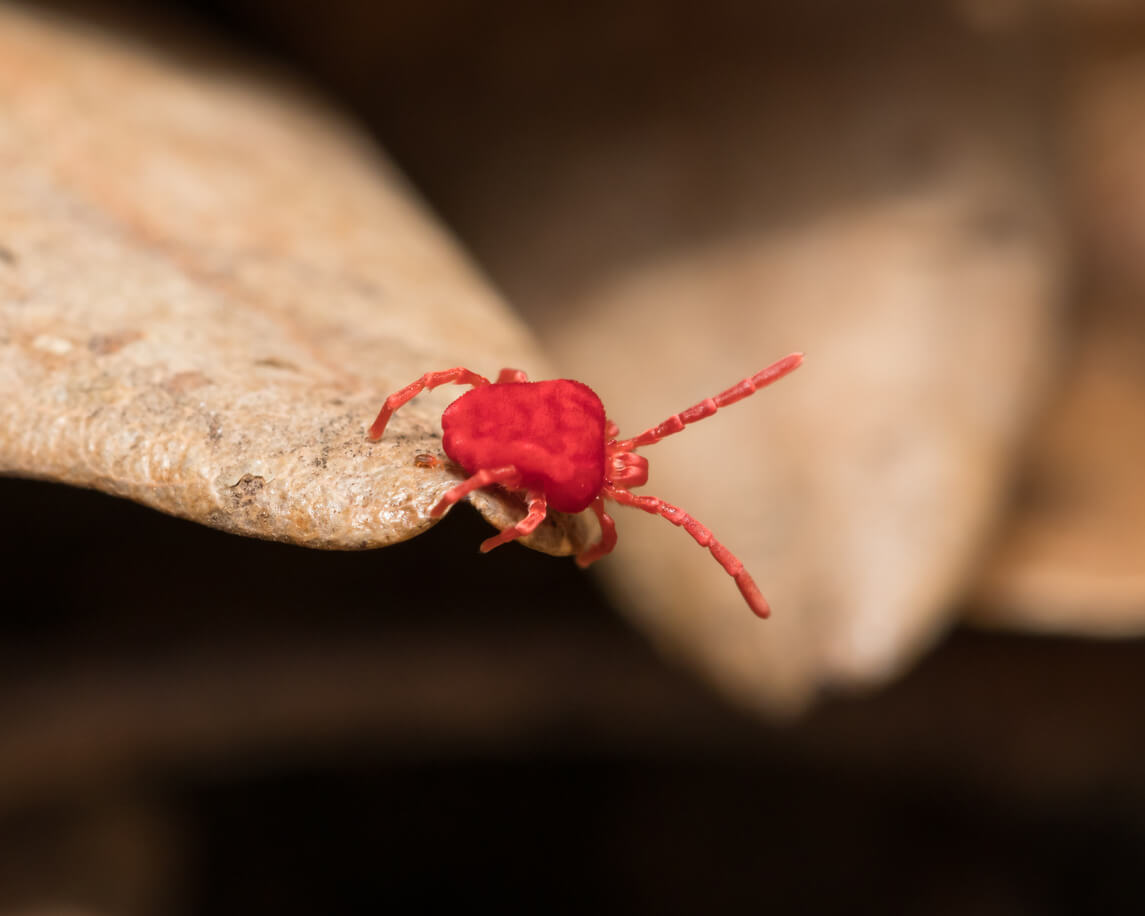
Clover mites are little red arachnids which exist throughout the United States. They are small – about the size of a poppy seed – and thrive around homes and other warm structures.
Related articles: CHIGGERS DUST MITES SPRINGTAILS STRAW ITCH MITES
Clover mites began to surface as a residential pest problem in the years following world war II. This is when the great housing boom began to place plants and landscaping close to houses. Though this new look to homes was nice, it introduced environments that several insects, arachnids and other creatures like as well. This lead to them living alongside homes which in turn lead to them finding there way inside. Much of the demand for pest control service is based on the fact that pre-existing conditions around the home are conducive to insect or pest infestations. The clover mite is such a pest.
CLOVER MITE BIOLOGY
Clover mites are plant eaters. They can live on many types of plants, trees, mold or algae. Clover mites are strong and hearty. They will easily endure a cold, long winter and will emerge on the first warm day of January. Clover mites live on or close to the food they like to eat. Once they find a food supply around your home, they will quickly move onto the siding. They like wood such as cedar, pine or pressboard. They will live in all the cracks and crevices such siding provides. It is likely they will find mold and algae on which to feed in these cracks as well. Clover mites are egg layers and usually lay eggs at least once a year. Though they may lay their eggs on plants, they prefer to do so on behind tree bark or house siding. The eggs will hatch in the spring as larva and begin feeding immediately. The larva will pass through several nymphal stages before reaching adulthood. This is true with most mites. In most areas, their is one generation that reaches adulthood a year. However, this generation is usually hundreds if not thousands of mites. Though small, they will utilize every space they can find. If they are allowed to nest on the side of your home a few years without being noticed, you will probably have quite an infestation by the time you find them!
CLOVER MITE PROBLEMS
Clover mites are a problem for several reasons. Since they are able to live in wall voids, under siding and generally out of view, many times their activity will go unnoticed for several years. During this time they will be reproducing and growing the population. This can happen out of sight since they are able to find food in areas where you don’t look on a regular basis. At one point their numbers will be so large they will have to migrate. This migration usually happens in the spring or during a warm spell in the winter. If you have such a migration expect to see thousands and thousands of red specs running around in circles. This migration may start from plants or trees adjacent to your home. It may be originating from the siding and wall voids of your home. This migration will lead to them getting in around window and door frames. The mites are not looking for anything specific but they will be persistent. These migrations generally happen when the nest areas are filled up and they are simply looking for a new place to live. You’ll know you have clover mites because they smear red if you crush one with your finger. This video does a good job of showing what a clover mite looks like close up, what they look like compared to a persons finger and what they look like after they’ve been crushed by that same finger!!

As demonstrated in the above video, the smashed mite will leave a red blotch. But this red is not blood. Clover mites don’t bite, but they will leave a mess. Their red will stain just about anything you smear them on so try not using the crushing method of control. It will prove to be easier removing them with a piece of scotch tape with light pressure. These migrations may be the first clue you receive that you have a problem. Rest assured it will continue throughout the spring and then appear to pass as summer sets in. And expect another exodus in the fall. These migrations and their populations will continue to grow unless you implement a pest control program designed to get them where they are living.
Although you may find them randomly around the home, in most cases the migration occurs on one side of a home. It may be on the second level coming from the roof, gutters and facia boards into attics and wall voids. It may be on the first floor on the southwest side of the home. It may even be only on the outside of the house and even on only one side. If they haven’t gotten inside yet, treatment will be limited to the outside siding. If they have found their way inside, you will need to attack them at both fronts. It is important to understand that the pest control program you set up will not be done one time. It must be set up to be done at least twice, depending on the level of infestation. Clover mites don’t establish themselves overnight and you won’t be able to get rid of them overnight. In the worst scenario, the treatment will be involve heavy outside treatments followed by heavy inside applications.
CLOVER MITE CONTROL
There are three levels of infestation that most clover mite problems follow. If the first level is detected before it reaches the second level, control is easy. If the house has reached the second level, more treatment is needed but you will be able to get control. The third level of infestation involves the most work and greater time to get under control.
For all levels, expect to do outside applications involving our granules and spray. This video summarizes the process in less than a minute.

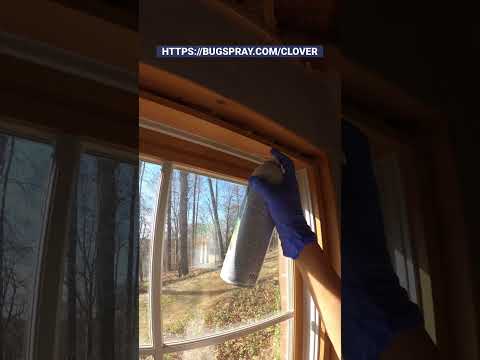
For inside the home, plan on applying our aerosol for nesting mites deep in wall voids, around windows and under baseboards. For surfaces, we have another aerosol or our liquid concentrate. Both need to be applied as fast the mites reappear to stay ahead of the problem and migrating populations.
This next video shows what’s needed inside the home.
CLOVER MITE INFESTATIONS – LEVEL 1
Level one infestations are when clover mites are found around the home. You may be finding them in mulch material like pine straw or wood chips. Any natural mulch decomposes and will create enough food to feed a lot of clover mites.
FIRST APPLY GRANULES
For these areas, its paramount to get the ground treated with MAXXTHOR GRANULES . These are time released and need to be renewed monthly from early spring through summer and into the fall. They will release over 30 days and do a great job of penetrating mulch and other damp areas where clover mites are known to hide. Treat a band around the home covering at least 10 feet out from the foundation. This will eventually give you a “mite free” zone on all sides with dirt, mulch, pine straw or turf. Remember, granules are slow to release but this is by design. Taking away their prime next site will keep them off the home and help get rid of them for good.
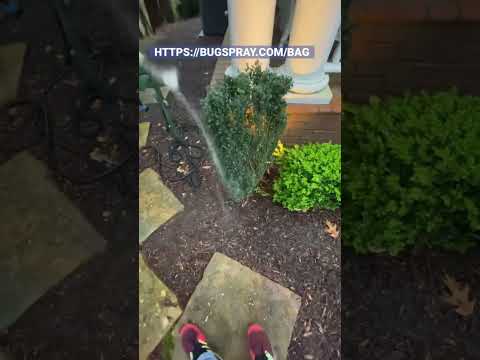
This short video shows you what these look like and how easy they can be to apply.
Expect to use around 1-2 lbs of granules per side of the home. Packed in easy to handle 11 lb jugs, expect to get 2 treatments around the home per jug which is enough for 2 months. Plan on treating once a month during the active season from early spring through fall. Mites are cold tolerant and in the fall is a key time to keep them away from the house so they don’t come back the following year.


NEXT SPRAY THE HOMES EXTERIOR AND LANDSCAPING
Once the granules are in place, spray over the top to get them activated. And keep in mind they will thrive in all kind of mulch, even rocks. Rock or gravel beds around the home are actually excellent clover mite beds. The rock tends to hold moisture which in turn allows algae to grow. Clover mites will readily take advantage of this food supply. Fence rows, pine straw, shredded bark, railroad ties and plants which are contacting or in close proximity of the home will all attract and provide both food and shelter.
The following video shows how to apply the liquid treatment needed.
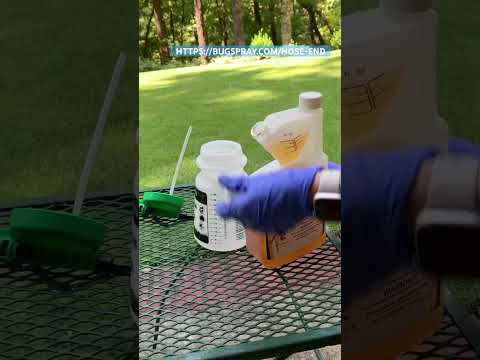
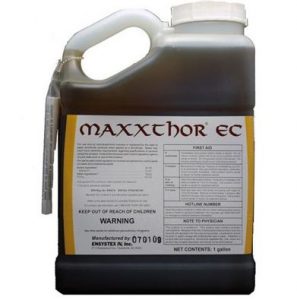
So for the outside of the home, go with MAXXTHOR EC. This fast acting, deep penetrating active will kill visual mites and penetrate their places of harborage so populations will be greatly reduced after just one application. That being said, plan on treating as they return. This may involve a few treatments per week for the first 1-2 weeks until you don’t see any more.
Plan on using 2.5 oz of Maxxthor in our hose end sprayer filled to the 5 gallon line. This means you’ll be applying around 5 gallons of mixed material to the home.
To get the most of your treatment, add SPREAD-X BOOST to your tank mix along with the Maxxthor. Boost is an adjuvant, also known as a wetter spreader or spreader sticker. It basically makes water and the mixture more “slippery” so you get better coverage. Treatments will spread 2-3 times wider and penetrate deeper.
The following short video summarizes why Boost can help deliver your treatment to where it matters the most. And this is extra helpful when treating homes with siding like vinyl, aluminum and stucco where clovermites are likely hiding.

Add no more than the rate you’re applying the Maxxthor so in this case, if you’re adding 2.5 oz of Maxxthor to the hose end sprayer, add 2.5 oz of Boost too before adding water. If you’re adding Maxxthor to a pump sprayer at the rate of 1 oz per gallon, use 1 oz of Boost.
And don’t spray in the middle of the day; treat late in the day close to sunset so the treatment can dry without direct sunlight. UV light on the Boost can stress plants if the temperature is 85 degrees or higher so treat 2 hours or less before sunset to reduce sunlight stress.

Use a good HOSE END SPRAYER if you don’t have a pump sprayer that can reach high enough. These hook to your garden hose and allow you to apply a lot of water and chemical quickly which is important when spraying for clover mites.
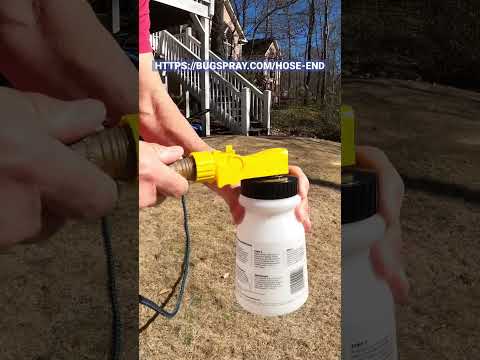
Add 2.5 oz of Maxxthor to the sprayer (and 2.5 oz of Boost if you get it too) and then fill it to the 5 gallon line with water. Use this entire amount around the homes exterior being sure to spray the homes siding as well as a good 5-10 feet of ground out from the foundation. Maxxthor is fine for use on flowers, shrubs, trees and more.
CLOVER MITE INFESTATIONS – LEVEL 2 – OUTSIDE THE HOME
Level two infestations are when the mites have found their way onto the home. If you are seeing hundreds or thousands of mites crawling on the exterior siding of your home, don’t panic. Using the Maxxthor/Boost as detailed above will control them on siding such as brick or stucco. But if you have vinyl, aluminum, stucco or cedar shake siding, you’ll probably need to power inject to reach the ones that could be nesting.
Small pests like clover mites prefer dark, dank areas to live. They can readily find food and shelter in these areas and will often reproduce in large numbers easily which leads to the spring and summer migrations.
In general, Maxxthor/Boost will penetrate any siding and for mild problems, that could solve the issue. But after a month of steady treatments, if you’re still seeing activity on the siding (especially around gutters, windows, doors or the bottom of the siding where its close to the ground), then its time to go to the next level. That means power injecting.
So just how can the Power Injector help? There are many reasons.
New for 2025, the POWER INJECTOR is something we’ve needed for a long time. It was first created to effectively replace aerosol products to help reduce on cost and waste (of throw away cans) but its turned out to be a lot more.
So first, the Power Injector lets you get to control what you’re spraying. That means now you can use the best chemicals like Bithor or Maxxthor up under siding instead of lesser actives found in aerosols. Currently there are no “ready to spray” aerosols which use these top of the line actives.
Second, you get to control the injecting power. Standard aerosols run on 15-20psi. But with the Power Injector, you can power it up to 90psi. This will get you 3-5 times deeper penetration which can be all the difference when it comes to solving tough pest problems with pests nestled deep inside wall voids or behind home siding.
Third, you can use BASE OIL in the Power Injector. Unlike other oil based aerosols that have odors (like FS MP), Base Oil is odorless and since its more refined, penetrates deeper compared to any other option. Add to that the power of Maxxthor and well, you’ll have the strongest mixture at your fingertips for hidden spaces.
The following video highlights these features in less than 1 minute:
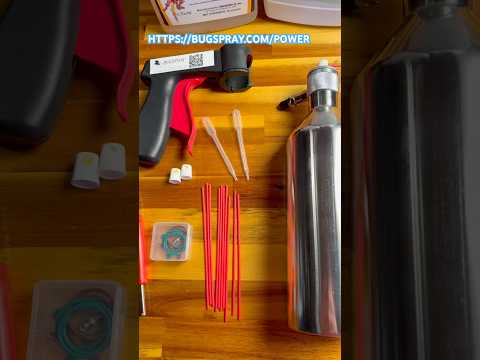
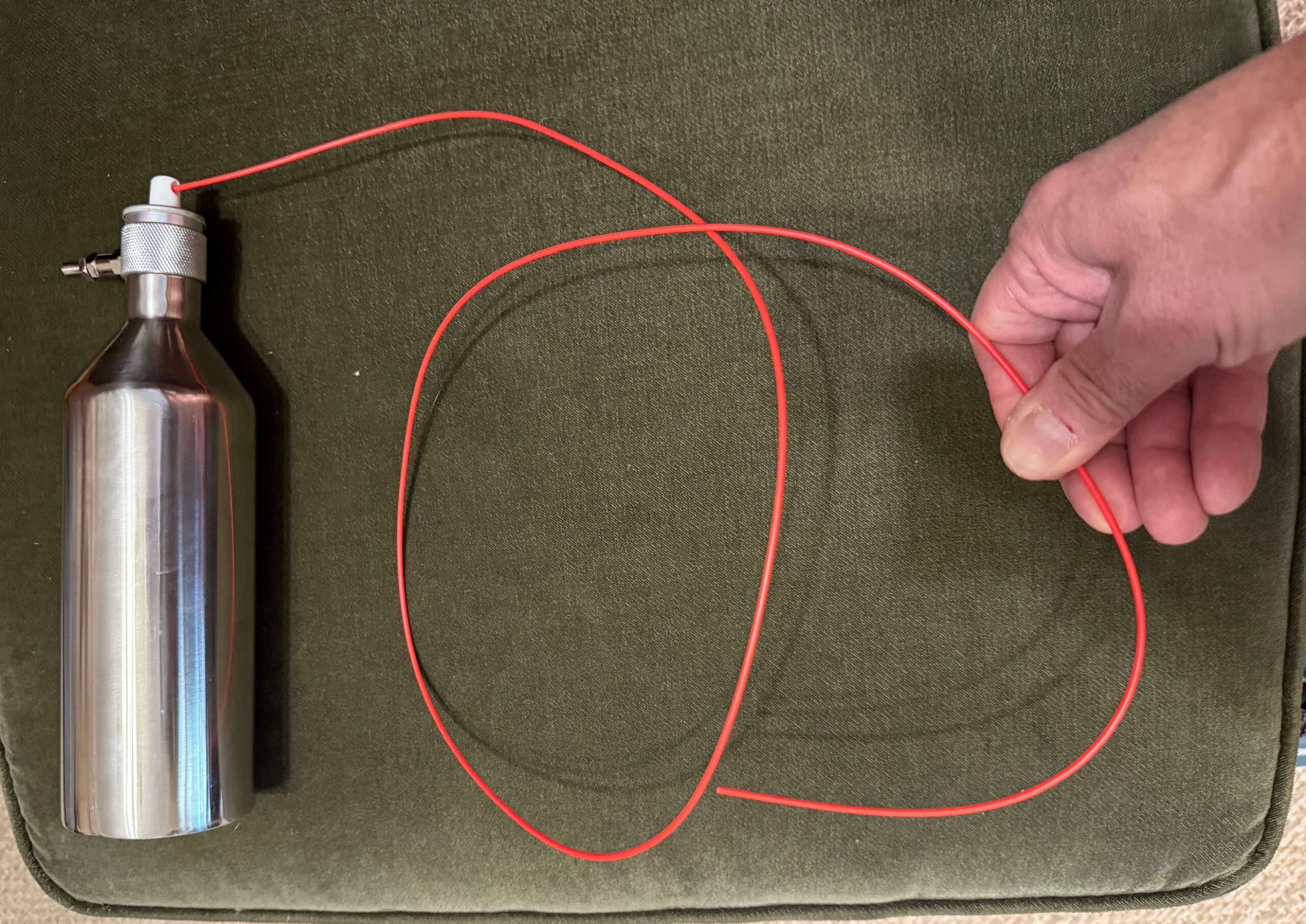
Since the filming of the video above, we’ve added a 50″ long straw that’s now included with the Power Injector. This can really help for certain pests that like to live deeply embedded such as clover mites. Basically the deeper you can inject treatments, the easier it will be to eradicate the problem for good.
Now if you plan on getting Bithor (listed below), the Power Injector can be used with water to make your own Bithor Aerosol. But where you will really benefit is by using BASE OIL and Maxxthor in the tank.
Base oil migrates through wood like no other solvent and so it will carry the active ingredients (Maxxthor) 5-10 deeper compared to mixing it with water. For pests that like to nest in wood, this can be big help.
The following short video explains why Base Oil is so good at enhancing the Power Injectors range:

As the video above explains, Base Oil can really help get deliver your treatments where it needs to reach. So if you’ve had issues under your homes siding, the Power Injector is probably going to be needed. And since you can use it to apply Bithor and Maxxthor, you won’t need any of the aerosols mentioned below.
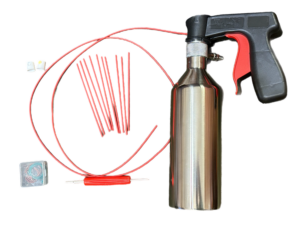
Now if you need extra power, get BASE OIL. It’s available in quarts, 1/2 gallon and 1 gallon jugs. Plan on using 16 oz per tank in the Power Injector so the 1/2 gallon will make 4 cans and the gallon jug, 8 cans. We recommend 5ml of Maxxthor per 16 oz of Base Oil; no more than 10ml. We include a 10ml eye dropper so its easy to add Maxxthor to the tank.

CLOVER MITE INFESTATIONS – LEVEL 3 – IN THE HOME
Level three infestations are when you’re finding mites on the inside of the home or apartment. This generally happens when the outside population has gotten so large they are foraging inside as their population migrates seeking new places to live. This can happen anywhere with some of our regular customers include large apartment buildings, hospitals and other cement structures. Typically these cement structures have a lot of areas for them to nest well hidden and out of view which clover mites find attractive. Typically large structures have large roof tops and clover mites can live under the shingles as well as in tiny cracks that develop in brick and mortar joints. Algae and mold will readily grow in these locations and clover mites will easily find this food and take up residence out of sight. From there some will inevitably end up inside the structure and in most cases, it will start out small with just a few being seen. And this can happen on homes too.
So for inside the home, first try to isolate their main route of entry. Are they coming in from up high, say the roof? Or are they coming up from the ground, under siding and then getting in at the ground floor? Is it a ledge, balcony, porch or deck that has plants where they are thriving? Maybe it’s a roof top garden or a leaky roof? Identifying any “hotspot” can help but then you need to treat their route too because as they expand, they tend to create pocket nests along the way. And if you don’t get them all, these small hidden nests will keep generating new waves of migrating mites.
So if you’re seeing them outside, be sure to watch if they are emerging from the siding, from the ground, from behind a window frame or shutter, etc. The two most important things to watch for is how high they are actively nesting and which side or sides of the home they are most active. If they are inside, watch to see if they are coming from the rug, the wall, the ceiling, a window frame, a door way, electric outlets, or other entry point.
Again, this information will prove critical for the best treatment results. By knowing their entrance points you will be able to treat them directly. This will enable you to get results quicker. Controlling level three infestations is more difficult as more treatment methods and material is needed. You will need to follow the guidelines outlined above:
1) Treat plants and/or mulch areas that may be harboring populations with Maxxthor/Boost.
2) If you are finding them throughout the yard, treat the entire area first with the Maxxthor Granules and then spray over the top with Maxxthor/Boost as explained above.
3) Spray the side of the home to at least a height above that which the mites are crawling. Use the Maxxthor for this application. If you’re up high in an apartment building, reach out every window you can and treat with one of the aerosols listed below.
Since level three infestations mean the mites are living in the siding and/or the walls of the house, the level of nesting can vary dramatically. Although it may only be one level deep, such as under the wood shakes or around a window frame, in most cases they will have gotten to several depths including wall voids. This means you’ll probably have to POWER INJECT.
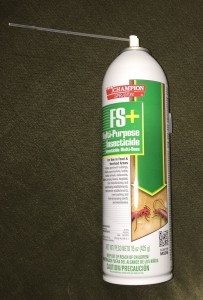
So for inside the home, the Power Injector can really help by delivering treatments under baseboards. And if you’re getting one for outside siding, plan on using it inside too if they’re active. But if you have a light issue inside, you might get treating cracks and crevices with FS MP AEROSOL. This short video shows how to use it.
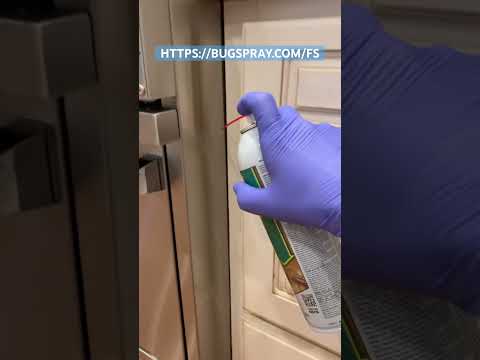
FS MP comes with a thin straw and like the Power Injector, will help you deliver it where clover mites like to nest. Initial treatments will kill insects quickly but after it dries, it will take 1-2 days to affect them. This means its normal to see them following a treatment 2-3 days later. And if you’re seeing activity after 3 days, treat again. The only reason to be seeing them in the areas you spray with FS MP or the Power Injector is because you didn’t reach deep enough into their nests. FS MP will migrate into wood up to 1″; the Power Injector with Base Oil can penetrate 2-3 inches so if they’re nesting in sill plate or studs in the wall, you may need to do some deep injecting.
SURFACE SPRAY FOR BASEBOARDS, WALLS AND CEILINGS
In theory, a thorough treatment with the Power Injector or FS MP should alleviate the issue assuming you reach all their nests. But this can be challenging. The key is to think small.
In other words, any time you see more than one close to a baseboard or window or AIR VENT, its a sure sign they are nesting together at that key spot. Rogue roamers are not always so helpful because unlike other small pests, clover mites can roam 40-50 feet in one day. So if you see one on the ceiling, it could have come from the ground on the other side of the home. But if you see 2-3 at the front DOOR SADDLE, it usually means they are nesting right there!
Now to stop these migrating adults from nesting in new locations, you’ll need to deal with activity on the walls and ceilings and sometimes even the floor and baseboards.
So if you get the Power Injector, you can use the Bithor listed below and the surface spraying nozzles to lightly mist all surfaces. But for small areas, MULTIPURPOSE INSECT KILLER is both handy and low odor too. Lightly misting any surface will kill active mites and help reduce them from returning in the future. This video shows how to apply it:
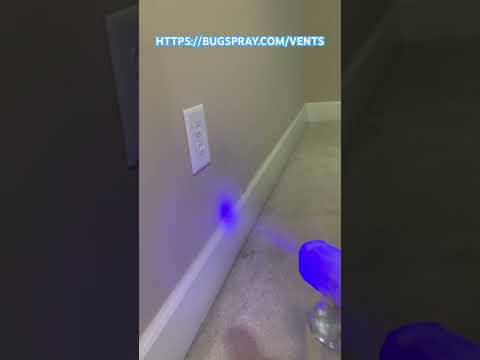
As you can see, treating is easy and should be done as needed. Again, when first starting, plan on retreating every few days till you aren’t seeing them in the area.
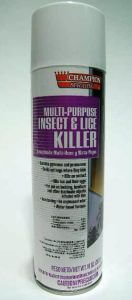
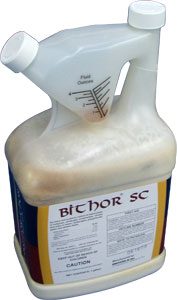
For longer lasting residual and a more cost effective approach, get BITHOR. Mixing it 1.5 oz to a gallon of water in a pump sprayer or 1/2 oz in the Power Injector, Bithor can be sprayed on carpeting, baseboards and even furniture.
The following short video explains how safe it is to use and why its ideal for inside the home applications.

Bithor can be applied using any good Pump Sprayer but for walls and ceilings, get the MINI MISTER (seen below).
MINI MISTER FOR WALL TREATMENTS
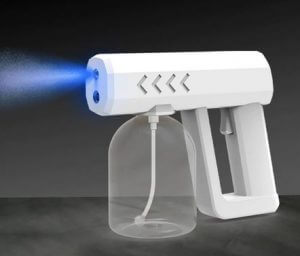
Now if you’re not getting the Power Injector, consider the Mini Mister. Its electric so no pressurizing needed. Designed for inside surface treatments only, its handy and helpful as the following video shows:

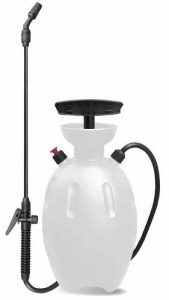
Alternatively, a good PUMP SPRAYER will work for getting Bithor applied.
Bithor is odorless, fast acting and should be applied once a month until you see no activity.
For cracks and crevices, use the FS MP. The following video explains how these two products work together to solve tough pest problems with Clover Mites.
WHAT ABOUT ELECTRIC OUTLETS, AIR VENTS AND LIGHT SWITCHES
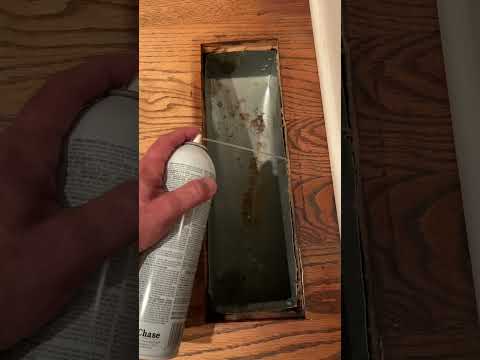
Now if the walls and ceilings have been surface sprayed and the baseboards power injected but you’re still finding rogue mites up high, they could be coming from electric outlets, under light switch covers or from Air Vents. These areas are direct passageways to wall voids and why they often times need to be treated. And for any ceiling or wall entry point, a Dust formulation is usually best because it’s dry AND will last 1-2 years compared to the liquid options.
The following short video shows how to dust these areas for long lasting protection.
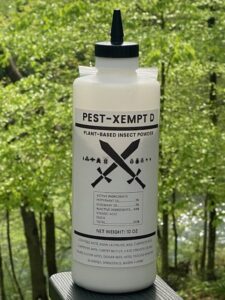
Xempt Dust used under home siding can last 6-12 months, even after its been wet. But in the home where its dry, applications can last 1-2 years on average. This long term protection combined with its ability to repel target pests makes Xempt Dust the ideal solution for these key areas.
CONTACT US
Give us a call if you need further help. Our toll free is 1-800-877-7290 and we’re open Monday through Thursday, 9:00 AM to 4:00 PM (Eastern Standard Time).
Email questions here: https://bugspray.com/about-us/contact-us
Order online and get a 5% discount! We ship fast with 99.9% of all orders shipping within 1 business day!!
Kay says
I believe I have identified my “bugs” as Clover Mites. Level 2 infestation probably because they come in around my vanity in the bathroom and around the mirror on the wall. However, I have a question:
When they are “squished” it is definitely brown (not red). Could this be another species?
Tech Support says
Sorry for not replying sooner but our site went down and for some reason your inquiry was logged as “spam”. As for what pest you have? I’m sticking with some species of clover mites. You see, there are many variations of this pest and some are in fact brown. The real key is how they move. If you see them moving in a circular fashion, quickly, with no real path or specific direction, they’re most likely some species of clover mite. And yes, some can be red but many are brown as you describe.
For now I’d start treating with the Maxxthor. If in fact they haven’t gotten into the home yet, this will both control them and keep them out.
Maxxthor EC: https://bugspray.com/catalog/insecticide/liquid/maxxthor-ec
Maryann says
Are these clover mites dangerous to cats?
Tech Support says
In general they’re not a threat to people or animals. But if you are sitting or walking over areas where this mite is active and some get on your skin or a pets skin, they can cause an allergic reaction that may need some type of skin treatment. I’ve never heard of this being serious but over the years have seen the rash and know the people who have had the reaction so it’s not “hear say”. Like most any insect, if enough of them get “on you”, they can cause issues. So if your cat is active in areas with lots of clover mites, something could happen if they have the allergy.
Amy says
I think I may have clover mites. I’ve found them in the kitchen on the countertop and backsplash. But, I never see more than 6 – 10 of them at a time. So, it doesn’t seem like a major infestation. Does this mean that maybe it isn’t clover mites? Because from what I’ve read above, by the time they actually make it inside a house there should be a lot of them. Thanks for your time, help and information.
Tech Support says
Actually, if you’re seeing 1-2 a day, you’ve got a problem. In most cases, what you’re seeing represents a very small % of what has made it’s way inside. At this point I advise you do a good outside treatment as well as some inside treating because whatever this pest turns out to be, it will only get more and more active until you treat. For now, I recommend the FS MP inside. For the outside, you’ll need to apply some of the Maxxthor Granules and spray over the top with some Cyonara RTS.
FS MP: https://bugspray.com/catalog/insecticide/aerosol/fs-mp-insecticide-15-oz-aerosol
Maxxthor SG: https://bugspray.com/catalog/insecticide/granule/maxxthor-sg-granules
Cyonara RTS: https://bugspray.com/catalog/insecticide/liquid/cyonara-32-oz-rts
Heather says
I have noticed hundreds of tiny pin sized redish brown bugs in all of my window seals even the 2nd story. Have been getting what looks like bites also. Could this be clover mites?
Tech Support says
This sounds exactly like them. I suggest you start doing some of the treatments listed in our article. Keep in mind the inside treatments will work but the mites will keep coming back if you don’t treat the outside too.
Heather says
@Tech Support:
So they can leave “bites”?
Tech Support says
As I stated above, people and pets can have reactions to these mites if you get some on your skin. Now whether it’s due to them biting, stinging or just crawling is unclear and will vary from person to person. That being said, there is no doubt many people do get skin conditions directly related to these mites. Here’s a paraphrase from the comment above:
“In general they’re not a threat to people or animals. But if you are sitting or walking over areas where this mite is active and some get on your skin or a pets skin, they can cause an allergic reaction that may need some type of skin treatment. I’ve never heard of this being serious but over the years have seen the rash and know the people who have had the reaction so it’s not “hear say”. Like most any insect, if enough of them get “on you”, they can cause issues…”
Alan says
We have a level 3 infestation. We are finding random mites strolling about our home. We had an exterminator come to spray outside, inside, and in our basement. We also were told to put baby powder around our windows. This seems to be helping as we are seeing dead ones in the powder. How long until we see more permanent results?
Tech Support says
No way to tell. Like springtails, what you’re seeing are the migrating masses. So if you don’t get them where them where they’re nesting (the root of the active ones you see), there will be a never ending supply of new mites entering your home indefinitely. What I can say is that if you’re service company is diligent and persistent, making sure to treat in wall voids, the mulch and any place these guys might be living, you can lick them. But what we find commonly happens is that not enough product is applied and that many key spots will be missed during the process. The net result will be less activity followed by flareups that seem to come at the worse possible time. And this pattern can go on for years.
To help prevent this scenario in your home, spend time inspecting the house – especially just outside around the perimeter of the structure – to see if you can locate where they’re most active. Find these spots and their main nest won’t be far away. And if you get their main nest treated well enough, you can reduce their numbers enough to where few if any will forage inside.
Diana says
For about a week or so I’ve been seeing these little microscopical bugs, reddish, thought they were baby lady bugs, because I see a lot of lady bugs in our home as well.. Finally I go to our downstairs (basement) spare room, and the widow/window sill has, I would say, hundreds of these things… tried smashing them and they left a red stain, so I vacummed them… Obviously I read this and I know what they are..they seem to be coming from that room and I see a few around my dining nook window. I guess I have a level 3? If so, are these pests going to destroy my house? Or are they harmless? Terminix came tuesday and obviously didn’t see them (useless).. So what should I do? Removing vegetation seems like a large task because our lawn is enormous and all I have is grass anyway, at least around that window downstairs…. I haven’t really inspected the outside yet either.. So do you think this is gonna be an expensive fix? Should I be mortified and worried?
Tech Support says
Clover mites won’t cause damage so there is no need to be mortified or worried. That being said, I’ve dealt with many homeowners that have felt this way because they’re not comfortable having the mites crawling around inside their home. Personally I agree and if I had them inside my home, I’d be treating extensively to get rid of them because I know my wife would mortified and worried!
In fact this is why I treat around my home on a regular basis – even when I’m not seeing anything – so that I don’t get any problems. By treating every month or so, insects can’t establish themselves which means I won’t have to contend with inside infestations like you now very much appear to have.
So what should you do? Well, if you want them gone, you should start inside by treating all the cracks and crevices with some FS MP. The FS MP will kill them on contact and where applied, they won’t return.
FS MP: https://bugspray.com/catalog/insecticide/aerosol/fs-mp-insecticide-15-oz-aerosol
But the inside treatments alone will only be a “band aid” and not a real fix. To fix the problem, you’ll need to start spraying the outside of the home with the Maxxthor and applying Maxxthor granules to the turf. And you’ll have to do this for a good year before you see long term benefit. Similar (time wise) to what it took for the problem to get this far so too will the treatments meaning the mites won’t be gone overnight. But if you get with the preventive treating like I mentioned, you’ll eventually get their levels low enough to where you won’t be seeing them anymore.
Maxxthor EC: https://bugspray.com/catalog/insecticide/liquid/maxxthor-ec
Maxxthor SG: https://bugspray.com/catalog/insecticide/granule/maxxthor-sg-granules
VIRENDRA PATEL says
Hi,
I just found today that on the outside wall which is facing sun all day has migration of red bug which look like clover mites as per your description. I also found them inside of the house on the wall with 3 windows. We put some plants over there like rose, tulsi and bamboo. Rose and tulsi are dried up during winter.
Can you tell me if it is the same what I thought? And which level of control should I use?
Thanks,
Virendra
Tech Support says
No doubt these are clover or spider mites and at this point, you need to treat the outside with the Maxxthor Granules first and then spray over the top with the Maxxthor.
For inside the home where you see them foraging, you’ll need to treat all the cracks and crevices with FS MP aerosol. If you’re lucky, they’re not yet nesting in the wall voids and these treatments will knock them out before they get established.
But next spring or later this year if you continue to find them “coming out” inside the home, you’ll need to dust using the products listed in our article above.
Maxxthor SG: https://bugspray.com/catalog/insecticide/granule/maxxthor-sg-granules
Maxxthor EC: https://bugspray.com/catalog/insecticide/liquid/maxxthor-ec
FS MP: https://bugspray.com/catalog/insecticide/aerosol/fs-mp-insecticide-15-oz-aerosol
Cathy says
We have a level 3 infestation of clover mites. We also have a 5 month old baby and a golden retriever. Are the sprays and granules safe for the baby and the dog? How often do we need to apply the sprays? The mites are around most of our window sills and are all over our wood overhang and jacuzzi in the backyard. They seem to like the jacuzzi cover; any ideas for treating that? Thank you so much for your help!
Tech Support says
First and foremost, the treatments recommend in our article are safe for people and pets as long as you follow the guidelines we have detailed in our safety video’s here:
Safety Videos: https://bugspray.com/safety-first-videos
These videos also appear on every product page, down toward the bottom, so you can get specific guidelines for specific products. It’s mostly common sense like keeping the pets and kids away from the area when you treat and letting the treatment dry before they come back. Remember, these products will be diluted down quite a bit so they will present little to no hazard once applied and dry.
As for the frequency of the treatments; the Delta-Gard Granules should be applied once a month during the warm season for the first year; every 2 months there after. Liquid treatments with Maxxthor should be done on the exterior of the home as frequently as once a week as long as you’re seeing activity. Now if you treat and you don’t see any for two weeks, you would wait two weeks and then treat. Eventually, when none are returning, you’d retreat once a month.
Maxxthor SG: https://bugspray.com/catalog/insecticide/granule/maxxthor-sg-granules
Maxxthor EC: https://bugspray.com/catalog/insecticide/liquid/maxxthor-ec
As for the jacuzzi and it’s cover; no doubt they’re nesting within the frame that is supporting the tub so all of that will have to be treated with either the Maxxthor or the FS MP aerosol. I’ve seen where they’re live within the wood cracks and crevices so all of those areas need to be finely treated with the FS MP. The cover is attractive to them because it either collects heat or mold. So for starters, you should clean it down with Sanni Shine. This will remove the food on which they’re feeding and prevent any algae or mold from returning.
Sanni Shine: https://bugspray.com/sanitizer/liquid/mold-blaster-sanni-shine
Lastly, treat all cracks and crevices you can with the FS MP Aerosol. Once they get inside they’ll start nesting if left alone and to do as they please. If these areas are humid and have moisture problems, wipe down all surfaces with the Mold Blaster as this will help remove any food for the mites to eat.
Denise says
I have these red dots in my window sills they are around my all my windows on the first and second level of my house. They are around my garage too. I sprayed bug spray. Should I call Orkin or is it something that we can handle? Do we need to take the plants up from out front of our house. Please help me. I can’t take it; they’re creeping me out. I’m scared because I have young kids that are always in the window. What should I do?
Tech Support says
For now I suggest you read our article and after learning about clover mites and how to treat for them you should be able to tell if you want to do the work yourself or hire a service. Remember, hiring a service will be costly. Of course it would be easier but if you’re a “do it your-selfer”, then doing pest control is one of the easiest ways you can save a lot of money.
As for the treatments; based on where you’re seeing them the FS MP will be a good option and then the outside with the Maxxthor and the Maxxthor. Give us a call if you need further assistance or have questions about any of the products or the treatments involved. Our toll free is 1-800-877-7290.
FS MP: https://bugspray.com/catalog/insecticide/aerosol/fs-mp-insecticide-15-oz-aerosol
Maxxthor SG: https://bugspray.com/catalog/insecticide/granule/maxxthor-sg-granules
Maxxthor EC: https://bugspray.com/catalog/insecticide/liquid/maxxthor-ec
Angela says
Came back from out of town to thousands of the clover mites. They are on the walls, the lamps, the furniture, just about everywhere I look. In all rooms of the apt. Called the landlord no call back yet. Any suggestions if they are in my blankets and towells and clothes? I can’t spray everything I own with bug spray!? Help! I only slept like two hours last night.
Tech Support says
In fact you can spray everything you own with bugspray. You just have to be careful of which one you choose. That being said, this would not be the most efficient way to go. So for now, here’s our suggestion.
First vacuum. These guys can be sucked up without making a blotchy red mess if you have a powerful vacuum. Next, get some Multi Purpose Insect Killer. Its water based and can be sprayed on any surface without risky leaving a stain.
Multipurpose Insect Killer: https://bugspray.com/catalog/insecticide/aerosol/multi-purpose-insect-killer-10-oz
Retreat as needed and if you want to stop them for good, get the FS MP Aerosol for all cracks and crevices:
FS MP: https://bugspray.com/catalog/insecticide/aerosol/fs-mp-insecticide-15-oz-aerosol
Sophia says
There are clover mites where I work. Four years ago I saw them crawling around the window sills and on the mail that was dropped through a mail slot onto the floor. (I collect the mail in a box during the spring.) I called an exterminator and they have sprayed the outside monthly April – September but stated that they need to cycle out and couldn’t treat the inside. They did not appear last year, I assume, due to the winter snow. I have seen sprays online for inside, but don’t know exactly which cracks and crevices they reside in as the building has so many. Will they migrate to other locations in the building. Can I take them home with me (i.e. do they live on people)?
Tech Support says
When clover mites start migrating around, they’ll get on anything. And once they’re on something that you take home, you can definitely bring some with you. Now do they bite or sting? No. But some people can have allergic reactions to them so in general, you don’t want them on you if you can avoid them. And when you consider how messy they are with their red “smear” blotches it only reinforces the fact that you shouldn’t allow them to live on or in any building where you work or reside.
Now once they start migrating, it’s only a matter of time before they end up on other buildings if these buildings are within the migration range of the main population. So the key is to spray the ground and building sides heavy enough to get any that come out with the goal being to intercept them before the migrate to new buildings.
Additionally, spraying the other buildings in the area can really help. Ultimately if you get their main nest sites, there won’t be any need to spray inside. But if you’re finding them around windows or doorways, spraying with the FS MP into any crack and crevice will definitely help.
FS MP: https://bugspray.com/catalog/insecticide/aerosol/fs-mp-insecticide-15-oz-aerosol
So in the end, if the service company you’re using is spraying enough of the area, you should expect to knock them out. Just remember these mites can live really high on any building so be sure and inspect all floors for activity.
Steve says
We have recently discovered clover mites on the inside of our window sills. We have been vacuuming up the mites that we find inside. We sprayed the exterior of our home with “ortho-bug-be-gone-max”. Will this kill the clover mites like the Maxxthor will? Also, how likely is it that the clover mites will escape the vacuum cleaner (it’s a shop-vac)?
Tech Support says
Most any insecticide can kill any given insect when one is able to directly spray the target pest. The real difference between something you purchase at a home center and the products we sell is in the length of what we call “residual”. This is the time following the treatment where the product applied will continue to work and affect target pests. And when we compare most any common home center product to what the professionals use (the products professionals use are the only products we carry), what we find is that there is really no comparison. Yes, the product you sprayed will kill mites when you first apply it so when that comparison is made, it will be “equal” to the Maxxthor. But in most cases the mites will be able to thrive on any treated surface just a day later because the residual from the product you applied is not strong enough to last more than a day or two on any treated surface.
Now when we look at the residual from the Maxxthor what we find is that a treated surface might remain mite free for many weeks. And that means when the mites come back (and they surely will), the Maxxthor will still be hard at work killing them and helping to keep their numbers in check. But in the end, just spraying the window sills with something as strong as the Maxxthor won’t solve the problem because if you don’t treat outside with the Deltaguard Granules, the mites will just keep coming inside as their migrate over and over from their prime nest site.
Maxxthor EC: https://bugspray.com/catalog/insecticide/liquid/maxxthor-ec
Maxxthor SG: https://bugspray.com/catalog/insecticide/granule/maxxthor-sg-granules
As for vacuuming; we always recommend using a vacuum which has a bag to contain the rogue mites. Most of the shop vacs I know have a holding container and these containers are not nearly tight enough to contain most insects and certainly not clover mites. No doubt many will die in the dry, dusty environment but since these mites are so messy, once they start migrating out of the shop vac and into the area around where you keep it, you could have a nice little mess needing to be cleaned up as well as a blossoming new nest site if you’re not careful.
Kellie says
We have recently noticed a serious clover mite infestation in and around our house. I am so thankful to have found this site. It gives me hope that we can overcome this problem. My only question is about outside treatment. We have only grass around our house. So when we do use the Delta Gard and Maxxthor around the perimeter, will watering and mowing the grass dull the effectiveness of the product? What are your suggestions?
Tech Support says
Clover Mites thrive on plants and many times the original source of the problem is grass clippings, mulch, thatch or just the plant itself. From there they’ll migrate onto and eventually inside the home. So to solve the problem, you need to treat the ground with the Maxxthor Granules and spray with the Maxxthor over the top. You should also spray the foundation good and make sure you spray high enough since these mites will many times crawl up to the second level of any structure.
Maxxthor SG: https://bugspray.com/catalog/insecticide/granule/maxxthor-sg-granules
Maxxthor EC: https://bugspray.com/catalog/insecticide/liquid/maxxthor-ec
Now will normal watering and mowing deter from the treatment? No. In fact, keeping the grass low is good as this decreases new food for the mites to eat. And watering is good because that’s what gets the treatment down into the ground where it’s most needed to kill off the developing mites.
Teresa says
I am currently treating the lawn for springtails. We now have clover mites. Will the Maxxthor granules and cyonara work on the clove mites or do I need to use the Maxxthor granules as well?
Tech Support says
No need to use the Maxxthor as long as you’re applying enough of the Maxxthor and Cyonara. In other words, it’s imperative that you’re treating an area much larger than just alongside the foundation if you want to get these pests so as long as you’re covering enough of the turf, just the Maxxthor and Cyonara will be needed.
Maxxthor SG: https://bugspray.com/catalog/insecticide/granule/maxxthor_sg.html
Cyonara RTS: https://bugspray.com/catalog/insecticide/liquid/cyonara-32-oz-rts
Kristi says
We have what I believe is a level 3 infestation. They first appeared in the spring then came back last week. I see them around all our window ceils and patio door and in the kitchen. They are also in the basement but we can not tell where they are coming from there. We found hundreds of them on a sweatshirt in the middle of the basement at the bottom of the stairs on carpet, which in next to our utility room that is not carpeted. Again, because they don’t seem to have a trail like ants, we can’t see a point of entry. We live in North Dakota and it is freezing here so I’m sure (hoping!) they are looking for shelter. With that being said, if they are in the siding, will the cold kill them off? Also, I saw the comment about baby powder and we heard the same with borax soap so we have put borax around all the window ceils and floors under the windows. Have you heard of this working over time? Along with spraying outside and the borax the numbers are way down but after reading all this I guess we may be fighting these for sometime 🙁
Tech Support says
Baby powder and borax will not help. No doubt they’ll kill some that move into the living spaces but this is not the crux of the problem but rather a symptom of the problem. And as explained above, the problem is that you have a breeding site which is generating thousands of clover mites. And as their population grows, they’ll need more and more areas to live which will lead to them getting inside and cause more and more to be visible like you’re seeing now.
So based on where you’re seeing them at this time, no doubt they are currently breeding in your turf, flower beds, mulch islands, house siding and wall voids. And I say this because as our article above explains, this pest will normally live outside in the turf, under thatch and basically around most any type of vegetation that can be found around structures. But when their populations growing, they’ll migrate onto structures and from there, inside these very same structures and no doubt that’s what you have going on right now at your home. Now what this means is that if you want them gone from your living space, you must get rid of them in your wall voids, exterior siding and turf. By eliminating them in the locations they’re using for breeding, you’ll pretty much eliminate the chance of any getting inside which ultimately is the goal.
So to accomplish this goal, I suggest you start by getting a good treatment of Maxxthor Granules applied around the home.
Maxxthor SG: https://bugspray.com/catalog/insecticide/granule/maxxthor-sg-granules
Next, spray over top with Maxxthor.
Maxxthor EC: https://bugspray.com/catalog/insecticide/liquid/maxxthor-ec
Next, if your home has vinyl siding, masonite or basically any kind of “layered” siding under which mold and algae can grow and clover mites can nest, you’ll need to dust said areas with Deltamethrin Dust.
Delta Dust: https://bugspray.com/catalog/insecticide/dust/deltamethrin-dust
As for the living spaces; dust all exterior wall voids with the same Deltamethrin Dust by drilling small access holes and then puffing the dust into the space using a hand duster. Since you’re finding them on window frames, it means they’re residing in the wall spaces around the windows and these areas must be dusted to eliminate the clover mites and prevent future nests from forming. The good news is that once these areas are dusted, the treatment will last a good 6-12 months so you don’t have to reapply the dust nearly as frequently as you will have to spray and spread granules.
Hand Duster: https://bugspray.com/equipment/dusters/crusader
Lastly, treat any living spaces where you see them with FS MP Aerosol. FS MP is quick acting and highly repellent.
FS MP: https://bugspray.com/catalog/insecticide/aerosol/fs-mp-insecticide-15-oz-aerosol
Now even though it’s cold outside you need to treat the exterior with granules and spray at least once before winter settles in. This will really help protect you all winter long because with clover mites, they’ll get active any day the temps climb up into the 40’s. And if you do a treatment now, it will most likely last well into the winter so that you’ll have a barrier in place working to control any that come out when it warms.
You should also dust under the exterior siding and the inside wall voids where activity is found. As stated above, these applications will last 6-12 months so what you do now will work all winter long and into the spring which will really help by eliminating this space as a nest site.
Lastly, the FS MP should be applied as is needed. Typically treatments can last a few weeks but if you find new activity in a few days following an application, treat again. Its important that you get “ahead” of the invasion by spraying as fast as they keep returning.
SR says
Hi – Yesterday I saw a number of red bugs crawling out from beneath my mattress. I have seen 1 or 2 in the past 2 weeks but when I lifted my mattress yesterday, I saw a lot of them underneath along with black moldy substance along the edges of the mattress. But I do not see them anywhere else in the house. Please let me know if these are bed bugs or clover mites.
Tech Support says
I would say the odds are high these are bed bugs. I say this because you’re seeing them focused in one location and that area is a mattress. Also, young bed bugs will look red and be tiny, close to the size of a clover mite, so the two are easy to confuse with one another.
Now before you do anything, I suggest you read our bed bug control article here:
Bedbug Article: https://bugspray.com/article/bedbugs
One big thing to understand with bed bugs is that if you have them isolated like you do, treatments can be very effective. But if you move too quickly meaning that if you start pulling the bed apart and randomly cleaning without treating at the same time, the odds of scattering them all over the house will become very real and this will make eradicating them for good difficult.
At this time I suggest you get some of the products listed in our article so you can knock them out before they spread. Give us a call toll free at 1-800-877-7290 if you need further help.
Mitch says
It’s November in Minnesota and I have a level 3 infestation. How will the upcoming freezing weather affect treatment you have described in this article?
Tech Support says
Freezing temperatures tend to prolong or “enhance” most pesticide treatments that are done in cold temperatures. Here’s why.
In general, heat is the leading reason most pesticide formulations don’t last as long as they might. Combine temperatures of 65 or more degrees with a lot of high humidity, and it’s a wonder todays actives can last 30 even 30 days.
But when it gets below 50 degrees, things change. For starters, the relative humidity doesn’t affect the treatment nearly as much but more importantly, the cold literally “ices” the degradation process that breaks down traditional pesticides. The net result is a treatment that might normally last 30 days could very well last 60-90 days. So overall, the cold will enable you to get a longer lasting residual or putting it another way, more “bang” for your buck.
Now lets take a more specific look at the treatments for clover mites.
For the outside applications which should consist of Maxxthor granules and Maxxthor spray, the colder temps will allow this application to last a good 60 or more days. Now keep in mind that the mites will probably be shut down on many of these days too because once it gets too cold, they won’t come out. But when it warms (which will happen from time to time throughout the winter), the treatment will kick into place and offer up some much needed protection for sure. This way they’re not able to find your home and successfully migrate inside which will can happen any time during the winter months.
Maxxthor SG: https://bugspray.com/catalog/insecticide/granule/maxxthor_sg.html
Maxxthor EC: https://bugspray.com/catalog/insecticide/liquid/maxxthor-ec
The same benefit will be derived from foundation treatments with the Maxxthor. So this way if you treat your foundation now and 45 days from now there is a warming trend, you’ll have some Maxxthor in place to help protect the home in case the mites start moving about. And keep in mind that clover mites are one pest that will definitely get active in cold temps. They commonly forage around once temps 45-50 degrees or more so they are quite hardy and more resilient than many other insects. For this reason clover mites are one pest where extra cold weather protection can be a big help.
Lastly, the inside treatments won’t really benefit from cold temps. That means if you treat wall voids and inside cracks and crevices with FS MP Aerosol and/or Deltamethrin Dust, they’ll last like normal. That means wall voids treated with the dust will be protected for at least 3-6 months and living areas treated with FS MP will probably get the standard 30 days of protection from the application.
FS MP: https://bugspray.com/catalog/insecticide/aerosol/fs-mp-insecticide-15-oz-aerosol
Delta Dust: https://bugspray.com/catalog/insecticide/dust/deltamethrin-dust
Hand Duster: https://bugspray.com/equipment/dusters/crusader
Matt says
My wife and I built a new home (in Iowa) and moved in July of 2011. In the spring of 2012 we noticed mites on the inside of the basement windows on the south and west sides and a few in the upstairs tub directly above one of the basement windows on the south. Again in the fall of 2012 in the same places but not as bad.
Now it’s January of 2013 and on the days it’s above freezing, they’re back. Is it possible the mites made it inside during the construction process and are trying to get out? I haven’t noticed any outside but our cement board siding is painted a dark color and would make it hard to see them. I’m thinking they are penetrating around the basement windows. The windows are large and are not far off the ground. My wife is very (very, very) sensitive to any odors, so any treatment that has odor, especially on the inside, will put me in the doghouse.
Same treatment as a level 3? Cold weather outdoor treatments apply as in the comment above? Is there any odor to the Delta Dust or FS MP? If there is odor associated with them and we treat just the outside, including the foundation, sod, etc., and do it 5 or 6 times a year, will we eventually “catch up” with the ones that are (getting) inside? I know Maxxthor can be used on the inside and it’s odorless but is it really? She also has a nose like a bloodhound!!
Tech Support says
First, it’s important to understand just what’s happening right now with the clover mites. So lets start at the beginning. And this beginning I’m talking about is before the home was even built.
So before the home was constructed, clover mites were no doubt living on the ground where your house now resides. And once the home was constructed and the landscaping took on shape, they were able to re establish themselves like they were before the land was cleared and construction began. And during this “repopulating process”, some got up the homes siding and started nesting in wall voids, under siding, around window frames, etc.
Now once living in these spaces, they’ll forage out to find food and warmth on a daily basis. Typically they’ll forage inside during the spring, fall and winter months which sounds like what you have happening now. But during the summer they’ll probably head out into the open air outside because the temps are warm and there is plenty of food to be found when it’s warm.
Second, the crux of the problem now is that they’re no doubt living in some small voids close to and alongside where you’re seeing them out in the open. It could be the wall void around any given window and it’s probably some spaces under the exterior siding of the home too. What this means is that spraying inside the home out in the open won’t help. But what will help is to right now treat any and all voids where you think they might be nesting.
So to start, I would suggest you target the spaces and voids where they might be hiding and during this process, avoid spraying in open living spaces. This should eliminate the chance of a smell being active inside the home.
Now the two products I’d recommend would be the Deltamethrin Dust and the FS MP Aerosol.
Using a Hand Duster, you should be able to direct the dust into small access holes where the clover mites might be living. And if you dust enough of these wall spaces, you could effectively eliminate most if not all nest sites which in turn could resolve the problem by the summer.
Delta Dust: https://bugspray.com/catalog/insecticide/dust/deltamethrin-dust
Hand Duster: https://bugspray.com/equipment/dusters/crusader
Next, I’d consider treating behind any baseboard moldings, window frames, etc. with FS MP. It does have a slight odor but nothing is as strong.
FS MP: https://bugspray.com/catalog/insecticide/aerosol/fs-mp-insecticide-15-oz-aerosol
Now is there a chance your wife mights still smell some and be upset? Absolutely. Smell is a personal sensation so in the end, it’s up to you and her to decide if you want to refrain from treating inside altogether and endure the clover mites or take a chance by treating because you just can’t stand seeing any around.
Which leads to the outside of the home (where any odor will permeate away). Once the temps start to warm this spring, you really need to start spraying the foundation with Maxxthor and applying some Maxxthor Granules to the turf, flower beds and mulch areas around the home. This will effectively put in place a barrier that will both kill off any that forage on your structure or in the dirt which in turn, will keep their numbers in check.
Maxxthor SG: https://bugspray.com/catalog/insecticide/granule/maxxthor-sg-granules
Maxxthor EC: https://bugspray.com/catalog/insecticide/liquid/maxxthor-ec
And yes, treating the outside some 5-6 times a year when it’s warm could very well resolve the problem because as stated above, the clover mites will be foraging outside during the warm months. And if you have a protective treatment in place for when they’re doing this foraging, you’ll keep them under control in these areas for sure which in turn should reduce and eventually eliminate any that might be living under siding or in wall void and coming out over the treated areas. Good luck!
Shawn says
We have found several brown mite looking bugs in the sinks of our bathrooms and thousands outside on our back deck, handrails, everywhere. They are like football shaped, brown, tiny, slow moving and appear to have two antenna. We want them out of the home asap! Please advise. We seem to find the majority in the bathroom sinks and its very hard to find where they are coming from? Also found in the window sills, especially when the window is open, between the glass and the exterior screens.
Tech Support says
Based on the description you provided, I’d say you have springtails or psocids. Springtails aren’t football shaped but they do appear where you’re seeing all the activity. However, the can move rapidly and “hop” so I’m fairly sure its psocids and not springtails.
Psocids live in cracks and crevices where it’s moist. They can be described as “football” shaped and have two antenna. Also, they love living under window’s where it rests on the window sill when the window is closed. Upon opening the window, they’ll come out and scurry about. They also love decks and sinks so what you’re seeing sure sounds like psocids to me.
The good news is Psocids are a lot easier to control of the two by using the sprays listed in our article here:
Psocids: https://bugspray.com/article/psocids
And if you’re interested in reading up on springtails, that article is here:
Springtails: https://bugspray.com/article/springtail
Mike says
I have what look like clover mites in my apartment, however, there isn’t any grass or landscape for blocks. I live on the top floor of a 4 story building, all brick and wood, about 130 years old. I have found them in two places only 1) In my bed, and 2) in the bathroom (only INSIDE the tub and toilet). They are tiny, almost non visible, and they leave a read smear. Could this be clover mites in these areas?? Also, there are not many, there are maybe 3-4 visible at any given time.
Tech Support says
As explained above, old buildings are prime locations for clover mites. Such buildings can develop small cracks in the mortar and cement where algae and mold can grow. Once clover mites find these areas, they’ll readily move into the spaces and start populating the structure. Over time some will forage inside. This scenario commonly plays out in cities all around as the temperatures warm in the spring.
Level 3 Infestation: https://bugspray.com/articles98/clovermites.html#clover-mite-infestations-8211-level-3
To solve the problem, you really need to isolate the main source of the mites you’re seeing. My guess is it has something to do with the roof. Roof tops will commonly harbor large populations of clover mites and if you can get up there to inspect the area, you need to get up there to see if anything is visibly active. And if you discover clover mites foraging around up there (which they commonly do in the spring), liquid treating with Maxxthor can really help cut down on what you’re seeing inside.
Maxxthor EC: https://bugspray.com/catalog/insecticide/liquid/maxxthor-ec
Next, treating all routes of entry to your apartment with some FS MP Aerosol will help. You should also open windows and treat the areas around them in case the mites are foraging into your apartment through these locations.
FS MP: https://bugspray.com/catalog/insecticide/aerosol/fs-mp-insecticide-15-oz-aerosol
Lastly, dusting any wall and ceiling voids may be needed. Especially if the mites are coming down from the roof. If there are any leaks in the wall voids, there will be mold and algae and once the mites find these dark secluded areas, they’ll no doubt take advantage which sounds what you have happening now. From there they’ll be migrating about and this is when many can get inside. Dusting with Deltadust will stop them for good.
Delta Dust: https://bugspray.com/catalog/insecticide/dust/deltamethrin-dust
Hand Duster: https://bugspray.com/equipment/dusters/crusader
Sarah says
Hi, we have a level 2-3 infestation I think and are needing to replace our siding in the spring next year. Will replacing old siding or old deck wood help get rid of these guys and would you recommend vinyl or fiber cement siding to keep these pests away? We also have gravel around some of our house- should we replace this with cement patios or dirt or grass instead? They seem to be coming in along the baseboard moldings into the carpets and around window sills. Thank you for your site and detailed information! These pests are relentless!
Tech Support says
Sarah,
First, changing any part of your home attempting to “control” a pest is generally a waste of time and money. In this case, the mites will surely linger and be present no matter what you put in place of the siding you remove. With that being said, our best advice is to control the problem now, make sure you don’t have any active for at least 12 months and then if you want to change your siding you can proceed without having to worry about having them returning. But you’ll still need to treat the new siding anyway, even if you don’t have them, since any location with a problem tends to get them over and over unless you treat on a regular schedule.
Second, vinyl and aluminum siding is about the best siding for harboring pests so we would avoid these types as well as cedar shakes. Masonite and brick is less likely to harbor pests.
Third, gravel should be sprayed since the bottom side and deep sections of the gravel will regularly harbor a range of pests. Liquid spraying it will keep the pests under control but you must stay active meaning plan on treating once every 1-2 months with the liquid option above so insects like mites don’t thrive in this space.
Fourth, replacing the gravel with grass or cement pavers will not change anything meaning you’ll still have to treat.
Lastly, get the exterior properly treated and you’ll be able to stop the invasion but for now, using the aerosol inside should help reduce the numbers you’re seeing. Plan on spraying as often as is needed which may be once a day for a few days until they subside.
Technical Support
U-Spray Bugspray
https://bugspray.com
1-800-877-7290
PS: Are you signed up for our informative twice a month Pest Report Newsletter? More info here: https://bugspray.com/bugspray-pest-report
Sarah says
Thank you so much for your precise and quick feedback!!!!!! I’m going to buy all your products and get to work. 🙂
Shauna says
Hello,
We currently have a Level 3 infestation. We first noticed them in our window sills or our living room and master bathroom, and the tracks of our sliding glass door. Now they are in the window sills of windows that don’t even open. I’m finding them all over our kitchen counters and kitchen island. Tonight I saw them in our carpet. I have a 5 month old that is rolling around all over the place, and now after finding a few clover mites on the blanket we put on the floor for him I don’t ever want to let him on the floor again.
We had a local pest control company come by two weeks so and they sprayed the outside and inside of the house and did the granules outside. There seemed to be more mites after that. They came again this last week and sprayed again but I’m still seeing hundreds a day all over my house. They advised me not to use anything myself, but rather call them. We signed up for a quarterly service, so I doubt they are going to want to come every week to spray because I am still seeing mites all over. I vacuum them every day and hundreds more replace them.
Should I just buy the stuff to do it myself? I’m at a loss and I’m completely losing my mind, especially with wanting to have a bug free home for my baby. Any advice is welcome!
Tech Support says
Shauna,
We get asked this question all the time but unfortunately its not one we can ever answer. Deciding to hire a service or do work yourself is a choice you will have to make for many things such as car repair, computer fixes, etc. Pest control is no different.
Two things to consider when deciding is that first, companies will try to solve problems using the least amount of chemical possible. This often leads to ongoing issues, especially if the problem is bad. The second thing to realize is they do not make profit by having to return over and over to the same home.
Lastly, we’re confident that using our products above will solve any problem. It might take a few applications but if you do the work yourself, you’ll be sure to use enough and spot treat as needed instead of having to wait for someone to show. But you will have to stay diligent meaning stay on track and keep treating.
Technical Support
800-877-7290
PS: Are you signed up for our informative twice a month Pest Report Newsletter? More info here: https://bugspray.com/bugspray-pest-report
Shauna says
Thank you! What chemicals do you suggest?
Tech Support says
Shauna,
Our items listed above, the Maxxthor outside and Bithor inside? Scroll up to see more details on them and order.
Maxxthor: https://bugspray.com/articles98/clovermites.html#clover-mite-infestations-8211-level-1
Bithor: https://bugspray.com/articles98/clovermites.html#clover-mite-infestations-8211-level
Technical Support
800-877-7290
Ilse says
I have clover mites inside my house. My pest control company applied Talstar P .06% to all the baseboards of my house on Friday. I applied Phantom II to the window cracks and crevices on the inside, not outside, on Saturday. Since applying Phantom II, I’ve seen so many clover mites on my window sill and I’m getting small black flies. I feel like I must’ve done something wrong.
I’m also finding clover mites in areas of my house I hadn’t before.
I bought Maxxthor EC (supposed to be delivered tomorrow) so I can spray my house siding since my pest control company won’t spray above a foot. And my pest control company said they’d spray my grass.
What am I missing?
Tech Support says
Llse,
So go to the top of this page and watch our videos. For the outside, sure the spray will be super helpful but you should consider adding the granules for getting down deep in the ground.
.
As for the inside; that Talstar is the worse product to use because its highly repellent and will just scatter them all over. In our video above we detail what you need to be spraying; the FS MP Aerosol carefully to all windows and then the Bithor on baseboards. Using our Minimister really helps make the application that much more effective too.
.
Also watch the video on how to treat the window properly. Its highly likely you’re not doing that correctly but armed with the FS MP, you should be able to get them where they’re nesting.
.
Technical Support
bugspray.com
Ilse says
Thank you so much for your reply! I will definitely purchase fhe Bithor, my question is, if I got Talstar sprayed on the baseboards this past Friday, how long should I wait for spray with the Bithor? Or can I go ahead and spray the Bithor without any problems?
Thank you!
Tech Support says
Isle,
Ideally the Talstar should be “removed” by using a damp paper towel over all areas where it was applied and then the Bithor should be sprayed. The Talstar will eventually wear down but it will take several weeks and you won’t see any positive results during that time.
.
To allow the Bithor work best, spraying it over a “clean” surface is the way to proceed.
.
Technical Support
bugspray.com
Nik says
We have been treating the exterior of our home for a year with Maxxthor granules and spray for springtails 15 feet around home and all exterior walls/windows, treated all windows several times with FS MP, any crack and crevice with FS MP around bathroom fixtures/surround/calking/wall voids/etc as well as Xempt Dust in walls or voids. We’ve removed all bathroom fixtures to treat inside the walls too. We’ve also been treating all the drains every 3 days. Our springtail issue is pretty much gone and we will continue to treat, but we are now getting clover mites in our tub and in 1 sink in the same bathroom. We have not been able to find them on walls, baseboards, ceilings or windows. Is it possible they are traveling up the pipes from under the tub? Our home is on a slab foundation. So far they are just in a bathroom on the North side of the home, the tub sits against the outside wall. We do not have grass, no vegetation near the home, nor have we seen any on the outside of the home/ground/walls/etc. I continue to spray FS MP around fixtures, around tub and where pipes are coming out of the wall. They are dying in the tub with it being coated with FS MP but I can’t figure out where else to treat. Should we open up an access panel in the adjoining room to spray under the tub and around the pipes coming from the ground? We are finding all of them in the tub at this point and a single one in the sink.
Tech Support says
Nik,
Please email us at order@bugspray.com with your order numbers so that we can confirm you have the best items for the task. Also include some pics of where the clover mites are now active so we can best advise your plan of attack.
That said, if your home is on a slab, it’s entirely possible the main “source” of your clover mite issue is coming from under your slab. In case you don’t know, there are several pests which thrive under cement including springtails/clover mites/termites. In most cases, if you don’t deliver the Maxxthor at points of entry (where water pipes, electric lines and the foundations perimeter) you will often find them coming into living spaces.
This tends to happen with clover mites from early spring through summer and into the fall. We explain how these areas need to be addressed and why here:
https://bugspray.com/how-to-treat-cement-slabs
For your current problem, you should strongly consider investing in the Power Injector to get deeper penetration compared to the FS MP.
https://bugspray.com/equipment/sprayers/bugspray-power-injector
Next, address all the main points of entry like the “traps” of any tubs, showers and sinks. Based on where you are reporting activity, this is most likely where they are coming from to enter inside areas.
Lastly, understand that failure to address the issue under the cement means you will very much have a “chronic” issue as we describe here:
https://bugspray.com/should-i-keep-spraying-every-month-or-are-they-gone-for-good
In summary, if you don’t control them under the slab, they will keep finding their way inside. This means you’ll have to decide how much “control” you want because if you don’t get them where they are coming from, they will keep penetrating. This can be regulated with the Power Injector AND ongoing treatments. Conversely, if your goal is get rid of them for good, you’ll need to be more precise with treatments at the point of entry focused on getting chemical into the ground under the slab.
Tech Support
Bugspray.com
Nik says
Thank you! We will definitely continue with ongoing treatment inside and out. To confirm, for use inside the home, would it be best to use Bithor and water with the Power Injector in wall voids & under the traps or Maxxthor with Base Oil? I thought I read on another post that Maxxthor may cause clover mites to scatter, but I may have misunderstood. I just want to make sure to use the best option to kill them quickly where they are and not push them to another area inside. We will open an access panel in the adjoining room to treat the tub trap, under the tub and under the slab as well.
Tech Support says
Nik,
The level of penetration using Maxxthor/Oil will be significantly better compared to the Bithor/Water as detailed here:
https://bugspray.com/equipment/sprayers/bugspray-power-injector#comment-546792
As for “scattering” clover mites or any other pest; if you have the inside treated under the Baseboards prior to doing the treatment around the tub, you won’t have to worry about anything being successful if any were in fact chased. And your plan to get that area treated is spot on and very much needed. Good luck!
Tech Support
Nikki says
Hey, I have had a similar issue. I have gotten rid of my springtails. Now i have a Clover mite issue. In all window sills and have seen them on the floors under my windows in the basement . thousands of them. That’s after spraying Maxxthor and using the granules. Any suggestions would be greatly appreciated
Tech Support says
Nikki,
Clover mites are actively coming out right now from under rocks, mulch and slabs. If you’re seeing them inside, you’ll need to Power Inject Bithor. Power Inject under your baseboards:
https://bugspray.com/best-way-to-treat-a-baseboard-for-insect-pests
And then around windows:
https://bugspray.com/window
And then if the home siding is Vinyl, Cedar Shakes, Aluminum or Stucco, you’ll need to Power Inject Maxxthor.
https://bugspray.com/treat-home-siding-springtails
Lastly, if the home is on a slab, you will most likely have to treat under it to stop new ones from coming up. This is explained here:
https://bugspray.com/how-to-treat-cement-slabs
Tech Support
Team Bugspray.com