Snails can become a nuisance around the home and garden. They can destroy plants, mess up surfaces with their slimy trails and ruin a relaxing evening on the porch by crawling around! This article will describe what these creatures do to be considered a pest and then I will detail how you can control them.
SNAIL PROBLEMS
Snails can be a problem around the garden. Snails feed on succulent plants and will eat pansies as fast as you plant them. Snails feed on plants by crawling out onto the leaf and eating from the middle out. This type of damage is easy to identify as most leaf eating insects eat around the edges first. Snail damage occurs in the evening as they are nocturnal.
To know if they are responsible for damage to your plants, I suggest going out with a flashlight just after dark to catch them in the act. Of course, their unsightly slime trails is a sure way to know you have snails. If they are feeding on your plants, you should be able to see these trails where they are moving. Snails will hide during the day so don’t expect to catch them in the act when the sun is shining. Dark, shady areas are where you might find them if you are looking for nest sights when it’s bright. These include under rocks, decks, wood timbers such as railroad ties, mulch and where concrete meets grass.
SNAIL BIOLOGY
Snails are prolific. They are unique in that they have both male and female sex organs. Known as a hermaphrodites, snails can mate with themselves. This ability enables them to populate a good nesting area even if only one makes it there to start!
Since snails seem to be drawn to moisture, watering gardens and yards can attract them. Crawl spaces are prone to having them as it provides dark and moist nest sights. Decks, poolside cabinets and any area around the home will provide ample housing during the light of day. At night, they will forage out into the yard for food. As slow as they tend to travel, it is not unusual for snails to migrate 30-50 feet each night in search for food. The most common pattern of behavior they will follow is to first identify a food supply.
Next, they will situate themselves as close to the food as they can yet still be both protected from the elements as well as the light. Once they have found such locations, they will come out each evening as the sun goes down and migrate to the food for both meals and mating. One favorite location for snails is around any type of cement block, garden lumber, fence or simple dividers which are placed in the yard to provide a barrier between a flower bed and grass.
SNAIL CONTROL
In most parts of the United States, snails have two breeding seasons – spring and fall. Expect to see big populations at these times. To control snails, you have a few options. Treatment and products to treat with will vary depending on the location of the problem. Products which came out many years ago were strictly a bait in the form of pellets. These products were effective but posed a hazard to none target animals like dogs and cats. This was mainly because the pellets were visible and tasty to animals. If you insist on using such a product, we carry them. However, there are many new options which are both safer to use and more effective. Here are your options.
SNAIL CONTROL TRAPS
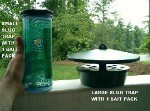 First, if you insist on using no chemical at all, install some of our SNAIL TRAPS. These fit in well with any garden environment and be made to look discreet. Most importantly, they work. Regardless of which model you choose, they need to be buried in the ground and their entrance holes need to be at soil level. The SNAIL BAIT is easily detectable by them and will attract snails through these entrance holes. The skinny trap has two entrances; the larger trap has 16 entrances. Try to place at least one trap for every 100 sq/ft of area you want to protect. The more installed the better. Inspect them every few days and be sure to empty them once you get 5-10 snails. Renew the Snail Bait at that time as well. These traps will work year round and will substantially reduce any infestation.
Snail Trap: https://bugspray.com/traps/pheromone-and-food/slug-trap
SNAIL CONTROL PELLET BAIT
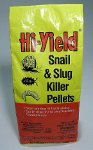 The fourth approach is the more conventional use of baits. We have the standard SNAIL PELLET which has probably killed more snails over the years than all the newer ones combined. However, these pellets do pose a hazard to non-target animals like dogs because they are quite large and easy to find. The other problem is that they use attractants which non-target animals like to eat. This means they pose a hazard and you must be careful if you have a pet which has access to areas where the pellets will be used. This product in particular is the main reason why all slug products are believed to be such a danger to use. The original products were all pelletized and most certainly were a problem when used in gardens, yards and areas where pets were active. The pellets were both visible and attractive to non-target animals. When found they were readily consumed which lead to many poisonings.
Snail Pellets: https://bugspray.com/bait/granule/slugsnail-pellets-2-5-lb
SNAIL CONTROL ORGANIC BAIT
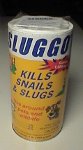 If this is a concern, use some of the NON-METALDEHYDE SNAIL BAIT. It won’t hurt pets or children and it works quite well. You can also opt for one of the other methods listed above as they work well too.The newer formulations, such as the spray and the mud, have effectively reduced these hazards because applications are invisible and not attractive to non-target animals. For this reason you can use them or some of the new bait without worry. Of course, trapping is always recommended and is by far the safest method of control. But if you need a fast knockdown due to the damage of the snails feeding, use the spray for quick knockdown. Followup with traps and bait for long term control.
Snail Bait: https://bugspray.com/bait/granule/sluggo-non-metaldehyde-bait
Snails can be a problem around the home and yard. Set out some Snail Traps to start reducing their numbers and the damage they do. Use a Snail Fence for repelling them from your garden if you want something more permanent and long lasting. Another repellent like Deadline might do the job for small infestations and the old standby, Snail Bait, will almost always help to reduce their numbers. Make sure to do regular inspections around the property to insure they don’t re-infest any time soon and treat early to prevent further damage from these plant eating pests.
CONTACT US
Give us a call if you need further help. Our toll free is 1-800-877-7290 and we’re open Monday through Thursday, 9:00 AM to 4:00 PM (Eastern Standard Time).
Email questions here: https://bugspray.com/about-us/contact-us
Order online and get a 5% discount! We ship fast with 99.9% of all orders shipping within 1 business day!!
Learn more about BUGSPRAY.COM and why it’s never been easier or safer to do your own pest control.
Please show your support for our business by purchasing the items we recommend from the links provided. Remember, this is the only way we can stay around to answer your questions and keep this valuable web site up and running. Thanks for your business!
Leave a Reply