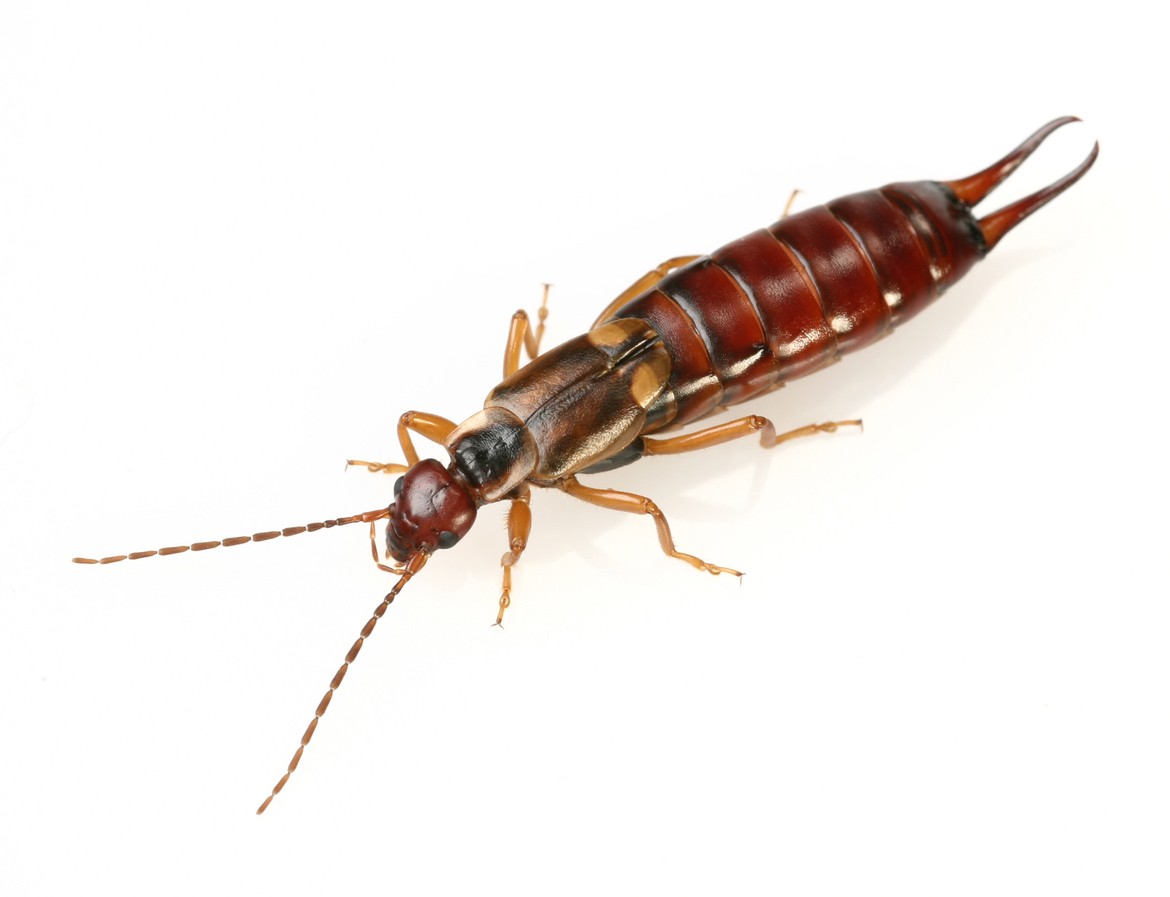
EARWIG TREATMENTS FOR THE YARD AND HOME
Earwigs have been a cosmopolitan pest for many years in the United States. There are over ten species in America, but four are most common and the species likely to invade homes.
The more common species includes the European, the Shore, the Ring Legged and the Seaside Earwig. Some of these have wings, some have stripes on their abdomens, some are dark brown, but all have pincers. Earwigs are both plant and insect eaters. In fact, they will eat just about anything.
EARWIG DAMAGE
Earwigs love plants. And in particular, vegetables. When they feed, their damage will be consistent and significant.
Plant damage looks like slug damage; the main difference is that slugs will leave a slimy trail behind where earwigs leave no foot prints.
Plant damage can be extreme. Although its most common to find small irregular holes, earwigs will readily eat all of the “meat” of a leaf starting at one edge and essentially devouring it row by row like a caterpillar.

Earwigs will feed as predatory insects but will also eat dead insects, algae and vegetation. Since they eat so many different food items, earwigs may find a home and food just about anywhere. It is not unlikely to find them around any type of structure too. However, unlike ants or termites, earwigs will readily establish themselves in the roof, the attic, the basement or the crawlspace. Although some species can fly, most find there way into homes by walking up the side of untreated exteriors. Once established in the mulch beds and flower beds around your home, earwigs will soon find their way inside.
EARWIG BIOLOGY
Earwigs are active year round. They’re super hardy and can do well even in the cold. Although they may find shelter under rocks and other ground cover during winter months, only freezing temperatures and ice seem to stop them from daily foraging and activity.
Earwig eggs are usually laid in the late fall/early winter. Females will lay 30-50 and generally have one brood a year. However, in warmer climates, she may have two. The eggs will hatch in about 2-3 months and the first instar of development will spend much of it’s time feeding on the food mother brings home. Within a month, the first instar will enter it’s second stage of development which is when they become a lot more venturesome.
EARWIG LIFE CYCLE
By early summer, they will be fully mature and ready to migrate away to neighboring plants looking for new nest sites. This is usually around June, July and August. Although the summer months are when you most likely may see invading earwigs, it is important to understand they may be active year round. If you are seeing them in living areas of the home during cold winter months, it is because they have established themselves inside. Since they can eat just about anything, earwigs can successfully nest in sections of the home which may be warm the whole year.
EARWIGS IN YOUR EAR?
Old wives tales tell of earwigs finding there way into the ears of sleeping people only to cause fever and insanity. Such tales are far fetched but earwigs have been found to crawl into any vacant cavity they can find. They love small holes, cracks and crevices. Such invasions won’t lead to insanity, but their pinchers will hurt when they grip you and it is more likely they will find their way into your shoes than your ear!
EARWIG INVASIONS
Earwigs typically become a “noticeable pest” when they start to invade. Homeowners will find them in basements, garages, Jacuzzi’s, bathrooms and just about any part of the home. Earwigs like it moist and prefer dark areas. Basements and crawl spaces provide great nest locations, but because people store many boxes and other items in these environments, earwigs find their way into homes by hitching a ride on items we bring inside.
Once in the home, earwigs will take advantage of any object which is set on the ground. Such locations are prime nest sites and slab homes seem to be particularly vulnerable. Since the slab will readily absorb moisture, earwigs are able to nest under carpet and find food by emerging and foraging as needed.
EARWIG SPRAY FOR THE HOME AND GARDEN
When treating for earwigs, the best approach is to protect all areas both inside and outside the structure. Outside areas earwigs will target include foundation walls, other points of entry like windows and doors and around AC condensers.
In the home they’ll gravitate to baseboards, cabinets, under area rugs, basements and crawlspaces. To control an active problem in the home, you’ll generally want to spray all areas with activity using a liquid residual and crack and crevice aerosol.
That said, if you’re only seeing 1-2 a week, set out some EARWIG TRAPS to see just how bad the problem is. If you catch more than one a week, you’ll want to start treating. The traps are a great way to monitor activity and the general rule is that catching 3-4 in a month but then no more after that means you had a passing problem. But if you’re catching 1-2 a week on a weekly basis, it means they’re nesting close by and will continue to be a problem.



BEST SPRAY FOR EARWIGS IN THE HOME
So for the baseboards in the home, get our BITHOR. Mixed at the rate of 1 oz per gallon of water per 1,000 sq/ft will usually solve most any problem. Be sure to coat all baseboards, under furniture and along every edge of carpet.
Bithor is safe for use in the home where people and pets are active. You can even spray it on carpeting or furniture as needed. The following “short video” (less than 60 seconds long) summarizes why its ideal for use in the home.
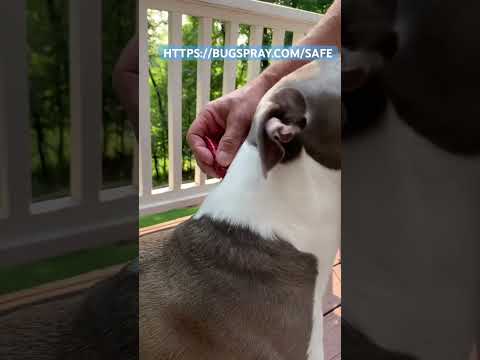
Pay particular attention to the bottom side of place mats and area rugs as well as the space under refrigerators and dish washers.
Bithor is odorless, fast acting and works great on earwigs. In most cases a single application will knock them out and if you spray every 2-3 months, they won’t come back.
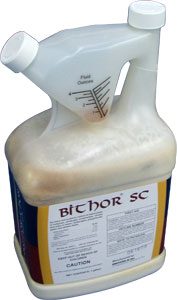
You’ll need a good PUMP SPRAYER to apply Bithor and you’ll want to treat the entire inside and outside perimeter of the home.
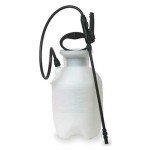
Pay particular attention to the outside foundation and entry points. Treat around windows, doorways, garages, crawl space entrances, pipe entrances, vents, AC areas and water spigots.
FS MP FOR CRACKS AND CREVICES
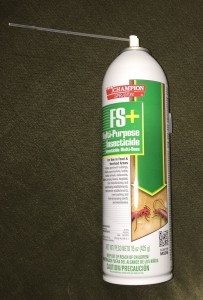
If you have areas where you can’t liquid spray, use FS MP AEROSOL. This product comes with a small straw like tube injector so you can make precise applications without making a mess. FS MP uses an ingredient very active on earwigs and can be used around windows, doors and baseboards.
The following video shows how to “inject” FS MP around a window and the baseboard underneath.
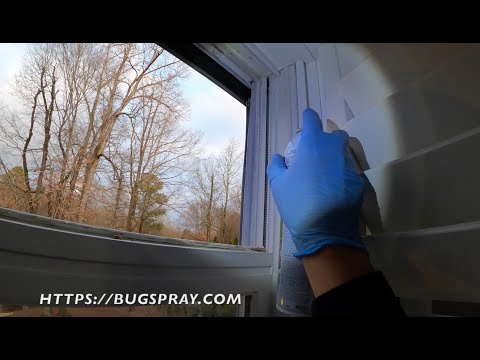
For small isolated issues in the home, carefully treating all cracks and crevices will be your best way for fast control. Yes it will take extra effort and attention to get all their potential nests treated but finding their source and getting it directly treated will yield the best results.
GARDEN SAFE EARWIG SPRAY
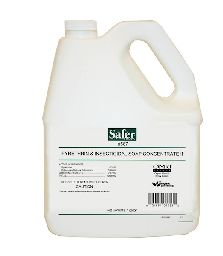
For vegetable gardens, the selection of good products narrows but we have two good choices. VEGETABLES PLUS is a permethrin concentrate labeled for use on fruit and vegetable bearing plants. It will both kill and repel earwigs so they won’t be able to eat treated foliage. Veg Plus has 7-14 days to harvest and treatments will last at least that long too.
Add 1/4 to 1/2 oz per gallon of water and plan on getting 500 sq/ft of coverage of plant foliage per mixed gallon of spray.
ORGANIC GARDEN SPRAY
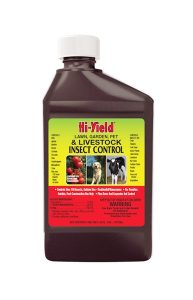
For organic gardeners, MULTIPURPOSE INSECT KILLER is a good choice. This concentrate has just 1 day to harvest but its plenty strong to handle strong pests like earwigs. Be sure to spray the main stem of the plants you want to protect along with the ground of the garden. Earwigs will typically nest in the ground just under plants they target. So if you’re finding damage to the leaves on your favorite garden vegetable, spray the plant and the surrounding area heavy to ensure you get the guilty pest.
Mix 6 oz of Multipurpose Killer with 1 gallon of water and expect to get 500-800 sq/ft of coverage per gallon. Repeat every 2 weeks to keep target pests under control.
EARWIG GRANULES FOR THE YARD
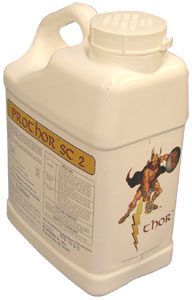
For bad infestations distributed over the yard, we recommend applying MAXXTHOR GRANULES to as much of the turf as possible. Maxxthor won’t work quickly like Bithor but its more time released and designed to get nesting reproducing populations down in the soil. This could prove important when they’re under thatch or dead grass clippings and coming from the yard.
The following “short video) (less than 60 seconds long) shows how to apply granules around the home:

Maxxthor is long lasting but it will need to be watered in too activate the chemical.
First, use a good fertilizer spreader or SCATTER BOX. to distribute the granules over the yard. Apply 1.5 lbs per 1,000 sq/ft of turf. Maxxthor is safe enough to be spread over pine straw, flower beds, wood chips, any kind of grass and around trees. The granules are fine, like wheat germ, and when applied properly won’t be detectable or easy to see.
Once applied, use your garden hose or your irrigation system to get them active. A good rain will also work. Reapply them every 3 months to keep most all perimeter pests in check and out of the yard.
Use your lawn fertilize spreader to apply the granules or a good hand held spreader like this one. It features a hopper that can hold almost 2 lbs of product and is well suited when treating over flower beds and other tight areas hard to navigate with a push spreader.

BEST YARD SPRAY FOR EARWIGS
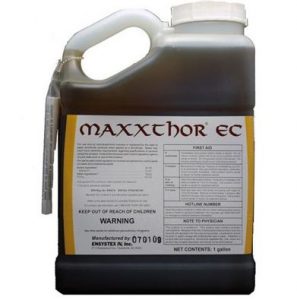
Lastly, if its just the yard needing treatments, go with MAXXTHOR EC over the Bithor. Maxxthor EC is super aggressive and super repellent. When applied over the granules, you’ll kill everything where you spray and nothing will come back. But its not for inside the home, just outside.
The following “short video” (less than 60 seconds) shows how to set up our GREEN TOPPED HOSE END SPRAYER for treatments around the home.
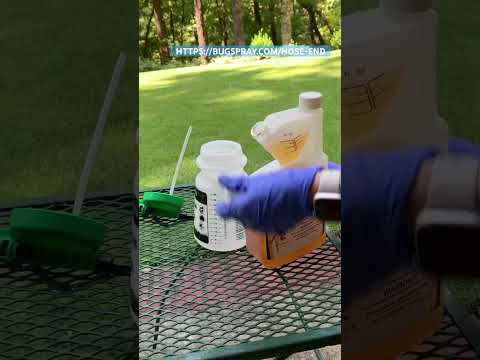
Mix 1 oz per gallon of water and apply it over the Maxxthor Granules after you apply them for a “1-2 punch” that will knock out any pest you have around the foundation.
CONTACT US
Give us a call if you need further help. Our toll free is 1-800-877-7290 and we’re open Monday through Thursday, 9:00 AM to 4:00 PM (Eastern Standard Time).
Email questions here: https://bugspray.com/about-us/contact-us
Order online and get a 5% discount! We ship fast with 99.9% of all orders shipping within 1 business day!!
Learn more about BUGSPRAY.COM and why it’s never been easier or safer to do your own pest control.
Please show your support for our business by purchasing the items we recommend from the links provided. Remember, this is the only way we can stay around to answer your questions and keep this valuable web site up and running. Thanks for your business!
Laura says
If I’m consistently having different bug infestations, would it be recommended for me to get a mold inspection? My house was newly built in 2021, and I’m the first owner. Ever since March of 2022, I have had nonstop bug infestations…one starts and ends months later for another to immediately start and on and on…clover mites then gnats then ear wigs then book lice in LARGE numbers over and over with some issues with ants and Asian lady beetles at times and large number of mosquitos around outside of house. This is despite trying different pest companies and routinely getting sprayed by them every quarter on top of the multiple treatments I’ve done myself roof to foundation, all of yard and inside of the house and drains. I also spent a lot of money on Pest Plug (similar to steel wool) and stuffing underneath all of my siding as well as caulking every crevice I can find and removed pine needles from beds. I’m at a loss as to what else to do. I’d move out if it was an option. Would be nice to relax in house. Just don’t understand why the bugs want to come in to this degree, where they get in (though ear wigs I’ve seen crawl under sliding door and up under siding but you’d think the caulking and steel wool would help) and what will keep them away. Jokingly thought of digging up and removing all the grass (some areas are seriously doing this in states due to water conservation but maybe would help deter insects too?). The only thing I’ve not done is treat behind outlets with dust or inside attic because this would take sooo much time due to number of rooms and attic is unfinished so can’t walk throughout.
Tech Support says
Laura,
So two things…
.
First, the ONLY REASON for ongoing pest problems is because THERE IS NO PESTICIDE THERE TO KILL THEM! Quarterly pest control? What a joke. It will never work.
.
You need to apply our granules once a month since they’re gone in 30 days and sprays? And if you’re lucky they’ll last 3 weeks. All sprays break down due to UV light and at best will be active 2-3 weeks. This is why its IMPERATIVE to treat as soon as pests get active following any treatment.
.
Second, YOU MUST USE THE RIGHT AMOUNTS! This means 5+ gallons sprayed around the home using our Hose End Sprayer with Maxxthor.
.
Maxxthor EC: https://bugspray.com/catalog/insecticide/liquid/maxxthor-ec
.
Hose End Sprayers: https://bugspray.com/hose-end
.
If you want to get serious about this, visit our Good Bugspray post which covers what you need and how to use it all. Essentially there are four products, two for inside and two for outside. Watch all the videos which will explain what’s needed. And use them as we detail and your home will be pest free.
.
Good Bugspray: https://bugspray.com/good-house-bugspray
.
Oh, and consider treating under any slabs you have as this is a key location for many pests to thrive. Our Hammer Drill and Sub Slab injector will allow you to get the product where its needed which is usually true for pests like ants, earwigs, springtails, roaches and more.
.
Hammer Drill: https://bugspray.com/equipment/tools/hammer-drill
.
Sub Slab Injector: https://bugspray.com/equipment/sprayers/eliminator-sub-slab-injector
.
Technical Support
bugspray.com
Laura King says
Do you still sell Eco Via?
Tech Support says
Laura,
It’s been hard to get this year but we have some in stock.
.
https://www.bugspraycart.com/exempt/aerosol/eco-exempt-org-ko-aero-14-oz
.
Tech Support
karilyn mcdonald says
Will any of these products harm our dog and cats?
Tech Support says
Not when used properly. We have all the details of how you need to mix and apply them safely explained here:
Product Safety: https://bugspray.com/about-us/who_is_bugspray.html#safe_for_the_home
Give us a call toll free if this doesn’t answer your questions well enough; it’s 1-800-877-7290.
Jonathan
Customer Care
reginald lee says
I think some spray will do but I wanted to explain my problem. I live in a basement apt and I see around 4-7 earwigs a day, always in the same rooms (both bedrooms and living room) . I sprayed all corners and edges a month ago but the problem still exists. However, this is the 1st summer in 3 years that the problem isn’t out of hand (I used to see up to 20 a day previous summers) what would be best to use and what makes this spray better than the one I used?
Tech Support says
First, what we sell is what professional pest control companies use these products will not be found at retail outlets or garden centers. In other words, the products recommended above are pretty much the best actives around designed to work in all kinds of surfaces, the toughest pests and to last the longest.
Second, retail formulations are commonly a lot more dilute, short lived and marginal in their performance at best. This doesn’t mean they won’t work; it just means for “less cost per finished gallon of spray”, using our products will enable you to achieve far better results with the same amount of effort.
Third, using our products insure you have the right % of active ingredient being applied when you treat. This is because our products are highly concentrated with only an ounce or two needed to make a gallon of mixed solution. That means you save big time on “cost per gallon” plus you have the added benefit knowing the product you’re applying is fresh when applied. This is because you’ll be making every gallon right when you need it.
Conversely, “ready to use” mixed sprays found on the shelves of big box retailers are products that have been “pre mixed”, diluted and then pumped full of nasty additives designed to “stabilize” the formulation so it can maintain it’s strength for extended periods of time. Unfortunately this concept doesn’t work well in the real world since one of the problems with pre mixed sprays is that the active starts breaking down right after it’s mixed due to many factors. This means by the time you purchase the product, there is no way the active is at it’s full strength anymore. In fact, what you’re applying is no doubt significantly weaker than it should be and in the long run, this will cause all kinds of problems as it relates to doing pest control.
In summary, if you’re willing to take the time to do your own pest control, why not use what the professionals use? And since these product cost less to apply compared to what you’ve been using, there is no logical reason to choose anything else.
As for your current situation; two thoughts. I too believe that most earwig problems can be controlled with nothing but the spray. But to completely control the problem (meaning if you want to knock it out for longer periods of time), go after them where they’re nesting. This is no doubt around the homes exterior and in some cases in the local wall voids, window frames, door frames, etc. of the homes interior.
And to accomplish this goal, you’ll need to change your focus from baseboards only to the homes exterior on the outside and the cracks and crevices of your apartment on the inside. So with that being said, I’m certain a combination of the Esfenvalerate concentrate (for spraying the exterior and baseboards) along with the Dforce Aerosol (for inside cracks and crevices) will prove way more effective in controlling your earwigs and any other insect pest you might encounter.
Oh, and I’m fairly sure this “problem” is only starting. You see, we’ve noticed most insects are a good 5-7 weeks behind this year due to the excessive rain and cooler temps we had across the country this spring. For this reason, insect pests seem to be “late” so even though your problem has been “less” so far this year, I suspect it will be getting worse as the summer heat enables all the moisture we’ve accumulate to breed insect populations including earwigs.
Here are links to these items in our cart. Please show your support for our business by purchasing the items we recommend from the links provided. Remember, this is the only way we can stay around and be here to answer your questions and keep this valuable web site up and running. Thanks for your business!
Conquer Esfenvalerate: https://bugspray.com/catalog/insecticide/liquid/conquer-esfenvalerate
D-Force: https://bugspray.com/catalog/insecticide/aerosol/d-force-14-oz-aerosol
Leona says
When he was young, my husband had an earwig crawl into his ear and get stuck while he slept. The noise it made trying to get out almost drove him mad. His mother tried everything to get it out, but he ended up being driven to the doctor for removal of the thing. The old wives tales have been embroidered and exaggerated, but there is some truth in them.
Jackie Solomon: says
Is it safe to use this spray on fruit trees? This terrible bug is eating the leaves and new fruit on my lemon tree.
Tech Support says
Go with one of the garden safe sprays listed above. The Vegetables Plus would be the strongest option.
Vegetables Plus Perm: https://bugspray.com/catalog/insecticide/liquid/veg-plus-10-perm
The 3-in-1 would be the organic spray.
3 in 1 Spray: https://bugspray.com/organic/liquid/3-in-1-fungicide-miticide-insecticide
Both will work but you’ll get longer protection (less spraying needed) with the Vegetables Plus.
https://bugspray.com/articles99/earwig.html#earwig-garden-safe-spray
Please show your support for our business by purchasing the items we recommend from the links provided. Remember, this is the only way we can stay around and keep this valuable web site up and running. Thanks for your business!
Kathy says
How is boric acid at keeping earwigs out of the house?
Tech Support says
Boric acid is a stomach poison which means target pests must ingest it. Since boric acid doesn’t taste good, it’s not easy to get insects to eat it with any consistency. For this reason it’s not a good product – especially for certain pests like earwigs.
But what will control them is listed above. I suggest you get some of the items listed in our article so if you have problems in or around the home, you can knock them out now before their population grows much more.
For moderate problems, a good treatment with Esfenvalerate is all you need to do. But if they’re active inside along molding or other areas you can’t easily spray with a liquid, get the Dforce.
Esfenvalerate: https://bugspray.com/catalog/insecticide/liquid/conquer-esfenvalerate
D-Force: https://bugspray.com/catalog/insecticide/aerosol/d-force-14-oz-aerosol
Lastly, set out some Earwig glue traps where you’ve been seeing activity. This way you’ll know for sure if the problem is getting better or worse.
Glue Traps: https://bugspray.com/traps/pheromone-and-food/scorpion-insect-lizard-15-pk
mesha says
Hellllllllp! The earwigs are everywhere in the garage by the front door. Its an infestation. I go to the kitchen and they’re on the floor counters mainly @ night. We moved in about 2 months ago. What spray is there to use? I have a 7 month old who is starting to crawl and I’m afraid one will bite her.
Tech Support says
Start spraying the Esfenvalerate listed above around the homes exterior using a standard pump sprayer. Esfenvalerate can handle most any insect but it’s particularly active on earwigs. Treatments will last 30 days or more and usually just one treatment will knock them out if you use 1-2 gallons of finished spray when treating.
Conquer: https://bugspray.com/catalog/insecticide/liquid/conquer-esfenvalerate
For inside the home, treat all the cracks and crevices with either Dforce or Phantom aerosol. Both come with “straw like” injector tips that enable you to spray where earwigs like to nest. The Dforce has an odor and if you spray any on a tiled or hardwood floor, it can leave a visible “wet” residue that can linger. Alternatively, Phantom goes on dry and is odorless making it ideal for baseboards, tiled floors, hardwoods etc. because you won’t see any residue after it’s applied.
D-Force: https://bugspray.com/catalog/insecticide/aerosol/d-force-14-oz-aerosol
Phantom: https://bugspray.com/catalog/insecticide/aerosol/pt-phantom-14-oz
Treating monthly with these products will knock out earwigs quickly and keep them away.
DEBRA says
I am going nuts with these annoying bugs..I would rather deal with roaches that die instead of these nasty things that drop on you. Gross bugs…HELP ME I WANT TO BURN MY HOUSE DOWN. I have not slept good since this started and its worse..
Tech Support says
Do you have a specific question? If you review our article above, you’ll learn that controlling earwigs is easy using the products we have listed in our article so if you want them gone, I suggest you start treating as we suggest. Earwigs are amongst the easier pests to control and one can usually knock them out with just 1-2 applications. Give us a call toll free if you have specific questions but again, this is one pest you can control pretty quick so there is no need to “burn the house down” or take any drastic active for that matter.
gloria schmitz says
Found your page about the earwigs to be very helpful and easy to read and understand. Look forward to your website and will recommend it to others. Thanks!