Rabbits have been adored and loved by people for centuries. They are found throughout the world and have a place in children’s books, TV and toys. The Easter Bunny is probably the most famous of all and Bugs Bunny may be a close second. Could an animal which is so widely loved ever cause a problem? Have no doubt about it; rabbits can become a destructive pest around the home.
Related articles: ARMADILLO GROUNDHOGS OPOSSUM RABBIT FUR MITES SKUNK
RABBIT PROBLEMS AROUND THE HOME
The cottontail and snowshoe or varying hare are distributed throughout the United States. In general, they are able to live in rural as well as urban environments. They reproduce quickly and will fill the landscape with as many rabbits that are able to survive. As their numbers increase, so do predatory animal populations. Fox, cats, dogs, people and coyote are just some of the animals that like to eat rabbit. In the wild, these predatory animals are able to help keep rabbit populations in check.
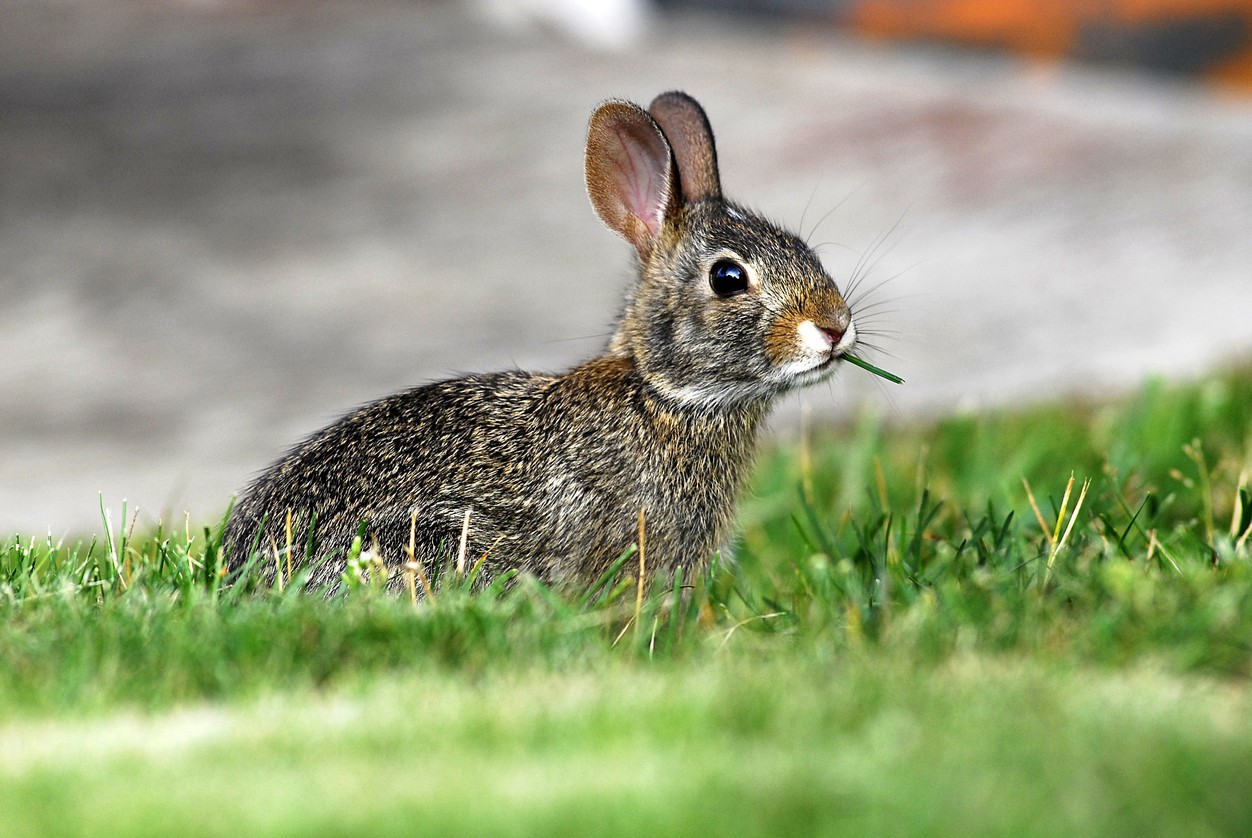
Rabbit problems arise when no predators exist. In addition to the native rabbit species, there has been a recent explosion of rabbits which have been released by people who were not prepared for the reproduction capabilities of their pets. These domestic rabbits are being released in the wild on a regular basis. Pet owners are not willing to let their one or two rabbits become 10 or 20 so litters are released in the wild. Unfortunately, the “wild” areas are many times all too close to residential landscape and gardens.
Domestic rabbits which are released to fend for themselves are not prepared or designed to “live off the land”. They much prefer processed food and when unable to find any will quickly feed in gardens and flower beds. Rabbits are nocturnal and will feed on just about any plant they are able to reach. Succulent pansies, just about any garden vegetable or fruit and several ground cover species of shrub are all targets for hungry grazing rabbits. Since they strike at night, rabbits may go unnoticed for weeks. Eventually, the gardener may notice plants are simply disappearing or dying.
RABBITS DAMAGE LAWNS AND TREES
Once in the yard, foraging rabbits will eat grass, flowers and even the bark off trees. A sure sign you have an active rabbit is when you find droppings which are round and small – much like a “cocoa puff” – in the area where you find damage.
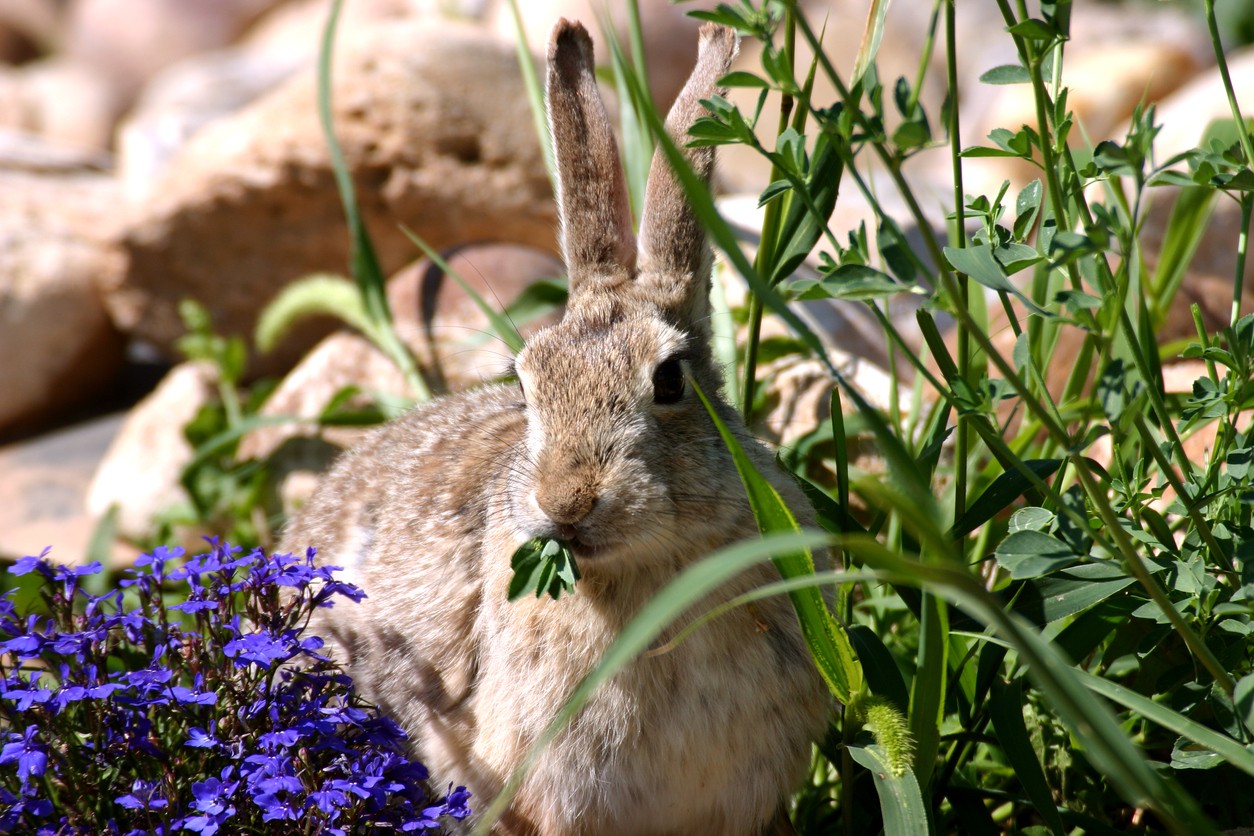
Other sure signs rabbits are the guilty animal is the damage they do. Rabbits will eat randomly. Instead of ingesting the entire plant, they may only chew the flower or half the plant before moving to the next. This behavior tends to maximize the damage they do and can be frustrating to the gardener. DEER will browse the entire plant down to the dirt and even yank it out of the ground if possible. And though deer can eat more at one sitting, they may only target 1-2 plants and move on where a rabbit might nibble on 5-8 causing a lot more damage overall.
There are limited approaches to controlling local rabbit populations. Although they may appear cute when they first appear in your yard, rest assured they are looking for something to eat. Once eating patterns are established, it can be difficult to change. Traditional approaches including wire fences, scarecrow like dolls or predatory animals will not work. Domestic rabbits which have been released in the wild are used to such devices and are not afraid of them. More importantly, these rabbits are large. The average adult is the size of a large cat. Because they are so big, cats will shy away from killing them. And because they are living in true metro and city environments, it is not likely that other predators will be able to help in controlling populations. This means you will have to take action if you want to stop them from destroying your plants and landscape.
HOW TO KEEP RABBITS OUT OF THE YARD
Rabbit damage in the yard can be minimized by using a repellent. The best repellent will depend on what you’re trying to protect.
BEST RABBIT SPRAY DETERRENT FOR LAWN AND GARDEN
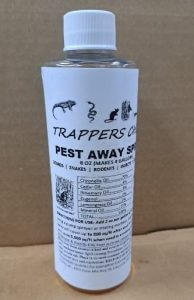
If rabbits are already entering the yard and feeding on grass or plants, use a bad tasting agent to stop the behavior. This approach is designed to put in place a “blanket” of bad taste over the vegetation the rabbits are targeting. A good option for this is PEST AWAY SPRAY.
Made with essential oils, Pest Away is mixed 2 oz to a gallon of water can cover up to 500 sq/ft. Generally speaking, where ever its sprayed, the rabbits will avoid. Use it on grass, shrubs and any area of the yard you find them resting.
Pest Away uses nothing but plant oils but because its so “concentrated”, animals suspect something is “not right” with the treated vegetation. Instinctively they will avoid it because the oils you’re applying will be higher than normal. This is a “warning” to them the plant is not healthy.
However, this treatment doesn’t kill anything so it poses no hazard to people, animals, plants, etc.
Plan on treating once a month when they’re active. A mixed gallon will cover up to 500 sq/ft and you get 4 gallons per jug (2 oz per gallon)


RABBIT REPELLENT GRANULES
Another all natural repellent that works great on rabbits is PEST-XEMPT GRANULES. These use a corn cob base with actives like wintergreen and other food grade oils. The odor is strong and nothing rabbits like and so they will avoid where its been applied.
Applications will last 60 days per application and if you spray Pest Away over the granules, you’ll get 60-90 days of residual.
Xempt G is packed 4 bags to a box; each baggie is .5 lbs and will cover up to 100 sq/ft.

SOUND REPELLER TO REPEL RABBITS
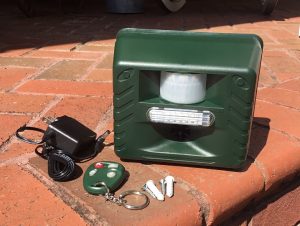
If you’re looking for a more permanent solution, install our SOUND REPELLER. This device releases “ultra” sound by default but can also send out an audible sound. This unit can be configured to turn on only at night, only at day or anytime. For rabbits, we recommend night time only.
This unit can be powered by 4 “c” cell batteries and when powered this way, you can rely on the motion detector setting to turn on the unit when rabbits enter the protected zone. The range of the detector is about 30-40 feet and the device should be set up off the ground about 1 foot. The sound will be effective up to 75-100 feet so one unit can protect up to 5,000 sq/ft of turf. Position units to point out over the turf or garden area needing protection and understand the units are “directional”. This means they are only effective in the direction they face and not behind them.
Our units come with a remote control key so you can turn the unit on and off as needed. And the sound will not hurt pets or people so they can be safely deployed around the yard and garden where people are active.
They also come with an AC power supply and if possible, powering them on all the time is the “best” setting. This will get the sound over a large area with no relief for intruding animals. They will avoid the sound at all costs so if you can keep the unit running continuously, you’ll get instant results and force the animals to forage elsewhere.
For continuous running, set the Operating Time to “Night” and Ultrasonic to “constant”. The Motion Sensor Sensitivity is “N/A” since it will be always on and the Sonic Volume should be turned all the down (to the left) since you will be relying on the ultra sound only. Set the Frequency (yellow knob) almost all the way to the left.
If you decide to power the unit with batteries, set the Operating Time to “night”, Ultrasonic to “Motion Sensor”, the Motion Sensor Sensitivity to “30” and the Sonic Volume to “40-60” if possible. The audible sound is quite loud and when the unit goes off, the extra sound will generally help your cause. And after 2 weeks, you can reduce this setting if you need to turn it down due to close proximity of neighbors. The Frequency (yellow knob) should be set almost all the way to the left.
Sound repellers are very effective and will last for many years providing a permanent solution to the problem. Wire them into the landscape for a more uniform look and since they only cost $.25-.50 a month to run via the included power supply, a fairly inexpensive fix.
HOW THESE SOUND REPELLERS WORK ON RABBITS
Units should be placed 1-2 feet above ground and pointed in the direction where animals are entering as well as “over” the turf you want to protect. 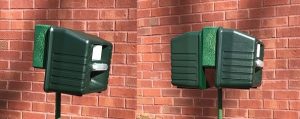
For easy installation, MOUNTING BLOCKS are handy. They can accept 1 or 2 repellers (picture to the right) and have a 1/2″ hole on their bottom so they will easily fit over a 1/2″ piece of rebar or any other wood or plastic stake. Ultra Sound Repellers will work fine by themselves as long as you have a good place to set them up. But we highly recommend getting the Units with Mounting Blocks in the kits we offer. Mounting Blocks allow you to place units anywhere and they will save time too.
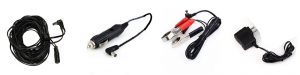
We also feature several accessories for our sound repeller including POWER CORD EXTENDERS (33 FEET AND 66 FEET), CIGARETTE LIGHTER POWER ADAPTER, ALLIGATOR CLIP POWER CORD and AC POWER SUPPLY REPLACEMENTS.
HOW TO TRAP NUISANCE RABBIT
A more permanent solution is to remove the invading animal. This can be done with either a live trap or a kill trap. Live trapping rabbit can be tricky but with the right trap and right lure, foraging animals can be tricked and caught. Kill traps are more efficient when you have established points of entry or trails in use.
BEST RABBIT LIVE TRAP
The best rabbit trap size is one that is much larger than the target animal. This will provide plenty of room for the rabbit to enter. Our LT111230 measures 11″ wide by 12″ tall by 30″ long and is efficient for rabbits. To get fast results, line the bottom of the trap with pine straw or grass so the rabbit will not notice the cage under their paws.
Trap sets should be made right at the point where they’re feeding. This could be in a garden, on the lawn or around a specific bush. In some cases covering the trap with sticks and brush will help. This is especially so if the activity is alongside ground cover.
Our trap comes standard with a front door only but the rear door model has a sliding removable rear door. This allows for easy sets and quick animal releases as well as access to the trip pan for trap maintenance if needed.

BEST RABBIT BAIT
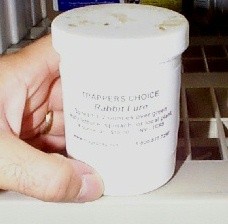
To get the rabbits to notice you’re set quicker and get them inside faster, add TRAPPERS CHOICE RABBIT LURE. This special paste combines several food items rabbits love and has a strong odor rabbits can’t resist. Place a tablespoon of this out over the food lure added to the back of the trap. And wipe out some onto the ground in front of the trap. This will help them locate the entry point of the trap that much faster.
Another way to get faster results is to place short fencing around the plant they’ve been targeting. This fencing can be plastic or wire and though it could be unsightly, you will only need to keep it in place a few days. If positioned right, the fence will force the rabbit to enter the trap all the more quicker since it won’t have access to it’s regular food combined with the attractive smell in the trap
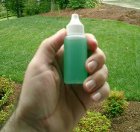
If the area where the rabbit is browsing is large, add RABBIT TRAILING SCENT. This highly concentrated lure is designed for use just outside the traps entrance and will effectively increase the area being reached by the scent of the bait inside the trap. Use 1-2 drops applied on the ground at the entrance and then another 1-2 drops every 2 feet in at least two directions. By creating a trail at least 20 feet long in at least two different directions, you will hopefully create a “path” foraging rabbits will follow.
By having the scent placed out over a large area, foraging rabbits will undoubtedly smell it even if they miss the trap by a wide margin. Remember, they don’t have great eyes and rely mostly on their sense of smell. By using the Trailing Scent you will be able to lead them in the traps direction. This could be vital for successful trapping since the average rabbit is “smart” enough or curious enough to enter cages in search of food. Unlike raccoon or squirrels, which have a natural curiosity to seek food aggressively and are quite easy to trap, rabbits will many times need a lot of help. Once trapped, you will need to relocate the rabbit at least 5 miles away to insure it will not return. Rabbits don’t migrate well and will take residence at the first place they are able to find a good food supply. Be sure to locate the animal where you know there will be a food supply so that it won’t return to your property.
RABBIT KILL TRAP
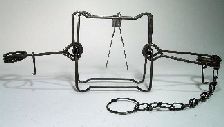
If you have a distinct pathway in use, a kill trap can be a quick way to eliminate the invading animal. These traps rely on a spring mechanism to crush the animal as it enters the trap jaws.
For most any rabbit, the BODYGRIP 220. will be large enough for the job. They measure 7″ wide by 7″ tall.
Place trap in front of a hole in the fence or over a tunnel their using to get in your yard. They can also be placed in front of a clear path or rabbit trail. Rabbits are creatures of habit and if they’re using a walk way between some logs or bushes, a bodygrip trap set in the middle of the trail will force them to pass through. As they try to fit through the trap, they’ll cause the jaws to close tight and in turn, get crushed.
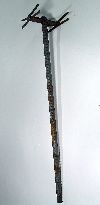
For easy sets, use a BODYGRIP STAND. This stake design is well suited for placing traps in an upright position along trails. Just drive the Stand into the ground making sure it is anchored well. Next, set the 220 over the mount and be sure to place some sticks or brush on either side to ensure the animal stays on the trail.
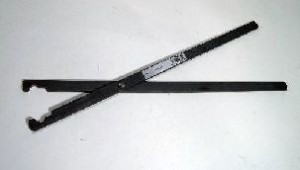
Since the springs on these traps can be hard to set, you may need SETTERS. to help get their springs collapsed. Their springs are quite strong and but setters enable you to get a huge amount of leverage making the job easy.
CONTACT US
Give us a call if you need further help. Our toll free is 1-800-877-7290 and we’re open Monday through Thursday, 9:00 AM to 4:00 PM (Eastern Standard Time).
Email questions here: https://bugspray.com/about-us/contact-us
Order online and get a 5% discount! We ship fast with 99.9% of all orders shipping within 1 business day!!
Learn more about BUGSPRAY.COM and why it’s never been easier or safer to do your own pest control.
Please show your support for our business by purchasing the items we recommend from the links provided. Remember, this is the only way we can stay around to answer your questions and keep this valuable web site up and running. Thanks for your business!
Martha says
Any of the repellants able to be used with three small yorkies in the yard? They eat rabbit poop and it has made hem sick.
Tech Support says
Martha,
All of the repellents listed above can be used in the yard safely where people and pets are active. For your situation, I suggest the sound repellers. If you place them along property lines pointed in the direction where rabbits are entering, they’ll hear the sound and stay out. Units can be remotely turned off/on so if desired, you can put them in standby mode when the dogs are out but the sound will not “hurt” them in any way. Dogs will hear it, check them out and within minutes forget about them. My dog doesn’t even look twice at them anymore. This will happen with animals native to the property so your Yorkies will be fine whether you power the units via battery only or with the included power supply.
Sound Repeller: https://bugspray.com/deterrents/sound/usd-animal-repeller-with-wireless-remote
Technical Support
U-Spray Bugspray
http://www.bugspray.com
1-800-877-7290
PS: Are you signed up for our informative twice a month Pest Report Newsletter? More info here: https://bugspray.com/bugspray-pest-report
Tech Support says
Definitely avoid leaving meat around the yard. It could attract bad insects as well as unwanted animals like cats, dogs, raccoons, rats, snakes or lizards just to name a few. And though coyotes won’t pass up carrion if found when naturally foraging, they don’t generally go out of their way to find it in new regions.
J.
Elizabeth says
Thanks for your reply. Yes, I’ll definitely be giving her your website and your comments. But what did you think of my idea to try to attract a coyote to the area. She’s well outside of town and she doesn’t have any small pets that roam outside that would be tempting to coyotes. Would you consider that dangerous? Having lived in rural parts with plenty of coyotes around, though rarely seen, I never had a rabbit problem.
Nasreen says
My problem is I live in an area with an metal back fence. I need something to get rid of their poop as my dog is getting sick eating it. It’s everywhere and I can’t get rid of the rabbits so how to get rid of poop?
Tech Support says
Nasreem,
Your statement about the “metal black fence”; why is this relative? If you install our Sound Repellers (listed above), they will keep the rabbits out of the yard whether you have a “metal black fence”, a white fence, a cement fence, a wooden fence, etc. Simply put, the rabbits will not stay where the units are going off. Simply set 1-2-3 up pointed at the points of entry. Keep the units set to “motion detector” and when any rabbit comes around, it will be scared off. The net result will be no more droppings.
Sound Repeller: https://bugspray.com/deterrents/sound/usd-animal-repeller-with-wireless-remote
Technical Support
bugspray.com
James says
I volunteer for our local little league and I am thinking the rabbits are chewing holes around the bottom of my batting cages. Have you heard of rabbits chewing through rope or netting and is your product safe around kids. Is the odor noticeable to humans?
Tech Support says
Rabbits will not commonly chew through man made materials like rope or netting. But there are several small animals that do.
The most common reported is squirrels followed by rats and mice. In some cases these animals are chewing as a way to grind or sharpen their teeth. In other cases, they’re trying to extract a nutrient from the material. This can sometimes be related to a chemical treatment the rope or netting has received.
The good news is you can stop this chewing by applying some Ropel or Pest Rid to the areas they’re targeting. Neither repellent will pose a hazard to the kids or local wildlife. Basically these agents don’t taste good and where applied, animals will avoid.
The Ropel is odorless and treatments should last 2-4 weeks. The Pest Rid is a bit stronger and will have a slight odor when first applied but within a few hours, this will dissipate and not be noticeable.
Here are links to these items in our cart. Please show your support for our business by purchasing the items we recommend from the links provided. Remember, this is the only way we can stay around and keep this valuable web site up and running. Thanks for your business!
Ropel Liquid: https://bugspray.com/repellents/liquid/ropel-liquid
Pest Rid: https://bugspray.com/exempt/liquid/pest-rid-exempt-liquid-repellent
Tech Support says
When used properly around the yard, the Rabbit Away won’t pose a hazard to people or pets. In fact, pets will usually just acknowledge the product is there and then forget about it within a minute or two.
Bat/Rabbit Away: https://bugspray.com/repellents/granules/bat-away
But if you want something you won’t even be able to see, go with with the spray. It too has a slight odor but it works very well, will cover a larger area and can’t be seen after you apply it and the spray dries.
Rabbit Away: https://bugspray.com/repellents/liquid/deer-and-rabbit-away-gallon
Lastly, placing out some Coyote Urine around the boundaries of your property to create an “invisible fence” will also help quite a bit.
Coyote Urine: https://bugspray.com/repellents/liquid/coyote-urine
Lisa says
I have a puppy and did fence off the yard and even put a small fence in front of it but the rabbits get in because I see poop. The poop is dangerous for the dog. What can I use or do to get rid the rabbits and not harm the puppy?
Tech Support says
If you review our article above, you’ll see several options listed that can help resolve this matter. The one I’d try is to live trap it. If you have a fence in place as you describe, the entry point must be a hole or low spot under which the rabbit is crawling. Find this spot and then on the inside, set up a live trap so that as the rabbit enters, it has no choice but to go into the trap.
LT7824: https://bugspray.com/traps/cage/live-trap-7-x-8-x-24
Rabbit Lure: https://bugspray.com/traps/lure/rabbit-lure-8-oz
Anonymous says
I don’t know what the rabbits are eating I know there’s some flowers but there’s no sign of them eating that. I don’t know what to use as bait. Please help.
P.S. I’m using a live trap.
Tech Support says
Go with the Rabbit Bait we have listed above. It works well.
Rabbit Lure: https://bugspray.com/traps/lure/rabbit-lure-8-oz