Odor control can be accomplished with a variety of products available today. First you need to determine the kind of odor you have. Then you need to minimize the conditions which are contributing to the odor. Thirdly you need to employ a material designed to counteract, mask or consume the odor. If you do all three things successfully, you will be able to reside, work or play in an environment without offensive smells.
This article will highlight different odor problems that may be encountered in the home or place of business. Then we will explain things you can do to minimize the conditions contributing to the odor. Thirdly we will explain how to use some of the latest products available for controlling these odors.
The following are some of the more common odor problems homeowners or businesses may have to deal with. Click on the one which you would like to learn more about and you will move to that section of our article.
3) MILDEW OR FUNGUS FROM WET CONDITIONS.
4) SMOKE ODORS FOLLOWING FIRE.
5) ANIMAL ODORS FROM SKUNK, RATS, BATS, RACCOON, ETC.
ODOR CONTROL FROM DEAD BODY DECAYING
These odors are caused by animals dying in and around the home or work place. In our business, the most common scenario is that a poison bait was used which caused a rodent such as a mouse or rat to die. If the death occurs in the attic, wall void or inaccessible crawl space, the animal will smell and in most cases the smell will last for several weeks. In some cases the animal is a squirrel, opossum or raccoon. These larger animals may smell for several months.
Other dead animal smells we deal with include birds in attics, frogs, lost pests such as snakes or gerbils, turtles, dogs, cats, and even humans who were left to decay for several days or weeks in an apartment or home. In general, the larger the animal, the longer the smell will persist and the more treating will be necessary. If you’re unsure as to what a dead body would smell like, it is most likely that there will be a large number of flies close to the odor. If you notice maggots or flies in the odor area, something organic has died and it probably is an animal.
Once the smell has been determined to be from a dead body, you should try to remove it. If you are able to find it and remove it, you may still need to treat the area with an odor enzyme to remove the persistent smell. If the animal is inaccessible, the use of these products will be ongoing until the body is able to completely decompose. Again, this may take several weeks or months, depending on the size of the animal.
DEAD BODY ODOR CONTROL PRODUCTS
There is one main product we recommend for the best breakdown and removal of dead body odors. Stay away from any material which is only an odor mask. There are many of those products available but they don’t eliminate the odor, they just mask it.
The best option is T.O.N. This product works well on most any type of odor problem. It mixes easily and works immediately when placed on odors. It uses actives which “un-assemble” odor molecules rendering them useless.
DEAD BODY IN THE WALL ODOR TREATMENT
One of the best ways to treat an odor issue that’s in the wall is with T.O.N. applied using our FOAMING TOOL and FOAMING AGENT.
This setup lets you inject the foam into any suspected wall void which might have the dead animal. The great thing about the foam is that it will tend to hold it’s place better in the wall which leads to better coverage of the animal which can be caught on one side. When applied, the foam will carry the T.O.N. onto the decaying body whereas any liquid sprayed into the wall could very easily pass the body causing it to be largely ineffective.
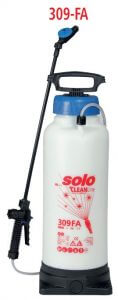
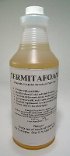
Be sure to treat as many of the voids that you can and try to apply the foam above the level where you think the animal is stuck. Remember that wall studs will obstruct the flow of the foam so you need to apply some into every void which is usually about every 16 inches on most traditional homes throughout the United States. The great thing about the Foaming Tool is that it will let you do this application without having to rip your walls out.
If the odor is in an attic or crawl space, you may broadcast it with a pump sprayer or a FOGGING MACHINE. In rooms where the odor is present but you do not know where it is coming from, you can place small amounts of T.O.N. in cups or soak cotton balls and place them out. Add more placements until the odor is removed. You will need to replenish these placements as the product evaporates and this approach won’t solve the issue quickly. In fact it will only resolve “new” odor that comes into the immediate areas where the T.O.N. is out. This means you will need to replenish the T.O.N. as needed until the “flow” of new odor stops.
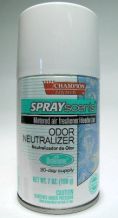
What works well as restoring new odor elimination action is an aerosol form we sell called the ODOR ELIMINATOR. This is an aerosol which works the same as T.O.N. by dismantling all odor molecules so that they “fall apart” and are not perceived as offensive in their broken down components. The Odor Neutralizer is used in small machines which run off batteries and releases a 1 second blast of aerosol every 7, 17 or 25 minutes depending on how you set it. They are small and discreet and called AEROSOL MACHINES.
Use a good PUMP SPRAYER to apply T.O.N. when you are have open access to the key areas such as the attic or crawl space. If you are unsure where the odor originates from or if the areas are hard to reach, use a FOGGING MACHINE for quick and complete coverage.
ODOR CONTROL FROM PET OR PEOPLE URINE
Pet urine odors are a common problem. Puppies and kittens are likely to urinate throughout the home before they are successfully house trained. Older pets are inclined to have urinary tract problems which will lead to mistakes in the home. People may have the same problem. Children may urinate when they are young or toddlers may decide to use the living room instead of the couch because “I didn’t know better”. Elderly people may have a problem which leads to accidents that might occur on furniture or the floor. Urine is an odor which is very much alive and needs to be killed. You won’t achieve success with detergents or bleaches.
For this reason, urine odors can persist for several years if left untreated on floors, carpets, beds, furniture or any porous surface. We have dealt with some homes that would have a terrible urine odor following a rain. These were homes that had pets several years before which urinated in the basement. Water activates urine and enables it to come to life. We have many customers who experience this in a used home they buy and can’t figure out where it is coming from.
URINE ODOR CONTROL
To control these problems, go with T.O.N. It will break down the odor molecules as explained above and should be applied directly to all the spots the animals have been leaving their marks. When treating, you will get better and quicker results if the area treated is moist or wet. If the pet has urinated on carpeting, make an effort to pull back the carpet to treat underneath it as well. Treating on the top only may work if you are sure of the location and if you soak it enough to penetrate through the carpet and then into the wood or cement underneath.
If the odor persists following a treatment, you probably need to pull the carpet up and retreat. This is important and cannot be overlooked. The wood or concrete below the carpet may be holding the urine and keeping it alive. This is particularly a problem when there is a slab below the carpet. Since slabs absorb moisture quickly, there could have been a lot of urine absorbed and so directly treating it may be required.
If animals were permitted to urinate in crawl spaces or attics, you may want to fog with both SANNI SHINE and then T.O.N.
Fogging enables you to reach far areas without having to travel in these sometimes tight spaces. It will also penetrate better and insure proper coverage. Our BUGSPRAY FOGGER will pump material out quickly and reach out up to 30 feet away. We have used it to treat attics where rats, raccoons or other animals have been living for some time and the feces odor was unbearable.
This short video shows the process we recommend:

After 1-2 treatments, the odors were broken down and the foul smell was eliminated.
MILDEW FUNGUS ODOR CONTROL
Mildew and certain fungus have odors which can become a problem in the home. Some can present a health risk.
To successfully deal with these problems, you need to identify that it is indeed the source of the smell. If it’s from mildew or fungus, there must be some kind of a moisture problem. The most common water problem we deal with along coastal areas and environments with high humidity involve water which accumulates in crawl spaces or basements. This is also common to homes that are built on hillsides or where rain or spring water typically flows.
To deal with the odors, you must minimize the moisture.
The first place to check is outside. Make sure the grade of landscape is helping – not creating the problem. Water which is left to stand alongside the foundation will certainly lead to all kinds of problems. The grade should help to relocate water away from your home. You may need to install more gutters or adjust the grade so that rain water is able to be carried away from your home. If you have high water tables or humid conditions, moisture by itself will allow for mildew to live. Basements, foundations and crawl space dirt which collect this moisture will create an environment fungus can thrive in. You must minimize this moisture.
Lastly, if you have a crawl space with moisture seeping up from the dirt, you should install 4 Mil Poly. This poly sheeting will keep the moisture down and combined with the vents will keep the humidity down so fungus can’t survive. If you do all of the above and still have fungus living, you will need to do some spraying.
Treating for fungus is easy and has other benefits as well. The active ingredient in these products is in the boron family so the materials are safe to use around the home. They are low in odor and offer broad pest coverage. The two most commonly used in the pest control industry are BORATHOR WP and BORATHOR PT.
Borathor WP is a fine powder and great for surface treating to both kill visible mold and prevent it from coming back. It’s a white powder you mix with water and spray onto joists, subflooring and sillplate. Borathor is used the same way BUT Borathor will actually penetrate through the wood so it can kill off all mold, fungus and even wood destroying organisms like termites or powderpost beetles.
Borathor does offer the ability to penetrate and may prove to be the better product to use if you are subject to either termites or powder post beetles. Once treated, the wood will not be able to host decay fungus, mildew or most pests so moist basements and crawl spaces should be treated to insure they are protected. Use one of our SPRAYERS to get the needed coverage.
Once the source of moisture has been addressed and the mildew has been controlled with one of the mildewcides above, there are two products which can be applied to eliminate the odor. Either SANNI SHINE or T.O.N. will work well for this application. Expect to see results immediately too so if the odor is still there a few days later, treat again. If you have done a good job of eliminating the source of the odor, you probably won’t have to worry about it anymore. However, for problems which have been active for some time, you may have to do 2-3 treatments to kill off all the active spores.
Use one of our SPRAYERS to do the application but if the area you are treating has limited access, ego with our MINI MISTER or BUGSPRAY FOGGER to make the job easier and more thorough. Because it creates a mist which is better suited for getting complete coverage, treatments made with a fogger are always more complete.
SMOKE ODOR CONTROL
Smoke seems to be one of the most persistent odors to eliminate. Homes which have had a fire, automobiles that have had smokers using them and processing plants where smoke is a part of the process all can be minimized if not removed.
Homes which have had a fire may have smoke odors persist for several years following the cleanup and rebuilding. Any part of the structure which is left from the original building is likely to have absorbed some smoke fumes and will continue to have that odor for some time. T.O.N. will work to eliminate this odor.
You may apply it by either spraying it with a SPRAYER or by fogging it with our BUG SPRAY FOGGER. It’s important to reach every area the smoke did. Since smoke will permeate cracks and crevices, treating them is important if you want to reduce the odor. It is best to treat the structure before rebuilding but we have many customers who call and are experiencing the problem after all the new construction has been done.
ODOR CONTROL FROM ANIMALS
Animals can get into our homes, garages or sheds and over time leave quite a bit of odor. Once they are removed, their scent can persist for some time. This odor can be left by pets such as dogs, cats, ferrets, gerbils, rabbits or many others. In either case, their scent may be strong and cleansers will not remove them. The best product to use for this problem is T.O.N. It reacts organically and will eliminate these animal scents and is great at getting rid of many problematic smells including:
a) Skunk scent under a deck, crawl space or shed.
b) Bat smell in the attic.
c) Raccoon smell in the attic or walls.
d) Dog or cat odors in carpeting or concrete.
e) Pet smells in boxes, garages or decks.
f) Smells left behind in vacant apartments.
g) Odors which accumulate on furniture.
Links to information on: BATS CATS DOGS MICE RACCOON RATS SKUNK SQUIRRELS
T.O.N. is great for these problems. It works quickly and can handle any odor safely and thoroughly.
It can be applied with a PUMP SPRAYER where you are able to reach treatment areas. If you have a crawl space that you need to saturate, use our BUGSPRAY FOGGER for quick coverage. Though one treatment may work, don’t be surprised if you have to do two or three since odors like these take a long time to build up and consequently take some time to break down.
CONTACT US
Give us a call if you need further help. Our toll free is 1-800-877-7290 and we’re open Monday through Thursday, 9:00 AM to 4:00 PM. (Eastern Standard Time).
Email questions here: https://bugspray.com/about-us/contact-us
Order online and get a 5% discount! We ship fast with 99.9% of all orders shipping within 1 business day!!
Learn more about BUGSPRAY.COM and why it’s never been easier or safer to do your own pest control.
Please show your support for our business by purchasing the items we recommend from the links provided. Remember, this is the only way we can stay around to answer your questions and keep this valuable web site up and running. Thanks for your business!
sheila hanson says
Last year we used a tractor on our small farm to remove old hay and manure, since then the ground stinks terrible every time it gets wet from rain, being on a farm I know manure smell and this is not manure, it ‘almost’ smells like dead animal but not quite although just as pungent – it never gets better with all the rain we have had, I would think if it was something topical it would have washed away by now, but it just stays – to the point of being almost unbearable to be outside. I have livestock animals in these areas and have had these animals for over 20 years – this smell is new to me – I need to determine what the smell is, hard to say exactly where it is coming from – and how to remove it. I do not mind so much manure smell, or hay smell but this is just terrible – almost a sour dead animal smell. Please help – this needs to be dealt with outside and safe for the animals in case they get near or on it.
Tech Support says
Sheila,
Unfortunately I don’t believe we can offer much help trying to identify the source of the odor. Typically it has to do with some kind of “fermentation” in the soil, wood or substrate. We commonly see this happen on farms and it has to do with all the “fluids” common to the area. In some cases it has to do with a single animal; other cases its a breed (such as a horse or cow). Worse case is some kind of disease.
The good news is treating the smell with T.O.N. will neutralize the odor. You would expect to see instant results and as you cover the area where the odor is active, the smell will go away. Typically one will have to make several treatments to different areas as you narrow down the footprint of the smell. But within a few days it should be gone and then if you treat when it comes back, you’ll be able to keep it eliminated.
T.O.N. mixes at the rate of 4-8 oz per gallon of water and we recommend applying the mixed solution to 500 sq/ft of area (assuming its dirt you’re treating). Varying rates will apply if you’re treating concrete, wood, inside vs outside, etc.
T.O.N. https://bugspray.com/sanitizer/liquid/total-odor-neutralizer
T.O.N. won’t pose any kind of hazard to people or animals and can be used anywhere using any standard pump sprayer or if the area is large, a mist blower like one of these:
Eliminator: https://bugspray.com/equipment/sprayers/eliminator-gallon-sprayer
Bug Spray Fogger: https://bugspray.com/equipment/foggers/bugspray-fogger
Give us a call if you need more help. Our toll free is 1-800-877-7290 and we’re open 9:00 AM to 4:00 PM Mon-Thur, Eastern Standard Time.
Technical Support
Customer Care
https://bugspray.com
1-800-877-7290
phillip mccarthy says
I had a hoarder in one of my rental units for several years. She allowed 4 feral cats to use the entire house as a cat box, with mounds of excrement in cabinets corners etc… She smoked inside and left rotting food around as well. I have gutted the house except baseboards walls and concrete slab… what product and application would fight a mixture of these smells?
Tech Support says
Phillip,
We have helped many people with this kind of problem. As crazy as it sounds, the scenario you’ve described happens a lot more than one might expect. In some cases its actually worse; imagine a corpse involved adding to the smell. Well, it happens. But regardless of how bad the odor might be, you can neutralize it using the following method.
First and foremost, the structure must be prepared. Typically this will involve removing all floor coverings, tearing down walls and essentially gutting the building down to structural members. Now it sounds like you’ve already done this and if thats the case, you’re pretty much ready to treat.
Second, you’ll want to “mist” the structure using anyone of the three following misting machines:
Mini Mister: https://bugspray.com/equipment/foggers/mini-mister
Bug Spray Fogger: https://bugspray.com/equipment/foggers/bugspray-fogger
Misting is the way to go compared to spraying a liquid since the mist will both cover everything faster, do a more thorough job of the treatment and use the material more efficiently compared to liquid spraying. In fact liquid spraying will many times end up taking more time, wasting the material and in the long run, costing more.
As for which of the machines to use; the Mini Mister is ideal for walls, ceilings, carpets, flooring and will reach out 5-6 feet. So its got limited power BUT its got a reasonable price tag.
But to save time, the Bugspray Fogger is the way to go. This machine has a 1 gallon holding tank and they pump out product 20-30 oz per minute which is a lot faster compared to the mini fogger.
The other advantage of the Bugspray Fogger is that it can pump product 20-25 feet out whereas the Mini Mister can only propel the mist 5-6 feet max. This means you’ll need to do more walking and moving around using the Mini Mister and risk missing areas the other machines will no doubt get.
As for what to apply; T.O.N. will do the job.
As for how much T.O.N. to use; this will depend on the square footage of the home. In general you’ll want to use 1 gallon of mixed material for every 800 sq/ft of surface area. T.O.N. is mixed at the rate of 4-8 oz per gallon of water; each mixed gallon can cover 500-750 sq/ft.
So how much will be needed to treat your home? I can’t say since I don’t know the size of the structure nor the extent of the problem. But for the average 1500-2000 sq/ft home which has been gutted and treated for similar odor problems, we find it typically takes 3-4 gallons of mixed material per treatment and that 2-4 treatments are usually needed spaced 1 day apart.
For example, if you determine you’ll need to use 4 gallons of mixed material, you’ll apply the first mixed gallon to 25% of the home. Next, you’ll repeat the process 3 more times to get all interior surfaces treated.
And once complete, you’ll let the treatment stand overnight. The next day you’ll enter and “smell” the results. No doubt the odor will be reduced but in most cases, a second application will be needed. This can be done right away.
Now by the 3rd day, most of the odor should be gone as long as you’re using enough of the T.O.N. per treatment. Typically we find there will be a “pocket” or two of bad odor remaining on the third day which can be addressed by spot misting. And with any luck, complete odor control may be achieved by the 4th day.
But before you proceed with any kind of repair work its best to wait a week to insure there is no lingering odor molecules since treating open and accessible areas is the only way to control the odor properly.
T.O.N. https://bugspray.com/sanitizer/liquid/total-odor-neutralizer
Give us a call if you need more help. Our toll free is 1-800-877-7290 and we’re open 9:00 AM to 4:00 PM Mon-Thur, Eastern Standard Time.
Jonathan
Customer Care
https://bugspray.com
1-800-877-7290
PS: Please show your support for our business by purchasing the items we recommend from the links provided. Remember, this is the only way we can stay around and be here to answer your questions and keep our web site up and running. Thanks for your business!
Crystal says
I recently moved into a house where the previous owners were not very clean and because of this, the house had a serious roach problem. Before we moved in, the house was exterminated and we thoroughly cleaned (several cabinets had roach droppings that had been left for an extended period of time). After deep cleaning all of the kitchen cabinets and everything in the kitchen with a bleach product, we are still dealing with a weird smell in the kitchen. It seems to get worse at times, and better at other times. It seems that some of the smell is originating from a few of the cabinets – other times it’s coming from behind the refrigerator (we also took the refrigerator and all of the other appliances out and thoroughly cleaned behind them and inside of them). We have deep cleaned every surface inside and out in the kitchen but the smell is persistent. We believe the roaches are all dead – we haven’t seen any since we moved in a month ago and we keep the house extremely clean – but the smell just won’t go away. It’s a disgusting smell that is unlike anything I’ve ever smelled before. After doing some research online, it seems like the problem is due to the previous roaches. The problem is, none of these sources give any clear cut information on how to eliminate the smell once and for all. What would you guys recommend we do about this? I’m concerned that there could be dead roaches in the walls that are also contributing to this problem. How would you go about handling this? This smell is driving us insane! Any help you could offer would be greatly appreciated.
Thanks! 🙂
Tech Support says
No doubt roach infestations – especially infestations that linger for months – will leave pheromones, droppings and dead body parts which smell. And you’re right in thinking these odors could be originating from all the places you listed.
Now if you review our article above, you’ll learn that cleaning compounds (like bleach) do nothing for animal or insect odor. So once the cleaning compound dries and evaporates, the odor will return. In some cases it will come and go; in other cases it will remain persistent all the time. So if you want to neutralize it for good, you’ll need to apply the TON we have listed which will definitely take care of the problem.
TON will attack and degrade all odors making them “senseless” to people once the molecules of the odor are dispersed and broken apart. This can best be achieved by simply wiping everything down using the TON mixed with water.
You could also choose to mist it out in every room using one of our misting machines. No doubt misting it would insure uniform coverage. And it will make the job very easy to do time wise. But you could opt to wipe the solution over all the walls, countertops, inside cabinets, etc. with a rag and/or sponges.
Lastly, if the odor is still active a week after you treat, focus on the areas where you still smell it and treat again. Next, give it another week to see if its gone. In our experience, most every problem can be resolved with one treatment but sometimes a followup in needed.
Now if you still detect it somewhere following a second treatment, it would mean there is most likely odor in the walls which would need a TON application as well.
To get the walls treated, you’ll need to use our Foaming Tool. It’s designed to deliver product into spaces like under cement slabs, in wall voids, behind cabinets where they hang on walls, etc. Basically the Foamer will allow you to deliver the TON through small holes. This way you won’t have to rip down wall covering, remove cabinets, etc.
Now if you end up needing to do some treating with the Foamer, start with small sections of the wall which were most likely infested. This would include the walls around your sinks, cabinets and appliances. In most cases, it won’t be the whole house but just a few key areas. Unfortunately for you it might be hard to tell exactly where but your nose will be a big help at identifying where to start and over time, you should get to the root of the matter and knock out the source for good.
Here are links to the recommended products:
T.O.N. https://bugspray.com/sanitizer/liquid/total-odor-neutralizer
Bugspray Fogger: https://bugspray.com/equipment/foggers/bugspray-fogger
Foaming Tool: https://bugspray.com/equipment/foamers/solo-2-gal-foamer-w12-inj-2
Give us a call if you need more help. Our toll free is 1-800-877-7290 and we’re open 9:00 AM to 4:00 PM Mon-Thur, Eastern Standard Time.
Jonathan
Customer Care
http://www.bugspray.com
Edward says
In October of 2012, we had a tenant pass way in one of the units. A local bio-management company supposedly cleaned the bath area where the body was found. The smell of the re-agent was noticeable after the treatment. However, now we’re experiencing nausea and a return of the original smell. What should we do? The exhaust fan was on when the person died until the body was discovered. Should we be concerned about any surviving bio-aerosols? Thanks.
Tech Support says
If you review our article above, you’ll learn that odors generated from dead carcasses will many times migrate to the substrate around the main area. In other words, the odor will permeate and then live on surrounding walls, floors and ceiling. And though service companies that specialize in cleaning up such messes do a good job of killing the bacteria that will be present, few of these companies use true odor eating agents which are needed to remove the smell.
At this time I suggest you get some of the TON (more details on this material is above in the article). This product works on odors because it neutralizes them. It’s not a masking agent nor is it designed to clean up the bacteria and germs associated with a dead body. But it does target and eliminate foul odors like nothing else on the market. I would wipe down the walls, ceiling, floors and even the pour some down the tub and sink drain to insure any odor molecules are neutralized.
I’d then consider treating the rest of the unit if the smell is present in surroundings room. Over time odors can migrate to other rooms so if this person was left for a long time without being found, an extensive treatment might be needed.
T.O.N. https://bugspray.com/sanitizer/liquid/total-odor-neutralizer
Now the TON can be applied with a standard Pump Sprayer or even a rag or mop.
Eliminator: https://bugspray.com/equipment/sprayers/eliminator-gallon-sprayer
But the easiest way to apply it is to use a misting machine. This method will get complete coverage quickly and take very little time.
Bugspray Fogger: https://bugspray.com/equipment/foggers/bugspray-fogger
Good luck and be sure to call if you need further help!
Please show your support for our business by purchasing the items we recommend from the links provided. Remember, this is the only way we can stay around and keep this valuable web site up and running. Thanks for your business!
Yvaine says
My brother passed away and his body was not found for 2-3 weeks. The smell is really bad but I wanted to salvage some items and pictures from inside the house. The smell is now a part of everything that was inside. Is there something I can use to completely get rid of the smell from these items? We are not looking to clean the house; just the items we’re taking out.
Tech Support says
If you review the article above, you’ll see the TON is the way to go. This is a true odor neutralizer and when misted or fogged out into rooms which have this type of odor problem, you can remove most any bad smell from individual items like you’re trying to do.
Now typically spraying either product onto specific areas where the odor was most present will remove the smell with just one application. That’s how good this product works. But in situations where you’re not treating the target area directly with a liquid spray, expect to do 2-3 light mist treatments to obtain the desired end result of no odor.
T.O.N.: https://bugspray.com/sanitizer/liquid/total-odor-neutralizer
The misting machine you’ll need to use for this type of treatment will be one like this:
Mini Mister: https://bugspray.com/equipment/foggers/mini-mister
Bug Spray Fogger: https://bugspray.com/equipment/foggers/bugspray-fogger
Now you can also remove the items you want to salvage and place them in a secluded area where you can mist them independently. No doubt this will save on the amount of product needed. But we’ve learned the best approach is to first treat them while they’re still in the original home. Next you can relocate them and expect too mist at least one more time to get decent results. And in some cases, a third application may be needed to. Since T.O.N. is water based, it’s gentle enough to use on most anything too making them safe enough to use on a wide range of inanimate objects.
Harvey Salem says
I had a groundhog living under my 10’x10′ shed which I believe has just died because of the strong odor coming from under the shed. I can look under the shed with a flashlight but all I see are dead leaves. The animal may have died in his burrough or under some leaves. It is hard to try clearing under the shed because one side only has about an inch opening between it and the asphalt and the other side has less than a foot. This also makes it hard to spray anything under there that can reach all surface areas since I do not know exactly where he is. What do you suggest? The foam wand you sell does not seem long enough to reach all the areas and the simple spray bottle will never do it. Should I just let him decay under there and then, eventually the odor might disappear. I understand that groundhogs are notorious for taking over abandoned hutches. Maybe if I make it too clean and livable again, others might come. What do you think?
Many thanks,Harvey
Tech Support says
To solve the odor issue, you’ll need to cover as much of the area with TON. This “odor eating” product works well at removing all kinds of living odors that come from things like dead bodies, fecal matter and other organic sources.
T.O.N. https://bugspray.com/sanitizer/liquid/total-odor-neutralizer
Typically TON is used by spraying it with a standard sprayer like this:
Eliminator: https://bugspray.com/equipment/sprayers/eliminator-gallon-sprayer
But since it sounds like you won’t be able to direct the spray where it will matter the most, the Foaming Tool might be the next best option.
Foaming Tool: https://bugspray.com/equipment/foamers/solo-2-gal-foamer-w12-inj-2
Now I understand you won’t be able to reach all areas with the Foamer from one access point you see. But that’s not how you’d need to use it.
In this case, all you need to do is drill small holes through the floor of the shed and through these holes inject the foam. Assuming the floor is wood, it would be easy to do and no doubt enable you to foam where it matters. I would drill a pattern of holes, spaced out in a “checkerboard” pattern, with the holes about 2 feet apart from one another. Once the entire shed floor has the holes in place, I’d pump the space underneath with foam that’s comprised of the TON, Foaming Agent and water. This will certainly solve the problem and in most cases, one treatment will neutralize the odor.
Foaming Agent: https://bugspray.com/catalog/insecticide/liquid/foaming-agent
Something else to consider is the importance of having access to the space under the floor. There are just so many potential problems that can arise in such areas and being able to look and inspect under there would be smart for future problems. For this reason we always recommend making some kind of “port” or hatch through the floor if possible. Even if the space is just a few inches off the ground, having an access point could prove helpful should anything bad happen. And since groundhogs (other animals too) like to “reuse” old abandoned burrows, there is a good chance another one will be coming around at some point down the road. For this reason it would be smart to have such an access point.
So no doubt cutting one or more hatchways through the floor would be another way to gain access. These hatches should be through the floor of the shed with the focus being on the side where you suspect the animal is located. In the past I’ve handled problems like this (in small sheds) and in at least one case we had to make 3 hatches, each about 1 foot square, which we made “removable” so that in the future, the hatches could be taken up when needed. We did this for a shed which was right at 10′ by 10′ too and though most times we only need one or two entry ways, this one had a floor which was very close to the ground so we ended up making 3 hatches before we finally found the dead animal. But once we had access, removing the animal was easy and treating with TON even easier.