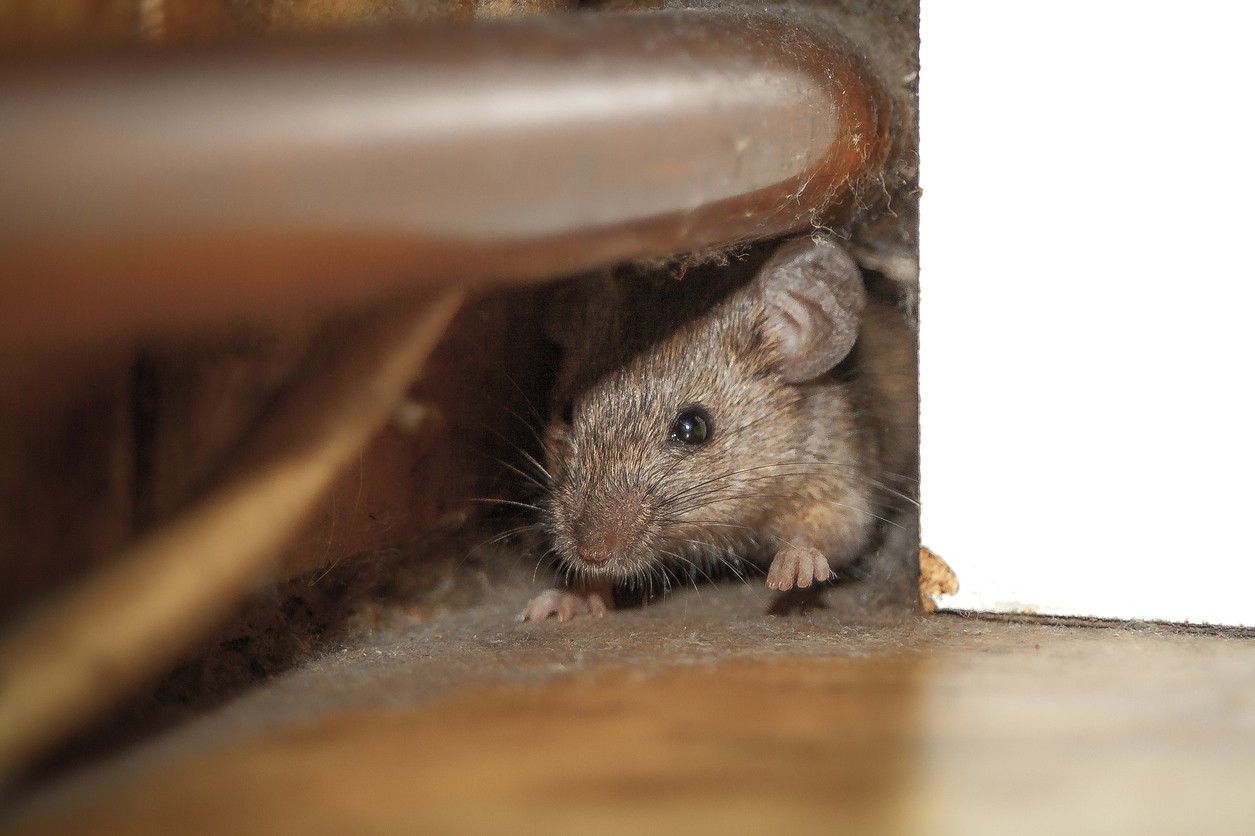
Fall is the time of year when mother nature tells animals that winter is coming. This prompts animals to prepare for colder weather. This preparation includes eating more food, hoarding food and finding appropriate shelter.
Animals can become a nuisance when they use our homes and apartments for their nesting. And throughout North America, there are many animals who will move in with us if we give them the chance. One of the most invasive animals every fall is the common house mouse.
Related articles: BATS FLYINGSQUIRRELS RATS SQUIRRELS
MICE BIOLOGY
Mice are small rodents which can multiply rapidly. Litters will contain 4-8 babies if not more.
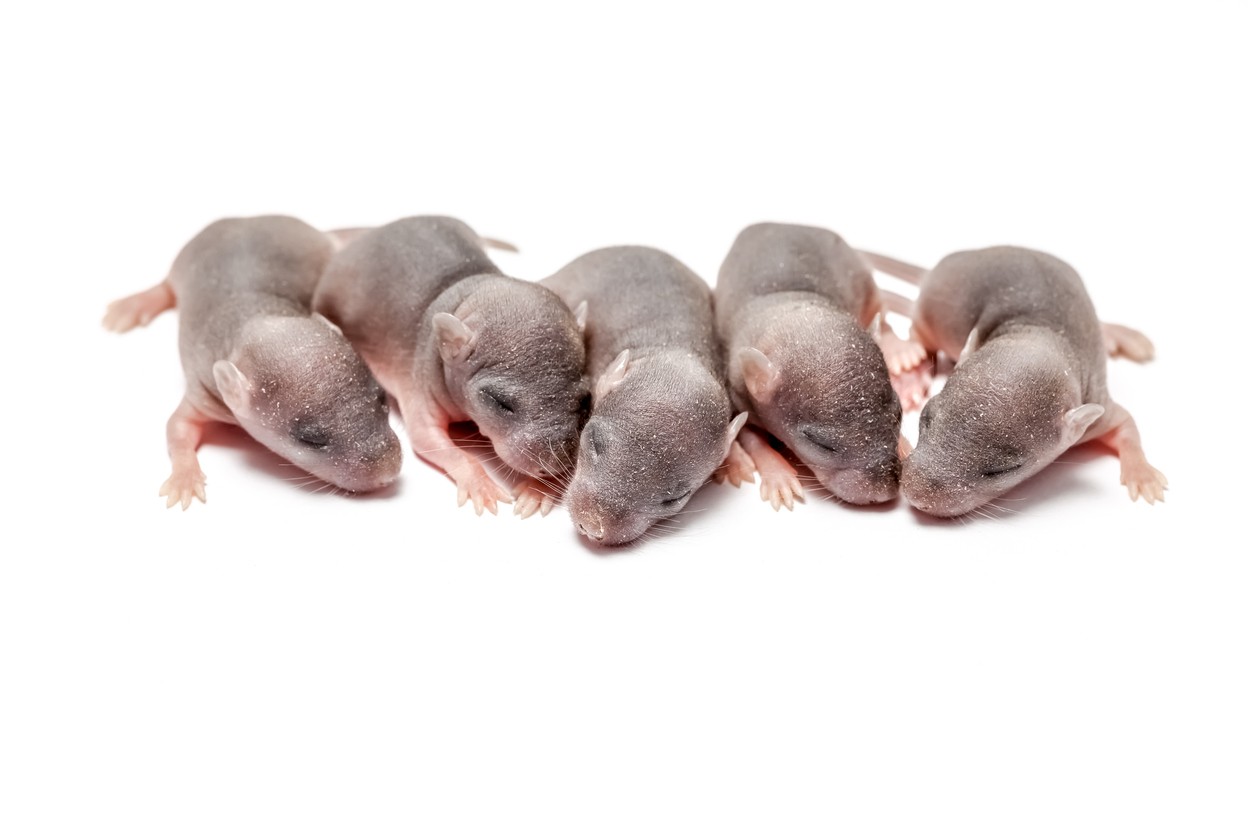
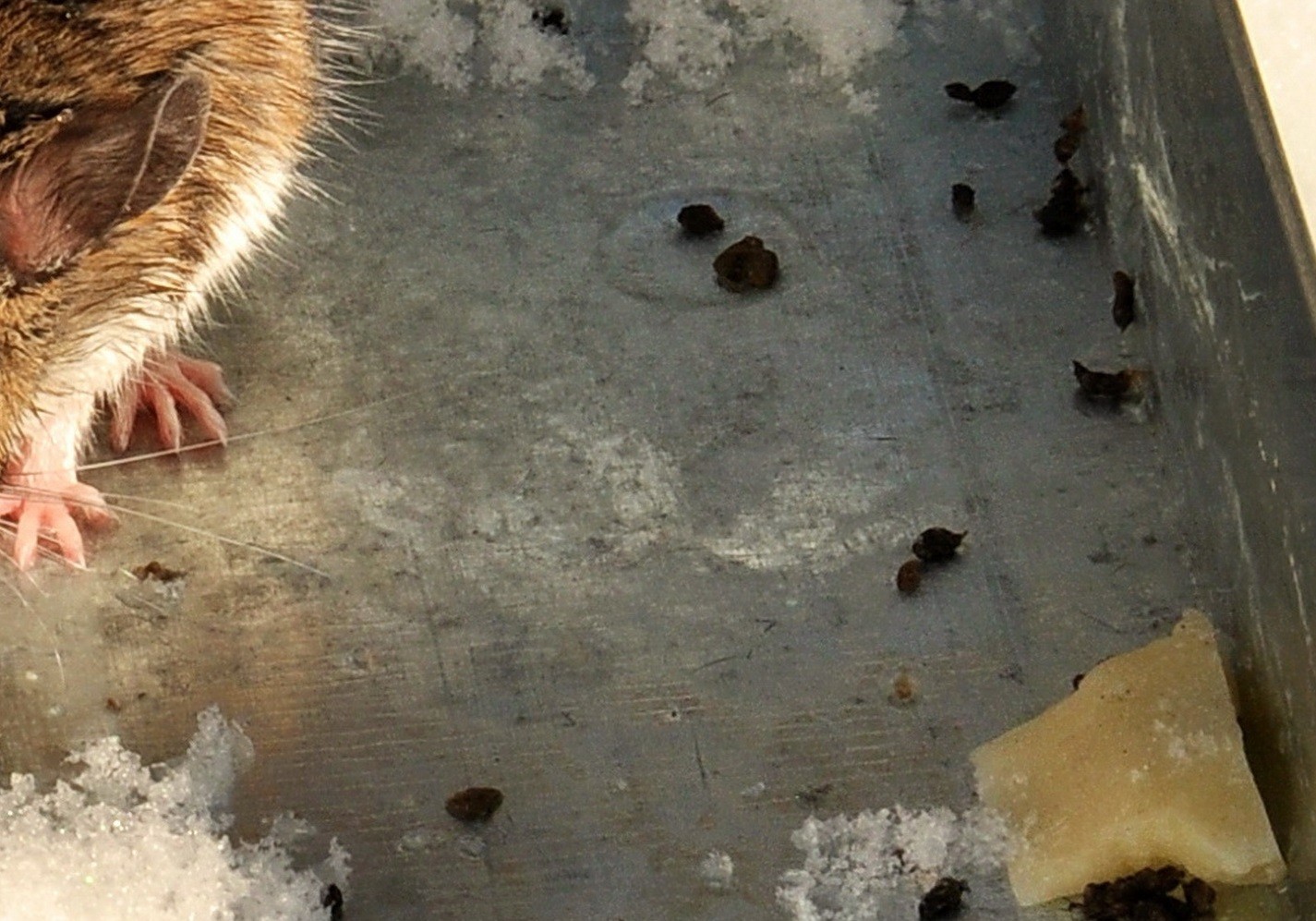
Mice feed on stored food products, pet food and all kinds of seeds including bird and lawn seed. We have a few species in America and all will invade our properties. Once inside, you will find their droppings where they are foraging for food.
Mouse droppings are small, black, oval shaped and about the size of a grain of rice. They’ll have pointed ends unlike roach droppings which have smooth ends.
Mice love kitchens and bathrooms and will readily find good nest sites in furniture or cabinets. They will nest in dresser drawers, closets and garages. Attics provide adequate nest sites, but mice prefer living close to their food so they’re more likely to be under an appliance at food level.
Attic’s or crawl spaces which develop problems can harbor many mice for long periods of time. This can lead to odor problems, damage and a nasty mess.
If you find what you think might be mouse droppings but are not sure if they’re new or old, first remove them. If they come back within a week, you have an active problem.
HOW TO CONTROL A MOUSE INFESTATION
There are several ways to control an active mouse infestation. Contrary to what you might have heard, mice are not smart. They don’t think or problem solve. But they are creatures of habit and this trait must be exploited if we are to get control of a local problem.
The good news is we have several mouse controlling options and these are all proven methods. Once the active mice are removed, there are ways you can rodent proof your home too so they won’t come back.
So if you have an active mouse problem, ask yourself a few questions like where do you think they entered your home? Secondly, what do you think attracted them to your home? The most common attractant around the average home in America is either pet food or bird seed. And if you have a pet or like to feed birds, chances are high you’ll have mice active around or in you home. Why?
Mostly because the smells from both pet food and bird seed is so strong and nutritious, it’s just a matter of time before it attracts some kind of rodent to your yard. And since the smells will permeate outside the home, many will try hard to get inside. Once they get a taste of these nutritious foods they will try to feed at your home daily. Eventually they’ll want to live close to the food which is when they start to nest.
If you suspect you have mouse activity around pet food or bird seed, DO NOT REMOVE the food until the animal has been successfully trapped, relocated or destroyed using any of the options which this article will detail.
Simply put, mice are creatures of habit. If you remove their food source thinking they will go away YOU ARE WRONG. All you will do is force them to adapt to the changing environment which will do nothing but complicate the situation. This adaptation will generally lead them to where the food is stored, where the food came from or where food similar to it is kept. The bottom line is that removing the food source will more than likely cause the mice to come inside your home seeking more food.
If you leave the food supply with activity in tact, you will have the upper hand in dealing with this animal because you will know where its going to feed.
DO PETS CONTROL MICE PROBLEMS?
The simple answer is no. Over 80% of our customers who have mice also have pets. Why is this percentage so high? Our guess is the smell of pet food (which is so nutritious) attracts them. Regardless, its very clear that HOMES WITH PETS ARE MORE LIKELY TO GET A MOUSE PROBLEM than homes without pets.
Pet food is packed with more nutrition now than ever as is bird seed and mice are able to detect these food supplies like flares in the night sky. Once found, they will not easily give up this precious supply and move away. So if you know where they’ve been feeding, use this information to your advantage. After the mice are successfully removed, you can then alter the outside food supplies to help reduce future problems but only at such a time that you are certain there is no mice still around.
Remember, it is always easier to keep mice out. Once they get in, controlling them requires more work, more cost and more aggravation.
Another word of advice
If you know the route of entry to your building….
DO NOT CLOSE OR SEAL ENTRY HOLES UNTIL YOU KNOW THERE IS NO MORE MOUSE ACTIVITY.
This is another critical part of mice control. All too many times people will close or seal holes thinking the mice will simply go away. Nothing could be further from the truth. Again, these are creatures of habit which will stop of nothing short of death to reclaim their home.
Think of it like this: If you came home and found all your doors and windows boarded over for no reason, would you simply walk away never to return? Of course not. You would do all you could to get inside, claim your personal belongings and find out what is happening. The same is true with mice. When closed out of their home, they will chew through wood, plastic, metal and cement to get back inside. Remember, they are creatures of habit and knowing their route of entry makes controlling them all that much easier.
MOUSE CONTROL OPTIONS
To control existing mice populations, consider the options. Over the years, we have learned what works and what doesn’t. Proven methods of control include the following:
RODENTICIDE (also known as poison bait) Pros: easy. Cons: risk of animal dying and smelling, secondary poisoning, non target animal impact.
SNAP TRAPS (kill traps) Pros: easy, fast, low cost. Cons: risky around pets and kids, messy, trap shyness.
GLUE BOARDS (paper and plastic tray) Pros: easy, fast, low cost. Cons: risky around pets and kids, can be messy, inhumane, board shyness.
ELECTROCUTION DEVICE Pros: easy and fast. Cons: costly.
LIVE TRAPS Pros: easy, fast, safe, highly effective, long lasting investment. Cons: must relocate or destroy trapped animals.
MOUSE RODENTICIDE AKA: MOUSE POISON
Rodenticide is a poison bait which mice eat. Most rodenticides are anticoagulants which mean they prevent the clotting of blood. The material works by affecting different components of the animals body. In effect, the mice loose their ability to clot their blood. Once an artery or vein ruptures, the animal dies. This can happen from a cut or when the animal sustains an internal hemorrhage. Either way, a weakened animal will quickly fall victim to the effect and once it starts to bleed, it will die.
No doubt one of the easiest ways to treat for mice is to employ a bait. Commonly used as a bait block or bait pack, this method of control is easy to deploy and fast working. But its important to understand that non target animals such as children and pets are also vulnerable to these products. For this reason you must be extra careful when using a mouse bait and the use of protective tamperproof bait stations is strongly recommended to help prevent accidental poisoning.
For small problems in 1-2 rooms, our BAITED TAMPERPROOF STATIONS. These stations are essentially ready to be use. Packed in a tamperproof station, they’re small enough to be placed in living areas. They have a clear window allowing you to inspect the bait inside so you know when its empty.
Each station has a 1 oz bait block which is enough to kill several mice. These use an active that features a “stop feed” mode of action so rodents will only consume enough to kill them and once this threshold is met, they will stop feeding. Place stations every 15-20 feet out of reach of children and pets when deployed inside the home.


For more “serious” problems where you need a lot of bait, go with the bulk packaging of the bait block. Known as TOP GUN BLOCKS, each block is 1/2 oz, weather resistant and features the same active ingredient as the bait station above. Well suited for use in moist areas like crawl spaces and water retention ditches, they’re good for attics and garages too.
Each pail weighs 4 lbs and contains 128 blocks. You’ll need to use one of the two bait stations listed below to keep the blocks protected and secure.


For ground level placements, you’ll need to keep the bait blocks out of sight and protected. Well suited for the task are these MOUSE TAMPERPROOF BAIT STATIONS. Basically these are heavy duty plastic boxes designed to keep the bait fresh and protected. They can be attached to stakes in the ground or glued in placed for long term service. Around the home, they can be anchored to cement blocks or nailed to wood for added security if you have curious kids or dogs.
The tops of these lock on and can only be taken off with a special key.


For tight narrow areas, our MINIGARD BAIT STATION is skinny enough to fit most anywhere and still large enough to hold one bait block.


To keep bait stations “locked” in place, use HERCULES PUTTY. This double sided “sticky” putty is strong and sticks well to plastic, wood, metal and more. A single piece of 1″ is enough to hold either of the above bait stations in place.


Alternatively, TOP GUN BAIT PELLETS auses the same formulation as the bait blocks but is presented in a broken down “place pack”. Well suited for areas where bait stations are needed such as attics or inaccessible crawl spaces, the pack will protect the bait inside but allow odor or permeate out so foraging animals will readily find the offer.
Packed in 4 lb pails, each pail has 128 packs.


BEST TAMPER PROOF BAIT STATIONS FOR TRAPS AND RODENTICIDE
If you need to keep your traps or bait safe from pets or children, look no further than our TAMPERPROOF BAIT STATIONS WITH BAIT OR TRAPS.
These stations come with a 10 lb block, two feeding or trap compartments, locked lid and safe enough to use both inside and outside the home.
For inside applications, we recommend using them configured with nothing but two mouse kill traps and PECAN PASTE. This reduces the risk of them dying somewhere in accessible.
This picture shows the traps inside each of the compartments (the lid is hinged and open out of frame). Notice the ramp to the far right; position that against their runway and rodents will confidently enter and forage to the feeder stations.


For outside applications, get the kit which includes one mouse kill trap and one tub of Top Gun.


This configuration is ideal for use around homes. By intercepting and controlling the mice around the home before they get inside is more effective.
What this VIDEO for details on all this amazing station and all the ways you can set it up to fit your specific environment and safety concerns.

HOW TO GET RID OF DEAD MOUSE ODOR
If you’ve had a mouse die somewhere in the home and now have that after death stink, you’ll need some ODOR NEUTRALIZER to remove it. This enzymal compound works two ways.
First, it readily “eats” the odor molecule which is a gaseous by product emitted by the decaying organic matter – in this case the body of the mouse. Second, it attaches itself to other odor causing molecules created in the breakdown of the body and causes them to get heavy and simply fall from the air. This dual action will eliminate the odor immediately from treated areas.
You will get the best results if you’re able to apply the product directly where the animal died. If you do not have access to this area, you can spray in crawl spaces, attics and into wall voids where you think the animal died and see if that helps.
So for attics, crawl spaces and wall voids, mix 8 oz of T.O.N. per gallon of water and expect to get about 800 sq/ft of coverage per mixed gallon. Since odors will translocate, you may need to wipe down the walls of adjoining rooms in case the odor has relocated to other parts of the house. T.O.N. works immediately so you’ll see an immediate improvement. Within half a day, you’ll know if you solved the problem or if you will have to treat again.


Use any any standard PUMP SPRAYER to apply the T.O.N. although you can wipe it over walls with a rag or sponge.


HOW TO SAFELY CLEAN UP MOUSE DROPPINGS
If the mice have been living under a cabinet or behind a large appliance, there could be a lot of accumulated droppings. Since these droppings can hold a range of virus and bacteria, they should be deactivated first by spraying them with ROUGH’N READY. Used by commercial processing plants, hospitals and warehouses to sanitize the mess left by rodents, Rough and Ready is easy to use and goes a long way.
Rough and Ready is ready to use and a quart will cover250 sq/ft; gallons will cover 1,000 sq/ft. Simply wipe countertops, spray over the floor or wipe contaminated surfaces using a sponge. Allow the treatment to air dry before using the area although the treatment will kill all virus and bacteria within a few minutes.


For small areas, HOSPITAL DISINFECTANT SPRAY. is easy to use and just as effective. Well suited for spot treatingThis is a ready to use aerosol which works well at killing any type of bacteria or virus and will quickly sterilize without hurting finishes or making a mess. Once you start the cleanup, be sure to place all rags, towels, droppings and other contaminants in a plastic bag for disposal. Wear rubber gloves during cleanup and be sure to wash your hands, clothing and shoes following the job.


MOUSE SNAP TRAPS
If you prefer a “tried and true” method for killing mice rapidly, EXPANDED TRIGGER TRAPS are a good choice. Don’t waste your time with the old fashioned metal trigger traps. The big problem with these traps is that mice can easily clean the bait off the trigger without setting off the trap. This new design with the expanded trigger alleviates the issue. In fact this expanded trigger area is so effective, you can use these traps without bait. Just place traps alongside the wall where the mouse is foraging. Be sure to locate the trigger along the wall. Foraging mice will walk on the trigger and meet their demise.


Although baiting is not necessary when using these traps, add TRAPPERS CHOICE PECAN PASTE to the trigger to ensure quick results. This strong smelling food lure is super sweet and cannot be ignored.


GLUE BOARD TRAPS
Glueboards are another device which have caught many mice over the years. These “traps” rely on the use of non-drying glue to catch and hold unsuspecting mice. The traps vary in size and should be placed along walls, around cabinets, under furniture or refrigerators where mice are active.
In general, place where mice activity is known to exist but you can also use them on either side of a garage door where mice could enter. When the animal steps on the glue, they get stuck and cannot pull free. Mice will not quit pulling however and many times will pull off a leg, tail or section of their body in an effort to escape. For this reason these devices are considered by many to be “inhumane”.
For dry areas, the common PAPER MOUSE GLUE BOARD is effective. Use it as is, flat on the ground, or you can fold them up into triangles shaped like a T-Pee.


LIVE TRAPPING MICE
The last option (and overall one of the best) is to use a live trap. Because these devices do not kill or harm the mice, they will not become afraid of entering or being around one. Live trapping mice is easy, inexpensive and without risk or danger to non-target animals. The latest design of traps will last a long time, catch many mice and be able to trap a wide range of small rodents like shrews and voles.
There are many models available for mice. For low areas under appliances or furniture, the TIN CAT is well suited. It features two entry doors. Mice enter and once inside, the doorway closes keeping them in the holding area. These traps can hold 5-10 mice no problem and once 1-2 get inside, more will enter as long as you fill the trap with lots of lure.
Place traps along walls mice use with the holes facing the wall. Traps should be spaced every 10-20 feet.


Since mice like to see “through” any tunnel they enter, the MOUSE MASTER is a good design. This trap features a wind up mechanism which powers a “paddle”. Mice will readily enter the open tunnel but halfway through, they’ll land on the paddle which is sensitive. Once activated, the mice will be “tossed” into the large holding area which can easily handle 10+ mice per set.
Like the Tin Cat, you need to place these out along walls mice are using. Space them at least 10 feet apart. These traps are almost 3 times “taller” than a Tin Cat so they’re more appropriate for use in open areas like basements, garages, attics, porches and crawl spaces.


One of the more unique designs which enables a multitude of sets is the LONG LINE MOUSE TRAP. It can be set out in one long continuous “tunnel” or can be bent around corners effectively. The mid section “hinges” allowing such flexibility. Its low profile too making it well suited for tight spaces.


Lastly, the LT3310 is a one of the best options (the authors personal favorite) when you need to trap skittish animals or where larger animals might be active. So if there is a chance you could catch rats or chipmunks, this trap is a solid and effective trap. It only catches one animal per set but its easy to clean and super durable making it useful for both inside and outside sets.


BEST LIVE TRAP MOUSE LURE
To ensure mice find your live traps, you’ll need the right food inside.
First, place out MIXED BIRD SEED. Use at least 2 oz of seed per trap. Mice love bird seed and when they find a bunch of it inside any trap, they’ll have plenty of motive to enter.


Though bird seed is important to have inside any live trap set, its just as important to get the mice to your sets. To do this, you’ll need a strong attractant like TRAPPERS CHOICE PECAN placed at the opening. Just a dab of 1/4 teaspoon full is enough. And be sure to add at least a teaspoon full to the holding area of the trap too. Pecan Paste cannot be ignored by foraging mice so they’ll quickly target the traps where some has been added.


LIVE TRAPS ARE PROBABLY THE BEST WAY TO CONTROL MICE
The great thing about live traps is that they don’t kill the mice which enter. This prevents other mice from becoming afraid or wary of the device. In fact, we have observed a trap with several mice in it seemingly lure new ones to it. The untrapped mouse on the outside would come to the trap after smelling the lure and hearing other mice. Once the trap is found, they will circle the holding area interested with the activity going on inside. Its clear the smell of the pecan paste is so powerful that even after being trapped the mice do not become upset or frightened so new mice finding the offer do not get alarmed. That being said, you do need to remove trapped mice within 3 days of being caught.
Now if you are inspecting the device every day or two, this will not be a problem. But if you are using this device in a vacation home or some part of the house where it is difficult to inspect it daily, you may have some of them die before you are able to empty it. If the animals are left to die, they will certainly smell and decay. Try to prevent this from happening.
WHAT TO DO WITH TRAPPED MICE
We are constantly asked how to destroy mice once trapped in a live trap and though we don’t recommend one method over the other, here are some methods which customers have used to discard trapped mice.
Drowning. This is done by placing the trap (with the mice inside the traps) into a bucket of water. You can also use a stream or pond if one is close by. It usually only takes a few minutes for the trapped mice to drown but wait 15 minutes to ensure the result.
Freezing. Placing the trap in a bag and then in a freezer will cause the trapped animals to go to sleep and then die. This is painless but does take awhile. Plan on keeping the animal in the freezer overnight.
Suffocating. Though this sounds humane, it can get difficult to accomplish since it’s hard to devise a way that removes all air available. Mice will prove to be persistent so expect them to hang on quite awhile.
Electrocution. The Zappers detailed above have proven to provide a very humane way to destroy unwanted mice and can be used as an “execution” chamber.
HOW TO MOUSE PROOF YOUR HOUSE
Once you’ve removed all the mice in the home, consider sealing off any route of entry found along foundations walls, around doors or where pipes enter the home.
To seal known gaps or open spaces, first fill them with COPPER WOOL. This product cannot be chewed through by rodents and it will not rust. Copper wool is both easy to cut and easy to stick into entry holes you find around the home.


Once the gaps are filled with Copper Wool, seal them tight with PUR BLACK. This unique expanding material is durable, strong and will pretty much permanently seal any gaps through which nuisance animals can enter. For small jobs, the cans which include the injecting hose will do the job.


For large jobs where you’ll need several cans, get the larger size Pur Black which is applied using a PUR SHOOTER GUN. This tool is similar to a caulking gun. It will hold the Pur Black cartridge and allow you to specifically apply just the right amount


For the gun, you’ll need the larger can of PUR FOAM.


You’ll also need some GUN CLEANER when the job is done and you want to store the gun.


HOW TO REMOVE MOUSE ODOR
Since mice rely on smell to find their way around, once a structure gets a mouse problem, its just a matter of time before new mice find this area and try to take advantage of the vacated voids. This happens because the scent and odor mice leave will linger for 1-2 years after the mice are removed. Think of these smells as a kind of “beacon” telling other mice your home would make a great place to live. In general these scents are used by the nesting mice to navigate around the structure. But once they’re gone, the odor won’t disappear.
In fact this is why structures which get mice tend to get them every 6-12 months. Basically new mice foraging around the home are finding the old scent trails and following them inside the structure.
FIRST REMOVE THE OLD SCENT TRAILS AROUND THE HOME
To prevent reinfestation, spray the TOTAL ODOR NEUTRALIZER (mentioned above) around the homes exterior. This can be safely used on foundations, around windows, doors, garages, plants, etc. where mice are finding old scent trails. Plan on using 1-2 gallons of mixed material. If the mice were active in crawl spaces or attics, spray these areas too. Its also suggest you spray gutters and rooflines where mice have entered attics if you had them this high on the structure.
Mix 8 oz T.O.N. per gallon of water and use it after mice have been removed from the building.


INSTALL ULTRA SOUND REPELLERS
Another way to ensure rodents don’t come back is to install an ULTRA SOUND REPELLER. Our unit is well designed for mice. It will release ultra sound by default (sound in a frequency range people cannot hear) which in turn will keep mice and rats away.
Set units up inside the home where mice were previously active. This can be in crawl spaces, attics, basements, garages or even living spaces. Our unit comes an included AC power converter so you can run the machine via electricity. And since they’re water resistant, they can be used outside too. For outside installations, use them around the homes exterior to create a barrier of sound mice will not want to enter.
When using ultra sound as a repeller, its important to understand it does have limits. First, you will lose protection in areas which are cluttered or filled with storage. Wide open attics and crawl spaces will provide an area well suited for good results; cluttered areas will require extra units to insure no “dead spots” exist.
Additionally, most homes will get great protection by installing units where activity was most noted. This is usually in the attic or crawl space. However, it could be in the garage or living area. Our units will not hurt people or pets so it can be used in these areas if needed. Another great location to set up units is at key points of entry.
For the exact settings to use for mice, refer to our product details page here: MOUSE SETTING FOR CRAWL SPACE OR ATTIC MOUSE SETTING FOR LIVING AREAS


We also feature several accessories for our sound repeller including POWER CORD EXTENDERS (33 FEET AND 66 FEET), CIGARETTE LIGHTER POWER ADAPTER, ALLIGATOR CLIP POWER CORD and AC POWER SUPPLY REPLACEMENTS.


Mice have been on the earth longer than mankind. In fact, the more we thrive, the more they prosper. We cannot hope to rid the world of these creatures; like most, they, too, have a place in nature. However, we can do many things around the home to help minimize their intrusions. Once inside, we have several options to first remove and then keep new ones from entering. Which ever method you choose to employ, remember that we as a species are much more advanced and intelligent than any mouse. If you learn to observe and use a method of control which works with the current pattern of behavior you will get great results. Combining two or three of the options listed above along with the use of repellents should not only solve your problem but keep new ones away. In the end, you will be able to reclaim your home mice free!
CONTACT US
Give us a call if you need further help. Our toll free is 1-800-877-7290 and we’re open Monday through Thursday, 9:00 AM to 4:00 PM. On Friday, 9:00 AM to 4:00 PM and on Saturday, 9:00 AM to 2:00 PM (Eastern Standard Time).
Email questions here: https://bugspray.com/about-us/contact-us
Order online and get a 5% discount! We ship fast with 99.9% of all orders shipping within 1 business day!!
Learn more about BUGSPRAY.COM and why it’s never been easier or safer to do your own pest control.
Please show your support for our business by purchasing the items we recommend from the links provided. Remember, this is the only way we can stay around to answer your questions and keep this valuable web site up and running. Thanks for your business!
robin stanley says
Hi
We live in an old cottage next to a Gardening business that has large piles of wood chips etc. We also back onto a river. We are overrun by mice. We have 2 parrots whose food obviously attracts the mice. The floors are old wood and the basement walls are rock with a stone/dust floor.
I was going to use peppermint oil to wipe in kitchen cupboards and drawers where I have found mice droppings but there seems to be conflicting evidence as to whether this is safe for parrots so am not willing to do this. Do you have any advice on how to start the elimination of the mice?
Tech Support says
If your review the article above, you’ll find all the best options available for mice. But after reading the details of your situation, I would not apply any chemical but instead use nothing but live traps. This way there will be no hazard to your birds and more importantly, the multiple catch traps are ideal for large mice problems like you seemingly have. This way you can catch 5-10 at a time and either relocate or destroy them with little effort so this system would be easy to utilize. So which exact traps am I referencing?
My favorites are the Tin Cats and the Mouse Master. I’ve caught over 10 in a Tin Cat with just one set so I know they work great. Furthermore, they’re easy to use and have nothing to “set”. Merely place some seed inside it’s holding tank along with some Pecan Paste, and you’ll start catching mice right away.
Tin Cat: https://bugspray.com/traps/cage/tin-cat-mouse-trap
A scaled down version of this is equally as effective even though it can’t hold as many mice at one set. It’s known as the Mini Cat and good for use in tight spaces like cabinets, cupboards and under the counter.
Mini Cat: https://bugspray.com/traps/cage/mini-cat-mouse-trap
Lastly, the Mouse Master is another good option which uses a wind up mechanism to power a turning “paddle” that tosses the mice into it’s holding tank.
Mouse Master: https://bugspray.com/traps/cage/mouse-master-clear-top
If you get 6-12 of these traps and locate them throughout your home, you can no doubt control the local mouse population no matter how bad it gets. And since these traps will last a life time, you’ll be prepared to contend with mice for many years to come after your initial investment.
I also know these traps are commonly used in warehouses because they can handle such large amount of activity so they’d be ideal for your environment based on how many mice must be living close by. And don’t forget to add the Pecan Paste to the traps for the best results; mice love this stuff!
Pecan Paste: https://bugspray.com/traps/lure/pecan-paste
Kurt Meyer says
I think I have mice in my attic. I have been hearing noises in the attic and decided to check things out late this evening. I found what I think are mice pellets that were sitting on top of fiberglass insulation batts. I also found an area where there were wood shavings. Apparently, the mice are nawing on a 2×4 because the shavings were right next to one.
Anyway, the area where I have heard sounds is not easily accessible. I have to go up into the attic, climb up a 4.5 to 5 foot wall, and then traverse about 12 feet of rafters (cathedral ceiling). How often would a live trap have to be checked? I thought about using one of your poisons, but I’m concerned about the effects of possibly breathing that stuff if any sits around. Any suggestions?
Also, isn’t there a risk of attracting more mice to your home if you use a bait attractant in one of the live catch methods?
Tech Support says
First, we never recommend using any of our mice poison in the home. The chance of them dying somewhere inaccessible and stinking up the home is quite real as explained here:
https://bugspray.com/mice#why-you-should-never-use-mice-poison
With that being said and as our article above explains, live trapping is definitely the way to go. Now based on what you’re finding, I would suggest you start with the LT3310. It can catch mice fine but since you’re finding wood shavings, I’m afraid you might have something larger active like roof rats or flying squirrels. Fortunately the LT3310 will be able to catch any of these. Personally I have used it for all three and it’s the way to go whenever there is a chance of some “other” animal being trapped.
LT3310: https://bugspray.com/traps/cage/live-trap-3-x-3-x-10
Pecan Paste: https://bugspray.com/traps/lure/pecan-paste
Lastly, try prebaiting some locations now, before your traps arrive, so that you can create a closer, easier to access location for trap setting. This is explained in more details above as well:
https://bugspray.com/mice#live-traps-in-the-attic
And don’t worry about attracting outside animals into the home when live trapping. No doubt some might be attracted but it will be the scent and odor of rodents already living there which will be luring them inside and not the Pecan Paste used in the trap. In fact this is why it’s best to spray the outside of the home with the T.O.N. listed above once the problem is resolved. The T.O.N. will cancel out and neutralize rodent odor so new ones around the home won’t smell the scent and follow the trails inside.
Total Odor Neutralizer: https://bugspray.com/sanitizer/liquid/total-odor-neutralizer
Kurt Meyer says
Thanks for the quick response. Based on the size of the pellets, I’m pretty sure I have mice and not rats. I’ve also read that mice gnaw on objects. Thanks for the pre-baiting tip. I didn’t think of that. The possible downside to this is possibly drawing the rodents closer to my attic hatch and I would be worried about them jumping through the opening when I went into the attic. However, this would be a risk I would be willing to take versus climbing up the wall and over the rafters.
The other odd thing about my rodent issue is that I hear them more in the day than at night. Lately, I’ve been hearing a sound similar to someone rolling BBs down the sheetrock. Any idea what this could be? It’s odd because there are insulation batts covering the sheetrock, so I’m not sure how anything could be rolling.
Tech Support says
The risk of one jumping out would be quite small. Especially since they won’t linger in the area and would no doubt hear you coming and leave before you had a chance to cross paths if they were close by.
Now the second part of your message has me thinking you could have flying squirrels. Here’s why.
First, they’re nocturnal. So when they live in a home, they’re active at night. When they’re away, you won’t hear them. But they will make noise during the day when they’re nesting and resting.
Second, flying squirrels are notorious for rolling around nuts. Acorns, walnuts and other nuts commonly found in the fall will be stored for the upcoming winter. And this activity can lead to sounds that can be described exactly as you described them. To read up more on Flying Squirrels, check out our article here:
Flying Squirrels: https://bugspray.com/catalog/products/flying-squirrel-control
The good news is whether you have mice or flying squirrels, the LT3310 will work fine for both.
LT3310: https://bugspray.com/traps/cage/live-trap-3-x-3-x-10
The bad news is if you have Flying Squirrels, they won’t be much interested in roaming around for food. Unlike rats and mice that will roam and forage throughout any attic, flying squirrels only want to “nest” in the space. And since they commonly store food, anything you place out won’t attract them unless you make the placement within 5-10 feet of their main nest site.
Now one way to tell (this is also covered in our article) if you have flying squirrels is to check to see if they’re droppings are “focused”. Unlike mice and rats which will scatter them all over the attic space, flying squirrels will have a very definite spot they like to use over and over.
Keep us posted on your progress and give us a call if you need any equipment or help.
Kurt Meyer says
Another thing that has me perplexed is why the mice chose our home. We don’t own pets, so we do not have pet food. We do not feed birds, so there is no bird seed. There are plenty of homes in our neighborhood that have pets and/or feed birds, so those properties should be more attractive.
I have another question and concern. The mice currently have a food source somewhere. When cold weather comes and we have not resolved the infestation, can we expect the mice to move down into the home looking for food? Why are they not coming down now? It would currently be very easy for them to get down into our home through a hole in the attic where the plumbing and freon pipes come up for the air handler in the attic. I now know I need to plug that hole somehow before they do decide to come down that route.
Tech Support says
Animals choose to live in any home because it a) has shelter and b) has food. So the prime reason is shelter and though having food will increase the odds of them moving inside, it is not required. Whatever animal you have active appears to have a food supply coming from outside the home. My guess is one of the local bird feeders, a nut bearing tree, maybe a flower or nearby vegetable garden, any kind of berry or holly tree – heck, even pine combs can feed mice. Remember, they “gnaw and store”. So if they find a large round acorn or walnut, they’ll dismantle it, eat a bit and bring some small chards inside to use at a later time.
Another fine food for mice is grass seed. People routinely reseed their turf. This alone can feed an army of mice. Regardless, the fact is that there are many natural things outside around most any yard that can feed mice so rest assured, there is plenty to keep them well fed. And with that being said, they will first target your home for shelter and then if they get desperate, start foraging around the living spaces to find food. But having mice inside does not mean you’ll find them active in your living space.
Lastly, since fall is about to kick in, I would make sure this problem is resolved. This way you won’t have to worry about having them active in your living space because in fact you’re right in what you’re thinking; as soon as their food supply runs out now they’ll be coming to your kitchen to find more. And though plugging the hole you mention might stop them from using that pathway when they first try to get into your living space, we’ve seen where they will just move such obstructions and find another route of entry so in the end, it’s all about getting rid of them if you want long term control.
Kurt Meyer says
I’ve confirmed that I have mice in my attic. They are either deer mice, wood mice, or a subspecies of deer mice. I’ve caught two in snap traps.
I’ve done quite a bit of research. Most of the info I’ve come across recommends exclusion first before starting elimination. Supposedly, exclusion will cause the mice to get stressed and be more receptive to baited traps. Of course, the question that comes to mind is, how do you know that you’ve sealed all possible entries?
Your recommendation to eliminate first seems to make sense, but is it based on personal experience? How can you know when you’ve eliminated the population? I’ve read about some extermination companies determining elimination when no more rodents are caught over a 3 to 5 day period. I don’t buy that. Maybe the remaining rodents have become shy about taking any more bait.
Tech Support says
As explained in our article, we believe you must remove the current population before sealing any entry holes. The reasons are also highlighted with the two most important ones being that a) you know where they are and will be active and b) by leaving the holes open, you won’t make them spooky or wary. This happens any time you make a change to their environment so it’s always best to leave things as is till most if not all of the local population is removed.
As for how to know when they’re all gone? That’s simple; they’re never “gone”! And though a good exclusion job will no doubt minimize activity inside the home, rest assured they’ll be active just outside the home and for this reason, the chances of some getting back inside are always present. Now the way to counter this never ending supply is by keeping some of the live traps we have listed above in place. This way any that get inside 1 month or even 1 year later will no doubt leave evidence of their activity or get trapped. And this I know from personal experience.
You see, the last two homes I’ve owned have been invaded by mice. In both situations I was able to trap out a few within a week and then have no activity for over a year but eventually they came back in. The good news is that because I kept my traps in place, I was able to catch the ones that eventually came. And my trap of choice? I like the Tin Cat and the LT3310. Both can be set up with some Pecan Paste and even a year later, mice will readily enter because the pecan will retain odor and be attractive to them.
Here is a link to this item in our cart. Please show your support for our business by purchasing the items we recommend from the links provided. Remember, this is the only way we can stay around and keep this valuable web site up and running. Thanks for your business!
LT3310: https://bugspray.com/traps/cage/live-trap-3-x-3-x-10
Tin Cat: https://bugspray.com/traps/cage/tin-cat-mouse-trap
Kurt Meyer says
Is it okay to reuse a mouse snap trap after a kill without cleaning the trap?
Tech Support says
In general yes, it’s okay to use them over and over. There are some who claim the “scent” of a dead mouse will cause other mice to avoid the trap when it’s reused but since mice are cannibalistic, I’ve not seen any trap avoidance when they’re used over and over after successful kills. In fact, I’ve even seen mice feeding upon a trapped dead mouse so if anything, the scent might actually attract them.
Kurt Meyer says
Thanks so much for all of the advice you’ve provided.
I think I know where at least one nest is located. It’s in a very difficult location (near the soffit), but if I can get to it, I would like to destroy it. Based on what I’ve seen going on in the attic, I’m thinking that a female is getting ready to, or may already, have a new litter. What is your suggestion?
Tech Support says
I never mess with nests till I know the active adults have been removed. This way I don’t “chase” them elsewhere and to a location I cannot reach. So for now, I’d place traps as close to the area as is possible and once I didn’t trap any for at least 1 week, I’d consider sealing entry ways and cleaning up the nest but not till I know the occupants have been removed.
Farah says
I live in a townhouse and I think we’re getting mice from our neighbors. I noticed dropping in only one cabinet in my kitchen. How would I be able to tell how many nice I have and also the exterminator came and placed black pellets throughout the kitchen, living room and basement. Would that be helpful? Also where can I find live traps?
Tech Support says
There is no way one can tell how many mice they have once droppings start appearing. The general rule to follow is to assume you have 1-5 and start live trapping based on that assumption.
Now as our article above explains, the use of “poison bait” can be risky. What we mean is that if any animals die somewhere inaccessible, there would be an odor issue for sure. And it’s this potential problem which causes us to not recommend bait for inside the home.
As for live trapping; no doubt this is one of the best ways to go and the method we advocate. Setting out 1-2 of our LT3310 traps will usually solve any mouse problem with the target mice being caught within a week.
And since they’re so effective, we always recommend removing any poison bait and replacing it with traps baited with Pecan Paste. This approach will prove successful with no risk of affecting non target animals or creating an odor problem in the home.
LT3310: https://bugspray.com/traps/cage/live-trap-3-x-3-x-10
Pecan Paste: https://bugspray.com/traps/lure/pecan-paste
Susan Padgett says
We have a mouse problem. We’ve been using live traps but they’re not eliminating the mice. We’re thinking of switching to snap traps but we have two small parrots that we let out during the time when when we’re at home. I don’t want to use snap traps because I’m concerned that our birds will be injured or killed. Any suggestions?
Tech Support says
Your concerns are warranted. I suggest you employ some Tin Cats and Mouse Masters. These are able to catch a lot of mice per setting (as many as your home might have) and pose no hazard to people or pets.
The Tin Cat is a “low profile” design and ideal for locating under couches, appliances, etc. The Mouse Master is ideal for high volume locations like on either side of a garage door.
Tin Cat: https://bugspray.com/traps/cage/tin-cat-mouse-trap
Mouse Master: https://bugspray.com/traps/cage/mouse-master-clear-top
I also suggest you bait them both with a mix of Pecan Paste and Bird Seed (parrot food).
Pecan Paste: https://bugspray.com/traps/lure/pecan-paste
No doubt the odor from your bird food is keeping them interested in sticking around and most likely drawing more into your structure throughout the year. Mice love bird food and most bird owners will find this out at some point.
Now this means you can’t control the problem; it just means you must take a proactive approach and set up plenty of multiple catch traps and keep them set up most all of the time. This way as mice enter the structure, they’ll be trapped before they have any chance of getting established.
Stacey says
We live in a 2 story home with an attic above the second story and an attic above the garage. The attic above the garage butts up to a second story bathroom and bedroom. We have heard a few rumblings in the upstairs attic and once between the first floor ceiling and second floor floor. We have also seen a mouse in the bathroom and closet of the bedroom that butts up to the attic above the garage. We have a tin cat trap in the attic, one in the near bedroom closet door, one in the bathroom and one in the attic above the garage.
In one week we have caught what looks like 2 adults in the second story attic and 4 what look like juniors (2 the bathroom, 1 in the attic above the garage and 1 in second story attic). We haven’t heard any other noises in the last few days. The latest junior was caught yesterday. How and when can we be sure that we’ve caught all of them?
Tech Support says
You can never be sure you’ve caught them all. And since it’s highly likely more will come around over time anyway, it’s generally best to keep the Tin Cat installed indefinitely just in case.
Personally I have one in a small attic above our front porch which seems to catch a mouse every 6-12 months. I basically check the trap every month or two and use nothing but bird seed in it which keeps indefinitely. This way if anything does comes around, I catch it.
Now if you’re wanting to do some closure to help prevent new ones from getting in, the rule is to wait at least 2 weeks where you have no sound or any caught. It’s also good to clean up any droppings you see so that if new droppings appear, you know there is more activity that needs to be addressed before you seal up any holes.
So if you’re able to go two weeks with nothing new to report, you can go ahead and do closure and set out some Evac Repellent in the spaces deter them. This should work at keeping new ones from starting nests if they get into the area but understand, you do not want to seal up holes or set out any repellent until the current problem is resolved and all active mice are removed.
Here is a link to this item in our cart. Please show your support for our business by purchasing the items we recommend from the links provided. Remember, this is the only way we can stay around and keep this valuable web site up and running. Thanks for your business!
Evac: https://bugspray.com/repellents/granules/evac_rodent_repellent
Kay says
Hello,
I have one room in my house that is never used. Only gone in there every once in a while. The only thing occupying the room is a mattress on the floor, some clothes in a hamper etc. The closet in this room is never gone in, it is full of boxes of clothes/clothes etc. We recently found and successfully caught 5 mice in our house with no signs of activity in that room. For the last week we have had traps set all over our house and nothing has caught any. I thought we were in the clear, but I went in the spare room and was startled by a mouse running around the closet. I believe they are using the closet as a ” breeding ground” but I don’t really want to go digging in there (I am absolutely terrified of the little critters) What would you suggest as the easiest most effective way to get rid of them before it becomes a real problem!
Please help!
Tech Support says
First, if you’ve caught more than 3 mice in the past month using traps, I think it’s safe to say you have a problem. And when it comes to controlling a mouse problem, the key is locating their source of food.
As our article above explains, mice won’t travel far from their nest to find food. But as local populations grow, they will move from one area to another area – especially if there is multiple food supplies in the home. And my guess the mice in your home are moving around because the local population is growing and there is a ready supply of food.
So if you want them gone, I suggest you set up 3-6 live traps. Specifically the Mouse Masters and/or Tin Cats listed above. This way none of the local population will get afraid or spooked.
As explained in the article, using kill traps rarely gets all the local mice since members of the colony will learn to avoid the devices which in turn leads to a population that will take a long time (if ever) to control.
Both of these live traps work great and you only need to choose which you’d prefer to have in your home; a low, almost flat profile like the Tin Cat or the larger, cigar box shaped Mouse Master.
Mouse Master: https://bugspray.com/traps/cage/mouse-master-clear-top
Tin Cat: https://bugspray.com/traps/cage/tin-cat-mouse-trap
Next, figure out what they’re eating. My guess here is you some kind of pet food like dog, cat or bird seed. Whatever it is, use it inside the traps. Add some Pecan Paste for extra attractiveness as this will really help get them inside.
Pecan Paste: https://bugspray.com/traps/lure/pecan-paste
Lastly, do not use kill traps. And do not focus on any one area as having the problem (like the closet you mention). Again, mice love to live close to any food supply they can find so find their food and you’ll find their nests.
Now for the time being, don’t remove any food you think they might be eating. Leave it in place until you’re able to go at least 2 weeks without catching any or finding any new droppings.
Once two weeks have passed with no new droppings being seen or mice being caught, you can start removing any loose food they might be eating and then at that time, start using some repellents both inside and outside the home to keep new ones from entering.
So in any area inside where you don’t want mice, set out Evac Repellent bags.
Evac: https://bugspray.com/repellents/granules/evac_rodent_repellent
One last thing. Around the outside of the home, apply Pest Rid Granule and Spray. This should be done every 2-3 months to insure new mice don’t enter the building. Just don’t use it until you trap out all the ones currently active.
Pest Rid Granules: https://bugspray.com/exempt/granule/pest-rid-exempt-granules-2-pound
Pest Rid: https://bugspray.com/exempt/liquid/pest-rid-exempt-liquid-repellent
Diane says
We have a mouse infestation in our walls and attic. We do not see any droppings in the living area of our home or crawl space. It is near impossible to do anything in the attic as there is only about a 4 inch gap between the attic floor and ceiling. We have several cats and they just recently found a mouse in the house; the first time one has actually entered the living quarters to our knowledge. Since the attic is almost impossible for us to do anything with in regards to eliminating the mouse infestation, we were wondering if there was something we could use to eliminate them since we can’t really get up into the attic. We prefer to use the most humane method possible so we prefer not to use things such as glue-traps.
Tech Support says
If you review our article closely, you’ll see there is a section discussing live traps. And one of the traps we list is a low profile device thats only 2.5″ tall so it would easily fit in your attic space. Bait it with mixed seed and Pecan Paste and set as many of them as you can in your attic as well as any room in your living space where you suspect mice might be entering.
Personally I have several of these in my house. I believe 6-7. I have a main attic with 3 small “knee” spaces off different rooms. Its hard to move around in these knee spaces so I choose to set out 1-2 of these traps in each location after discovering mouse droppings several years ago. This year alone I’ve caught over 5 mice already (over 10 in 2013) so I can tell you from personal experience these really work.
I use nothing but the mixed seed and Pecan Paste as bait and they can’t resist entering. My wife has her office just below one of these spaces and she can hear when we get a catch because the trap makes just enough of a rattling noise for her to notice something above. At that point I remove the trap and relocate the mouse with no fuss or mess. Easiest way to proceed as far as I’m concerned with an ongoing mouse problem and I’m sure it will work for you too.
Tin Cat: https://bugspray.com/traps/cage/tin-cat-mouse-trap
Mixed Seed: https://bugspray.com/traps/lure/mixed-seed
Pecan Paste: https://bugspray.com/traps/lure/pecan-paste
Give us a call if you need more help. Our toll free is 1-800-877-7290 and we’re open 9:00 AM to 4:00 PM Mon-Thur; 9:00 AM to 4:00 PM Friday and 9:00 AM to 1:00 PM Saturday, Eastern Standard Time.
Jonathan
Customer Care
https://bugspray.com
1-800-877-7290
PS: Please show your support for our business by purchasing the items we recommend from the links provided. Remember, this is the only way we can stay around and be here to answer your questions and keep our web site up and running. Thanks for your business!
DBubla says
If a rodent (mouse or rat) died in the attic and was unable to be found, how long does it take for the odor to dissipate and can one use anything to make the odor go away faster?
Tech Support says
Dennis,
Its hard to say for sure how long the odor may persist. We’ve seen it last as short as a month but in some cases the smell can linger indefinitely. There are just too many variables for us to say for sure.
To eliminate the smell, use the T.O.N. listed in our article here:
https://bugspray.com/mice#dead-body-smell-from-mice
Spraying it directly where the body lies is the most effective approach and will work immediately. But if you’re unsure where the body resides, you can use two “shotgun” approaches to diffuse the smell.
The first is to fog the T.O.N. throughout the entire attic space. This usually does the job since you can effectively treat the entire area thoroughly and with little effort. No doubt fogging the attic is the way to go – especially when you don’t know the origin of the smell.
Total Odor Neutralizer: https://bugspray.com/sanitizer/liquid/total-odor-neutralizer
BG 2300: https://bugspray.com/equipment/foggers/bg-my-t-lite-2300-120-v
But if you believe it may be hidden somewhere in a wall, using our Foaming Tool would be the best approach.
Foaming Tool: https://bugspray.com/equipment/foamers/solo-2-gal-foamer
Give us a call if you need more help. Our toll free is 1-800-877-7290 and we’re open 9:00 AM to 6:00 PM Mon-Thur; 9:00 AM to 4:00 PM Friday and 9:00 AM to 1:00 PM Saturday, Eastern Standard Time.
Jonathan
Customer Care
https://bugspray.com
1-800-877-7290
PS: Please show your support for our business by purchasing the items we recommend from the links provided. Remember, this is the only way we can stay around and be here to answer your questions and keep our web site up and running. Thanks for your business!
Christy says
I feed the birds, so to make it easy to reload the feeders, I left a basket of peanuts in shell out, on top of a 15″ tall metal canister (where the birdseed is kept). A couple days ago, I realized something was stealing peanuts and relocating them under a large hutch. All that’s left is the shells, no peanuts. The next night, the critter found a whole walnut that was in a basket of firewood kindling and moved it about 15′ across the room. I haven’t been able to move the hutch yet, but have used my phone to video the area behind and underneath where all the shells are. At first, I assumed a chipmunk had gotten in, but we haven’t heard any noise and so far haven’t turned up a critter. I can’t believe a mouse would be able to climb the metal tin or move that walnut, but maybe they can. I read above that mice hoard for the winter, so does that mean all those empty shells are evidence there’s a stash of peanuts somewhere else in my house? I was wondering how one random critter (like a curious chipmunk) could have eaten so many peanuts without our hearing him. I’ve only seen a few droppings so far, and they’re tiny, like rye seeds. I am going to move the hutch and the rest of the furniture today, and if no chipmunk pops out, I’m ordering a live trap from you!
Tech Support says
Christy,
I suggest you get a live trap immediately. The LT3310 would be ideal. Here’s why.
Clearly you have an animal active in the home. And no doubt its established and comfortable. That means it won’t be leaving and more importantly, the odors and scent its left around the home will no doubt attract more.
Lastly, your bird feeder and bird food are highly desirable and no doubt attracting a wide range of unwanted critters around the home. I’m not saying you need to get rid of it; I’m saying you need a live trap to manage the unwanted guests. This way you can remove animals as they come around because even after you get rid of the current activity, its highly likely more will come around. Typically this activity goes unnoticed in the spring and summer but as fall arrives, they’ll start hoarding and/or moving inside which can lead to conflict.
Now since the LT3310 will last for many years and is easy to use, you’ll find its the best way to deal with this kind of problem. Personally I have a couple (have used them for over 10 years now) and I mostly use it in my attic and just outside my front porch. I have caught chipmunks, mice, voles, rats and squirrels. In the home, I’ve caught mice and roof rats. Using nothing but Pecan Paste and some bird seed, its highly effective at keeping rogue invaders under control and I know it will work well for your problem too.
LT3310: https://bugspray.com/traps/cage/live-trap-3-x-3-x-10
Pecan Paste: https://bugspray.com/traps/lure/pecan-paste
Now what might the animal active in your home? My guess is a mouse, vole or shrew. They all leave tiny droppings like you’ve described. But it could turn the droppings you are finding are old and dried up meaning they’ve shrunk. So they could have come from a rat or chipmunk. Regardless, if you place the trap by the bird seed (where you had the peanuts), I’m sure you’ll catch it. And be sure to keep the trap readily available for the future; I’m sure you’ll be having more visitors in the coming months..
Give us a call if you need more help. Our toll free is 1-800-877-7290 and we’re open 9:00 AM to 6:00 PM Mon-Thur; 9:00 AM to 4:00 PM Friday and 9:00 AM to 1:00 PM Saturday, Eastern Standard Time.
Jonathan
Customer Care
https://bugspray.com
1-800-877-7290
PS: Please show your support for our business by purchasing the items we recommend from the links provided. Remember, this is the only way we can stay around and be here to answer your questions and keep our web site up and running. Thanks for your business!